Showing posts with label Conferences. Show all posts

Wednesday, 16 September 2026

GA International Geography Network (GA IGN) - get involved

The GA IGN has been launched.


The GA International Geography Network is currently developing a network of regional hub coordinators, with colleagues already involved across South America, North America, Europe, the Middle East and Asia. Our aim is to create locally relevant professional networks while remaining connected as part of a wider international geography community.

The GA IGN seeks to:
  • provide an online space for sharing ideas, resources and best practice
  • organise at least one online TeachMeet-style event each year
  • facilitate at least one regional, face-to-face meetup each year
  • encourage collaboration and professional dialogue between geography educators working in international settings
  • support teachers and departments in developing high-quality geography education within their schools
  • Improve representation of international geography teachers at the GA Annual Conference.
Here are the existing regional hub co-ordinators, but if you want to get involved, contact Matt Podbury.
Follow the link at the top of the post.


Update - 18th September 2026

Matt posted today that the response has been excellent...

Still time for you to get involved in this rapidly growing international network.

Wednesday, 22 September 2021

SAGT Conference 2021

The Scottish Association of Geography Teacher's annual conference is being held online this year. The President of the GA traditionally gives fraternal greetings and I have been there in person to see about 8 or 9 Presidents do that.

The theme is rewilding.

Tickets are now available on Eventbrite.

Programme
10:00 Welcome

SAGT Presidential Address, Fraternal Greetings from Geographical Association, Publishers awards

10:30 Keynote 1 - Paul Lister The European Nature Trust

Paul Lister bought the Alladale estate in 2003. Paul will speak about his life before Alladale, his purchase of the reserve and how he and his team have approached his 'wild' vision. He will also discuss some of the projects which are being undertaken including the wild boar and European elk projects.

11:15 Workshops

Geographies of Abandonment: Developing case studies around the rewilding of abandoned places - Alan Parkinson
Cultivating Climate Justice through Curriculum Change - Frances Hobbs
Carbon and Rewilding-Neil Kitching
Beavers and Buffers - nature based solutions for the climate and extinction emergency - James Wallace
12:00 Keynote 2 - Peter Cairns

Peter calls his talk 'A Rewilding Journey'. Using stunning imagery created by the 'SCOTLAND: The Big Picture' photography team, this presentation showcases the country's beauty and drama, but also poses an intriguing question: What should Scotland look like?

12:50 Vote of thanks/ Raffle

All participants will be able to access recordings of all the workshops.

Wednesday, 25 August 2021

IGU - CGE

The IGU (International Geographical Union) will have their 100th conference next year in Paris.

This year's IGU-CGE conference was held last week in Prague.

The keynote speakers and several of the other sessions involved people who I have been privileged to work with over the years on ERASMUS+ funded projects including Michael Solem and the third phase of GeoCapabilities is well represented too.
On the IGU site, there is history of the IGU, which was originally co-written by Norman Graves, former GA President and added to by other people. (Downloadable as PDF or Word document)

He talks about the original seminars organised with the UN, which included Neville Scarfe from the UCL IoE.

In 1950, UNESCO organized their first seminar on the teaching of geography in Montreal. This seminar was chaired by Neville Scarfe (1908-1985), who at that time was Head of the Geography Department at the University of London Institute of Education. The result of this seminar was UNESCO’s A Handbook of Suggestions on the Teaching of Geography (Unesco, 1951) mainly drafted by Neville Scarfe.

Following the book, the next stages of the development drew in L Dudley Stamp. This followed the early UK Land User Survey which has appeared on the blog before.

Neville Scarfe reported his association with L. Dudley Stamp, a British geographer at the London School of Economics. Scarfe, a British geography teacher, became senior lecturer at the London Institute of Education in 1935. He was a professional acquaintance of Stamp’s since the London geographers were, in Scarfe’s words, a friendly and sociable group. Both were members of the Royal Geographical Society, which was a further reason for contact. It is likely that Stamp and Scarfe collaborated during the 1930s and 1940s when Stamp organized the school children of the United Kingdom to map the land use near their schools. Scarfe had a network of many geography teachers and students who participated in the mapping. Stamp and Scarfe both participated in the first post war IGU conference in Lisbon, Portugal in 1949, where geographical education and international cooperation were topics being addressed with considerable interest. It was during the Lisbon Congress that the IGU appointed a Committee on the Teaching of Geography under the chairmanship of Neville Scarfe.

The history also talks about the publication of the 1965 UNESCO New Source Book for Geography Teaching.
It features several chapters by Norman Graves on the teaching of geography which make interesting reading, and also a chapter by Tom W Brown who was a teacher at the King's School, Gloucester on the organisation of the geography classroom.


Sunday, 18 April 2021

2007: Action Plan for Geography Events

I've already blogged about the Action Plan for Geography, which funded a whole range of CPD, activity, events, and support for teachers.

This was the brochure for some of the events that took place in the early years of the APG, just before I joined the GA (more on that in future blog posts).

Thursday, 15 April 2021

CFBT Curriculum support - 2007-8

During 2007 and 2008, the GA were involved with CFBT to provide support for the new National Curriculum.

This brought Ruth Totterdell to the GA, and also David Rayner who were the two national subject leads. I was one of the regional advisers for the project and it was a stepping stone to my eventual appointment at Solly Street. I worked in the East of England.

Here I am at a hotel in Norwich leading some training in February 2008. I think I met John Lyon for the first time here too. This was where my session including 'never gonna give you up' by Rick Astley also got its venue I believe... where I explored case studies and topics that people persisted in teaching despite being less relevant...

Sunday, 28 February 2021

2002 Conference - thanks to Joseph Kerski

Another illustrated report shared by Joseph Kerski. This one was held at the University of Manchester - Jeremy Krause's conference as President.  

Monday, 15 February 2021

2001 Conference - thanks to Joseph Kerski

Thanks to Joseph Kerski for the details of these conferences that he attended as a delegate.

University of Sussex, Brighton was the venue.

He was there in person and shared some links to the archive newsletters. 

Wednesday, 20 January 2021

GA Conference 2021 - time to book your place

April 8th - 10th is the date of the 2021 GA Conference.


Unfortunately it will be online rather than face to face once again, but we were prepared for that this time round.

Booking is now open.

The theme, chosen by President Susan Pike is an important one for our current times: Compassionate Geographies.

Compassionate Geographies
It gives me great pleasure to announce the theme of the GA Conference for 2021: Compassionate geographies. Geographers are compassionate about the planet and all who inhabit it. The conference theme also encompasses all the GA stands for – compassion in supporting and challenging geographical learning, with a view to a better understanding of the world and its people. Compassion works at numerous levels across a high-quality geography education:
The geography education community has compassion for all its members. Participating in this community, through support and collaboration, ensures every member of the community can find their professional voice.
Our community cares greatly about the quality of geography education for young people. We care about the accuracy of the learning we share with them and each other, the quality of our teaching and more.
Conference 2021 will be an opportunity to celebrate and meet to share our compassion to excite and inspire our learners in geography.

Dr Susan Pike

Sunday, 27 December 2020

Rob Lodge

Every six months or so, I spot a C3 Picasso and the tall figure of Rob Lodge in Morrison's car park in Fakenham and have a chat. He lives in a neighbouring village of mine. He has been involved with geography in Norfolk for well over 30 years in various ways and has helped so many fellow teachers during that time. He is known by many, including Kit Rackley as "Rob Ledge"...


Rob Lodge
was the advisory teacher for Geography for Norfolk when I first started teaching. He ran CPD sessions and was also involved in the National Strategies when they were first introduced. We had regular meetings at the PDC on the edge of Norwich and this was where I first started presenting to other colleagues - some short inputs, one on blogging, one on using Excel to make 3D landscapes. He was also leading a session on the internet which was actually the first time I ever went on the internet... I go on it quite a bit now.

He has also had the pleasure (I think) of observing me teach several times when I was teaching in King's Lynn and his brief was supporting certain departments within the school.

He has also worked as Head of Humanities at Hamond's High School: a school I have visited several times over the years as well, and contributed support materials to the GA's 'a different view' manifesto (of which more to come in due course)

Rob Lodge was also the co-chair of the GA's SPC when I joined, along with Alan Kinder from memory, or possibly Gary Dawson, or possibly Sarah Watts.

He involved me in the SPC from around 2004, and I remember in the first meeting listening to discussions which were going well over my head, and also the train journeys to and from Norfolk, where I talked about my possible further involvement with the GA. He was also a referee when I went for a job with the GA in 2008 which I was successful in getting. I will always be grateful to him for that.

He was also behind my first time presenting at the GA Conference in 2005 - although he was on holiday at the time!

The presentation can be viewed here still.

I remember that Fred Martin was last up - we over ran but by the time Fred started talking we were already nearly at our time limit - we still blamed him for the overrun :) Looking at it now, I can see quite a few of my ideas in there - the 'Have I got News for You' animations, and the use of Only Fools and Horses... quality still, plus GeoBlogs getting an early mention, This is your Life Old Harry, and some other classics...

He later had to widen his brief into the Humanities and school improvement, and also changes to the advisory service generally before it disappeared eventually.

He was also involved with events held at Gressenhall Rural Museum that I attended and presented at, and also an event in association with Norwich Castle museum. He has written a few articles with Colly Mudie from Gressenhall as well.

He organised a CPD session where I first met Jason Sawle and saw ESRI's Digital Worlds product - I later worked with ESRI and Jason for several years on various projects.

In 2009, I was in Dereham at an event that Rob had organised

http://livinggeography.blogspot.com/2009/03/norfolk-gis-links.html

He was/is a trustee of CPRE Norfolk, and is also a governor of the local Fakenham Academy.

He also got me involved in a conference at Holt Hall, along with Anne Marie Emmett, who has widened her links with the GA since, in 2012. I remember that event well. The venue is currently threatened with closure to save funds.

https://csapps.norfolk.gov.uk/csshared/ecourier2/fileoutput.asp?id=12062

References

https://csapps.norfolk.gov.uk/csshared/ecourier2/fileoutput.asp?id=15121 - CPRE involvement mentioned here.

Mudie, Colly, and Rob Lodge. “New Ideas in Norfolk Museums.” Teaching Geography, vol. 32, no. 3, 2007, pp. 127–128. JSTOR, www.jstor.org/stable/44633497. Accessed 23 Dec. 2020.

Dawson, Gary, and Rob Lodge. “Campaigning for Geography.” Teaching Geography, vol. 28, no. 1, 2003, pp. 36–36. JSTOR, www.jstor.org/stable/23756451. Accessed 23 Dec. 2020.


Image: CPRE event in 2018 - an awards event in the Hostry at Norwich Cathedral

Postscript

At the meetings of Norfolk geography teachers, Rob handed out Norfolk Geogers awards, and I am the proud owner of a Norfolk Geogers shield, handed out in 2006 when I was still teaching in King's Lynn, and before I started my GA journey.

Hello to all those teachers from past meetings, such as Graham Ridsdale, Terry Mansfield, Ben Utting, Kit Rackley, Kirsten Remer, Gordon Stone, Chris Clarke, Peter Coote, Helen Carty and many others from these events...

I'm not the only one to have a Norfolk Geogers award either...

Sunday, 29 November 2020

Conference Officers

The GA Annual Conference has always been a highlight of the GA year, and an opportunity for the President to give their address. For many decades, this was held over the New Year at the London School of Economics. Sheila Jones told me that the conference officer was always a very important person in the GA.

In the conference document that Pat Cleverley sent me, from 1984, the conference officers were listed in the programme as David Green from the Department of Geography at King's College, and Ralph Dunkley from the Geography Section at City of London Polytechnic.

I will be researching each of these people as well as the GA Presidents, so any help with those names would also be helpful.

Denys Brunsden: a former GA President was a conference officer for some years, and passed on details of some of the other conference officers during his time connected with the GA.

Tom Elkins - Professor of Geography at the University of Sussex

“The Geographical Association.” Geography, vol. 63, no. 4, 1978, pp. 369–379. JSTOR, www.jstor.org/stable/40569009. Accessed 2 Nov. 2020.

Jim Bird
Peter O'Dell (or Odell?)
Denys Brunsden - himself a conference officer in the 1970s
David Jones
Nigel Yates
Ralph Dunkley
Russell Chapman
Barrie Morgan - strongly linked to King's College, London
https://www.strandlines.london/2012/08/01/memories-of-the-strand-dr-barrie-morgan/
Also runs the King's College London Alumni twitter feed

1981 Conference


David Green

Russell Chapman and Geoff Dunkley ran the conference for years in the 90s.

In the recent era, Lucy Oxley was in charge of the conference for many years.

The last few years' conferences have been organised by Harriet Brookes and Becky Kitchen. They have had to adapt to an online model for delivery due to circumstances.

As I mentioned before, all memories of GA conferences past, and conference officers would be very welcome.

References

Coates, Bryan E., et al. “Annual Report of the Geographical Association 1981.” Geography, vol. 67, no. 2, 1982, pp. 157–163. JSTOR, www.jstor.org/stable/40570513. Accessed 2 Nov. 2020.

Saturday, 24 October 2020

1985: A world turned upside down

In 1985, the Commonwealth Secretary-General Sir Shridath Ramphal delivered this joint GA/RGS/IBG lecture at the Royal Geographical Society on the 10th April 1985. This was Pat Cleverley's conference and she sent me a copy of the conference programme as well, which has appeared on another post on the blog.

He was also known as Sonny Ramphal.


This event was one of the first introductions for many to the Peters projection rather than Mercator, and he called on geographers to help people see the world in the round. I remember starting to see a Peters map around this time, and bought one when I first started teaching. Radical geography!

This was one of the highlights of that year's conference for many according to reports, and he was a high profile guest of the conference that year.

Reference

Ramphal, Shridath S. “A World Turned Upside Down.” Geography, vol. 70, no. 3, 1985, pp. 193–205. JSTOR, www.jstor.org/stable/40570953. Accessed 26 Sept. 2020.

Wednesday, 7 October 2020

1985 Conference Programme

Thanks to Pat Cleverley for sending through an original copy of this document, which I scanned.

It was a single folded A4 page, a far cry from the lengthy full colour document that is produced for conferences these days. I'm hoping to find more of these when I eventually get a chance to go to the GA HQ and browse through the archives.

There are some interesting-sounding sessions.

Wednesday, 2 September 2020

1979: Some dimensions of geography

Professor J. H. Paterson is Professor of Geography in the University of Leicester. This article is based on the lecture he delivered to the Joint Annual Meeting of the Geographical Association, the Royal Geographical Society and the Institute of British Geographers on 18th April, 1979, during the Annual Conference of the Geographical Association.


He produced this diagram.


Source
PATERSON, J. (1979). Some Dimensions of Geography. Geography, 64(4), 268-278. Retrieved August 26, 2020, from http://www.jstor.org/stable/40569982

Monday, 27 July 2020

1973-4: Strike!


1973-4 was a period of industrial action by many unions. I remember this period well - doing school work by candle light - the winter of discontent etc, the three day week etc.
Interested to see Denys Brunsden - who will have his own entry on the blog in due course - organising annual conference at this time.

It's one of many national crises which the GA has gone through, but with the help of members and volunteers and staff alike has come through.
And throughout these times, the GA has still supported teachers, just as we will be when we return to school in August / September 2020...

References

Ellis, W. R. A., et al. “The Geographical Association.” Geography, vol. 60, no. 1, 1975, pp. 63–74. JSTOR, www.jstor.org/stable/40568701.

Friday, 22 May 2020

1966: Professor Stanley Henry Beaver

Last updated August 2023

Professor Stanley Henry Beaver was an academic geographer, who was particularly associated with the LSE and Keele University, as well as being a great supporter of the work of the GA.

A prolific author, he authored books on a wide range of topics, from Sand and Gravel, to more general human geographies of the world, and geomorphology.
He had a very long association with the GA, as did many Presidents of course, working with them for over 30 years before becoming President in a number of roles, and providing content for journals.
He was involved with L Dudley Stamp's Land Utilisation Survey, and co-authored many of the reports that came out of that survey in the 1930s and beyond.

He also became involved in the planning and delivery of the Annual Conference in 1933, after Dr. H J Wood stood down.
During the 1930s, the GA Conference actually moved around a lot more than it had previously, where it was mostly held at the LSE. The 1930s saw it in cities including Liverpool, Glasgow, Nottingham and Sheffield. In 1932, the conference was even planned to be overseas in Heidelburg, but political and currency problems meant it had to be cancelled.

He had an association with the RGS (as many other GA Presidents have) and the IBG.

When he left the LSE he was succeeded by Michael Wise: another former GA President.

He also co-wrote a classic book with another GA President, L Dudley Stamp called 'The British Isles' as part of the 'Regional Geography' series.

He was born in London in 1907, and went to UCL where he graduated with first class honours in Geography in 1928. He completed his Diploma in Education in 1929, and according to an obituary published in the Transactions of the IBG, was influenced by L. W. Lyde, who apparently regarded geography as:
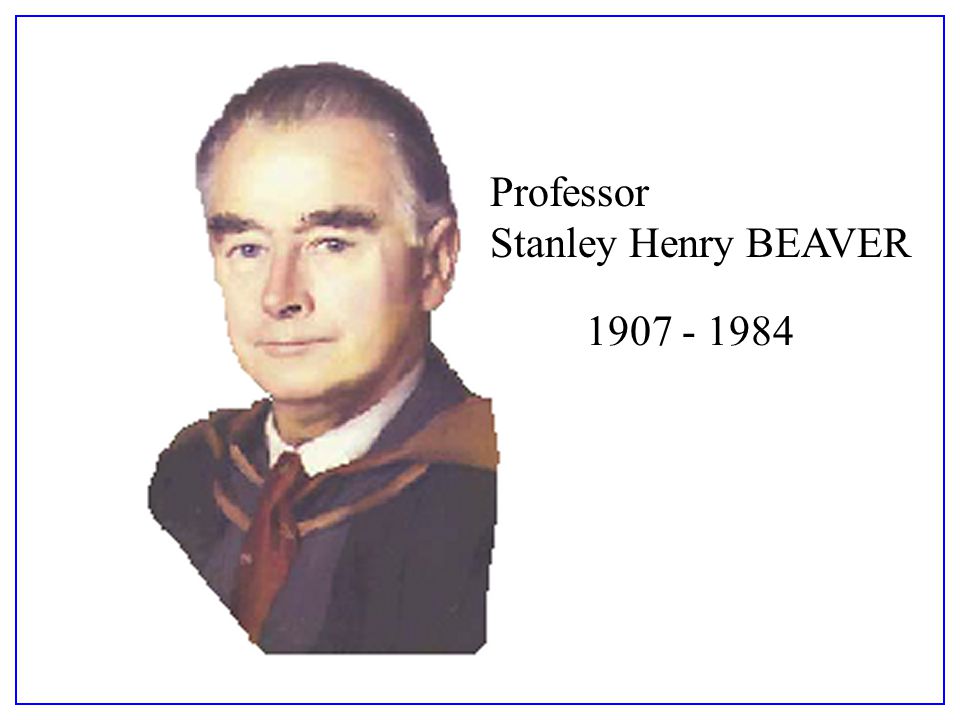
Image result for Professor Stanley Henry Beaver
"a body of knowledge coupled with an attitude of mind". 

He worked at the LSE between 1929 and 1950,  along with L Dudley Stamp

For some time, I couldn't find a contemporary image of Stanley Beaver, but was fortunate to receive one from Dr. Philip Kivell which can be seen at the top of the blog post.

In 1962, he had a piece published in 'Geography' on the Le Play Society and their contribution to fieldwork.

By this time, he was Head of the Geography department at the University of Keele. He stayed at Keele until his retirement in 1974 when he became Emeritus Professor.


In it, he references the work of Patrick Geddes, who had A. J. Herbertson as his assistant.


I am grateful to Dr. Peter Knight for helping me get in touch with Dr. Philip Kivell, who very kindly gave me a range of additional details on Professor Beaver's career and personal life. 
What follows was provided very kindly by Dr. Kivell.

S.H.BEAVER 1907-1984
Stanley Henry Beaver was born in Willesden, North London in August 1907. He graduated from University College London in 1928 with first class honours in Geography having already been awarded the Morris Prize and a University Scholarship in Geology. His first academic post was at the London School of Economics, where a very productive period resulted in appointment as Ernest Cassel Reader in 1946. His major work at this time, together with L Dudley Stamp was “The British Isles: a geographic and economic survey” which went though many editions before and after the war and provided a geographical grounding for  many thousands of students. 
During the war he worked for Naval Intelligence and used his geographical training to produce a number of regional handbooks. 
He was appointed as the founding professor of Geography at the new University College of North Staffordshire, subsequently Keele University, in 1950. 
Here he built up the first new post- war Geography Department in the country, including being closely involved in the physical design of the building. 
This included finding a home for millions of RAF air photographs taken over Europe during the war, and the establishment of a meteorological station on the campus.
Beaver could fairly be described as a traditional geographer, a product of an age that largely pre-dated the increasing specialization that reshaped the discipline from the 1960s. 
Having said that, his interests and skills were enormously diverse.  Most obviously he was a Human Geographer concerned with economic and regional matters, but his interests also ranged widely over transport geography, land use and dereliction and he was equally well informed about climate, meteorology, and mineral extraction. He was a practical academic, always interested in how environments and human processes worked and in this context he helped enormously to put “The Potteries” region on the map of public and academic awareness.
He was a superb and well organised teacher and was always in demand as a guest speaker by organisations across the country. From a student point of view he was extremely well respected but perhaps not the most approachable teacher. He belonged to an era when staff- student relations were more formal and respectful so the informality and student politics of the 1960s and 70s did not always sit easily with him. 
He could appear austere and remote but those who experienced his excellent field excursions soon saw a more relaxed side of him and were perhaps party to his dry sense of humour, his love of puns and his stock of limericks. At heart he was kind and immensely supportive to his staff and colleagues.
Apart from his teaching and research Beaver played a very active role in numerous groups and committees. Some of these were tied up with the University and local region, but others were national or international.  For many years he chaired Keele University Grounds Committee, responsible for the largest, and some would say, most attractive university campus in the country. It was not unknown for him to open his office window to berate students who were walking on the grass. 
He was President of the Geographical Association, active in the RGS and in the founding of the IBG, the IGU and the Anglo-Polish seminars. 
As Chair of the Geography Board of the CNAA he played a major role in promoting the new Polytechnic sector. Amongst all of this he found time to translate several important French texts into English.
During his quarter century at Keele  Stanley lived on the campus with his wife Elsie, who also worked as curator in the departmental map library, and four children. He enjoyed his large garden which he said (tongue in cheek) lay astride the watersheds between the Trent, Severn and Weaver catchments. One of his enduring passions had been steam railways, about which he was enormously knowledgeable. When the locomotive Keele Hall was withdrawn from service in 1963 Stanley Beaver bought the nameplate and displayed it proudly in his new department. On numerous overseas travels he would manage to arrange a trip on the footplate of whatever local steam locomotive took his fancy.
Upon retirement he and Elsie bought a large house in Eccleshall , a few miles from the campus, where he continued to garden, to enjoy his stamp collection and to continue his involvement in local Staffordshire organisations, especially the CPRE. He and Elsie endowed separate funds for student prizes and for fieldwork in the local area. 
Stanley Beaver was undoubtably one of the great geographers of his generation.
Professor Beaver died in 1984.

References
http://worldcat.org/identities/lccn-n50006237/

Obituary: “Stanley Henry Beaver, 1907-1984.” Transactions of the Institute of British Geographers, vol. 10, no. 4, 1985, pp. 504–506. JSTOR, www.jstor.org/stable/621896

Beaver, S. H. “The Le Play Society and Field Work.” Geography, vol. 47, no. 3, 1962, pp. 225–240. JSTOR, www.jstor.org/stable/40565418

British Geography 1918-1945, Edited by Robert.W Steel - published in 1987.
Chapter 12 was by J A Patmore, where he gave a personal perspective on the period.

Article in Geography in 1978
BEAVER, S. (1978). Some Observations on the Climate and Weather of New Zealand. Geography, 63(1), 14-22. Retrieved August 25, 2020, from http://www.jstor.org/stable/4056883
Patmore describes Beaver in this chapter.
A chapter in this book is here:
https://books.google.co.uk/books?id=9NSDx4DxfVcC&lpg=PA76&ots=uk5vMrcPG4&dq=stanley%20henry%20beaver%20geographer&pg=PA76#v=onepage&q&f=false

RGS Archives: http://discovery.nationalarchives.gov.uk/details/c/F46114 - I won't be able to visit the archive for a while, but there are quite a lot of papers

Updated - May 2020

A few updates to add following the posting.

There was a connection revealed between Professor Beaver and another former GA President who will have his own entry in due course (sometime in 2021) Bob Digby.
Bob told me that:


Bob apparently spent the £25 in the Keele University bookshop, buying geography textbooks from the time.

I also discovered another bit of information on Professor Beaver, from when he was a student at UCL in the 1920s. He was taught by Lionel William Lyde, another high profile Geographer from the early part of the 20th century.

His wife Elsie Rogers was also a student at UCL, and her memories of Lyde's teaching were also featured in the same document.


Taken from UCL Geography Department Archives.

Keele University offers an Elsie Beaver Prize for the best undergraduate dissertation by final year student involving fieldwork in physical geography, so the connection to Beaver continues.
It seems that she worked in the Map Library at the University as Map Curator. 


Beaver was also taught by another former GA President: Edmund Garwood. More connections...

Source:
https://books.google.co.uk/books?id=7BQSBwAAQBAJ&lpg=PA16&ots=qyoQUQmILd&dq=lyde%20geography%20definition&pg=PA8#v=onepage&q&f=false
- this link is to one of the many Biogeographical Studies, which are 'proper' versions of what I'm doing on this blog.

I also found his own entry, after all that, in the Biogeographical Studies series.


This included an image of him, and also details of his links with the GA, as well as a lot more detail.

Beaver was Honorary conference organiser from 1934-1949 and also declared an intention to visit every branch in Britain while President - something I hoped to do, but didn't quite manage it.


https://books.google.co.uk/books?id=R-48DwAAQBAJ&lpg=PA130&ots=vx3Y5ASsYg&dq=lionel%20lyde%20UCL&pg=PA129#v=onepage&q=lionel%20lyde%20UCL&f=false 

As always, if you have further information relating to this President please get in touch. 

Thanks to Dr. Philip Kivell for the image of Professor Beaver used at the top of the blog and substantive text later on.
Thanks to Dr. Peter Knight for his assistance as well.

Updated March 2023

Mentioned on first page of J B Priestley's 'English Journey'.

Updated August 2023


This flagged up his involvement with Section E of the BAAS, which I have been investigating over the last few days and have found plenty of details in the Transactions of the IBG and elsewhere that show Beaver's substantial involvement in discussions around geography in schools and universities. 


GA Obituary

Rodgers, H. B. “The Geographical Association.” Geography, vol. 70, no. 1, 1985, pp. 77–80. JSTOR, http://www.jstor.org/stable/40571501. Accessed 24 Aug. 2023. 

Friday, 17 April 2020

GA eConference 2020

Thursday's GA Conference 2020 Public Lecture and Awards were streamed on YouTube for the first time ever replacing the face to face event.
Paul Rose spoke about the power of his own teacher in changing his life.
I also took part in a panel on 'Geography at Home' which can be viewed here.

Gill Miller's Presidential lecture also kicked off proceedings yesterday. If you missed them head over to the GA's YouTube channel to watch at your leisure. 
Gill's lecture has been viewed over 1700 times at the time of posting.

Sunday, 29 March 2020

1951: International Conferences

A piece on Marguerita Oughton in 1965 described the work she did organising International Conferences.

In 1951, Miss Oughton had had to assist in some measure in the conduct of a major conference - the First International Conference of Teachers of Geography - held in Sheffield from 30th July to 7th August, at which nearly 100 members and delegates from 17 countries attended. The second such conference took place in Holland in August 1954 and Miss Oughton both travelled to Holland in the previous year to make preliminary arrange- ments, and attended the conference and reported on it (Geography, No. 186, pp. 286-290).

The Third International Conference in this series was at Grenoble in 1957, and this, she has told me, she felt to be an outstanding event in her career, for not only did she attend but she found herself on at least one occasion shouldering the responsibility of speaking for the Association.

More on Marguerita in a a future blog post.

References
Linton, David L. “Miss Marguerita Oughton: An Appreciation.” Geography, vol. 50, no. 2, 1965, pp. 172–176. JSTOR, www.jstor.org/stable/40565934. Accessed 27 Mar. 2020

Saturday, 28 March 2020

1951: Hull Spring Conference #2

Thanks to Justin Woolliscroft once again for these documents from the programme for the 1951 Spring Conference held at the University of Hull.
The conference was addressed by Professor Frank Debenham, GA President for 1952 who accompanied Scott on his ill-fated Antarctic expedition, and had his own post on the blog. His lecture was not on the Antarctic, but on 'Livingstone's Africa and future development". There was a choice of field excursions.

There was a lecture on the East Riding by G De Boer from the University, and also a talk by 'EGB': E G Bowen, who was to become the GA President in 1962. A lecture on the Hull Ports followed afternoon tea. Those who got up early could go and see fish being landed at the docks as long as they were wearing "non skid footwear and an old Mackintosh".

Friday, 27 March 2020

GA Virtual Conference 2020 - an update

As you will be aware the 2020 GA Conference has had to be cancelled for obvious reasons. Harriet Brookes, Becky Kitchen, Gill Miller and the rest of the conference planning team have worked wonders to put together a virtual conference using Adobe Connect which will take on the same dates as the original would have been taking place. Check your e-mails from a message from Harriet Brookes.

Whilst the Conference is an important time for the geography education community, the current government restrictions around movement mean that we are unable to hold the Conference in it's original form at the present time.

Instead we are pleased to launch GA eConference 2020 which will be an online offering of some of the programmed sessions over three days; Thursday 16 – Saturday 18 April.

The keynote sessions, to include the public lecture, presidential lecture and keynote, will be freely and publicly available live on Thursday 16 April.


Delegates to GA eConference 2020 will then have a choice of one of four pathways on Friday 17 April – Primary, GCSE, A level or Beginning Teachers – and one of four pathways on Saturday 18 April – Geography for sustainability, Real world enquiry, Geography curriculum planning or Case studies of a changing world.

The cost of the online Conference programme is £60.
Full programme details will be available shortly on Sched and on the GA website.
Next steps

For delegates who paid for their Conference place, there are five options for you to choose from:
  • I would like to cancel my booking and receive a full refund if applicable. 
  • I would like to donate my delegate fee to the GA. No refund will be issued.
  • I would like to join the eConference and donate the rest of my delegate fee to the GA. If you select this option, you will be donating the remainder of your delegate fee to the GA and no refund will be issued.
  • I would like to join the eConference and receive a partial refund. If you select this option, you will receive a partial refund equivalent to the amount previously paid to us minus the £60 online Conference fee.
  • I would like to transfer my place to next year’s Conference. Your place will be transferred to the GA Annual Conference and Exhibition 2021 at the University of Surrey, 8-10 April 2021 at no extra cost. No refund will be issued.

If you booked as a speaker, you can either choose to join the eConference free of charge as a speaker or not.

John Widdowson and I were due to lead a fieldtrip in Guildford, based around the 2nd edition of our Fieldwork through Enquiry book.

The publication of the book has been delayed because of printing issues, so will not be available as planned.

I am working out some sort of virtual fieldtrip which I will share when it is complete, and perhaps see you in Guildford in 2021 instead for the actual event...


Thursday, 26 March 2020

1951 Spring Conference #1

The GA's 1951 Spring Conference was held in Hull in April 1951

Justin Woolliscroft very kindly sent me some images of the programme which he found for me on his visit to the Hull. There were places for 150 delegates. Price was £4 including a river cruise and a reception by the Lord Mayor. More to come tomorrow.

Margaret Mackintosh RIP

Updated post. Sad news at the end of last week from colleagues who have organised the Charney Conference over the years of the passing of Ma...