Last updated June 2021 with some sad news.
Sheila Jones was one of the few Presidents to be a teacher when she took office. She was the first female practising teacher to take office.
Regular readers of the blog will know that it's a little unclear just how many GA Presidents were actually
still teaching when taking up the post, but Sheila was definitely in the classroom at the time.
She was also only the third woman to be GA President, following Molly Long in 1970 and Alice Garnett in 1968, and marking a slight change from previous Presidents' backgrounds.
Sheila was born in Newport, Monmouthshire in 1929. When she served as GA President, she was the
Head of Geography at
Colston Girls' School in Bristol, and early in her Presidential address outlined how one of the great challenges she had faced was finding the time to write her lecture.
I will no doubt sympathise with that a little, although this was in the days before the two year lead in that Presidents get these days, and the current organisation of the GA with Professional staff and a Chair of Trustees. Sheila used a lot of her time as President to support those who spent their career in the classroom, after decades of Presidents who had never done any teaching, or whose teaching was in an academic or Higher Education setting rather than a school.
She went to Redland High School in Bristol (1934-1947) and in the 6th Form was actually taught by
Elizabeth Fleure daughter of Professor H J Fleure of GA fame.
Sheila had a strong link with the city of Bristol, which has provided a number of Presidents over the years, as mentioned in John Westaway's Presidential lecture, where she got a mention. She also studied geography at
Bristol University.
At that time the University's Geography department was not as noted as it is now. Several of Sheila's small year group were ex- service personnel (as were quite a few GA Presidents at this time, as has been noted). There were few employment opportunities then, so most of that year group became teachers and some progressed as college lecturers.
Her Education year (1950-51), was a revelation, with
Dr. Gladys Hickman who introduced her year group to
fieldwork opportunities and was a great innovator. Many of her students owed much of their success in teaching to her in Sheila's opinion.
Gladys had her own post on the blog back in May.
For her first job, Sheila was the only Geographer in a two stream girls' grammar school in Falmouth, then a similar school in Dorchester, Dorset. In 1957 she moved back to Bristol as Head of Department at Colstons Girls School where she stayed until she retired in 1979. I think she must have arrived just after Margaret Roberts, who went to the school as a pupil, left.
In that time Sheila became one of the first pair of teacher tutors in the Bristol University Education department, a member of the local branch of the GA and was involved with the Easter GA conferences, which at the time happened in addition to the New Year conferences where the AGM was held. Sheila remembers attending Easter conferences in Swansea, Liverpool and Birmingham. Gradually numbers declined for those but at the same time the New Year was increasingly difficult with it becoming a Bank Holiday and a period of strikes and increasing salaries and expenses. As a result the peripatetic round of regional events disappeared, being replaced by travelling and now down to the current three locations of Sheffield, Manchester and Guildford on a rotation (although even this might be subject to change in the future).
She was also a member of the 14-18 Project, served on the RGS Council, was the Vice Chairman of the Schools Council Geography Commitee and of course GA President in 1975. What a range of experiences and achievements. All of these were made possible by an understanding Headteacher. She was involved with the creation of three school textbooks.
She also attended courses and conferences including Madingley and Charney Manor.
Her Presidential Address was called '
The Challenge of Change in Geography Teaching' and explored notions of change in the profession.
There are some excellent sections on change, and the challenges of teaching itself (something which many GA Presidents may have had little experience of... or which might have been for some a distant memory)
The preparation of my lecture has certainly proved to me that one of the greatest challenges
facing all of us working in school is that of time. Those of you who like me work at the chalk
face will agree that another of our challenges is to keep up to date with the proliferation of
texts of all types concerned with the teaching and content of our subject. You too may feel
guilty when conversing with a geographical educationist who quotes on Saturday, or even
Friday evening, the most recent educational news from the week's Times Educational Supplement. Not only do we have to try to keep up with the literature but also with current jargon
which, if used in the average classroom, would create an impenetrable barrier to communication.
(Jones, 1976)
She also referred to other changes:
Reviewing the DES courses during the years 1970-76, Sheila Jones stated:
"It shows
quite clearly the current trend. Obviously what some are disposed to call the
"Quantitative Revolution" was infiltrating into schools from 1970 to 1973, with
applicants heavily outnumbering those who could actually be accepted for the
courses. Likewise the Schools Council Geography 15-18 Project, in seeking
to answer the question 'Is there really a "new geography"?', concluded there
had been an important general shift in approaches to the subject: geographers have become:
(a) more critical of concepts and models
that had previously been taken for granted, e.g. the 'region'; the
Davisian cycle, or maps themselves; and hence are less ready to rely on
'common sense' and on unquantified evaluation of how well models
and concepts used in geography match the real world.
(b) more
enterprising in devising new models, and in borrowing ideas like
systems-analysis, or methods of evaluation such as regression analyses
from other subjects."
Sheila attended the 125th Anniversary dinner of the Associationl at Oxford University in 2018, and is pictured here - thanks to Bryan Ledgard for the image.
 Image credit: Geographical Association and Bryan Ledgard
In 2019, I sent round a questionnaire to all those former Presidents who were still able to receive one, and received some lovely e-mail responses from Sheila, who is the oldest living former GA President.
Here are some of her memories from the time as President.
I asked her how she had found it being a teacher at the same time as being President - something which worried me before I applied.
My Headmistress was very understanding and always said that any success reflected well on school. She came as a guest to my Presidential evening.
I also later remembered with happy thoughts other Presidents, Michael Storm who shares a love of cricket and have met annually at the Cheltenham Cricket festival.
Also Chris Kingston representing publishers and Tony Binns.
Other memories are silly one like Denys Brunsden fetching coffee for the Saturday Council meeting at LSE and deciding that we deserved Lion Bars as well which was an unexpected GA expense but the Treasurer agreed to it.
I also remember having to give a toast at the IBG dinner in Coventry when many members lost their money as they had not anticipated a long one with jokes!
Another memory was the New Years Eve when
Robert Steel was President (1972-3). At that time there were strikes at New Year (a reason why timing changed) so Denys stayed overnight instead of commuting as Conference organiser, and escorted the Steel family, Pat Cleverley and me to Trafalgar Square for the New Year celebrations.
She was also Branch Officer

Daugherty, R., Lewis, G., & Mills, D. (1978). The Geographical Association. Geography, 63(2), 126-137. Retrieved August 25, 2020, from
http://www.jstor.org/stable/40568896
In our early GA days Emrys Bowen was a very kind member of the hierarchy and Norman Pye was the one person who should have been a President but chose not to be.
Norman Pye has already featured on the blog in his own blog post as it happens.
Personal communication (2019)
I was also pleased to get Sheila Jones' memories on what gave her the 'spark' for geography which was part of Chris Kington's project around his own Presidency. Chris loaned me the letters that he had collected at the time. Due to Coronavirus I've still got them 7 months on from the loan.
Sheila said that she had "drifted into geography as my favourite subject at school". She explained that her father was a rep for an engineering firm, travelling throughout South Wales and the West Country. in the 30s and 40s, unlike most of her contemporaries, there was a family car available for use. She would also accompany her father on trips to Gloucester, Cardiff and Taunton, and left to look around herself with a street map, and also be on time to meet up again later in the day. The glories of a roaming childhood which is now mostly lost.
She also enjoyed having good teaching.
Her High School Certificate teacher, who turned out to be Elizabeth Fleure, the daughter of no less a person than Professor H J Fleure (although she didn't know it at the time) had visited places like the Grand Canyon and even in the 1940s was using colour slides in her teaching. She mentions seeing the Grand Canyon image and saying to herself "I don't suppose I shall ever see it". She also mentions reading a book by Nora Cundell called "Unsentimental Journey" which was influential to her.
Sheila also told me why she feels that the GA matters so much:
"I think it is very important to support and educate teachers and also to present the subject nationally, e.g. the GA conference with Sir Keith Joseph (more on that to come in time). My first involvement was at the time of the Easter Conference in Bristol. Geoffrey Hutchings, chair of the Fieldwork committee invited me to join it, but died soon after and his successor formed a new commitee. Then I was invited to join the Models and Quantitive commitee. There I met John Everson, Brian Fitzgerald, and Richard Daugherty becoming Secretary and then Chairman. This led to a place on Council and on to the working group bringing about the first constitutional change. It was a period of great change in many ways.
The President when I became one was undemocratic, one was selected by a very small group of the hierarchy, in my time Professor Robert Steel was one of them. Also 'Teaching Geography' was introduced after a lively AGM, publications were increased, the first attempt at commercialisation with sales of ball point pens, introduced. although not sold or stored by Office staff but by GA members. There was also the introduction of a Branch Officer with annual meetings for Branch reps. as the first Branch Officer, after being President I felt very strongly about. When I look at the list of publications available now and the range of Conference activities I think that Geography teachers are very lucky."
Of her time as President, she says:
"At that time, unlike my academic predecessors I had no lecture experience, no secretarial support and no visual aid support. However I did get help from GA HQ for research, and friends in Bristol University Geography department departmentt for slides. My lecture at LSE was marred by projection problems!
At this time, presentations were done via slides loaded into a carousel. One of them was displayed upside down - would be fun to have one of my powerpoint slides upside down.
I still feel much gratitude to David Jones and Barrie Morgan as my Conference organisers: a hard job at that time. In those days the Conference had a Presidential evening reception at LSE which I think I enjoyed less than any other as one could not relax".
And some memories:
"My immediate predecessor was Professor Harry Thorpe. At that time one was only involved for a year as President and for my first Council Meeting I was only given an Agenda shortly before the meeting started, thinking this was because I was only a schoolteacher I was greatly cheered when Harry told me that it had also happened to him.
He was very supportive.
I do have some memories of Presidents but they are general rather than specific.
As one would expect Rex Walford's was both successful, entertaining and enjoyable. Several of my memories are of Presidential evenings: Eleanor Rawling on a boat which could not leave harbour in Southampton and Richard Daugherty on the Thames, heading out to the Thames Barrage, plus John Westaway and the coach transport problems from Guildford, the Lord Mayors speech at Sheffield.
My greatest memory however is of the friendships I made over the years and have maintained not only with schoolteachers but also with University staff and HMIs. Apart from people already mentioned I would add Denys Brunsden as one of the best lecturers at GA conferences, Graham Humphrys who was a great supporter of school geography, Vic Dennison also from Bristol and unusually an F.E. lecturer who always asked questions of the treasurer, Professor Michael Wise at the AGM, Michael himself, Brian Coates and the work he did over the years in modernising the GAHQ but at the same time looking after the finances.
And finally a mention of two good friends of the GA who have died recently: Doreen Massey and Mchael Bradford."
A few details also came from this book, which featured Sheila, and her contributions to British geography, along with other GA notables.

She describes her shock at being suggested for GA President by another former
GA President Robert Steel.
Sheila took over as
Branch Officer for a time as well, and wrote a history of the Bristol GA Branch.
 https://books.google.co.uk/books?id=p_xfuY8CJ48C&pg=PT115&lpg=PT115&dq=%22marguerita+oughton%22+sheffield&source=bl&ots=xln_U09sEO&sig=ACfU3U0BVaFI8t74PC7xxPHMiijd8QoLyQ&hl=en&sa=X&ved=2ahUKEwjbrsfys43pAhXKQEEAHeGlCCIQ6AEwAnoECAoQAQ#v=onepage&q&f=false
References
https://books.google.co.uk/books?id=p_xfuY8CJ48C&pg=PT115&lpg=PT115&dq=%22marguerita+oughton%22+sheffield&source=bl&ots=xln_U09sEO&sig=ACfU3U0BVaFI8t74PC7xxPHMiijd8QoLyQ&hl=en&sa=X&ved=2ahUKEwjbrsfys43pAhXKQEEAHeGlCCIQ6AEwAnoECAoQAQ#v=onepage&q&f=false
References
Daugherty, R. A., et al. “The Geographical Association.” Geography, vol. 62, no. 2, 1977, pp. 129–139. JSTOR,
www.jstor.org/stable/40568648. Accessed 6 Aug. 2020
Daugherty, R. A., et al. “The Geographical Association.” Geography, vol. 64, no. 2, 1979, pp. 138–150. JSTOR,
www.jstor.org/stable/40569097. Accessed 6 Aug. 2020.
JONES, SHEILA M. “The Challenge of Change in Geography Teaching.” Geography, vol. 61, no. 4, 1976, pp. 195–205. JSTOR, www.jstor.org/stable/40568588.
Sheila Jones (1993) A brief history of the Bristol branch
of the Geographical Association. Bristol: Geographical Association
Bristol University Geography department history:
http://www.bris.ac.uk/media-library/sites/geography/documents/bristolgeoghistory2009.pdf
https://www.researchgate.net/profile/Ivor_Goodson/publication/339722653_Geography_Aspects_of_Subject_History-Goodson/links/5e611686a6fdccac3cebc796/Geography-Aspects-of-Subject-History-Goodson.pdf
As always, if anyone has further memories or images of 1975 (or any other year) please get in touch.
I am very grateful to Sheila for providing so much detail on her memories and professional experiences. There are so many connections here with other former GA Presidents and events which have been added to the blog over the last year or so.
Updated October 2020
Thanks to Sheila Jones for sending me further updates during 2020
From her most recent e-mail:
"By modern standards the 60s and 70s meetings were cosy, friendly affairs with more attention given to the help with 6th form. In the period that I am considering the Conference Officer (always a man) was a very important person throughout the year but it was a very time consuming task.
The GA was founded by academics, and teachers were encouraged to join but the stress was originally on University staff.
Then, as teachers started being more active, teachers started becoming President. I remember I was first woman in 1975 and the first man was about 1970. Simon Catling was the first Primary. At the same time, pressures were mounting on academics to support their own location.
They needed to write papers if they were to succeed. Thus in Swansea, Graham Humphrys deserved Professorship with all his work with schools but one was awarded to a colleague instead. The influence of some of the HMIs should not be discounted as well."
Updated March 2021
A memory from Jeremy Krause, President in 2001
1976 Sheila Jones
I regularly visit a friend at a Retirement Village in Bristol who lives near Sheila Jones. She was the first female teacher to be President of the GA. Recently she shared with me an offprint of her 1976 Presidential Address. It all seemed so fresh and served as a reminder of the common cause we have been engaged with for the past 128 years.
These are her final two paragraphs
“In conclusion I should like to refer to part of Professor Stanislawski's obituary to Carl Sauer who died last year: "He rejected the proposition that a teacher was obligated to pour knowledge into students while they were comfortably unaware - a method that may result in saturated sponges but hardly artesian wells of inspiration." You will all realize that this has been a very personal and consequently rather superficial consideration of the challenges facing us today. I hope that you may disagree with some, although not all of my opinions and if so, you may be provoked into considering your own point of view and possibly in clarifying your own aims and objectives. If so, then I will have achieved what I hope to achieve in the classroom, that is, a statement made by Carl Sauer in one of his last conversations - "I tried to encourage students to keep on thinking”.
D. Stanislawski, Carl Ortwin Sauer, 1 889-1 975, Journal of Geography, vol. 74, 1975, pp. 548- The Challenge of Change in Geography Teaching Author(s):
SHEILA M. JONES Geography, November 1976, Vol. 61, No. 4 (November 1976), pp. 195-205 Published by: Geographical Association
Update June 2021
Sheila sadly passed away on the 28th of May 2021
Jeremy Krause passed on the news.
She died in Southmead Hospital in Bristol
A very special person in so many ways to those who knew her. The Geography community has lost one of its pioneers ! The first woman teacher to be GA President and our oldest surviving President.
Look out for an appreciation in the GA Magazine in Autumn 2021.
Further memories of Sheila always welcome - as with every Presidential post on this blog...
I mentioned Sheila in my own GA Presidential lecture including other people we had lost since the previous GA Conference in person.


 There is sad news to report in this entry.
 Jones, Sheila M. “Letter to the Editor: Contact with Schools.” Area, vol. 8, no. 3, 1976, pp. 223–223. JSTOR, http://www.jstor.org/stable/20001121. Accessed 16 Sept. 2023.

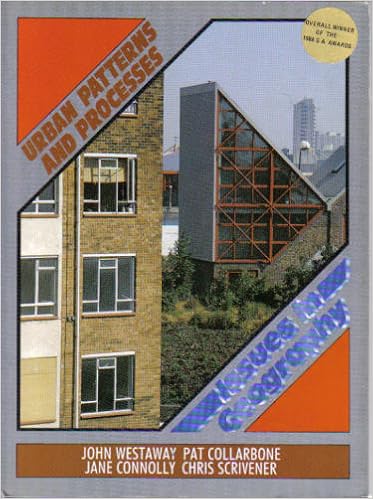 John Westaway is a big character, and had many roles in education, starting as a teacher, and also working for SCAA, and as an author of numerous books.


