Frank Debenham was born in Bowral, New South Wales, and educated at the University of Sydney, where he studied geology.
Debenham took part in Captain Scott's
Terra Nova expedition, and was a survivor of that fateful trip to Antarctica which ended with the death of the Polar party. He was a geologist on the expedition, surveying the mountains near McMurdo Sound, and also took over from the renowned
Herbert Ponting (who took some of the most iconic images of Polar exploration ever) as expedition photographer when Ponting left in 1912.
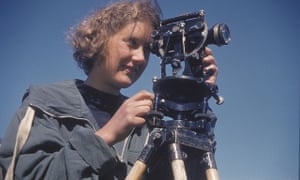
He is shown on many of the photographs from that expedition, including the one shown here.
A knee injury, from playing football in the snow, apparently partly prevented him from going on the ill-fated Polar journey.
Just let that sink in for a moment...
I also caught him on the Blu Ray I have of 'The Great White Silence', emerging from a hut.
See the screengrab below.
![The Epic of Everest & The Great White Silence [DVD & Blu-ray]](https://images-na.ssl-images-amazon.com/images/I/51NUuZ92xDL._AC_.jpg)

Debenham returned to Cambridge to write up his expedition notes, but the First World War intervened and he saw active service in a number of places, rising to the ranks of Major, before being wounded and returned home.
Image source: Public Domain
Image credit:
Herbert Ponting - National Library of New Zealand Reference Number: PA1-f-067-045-2
Frank Debenham and a plane table, during the Terra Nova Expedition 1910-1913 under the command of Robert Falcon Scott
Debenham was also the
Director of the Scott Polar Institute in Cambridge between 1926 and 1946.
I have visited here many times, and am hoping to make a visit to see what further connections we can make with the GA during my Presidential year.
Debenham was also a fellow of Caius College, and
Professor of Geography. I wonder whether they have further relevant material in their archive?
From the Cambridge University alumnus page:
Debenham was an Australian petrologist who had served on Scott's ill-fated Terra Nova expedition. He had originally arrived in Cambridge in 1914 to begin compiling records of the mission in the attics of the Sedgwick Museum, but then had been on service throughout the war. Debenham arrived at a time when a number of other polar individuals were also present within Cambridge: Charles Wright, who had also been on the Terra Nova, briefly lectured at Cambridge but continued to live in the area for much longer; Raymond Priestley, who had been with Shackleton on the British Antarctic Expedition of 1907-1909 was Assistant Registrar; and James Wordie, who would become Master of St John's College, and who had been a member of the crew of the Endurance. It was Debenham's dream to set up a polar research centre in memory of Scott at Cambridge, and he successfully won over the support of the Scott Memorial Fund to create it in 1920. The Scott Polar Research Institute (SPRI) continues to form an important part of Department life today, from its base on Lensfield Road.
The first candidates for the Geography Tripos sat the exam in 1920, resulting in 2 students receiving a 1st Class for their Part 2 exams, one of whom was JA Steers, who would go on to become Professor of Geography and Head of Department 1949-66.
When Philip Lake retired as Chair of the Department, he was succeeded by Frank Debenham, who became the Department's first Professor of Geography in 1933.
Source:
https://www.geog.cam.ac.uk/alumni/earlyyears/
Debenham travelled extensively in
Africa, and published on such subjects as the water resources of arid regions, the construction of small earthen dams, the ecology of the Kalahari, and on David Livingstone.
Between 1951 and 1953 he was also
Vice President of the Royal Geographical Society (yet another President who helped to connect the two institutions - this is a common thread through many of the blog posts, as those of you who have been following the blog will perhaps have noted)
Debenham's Presidential address,
on the subject of Travel is well worth reading, taking place as it did in the GA's
Diamond Jubilee year.
A few quotes from the Address are worth repeating here.
"Travel, either or own or that of others, is the very essence of geography... it can be satisfied to some extent when done by proxy, with the aid of imagination. In fact, both at the beginning of life and at its latter end, that form of travel - armchair travel - is the normal one... It is far more comfortable than real travel and can be just as exciting as your imagination likes to make it."
He follows with some important ideas on the importance of narrative where a book is
"a magic casement (window) through which, at will, they can gaze upon not only perilous seas and faery lands forlorn, but tropic isles and priate lairs..."
He gave some advice which I think would have gone down well with Frank Zappa.
"one can study a country in its biergartens.... nearly as profitably as at its Department of Statistics" (one for the Presidential lecture I think)
He moved on to advice for the traveller.
"In my opinion it is best to do your travelling as slowly as possible.... Shank's ponies by preference. If you must have transport of some time, let it be a donkey rather than a bicycle."
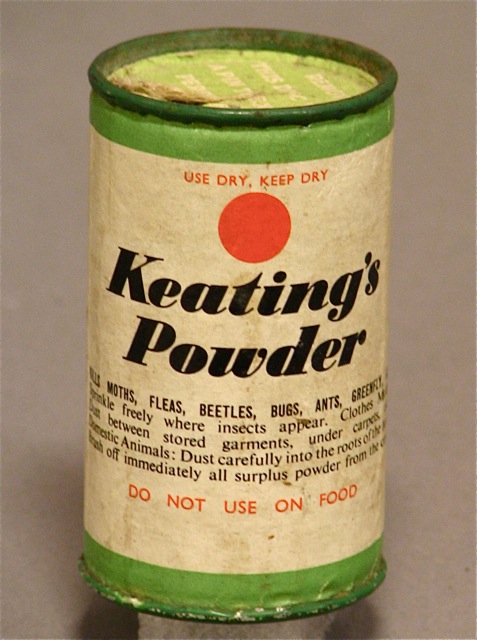
 "...it is always wise to travel comfortably, which is an entirely different thing from travelling in luxury.... get a good night's sleep... or even making sure you have a supply of Keating's Powder"
"I would say that the better informed a man is before he visits a country, the more he will appreciate it; and certainly he will cause less annoyance to the local inhabitants who will not have to answer so many silly questions. I think that most of us could quote instances where fore-knowledge of what one was about to see was very helpful and timesaving..."
"...it is always wise to travel comfortably, which is an entirely different thing from travelling in luxury.... get a good night's sleep... or even making sure you have a supply of Keating's Powder"
"I would say that the better informed a man is before he visits a country, the more he will appreciate it; and certainly he will cause less annoyance to the local inhabitants who will not have to answer so many silly questions. I think that most of us could quote instances where fore-knowledge of what one was about to see was very helpful and timesaving..."
Debenham followed this quote by providing an anecdote from his time travelling with Captain Scott.
He was a great fan of sketching, rather than photography.
"It is only when you sketch a thing, be it a mountain or a cathedral or a native hut that you really take in its details and appreciate it fully. To my mind, the artist is the most skilled observer there is, and to observe with care is the duty of every geographer."
It is worth noting that Debenham's name really was put on the map:
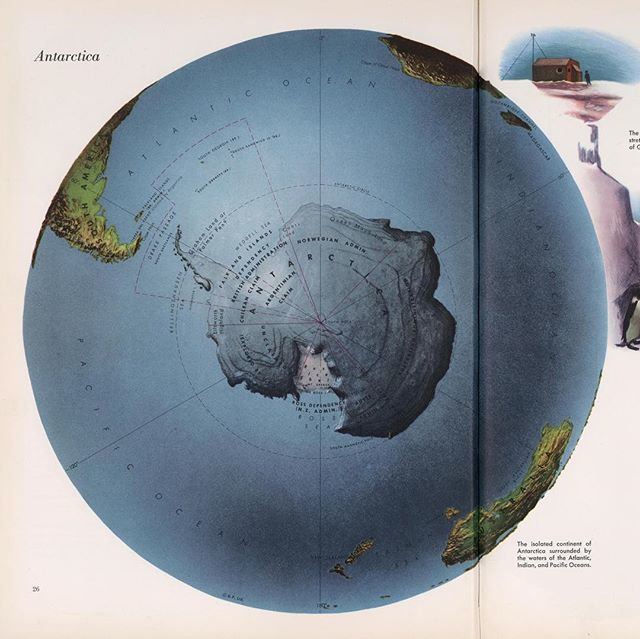
Debenham is commemorated in the Antarctic by Debenham Glacier (77°10' S 162°38' E), which flows into the northern part of Wilson Piedmont Glacier, the Debenham Islands (68°8' S 67°7' W), between Millerand Island and the west coast of Graham Land, and by Debenham Peak (67°21' S 50°26' E.) in the Scott Mountains.
A challenge for the readers: which other GA Presidents had landscape features named after them?
Some others appear on this blog, but there may be others...
Debenham was the author of a number of books on the theme of map making, and geography as a discipline. I am going to try to track a few of them down in the next few years. I have a few places to explore to get hold of copies.
I liked this passage from his book on
'Map Making' - which is accessible on the
Web Archive site, as are many others of the early Presidents' books.
This is my kind of cartography, taking place on a pub table.
Quote attributed to him here.
Debenham's Ice Pick sold in March 2019 for £22 000.
References
Wikipedia page:
https://en.wikipedia.org/wiki/Frank_Debenham
I have edited his Wikipedia page to reflect the fact that he was a President of the GA, as with all Presidents.
Debenham, F. “TRAVEL: Address to the Geographical Association.” Geography, vol. 38, no. 3, 1953, pp. 117–124. JSTOR, JSTOR,
www.jstor.org/stable/40564829
Obituary: Steers, J. A. “Obituaries: FRANK DEBENHAM.” Geography, vol. 51, no. 2, 1966, pp. 150–151. JSTOR, www.jstor.org/stable/40566075.
Cambridge University Page:
https://www.geog.cam.ac.uk/alumni/earlyyears/
Scott Polar Institute page:
https://www.spri.cam.ac.uk/people/debenham/ with some biographic details - t
hey will also presumably have some Archived material relating to his work and associations with the SPRI.
Books published:
https://www.abebooks.co.uk/servlet/SearchResults?sts=t&cm_sp=SearchF-_-home-_-Results&an=Frank+Debenham&tn=&kn=&isbn= (ABE Books search)
Image:
https://www.davidrumsey.com/luna/servlet/detail/RUMSEY~8~1~247001~5515217:View--Solar-System?sort=Pub_List_No_InitialSort%2CPub_Date%2CPub_List_No%2CSeries_No&qvq=q:space;sort:Pub_List_No_InitialSort%2CPub_Date%2CPub_List_No%2CSeries_No;lc:RUMSEY~8~1&mi=366&trs=470#
 As always, if you know more about the work of Frank Debenham while President of the GA, please get in touch.
I'll finish this entry with the final paragraph from Frank Debenham's Presidential Address
"Even though the geographer... has the ability to see more than others on his travels because he has cultivated special faculties for seeing, he will, I hope, remain a normal person. Though his work will give him infinite satisfaction, his keenest pleasure in travel will still come through his senses.
Travel, to a geographer, should be a richer experience than it is to other people.....
Bon Voyage, Good Travelling to you all..."
Update December 2019
There was a useful piece mentioning Frank Debenham that I came across in an unpublished thesis called 'A Frozen Field of Dreams'.
He was educated in Sydney, and had connections with the work of James Wordie and Raymond Priestley.

Extract from thesis above by Peder William Chellew Roberts and online here:
https://purl.stanford.edu/qh833rs4632 (PDF) - start reading from around p.200 - p.220 contains a lot of information about Debenham's work at the RGS, SPRI and Cambridge University, as their first Professor of Geography.
More here too:
https://www.amazon.co.uk/British-Geography-1918-1945-Robert-Steel/dp/0521067715 - I may need to get a copy of this to add some more detail to the early part of the century over time.
This has a lot more information about the work of Frank Debenham
Update June 2020
An excellent film from the East Anglian Film Archive (in 1961) was added to the SPRI Facebook page. It includes a clip with an interview with Frank Debenham - 50 years on from the Terra Nova expedition.

Lovely to hear the voice of a former GA President from almost 70 years ago.
Updated November 2020
Centenary of SPRI was in November 2020
The Scott Polar Research Institute was founded in 1920, in Cambridge, as a memorial to Captain Robert Falcon Scott, RN, and his four companions, who died returning from the South Pole in 1912. When Scott's last words, "For God's sake look after our people" were made known to the British nation, the response was tremendous. Scott himself had emphasised the importance of science and from this plea, the Institute was born.

Frank Debenham, Geologist on the British Antarctic Expedition 1910-13 (Terra Nova), was the driving force behind the founding of the Scott Polar Research Institute. He wanted to establish a place that brought together polar researchers and resources for the improvement of polar expeditions and scientific investigation. Debenham asked that the new institute perform two roles: it should be a centre of study, preferably as part of a university, and it must also stand alone as a national memorial to Captain R. F. Scott and the men who died with him in the Antarctic. As Debenham and other veterans of the British Antarctic Expedition 1910-13 (Terra Nova) had found themselves in Cambridge writing up their findings, and, as Debenham argued, because Cambridge had 'furnished more polar scientists than all the other English universities put together', a home within the University of Cambridge was the obvious choice.
Source: https://www.spri.cam.ac.uk/centenary/past/
In November 2020, a Grace was granted by the University of Cambridge Senate, formally establishing the new Scott Polar Research Institute.
In its early years, the Institute occupied rooms above the Sedgwick Museum, where Frank Debenham was based as Emeritus Professor of Geography for the University of Cambridge Department of Geography.
Updated April 2022 - following the GA Conference.
I used a few quotes and images of Professor Frank Debenham in my GA Presidential Address.
I also visited the Scott Polar Research Institute and found this book which I hadn't seen before and which was very useful in giving details of his career, although it doesn't mention his GA Presidency or anything that he did while holding the office.
More to come on this once I've read the book.
Here is the surveying equipment that Deb used in the Antarctic.
Updated April 2023
A book that Debenham compiled on his time in the Arctic.
Via the Facebook Sir Ernest H Shackleton Appreciation group.
The book is also available to purchase.
Updated August 2023
A mention in this piece on Cold War travels by Geography:
It references his GA Presidential lecture - which I also quoted from in my own:
Travel in mid-twentieth century British geography was the subject of Frank Debenham's 1952 Presidential Address to the Geographical Association, with travel presented as