Showing posts with label Richard Chorley. Show all posts

Wednesday, 15 April 2020

1963-7: Haggett and Chorley and Madingley

In the sixties, there was a revival of quantitative geography, and the use of statistical models to help explain some geographical patterns and processes.

Peter Haggett was one of the lead lecturers in this movement, but people who were associated with the GA were also there too.

Madingley Conferences took place at this time, convened and organised by Haggett and Richard Chorley. They ran between 1963-7 and spawned several influential textbooks.


At the Geography Teacher Educators's conference in 2010, I had the privilege of speaking to the late Rex Walford (of which many more posts to come) after he did a talk on his memories of attending these conferences.
He had brought some of his memorabilia to the event and it was fascinating to see those original documents from those conferences that he had brought along.

Image from University of Cambridge Alumnus magazine (see source below)

Walford is quoted in Ivor Goodson's book talking about this time:
The Madingley Lectures proved a watershed in the emergence of the subject. Two years before, E.E. Gilbert - in an article on 'The Idea of the Region' - had stated that he regarded new geography in the universities as an 'esoteric cult'. After Madingley, this was no longer the case, as a college lecturer who was secretary of his local Geographical Association recalled: 'After Madingley my ideas were turned upside down... That's where the turn around in thinking in geography really started'. But as Walford later noted, Madingley was 'heady to some, undrinkable brew to others'. Following the second Madingley Conference in 1968, Chorley and Haggett sought to consolidate the changes they were advocating by a new book entitled Models in Geography. By this time opinions were becoming progressively polarized about the 'new geography'. Slaymaker wrote in support of the book:
In retrospect, a turning point in the development of geographical methodology in Britain. After the exploratory and mildly iconoclastic contents of the first Madingley lectures, recorded in Frontiers in Geographical Teaching, a more substantial statement of the methodological basis and aims of the so-called 'new geography' was required... with the publication of this book [it is demonstrated that] the traditional classificatory paradigm is inadequate and that in the context of the 'new geography' an irreversible step has been taken to push us back into the mainstream of scientific activity by process of model building. 
Neville Grenyer wrote about this time for the GA in 1972.

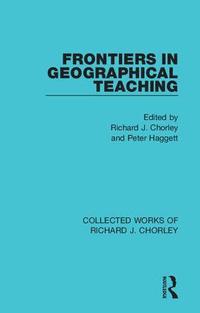
The Madingley Seminars were held between 1964 and 1967, following first lectures in 1963. 'Frontiers in Geographical Teaching' captured the atmosphere of the seminars. 'Trends in Geography' by Cooke and Johnson also came out of these events.

It also inspired my PGCE tutor Vincent Tidswell, who will appear later in the blog in his work.

Here's Chorley in an early interview.


More to come on this in future posts.

References
Wikipedia page for Peter Haggett:
https://en.wikipedia.org/wiki/Peter_Haggett

Madingley Conferences:
https://www.ivorgoodson.com/becoming-a-school-subject?p=12 - and other pages near this

Grenyer, N: "An introduction to Recent developments in Geography teaching: an annotated
bibliography" (Geography, Vol 57, No. 4, November 1972)
https://www.jstor.org/stable/40567919

https://www.geography.org.uk/Journal-Issue/ea4a0ee3-5175-48c2-a8ae-1789df0ffec7 - Peter Haggett

References: Rex Walford's book on School Geography.

Image: Madingley Hall - shared under CC license by Alan Parkinson (2010)

Friday, 3 April 2020

1960s - the New Model Army


The Life of Peter Haggett | Peter Haggett

The late Professor ChorleyRex Walford tackled the changing nature of Geography in the 60's in a pieece called 'On the frontier with the New Model Army" published in 'Geography'.


This was a part of a short series which was put together by Chris Kington, along with pieces by Balchin and Tidswell.

The original piece is available in 'Geography'.

He also wrote a chapter with the same name with his book on School Geography teaching which has been a major source when writing this blog.
There is also detail on this era in the Marsden textbook on... textbooks which I was loaned by Chris Kington.
This was "a watershed in academic geography, chiefly reflected in the dramatic shift from traditional regional to the more mathematical and scientic approaches of the so-called quantitative revolution" (Marsden, p.44)

Rex Walford described the regional approach by them as being "too static, too pat, too enclosed", although it persisted, as I taught it in the late 80s still. Key textbooks at this time included those by Everson and Fitzgerald, and one by J P Cole & N J Beynon 'New Ways in Geography', which sold over 300 000 copies of the pupil books and even more of the work packs between 1969 and 1984. The series pioneered some new ideas such as disposable worksheets. It replaced the traditional exploration of life in other lands with skills development on such things as networks, coordinates, journey patterns and kocations.

The Madingley lectures of 1963 led to the release of Chorley and Haggett's 'Frontiers in Geographical Teaching' (1965) and 'Models in Geography' (1967). These were the bibles of what Rex called the 'new model army' of teachers.
In Balchin's Centenary book he talks about the impact of the quantitative revolution on the GA, which he describes as a 'danger'.
Frontiers in Geographical Teaching (inbunden)It was starting to affect teaching in schools. Quantitative techniques were apparently embraced by younger students, but viewed critically by 'the establishment'. A new GA committee was eventually formed in 1967 called the 'Role of Models and Quantitative Techniques in Geographical Teaching', which was chaired by Professor Stan Gregory.

A full issue of 'Geography' in January 1969 was devoted to the work of this committee.

More to come on this as the blog moves through the 1960s.

References
Walford, Rex. “On the Frontier with the New Model Army: Geography Publishing from the 1960s to the 1990s.”
Geography, vol. 74, no. 4, 1989, pp. 308–320. JSTOR, www.jstor.org/stable/40571739
Balchin's Centenary volume

Images in this post:
Peter Haggett (top)
Dick Chorley (bottom) - link to Cambridge Obituary

Another name associated with this period is William Vaughan Lewis.

It is worth finding and reading Haggett's own reflections on the Quantitative Revolution, which are found in this document (a useful 17 page PDF download for free) - several other former GA Presidents get a mention in this document.

Margaret Mackintosh RIP

Updated post. Sad news at the end of last week from colleagues who have organised the Charney Conference over the years of the passing of Ma...