Showing posts with label SAGT. Show all posts

Saturday, 21 May 2022

COBRIG Meeting

As part of my Presidential journey I was asked to attend a meeting of COBRIG: the Council of British Geography.

This includes members from the following organisations - some educational and others from awarding bodies, inspectorates and government bodies. 

British Science Association (Geography group recorder) (BSA)
Conference of Heads of Geography in British Universities
Council for Curriculum, Examinations and Assessment, Northern Ireland (CCEA)
ESTYN
Geographical Association (GA)
Office of Standards in Education, Children’s Services and Skills, England (OFSTED)
Royal Geographical Society (with the Institute of British Geographers) (RGS with IBG)
Royal Scottish Geographical Society (RSGS)
Scottish Association of Geography Teachers (SAGT)
Welsh Joint Education Committee/Cyd-bwyllgor Addysg Cymru (WJEC / CBAC)

COBRIG has been in existence since 1988.

It was created:

"to advance the interests of geography, and is made up of all the main organisations of geographers and geographical educationists in Britain."

Prominent among its initiatives in the educational context has been the recent COBRIG-inspired Geography into the Twenty-First Century (Rawling and Daugherty, (1996)), which has at its heart the central issue to which this article has been addressed: putting the  geography back into geographical education. This offers the basis of a fruitful agenda as represented, among other things, in Haggett’s delineation of ‘the central and cherished aspects of geographical education: a love of landscape and of field exploration, a fascination with place, a wish to solve the spatial conundrums posed by spatial configurations’ (Haggett, 1996, p. 17); in Johnston’s advocacy of a refreshed, dynamic, and distinctive place geography (pp. 73-4); and in Jackson’s concern for developing sensitivity to place connections at a variety of scales (p. 91); or, as Allen and Massey have put it: 

‘We live local versions of the world and in so doing we have to locate ourselves within a wider global context. We only understand the changes taking place in our own backyard when we begin to understand how changes taking place elsewhere affect our world’ (1995, p. 1)

Source: https://www.open.edu/openlearn/pluginfile.php/631169/mod_resource/content/1/geog_sk6_06t_5.pdf 

Neil Simmonds and Eleanor Rawling were originally involved from the GA's perspective, along with Richard Daugherty.

COBRIG previously ran seminars for geographers as well through the 1990s in particular.

This meeting was held at the Royal Geographical Society - the first time I'd been there for about three years and it was good to be back in such a historic location.

It was lovely to meet some old friends - particularly Erica Caldwell who was representing SAGT / RSGS, and also to make new acquaintances.


Image: Alan Parkinson, shared under CC license.

Monday, 1 November 2021

GA Presidency Month 2: October 2021

This is the second month of my updates on what I have been up to as GA President, to show what is involved (as much as possible) and also let others who may want to apply know that it is possible to take on the role alongside other responsibilities. It also comes just a week before the deadline to put your name forward to be President for 2023-4.

As always, there were many daily emails on a whole range of topics, many of which can't be shared here.

The month started with a few events for the Geographical Association which involve the President specifically.

Governance Working Group is a small sub-group which supports the Governing Body. This includes the Honorary Treasurer and others, and follows other meetings between other senior members of the Association to consider strategy. This meets termly, with other ad hoc meetings happening in between.

The Early Career Teacher's eConference had a good range of delegates. I chaired the event, and also spoke. I enjoyed all our varied speakers who brought their own styles, messages and energy to the event. This took place on a Saturday and we had a good range of sessions. I hosted and led the day as I did for the previous SCSIG session on COP26 a few weeks ago. The event was well attended.

Sessions included:

  • My own session on belonging to a subject community
  • Gemma Collins from the University of Birmingham on 'How to build a geographer' - a lovely session
  • Katy Salter on the creation of resources - very useful advice here
  • Tanith Ludlam on making the most of ECT experiences - a member of the GA's SPC

GA Branches are starting to come back to life again and plan their programmes and I'm pleased to have been invited to speak at several of them. The GA Cambridge Branch has the support of a couple of former GA Presidents: Keith Grimwade and Chris Kington, and I have spoken at their events a number of times. They had their AGM which I attended. I also responded to invitations to speak. 

If any GA Branch officer needs further support, or would like to invite me to come along and speak at their branch, please get in touch.

There was also a meeting of the Geographers' Gaze project team, uncovering some of the GA's Lantern Slides and writing accompanying materials.

ERASMUS+ is something which has been lost (hopefully not for good) for UK schools and universities as a result of the poor decisions made during the Brexit process.

I am involved in two final projects currently on behalf of school and this month also saw our first face to face meeting of the partners for the GI Pedagogy project. We hosted the partners at King's Ely. We weren't able to have the usual social events that we would have normally done and the meeting was a little truncated too compared to previous mobilities. The project is about applying Rosenshine's principles to teaching with GIS, and developing a model for this, which is just about complete.

If you would like to be involved in trialling our GIS resources and teacher training course then please get in touch with me.

Our European visitors were able to enjoy a Sunday roast in their hotel, attend evensong in Ely Cathedral and also enjoy a traditional Turkish meal...  I'll return to Turkey later.

I have also been working to finalise my input to the teacher training course which has been created by the D3: Developing Digital Data Literacy project. The first three modules have been fully finished, and I am also uploading some further materials to the website to finalise the 4th module which draws on the previous three. The context for this is the '15 minute city' and I was pleased to have a brief Twitter exchange with Carlos Moreno, who developed the idea.

This explores open data and how it can be used to help young people to make important decisions in their lives, now and in the future. It's also about understanding that their use of technology, which has increased during the last couple of years is creating a huge amount of data which could be valuable and also say a lot about them to advertisers and other companies such as Meta (the rebranded umbrella body including Facebook)

If you would like to be involved in trialling our Open Data resources and teacher training course then please get in touch with me.

The Turkish Geographers' Congress is called UCEK or IGCU, and this was the 3rd running of this large event with hundreds of papers and other sessions. I was one of the invited international speakers, which was an honour and had to cram it into a working day. I also did a Q and A with one of the organisers Eyüp Artvinli and the Australian geographer Susan Caldis.

I enjoyed speaking to over 200 Turkish geographers around the theme of Everyday Geographies. The session can be viewed on Facebook here, minus the opening minute of my talk, when I introduced myself to the delegates. I was very pleased to have been part of this international event.


I also involved myself in other events.

I am also awaiting the IGU's response to a session proosal for their conference in 2022. The date for this has now been put back into November so I am hoping that I might be able to attend the event in Paris later in my Presidency and also take in a visit to the iGEO Competition which would involve offering my support to the team selected as part of the Worldwise competition organised by the GA. There is a long association between the GA and the IGU, particularly via Norman Graves. This forms part of his entry on the GA Presidents blog.

The following Monday I spoke at a seminar organised by the Prince's Teaching Institute.

There was a session from me on how COVID19 has changed geographical thinking and elements of the curriculum. Thanks to those who came along. I shared a chronology of the pandemic and then the PTI Teacher Leader Catherine Bradley took over and worked with the delegates to connect it to the curriculum.


The SAGT Conference is a regular fixture on my annual calendar. I have attended many years since 2005, and this year was a second online conference of the Scottish Association of Geography Teachers. I presented on 'Landscapes of Abandonment' to fit the theme of rewilding. There were some very interesting keynotes on Scotland's landscape and the Alladale reserve connected with some current work. I was also delighted that 'Why Study Geography?' won a Highly Commended in the SAGT Publishers' Awards. I've previously won the Best Book Award but not this time.


There were lots of 'smaller' actions as well.

I sent off the 2nd draft of an article to Routes Journal on the research that I carried out to produce the GA Presidents blog. This was in response to the peer review. I also researched some images. This has been accepted for publication and I will share the link to the article once it is published early in the New Year.

GA Conference planning occupied a lot of time of course, with plenty of emails trying to finalise different elements.

This included the Future Geographers strand which is for students. It includes a link to elements of the main conference, and usually includes the President and Vice President as well. We will be publicising more details of this once finalised.

As always, I had conversations with numerous people on a range of topics including:

- the forthcoming Governing Body meeting in Sheffield

- forthcoming journal contents and articles

- GA Innovation Fund judging - this was completed and those who applied will find out the results in November

- sending off booking form for the Charney Manor Conference in February 2022.

I also signed the CSA for a forthcoming publication in 2022.

My LivingGeography blog also passed 6 million page views this month. Thanks for visiting. There's a lot of geography in just one site. Use the SEARCH function whatever you're teaching to find something useful.

I also read a lot of the new book by Parag Khanna called 'Move' and an excellent book by Jer Thorp called 'Living in Data'. 

Parag's book has some accompanying education materials which are worth taking a look at.

I also did some consultancy for a firm developing some exciting new materials - more when they emerge as well.

And finally, you have a week to apply to be the President of the GA for 2023-4 (following Alastair Owens) - deadline is 8th of November.

Twitter analytics for the month again.

Looking back, October has been rather busy. Let's see what November has to offer.

Wednesday, 22 September 2021

SAGT Conference 2021

The Scottish Association of Geography Teacher's annual conference is being held online this year. The President of the GA traditionally gives fraternal greetings and I have been there in person to see about 8 or 9 Presidents do that.

The theme is rewilding.

Tickets are now available on Eventbrite.

Programme
10:00 Welcome

SAGT Presidential Address, Fraternal Greetings from Geographical Association, Publishers awards

10:30 Keynote 1 - Paul Lister The European Nature Trust

Paul Lister bought the Alladale estate in 2003. Paul will speak about his life before Alladale, his purchase of the reserve and how he and his team have approached his 'wild' vision. He will also discuss some of the projects which are being undertaken including the wild boar and European elk projects.

11:15 Workshops

Geographies of Abandonment: Developing case studies around the rewilding of abandoned places - Alan Parkinson
Cultivating Climate Justice through Curriculum Change - Frances Hobbs
Carbon and Rewilding-Neil Kitching
Beavers and Buffers - nature based solutions for the climate and extinction emergency - James Wallace
12:00 Keynote 2 - Peter Cairns

Peter calls his talk 'A Rewilding Journey'. Using stunning imagery created by the 'SCOTLAND: The Big Picture' photography team, this presentation showcases the country's beauty and drama, but also poses an intriguing question: What should Scotland look like?

12:50 Vote of thanks/ Raffle

All participants will be able to access recordings of all the workshops.

Monday, 31 May 2021

2013: Professor Hazel Barrett

Hazel Barrett is an academic geographer from Coventry University, specialising in Development Geography.


As with more recent Presidents, much of this entry has been written thanks to contributions from Hazel, who responded to a Google Form which I sent round to as many Presidents as possible and has been updated slightly since the original posting.

Hazel is currently Chair in Development Geography at the Centre for Trust, Peace and Social Relations at Coventry University. 

Hazel is a social scientist who has been undertaking research into the reality of gender and development in sub-Saharan Africa for over 30 years. Her main areas of research are the socio-economic aspects of human development and how these impact on children and women, in particular their livelihood opportunities, education as well as health and well-being.

Hazel has led national and international research projects funded by UK government, UK research councils, UK foundations and the European Union Daphne Fund. She has published books, chapters and over 50 refereed articles relating to gender, health and development in sub-Saharan Africa. Her work has been featured in The Guardian, New York Times, London Evening Standard, the Huffington Post, BBC, ITV and Sky TV as well as UK, US and Singapore radio. 
She has presented her research at the Houses of Parliament, the EU Parliament and at the Girl Summit 2014. 

In 2015 she was named as ‘One of 1000 Most Influential Londoners’ for her research on female genital mutilation. She is a specialist on participatory and community-based action research methods which empower research participants and enables their narratives and views be heard.

Hazel was born in London in 1955.

She told me about her school experiences and employment:
"I failed my 11+ so went to the Secondary Modern School in Maldon, Essex.
I then passed my 13+ so went to the Grammar School in Maldon, Essex.
Two years later the two schools were merged into a large Comprehensive School, renamed The Plume School, Maldon, Essex. I stayed there until I finished my A levels.

From 1973 to 1976 I attended Sussex University where I graduated with a BA 2.1 (Hons) in Geography with African and Asian Studies.
Between 1977-1978 I did an MA in West African Studies at the Centre for West African Studies (CWAS) at Birmingham University.
From 1978 to 1984 I undertook my PhD at CWAS at Birmingham University.
I have spent my career as an academic teaching human geography and development studies and researching social justice issues, mainly in sub-Saharan Africa.
When Hazel became President, she was Associate Dean of Applied Research, Faculty of Business, Environment and Society, Coventry University. She was also Research Professor in Development Geography."

I first met Hazel in October of her Presidential year, when she travelled up to the SAGT Conference. She was there to give the fraternal greetings as is common between the SAGT and the GA at their respective conferences. I have attended the SAGT conference almost every year since 2004 when I was first invited up by Val Vannet when she was conference convenor.


Image: John Vannet

I'd just moved into a new job, and we picked up an award for 'Fieldwork through Enquiry' and I also won one for some work I'd done with Felicity Aston on her 'Pole of Cold' expedition.

Hazel was the editor of 'Geography' from 1997-2003 years. This is a significant role, held for a considerable period.


Hazel's Presidential year reflected her own research interests of course. She told me, "my Presidential theme was:
Geography: Crossing Boundaries.
This refers to the fact that as geographers:
  • We research issues that cross physical and human boundaries
  • We research issues that require an interdisciplinary approach that cross subject boundaries
  • The methodologies and methods we use in our research are constantly pushing back boundaries

Hazel lived in the Gambia earlier in her career. where she undertook data collection for her PhD. In the early part of her research career she carried out research into the HIV/AIDS epidemic in sub-Saharan Africa and has done numerous invited lectures at GA branches on this topic. 

More recently her research has focussed on female genital mutilation (FGM) both in Africa but also in the EU and UK.

Over the last decade her research has been directed at the social and economic aspects of the HIV/AIDS epidemic in sub-Saharan Africa, in particular Kenya, Uganda, Zambia and The Gambia as well as amongst migrant groups in the UK.

An area that she often focusses on in her talks is female genital mutilation (FGM): a topic on which she speaks widely at GA Branches and elsewhere, bringing this important issue to the attention of many students. She has written on this topic, and also period poverty (another current issue) for the Conversation:

Hazel said:
"I focussed on equal opportunities during my time as President. I like to think I contributed to the GA being an open diverse organisation which welcomes people of any gender, ability, ethnicity and religion. My main memories are of camaraderie, support and laughing (a lot!)."

References

University page: https://pureportal.coventry.ac.uk/en/persons/hazel-barrett

https://www.coventry.ac.uk/research/researchers/professor-hazel-barrett/?theme=main

View Hazel's Presidential Lecture here: https://slideplayer.com/slide/6367868/

BARRETT, HAZEL. “Editorial.” Geography, vol. 82, no. 1, 1997, pp. 1–1. JSTOR, www.jstor.org/stable/40572860. Accessed 20 July 2020.


Top Spec, co-written with the previous year's President: Bob Digby

Top image: Copyright Bryan Ledgard / Geographical Association

Any memories of Hazel's time at the GA welcome

Wednesday, 2 September 2020

1978: Professor Norman Graves

Last updated January 2025

Norman Graves' name will be known to many for his involvement in the authoring of school textbooks over many years. His other significant contribution was in the development of the IGU.

Norman taught in a number of secondary schools in his career.
He was also involved with the University of Liverpool and latterly the Institute of Education, from where he retired 30 years ago.

He will turn 100 in January 2025. 
There is a comment at the end of the blog post providing details of how you can send Norman best wishes on his birthday.

Norman told me in an e-mail that: "I am conscious that the year of your birth, 1963, was the year I arrived at the Institute of Education to head the Geography Department."

He was also mentioned early on in David Mitchell's PhD thesis:

In 1979 Norman Graves produced a model of ‘curriculum planning’ in geography which places the responsibility for the ‘curriculum problem’ with the teacher. 

‘Essentially a teacher’s curriculum problem should be that of deciding what he is going to try to get his students to learn.’ (Graves, 1979: 1)

Norman attended a seminar at the Institute of Education during my time working for the GA, as part of a seminar series organised by the late Duncan Fuller, which also had inputs from Andrew Bonnett and Michael Young. That was a good day of learning for me.

Here are just a small selection of some of the books that Norman authored during his long career:

Geography in Education;
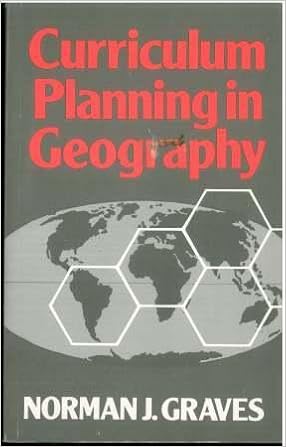
Curriculum Planning in Geography;
Geography in Secondary Schools,
The Education Crisis;
School Textbook Research: the case of geography;
Editor: Teaching Geography 
Series; New Movements in the Study and Teaching of Geography; 
New Unesco Source Book for Geography Teaching;
Initial Teacher Education;
Learner Managed Learning;
Working for a Doctorate;
Education and the Environment.

Norman Graves was GA President at a time when there were some financial issues for the Association. It had a deficit of around £10 000 and efforts were made to try to reduce expenditure to cope with the situation at the time.
https://www.jstor.org/stable/40569009?seq=1#page_scan_tab_contents

I contacted Norman by e-mail in August 2019, and he passed through the following information to me, along with the image which is included at the top of the blog post. The image shows Norman speaking at the 1976 IGU Conference in Leningrad, Russia.

Thanks to Norman for the following information on this entry, which he provided for me. He is the 2nd 'oldest' GA President to be alive, (and also the oldest as it happens I believe) and therefore able to offer me his own personal perspectives, following Sheila Jones' memories from her time as President in 1975 in an earlier blog post.

Norman was born in Sainte Adresse, Seine InfƩrieure (now Maritime), France, and lived there briefly before moving to the UK.

Education:
Ecole Communale de GarƧons de Sainte Adresse,1931-35
London: Finsbury Park Junior School, 1935-36;
Tollington Park Central School, 1936-38;
Highbury County Secondary School, 1938-41;
The Polytechnic, Regent Street 1945-46 (part-time);
The London School of Economics and Political Science, 1946-49 (2 years part-time, 1 year full-time) - the LSE links with the GA are very strong
The University of London Institute of Education, 1949-50 (full-time). Subsequently, part-time study for higher degrees, 1952-63.

Employment
Norman started working life in 1941as a "Youth in Training" in the Post Office Engineering Department, then as a Technical Officer in the Engineer in Chief's Circuit Laboratory until 1948.

Teacher of Geography and Economics at East Ham Grammar School for Boys, 1950-54; responsible for Geography at Borough Beaufoy Secondary Technical School in Lambeth, 1954-58; Head of Geography and housemaster at Malory Secondary Comprehensive School in Lewisham,

Good to see another GA President who had spent time as a teacher of geography.

1958-60: Lecturer in Education at Department of Education University of Liverpool 

1961-63: Senior Lecturer in Education

1963-74: Reader in Education at the Institute of Education.

In an e-mail communication, Norman told me that he
1974-78: Professor of Education
1978-80: Robert Ogilvie Professor of Geography Education
1980-90: Pro-Director Professional Studies

When he became GA President he was working as Professor of Education at the IOE (UCL)


Norman told me:
"I entitled my Presidential Address "Contrasts and contradictions in Geographical Education". In the 1970s, I expressed the tensions which existed between the scientific nomothetic approach manifest in the then conceptual revolution, and the ideographic and humanistic approach epitomised in Yi Fu Tuan's book 'Topophilia'. "

He also said:
"Contradictions were evident in the attitudes of teachers who had difficulty in reconciling the instrumental aims of education, for example, coaching students to pass examinations, and the intrinsic mind-opening aims of guiding students to question the validity of certain theories, for example the Davisian view of landscape evolution."

This is an ongoing issue for many - dealing with the question of "is this on the test?" and making time for those additional discussions and criticality which helps build geographical thinking.

Norman told me: "I joined the GA as a student and maintained my membership throughout my career. I found it useful to read its publications and attend its meetings and Annual Conferences where I could discuss with other teachers our teaching problems."

Here's Norman's Curriculum Planning Model, which has stood the test of time as far as I can see.


Here's a publication that Norman produced for the GA during this period.
Of his association with the GA Norman said:

"The GA was a professional association of geography teachers whose meetings and publications provided me with in service development, which at that time was not provided by my first employers. I subsequently participated in the "training college" section and contributed occasional lectures, but my main contributions were to the GA's publications. For example: articles in" Geography"; A Tropical Peasant Holding in Ceylon in Asian Sample Studies (169); Geography in Secondary Education (1971); Geography in Education: a Bibliography of British Sources (with Clare Lukehurst, 1972); Geographical Education in Secondary Schools (1980); I also edited the series "Teaching Geography" (1968-72)."

Norman told me of his wider work in the field of Geographical Education which included his chairmanship of the Commission on Geographical Education of the International Geographical Union, his membership of the Schools Council Geography Committee and its Geography 16-19 Project led by his colleague, Michael Naish. 

A report on the work of the Commission on Geographical Education was written by Norman as Chairman and published in 'Geography' in 1980


Graves, N. (1980). THE COMMISSION ON GEOGRAPHICAL EDUCATION. Geography, 65(3), 230-231. Retrieved August 26, 2020, from http://www.jstor.org/stable/40569278
He also recalls being asked to lecture to various GA local branches in Oxford, Bristol and Leicester, and attending the Scottish Geography Teachers Association conference in Edinburgh - something I've done many times myself, and now with a reciprocal arrangement with the SAGT for our conferences.

He also sent some memories recently about his links with the previous GA President Stan Gregory:

Stan Gregory and I were students in the Joint School of Geography which was then shared by Kings College and the LSE, though he did a straight Geography degree while I did a BSc (Econ) which actually included a course in statistics which proved useful during the quantitative revolution. 
Our paths crossed again in Liverpool when I joined the Education Department, while he was in the Geography Department headed by Professor Steele at that time.

Along with Michael Naish, he wrote an important publication for the GA called 'Profiling in Geography', which was published in 1986.

Norman was awarded the RGS's Victoria Medal in 1993.

A picture of Norman Graves still hangs in the office at UCL which is used currently by Alex Standish, previously used by David Lambert and John Morgan. Alex kindly took a photo of it for me some time ago and shared it with me for use on the blog.


And here's the book that perhaps will be most well known to many of a particular age: the classic textbook that was used in schools and which was part of my own 'A' level studies. This is my own personal copy which is part of my growing library of textbooks which I have been collecting as part of this project.


References
Norman Graves (2008) Reflections on a Life in Geographical Education, International Research in Geographical and Environmental Education, 17:1, 1-5, DOI: 10.2167/irgeeed171.0

https://www.ucl-ioe-press.com/books/history-of-education/school-textbook-research/

https://link.springer.com/article/10.1007/BF02736948

REF: https://impact.ref.ac.uk/casestudies/CaseStudy.aspx?Id=44328 - mentions how the APG that I worked on, and the work of David Lambert built on Norman's work:

It develops Norman Graves's innovative work at the IOE in the 1970s and 1980s on the theory and application of `rational curriculum planning' in school geography.

Also a mention from Brian Hobbs: https://www.asdan.org.uk/blog/2013/02/19/a-geog-down-memory-lane as part of the GA's work to create an ASDAN course.

IGU:
http://www.igu-cge.org/wp-content/uploads/2018/02/The-IGU-Commission-on-Geog-Education-modified-0915.pdf

GRAVES, N. (1978). Changes in Attitude towards the Training of Teachers of Geography. Geography, 63(2), 75-84. Retrieved August 25, 2020, from http://www.jstor.org/stable/40568886
Non-GA book publications may be grouped into three groups: 
1 Text books: 
North America and Asia 1966 (with R C Honeybone), Geography of The British Isles 1971 (with John White), People and Environment 1987 (with John Lidstone and Michael Naish) 
2 Academic books on geographical education: 
eg Geography in Education (1975), Curriculum Planning in Geography (1979), School Textbook Research: The case of geography (2001); New Movements in the Study and Teaching of Geography (Editor, 1972); New Unesco Source book for Geography Teaching (Editor 1982) 
3 Academic books on education: 
eg The Education Crisis: Which way now, (1988); Initial Teacher Education: policies and progress (Editor 1990); Working for a Doctorate (Editor 1997); Education and Environment (Editor 1998)

Image: top image supplied by Norman Graves, office photo by Alex Standish, textbook image by Alan Parkinson

Please pass through any other memories of Norman Graves influence on your own practice.

Update September 2020
Norman kindly sent me a range of items to help this (and other) posts, including a copy of his article Reflexions on his career and on geography education, which was published in IRGEE journal in 2008. It contains further thoughts which has its own blog post in October 2020.

Additional details added in November 2020.

Simon Catling sent me the following memory:

"I have enjoyed reading your blog on Norman Graves, the inspiration for many of us. When I did my MA in geography education at the Institute in 1971-3 (the 3rd or 4th year it ran, I think) I was one of a group of 4 students. We had superb seminars where one of us would read our essay for that week (we wrote 24 essays over the 3 terms of the year, weekly) and then it would be debated. Alongside Norman, Molly Long, Bertie Roberson and Michael Naish were our tutors. It was a fascinating, invigorating, rigorous and very informative first year of the MA. Mick Naish supervised my MA thesis. I think that was, part-time on a Monday late afternoon, an invaluable course for my geographical education. The reading, thinking and writing was a very real education, demanding but just right.

While a young primary teacher I did two week long courses which were influential. In early 1975 I did a Place, time and Society 8-13 course run by Ray Derricot, Hazel Sumner and Gordon Elliot at an ILEA centre. In early 1978 I did an environmental course at Avery Hill College in Eltham, run by Colin Ward. Both were influential in my thinking. 

Gordon Elliott introduced me to a producer at the BBC which led from the autumn of 1975 to me being an adviser, alongside Michael Storm (who had just become the geography adviser in the ILEA), to a new series of primary geography programmes."

Check out Michael Storm's entry on the blog as well.

Updated July 2022

I prepared a paper for the IGU 2022 in Paris - the centenary event and was invited to chair a session. A link back to the work of Norman.

Archive material is also available apparently at the IoE - I wonder whether I might be able to get access to this material in the new academic year.


It includes handwritten notes by Elisie Beaver (the wife of Stanley?) and also mention of James Fairgrieve and also Robert Ogilvie Buchanan in these papers. They include handwritten notes on lectures related to curriculum development.

Updated August 2023

A family photo on Facebook showed Norman is still around and enjoying another French summer with family. Good news.

Updated January 2024

Again via Facebook, January 28th was Norman's 99th birthday. The oldest living GA President. Coincidentally I started a presentation at the Geography Teacher Educators' Conference with a messsage Norman sent me when I started writing this blog.

Margaret Mackintosh RIP

Updated post. Sad news at the end of last week from colleagues who have organised the Charney Conference over the years of the passing of Ma...