 Updated August 2021
Sir Josiah Stamp was not an obvious President of the GA, with no apparent geographical education background, but a great deal of influence.
He did, however, have a high public profile, and this was a period when non-geographers were given the Presidency, as mentioned previously. He was also apparently a very wealthy man because of his links with the Bank of England.
This was already changing to a period when GA officers were rewarded for their long service, such as the previous President.
Stamp's background was in railways. He was the Chairman of a number of railways.
He was the third of seven children, and his youngest brother was L Dudley Stamp, who later became President of the GA in 1950, and one of the most prolific authors of geographical support material for teachers.
These are the only brothers to have been GA Presidents.
I wonder whether other GA Presidents have brothers with a geographical background? I can't think of many brother and brother/sister geographer teams.
Stamp became a civil servant, and worked as a tax inspector at first, alongside his studies in economics.
In 1919 Stamp changed career, leaving the civil service for business, to join as secretary and director of Nobel Industries Ltd, from which Imperial Chemical Industries (ICI) developed.
In 1928 he was appointed a director of the Bank of England.
He was remembered in an issue of 'Geography' in 1941

Image credit:
Josiah Charles Stamp, 1st Baron Stamp of Shortlands
by Lafayette
whole-plate film negative, 21 March 1930
NPG x70222
© National Portrait Gallery, London
Shared under CC license
References
Wikipedia: https://en.wikipedia.org/wiki/Josiah_Stamp,_1st_Baron_Stamp
I amended this entry to add his GA Presidency role, as I have with all the others who have Wikipedia pages. If anyone knows more about this interesting person's work while at the GA, please get in touch.
Bibliography: http://www.steamindex.com/people/stamp.htm
https://www.norwoodsociety.co.uk/articles/129-josiah-stamp-1st-baron-stamp.html
https://sydney.edu.au/secretariat/senate-committees/honorary-awards/Citations/Pre-2016/S/Citation_Sir_Josiah_Stamp.pdf - an Honorary degree from the University of Sydney
Remembrance: “LORD STAMP.” Geography, vol. 26, no. 2, 1941, pp. 87–87. JSTOR, www.jstor.org/stable/40562086.
Books - he wrote many - on the Internet Archive: https://archive.org/search.php?query=%28%28Josiah+Stamp%2C+1st+Baron+Stamp%29%20OR%20%28%221880-1941%22%20AND%20Stamp%29%29%20AND%20%28-mediatype:software%29
Presidential Address:
STAMP, JOSIAH C. “GEOGRAPHY AND ECONOMIC THEORY.” Geography, vol. 22, no. 1, 1937, pp. 1–14. JSTOR, www.jstor.org/stable/40560061

Sir Josiah and Lady Stamp perform the opening ceremony of the new Sandilands esplanade in Saltcoats.
Preservation of this film supported by the National Heritage Memorial Fund.
He did, however, have a high public profile, and this was a period when non-geographers were given the Presidency, as mentioned previously. He was also apparently a very wealthy man because of his links with the Bank of England.
This was already changing to a period when GA officers were rewarded for their long service, such as the previous President.
Stamp's background was in railways. He was the Chairman of a number of railways.
He was the third of seven children, and his youngest brother was L Dudley Stamp, who later became President of the GA in 1950, and one of the most prolific authors of geographical support material for teachers.
These are the only brothers to have been GA Presidents.
I wonder whether other GA Presidents have brothers with a geographical background? I can't think of many brother and brother/sister geographer teams.
Stamp became a civil servant, and worked as a tax inspector at first, alongside his studies in economics.
In 1919 Stamp changed career, leaving the civil service for business, to join as secretary and director of Nobel Industries Ltd, from which Imperial Chemical Industries (ICI) developed.
In 1928 he was appointed a director of the Bank of England.
He was knighted in 1920.
Stamp refused to be moved out of his house, in Park Hill Road, Shortlands, because of German bombing during The Blitz. He, aged sixty, and his wife were killed by a bomb's direct hit on the air-raid shelter at their home on 16 April 1941. They were buried at Beckenham Cemetery.
He joined the railway company LMS and served on many committees in this regard.
From 1927 until his death he was Colonel commanding the Royal Engineers Railway and Transport Corps, and became Honorary Colonel of Transportation Units in the Royal Engineers Supplementary Reserve in 1938.
Here he is, on YouTube, speaking in 1931... about savings... another early sighting of a GA President.
And here on Pathe News talking about the "Gold Standard" in his role at the Bank of England.
Stamp was widely regarded as the leading British expert on taxation, and took an active part in the work of the Royal Statistical Society, serving as its president from 1930 to 1932.
Here he is, on YouTube, speaking in 1931... about savings... another early sighting of a GA President.
And here on Pathe News talking about the "Gold Standard" in his role at the Bank of England.
Stamp was widely regarded as the leading British expert on taxation, and took an active part in the work of the Royal Statistical Society, serving as its president from 1930 to 1932.
He also served as the Mayor of Beckenham in Kent. He was raised to the peerage on 28 June 1938 as Baron Stamp of Shortlands, Kent.
His GA Presidential Address was not surprisingly on Economic Geography.

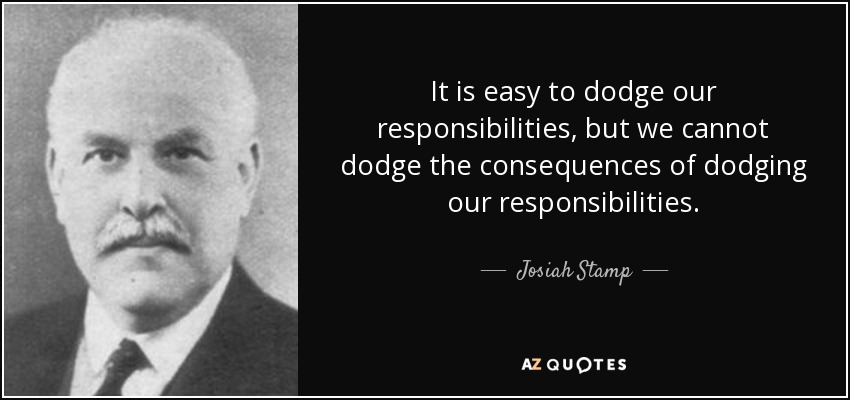
I like this quote attributed to him, a timely one:
Also from his
His GA Presidential Address was not surprisingly on Economic Geography.

I like this quote attributed to him, a timely one:
Also from his
Wikipedia page, we get the story of his untimely death.
Stamp refused to be moved out of his house, in Park Hill Road, Shortlands, because of German bombing during The Blitz. He, aged sixty, and his wife were killed by a bomb's direct hit on the air-raid shelter at their home on 16 April 1941. They were buried at Beckenham Cemetery.
Ironically in 1935, he had been a founder member of the Anglo-German Fellowship and had made low key visits to Nuremberg in 1936 (when he met Adolf Hitler – whom Stamp noted was a "statesman and demagogue combined").
He was remembered in an issue of 'Geography' in 1941

Image credit:
Josiah Charles Stamp, 1st Baron Stamp of Shortlands
by Lafayette
whole-plate film negative, 21 March 1930
NPG x70222
© National Portrait Gallery, London
Shared under CC license
References
Wikipedia: https://en.wikipedia.org/wiki/Josiah_Stamp,_1st_Baron_Stamp
I amended this entry to add his GA Presidency role, as I have with all the others who have Wikipedia pages. If anyone knows more about this interesting person's work while at the GA, please get in touch.
Bibliography: http://www.steamindex.com/people/stamp.htm
https://www.norwoodsociety.co.uk/articles/129-josiah-stamp-1st-baron-stamp.html
https://sydney.edu.au/secretariat/senate-committees/honorary-awards/Citations/Pre-2016/S/Citation_Sir_Josiah_Stamp.pdf - an Honorary degree from the University of Sydney
Remembrance: “LORD STAMP.” Geography, vol. 26, no. 2, 1941, pp. 87–87. JSTOR, www.jstor.org/stable/40562086.
Books - he wrote many - on the Internet Archive: https://archive.org/search.php?query=%28%28Josiah+Stamp%2C+1st+Baron+Stamp%29%20OR%20%28%221880-1941%22%20AND%20Stamp%29%29%20AND%20%28-mediatype:software%29
Presidential Address:
STAMP, JOSIAH C. “GEOGRAPHY AND ECONOMIC THEORY.” Geography, vol. 22, no. 1, 1937, pp. 1–14. JSTOR, www.jstor.org/stable/40560061
Updated August 2021
It is easy to dodge our responsibilities - Sir Josiah Stamp (1080x900)
— The Wisdom Post (@thewisdomposts) May 10, 2020
⚡️RT IF YOU AGREE🔥#motivation #quotes #motivationalquotes #getmotivated #nlp #selfimprovement pic.twitter.com/Ek7tY9C4rB
This old film shows him opening a new Esplanade at Saltcoats. A film which has his voice once again.

Sir Josiah and Lady Stamp perform the opening ceremony of the new Sandilands esplanade in Saltcoats.
Preservation of this film supported by the National Heritage Memorial Fund.


