Showing posts with label Cambridge. Show all posts

Tuesday, 6 April 2021

2006: Keith Grimwade

Updated October 2023

When Keith Grimwade became President, he was working as the Head of Professional Development for Cambridgeshire County Council, with responsibility for the Schools Advisory Service, as well as training and development for the Council’s Children’s Services staff.


I have had the pleasure of knowing Keith for many years, and have continued this friendship partly through his association with the Cambridge GA Branch. This is my local branch, and I have had the pleasure of speaking to students there quite a few times. Our paths have also crossed en route to the GA Conference in the past. He organises social event for the GA Cambridge branch to the present day, and regular attends meetings. The Pandemic has paused this activity for a while, although the GeogMeet and Worldwise Quiz continues thanks to a lively committee. 

As with more recent Presidents, much of this entry has been written thanks to contributions from Keith to a questionnaire which I sent round to as many Presidents as possible.

Keith was born in 1957 in Southend on Sea, in Essex. He spent five years in London.

He told me, "I benefited from two very skilled teachers who saw my interest in geography and knew how to nurture it.

First, there was Miss Foster, my Year 3 teacher at Prince Avenue Junior School. 
We had to choose reading books from a trolley and I picked out a book about Thailand that was far too hard for me to read but I was fascinated by the photographs. Miss Foster let me keep it, so while my classmates were developing their reading skills I was absorbing images of Thailand, and then I moved on to other countries in the subsequent weeks.

Second, there was Jim Alves, my geography teacher at Southend High School for Boys. He led a school trip to the Lake District at the end of my first year. I had never been on holiday and the whole week was an amazing experience. I remember studying an OS map at the top of Cat Bells. Mr Alves looked over my shoulder and began to point out features. The map came alive, I could now see it in 3D and I was hooked. So, I think I’ve always been a geographer and I’ve spent my life looking at photographs and OS maps, and not much else! I read geography at Jesus College, Oxford - it was an alien culture (these days I would be helping their ‘disadvantaged background’ quota).
Not all of the teaching was that good, to be honest, but the opportunities and access to resources were phenomenal and ideal for someone who was quite happy to work independently and plough his own furrow.
The mid to late 70s was also an exciting time to be an Oxford geographer because having lost out to Cambridge and elsewhere in the quantitative revolution, it was just beginning to pull ahead with its work on the environment and climate, led by someone else who was to become a GA President, Andrew Goudie".
Andrew has his own entry on the blog of course, with plenty of contributions from Andrew himself.

In terms of his teacher training, Keith told me:

I did a PGCE at Goldsmiths and was accepted into the ILEA ‘pool’, having been interviewed by another future GA President, Michael Storm. I requested a posting in a mixed comprehensive in NE London, so they sent me to Henry Compton Boys School in Fulham. I know that ‘it was a rough, tough school’ is a bit of a cliche but it really was but I learnt a lot about how to motivate a wide range of abilities and manage a wide range of attitudes and behaviours very quickly. I was there for 5 years and then became Head of Geography at Hinchingbrooke School, Huntingdon, where I stayed for 12 years.
In 1997 I joined Cambridgeshire County Council as County Adviser for Geography, and I stayed there until my retirement at the end of 2017, having been Director of Education for the last 5 years of my career.

In the 80s / 90s and early 2000s I authored / co-authored a range of curriculum materials and text books, and regularly contributed to the TES.

His Presidential theme was ‘The Future of Geography’. Keith says:
"we were twenty years on from the original National Curriculum debates and in something of an existential crisis. I re-visited the Case for Geography (which has had its own post on the blog previously) and explored possible, probable and preferred futures. 

My sub-theme was young people’s involvement in curriculum making. I managed to combine both into my Presidential Address. 

My route to becoming President was via the Secondary Education Section Committee (on which I also served for 14 years) and the Education Standing Committee, and I was encouraged, supported and guided by two wonderful but very different geographers,
Patrick Bailey and Roger Carter.

Read Keith's Presidential Address here:

It is called 'The Future of Geography'.
(Slideplayer)
In it, he considers the new National Curriculum and some strategies for the future.
He also mentions the Young People's Geographies project, which I was involved in.
Keith told me back in 2019 why he believes the GA matters.

"Geography teachers need a ‘community of practice’ - that is the GA, it’s one and only unique selling point - that is why the GA matters. I joined the Secondary Education Section Commitee in 1991 and was involved with many committees, including chairing the Education Standing Committee. I have been a long-standing member of the local branch, helping to keep it going through some difficult times, and I have just attended my 35th consecutive annual WorldWise quiz local round; and I still don’t know all of the answers."
He told me that:

"My Presidential year was the highlight of my professional career as a geographer. It is, of course, part of a 4 year term (Junior, Vice, President, Senior) so ‘achievements’ are spread out over a period of time. 
The big curriculum initiative was the Action Plan for Geography. 

Lord Adonis was a great supporter of geographical education but could not understand why we had the RGS/IBG and the GA - politicians prefer dealing with just one organisation. Negotiating and securing the GA’s distinctive role was, I think, one of my biggest achievements, much of which went on behind closed doors and could not be broadcast. 
I keep a letter from Lord Adonis acknowledging my work, and recognising the GA’s contribution. I also helped the GA develop its strategic framework."

He also talked about the importance of David Lambert to the GA, something I certainly appreciated when in post.

"My biggest achievement was probably retaining the services of David Lambert, who was in danger of heading off to the Institute of Education full time; David did for the GA what few, if any, others could have done over the next few years."

He was also mentioned by Jeremy Krause as being very supportive.

Ketih finished with some thoughts:
These days, I attend GA events mainly for social reasons.

What really gives me hope for the future is the energy and enthusiasm of our young teachers. They will spark a lifelong love of our subject in many ‘young Grimwades’ in the years to come. And the GA must remember that its purpose is to support their passion.

Keith was also influenced by the work of the GeoVisions project.

Keith Grimwade reflects on Geo Visions as “one of the most enjoyable and influential projects that I have been involved with …” in his 2007 Presidential Address [reported in journal 'Geography' Autumn 2007]. He highlighted the strap line:

‘Create the future … don’t just let it happen’


“ The GA adopted GeoVisions under Di Swift’s leadership (see more in Di's own blog post) and over a period of two years it inspired a range workshops and publications including the GA’s [2002] Position Statement on Geography and it initiated the GA's involvement with ‘third stream’ activities. GeoVisions introduced many of us to possible, probable and preferred futures and, I now realise, to my presidential theme. To create the future of geography rather than just letting just happen we need a strategy for change.”
Keith retired as Director of Learning at the end of 2017 after 37 years in education.

He continues to be generous with his time in the local community, and to support the work of the Cambridge GA Branch.

He is also a Governor of the Cambridge and Peterborough NHS Foundation Trust.

He is also a supporter of Peterborough Football Club, who I have been to see play with colleagues from Ely.

References

GRIMWADE, KEITH. “Presidential Address 2007: The Future of Geography.” Geography, vol. 92, no. 3, 2007, pp. 175–178. JSTOR, JSTOR, www.jstor.org/stable/40574331


Image copyright: Geographical Association and Bryan Ledgard - used with permission

Any further memories of Keith welcome. 

Updated October 2023

Keith is the guest on a podcast, exploring ideas of Hope. It was published on October 17th 2022.
He speaks openly about his career and personal challenges, and connection with caring.

He talks about his career in education: 20 years as a geography teacher, and later as an education administrator for Cambridgeshire, and as the county's adviser for geography.

He describes again the influence of his teacher Miss Foster, and his love of Ordnance Survey maps.

He retired at the end of 2017.

It's lovely to hear Keith talking about his "hope kit".


Thursday, 1 April 2021

2003: Building Sustainable Communities

Building Sustainable Communities was a GA project which was run in association with the Academy for Sustainable Communities, which later became the Homes and Communities Agency, but was then subsequently replaced again by Homes England... can't keep up with these governmental changes....

Building Sustainable Communities arose from two linked ideas. First of all the idea of living geography - at home and outside the front door - one of the GA's key concepts and one which we've developed over a number of years through our project work. The second was about participation now and for the future - how do students make a positive contribution to the community and how will they develop skills which will contribute to their future economic well-being?

The project also asked two questions: 'What is meant by sustainable communities?' and 'How do geographical skills lead to engagement?'
One of several projects involving the GA over the last few decades. They will feature on this blog in time.


To support the project, groups of teachers were engaged in action research in four regions - Kent and Medway, Milton Keynes and South Midlands, Humberside and Plymouth and South Devon.

The project was ultimately involved with the creation of  this DVD, which I still have a copy of.

This fed into the development of a unit in the OCR Pilot GCSE Geography, which was on Sustainable Communities.

More details here. (PDF download)

Main image: Eddington Sustainable Community in Cambridge - fieldwork day - Alan Parkinson - shared under CC license

Friday, 5 March 2021

2002: Chris Kington

Many geographers will be familiar with Chris Kington's publishing output.
His Publishing included some classic books for geography teachers including David Leat's 'Thinking through Geography', Liz Taylor's 'Representing Geography', 'Living Geography', and Rex Walford's 'Games in Geography'.

Many of these spiral bound books sit by my desk in my classroom, or on my shelves at home, along with others. Chris worked mostly in educational publishing (school books and books for teachers). He also spent time in magazines, newspapers and broadcasting.

Chris is delightful company and has been a member of many of the GA's overseas Study Tours over the years. 
He was born in Bristol (another President with a link to the city) in 1946. He remembers bombsites still around in the city during his childhood. He told me about his education:
Education:
Speedwell Boys' School, Bristol.
He enjoyed making models, and remembers a geography teacher called Mr. Alves who drew amazing chalk diagrams on the board, and also a neighbour who sent postcards from exotic overseas locations. While at school he won a prize and was able to choose a book, and chose 'Human Geography' by D C Money. 
Failed 11+ (an early bi-lateral later to become comprehensive).
He was in the frst cohort to form a sixth form and the first to go to university (I think 5 of us)
He studied at the University of Exeter, for a BA in Geography.
Here, he came across the teaching of Peter Toyne, who had come under the influence of Haggett and Chorley.

He describes himself as an 'outsider President' in that he was not from a geographical background, although he completed a geography degree at the University of Exeter.
One early previous outsider President was the author Hilaire Belloc, early in the 20th century, who has been previously featured here on the blog.

He started his Presidential address by saying: "I am not an academic. I am not a practising geographer. But I am a geography graduate and I have been involved in aspects of geographical education and with the GA for the best part of 30 years."

Chris's Presidential theme was "Valuing Geography", although he said it could just as easily be "Valuing Geographers". 

His Presidential address was entitled:
"You can't judge a book by looking at the cover."
It is very well worth reading, as it goes through some of the changes in textbook publishing which those of us who have been teaching for a while will remember. 
Chris himself says that it is about:
"...the wow factor in the classroom, the sparks that lit the fire in the young mind and the desire for concerned teachers (in particular) to win back control of the curriculum and the control of their professional lives in order they could realise the ambitions that took them into the classroom in the first place."

He mentions early texts such as Preece and Wood, and Rex Walford's book on School geography, before talking about his own publishing career and various encounters with geographers. He mentions a Bill Marsden book which he also loaned me: 'The School Textbook" (2001)
He also looked ahead to the future for publishing, which 19 years on has been proved to be quite prescient:
"the future knowledge economy will rapidly change our perception of how learning takes place as content is increasingly commoditised and contextualised and print and broadcast media merge together. This is the challenge for the government and for the Geographical Association too."

His Presidential address ends as follows:
"I am concerned that the children we teach better become not just better geographers, but better people as a result of studying geography".

He has worked with some famous geography authors, including Harry Robinson, who was Head of the Geography Department at Huddersfield Polytechnic just before I started my degree there in the early 1980s, D C Money - who I have mentioned in previous posts and Vincent Tidswell - my PGCE tutor at Hull University and someone else who I have blogged about previously. He also mentions Bill Chambers and Karl Donert working on a book together, and the involvement of Mary Biddulph: another former GA President.

Chris told me about his various roles within the GA, many of which I had been unaware of.

"I have kept my hand in throughout my working life with geography - Trustee of Field Studies Council, a Non Executive Director of the Ordnance Survey (both of whom subsequently became major supporters/strategic partners of the GA), and three stints of six years each on the GA Council."

In 1987(ish?) Bryan Coates (who was then Honorary Treasurer, but later to be President himself) asked me to conduct the Strategic Review of the GA which took three years to develop then two years to get through Council and a further five years to implement (a decade of work in total) - including the appointment of the new roles of Chief Executive, Finance Director, setting up a proper publishing and marketing arm to the business and a re-focus on (Continuing) Professional Development.

This moved the GA from being an organisation with many volunteers in key voluntary positions to a professional Association with salaried officers, and also brought Richard Gill and others into the GA story,

Thanks partly to the work of Chris Kington before his Presidency we have the GA as it currently stands, and which I helped all aspects of while working at Solly Street. Something that, looking back, I hadn't fully appreciated. Chris is also still active in the GA Cambridge Branch, and was chair for 5 years. He hosts events, and leads guided walks for members each year and also supports ITE students. This work will continue once we are able to move more freely again I am sure.

Chris is also one of the founding member of the Worldwise Quiz (along with Rex Walford, Mike Morrish, Ellie Rawling etc) - plenty more on those Presidents in their own blog entries of course as Former Presidents.

Chris still lives in Cambridge and I have met up with him several times in recent years. One of the great things that Chris did to help me with the blog project was to unearth a range of letters from former Presidents which he collected for his own Presidential years.

These explore the 'spark' which led to their initial interest in geography, and have been mentioned in the posts of a lot of recent Presidents.
Of his achievements he said:
I convened the Strategic Review which took 5 years to work through and to implement and a further 5 years to work throughout the system. Broadly this advocated: 
1) the move from an organisation run and managed by good hearted amateurs to one run by appropriately qualified professionals. Appoint a full time Chief Executive and a qualified Business Manager. 
2) a focus on the increasing professional requirements of teachers as the nature of the subject, schools and exams changed. 
3) the provision of high quality CPD and publications through all phases of schooling and teacher training. 
4) the re-organisation of the entire GA to reflect these new demands whilst re-committing to a Branch structure. 
5) asserting professionalism at all levels and the primacy of the Annual conference and its professional journals - something that remains very important.
6) anticipating technological innovation (mostly unspecified) and need to equip both teachers and students for a changed brave new dynamic world.

I last saw Chris at the FSC 75th Anniversary event at the Linnean Society in London just a few months ahead of the lockdown. Since the lockdown in March 2020, Chris has been treating his followers on Facebook to a daily poem. I'm looking forward to being able to return the letters and books that Chris loaned me in due course.

References
See Chris Kington publications - for sale by resellers and from other bookshops.
'Thinking through Geography 1 and 2' - David Leat, Adam Nichol et al
Also books with Fran Martin (former GA President) and Jeff Battersby
'Representing Geography' - Liz Taylor - still an important book and one I got a 2nd hand copy of recently so that I could reread a section for a project I was writing.
A photography pack with Harry Cory Wright, with Primary and Secondary handbooks was also excellent. It is reviewed here for TES by former GA President Keith Grimwade.
'Contemporary Approaches to Geography' - 2 volumes written by Charles Rawding
'Living Geography' - a number of authors with GA connections, including several GA Presidents - edited by David Mitchell

I also have a copy of 'Reading our Landscapes' by Charles Rawding which won a GA Silver Award

Image copyright:Bryan Ledgard and the GA (from Flickr account) at the 125th Anniversary event.
2nd image courtesy of Joseph Kerski

Sunday, 28 June 2020

Sir (Henry) Clifford Darby

Clifford Darby was never a GA President, but he was associated with the GA in some ways, and was certainly a significant figure in British Geography.

He was present at the 50th anniversary celebrations of the GA's Cambridge Branch, as featured in a previous blog post.

This piece from the British Academy gives a detailed biography of his life and geographical achievements, which were many.
(PDF download)

He was able to gain a scholarship to Cambridge from his village in Wales where he was born in 1909. He lived in lodgings as he couldn't afford the college lodgings. His tutor was former GA President Alfred Steers.
He was also connected with several other former GA Presidents.

Early in his academic career, he was chosen to assist Frank Debenham with some research in Southern Africa. When he returned he used his experiences in his other work.
His dissertation was on the role of Fenland in English history. His early work was a little deterministic, but he reworked it later for a different emphasis on the changing landscape and the draining of the Fens. An area of personal interest given the location of my school in Ely. Not everyone at the University was as encouraging - I liked this story:

His supervisor was Bernard Manning - not the comedian.
He was involved in conversations between the GA and the Historical Association following a joint meeting on "the new historical geography" in 1932. He shared the Common Room with a range of interesting characters including M.R. James (who also wrote about East Anglia)
He also assisted George Philip in the production of their atlases.

During the Second World War, as shown above, he joined many other geographers in helping with the war effort.

In 1945, he took over from another former GA President Percy Maude Roxby at the University of Liverpool.
He took over from Alfred Steers on his retirement in 1966 at the University of Cambridge, having also spent time at UCL (an insitution with strong connections with many former GA Presidents)
He died in 1992.

Source:
https://www.britannica.com/biography/Clifford-Darby
https://www.thebritishacademy.ac.uk/publishing/proceedings-british-academy/87/darby-henry-clifford-1909-1992/

Update: December 2020
In 2003, Chris Kington asked a number of former Presidents what had sparked their passion for geography. He lent me the letters and Dick Lawton mentioned the influence of Roxby and other geographers including Clifford Darby and Bill Mead on his own academic career at the time.
He says they taught him not only about geography, but how to be a geographer...

Sunday, 3 May 2020

1936: Founding of the GA Cambridge Branch

While doing some searching on Facebook for archive images of GA activity over the years, and trying to track down images of individuals, I came across this clipping from the newspaper, posted by Mike Petty, of the 50th anniversary celebrations of the Cambridge Branch of the GA in 1986.


There is a lovely origin story for the branch, with Edith Butcher pictured in the middle of the photo returning from a GA conference held in Sheffield and teaming up with one the original founders B. B. Dickinson, who had retired to Cambridge after finishing teaching at Rugby School.

Good to see Rex Walford here as well as Professor Clifford Darby (who deserves his own entry later, despite not having been GA President). They also had an address from Frank Debenham to kick start the branch.

Does any other GA Branch have similarly auspicious beginnings I wonder?

Wednesday, 11 December 2019

1952: Professor Frank Debenham, OBE

Last updated August 2023

Perhaps one of the most illustrious of all GA Presidents was Professor Frank Debenham.


2022 marks the 70th anniversary of his Presidency - a fact that appeared in my Presidential Address.

Frank Debenham was born in Bowral, New South Wales, and educated at the University of Sydney, where he studied geology.

Debenham took part in Captain Scott's Terra Nova expedition, and was a survivor of that fateful trip to Antarctica which ended with the death of the Polar party. He was a geologist on the expedition, surveying the mountains near McMurdo Sound, and also took over from the renowned Herbert Ponting (who took some of the most iconic images of Polar exploration ever) as expedition photographer when Ponting left in 1912.
He is shown on many of the photographs from that expedition, including the one shown here.

A knee injury, from playing football in the snow, apparently partly prevented him from going on the ill-fated Polar journey.
Just let that sink in for a moment...

I also caught him on the Blu Ray I have of 'The Great White Silence', emerging from a hut.
See the screengrab below.
The Epic of Everest & The Great White Silence [DVD & Blu-ray]


Debenham returned to Cambridge to write up his expedition notes, but the First World War intervened and he saw active service in a number of places, rising to the ranks of Major, before being wounded and returned home.

Image source: Public Domain

Image credit:
Herbert Ponting - National Library of New Zealand Reference Number: PA1-f-067-045-2
Frank Debenham and a plane table, during the Terra Nova Expedition 1910-1913 under the command of Robert Falcon Scott


Debenham was also the Director of the Scott Polar Institute in Cambridge between 1926 and 1946.

I have visited here many times, and am hoping to make a visit to see what further connections we can make with the GA during my Presidential year.

Debenham was also a fellow of Caius College, and Professor of Geography. I wonder whether they have further relevant material in their archive?

From the Cambridge University alumnus page:
Debenham was an Australian petrologist who had served on Scott's ill-fated Terra Nova expedition. He had originally arrived in Cambridge in 1914 to begin compiling records of the mission in the attics of the Sedgwick Museum, but then had been on service throughout the war. Debenham arrived at a time when a number of other polar individuals were also present within Cambridge: Charles Wright, who had also been on the Terra Nova, briefly lectured at Cambridge but continued to live in the area for much longer; Raymond Priestley, who had been with Shackleton on the British Antarctic Expedition of 1907-1909 was Assistant Registrar; and James Wordie, who would become Master of St John's College, and who had been a member of the crew of the Endurance. It was Debenham's dream to set up a polar research centre in memory of Scott at Cambridge, and he successfully won over the support of the Scott Memorial Fund to create it in 1920. The Scott Polar Research Institute (SPRI) continues to form an important part of Department life today, from its base on Lensfield Road.
The first candidates for the Geography Tripos sat the exam in 1920, resulting in 2 students receiving a 1st Class for their Part 2 exams, one of whom was JA Steers, who would go on to become Professor of Geography and Head of Department 1949-66.
When Philip Lake retired as Chair of the Department, he was succeeded by Frank Debenham, who became the Department's first Professor of Geography in 1933.
Source:
https://www.geog.cam.ac.uk/alumni/earlyyears/

Debenham travelled extensively in Africa, and published on such subjects as the water resources of arid regions, the construction of small earthen dams, the ecology of the Kalahari, and on David Livingstone.

Between 1951 and 1953 he was also Vice President of the Royal Geographical Society (yet another President who helped to connect the two institutions - this is a common thread through many of the blog posts, as those of you who have been following the blog will perhaps have noted)

Debenham's Presidential address, on the subject of Travel is well worth reading, taking place as it did in the GA's Diamond Jubilee year.
A few quotes from the Address are worth repeating here.

"Travel, either or own or that of others, is the very essence of geography... it can be satisfied to some extent when done by proxy, with the aid of imagination. In fact, both at the beginning of life and at its latter end, that form of travel - armchair travel - is the normal one... It is far more comfortable than real travel and can be just as exciting as your imagination likes to make it."

He follows with some important ideas on the importance of narrative where a book is

"a magic casement (window) through which, at will, they can gaze upon not only perilous seas and faery lands forlorn, but tropic isles and priate lairs..."

He gave some advice which I think would have gone down well with Frank Zappa.

"one can study a country in its biergartens.... nearly as profitably as at its Department of Statistics" (one for the Presidential lecture I think)

He moved on to advice for the traveller.

"In my opinion it is best to do your travelling as slowly as possible.... Shank's ponies by preference. If you must have transport of some time, let it be a donkey rather than a bicycle."

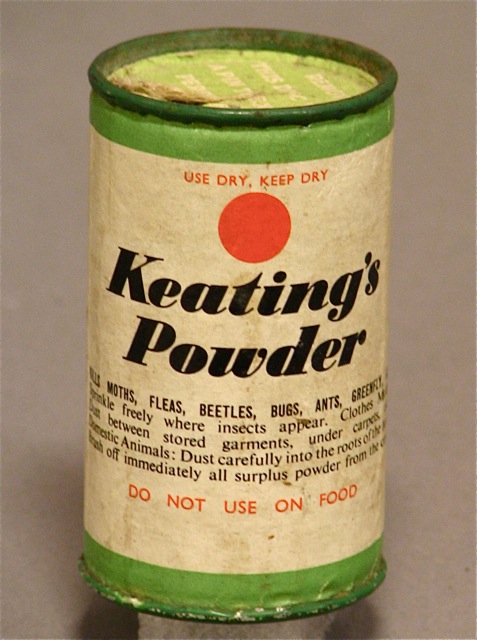
Image result for keating's powder"...it is always wise to travel comfortably, which is an entirely different thing from travelling in luxury.... get a good night's sleep... or even making sure you have a supply of Keating's Powder" 

"I would say that the better informed a man is before he visits a country, the more he will appreciate it; and certainly he will cause less annoyance to the local inhabitants who will not have to answer so many silly questions. I think that most of us could quote instances where fore-knowledge of what one was about to see was very helpful and timesaving..."

Debenham followed this quote by providing an anecdote from his time travelling with Captain Scott.

He was a great fan of sketching, rather than photography.

"It is only when you sketch a thing, be it a mountain or a cathedral or a native hut that you really take in its details and appreciate it fully. To my mind, the artist is the most skilled observer there is, and to observe with care is the duty of every geographer."

It is worth noting that Debenham's name really was put on the map:
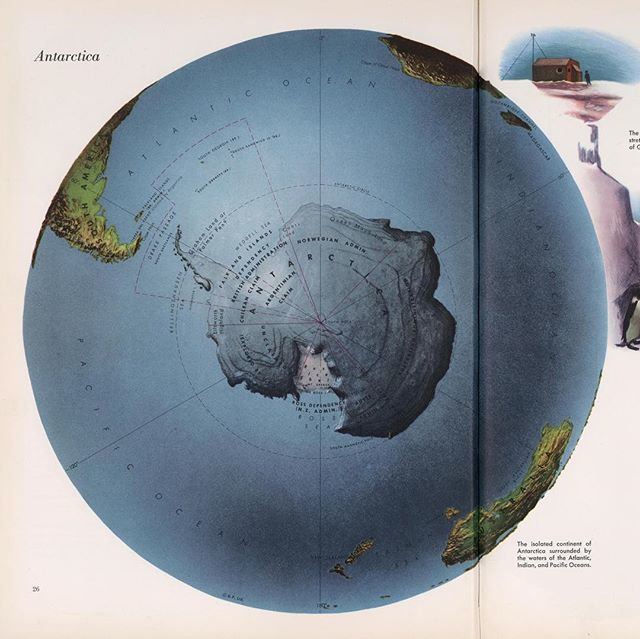
Debenham is commemorated in the Antarctic by Debenham Glacier (77°10' S 162°38' E), which flows into the northern part of Wilson Piedmont Glacier, the Debenham Islands (68°8' S 67°7' W), between Millerand Island and the west coast of Graham Land, and by Debenham Peak (67°21' S 50°26' E.) in the Scott Mountains.

A challenge for the readers: which other GA Presidents had landscape features named after them?
Some others appear on this blog, but there may be others...

Debenham was the author of a number of books on the theme of map making, and geography as a discipline. I am going to try to track a few of them down in the next few years. I have a few places to explore to get hold of copies.
I liked this passage from his book on 'Map Making' - which is accessible on the Web Archive site, as are many others of the early Presidents' books.

This is my kind of cartography, taking place on a pub table.

Quote attributed to him here.

Debenham's Ice Pick sold in March 2019 for £22 000.

References
Wikipedia page: https://en.wikipedia.org/wiki/Frank_Debenham

I have edited his Wikipedia page to reflect the fact that he was a President of the GA, as with all Presidents.

Debenham, F. “TRAVEL: Address to the Geographical Association.” Geography, vol. 38, no. 3, 1953, pp. 117–124. JSTOR, JSTOR, www.jstor.org/stable/40564829

Obituary: Steers, J. A. “Obituaries: FRANK DEBENHAM.” Geography, vol. 51, no. 2, 1966, pp. 150–151. JSTOR, www.jstor.org/stable/40566075.

Cambridge University Page: https://www.geog.cam.ac.uk/alumni/earlyyears/

Scott Polar Institute page: https://www.spri.cam.ac.uk/people/debenham/ with some biographic details - they will also presumably have some Archived material relating to his work and associations with the SPRI.

Books published: https://www.abebooks.co.uk/servlet/SearchResults?sts=t&cm_sp=SearchF-_-home-_-Results&an=Frank+Debenham&tn=&kn=&isbn= (ABE Books search)

Image: https://www.davidrumsey.com/luna/servlet/detail/RUMSEY~8~1~247001~5515217:View--Solar-System?sort=Pub_List_No_InitialSort%2CPub_Date%2CPub_List_No%2CSeries_No&qvq=q:space;sort:Pub_List_No_InitialSort%2CPub_Date%2CPub_List_No%2CSeries_No;lc:RUMSEY~8~1&mi=366&trs=470#

Image

As always, if you know more about the work of Frank Debenham while President of the GA, please get in touch.

I'll finish this entry with the final paragraph from Frank Debenham's Presidential Address

"Even though the geographer... has the ability to see more than others on his travels because he has cultivated special faculties for seeing, he will, I hope, remain a normal person. Though his work will give him infinite satisfaction, his keenest pleasure in travel will still come through his senses. 
Travel, to a geographer, should be a richer experience than it is to other people..... 
Bon Voyage, Good Travelling to you all..."

Update December 2019

There was a useful piece mentioning Frank Debenham that I came across in an unpublished thesis called 'A Frozen Field of Dreams'.
He was educated in Sydney, and had connections with the work of James Wordie and Raymond Priestley.

Extract from thesis above by Peder William Chellew Roberts and online here: https://purl.stanford.edu/qh833rs4632 (PDF) - start reading from around p.200 - p.220 contains a lot of information about Debenham's work at the RGS, SPRI and Cambridge University, as their first Professor of Geography.

More here too: https://www.amazon.co.uk/British-Geography-1918-1945-Robert-Steel/dp/0521067715 - I may need to get a copy of this to add some more detail to the early part of the century over time.
This has a lot more information about the work of Frank Debenham

Update June 2020
An excellent film from the East Anglian Film Archive (in 1961) was added to the SPRI Facebook page. It includes a clip with an interview with Frank Debenham - 50 years on from the Terra Nova expedition.


Lovely to hear the voice of a former GA President from almost 70 years ago.

Updated November 2020

Centenary of SPRI was in November 2020

The Scott Polar Research Institute was founded in 1920, in Cambridge, as a memorial to Captain Robert Falcon Scott, RN, and his four companions, who died returning from the South Pole in 1912. When Scott's last words, "For God's sake look after our people" were made known to the British nation, the response was tremendous. Scott himself had emphasised the importance of science and from this plea, the Institute was born.

Polar Museum

Frank Debenham, Geologist on the British Antarctic Expedition 1910-13 (Terra Nova), was the driving force behind the founding of the Scott Polar Research Institute. He wanted to establish a place that brought together polar researchers and resources for the improvement of polar expeditions and scientific investigation. Debenham asked that the new institute perform two roles: it should be a centre of study, preferably as part of a university, and it must also stand alone as a national memorial to Captain R. F. Scott and the men who died with him in the Antarctic. As Debenham and other veterans of the British Antarctic Expedition 1910-13 (Terra Nova) had found themselves in Cambridge writing up their findings, and, as Debenham argued, because Cambridge had 'furnished more polar scientists than all the other English universities put together', a home within the University of Cambridge was the obvious choice.


Source: https://www.spri.cam.ac.uk/centenary/past/

In November 2020, a Grace was granted by the University of Cambridge Senate, formally establishing the new Scott Polar Research Institute.

In its early years, the Institute occupied rooms above the Sedgwick Museum, where Frank Debenham was based as Emeritus Professor of Geography for the University of Cambridge Department of Geography. 


Updated April 2022 - following the GA Conference.

I used a few quotes and images of Professor Frank Debenham in my GA Presidential Address.

I also visited the Scott Polar Research Institute and found this book which I hadn't seen before and which was very useful in giving details of his career, although it doesn't mention his GA Presidency or anything that he did while holding the office.


More to come on this once I've read the book.

Here is the surveying equipment that Deb used in the Antarctic.


Plenty here on the origins of the Scott Polar Research Institute by Isobel Williams - loads of detail and images here.

Updated April 2023

A book that Debenham compiled on his time in the Arctic.


June 2023

Via the Facebook Sir Ernest H Shackleton Appreciation group.
Visit the post - why not join the group if interested.

The book is also available to purchase.


Updated August 2023

A mention in this piece on Cold War travels by Geography:

It references his GA Presidential lecture - which I also quoted from in my own:

Travel in mid-twentieth century British geography was the subject of Frank Debenham's 1952 Presidential Address to the Geographical Association, with travel presented as 
'the essence of geography' (Debenham 1953, 117), though not as 
'mere roaming . . . pleasant as roaming can be' (118). 
The geographer had the urge to 'travel intelligently' (119), and 'the ability to see more than others on his travels because he has cultivated special faculties for seeing' (124). Intelligence did not however preclude field pleasure: 'it is possible to be too earnest about one's purpose in travelling and to forget that one can study a country in its biergartens or at sundowner parties nearly as profitably as at its Department of Statistics' (119).


Margaret Mackintosh RIP

Updated post. Sad news at the end of last week from colleagues who have organised the Charney Conference over the years of the passing of Ma...