Showing posts with label Eton College. Show all posts

Wednesday, 30 October 2019

1947: Sir Alexander Morris Carr-Saunders

Clack and white portrait photograph of an elderly Alexander Carr-SaundersLast updated November 2023

Sir Alexander Carr-Saunders was another Economist and served as the former Head of the LSE. He is also described as a Sociologist and academic administrator. A building at LSE is named after him.

It is not surprising to see some connections between the LSE and the GA given their long-term hosting of the GA conferences, even into the 1970s.

He was born in Reigate in 1886 - the son of an underwriter - and was educated at Eton College. A few GA Presidents had that connection.

A British Academy biography describes the bullying he endured at Eton, which he described as "a convict ship"
He said he could learn nothing during term time, and left the school at 16, when he visited Paris and the Alps, and fell in love with the mountains there.

Perhaps this was the start of his love for Geography, along with mountaineering.


Carr-Saunders went to the University of Oxford, studing zoology initially.

He served in France and Egypt during the First World War as well - one of a generation of GA Presidents around the first half of the century to have experienced conflict and had their world view shaped by this.

On his return, he studied once again at Oxford, and during this time, he developed some ideas around Eugenics.
He was offered a Professorship in Social Science at the University of Liverpool, which allowed him to develop his thinking.
In 1943 he joined the Asquith Commission on Higher Education in the Colonies, and travelled widely during this time, having never previously travelled much at all.
He helped set up a lot of work in Colonial Universities through the next few decades and this is where his contribution to Geographical education began to flourish, and perhaps his potential as a GA President to unfold.

From his Wikipedia extract: shared under CC license

He participated in one of the first Oxford Expeditions to Spitsbergen in the Arctic in 1921 as main scientists, together with Julian Huxley. 

During the expedition he distilled his early ideas on population dynamics and summarized them in a book called The Population Problem. The book used a neo-Malthusian argument plus Galton's eugenics as the theoretical framework for a quantitative analysis of population dynamics. 
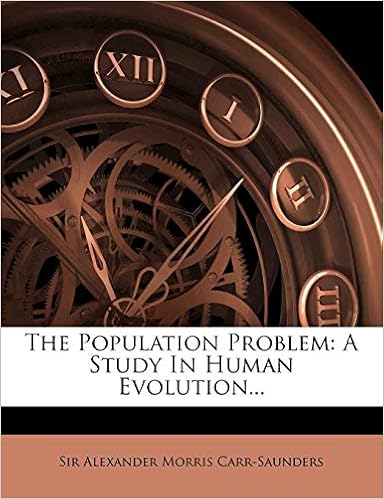
The population problem arose - according to Carr-Saunders' demographic analysis - from the fact of having high reproductive rates among what were described as "primitive people with low mental and physical qualities". Over-population of these lower races endangered the standard of living of races bearing higher qualities. Unlike Malthus, he thought that industrial productivity and not food was the main limiting factor in human populations.

Some of the views were of course of their time. Hans Rosling may have had a few alternative thoughts.

In 1921, as mentioned above he went to Spitsbergen on an expedition - one of several GA Presidents to have visited this place - perhaps I need to plan a visit during my Presidency. 
Is there a GA Branch in Longyearbyen?

Carr-Saunders served as Director of the LSE from 1937 to 1957.
His early publications used demographic data in a way that hadn't been done before.
He was knighted in 1946/7, around the time he served as GA President.
 

His Presidential lecture was on the theme of the teaching of Geography in Colonial Colleges, and started with him explaining how he was not a geographer - an unusual opening gambit for a President, although not unprecedented...


The address was published in 1948.

He founded the British Sociological Society in 1951.

This image from the LSE library was taken in Cumbria in 1964, to which Carr Saunders retired.
He is pictured with his wife Teresa in the middle, and Julian Huxley on the left.


He died in 1966 in Cumbria.
One obituary gives the actual circumstances which sound characteristic of him from what I have read...

He died on the night of 6 October 1966 after trying, at the age of eighty, to push his car uphill following a breakdown at Thirlmere in his beloved Lake District.

Here's a description of him from Professor Maurice Freedman:


Source: https://journals.sagepub.com/doi/abs/10.1177/030639686700800306?journalCode=raca

His GA obituary was written by fellow and former GA President Michael Wise.

He received honorary doctorates from the Universities of Glasgow, Columbia, Natal, Dublin, Liverpool, Cambridge, Malaya, Grenoble and London, and was made honorary fellow of Peterhouse, Cambridge, the University College of East Africa, and LSE.

References

https://en.wikipedia.org/wiki/Alexander_Carr-Saunders

I added reference to his GA Presidency to the Wikipedia page, as I have with all those who have Wikipedia pages.

https://www.britannica.com/biography/Alexander-Carr-Saunders - this describes him as a demographer ,and focusses on his work in the area of population - he also influenced Charles Elton, a biologist https://www.britannica.com/biography/Charles-Elton#ref5660

Obituary: https://www.tandfonline.com/doi/abs/10.1080/00324728.1967.10409969?journalCode=rpst20

Presidential Address
Carr-Saunders, Alexander. “THE TEACHING OF GEOGRAPHY IN COLONIAL COLLEGES: ADDRESS TO THE GEOGRAPHICAL ASSOCIATION.” Geography, vol. 33, no. 1, 1948, pp. 1–7. JSTOR, www.jstor.org/stable/40562655.
Obituary: Wise, M. J. “Obituary: SIR ALEXANDER CARR-SAUNDERS.” Geography, vol. 52, no. 1, 1967, pp. 81–81. JSTOR, www.jstor.org/stable/40566219.

Carr-Saunders as one of the original 'sociologists': https://journals.sagepub.com/doi/abs/10.1111/j.1467-954X.2008.00805.x?journalCode=sora

https://oxfordindex.oup.com/view/10.1093/oi/authority.20110803100443150

Image: https://www.npg.org.uk/collections/search/portrait/mw100157/Sir-Alexander-Morris-Carr-Saunders
Some further images of him: https://www.npg.org.uk/collections/search/person/mp72409/sir-alexander-morris-carr-saunders
Images from Flickr library of LSE: https://www.flickr.com/photos/lselibrary/with/3926497416/
CC licensed.

Biography from the British Academy: https://www.thebritishacademy.ac.uk/pubs/proc/files/53p379.pdf

His most famous book is still available to purchase from all good bookshops. It can also be accessed via the Internet Archive: https://archive.org/details/populationproblem00carr


If anyone has further information on Carr-Saunders, please get in touch.

Updated January - August 2021

There are remarkably few early videos or audio of GA Presidents on YouTube since some very early ones you may remember.
Here's an extract from a radio programme where he described his strong faith in God.


Thanks to Brendan Conway for this additional information on a link to the modern day LSE.

National Portrait Gallery:

https://www.npg.org.uk/collections/search/portrait/mw88743/Sir-Alexander-Morris-Carr-Saunders 

Carr-Saunders Hall - a dining space for 160 students

https://blogs.lse.ac.uk/lsehistory/2017/09/05/carr-saunders-hall-living-in-bloomsbury/

Carr-Saunders served as Director of LSE from 1937-1957 and had arranged the School’s evacuation to Cambridge prior to the outbreak of war, ensuring that the School was in touch with its London base and could continue teaching across all of its subject areas.

A mention in the Alpine Journal (PDF download)


On his personality:

The piece also outlines his impressive mountaineering achievements and plenty of anecdotes about his experiences, including ascents of Mont Blanc and lots of the nearby peaks.


I like this quote on how the scenery 'attracted and occupied his keen and sensitive mind'.

Updated August 2023

He contributed a chapter to this book, from the Wellcome collection, and stamped as being in the Eugenics Society library.


First published in 1935

Updated November 2023

On the opening of Carr Saunders Hall - with the menu that was served

He worked in Eugenics...
 
Details of his Galton Medal Award in 1946, from the Eugenics Society.


Tuesday, 9 July 2019

1922: Right Hon. Lord Robert Cecil PC, KC, MP

Robert Cecil, 1st Viscount Cecil of Chelwood looking right circa 1915.jpgUpdated April 2021

One hundred years before 2022, when I will be in my Presidential year, the President of the GA had rather more letters after his name, and titles before it than I have. There's time yet though....

Lord Robert Cecil was an MP and held other roles of importance in his long career. He had an extraordinary, and long, life with a huge variety of contributions to different parts of society.

Like Gilbert Murray before him, he was linked with the work of the League of Nations. 
This association was to end with him being awarded the Nobel Prize for Peace.

In 1920, a message that Lord Robert Cecil had sent to the GA regarding the establishment of the League of Nations was included in 'The Geographical Teacher'. This perhaps brought him to the attention of the Association, and he was earmarked for a future role.

He was known as 1st Viscount Cecil of Chelwood. He was born in London, son of the 3rd Marquess of Salisbury, who had been Prime Minister three times, so from a background of political involvement and high standing within London society. He attended Eton College. 
He studied Law at University College, Oxford and was then called to the Inner Temple.

In 1906, he became the Conservative MP for Marylebone East, serving for 4 years, before unsuccessfully contesting the seats at Blackburn and Wisbech. 
He later served as Independent Conservative MP for Hitchin between 1911 and 1923, so he was an MP when he was the President of the GA. He served as a Government minister during the First World War, as he was 50 and too old for Military service. He was also a Government minister later on in his career. He had earlier been vocal in seeking peace and avoiding the conflict that was to come.
He was apparently very concerned about the increasing social problems and public dangers associated with growing car ownership, and became the first President of the Pedestrians Association in 1929.

This is still in existence and is now known as Living Streets. The UK Charity for Everyday Walking. It is celebrating its 90th birthday this year.

He had earlier drawn the GA members attention to the role of the League of Nations, in 1921, as mentioned before:


He was announced as President in this piece from 'The Geographical Teacher' in 1921


Source: “Editorial.” The Geographical Teacher, vol. 11, no. 3, 1921, pp. 131–135. JSTOR, www.jstor.org/stable/40555625. Accessed 11 Apr. 2021.

His Presidential Address was, unsurprisingly called "Geography and Peace", and was delivered at Birkbeck College on January 5th, 1922.

He started by saying "Geography, when I was young, was of all the subjects of my education the least inspired and the least inspiring", which I'm sure got the room on his side, especially when he continued to talk about its "devastating dullness".


However, "nowadays, Geography is a very different thing (he went on to say). He referred to the conflict that had recently ended, and areas such as Poland, Silesia and Albania. He described the need for the League of Nations.

"Peace is not only the first of British interests, it is the greatest interest of all other countries as well."

Following his earlier work, the 1930s were taken up with efforts to develop the League's work to secure peace in Europe.
The Wikipedia entry provides a lot of details on his efforts at appeasement, following Hitler becoming the Chancellor of Germany. These discussions occupied him for another decade, but not without reward.

In 1937, Cecil was awarded the Nobel Peace Prize.
This is one of the most remarkable of the 'hidden' stories of past GA Presidents. 
A Nobel Prize has to be the pinnacle of achievement for a life lived in the service of others.


Cecil lived to see the birth of the United Nations.

Following his long public service, he served for many years in the House of Lords. 
Hansard can be searched to find the contributions he made to debates.

Lord Home paid tribute to him in the House of Commons a few days after his death.

He was one of the first people, perhaps, in the modern world...to foresee the absolute need for nations to meet round the table in discussion of their national affairs in the interests of peace. He was one of the architects of the League of Nations. And your Lordships will recall the unflagging enthusiasm with which he pursued the cause of peace wherever he went. His vision of a world disarmed, where conciliation would hold the day, was time and again disappointed...all since have been convinced of the rightness of his ideal, although the world has not proved itself yet great enough to match his great conception. In the United Nations, which was the successor of the League of Nations, there is many a living monument to Lord Cecil. Many of the committees which do great work in the international field were the result of his conception and are daily drawing people closer and closer together in interdependence. I, myself, because my father was very keen and with him did much in the League of Nations field, remember Lord Robert Cecil coming to stay at home; and many a time at dinner, when I was a comparatively young man, I would watch him, with his long figure, slide more and more under the table, until only the distinguished head was left above his plate, and he would tell us of all his plans for the future peace of the world. Ever since then I have felt that so long as he was alive there was one among us who, however bitter the strife and however blind the world, never despaired of finding peace in our time

He left no heirs sadly, and his Viscountcy became extinct.

References


Wikipedia page: https://en.wikipedia.org/wiki/Robert_Cecil,_1st_Viscount_Cecil_of_Chelwood - also the source of the image. This is a detailed and lengthy entry.

I edited the Wikipedia article to add the fact that he had served as the President of the GA, as I have done with each President.

The Nobel Peace Prize 1937. NobelPrize.org. Nobel Media AB 2019. Sun. 16 Jun 2019

Citation:

The British politician, diplomat and peace activist Lord Robert Cecil came of an aristocratic family from which had sprung as many as four prime ministers. After reading law at Oxford, he worked for a number of years as a lawyer, before being elected to Parliament in 1906 as a Conservative.
During World War I he was Minister of Blockade, and at the Versailles peace conference he played a leading part in the formulation of the rules of the League of Nations. In 1919 he participated in the founding of the League of Nations Union (LNU), which in the inter-war years became Britain's most important extra-parliamentary pressure group in the field of foreign policy.
In 1937 Lord Cecil spearheaded a nationwide signature campaign demanding that the League of Nations adopt economic and military penal sanctions against violators of the peace. He was also among the leaders of the International Peace Campaign (IPC), which worked for disarmament and collective security through the League of Nations.


https://www.nobelprize.org/prizes/peace/1937/chelwood/facts/


As always, if anyone has further information relating to this President, please get in touch.

Friday, 3 May 2019

1913: Professor Edmund Johnston Garwood

Last updated August 2023

Edmund Johnston Garwood was another person involved as part of the drive to bring in distinguished outsiders with geographic interests to strengthen the standing of the Association in its early years.

Garwood was born in 1864 in Bridlington, and educated at Eton College and Trinity College, Cambridge, where he took his degree in 1886.

Between 1887 and 1892, he served as director of the Jarrow Chemical Company and as lecturer at the Cambridge University Extension Lecture Syndicate between 1891 and 1898.

In 1896, he accompanied the British Exploring Expedition (led by Sir William Conway) to Spitzbergen where he studied glaciological phenomena and geology. For this work, he was awarded the Gill Memorial Fund by the Royal Geographical Society and the Wollaston Fund by the Geological Society of London. This provided his entry into the sphere of geography.

The following year he returned to Spitzbergen. At the end of July, Garwood and the assistant Nielsen ascended Nielsenfjellet to survey the scene inland, later setting off inland up the Kongsvegen glacier. They ascended the glacier to the vicinity of Kongsfjella, then turned back to examine the vicinity of Tre Kroner before finally returning to Kongsfjorden. Conway named the region of this exploration King James Land (now James I Land).

Read their journals from this expedition here. They are beautifully illustrated and well worth reading.

Here's a comment on Garwood's involvement in the party:


In 1899, Garwood accompanied Douglas Freshfield (a previous President of the GA) on an expedition to Kangchenjunga and was responsible for the accounts of the geological structure and physical features of Sikkim. 

In 1901, he was appointed Professor of geology and mineralogy at University College, London, a chair he held until his retirement in 1931. Another link with UCL for GA Presidents.

He produced a series of maps during this time - one of which can be seen here. This is a wonderful piece of cartography from the days before GIS and StoryMaps.

In 1913, Garwood was proposed and seconded into the post (these were the days before a ballot of members was held to decide between those who were proposed and named). This article describes the AGM where this took place, and Garwood's contribution to it, as he took the Chair.

Garwood's Presidential Address was on 'Arctic Glaciers and British Ice Sheets' and can be read on JSTOR by 'Geography' subscribers.

Presidential Address: Garwood, Edmund J. “ARCTIC GLACIERS AND BRITISH ICE SHEETS.” The Geographical Teacher, vol. 7, no. 2, 1913, pp. 73–89. JSTOR, www.jstor.org/stable/40554273.

Between 1930 and 1932, Garwood served as President of the Geological Society of London as well as other posts of responsibility. He published a number of articles in the Society's journals during this period, and also in the period before he took up the post. 
He was also succeeded in that post by another former GA President, Thomas Henry Holland.


From 'The Geographical Teacher' 1921

His published work includes:

The first crossing of Spitsbergen by (Sir) Martin Conway, J W Gregory, Aubyn Trevor-Battye and E J Garwood, J M Dent & Co. London (1897) SPRI Library Shelf (32)91(08)[1896 Conway
A northern highway of the Tsar by Aubyn Trevor-Battye, Constable London (1898) SPRI Library Shelf (50)91(08)[1894-95

During the time of Garwood's Presidency, there was another significant change in the development of the Geographical Association. Prior to this, there wasn't the same financial strength, but now it had significant financial assets, which meant that the GA needed Trustees and a Constitution. 

The GA President is now a Trustee for the period of their Presidency, but there is a Chair of Trustees, who Chairs the Governing Body meetings.

The GA's Constitution was formally adopted on the 9th of January 1913.

At this time, life membership of the Association could be purchased for £3.50. Quite a bargain.


Garwood died on 12 June 1949 after a long and varied career of which this entry only tells a fraction.

References:
Source:
https://archiveshub.jisc.ac.uk/search/archives/4888f487-98b6-30e3-aad9-f081d053f20f

https://en.wikipedia.org/wiki/Edmund_Johnston_Garwood

I edited the Wikipedia entry to add the fact that he was the President of the Geographical Association. I shall do that for each President, as hardly any of their entries mentioned that before I started the blog.

“THE ANNUAL MEETING OF THE GEOGRAPHICAL ASSOCIATION.” The Geographical Teacher, vol. 7, no. 1, 1913, pp. 40–41. JSTOR, www.jstor.org/stable/40554231
Some details from Balchin's centenary History of the Association were used in this post.

Presidential Address: Garwood, Edmund J. “ARCTIC GLACIERS AND BRITISH ICE SHEETS.” The Geographical Teacher, vol. 7, no. 2, 1913, pp. 73–89. JSTOR, www.jstor.org/stable/40554273.

Spitzbergen Journals at SPRI: https://discovery.nationalarchives.gov.uk/details/r/N13920016

Image copyright details:

Edmund Johnston Garwood
by Walter Stoneman
bromide print, 3 March 1926
NPG x162525
© National Portrait Gallery, London

As with each post, if you know more about E J Garwood, please get in touch. This is a relatively brief entry, and I'd love to know more.

Updated May 2019

1913 was the year when the RGS admitted women as Fellows. This brought an end to what previous GA President, Douglas Freshfield had referred to as 'the lady question' and was the reason why he wanted to start a new Association.

Read more about this in:

Bell, Morag, and Cheryl McEwan. “The Admission of Women Fellows to the Royal Geographical Society, 1892-1914; the Controversy and the Outcome.” The Geographical Journal, vol. 162, no. 3, 1996, pp. 295–312. JSTOR, www.jstor.org/stable/3059652.


Further research opportunities:
Geological Society of London Archives

Updated May 2020
When he was teaching at UCL, he taught another former GA President: Stanley Henry Beaver.

Updated November 2020


Updated August 2023

A geology map of NW England by Garwood - follow the search for a few more items.

https://picryl.com/media/geological-map-nw-england-garwood-1912-01-9075a0 


Wednesday, 10 April 2019

1897 - 1911: Douglas William Freshfield

Image result for douglas freshfieldUpdated September 2023

In 1897, following a period during which the Association was developing its constitution and statutes, Douglas W Freshfield became the first President of the Geographical Association (GA). 

This followed his resignation from the Royal Geographical Society, apparently partly because the organisation would not admit women Fellows. 
He remained in office until 1911, a period which has not been surpassed since, and will not now be, as the Presidency is a one year post (bracketed by other related responsibilities)

From the chronology written by Peter Jackson for the GA website. (see separate blog post)

Douglas Freshfield was one of the people who attended the first meeting when the Association was formed. He was the first Honorary Secretary of the Royal Geographical Society.

He was born on the 27th of April 1845, and died on 9th of February 1934. 

He was a lawyer, mountaineer and author and also edited the 'Alpine Journal'. 
He was educated at Eton College, and University College, Oxford.

He also wrote a quote that I have used many times in my CPD sessions in the first issue of 'The Geographical Teacher': the first journal that the GA published (of which more to come later in the blog) about the importance of teachers coming together to learn from each other.

This can be read in the image to the right.

This was published in 1901, and was free to members, (but cost one shilling for non-members). This was an important element of the work of the GA, and remains so today.

Douglas Freshfield was heavily involved with the GA from the very early days of the Association.

In 1899,  Freshfield accompanied another future President: E. J. Garwood, on an expedition to Kangchenjunga and explored the geological structure and physical features of Sikkim. Images taken during trips like this helped build the lantern slide library owned and shared by the GA as part of its founding purpose, and which was revisited for the Geographers Gaze project.

In 1900, GA membership opened to all teachers of geography irrespective of age, gender or type of school.

Key lectures were given at this time by H. J. Mackinder on 'Geography as Training for the Mind' and B. B. Dickinson on 'The Use of the Lantern Slide'.

Update
These were referenced by Emily Hayes in her PhD thesis - more on that to come in future blog posts as I discuss the early importance of the lantern slide as a resource for geography teaching and knowledge exchange.

Douglas Freshfield was working as Honorary Secretary to the RGS when he became involved in the founding of the Association. He had made some decisions which were apparently not always welcome by the President at the time: Clements Markham.

On his mountaineering exploits:

He also became the first mountaineer to examine the western face of Kangchenjunga, which rises from the Kanchenjunga Glacier. Freshfield described Siniolchu as "The Most Superb Triumph of Mountain Architecture and The Most Beautiful Snow Mountain in the World".

He made some notable first summits, including in the Caucasus - see later tweet update towards the bottom of the post.


In 1905 he attempted to climb Rwenzori Abruzzi in Uganda but failed due to bad weather. 

However the Freshfield Pass on the mountain was named after him. This makes him one of several GA Presidents who have geographical features named after them. Keep an eye out for them as the blog develops. There are various examples of different features.

Mount Stanley from Freshfield Pass. Photo by Vittorio Sella.

Freshfield Pass and Mount Stanley - Image source and copyright

Rex Walford's book on School Geography (an important source for this blog) reminds us that Freshfield also had concerns that the membership of the RGS (at the time) did not allow women to become Fellows, although the RGS had given them awards and indeed Fellowships, until the full society forced the Council to back down on this issue later on.
Freshfield penned a brief quatrain at the time:

The question, our dissentients bellow
Is can a woman be a Fellow?
That, sirs, will be no question, when
Our Fellows are all Gentlemen!

Freshfield did re-establish his connections with the RGS later in the later part of his period as GA President. He was also awarded the RGS Founder's Medal in 1903.
(Walford, 2001) - pp.68-9

The work that Freshfield led can be followed by visiting the JSTOR archive of the 'Geographical Teacher' journal. He chaired the AGM and other meetings of the Association and these are reported each year, often held in different venues offered free of charge at the time.

At the AGM of 1903, Freshfield reminded those present that:

"The Geographical Association began its corporate existence as a body militant, a body struggling against a national and professional apathy, of which they recognised the dangers".

At the same event, there was a reminder of the ties between the Ordnance Survey and the GA, which have persisted for over a century as well, with Charles Close being a later President.

During this period, there was continued growth in the Association, and branches opened in Sheffield and Huddersfield (1907), Leeds (1911) and other cities - I have visited and spoken at these branches, as well as many others. Efforts continued to develop the position of geography in universities at degree level to allow Honours degrees to develop.

When Freshfield stepped down in 1911, the Presidency became an annual appointment, and efforts were made to bring in distinguished outsiders with geographic interests to strengthen the standing of the Association. This pattern persisted for a few years.

At the 50th Anniversary conference in 1943, T. C. Warrington reflected on Freshfield's contribution to the GA, saying this about him:

Douglas Freshfield, who became leader of the movement in the Royal Geographical Society for the improvement of geographical education, had been a member of its Council since 1878 and Secretary from 1881. By the end of 1893, he had retired from the Council and from the secretaryship in protest against the action of the Society in denying ladies admission as Fellows. From the beginning his interest in the Geographical Association was keen.

In 1898 he became its first President and remained in office till 1911. His interest in the improvement of the teaching of geography was primarily enlisted for public schools and universities, but he was president of this Association when, in 1900, its doors were thrown open to all teachers of geography. Our debt to him for the improvement of the teaching of geography, for his help and guidance and encouragement in the formative years of the Association cannot easily be measured.

In 1911, he gave his Valedictory Address after 14 years as President, where he reflected on his time as President, and the changes in the nature of the discipline.

In this address he returned to the reasons for his original exit from the RGS.

"The reason why some of us wanted to see ladies in the Society was that many ladies are engaged in geographical teaching and often in high posts. The Geographical Association was founded to give those ladies facilities denied them elsewhere."

Freshfield went on to be elected as President of the Royal Geographical Society between 1914-17 - cementing the relationships between the two organisations.

References

Valedictory Address: FRESHFIELD, DOUGLAS W. “VALEDICTORY ADDRESS.” The Geographical Teacher, vol. 6, no. 1, 1911, pp. 5–9. JSTOR, www.jstor.org/stable/40554086.

This is well worth reading!

An obituary following Freshfield's death in 1934 is linked to here

https://www.britannica.com/biography/Douglas-William-Freshfield - an entry in Encyclopaedia Britannica - not many GA Presidents have one of those.

Some details from Balchin's Centenary history of the Association used in this post.

https://en.wikipedia.org/wiki/Douglas_Freshfield - I edited the Wikipedia entry to add the fact that he was the President of the Geographical Association. I shall do that for each President, as hardly any of their entries mentioned that before I started the blog.

Image: Wikimedia - Creative Commons

ABE Books for 2nd hand copies of books by Freshfield - if I was doing this properly I would try to get books from as many of the Presidents as possible - I still might over the years to come, although I guess they are in the GA archive, and I will try to get access to those during my time as President and perhaps turn this blog into a proper book: https://www.abebooks.co.uk/servlet/SearchResults?sts=t&cm_sp=SearchF-_-home-_-Results&an=Douglas+Freshfield&tn=&kn=&isbn=

At the end of each post, there will be a request for anyone who has further additions to add them as a comment. 

UPDATE (May 2019)

While compiling the entry for John Scott Keltie, I came across some words from Douglas Freshfield following Kelties' Presidential Address in 2014
You can read it here:

Presidential Address: KELTIE, J. SCOTT. “THIRTY YEARS' PROGRESS IN GEOGRAPHICAL EDUCATION.” The Geographical Teacher, vol. 7, no. 4, 1914, pp. 215–227. JSTOR, www.jstor.org/stable/40555979.


Freshfield was referenced in Keltie's address, for his work in the early years of the Association, but there was a nice quote in Freshfield's comments, which also referred to the GA's founding and the link with the RGS and their position on female fellows. He thanks Keltie for having "created and maintained the leading Geographical Journal of the World"

There is an interesting quote on fieldwork or "out of door work" as Keltie referred to it. He describes a visit to Japan and France where he had seen teachers taking students outside. He makes the connection with the Boy Scouts, which at that stage was quite a new organisation, having been founded in 1908....

"Give the Boy Scouts a rough map of some very think and difficult wood, with instructions to look for their lunch at a particular spot, and they will develop remarkable skill in map-reading." - I may hide the packed lunches on our next field trip accordingly....

Updated June 2019 - additional links to Emily Hayes PhD thesis

Updated November 2019
Image of his grave from Wikipedia


Plus details on Ugandan mountaineering
https://www.rwenzoriabruzzi.com/highest-peaks-of-the-Rwenzori

For further research:

The Alpine Club has a series of Douglas Freshfield's papers including correspondence and other documents
https://discovery.nationalarchives.gov.uk/results/r?_q=douglas+freshfield+alpine+club

The RGS Archives - apparently his writing was "very hard to read" - there are documents here relating to the Everest expedition of the 1920s, so will have to try to access those
https://discovery.nationalarchives.gov.uk/details/r/b46cabd2-de41-4d6d-9a91-06ca17dde4d9

Search on items
https://rgs.koha-ptfs.co.uk/cgi-bin/koha/opac-detail.pl?biblionumber=217804&query_desc=kw%2Cwrdl%3A%20douglas%20and%20kw%2Cwrdl%3A%20freshfield

These include some lantern slides from his Ugandan climbs, which were apparently destroyed in February 1951 as they had faded.

Updated November 2020

In 1899 the noted British explorer Douglas Freshfield accompanied by the great Italian photographer Vittorio Sella did a circuit around Kangchenjunga. Freshfield described Siniolchu as “The Most Superb Triumph of Mountain Architecture and The Most Beautiful Snow Mountain in the World” in his book Round Kangchenjunga. Here Siniolchu is seen from the "Rest Camp" on the Zemu Glacier one day short of the Green Lakes Base Camp.

Updated August 2021

A set of Freshfield's journals from the Caucasus expedition sold for £4750 at Sotheby's auction house in London - part of a collection that was being auctioned.

Here's the description of the lot:

Freshfield first climbed Mont Blanc as a schoolboy, made at least twenty first ascents in the 1860s and 1870s, chiefly of lesser known-peaks in the Italian Alps, and was president of the Alpine Club from 1893 to 1895. "In 1868 he explored, together with Charles Tucker, Adolphus Moor, and his lifelong friend François Devouassoud, the central Caucasus, which, except for the lower heights, were then unknown. He made the first ascent of Kazbek (16,546 ft), Elbrus (18,470 ft), and several other peaks, and recorded the existence of large glaciers in the regions between them. After returning to the Caucasus in 1887 and 1889 he published his Exploration of the Caucasus (1896), which was for a time a standard work. In 1899 he visited India, Burma, and Ceylon, and made, with Dr Edmund Johnston Garwood, the circuit of Kanchenjunga through unmapped territory in Sikkim and Nepal, recorded in Round Kanchenjunga (1903) [see lot 532]. Lastly, in 1905, at the age of sixty, he tried, with A. L. Mumm, to ascend Ruwenzori in Uganda, then known as the Mountains of the Moon, but was stopped by bad weather and mud at 12,000 ft." (ODNB).

Updated July 2022

Freshfield in later life supported others.
He was particularly active in mountaineering.

And a local example:


I then found his entry in the series of Biobibliographical Studies. 


A little more about his later life:


A good quote in this final extract from that book as well:


And more on his work at the GA: "a militant body"


Updated August 2023

Some further tweaks and amendments.


I discovered a book about Douglas W Freshfield and have ordered a second hand copy. It says that he was the youngest schoolboy to climb Mt. Blanc in 1863.

From the Alpine Journal obituary (source of the image above) which shows his remarkable career and how highly he was held in regard.

https://www.alpinejournal.org.uk/Contents/Contents_1934_files/AJ46%201934%20166-198%20In%20Memoriam.pdf

He was in Anthony Wolley-Dod's house at Eton. - an interesting character himself.

It is hard to realize that he made a 'first ascent' as far back as 1861. He may be said to have descended from mountaineering stock, for his mother, Mrs. Henry Freshfield, was a mountain wanderer before the Victorian era and the gifted authoress of A Summer Tour in the Grisons and Italian Valleys of the Bernina (1862)

In 1923 the University of Geneva conferred on him the Honorary Degree of Doctor of Laws. He married, in 1869, Augusta Charlotte, daughter of the Ron. William Ritchie; sh~ died in 1911. He leaves four daughters, his only son dying as a schoolboy. He was a barrister at the Inner Temple and a J.P. 'for Sussex. 

It features a memory from E J Garwood (another former GA President)

https://charlottemasonpoetry.org/the-teaching-of-geography-by-r-a-pennethorne/ - 1956

Some of us remember the first stirring of the dry bones—and how our founder gave the results of her personal walks and investigations of our own country to the world as The Forty-two Shires—of how the London University Lectures on the subject were given in the ‘Eighties’—of how the Schools of Geography were founded, and largely through the inspiration of Dr. Douglas Freshfield, the ‘Geographical Association’ grew out of the Royal Geographical Society, and the path was ready for the mental explorer and discoverer to tread.

Referenced here:

Updated September 2023
The controversy over women fellows at the RGS-IBG and Freshfield's involvement is outlined in this article:


Source:
Bell, Morag, and Cheryl McEwan. “The Admission of Women Fellows to the Royal Geographical Society, 1892-1914; the Controversy and the Outcome.” The Geographical Journal, vol. 162, no. 3, 1996, pp. 295–312. JSTOR, https://doi.org/10.2307/3059652. Accessed 16 Sept. 2023.

“DOUGLAS WILLIAM FRESHFIELD.” Geography, vol. 19, no. 1, 1934, pp. 60–60. JSTOR, http://www.jstor.org/stable/40558766. Accessed 16 Sept. 2023.

Margaret Mackintosh RIP

Updated post. Sad news at the end of last week from colleagues who have organised the Charney Conference over the years of the passing of Ma...