Showing posts with label Colonial Administration. Show all posts

Tuesday, 12 November 2019

1949: Sir Harry Alexander Fanshawe Lindsay KCIE CBE

Updated October 2023

Sir Harry Lindsay was a Colonial administrator, who was connected with India, and worked to develop aspects of the Commonwealth, which grew from the end of Empire.

He was another St. Paul's Old Boy and was also educated at Oxford University, as were many previous Presidents.

A Wikipedia article provided the following information, under CC license:

In 1910 Lindsay became Under-Secretary to the government of Bengal. He moved to the Commerce and Industry Department of the Government of India in 1912.

In 1916 he was Director-General of Commercial Intelligence in Calcutta and in 1922 Secretary to the Government of India, Commerce Dept. In 1923 he became Government of India Trade Commissioner in London. 

In 1919, he was knighted:

CENTRAL CHANCERY OF THE ORDERS OF KNIGHTHOOD. St. James's Palace, S.W. 
3rd June, 1919. 
The KING has been graciously pleased, on the occasion of His Majesty's Birthday, to make the following promotions in, and appointments to, the Most Excellent Order of the British Empire: — 'To be Knight Commanders of the Civil Division, of the said Most Excellent Order.

Harry Alexander Fanshawe Lindsay, Esq., Indian Civil Service, Director-General of Commercial Intelligence in India.


In 1923 he was delegate for India to the Economic Committee of the League of Nations. In 1934 he was appointed Director of the Imperial Institute, a post in which he remained until 1953.

He was GA President during this time.

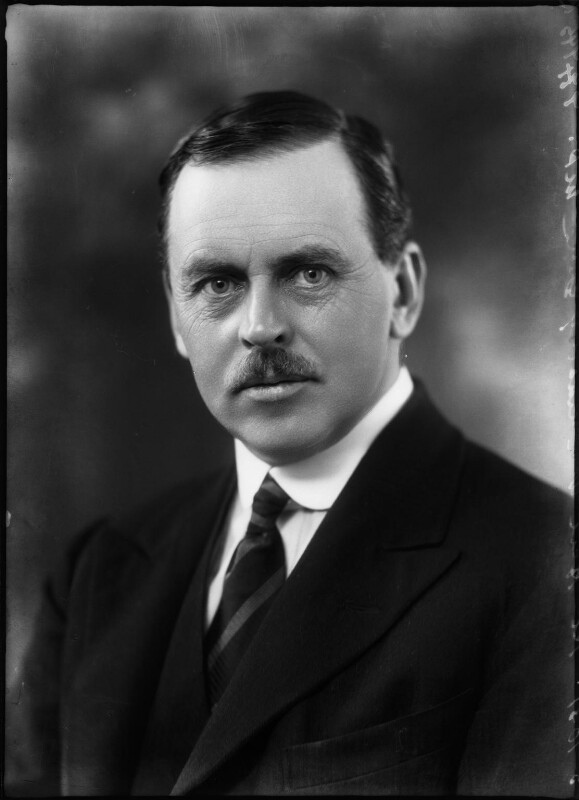
Image credit: National Portrait Gallery


Described here:


Lindsay was Chairman of the Council of the Royal Society of Arts, editing the publication British Commonwealth Objectives in 1946. 

He was President of the Imperial Institute in the 1940s as well.
A vintage photograph from the time.

Lindsay was also president of the Royal Geographical Society (yet another President to have served with both organisations), and vice-president of the Royal Commonwealth Society.

Lindsay's presidential address was on 'Geography and the Museum'.


In it, he talked about the role that geography might play in the development of museums, even the one at the RGS, which he mentions at the start of his address.

There is a return here to the contested notions of geography as a science, which was a debate had throughout the early 20th Century, and aspects of this are still talked about now.

An interest in museums also connects him other former GA President, who were connected with museums:
1925 - John Linton Myres, who was linked with the Pitt Rivers Museum in Oxford, and
1929 - Sir Henry Lyons, who was a director of the Science Museum

He died on 2 March 1963, in Oxfordshire, England, United Kingdom, at the age of 81.

I wasn't able to find much about what he did while GA President unfortunately.

References

Wikipedia page: https://en.wikipedia.org/wiki/Harry_Lindsay - a brief entry, which doesn't say anything about his Geographical career - Edited to add his GA Presidency as always.

Lindsay, Harry. “GEOGRAPHY AND THE MUSEUM: ADDRESS TO THE GEOGRAPHICAL ASSOCIATION.” Geography, vol. 35, no. 1, 1950, pp. 1–9. JSTOR, www.jstor.org/stable/40564519.

Portrait at NPG: https://www.npg.org.uk/collections/search/person/mp79885/sir-harry-alexander-fanshawe-lindsay

https://api.parliament.uk/historic-hansard/written-answers/1943/mar/31/colonial-products-research-council

Mentioned in: https://journals.le.ac.uk/ojs1/index.php/mas/article/viewFile/232/245

Lindsay, Harry. “CULTURAL RELATIONS WITHIN THE BRITISH COMMONWEALTH.” Journal of the Royal Society of Arts, vol. 96, no. 4756, 1947, pp. 6–18. JSTOR, www.jstor.org/stable/41364360.


Here's an image of Sir Harry Lindsay welcoming the Queen to an event at the Royal Society of Arts mentioned in the article above - when he served as President of the RSA.


Image of Lindsay from NPG under Creative Commons

Sir Harry Alexander Fanshawe Lindsay
by Walter Stoneman
bromide print, March 1943
NPG x165080© National Portrait Gallery, London

As always, I would be happy to hear from anyone who has further details on this President's particular contributions to the work of the GA. I have very little to go on for this entry which is one of the briefest.

You can buy a greetings card with his image on from the NPG if you so desire...


Sunday, 8 September 2019

1934: Rt. Hon Lord James Scorgie Meston

Last updated August 2023

When I started this blog post, I couldn't find a great deal about Lord Meston's geographical 'credentials', so had to do a little more digging than usual. 

We are moving into a period when the Presidents don't have Wikipedia pages which are as detailed in all cases as some of the earlier, or slightly later ones.

I then came across a piece on the RSGS website, which gave me a way in to finding out more.

Lord Meston was involved with Geography for many years it seems, particularly in Scotland, although there was still little about his time at the GA.

On 24th October 1934, the Royal Scottish Geographical Society celebrated its Golden Jubilee. The newspapers were full of the arrival of the Duke and Duchess of York, who were visiting the Society as representatives of its Patron, King George V.
In the Usher Hall in Edinburgh, RSGS members joined delegates from other scientific and geographical societies at an afternoon reception for 2,000 guests. This was the opening session of the Society’s Edinburgh branch, and the Duke of York had agreed to present some awards. Among the recipients were Isobel Wylie Hutchison, who was awarded the Mungo Park Medal for her explorations in the Arctic, and Lord Meston of Agra and Dunnottar, who received the Scottish Geographical Medal “for distinguished services to geography over a period of many years.” 

After the ceremony, Lord Meston, a statesman whose family hailed from Aberdeen, addressed the company on the subject of India.

Source: https://rsgs.org/the-kings-speech/

His interests were wide, and he was also the President of the Royal Statistical Society.
There was a strong connection with the Royal Scottish Geographical Society, which continued.

He received the Scottish Geographical Medal from the Royal Scottish Geographical Society in 1934. This led me to a useful biography, and as an RSGS medal winner myself gave me a connection with Scorgie Meston.

Sir James Scorgie Meston. 1st Baron Meston KCSI, was a prominent British civil servant, financial expert and businessman. He served as Lieutenant-Governor of the United Provinces of Agra and Oudh from 1912 to 1918. He passed the Indian civil service examination in 1883 and was posted to the North-Western Provinces and Oudh in 1885 (which later became the United Provinces of Agra and Oudh), where he was director of land records between 1897 and 1899 and financial secretary to the government between 1899 and 1903. From 1905 to 1906 he briefly left India to act as an adviser to the Cape Colony and Transvaal governments in South Africa.

After his return to India in 1906, Meston was secretary to the finance department of the government of India until 1912, when he was appointed Lieutenant-Governor of the United Provinces of Agra and Oudh. He remained in this position until 1918, when he became finance member of the Viceroy of India's executive council. In 1917, along with Sir Satyendra Prasanno Sinha and Maharaja Ganga Singh, he assisted the Secretary of State for India in representing India in the Imperial War Cabinet and Conference.
After the war, Meston, along with Lionel Curtis, was the main designer of the Institute of International Affairs, and served as chairman of its first governing body from 1920 to 1926, of its publications committee and of the editorial board of International Affairs. Apart from this, Meston was also vice-chairman of the Supervisory Commission of the League of Nations. He sat on the Liberal benches in the House of Lords and served as President of the Liberal Party organization. He was also involved in business and served as chairman and as a board member of several companies.

Meston was made a CSI in 1908 and a KCSI in 1911 and in 1919 he was further honoured when he was raised to the peerage as Baron Meston, of Agra in the Indian Empire and Dunottar in the County of Kincardine.

In 1935, he gave his Presidential Address, which was on 'The Geography of an Indian Village.' He had spent a considerable time involved in the administration of India.


In the Address, he described his travels in India, from the perspective of someone who had lived there for a long period.
He also suggested that, as Fairgrieve explained the following year, the object of the Association was to spread interest in the population about the subject through supporting teachers.
I could find little else about his time working for the GA, but then came across an obituary. See the Update.

Image from the National Portrait Gallery.
Image - shared under CC license
James Scorgie Meston, 1st Baron Meston
by Bassano Ltd
whole-plate glass negative, 9 October 1923
NPG x122702
© National Portrait Gallery, London

A plaque with his name can be seen at Aberdeen University.

References
https://rsgs.org/the-kings-speech - link to medal ceremony at the RSGS

https://en.wikipedia.org/wiki/James_Meston,_1st_Baron_Meston - more details once I'd established the correct Lord Meston. Added his GA Presidency to the page.

“THE GEOGRAPHY OF AN INDIAN VILLAGE. ADDRESS TO THE GEOGRAPHICAL ASSOCIATION, By the Rt. Hon. BARON MESTON OF AGRA AND DUNOTTAR President, 1934-35.” Geography, vol. 20, no. 1, 1935, pp. 1–12. JSTOR, www.jstor.org/stable/40559216.

Obituary: G. F. S. “Lord Meston 1865-1943.” Journal of the Royal Statistical Society, vol. 106, no. 3, 1943, pp. 294–296. JSTOR, www.jstor.org/stable/2979981.
I amended this entry to add his GA Presidential role and RSGS Medal award.

Some papers: https://discovery.nationalarchives.gov.uk/details/c/F42492

https://saalg.blogspot.com/2018/04/meston-formation-of-civil-servant.html

If anyone has further information on this President and his time at the GA please get in touch. This is quite a slight entry compared with some of the others.

Update - late September

“LORD MESTON.” Geography, vol. 28, no. 4, 1943, pp. 120–120. JSTOR, www.jstor.org/stable/40562330

Updated November 2020
Sir James Scorgie Meston succeeded Sir John Hewett as the Lieutenant Gov. of the United Provinces of Agra & Oudh in 1912. He was looked upon as progressive and was very keen on public constructive works.

This may not have been the view of those in the United Provinces at the time of course.

Updated August 2021


James Scorgie Meston, 1st Baron Meston

by Bassano Ltd
whole-plate glass negative, 9 October 1923
NPG x122705

© National Portrait Gallery, London

Updated August 2021


Updated August 2022

I came across this document with his Presidential Address in 1934 from the Scottish Educational Journal. It has been posted separately.


Updated August 2023


He was appointed Secretary to the Finance Department, the Government of India in 1906 and, while holding that position was a temporary Finance Member of the Governor-General's Council and a member of the Imperial Legislative Council. Awarded the C.S.I. in 1908, he was knighted in 1911.
In 1912, he was made Lieut-Governor of the United Provinces and was in that post when the last World War began.
His wide knowledge of conditions in India led to his being summoned to London in 1917 and made representative for India in the Imperial War Cabinet.

Thursday, 1 August 2019

1927: Colonel Sir Charles Close KBE CB CMG FRS (later Arden Close)


Updated August 2023


Colonel Charles Close was a Geographer and Surveyor, and the GA had somebody as President, for the first time in a while, who could be said to be a Geographer both at heart, and in occupation.

Charles (Arden) Close served as Director General of the Ordnance Survey from 1911 to 1922.

(10 August 1865 – 19 December 1952) 

There are several biographies of him online, which provide plenty more detail on his achievements, and the way that he prepared the OS for the demands of the First World War, which were particular impressive and showed his attention to detail:
Biography here.
A detailed biography here (PDF download)

Amongst the offices which he held were those of President of the International Union of Geography from 1934 to 1938, President of Section E (geography) of the British Association in 1911, President of the Geographical Association in 1927, President of the Royal Geographical Society, 1927 to 1930 (he was also on the RGS Council for 35 years) and was also Chairman of the Palestine Exploration Fund for fifteen years. He was Honorary Secretary of the International Geographical Congress.

This link to the RGS is also something which has been very important over the years, and Close seems to have been linked more closely with them than the GA.

Following text is from his Wikipedia page (shared under CC license)

Colonel Sir Charles Frederick Arden-Close, was a British geographer. He was Director General of the Ordnance Survey from 1911 to 1922. His insistence on attention to detail saw the improvement of many attitudes and methods at the Ordnance Survey. Close's planning saw the production of many maps now viewed as pinnacles in the classic period of map making. 

He was born Charles Frederick Close and changed his surname to Arden-Close in 1938 so as to comply with a bequest.

He was born in Jersey, the eldest of the eleven children of Major-General Frederick Close (1830–1899) After receiving his commission in the Royal Engineers in 1884, he saw service in the School of Military Engineering, and served in Gibraltar and India.

In 1889 Close was posted to the survey of India where he carried out topographic work in Burma and triangulation in Mandalay. There was a further posting to eastern Nigeria, to survey the border with the German Cameroon. After appointment to the Ordnance Survey he carried out much work in central, eastern and southern Africa. Close led a small surveying unit in the Second Boer War, and returned to Chatham in 1902 to become chief instructor of surveying at the School of Military Engineering. His Text Book of Topographical and Geographical Surveying, published in 1905 became the standard textbook on the subject.

Close served as Head of MO4, the Geographical Section of the General Staff, at the War Office until 1911.

In 1911, he was appointed Director General of the Ordnance Survey, a post he held until 1922.
He introduced more rigorous scientific methods at the Ordnance Survey and proceeded with a second levelling of the United Kingdom. He was intent on producing one-inch maps of revolutionary appearance, including colour printing and precise printing methods. Because of the high cost of production Close had to compromise his aims and a simpler style was adopted.
This design set the standard for subsequent one-inch series.

Charles Close married in 1913 and had two sons and a daughter. He was knighted in 1918, in recognition of the Ordnance Survey's efforts during World War I during which over 30 million maps were produced.
He was elected a Fellow of the Royal Society in 1919.
Upon retirement in 1922 he became secretary of the International Geographical Congress and was also a long-serving Fellow of the RGS and in 1927 was awarded their Victoria Gold Medal and was later elected President (1927–30).

The announcement of his appointment in the Geographical Teacher:


In the same year, he became the President of the GA, Close became the first person to write an article in the newly named journal 'Geography' journal - the name change was mentioned in a recent blog post.
He described the different types of people who go to Geography conferences in his address on Population and Migration.

Which one are you?

Close continued to support the GA following his Presidential year, which was described as a great success by all accounts.

"Geography untouched by the human hand is dull to an extraordinary degree"
Sir Charles Close, Royal Geographical Society, 1932

The Annual Report of 1928 mentioned his ongoing support for the Association.

The Charles Close Society is still in operation, and is for those who are interested in Ordnance Survey Maps.
Thanks to John Davies with whom I corresponded about Charles Close, and Elaine Owen of the OS for her input and suggestions.


Close died in Winchester in 1952.

1927 also saw a few other events.
First was the death of Sir John Keltie.
1927 also saw an experiment in publications beyond the journals. Two research publications were created: one on a Historical Geography of Ireland and one on the Deccan Plateau, but sales were poor.

There is an interesting connection between Charles Close and my current work with the Ordnance Survey's GetOutside Campaign.

References

Wikipedia: https://en.wikipedia.org/wiki/Charles_Close - source of some of the page above

I added his GA Presidency role to the page.

OS website: https://www.ordnancesurvey.co.uk/docs/ebooks/map-makers-to-britain-since-1791.pdf (PDF download)

There is a Charles Close Society for the study of OS Maps which shows his influence persists even now.

Fleure, H. J. “ANNUAL REPORT.” Geography, vol. 14, no. 4, 1928, pp. 338–341. JSTOR, www.jstor.org/stable/40558279.

If anyone knows anything more about Charles Close and his work with the GA, please get in touch.

Update November 2019
Charles Close collaborated with the famous illustrator Ellis Martin.
He launched the One Inch Map for Tourists which sold well.


Update December 2019

Charles Close's obituary was published in 'Geography', written by H. J. Fleure.


Updated July 2022
A good quote:


Updated August 2023

A few tweaks and amendments and additional labels added.

I looked at the development of the International Population Union - linked with the UN - Close was the President for 6 years - was that of the UK National congress of the IPU?

A M Carr Saunders (another former GA President) mentioned it in an article in Nature:

Source:
International Population Congress in Paris. Nature 140, 471 (1937). https://doi.org/10.1038/140471a0

I also followed up some more on the MO4 - the Geographical arm of the War Office, or the Military Survey.


Source:

Updated August 2023

Close was not always as strong a supporter of 'geography' as he was when President (presumably).
In 1911, he was at a meeting of BAAS Section E.
This was linked to the changed nature of the papers presented, partly down to former GA Presidents who said that listening to travel papers wasn't necessarily advancing the discipline....


The outcome was:


Source:

Charles W. J. Withers, et al. “Geography’s Other Histories? Geography and Science in the British Association for the Advancement of Science, 1831-c.1933.” Transactions of the Institute of British Geographers, vol. 31, no. 4, 2006, pp. 433–51. JSTOR, http://www.jstor.org/stable/4639988. Accessed 24 Aug. 2023.

Beaver, S. H. “Geography in the British Association for the Advancement of Science.” The Geographical Journal, vol. 148, no. 2, 1982, pp. 173–81. JSTOR, https://doi.org/10.2307/633769. Accessed 24 Aug. 2023.


Monday, 29 July 2019

1926: Rt. Hon. William George Arthur Ormsby Gore (later Lord Harlech)

William Ormsby-Gore, 4th Baron Harlech.jpg
Updated November 2020

The 4th Baron Harlech was a Conservative politician: another President during this period who didn't have an obvious connection with either geography or education.

He obviously had influence in other areas, and could perhaps 'speak up' for geography at a time when this was needed (which is pretty much always it seems...)

He was a Conservative politician, and during his political career, held the office of Secretary of State for the Colonies (making him another GA President with a colonial background) and also an MP.

He served in Egypt during World War 1, and worked as a liaison officer in Palestine.

In 1936 he was appointed colonial secretary, a post he resigned two years later because of his elevation to the peerage (on the death of his father, the 3rd Baron Harlech) and because of his outspoken criticism of Nazi Germany.

He promoted educational policies in keeping with the needs of the region. He also championed scientific research to aid in solving the medical and agricultural problems afflicting the underdeveloped portions of the British Empire. 
In line with his interest in and commitment to education, he served as prochancellor of the University of Wales from 1945 to 1957.

He seems to have made some very reasonable choices during his Political career.

I perhaps need to start keeping count of the various Presidents who were MPs and establish the general political leaning of GA Presidents. I wonder also whether that has changed over the years...

His Presidential Address was on the theme of 'The Economic Geography of the British Empire'.
It was mentioned by the previous President: Linton Myres in his 'Wayside Geography' piece in the same issue of the journal as the Address was published.


He starts by setting out the size of the Empire at the time, which in this time of Brexit puts our current status on the world stage into even sharper relief.


There was little that I could find about his further involvement with the GA on reading through all the journals at the time. He wrote about various parts of the country with respect to the Ancient Monuments that could be found there, so could perhaps be described as a geographer that way.

I am unsure as to which stories relate specifically to him, as he had other family members.

References

Wikipedia page: https://en.wikipedia.org/wiki/William_Ormsby-Gore,_4th_Baron_Harlech
Source of image.

https://www.britannica.com/biography/William-George-Arthur-Ormsby-Gore-4th-Baron-Harlech

Papers (which may have further information on his time at the GA)
https://archives.library.wales/index.php/papers-of-william-george-arthur-ormsby-gore

https://livesofthefirstworldwar.iwm.org.uk/lifestory/1392688

I edited this page to include the fact that he was the President of the GA, as usual.

Gore, W. G. A. Ormsby. “THE ECONOMIC GEOGRAPHY OF THE BRITISH EMPIRE.” The Geographical Teacher, vol. 13, no. 4, 1926, pp. 268–275. JSTOR, www.jstor.org/stable/40556127.

If you know anything further about this President, and what he did during his time in office let me know. This is one of the briefest entries on the blog so far.

For example, was this him?
He looks similar and of the right age.

Thursday, 27 June 2019

1920: Sir Charles Prestwood Lucas KCMG, KCB

Updated August 2023

Sir Charles Prestwood Lucas, by Bassano Ltd - NPG x75124
Sir Charles Prestwood Lucas was announced as the new President of the Association in a piece published in 'The Geographical Teacher' in 1919.

"We have pleasure in announcing that Sir Charles Prestwood Lucas, K.C.M.G., K.C.B., has accepted the Presidency of the Association for 1920, and will deliver his Presidentiaî Address on " Islands, Peninsulas and Empires " on Friday evening, January 9th, at the Day Training College, Southampton Row, London, W.C.1. 
Details will be announced shortly, and the meetings will be spread over January 9 and 10. Sir Charles Lucas is well known, both as a Colonial Administrator and as a student of Historical Geography. 

He presided over the Geographical Section of the British Association at Adelaide in 1914, and his work for the Royal Colonial Institute during the War has strengthened that valuable organisation in many ways. His chief writings are the History of Canada."

Lucas was born in Brecon, Wales. He was educated at Winchester College and Balliol College, Oxford.
Lucas was called to the bar, in Lincoln's Inn, on 30 April 1885. He became a civil servant in the Colonial Office which led to his becoming head of the Dominion Department and, in 1907, to his knighthood.
He is one of a number of GA Presidents who came to the role following a distinguished career in Law or the Civil Service, or a Colonial administrator. Those years are perhaps gone now, and the 21st Century has moved more towards those with a closer connection to teacher education or academic geography.

His Presidential Address was on the theme of 'Islands, Peninsulas and Empires', and he also published other articles on the parts of the world which he knew the best. This was also a time when Presidential addresses sometimes focussed on particular parts of the world in detail - the era of the "expert" - Michael Gove would have hated it.

In his address, he discussed the significance of islands and peninsulas in geopolitics. He ended by saying "Perhaps air power may supersede both land and sea power."

In the same year, he produced a piece on 'The Place Names of Empire', which had been read at the Colonial Institute in April 1917.

He was thanked for his work in an issue of 'The Geographical Teacher', which he helped to produce.


His Obituary was published in the Times in 1931, outlining his work in a number of locations around the world, but not saying much about his time as President. 
He was serving on the GA's Council until his death, so remained actively involved with the GA.
He is described as a Civil Servant and Historian. 
He wrote about the Colonies.


References

Announcement in 'The Geographical Teacher': H.J.F. “[Editorial].” The Geographical Teacher, vol. 10, no. 3, 1919, pp. 77–79. JSTOR, www.jstor.org/stable/40555739.

Wikipedia: https://en.wikipedia.org/wiki/Charles_Prestwood_Lucas

I have amended the entry to add his GA Presidential role, as I have with all the Presidents who have Wikipedia pages.

Presidential Address: Lucas, Charles P. “Islands, Peninsulas and Empires.” The Geographical Teacher, vol. 10, no. 4, 1920, pp. 126–130. JSTOR, www.jstor.org/stable/40555032.

“SIR CHARLES PRESTWOOD LUCAS, K.C.B., K.C.M.G.” Geography, vol. 16, no. 2, 1931, pp. 153–153. JSTOR, www.jstor.org/stable/40557915.
Obituary in the Times:
 https://en.wikisource.org/wiki/The_Times/1931/Obituary/Charles_Prestwood_Lucas

Image credit: National Portrait Gallery
CC Attribution:
Sir Charles Prestwood Lucas
by Bassano Ltd
whole-plate glass negative, 11 August 1920
NPG x75124© National Portrait Gallery, London

He wrote a History of Canada.

If anyone knows any further information about Sir Charles Prestwood Lucas please get in touch to help expand this entry as it is rather brief and I couldn't find much about what he did while President.

Update March 2023


Updated August 2023

He lived from 1853-1931.


Given the importance of decolonising the curriculum currently, it's also interesting that Prestwood Lucas wrote about the history of Jamaica as a colony, including this section on the Maroons.


Article in Scottish Geographical Magazine


Sir Charles P. Lucas K.C.B. K.C.M.G. (1914) Man as a geographical agency, Scottish Geographical Magazine, 30:9, 449-467, DOI: 10.1080/14702541408541564

Margaret Mackintosh RIP

Updated post. Sad news at the end of last week from colleagues who have organised the Charney Conference over the years of the passing of Ma...