See if you can catch a mention for my contributions over the years...
Showing posts with label Teaching Geography. Show all posts
Showing posts with label Teaching Geography. Show all posts
Thursday, 10 July 2025

Friday, 13 June 2025
'Teaching Geography' consultation
The Teaching Geography editorial board want to hear from you!
Please help them by completing this short survey.
This is your chance to tell them what you like and dislike about the current journal, what you would like to see articles about and where they might go next with the journal.
Thank you for your support!
Link to survey here.

Please help them by completing this short survey.
This is your chance to tell them what you like and dislike about the current journal, what you would like to see articles about and where they might go next with the journal.
Thank you for your support!
Link to survey here.
Tuesday, 3 June 2025
50 years of Teaching Geography
The Summer 2025 issue of 'Teaching Geography' reflects on 50 years of the journal. There's a look back at four of the editors of the journal and their reflections.

Thursday, 31 August 2023
2023: Denise Freeman

Denise is another serving teacher President, which is rare but also a female state school teacher President, which is very rare indeed. I think she may be the first to be a secondary classroom teacher rather than in a leadership role.
Denise is a Fellow of the Royal Geographical Society.I sent Denise the questions that I had given to all other Presidents and used them to create the post below. I'm grateful to Denise for the level of detail she provided.
When and where were you born?"I was born in May 1977, in Ipswich, Suffolk."
Where did you go to school / university?
"I grew up in Ipswich, having what can only be described as a very standard and uneventful childhood. I went to school in Ipswich, starting at Britannia Primary School, before moving onto Copleston High School and then Northgate High School to do my A Levels, where I was taught by Mr. Murray, who I'm still in touch with.
Mr. Murray of SLN and Geography Photos (GA Award-winner) fame it turns out.
I didn’t begin to show any great passion for geography until year 10.
I didn’t begin to show any great passion for geography until year 10.
I had attempted to make a Plaster of Paris volcano with my Dad and it failed terribly (we found we had used some sort of paint rather than plaster). I was also well known for my terrible knowledge of where places were, something I am ribbed for to this day (I am much clearer on this now!) Highlights for me, at school, were learning about Glasgow, urban models and visiting Milton Keynes. I loved learning about redevelopment and new towns. I also had Mr Moon for Sociology and found so many connections between the two subjects, and in particular my growing interest in urban geography. I could apply knowledge from sociology to my geographical studies e.g the cycle of poverty, the culture of poverty, race, class and gender. The focus on research methods in Sociology is really useful to help with fieldwork planning. Today, I find myself cross-referencing Sociology in my lessons a lot.
My Dad also played a key part in fostering my love for geography, taking me places, including Sheringham to do my A Level fieldwork!
"I took three A Levels: English, Sociology and Geography. I also did AS Photography. I continue to make links between all my subjects, including taking endless photographs of the places I visit.
I went to the University of Reading to study for a BSc in Human Geography.
 There was a great module, about the representation of Place in films. I still regret not picking this!
At university my main areas of interest were Development Studies with Dr Sally Lloyd Evans and Tourism with Erlet Cater. I also enjoyed some Planning modules with Michael Breheny. A real highlight for me was a field trip to Glasgow, in which we visited some of the edge of city housing estates I had learned about at High School. We spent a day on one estate in the local community centre, interviewing people. I was captivated and Glasgow remains a top fieldwork destination for me and my students today.
I went on to complete my PGCE and an MA in Geography in Education, both at the Institute of Education, University of London.
What theme did you choose when President, and why did you pick it?
 I could see real teachers doing what I was starting to love doing, and they had some great ideas and thoughts on good classroom practice.

I attended the GA Conference frequently in the early years of my teaching career. I have very fond memories of going to Brighton with another teacher from my PGCE course: Caroline Kemp, and taking part in one of the field trips around the city. I also remember Alun Morgan and his giant Earth Balloon and taking part in a panel discussion in Derby, giving advice to NQTs.
Since this time, I have written a number of chapters for the GA Secondary Handbook and contributed to Teaching Geography magazine myself, most recently writing about supporting students with visual impairments in geography. I am also active in the geographical community, online and beyond, which the GA and its members are a key part of.
As part of the Presidential cycle, I have spent the past year as a Trustee for the GA, sitting on the Governing Body, something I have found to be great CPD for me and an enjoyable experience. I have also met so many interesting and inspiring people.
I am really enjoying planning the GA Conference for 2024 and am looking forward to the event."

Throughout Primary school and early on in Secondary school I had been very interested in History, particularly the Tudors and was most concerned that I wouldn’t get to study it at GCSE due to limited availability on the course.
Then I went to the options talk for Geography, heard all about the Amazon Rainforest, and the rest (as they say) is history!
I was completely captivated by my geography teacher, Mr Moon and his almost lecture-style delivery (perhaps even geographical sermons) on consumerism, the planet and urban issues.
I was completely captivated by my geography teacher, Mr Moon and his almost lecture-style delivery (perhaps even geographical sermons) on consumerism, the planet and urban issues.

My Dad also played a key part in fostering my love for geography, taking me places, including Sheringham to do my A Level fieldwork!
We still enjoy a good geographical discussion today, usually about energy and climate change."
Image: Denise's dad on a fieldwork trip to Sheringham
"I took three A Levels: English, Sociology and Geography. I also did AS Photography. I continue to make links between all my subjects, including taking endless photographs of the places I visit.
I went to the University of Reading to study for a BSc in Human Geography.
I am still slightly amused (along with my Dad) that I have a BSc, as my Science and Maths are not always great.
I made some poor module choices in my first year and often wish I could go back today, and do it again! I was so committed to my Human Geography (and terrified of Physical Geography) that I took all the Human modules I could, including those outside of the Geography department. This led me to a Law module, which I did terribly at!
I regret this choice now and wish I had had the confidence to study more Geography in Year 1. Ironically, I now really enjoy teaching some Physical Geography topics and can of course see the interconnections between all areas of our discipline.
 There was a great module, about the representation of Place in films. I still regret not picking this!
At university my main areas of interest were Development Studies with Dr Sally Lloyd Evans and Tourism with Erlet Cater. I also enjoyed some Planning modules with Michael Breheny. A real highlight for me was a field trip to Glasgow, in which we visited some of the edge of city housing estates I had learned about at High School. We spent a day on one estate in the local community centre, interviewing people. I was captivated and Glasgow remains a top fieldwork destination for me and my students today.
I went on to complete my PGCE and an MA in Geography in Education, both at the Institute of Education, University of London.
My PCGE year was a special time for me, with so many fires lit!
I embraced both of my teaching practices and was inspired by those around me, including David Balderstone as my tutor, and later during my MA, Dr Claire Brooks and Dr Alun Morgan."
Tell us about your career to date:
"When I left University, I worked for a year for Eastern Power and Energy Trading, part of the Eastern Group (energy company). I worked in the accounting department (another ironic move for me). I had no idea what I wanted to do when ‘I grew up’! My Dad said I would make a good teacher but I scoffed at such a suggestion…
One day I visited a recruitment fayre in Islington. I got chatting to two Primary teachers on a teaching stand. Again, the rest is history.
I currently work as a geography teacher at Oaks Park High School in the London Borough of Redbridge, where I have been teaching since September 2003!
Tell us about your career to date:
"When I left University, I worked for a year for Eastern Power and Energy Trading, part of the Eastern Group (energy company). I worked in the accounting department (another ironic move for me). I had no idea what I wanted to do when ‘I grew up’! My Dad said I would make a good teacher but I scoffed at such a suggestion…
One day I visited a recruitment fayre in Islington. I got chatting to two Primary teachers on a teaching stand. Again, the rest is history.
I currently work as a geography teacher at Oaks Park High School in the London Borough of Redbridge, where I have been teaching since September 2003!
Having previously been Head of Geography, Head of Humanities and ITT lead, I now have responsibility for our own bespoke ECF programme and I look after the many ECTs who complete it."
What theme did you choose when President, and why did you pick it?
What had been your involvement with the GA leading up to that time, and since that time?
"I joined the Geographical Association when I was a trainee teacher in 1999.
"I joined the Geographical Association when I was a trainee teacher in 1999.
We were advised to join by UCL (Institute of Education), which was very good advice! Membership was free in this training year and I really made use of the support the organisation offered. I have very distinct memories of sitting in the staff room of my placement school with my first copy of Teaching Geography magazine open, fervently reading through looking for examples of classroom resources, teaching ideas and anything that helped me understand my new role as a teacher better. I can still picture some of the pages I read and the front cover (see below)

Of particular interest was an article by Susan Bermingham on ‘multiple Texts, alternative texts and multiple readings’.
I was passionate about this topic at the time and remember devouring it all.
I should declare my training year was a great one and is a period that is clearly etched in my memory!

I attended the GA Conference frequently in the early years of my teaching career. I have very fond memories of going to Brighton with another teacher from my PGCE course: Caroline Kemp, and taking part in one of the field trips around the city. I also remember Alun Morgan and his giant Earth Balloon and taking part in a panel discussion in Derby, giving advice to NQTs.
Since this time, I have written a number of chapters for the GA Secondary Handbook and contributed to Teaching Geography magazine myself, most recently writing about supporting students with visual impairments in geography. I am also active in the geographical community, online and beyond, which the GA and its members are a key part of.
As part of the Presidential cycle, I have spent the past year as a Trustee for the GA, sitting on the Governing Body, something I have found to be great CPD for me and an enjoyable experience. I have also met so many interesting and inspiring people.
I am really enjoying planning the GA Conference for 2024 and am looking forward to the event."
What is your Presidential theme, and how did it develop?
"My chosen theme for the conference is ‘Geography for Everyone’.
I chose this as I am really captivated by the idea that we all have our own geographical journeys and areas of interest. I am keen to hear about (and celebrate) all of these personal passions for Geography at the conference, but also to consider how our lived experience shapes our geographical interests and the way we see the world around us. I am also passionate about discussions around how we can make geography as inclusive and accessible to all (particularly in the classroom).
I have been very lucky over the past few years to collaborate with so many wonderful and inspiring people in the GA, including Past Presidents. I can’t even begin to list them all here but thanks to everyone in the GA for all their encouragement so far, on my journey.
After meeting at the GA Teachmeet in 2019, I have enjoyed ‘working’ with Dr. Susan Pike on many occasions including hosting an online session for our students and her trainees, leading a workshop at the recent Guildford conference and writing a chapter together for an upcoming publication.
I have been very lucky over the past few years to collaborate with so many wonderful and inspiring people in the GA, including Past Presidents. I can’t even begin to list them all here but thanks to everyone in the GA for all their encouragement so far, on my journey.
After meeting at the GA Teachmeet in 2019, I have enjoyed ‘working’ with Dr. Susan Pike on many occasions including hosting an online session for our students and her trainees, leading a workshop at the recent Guildford conference and writing a chapter together for an upcoming publication.

Denise in action in 2022 - Image copyright Shaun Flannery / Geographical Association
All of this arose from sharing our nerves in a packed room at the University of Manchester (although I am sure Susan was just being polite and wasn’t nervous at all)!
I have future ideas for collaboration with Susan, as part of my Presidential year, she just doesn’t know it yet!
In Manchester, I also met Kit Marie Rackley and the wonderful Bob Digby. Both have been very supportive of me, with Kit visiting and leading a session for my local East London teacher hub. Another great support over recent years has been Brendan Conway. Again, I met him in Manchester in 2019. Although we had chatted via Twitter, a face to face meeting was great and led to collaboration, including hosting a joint workshop at the 2023 Sheffield conference. Brendan has supported so many of my online hub events and answered many an IT question.

Finally, over the past year, I have worked with Professor Alastair Owens, supporting him in my role as Vice President. It has been such a pleasure to do this and we have made a great team and I now have a great ‘outside of work colleague’ that I can turn to for advice and guidance. Thanks Alastair. Can’t wait to grow the same relationship with Hina Robinson!"
In 2019, I also met Alan Parkinson face to face. Again, we had conversed online but it was great to meet in person. Alan's support for the GA and those undertaking roles in the Governing Body and as President is intensely valuable. It goes to show, so much can come out of attending the GA conference and making strong connections! 2019 was a great conference year for me!

Denise is announced as the GA President elect in 2022.
Image copyright: Shaun Flannery / Geographical AssociationFinally, over the past year, I have worked with Professor Alastair Owens, supporting him in my role as Vice President. It has been such a pleasure to do this and we have made a great team and I now have a great ‘outside of work colleague’ that I can turn to for advice and guidance. Thanks Alastair. Can’t wait to grow the same relationship with Hina Robinson!"
Good luck to Denise in her role.
Denise's Presidential conference will take place from the 4th to the 6th of April 2024 at the University of Manchester. You can find out more here.
Most images provided by and copyright Denise Freeman unless otherwise captioned
As part of my @The_GA presidential year, I am heading out on tour! Myself & students from @OaksParkHighSch will be visiting schools & universities, advocating for geography, sharing lived experiences of place, and promoting geography for all. Watch this space for updates! https://t.co/pwB8fQj8AZ
— Denise Freeman 🌎🙋🏻♀️ (@geography_DAF) September 1, 2023
Thursday, 12 August 2021
Fred Martin
Along with the Presidents, this blog has featured some of the many volunteers and activists who have supported the Association over the years.
Fred Martin was the PGCE tutor at Bath Spa University for many years, and has been involved with the GA for decades in various roles, with a long stint serving on the Education Group of the GA.

Fred was on the sub-group that was involved with the GeoVisions project, which led to many other GA projects over the years, and has appeared on this blog previously, along with further information about Di Swift.
This led to him writing the Cape Farewell resource, which I used when teaching the OCR Pilot GCSE Geography, and which has also been featured in a previous blogpost.
Fred served on the Secondary Phase Committee for many years, including the period when I was also on the committee.
I presented sessions with Fred several times at GA Conference including 2005 - the first time I presented at the GA conference in a session on Gifted and Talented Geographers. I was a bit nervous.
We also worked on a session exploring how to 'Transform Tired Topics' along with Tom Biebrach. It originally had a diffferent title...
In 2007, we also jointly presented on Future Fieldwork: a double workshop on GIS for Beginners which included some cutting edge GIS work (for the time) and also included future Chief Executive Alan Kinder.

Fred worked with a number of others, including Gary Dawson, who also served on the Secondary Committee to write 3 books of starters for Badger Publishing. You may remember them. I have them on the bookshelf in my classroom.

Fred was also kind enough to provide a message to delegates at the first TeachmeetGeographyIcons when I did a keynote session.
Even in the Summer 2021 issue, Fred has an article, where he explores the progress made in pedagogy over the years through 'Teaching Geography' articles.
Image: Bryan Ledgard / Geographical Association
References
Martin, Fred, and Diane Swift. “What Can CD-ROMs Do for Us?” Teaching Geography, vol. 21, no. 1, 1996, pp. 20–23. JSTOR, www.jstor.org/stable/23753746. Accessed 26 June 2021.
Sunday, 17 January 2021
1995: 'Teaching Geography' goes full colour

It was edited by Derek Spooner (GA President in 2000) for many years. By this stage, it had gone through a redesign as well, along with a shift in emphasis in the articles.
In the same year, 'Teaching Geography' went full colour - previously only the front cover was in full colour.
Sunday, 1 November 2020
1985: Patrick (John Mumford) Bailey
 PATRICK BAILEY was one of Britain's finest and foremost geographical educators. Over the years, he did much to promote Geography as a school subject and to enhance the teaching of the subject in schools.
Alan Sutton, 'The Independent"
Visitors to the Geographical Association's current headquarters at Solly Street in Sheffield, may well visit the main meeting room at the front of the 2nd floor. It is called the Patrick Bailey room.
Upated September 2023
When working for the GA between 2008 and 2011 I spent many days in the room named after him, which has his picture and a biography on the wall, and have spent a great many days in there since for meetings and Quality Mark moderation. My forthcoming Presidency will also add to the time I will spend in that room (Covid-19 permitting), and I hope to be visiting it for many years to come for various reasons.)
Patrick Bailey was the first editor of 'Teaching Geography', which was introduced in 1975, at a time when new pedagogies were emerging. He was involved with the GA for the next 25 years.


He was also the editor of an edition of the first modern edition of the Secondary Geography Handbook: one of the most prominent publications of the GA.
To conclude his Editorial of the first issue of Teaching Geography P. J. M. Bailey wrote:
"The teaching of geography has never been so difficult or challenging as it is today. Unless geographers in the universities and schools help in some measure to interpret the problems of the changing world, geography will neither maintain nor deserve its continuing place in the curriculum. However, many of us believe that geography has important things to say about the human condition and that its distinctive message can and must be made effective in the schools."
The Obituary in the Independent provides a lot more information on Patrick's career. It was written by Alan Sutton.
He studied at Corpus Christi College, Cambridge, and then moved on to McGill University in Canada.


Bailey was a keen photographer, and used his Zeiss camera to explore the 'Orkneys' and wrote a book about the island. A sample of his images are shared on this RSGS project website.
Here's one of his images of Scarista Sands on the Isle of Harris, taken in 1987
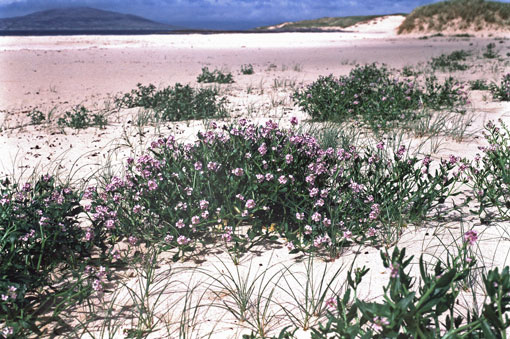
Source: https://www.geos.ed.ac.uk/~rsgs/ifa/gems/landformscarista.html

 His last major publication for the association, the Geography Teachers' Handbook (1996), which he co-edited with another former GA President Peter Fox, was a mammoth effort. This remained in print for many years until more recent editions were published.
Bailey's enthusiasm for his subject was infectious, his love of teaching boundless - sometimes he even found it difficult not to intervene in the classroom when advising and supporting students on teaching practice. He was equally at ease introducing interested lay people into the delights of town trails and countryside walks.
Behind the teacher/scholar, Patrick Bailey was a very compassionate, thoughtful and caring man, generous in his praise of work done well, and very supportive of his close colleagues as well as his tutees. It was a measure of his inner strength and belief - he was a Christian Scientist - that in spite of a very debilitating illness he continued to be stimulating, interested, alert, and active in promoting the cause of geographical education.
References
https://www.independent.co.uk/arts-entertainment/obituary-patrick-bailey-1195260.html -Obituary by Alan Sutton
Bailey, Patrick. “A Reply to Sir Keith Joseph's Seven Questions, from the President of the Geographical Association.” Teaching Geography, vol. 11, no. 2, 1986, pp. 64–67. JSTOR, JSTOR, www.jstor.org/stable/23751212.
https://www.geos.ed.ac.uk/~rsgs/ifa/gemlandforms.html - Patrick Bailey's images used in this book
King, Russell. “Geography in the School Curriculum: A Battle Won but Not Yet Over.” Area, vol. 21, no. 2, 1989, pp. 127–136. JSTOR, www.jstor.org/stable/20002700. Accessed 31 Oct. 2020.
Patrick Bailey was the first editor of 'Teaching Geography', which was introduced in 1975, at a time when new pedagogies were emerging. He was involved with the GA for the next 25 years.


He was also the editor of an edition of the first modern edition of the Secondary Geography Handbook: one of the most prominent publications of the GA.
To conclude his Editorial of the first issue of Teaching Geography P. J. M. Bailey wrote:
"The teaching of geography has never been so difficult or challenging as it is today. Unless geographers in the universities and schools help in some measure to interpret the problems of the changing world, geography will neither maintain nor deserve its continuing place in the curriculum. However, many of us believe that geography has important things to say about the human condition and that its distinctive message can and must be made effective in the schools."
The Obituary in the Independent provides a lot more information on Patrick's career. It was written by Alan Sutton.
He was born in London in December 1925.
He studied at Corpus Christi College, Cambridge, and then moved on to McGill University in Canada.
Patrick started his career as a Geography teacher, and he was also linked to Norfolk, and to several teaching jobs, including a school not far from where I live, called Wymondham College. We still play them at sport (Covid-19 has put an end to that temporarily).
He moved on to lecture at Ponteland College in Northumberland in 1964-8.
In 1969, he moved to the University of Leicester to get involved in teacher training and also do some teaching in the University of Geography, and stayed there for well over a decade, lending his knowledge and experience to generations of new geography teachers - something I've always thought of as a privilege when I've spoken to them.
In the late Eighties, he was significantly President of the association at a time when Geography was obliged by the then Secretary of State for Education, Sir Keith Joseph, to justify its place in the school curriculum.
In A Case for Geography (1987, co-edited with another former President Tony Binns), a spirited advocacy of the subject was argued on behalf of the members of the Geographical Association.
In 1969, he moved to the University of Leicester to get involved in teacher training and also do some teaching in the University of Geography, and stayed there for well over a decade, lending his knowledge and experience to generations of new geography teachers - something I've always thought of as a privilege when I've spoken to them.
In the late Eighties, he was significantly President of the association at a time when Geography was obliged by the then Secretary of State for Education, Sir Keith Joseph, to justify its place in the school curriculum.
In A Case for Geography (1987, co-edited with another former President Tony Binns), a spirited advocacy of the subject was argued on behalf of the members of the Geographical Association.

This appeared in a recent blog post.
His Presidential Address was entitled "A geographer's view" contributions of geography to the school curriculum".

In his address, which was relatively rare at the time in focussing on pedagogy and teaching, Patrick suggested that teachers needed to raise awareness in young people of the powerful knowledge of the subject.
He had a particular focus on map-making and map use and the graphical representation of information, mirroring, Billy Balchin's 'graphicacy' work.
From the introduction:
Geography is a view of the world. It is a unique way of observing and recording the
features of that world: of analysing our observations and experience and of setting them in
order. It is both a body of knowledge and a way of thinking.
Indeed, the way geographers
think determines what they study and also how they study it. It is my conviction that the
knowledge and the processes of thought which can be acquired through a study of
geography are valuable parts of a general education. They need not, indeed they should
not, be confined to lessons labelled 'geography'.
All geography starts with observation: with somebody, somewhere, going out and
looking at a part of the earth's surface. On that surface, two broad categories of
phenomena are to be observed: those which are natural and those which Mankind
produces.
Observations show that the two are often closely linked, reminding us that
geography is one subject, not two. Sometimes the links between what is natural and what
is of human origin are obvious, but more often than not they are subtle, indirect, hard to
observe, let alone to explain and understand.
The whole address is well worth reading.
Bailey finished by quoting the legendary H. J. Fleure.
H. J. Fleure once remarked that "Geography is the study of
things becoming".
This, I think, should be our watchword for the modern teaching of
geography.
Bailey was a keen photographer, and used his Zeiss camera to explore the 'Orkneys' and wrote a book about the island. A sample of his images are shared on this RSGS project website.
Here's one of his images of Scarista Sands on the Isle of Harris, taken in 1987
Source: https://www.geos.ed.ac.uk/~rsgs/ifa/gems/landformscarista.html
He was heavily involved in the Leicester GA Branch, delivering many lectures and organising other visitors to their meetings.

He was a prolific writer of books, articles and reviews.
He was the author of The Norwich Area (1971) in the British Landscapes through Maps series - I have a copy of that particular publication - Orkney (1971), part of the Islands series, and also of Teaching Geography (1974).

Once Patrick retired from Leicester University, he continued to get involved with the teacher training at nearby Loughborough University.
Patrick is another former President whose involvement with the GA went far beyond his Presidential year, and for which the GA will always be grateful.
Patrick is another former President whose involvement with the GA went far beyond his Presidential year, and for which the GA will always be grateful.
Bailey's obituary by Alan Sutton paints a lovely portrait of his enthusiasm for the subject.
Bailey's enthusiasm for his subject was infectious, his love of teaching boundless - sometimes he even found it difficult not to intervene in the classroom when advising and supporting students on teaching practice. He was equally at ease introducing interested lay people into the delights of town trails and countryside walks.
Behind the teacher/scholar, Patrick Bailey was a very compassionate, thoughtful and caring man, generous in his praise of work done well, and very supportive of his close colleagues as well as his tutees. It was a measure of his inner strength and belief - he was a Christian Scientist - that in spite of a very debilitating illness he continued to be stimulating, interested, alert, and active in promoting the cause of geographical education.
Following his GA Presidency he became Honorary Secretary and also served as a Trustee for another decade.
Patrick Bailey was awarded an Honorary Fellowship by the Royal Geographical Society shortly before his death.
References
https://www.independent.co.uk/arts-entertainment/obituary-patrick-bailey-1195260.html -Obituary by Alan Sutton
Bailey, Patrick. “A Reply to Sir Keith Joseph's Seven Questions, from the President of the Geographical Association.” Teaching Geography, vol. 11, no. 2, 1986, pp. 64–67. JSTOR, JSTOR, www.jstor.org/stable/23751212.
https://www.geos.ed.ac.uk/~rsgs/ifa/gemlandforms.html - Patrick Bailey's images used in this book
Article on the creation of Teaching Geography:
Richard Daugherty also mentions Patrick in his article on the origins of 'Teaching Geography'.
King, Russell. “Geography in the School Curriculum: A Battle Won but Not Yet Over.” Area, vol. 21, no. 2, 1989, pp. 127–136. JSTOR, www.jstor.org/stable/20002700. Accessed 31 Oct. 2020.
Bailey, Patrick. “A Geographer's View: Contributions of Geography to the School Curriculum.” Geography, vol. 71, no. 3, 1986, pp. 193–205. JSTOR, www.jstor.org/stable/40571121. Accessed 31 Oct. 2020.
https://www.tes.com/news/geographer-dies?amp - TES mention in 1998
Image of Patrick Bailey room by Alan Parkinson, CC licensed
Image of Patrick Bailey room by Alan Parkinson, CC licensed
If anyone has more memories of Patrick Bailey they would be gratefully recieved. This initial post is a little briefer than Patrick deserves.
Updated September 2023
As mentioned before, Bailey was awarded Honorary Fellowship of the Royal Geographical Society in 1999. Here is the transcript of the citation:

Source:
“Meetings: Session 1998-1999.” The Geographical Journal, vol. 164, no. 3, 1998, pp. 365–72. JSTOR, http://www.jstor.org/stable/3060640. Accessed 16 Sept. 2023.
Obituary

Lewis, Gareth. “Obituaries: Patrick J.M. Bailey 1925-1998.” The Geographical Journal, vol. 165, no. 2, 1999, pp. 244–244. JSTOR, http://www.jstor.org/stable/3060432. Accessed 16 Sept. 2023.
Saturday, 3 October 2020
1975 - 'Teaching Geography' - updated post
 Updated October 2020
April 1975 saw the arrival of 'Teaching Geography'. This was edited by Patrick Bailey, who set out the aims of the journal in the first Editorial of many.

The first article to be published was a field research exercise on a supermarket in Llandovery, written by another future President, Eleanor Rawling.
Also Roslas in the Rain from Margaret Booth.

I'm pleased to have contributed a few items to Teaching Geography myself over the years.
There were originally intended to be five issues a year, but this settled into 4 issues to begin with from August 1976 onwards.The subscription was £5.
The journal is now published three times a year.
References
Bailey, Patrick. “EDITORIAL: New Geography—New Schools.” Teaching Geography, vol. 1, no. 1, 1975, pp. 4–5. JSTOR, www.jstor.org/stable/23749910.
RAWLING, ELEANOR. “Supermarket for Llandovery: —an Exercise in Field Research.” Teaching Geography, vol. 1, no. 1, 1975, pp. 7–10. JSTOR, www.jstor.org/stable/23749911.

The first article to be published was a field research exercise on a supermarket in Llandovery, written by another future President, Eleanor Rawling.
Also Roslas in the Rain from Margaret Booth.

I'm pleased to have contributed a few items to Teaching Geography myself over the years.
There were originally intended to be five issues a year, but this settled into 4 issues to begin with from August 1976 onwards.The subscription was £5.
The journal is now published three times a year.
References
Bailey, Patrick. “EDITORIAL: New Geography—New Schools.” Teaching Geography, vol. 1, no. 1, 1975, pp. 4–5. JSTOR, www.jstor.org/stable/23749910.
RAWLING, ELEANOR. “Supermarket for Llandovery: —an Exercise in Field Research.” Teaching Geography, vol. 1, no. 1, 1975, pp. 7–10. JSTOR, www.jstor.org/stable/23749911.
Updated October 2020
I've been receiving some very helpful details in emails from Sheila Jones, Former President.
She has been telling me some of her memories, and a recent email described the origins of 'Teaching Geography'.
Re: 'Teaching Geography' that was most exciting!
For some time there was only the very academic forerunner 'Geography', and during the Annual Conference a group of us would have coffee breaks in the cafeteria at LSE (that was the only location in Conference for food and drink, although a few people would go to a coffee bar in the street by the college instead).
The names of all escape me but I am pretty sure that there were Richard Daugherty, Rex Walford, Pat Cleverley, John Everson and Brian Fitzgerald, and John Bale. He it was that led the case for a teachers' magazine at that year's AGM - which was one of the liveliest I have ever attended.
The names of all escape me but I am pretty sure that there were Richard Daugherty, Rex Walford, Pat Cleverley, John Everson and Brian Fitzgerald, and John Bale. He it was that led the case for a teachers' magazine at that year's AGM - which was one of the liveliest I have ever attended.
There was no real opposition, only the desire to get the members' agreement that this was necessary. It has been suggested that Norman Pye (a lovely man) was against it, which is unfair because he was an academic in charge of an academic magazine which was inappropriate for school teaching apart from 6th forms. I think that the attendance at AGM in that year broke all records . The Deputy Conference officer at the time, could well have been Denys Brunsden, he did not have to search highways and byways to produce a quorum.
I've been promised more detail from Richard Daugherty as well.
I've been promised more detail from Richard Daugherty as well.
Saturday, 26 September 2020
1980: Myopic Geographers
In 1980, an item was published in 'Teaching Geography' called 'Do myopic geographers ignore the world?'
It explored the areas that teachers chose to study and whether we tend to focus on particular parts of it and neglect others, particularly at 6th form level.

Reference
Do Myopic Geographers Ignore the World? From the Sixth-Form/Universities Working Group of the Geographical Association. (1980). Teaching Geography, 6(2), 50-52. Retrieved September 14, 2020, from http://www.jstor.org/stable/23752265
It explored the areas that teachers chose to study and whether we tend to focus on particular parts of it and neglect others, particularly at 6th form level.
Reference
Do Myopic Geographers Ignore the World? From the Sixth-Form/Universities Working Group of the Geographical Association. (1980). Teaching Geography, 6(2), 50-52. Retrieved September 14, 2020, from http://www.jstor.org/stable/23752265
Sunday, 13 September 2020
1979: Crossword
Here's a crossword puzzle in 'Teaching Geography' in 1979. Why not print it off.... bonus points for any correctly completed answers...
1 across is Madrid.

Source:
Robinson, A. (1979). Geogames: Geographical Crosswords for the End of Term and Other Occasions. Teaching Geography, 4(3), 134-144. Retrieved September 13, 2020, from http://www.jstor.org/stable/23751042
1 across is Madrid.

Source:
Robinson, A. (1979). Geogames: Geographical Crosswords for the End of Term and Other Occasions. Teaching Geography, 4(3), 134-144. Retrieved September 13, 2020, from http://www.jstor.org/stable/23751042
Sunday, 16 August 2020
1976: United Kingdom Flood Survey
UK Flood Survey was in 'Teaching Geography'.

References
ELLIOT, GORDON. “United Kingdom Flood Survey 1976: a Project for Schools.” Teaching Geography, vol. 1, no. 3, 1976, pp. 128–129. JSTOR, www.jstor.org/stable/23752224

References
ELLIOT, GORDON. “United Kingdom Flood Survey 1976: a Project for Schools.” Teaching Geography, vol. 1, no. 3, 1976, pp. 128–129. JSTOR, www.jstor.org/stable/23752224
Sunday, 12 July 2020
Some sources of information: GA journals
To research the Presidents for the blog, I have used a number of sources.
These include those listed at the bottom of each blog post, but it's worth mentioning the GA's journals, which include notes on previous meetings, AGMs, Presidential addresses and 'Back and Front Matter; which features details on conferences, branch meetings, meetings and minutes, and changes of GA officers, from which one can chart the involvement of particular characters who then emerge as President having served their time in other roles.
The Geographical Teacher was the first of the GA's journals. It had its first issue in 1901. Although there was no issue in 1902, it returned in 1903, and then continued for several decades. It was edited by John Scott Keltie for many years, Beckit and Roxby earlier, and other names then took over. All past issues are available on the JSTOR archive for 'Geography' subscribers - login via the GA website.
This has some wonderful articles, and it's good to see female geographers so well featured, even in early editions (although the GA's formation is connected with the position of women within the RGS, so perhaps this is not so surprising). We still have an imbalance in the number of male to female Presidents of course (and my own taking-up of the Post doesn't help with that...)

It later became the journal Geography. This is also available on the JSTOR archive for subscribers.
This is the academic outlet of the association, with useful information on AGMs, formation of committees, branch activities and other activity.
More recently, an editorial collective shaped the new format, which to begin with slimmed down the many pages of references which accompanied many articles, and which many people will never read anyway.
Teaching Geography was launched in the mid 1970s - more on that to come when I get that far.
This features articles relating to pedagogy in the secondary classroom, and also some
The GA Magazine is a more newsy journal, which also shares news of GA policy and committees and special interest groups, as well as projects.
Issues dating back to 2004 (Issue 77) are available online.
I gained a few useful entries from there, and went up to Solly St over the summer to go through the paper archive copies. Early issues of the GA Magazine did contain some details of Presidents, but few and far between. We've also moved away from the tradition of printing Presidential Addresses.
Primary Geographer (now Primary Geography) was first published in the 1990s.
I am pleased to have contributed some articles to all of the GA's journals over the years, including most-recently a piece in the Spring 2020 issue of Primary Geography.
Issues back to 2004 (Issue 55) are available online.
 GA members who subscribe to the present day journal 'Geography' will find they have access to an electronic back catalogue of all issues going back to 1901, which has been produced in association with JSTOR.
This has been the primary source for information on the proceedings of the Association, as outlined at the AGMs.
A similar facility exists for Teaching Geography too, going back to the early issues of the journal. Others have researched this archive such as Indra Persaud.
I think there may also be plans to digitise Primary Geography(er)
Other sources were:
Wikipedia - some of the older, more illustrious Presidents have pages, whereas more recent Presidents are less likely to be featured. I may well encourage some page building nearer the time as we move later into the 20th Century.
Many of their entries didn't have mention of the Geographical Association Presidency, so I have edited these entries to include reference to the GA.
Classroom Geographer journal has previously been mentioned as well. I have most of a full set of this journal.
These include those listed at the bottom of each blog post, but it's worth mentioning the GA's journals, which include notes on previous meetings, AGMs, Presidential addresses and 'Back and Front Matter; which features details on conferences, branch meetings, meetings and minutes, and changes of GA officers, from which one can chart the involvement of particular characters who then emerge as President having served their time in other roles.
The Geographical Teacher was the first of the GA's journals. It had its first issue in 1901. Although there was no issue in 1902, it returned in 1903, and then continued for several decades. It was edited by John Scott Keltie for many years, Beckit and Roxby earlier, and other names then took over. All past issues are available on the JSTOR archive for 'Geography' subscribers - login via the GA website.
This has some wonderful articles, and it's good to see female geographers so well featured, even in early editions (although the GA's formation is connected with the position of women within the RGS, so perhaps this is not so surprising). We still have an imbalance in the number of male to female Presidents of course (and my own taking-up of the Post doesn't help with that...)

It later became the journal Geography. This is also available on the JSTOR archive for subscribers.
This is the academic outlet of the association, with useful information on AGMs, formation of committees, branch activities and other activity.
More recently, an editorial collective shaped the new format, which to begin with slimmed down the many pages of references which accompanied many articles, and which many people will never read anyway.
Teaching Geography was launched in the mid 1970s - more on that to come when I get that far.
This features articles relating to pedagogy in the secondary classroom, and also some
The GA Magazine is a more newsy journal, which also shares news of GA policy and committees and special interest groups, as well as projects.
Issues dating back to 2004 (Issue 77) are available online.
I gained a few useful entries from there, and went up to Solly St over the summer to go through the paper archive copies. Early issues of the GA Magazine did contain some details of Presidents, but few and far between. We've also moved away from the tradition of printing Presidential Addresses.
Primary Geographer (now Primary Geography) was first published in the 1990s.
I am pleased to have contributed some articles to all of the GA's journals over the years, including most-recently a piece in the Spring 2020 issue of Primary Geography.
Issues back to 2004 (Issue 55) are available online.
This has been the primary source for information on the proceedings of the Association, as outlined at the AGMs.
A similar facility exists for Teaching Geography too, going back to the early issues of the journal. Others have researched this archive such as Indra Persaud.
I think there may also be plans to digitise Primary Geography(er)
Other sources were:
Wikipedia - some of the older, more illustrious Presidents have pages, whereas more recent Presidents are less likely to be featured. I may well encourage some page building nearer the time as we move later into the 20th Century.
Many of their entries didn't have mention of the Geographical Association Presidency, so I have edited these entries to include reference to the GA.
Classroom Geographer journal has previously been mentioned as well. I have most of a full set of this journal.
Thursday, 12 March 2020
28th May 1960: A one-day conference on the teaching of geography

I also liked the description of this contribution, from David Linton, on geography and realities, particularly the final quote.

References
Shepherd, W. H. “A One-Day Conference on the Teaching of Geography: A REPORT.” Geography, vol. 45, no. 4, 1960, pp. 300–303. JSTOR, www.jstor.org/stable/40565188
Subscribe to:
Posts (Atom)
Margaret Mackintosh RIP
Updated post. Sad news at the end of last week from colleagues who have organised the Charney Conference over the years of the passing of Ma...
