Showing posts with label Liverpool University. Show all posts

Thursday, 19 December 2024

R H Kinvig

R H Kinvig is mentioned in a few documents referenced when I was searching for information on Michael Wise. He was connected with the University of Birmingham,. and also other presidents including Percy Roxby.


He served as President of the Institute of British Geographers in 1957.

He wrote a history of the Isle of Man.

The University of Birmingham still has a Kinvig Geographical Society.

https://www.kinvigsociety.co.uk/


Obituary, written by Michael Wise of whom he was a mentor, as he was for Harry Thorpe.

Wise, M. J. “Obituary: Professor R. H. Kinvig.” The Geographical Journal, vol. 135, no. 3, 1969, pp. 485–87. JSTOR, http://www.jstor.org/stable/1797428. Accessed 19 Dec. 2024.

References

Sunday, 9 June 2024

The Geographer's Craft (1967) - Percy Maude Roxby

While researching something on the history of the RGS, I came across a book called 'The Geographer's Craft' by Emeritus Professor T.W. Freeman (of Manchester University) published in 1967.

It can be accessed via the Internet Archive site and borrowed if you have a free account.

One of the chapters focussed on two British Geographers, and one of them was Percy Maude Roxby.

It included the image opposite.

Roxby was GA President in 1933.

The chapter starts with a description of Roxby which is excellent - he had panache.

He was 6'5" tall and saw each lecture as a performance.


There is a reminder that he trained as a Historian originally. He was influenced by lectures by Herbertson and Mackinder, and also Linton Myres.

He became particularly interested in China, which became a preoccupation.

He was also interested in the geography of East Anglia.

He produced his own regionalisation of East Anglia.


According to Roxby, I live in an area he called High Norfolk (some of this is now called Breckland)

It is described by Roxby as having:

Mainly heavy and tenacious boulder clays, mixed arable farming, many commons.

He died suddenly in 1946, 2 years after retiring from his Chair at Liverpool University.

Tuesday, 6 October 2020

1982: Professor Richard (Dick) Lawton

Updated August 2023

Richard (Dick) Lawton was an academic geographer who was active in all spheres of the subject during a long career, and involved in moves to improve the standard of teaching in universities.

He was born in County Durham, but he was linked with the University of Liverpool for his entire career. He was very much influenced by the teaching of a previous GA President,
Professor Percy Maude Roxby.

He was described by Bill Chambers (President in 2004) as

"a tough Yorkshireman and utterly committed to geography and to the GA especially on Merseyside."

His 1972 inaugural lecture, ‘An age of great cities’ (itself a classic Lawton tour-de-force apparently) and his 1987 Presidential Address to the Institute of British Geographers, ‘Peopling the past’ were said to have encapsulated his academic achievement.

He had a distinguished wartime career, as did many GA Presidents during this time.
His undergraduate studies were broken by three years (1943–46) as a sub‐lieutenant aboard the corvette HMS Primrose hunting U‐boats on the North Atlantic - an experience which I am sure informed his geography in many different ways.

His duties on board the ship included those of librarian, in charge of a set of the top‐secret Naval Intelligence Geographical Handbooks, many written by those who would become his tutors and his colleagues after the war was over, and some of whom we have featured in the posts on this blog of course.

From a description of his work:

He was a good and faithful servant of the (then) three principal professional organisations: the Geographical Association (Member of Council 1975–89 and President 1982–83); the Institute of British Geographers (Honorary Secretary 1973–76 and President 1986); the Royal Geographical Society (Member of Council 1986–89).

As an official or committee member Dick was always in total command of the details and could deal sharply with those who, having failed to ‘do their homework’, made lazy or ill-informed contributions to proceedings.

He wrote a useful piece on Career opportunities for Geographers in 'Geography' in 1980 as well, connecting with my own work in this area during 2020.

Source:
Lawton, R. (1980). CAREER OPPORTUNITIES FOR GEOGRAPHERS. Geography, 65(3), 236-244. Retrieved August 26, 2020, from http://www.jstor.org/stable/40569280

His GA Presidential lecture was entitled: 'Space, Place and Time'


In it, he explores some important geographical concepts:
This particular quote from his address is interesting:

"Knowledge of places, awareness of space and perception of spatial order - both life-space and social space - is built up over time and in the context of shared cultural experience. Hence it is not equally open to all and is shaped by many factors such as age, education, opportunities of travel and the like. These interact over time in a complex way to create a hierarchy of personal space from the very familiar - home, workplace, neighbourhood - to the occasionally visited, which may be far in distance but not now necessarily in time (overseas holidays, and international business trips or conferences). Indeed, modern telephonic and radio communication is leading towards a micro-electronic era in which we may well witness the ultimate collapse of space by time. This substitutability of one dimension of our world by another is not new, as we shall see, but never before have the implications of it been so profound..." 

- there certainly have been some profound changes in our lives in the micro-electronic era...

In the Space section he references Richard Hartshorne and talks about the idea of "life space".

The last award he received was the RGS's prestigious Murchison Award in 1983 ‘for his contributions to historical geography and geographical education’. In his reply on behalf of those who received honours from the RGS that year Dick reflected his firm belief in the importance of geography (‘a truly universal subject in its appeal and relevance’) in education for citizenship, a concern advanced as Secretary of the Council of British Geographers (COBRIG)

An obituary was published in the Geographical Journal, following his death in 2010.

A few quotes from this piece:
In 1995 (in an essay on the historical geography of the British Isles published in German) he summarised his chief interest as the historical and social geography of the British Isles, especially the urban and population problems of industrial society in the nineteenth and twentieth centuries.

"There was nothing narrow or instrumental in his teaching, with its invitations to explore beyond anything that might be regarded as ‘curriculum’ "

Expanding on this:

There was nothing narrow or instrumental in his teaching, with its invitations to explore beyond anything that might be regarded as ‘curriculum’ and its frequent historical, literary and biblical allusions enthusiastically delivered to classes who were assumed if not to know about them at least to savour them. Like many of his generation he had serious academic interests and knowledge far wider than those they expressed in their publications. That may seem strange in the current university climate but simply reflects a shift of priorities from teaching in its widest sense to research in its narrowest. 
What his students experienced was rock‐solid integrity from a teacher who demonstrated that knowledge mattered, and could open doors onto worlds they never knew existed. 
He did not patronise or talk down to them, but simply encouraged them to do better and better.

As with another President who was to follow him: Rex Walford, he also had a particular interest in music.

He was also, it seems an accomplished historian, and wrote a history of the Ryedale village of Marton.
He was interested in the developments of the village.

He is an authority on the historical and social geography of Britain and has written more than 150 research articles and books.
Professor Lawton says the Domesday Book village, which gets its name from a farm or place by a pool, was originally part of the lands of Sinnington Manor and was in the hands of Norman lords until the 16th century.
An RGS remembrance ends with these kind words:

This was a generous, fearless man who could direct a fiery indignation against humbug and intellectual dishonesty, while showing a deep sensitivity to understanding the problems and applauding the achievements of others. These were some of the many things we loved him for. It will be a duller world without him.

References
Obituary:
https://rgs-ibg.onlinelibrary.wiley.com/doi/pdf/10.1111/j.1475-4959.2011.00408.x
Image result for richard lawton geography
Selected publications 
Lawton R 1972 An age of great cities Town Planning Review 43 199–224 
Lawton R 1983 Space, place and time Geography 68 193–207 
Lawton R 1987 Peopling the past Transactions of the Institute of British Geographers new series 12 259–83 
Lawton R 2009 Marton: a short history Ryedale District Council Lawton R and Cunningham C M eds 1970 Merseyside: social and economic studies Longman, London 
Lawton R and Lee W R eds 1989 Urban population development in western Europe from the late-eighteenth to the early twentieth century Liverpool University Press, Liverpool 
Lawton R and Lee W R eds 2002 Population and society in western European port cities, c 1650–1939 Liverpool University Press, Liverpool 
Lawton R and Pooley C G 1992 Britain, 1740–1950: an historical geography Edward Arnold London Lawton R, Aspinall P J and Hudson D M 1982 Ellesmere Port: the making of an industrial borough Borough Council of Ellesmere Port, Neston, South Wirral 
Steel R W and Lawton R eds 1967 Liverpool essays in geography: a jubilee collection Longman, London

https://www.rgs.org/geography/news/richard-(-dick-)-lawton-(1925-2010)/
An influence on the work of Gerry Kearns:
https://hgrg.org.uk/how-i-became-a-geographer-2/

- RGS obituary with further information and some images - worth reading.

https://rgs-ibg.onlinelibrary.wiley.com/doi/pdfdirect/10.1111/j.1475-4959.2011.00408.x#:~:text=Dick%20Lawton%20was%20an%20empiricist,to%20the%20Geographical%20Association%20showed.

Book: https://www.amazon.co.uk/Britain-1740-1950-Historical-Richard-Lawton/dp/0713165502
Liverpool Essays:
https://www.amazon.co.uk/Liverpool-geography-jubilee-collection-Richard/dp/B0014KRQ02
 co-written with former GA President Robert W Steel.

Lecture from GA Conference:
LAWTON, R. Changes in University Geography. Geography, vol. 63, no. 1, 1978,“www.jstor.org/stable/40568829. Accessed 25 Aug. 2020.


If anyone has any further information on Richard Lawton please get in touch as this entry is quite brief compared with some of the other recent entries.


Update: December 2020
In 2003, Chris Kington asked a number of former Presidents what had sparked their passion for geography. He lent me the letters and here is the response that Richard sent:

As with many Presidents, Dick mentioned his childhood, and a fascination with maps, followed by exploration of the local area: in his case the limestone across the moors.
He also had a "dynamic junior geography teacher" at Houghton-le-Spring Grammar School called Doris Parkinson. As with Richard Daugherty, Lawton was a scholarship boy, back in 1936.
I wonder whether Doris is a distant relation.
Richard says "What cricket mad schoolboy could resist a lesson in which the diversity of West Indian society was ullustrated from a photo of the touring side of, I think, 1937 with its ethnic mix from the captain, white of course, at that time, through varying degress of mixed blood to fully black...."
Doris was a Liverpool graduate, and that took him to Liverpool where he encountered many of the luminaries that have featured on this blog already: Percy Roxby, Wilfred Smith, Clifford Darby, Bill Mead, Frank Monkhouse and Harry Wilkinson.
He says that he learnt from them "not only about geography, but how to be a geographer".
Thanks to Chris Kington for the loan of the letters.
Update March 2021
Bill Chambers, President for 2004 remembered Dick Lawton getting him involved with the GA, as Dick was in charge of the GA's Liverpool Branch: He told me:
Once established from 1973 at Notre Dame College Liverpool (now Liverpool Hope University) and being responsible for the training of primary and secondary teachers it was a natural progression to join the local branch of the GA which was largely run by Professor Dick Lawton of Liverpool University. 

After a decade as Programme Secretary and later Chair of the Branch I was encouraged as part of my professional development by my head of department Alan Hammersley to contribute nationally and I joined the Environmental Education Working Group. The GA gave me the opportunity to work with the great geographers of the day and become aware of current developments in geography. It also gave me an opportunity to begin to publish both academic and pedagogical papers. I also made many lifelong friends including Tony Thomas the inspirational head of the Field Studies Council.

Updated August 2023

He co-edited a collection of essays on Liverpool with another former GA President with Liverpool connections: Robert Steel, published in 1967

Essays from generations of Univ of Liverpool-trained geographers from 1920s to 1960s. The anthology spans from Britain to Brasil, the USSR to southern Australia, and, timewise, from the Tertiary Era to the present day


https://www.abebooks.co.uk/servlet/BookDetailsPL?bi=31406496394&searchurl=an%3Dsteel%2Brobert%2Bw%2Band%2Blawton%2Brichard%26sortby%3D17%26tn%3Dliverpool%2Bessays%2Bin%2Bgeography&cm_sp=snippet-_-srp1-_-title1#&gid=1&pid=1


Another book on Liverpool that he co-authored


Appears in this book - £150 though...

Friday, 11 September 2020

1979: Professor John Allan Patmore

Updated July 2022

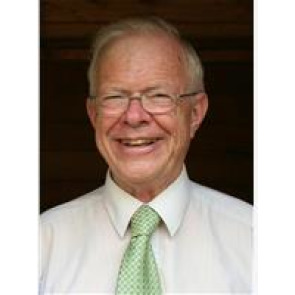
Professor (John) Allan Patmore was an academic geographer linked to the University of Hull with a particular interest in leisure and tourism.

I wasn't able to find out much about his time at the GA from the usual sources, and to begin with not much about the man himself. I still have very little about his time as President.

He was Professor of Geography at the University of Hull, which he arrived at in 1973, with a particular interest in leisure and recreation, a subject he wrote a lot about, including a series of books, articles and papers, including writing about this for GA journals. Regular readers of the blog will know that I did my teacher training at the University of Hull, so have a connection with this place, although we didn't mix much with the actual undergraduate geographers, and the postgrads had a better dining hall. Allan lived in North Ferriby on the outskirts of Hull.

It seems that he was also linked with the University of Liverpool to begin with, before moving to the University of Hull, where he eventually became a Professor.

He was born on the 4th of November 1931, and graduated from the University of Oxford. in 1952 according to a book edited by Robert W Steel.

I found a mention of him in a newsletter published by the Assocation of Jewish Refugees in Great Britain in 1967. He was given some money from the 'Thank-you Britain Fund' to pursue his research on Leisure and Land Use.
I gained further information from a newsletter associated with the LUPTS (showing his lifelong interest in the railways).

Liverpool University Public Transport Society (LUPTS) was formed in 1958 by a group of undergraduate students at the University with a mutual interest in all kinds of transport. Patmore was the first President of the Society http://www.lupts.org.uk/downloads/Patmore_Foreword.pdf

His inaugural Professorial lecture was given in 1974, and called 'People, place and pleasure', and published at the time. He was an expert in tourism and leisure and is referenced in a great many books and PhD theses. Here he is on people's holiday choices:

"The two prime factors in the choice of holiday destination are the friction of distance and the lure of the sun, factors that are equally applicable abroad and at home." (Patmore, 1983)

I wonder what we would have made of the current state of the tourist industry after Covid-19.

He was eventually the Vice Chairman of the Sports Council, now known as Sport England.
In his obituary, he is described as follows

“…a strong religious conviction - he was a Methodist lay preacher - and a moral compass that underscored all that he did. For us, we will remember his interest in and knowledge of railways in all their aspects but, in particular, his friendship and support."

In 1980, his Presidential lecture was entitled "Geography and Relevance" and had some illustrations when it was reproduced in 'Geography'.

Patmore, J. (1980). Geography and Relevance. Geography, 65(4), 265-283. Retrieved August 26, 2020, from http://www.jstor.org/stable/40570301

It also included one of the most well known quotes on the value of fieldwork in it:

Observation is the key to the importance of landscape to the geographer. It links him firmly to reality, it develops his appreciation and poses the questions he must answer to develop understanding. 
Contact with the actual landscape is contact with reality. Confined within classroom walls, geography is an impoverished shadow, like chemistry without experiments or biology without recourse to tangible specimens of plants and animals.
J Allan Patmore, 1980
He went on to say:
A training in geography enhances appreciation not through its intrinsic merit but because it is concerned to go far beyond the simple visual record and experience to consider context and process. The resulting understanding may be partial and incomplete, limited both by the extent of the observer's training and experience and by the inherent problems posed by elements in the landscape itself, but of almost equal worth is the curiosity aroused in the attempt.

Patmore, J. (1980). Geography and Relevance. Geography, 65(4), 265-283. Retrieved August 26, 2020, from http://www.jstor.org/stable/40570301

He was also made a CBE as part of his work with the Sports Council. 

Allan sadly died in 2018, aged 87, he lived in North Ferriby, Hull for some years.

I also found some reference to him at the University of Hull thanks to Justin Woolliscroft.

References
http://worldcat.org/identities/lccn-n50050666/
Notice Gallery for PATMORE
Obituary notice:
https://funeral-notices.co.uk/Yorkshire+%26+the+Humber-East+Riding+of+Yorkshire-Hull/death-notices/notice/PATMORE/4558758

British Geography 1918-1945, Edited by Robert.W Steel - published in 1987.
Chapter 12 was by J A Patmore, where he gave a personal perspective on the period.

He describes Stanley Wooldridge with his "eyebrows bristling" (note to self, get eyebrows sorted before the GA Conference)
Elements from this have appeared in other Presidents' entries from the period.

Yorkshire beyond the Millennium: https://www.yorkpress.co.uk/news/7957703.countys-future-to-be-put-under-spotlight/
A rather nice tribute to Patmore was published in the magazine of the North Yorks Moors Association (NYMA) journal 'Voices of the Moors' in Summer 2018 - written by Tom Chadwick. He was associated with the organisation for some time, and President of the YNMA from 1993 to 2001.

https://www.nyma.org.uk/_webedit/uploaded-files/All%20Files/Voice%20of%20the%20Moors/VOICE-132.pdf

Allan’s connection with the North Yorkshire Moors goes back to his childhood when he lived with his parents in Wetherby and was a regular visitor to the moors and coast.
This brief summary of Allan’s academic career and his involvement in the study of recreation and the countryside is a mere snapshot of his huge contribution to understanding the problems of balancing the human activities of recreation and sport and preserving the beauty of the countryside. Nowhere is this more important than in our National Parks and Areas of Outstanding Natural Beauty.

https://core.ac.uk/download/pdf/2731527.pdf - PhD thesis he supervised

If anyone can provide me with some more information on Professor Patmore that would be appreciated. This is a fairly brief entry compared with other recent ones.

Updated September 2020
Thanks to Brendan Conway for his additional contributions...

Also his work on 'Access to Water'

He attended the 1993 Centenary celebrations and is pictured top right on this image - standing in a grey suit.


Updated November 2020

I am particularly grateful to Derek Spooner, GA President 2000-2001 for the following details on the life of his friend Allan Patmore:

Allan Patmore and I were colleagues for 18 years in the Department of Geography at the University of Hull. 
He was appointed in 1973 as the Department’s second Professor (joining Professor Harry Wilkinson) and moved across from the hugely influential Liverpool Department of Geography. 

He had been at Liverpool since he left Oxford in 1974, after graduating from Pembroke College with a First Class B.A. in 1952, followed by a B.Litt. Allan had a wide range of interests in human geography, including urban development (his B.Litt thesis was a study of Harrogate) and the historical geography of transport (he was infatuated with railways). But his academic career was shaped by the award of a British Academy Thank Offering to Britain Research Fellowship 1967-69. 

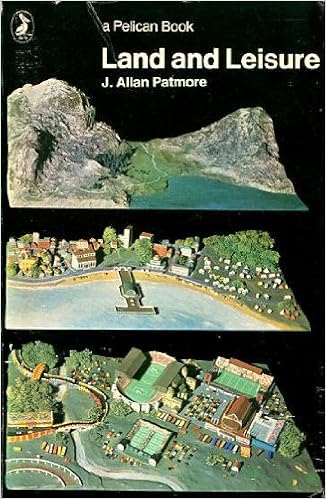
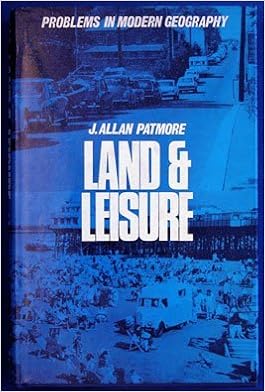
This enabled him to develop his interest in the geography of recreation, and led to the publication by Pelican of Land and Leisure in 1972. This highly successful book linked recreation and environment and kick-started the emerging field of recreational geography. 
A second book, Recreation and Resources followed in the 1980s. 
Twenty years after Land and Leisure his influence was celebrated in the publication Leisure and the Environment : Essays in Honour of Professor J.A.Patmore (including some by former graduate students). Allan was a Yorkshireman, born in Wetherby, and from his childhood had a particular affection for the North York Moors. 
Student field trips with Allan were characterised by a fluent and stimulating commentary on the landscape, environment, and, of course, recreational issues. He seemed to know every inch! It was hardly surprising that from 1977 to 1992 he was to be a member of the North York Moors National Park Committee (appointed by the Secretary of State for the Environment). 
This was just part of an extraordinary record of public service. 
He was a member of the Sports Council from 1978 to 1994 (sitting alongside the likes of Jack Charlton and Seb Coe), with several years as Vice-Chairman. I used to pull his leg about this, pointing out that he was not apparently either a sportsman or a sports fan! He also had close associations with the National Railway Museum at York, with spells on its Advisory Committee and as Chairman of the Museum’s Friends. He was awarded the CBE in 1993 for his services to sport and recreation. At Hull he had two spells as Head of Department, and also a spell as Dean of Social Sciences, and then became a Pro-Vice-Chancellor. 

He was an immaculate Chair of meetings, always well briefed, articulate and courteous. 

As my Head of Department he was always most supportive. As Head of Department he was keen to put the Department on the map, and persuaded his somewhat reluctant colleagues that it was time for Hull to host the Institute Of British Geographers Annual Conference. He pushed for it to be held in 1978 to follow the opening of the Humber Road Bridge (at the time the longest span in the world). Unfortunately the construction of the Bridge did not keep pace with Departmental plans, and it was not open by the time the Conference took place, leading to some interesting logistical gymnastics for the planned programme! 
 When Allan arrived in Hull he assisted greatly in the invigoration of the Hull branch of the GA, in which Vincent Tidswell was also strongly involved. It was through Allan that I became involved in the GA, and my first lecture to a GA Annual Conference came when he was President. 
Allan was also a Methodist lay preacher. He was a teetotaller. His Christian religion was a central part of his life, and I always think of him as a model Christian gentleman. Sadly his last years were clouded by serious health problems, including dementia. He and Barbara moved from North Ferriby by the Humber to Chesterfield to be close to some of his family, and in time he moved into a nursing home, where he died in 2018 at the age of 87.

Derek told me:

"He was a remarkable man, and I don't know how he found time to do all the things he did. 

The influence of the Department of Geography at Liverpool is very interesting. The Liverpool Department under Darby and Steel exported many of their lecturers to other universities as Professors, (and Darby himself moved to Cambridge). We used to refer to it as the Liverpool Mafia!"

Upated July 2022
On his retirement a collection of essays was published, edited by Sue Glyptis. This featured an introduction by another former GA President: Robert Steel.


Some useful additional background there, as well as his links with the Geographical Association:


Wednesday, 2 September 2020

1978: Professor Norman Graves

Last updated January 2025

Norman Graves' name will be known to many for his involvement in the authoring of school textbooks over many years. His other significant contribution was in the development of the IGU.

Norman taught in a number of secondary schools in his career.
He was also involved with the University of Liverpool and latterly the Institute of Education, from where he retired 30 years ago.

He will turn 100 in January 2025. 
There is a comment at the end of the blog post providing details of how you can send Norman best wishes on his birthday.

Norman told me in an e-mail that: "I am conscious that the year of your birth, 1963, was the year I arrived at the Institute of Education to head the Geography Department."

He was also mentioned early on in David Mitchell's PhD thesis:

In 1979 Norman Graves produced a model of ‘curriculum planning’ in geography which places the responsibility for the ‘curriculum problem’ with the teacher. 

‘Essentially a teacher’s curriculum problem should be that of deciding what he is going to try to get his students to learn.’ (Graves, 1979: 1)

Norman attended a seminar at the Institute of Education during my time working for the GA, as part of a seminar series organised by the late Duncan Fuller, which also had inputs from Andrew Bonnett and Michael Young. That was a good day of learning for me.

Here are just a small selection of some of the books that Norman authored during his long career:

Geography in Education;
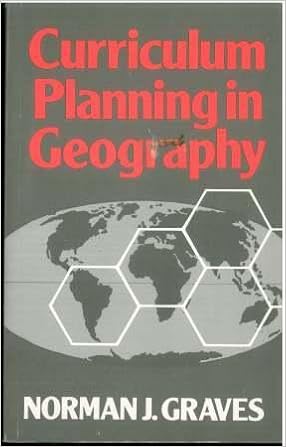
Curriculum Planning in Geography;
Geography in Secondary Schools,
The Education Crisis;
School Textbook Research: the case of geography;
Editor: Teaching Geography 
Series; New Movements in the Study and Teaching of Geography; 
New Unesco Source Book for Geography Teaching;
Initial Teacher Education;
Learner Managed Learning;
Working for a Doctorate;
Education and the Environment.

Norman Graves was GA President at a time when there were some financial issues for the Association. It had a deficit of around £10 000 and efforts were made to try to reduce expenditure to cope with the situation at the time.
https://www.jstor.org/stable/40569009?seq=1#page_scan_tab_contents

I contacted Norman by e-mail in August 2019, and he passed through the following information to me, along with the image which is included at the top of the blog post. The image shows Norman speaking at the 1976 IGU Conference in Leningrad, Russia.

Thanks to Norman for the following information on this entry, which he provided for me. He is the 2nd 'oldest' GA President to be alive, (and also the oldest as it happens I believe) and therefore able to offer me his own personal perspectives, following Sheila Jones' memories from her time as President in 1975 in an earlier blog post.

Norman was born in Sainte Adresse, Seine Inférieure (now Maritime), France, and lived there briefly before moving to the UK.

Education:
Ecole Communale de Garçons de Sainte Adresse,1931-35
London: Finsbury Park Junior School, 1935-36;
Tollington Park Central School, 1936-38;
Highbury County Secondary School, 1938-41;
The Polytechnic, Regent Street 1945-46 (part-time);
The London School of Economics and Political Science, 1946-49 (2 years part-time, 1 year full-time) - the LSE links with the GA are very strong
The University of London Institute of Education, 1949-50 (full-time). Subsequently, part-time study for higher degrees, 1952-63.

Employment
Norman started working life in 1941as a "Youth in Training" in the Post Office Engineering Department, then as a Technical Officer in the Engineer in Chief's Circuit Laboratory until 1948.

Teacher of Geography and Economics at East Ham Grammar School for Boys, 1950-54; responsible for Geography at Borough Beaufoy Secondary Technical School in Lambeth, 1954-58; Head of Geography and housemaster at Malory Secondary Comprehensive School in Lewisham,

Good to see another GA President who had spent time as a teacher of geography.

1958-60: Lecturer in Education at Department of Education University of Liverpool 

1961-63: Senior Lecturer in Education

1963-74: Reader in Education at the Institute of Education.

In an e-mail communication, Norman told me that he
1974-78: Professor of Education
1978-80: Robert Ogilvie Professor of Geography Education
1980-90: Pro-Director Professional Studies

When he became GA President he was working as Professor of Education at the IOE (UCL)


Norman told me:
"I entitled my Presidential Address "Contrasts and contradictions in Geographical Education". In the 1970s, I expressed the tensions which existed between the scientific nomothetic approach manifest in the then conceptual revolution, and the ideographic and humanistic approach epitomised in Yi Fu Tuan's book 'Topophilia'. "

He also said:
"Contradictions were evident in the attitudes of teachers who had difficulty in reconciling the instrumental aims of education, for example, coaching students to pass examinations, and the intrinsic mind-opening aims of guiding students to question the validity of certain theories, for example the Davisian view of landscape evolution."

This is an ongoing issue for many - dealing with the question of "is this on the test?" and making time for those additional discussions and criticality which helps build geographical thinking.

Norman told me: "I joined the GA as a student and maintained my membership throughout my career. I found it useful to read its publications and attend its meetings and Annual Conferences where I could discuss with other teachers our teaching problems."

Here's Norman's Curriculum Planning Model, which has stood the test of time as far as I can see.


Here's a publication that Norman produced for the GA during this period.
Of his association with the GA Norman said:

"The GA was a professional association of geography teachers whose meetings and publications provided me with in service development, which at that time was not provided by my first employers. I subsequently participated in the "training college" section and contributed occasional lectures, but my main contributions were to the GA's publications. For example: articles in" Geography"; A Tropical Peasant Holding in Ceylon in Asian Sample Studies (169); Geography in Secondary Education (1971); Geography in Education: a Bibliography of British Sources (with Clare Lukehurst, 1972); Geographical Education in Secondary Schools (1980); I also edited the series "Teaching Geography" (1968-72)."

Norman told me of his wider work in the field of Geographical Education which included his chairmanship of the Commission on Geographical Education of the International Geographical Union, his membership of the Schools Council Geography Committee and its Geography 16-19 Project led by his colleague, Michael Naish. 

A report on the work of the Commission on Geographical Education was written by Norman as Chairman and published in 'Geography' in 1980


Graves, N. (1980). THE COMMISSION ON GEOGRAPHICAL EDUCATION. Geography, 65(3), 230-231. Retrieved August 26, 2020, from http://www.jstor.org/stable/40569278
He also recalls being asked to lecture to various GA local branches in Oxford, Bristol and Leicester, and attending the Scottish Geography Teachers Association conference in Edinburgh - something I've done many times myself, and now with a reciprocal arrangement with the SAGT for our conferences.

He also sent some memories recently about his links with the previous GA President Stan Gregory:

Stan Gregory and I were students in the Joint School of Geography which was then shared by Kings College and the LSE, though he did a straight Geography degree while I did a BSc (Econ) which actually included a course in statistics which proved useful during the quantitative revolution. 
Our paths crossed again in Liverpool when I joined the Education Department, while he was in the Geography Department headed by Professor Steele at that time.

Along with Michael Naish, he wrote an important publication for the GA called 'Profiling in Geography', which was published in 1986.

Norman was awarded the RGS's Victoria Medal in 1993.

A picture of Norman Graves still hangs in the office at UCL which is used currently by Alex Standish, previously used by David Lambert and John Morgan. Alex kindly took a photo of it for me some time ago and shared it with me for use on the blog.


And here's the book that perhaps will be most well known to many of a particular age: the classic textbook that was used in schools and which was part of my own 'A' level studies. This is my own personal copy which is part of my growing library of textbooks which I have been collecting as part of this project.


References
Norman Graves (2008) Reflections on a Life in Geographical Education, International Research in Geographical and Environmental Education, 17:1, 1-5, DOI: 10.2167/irgeeed171.0

https://www.ucl-ioe-press.com/books/history-of-education/school-textbook-research/

https://link.springer.com/article/10.1007/BF02736948

REF: https://impact.ref.ac.uk/casestudies/CaseStudy.aspx?Id=44328 - mentions how the APG that I worked on, and the work of David Lambert built on Norman's work:

It develops Norman Graves's innovative work at the IOE in the 1970s and 1980s on the theory and application of `rational curriculum planning' in school geography.

Also a mention from Brian Hobbs: https://www.asdan.org.uk/blog/2013/02/19/a-geog-down-memory-lane as part of the GA's work to create an ASDAN course.

IGU:
http://www.igu-cge.org/wp-content/uploads/2018/02/The-IGU-Commission-on-Geog-Education-modified-0915.pdf

GRAVES, N. (1978). Changes in Attitude towards the Training of Teachers of Geography. Geography, 63(2), 75-84. Retrieved August 25, 2020, from http://www.jstor.org/stable/40568886
Non-GA book publications may be grouped into three groups: 
1 Text books: 
North America and Asia 1966 (with R C Honeybone), Geography of The British Isles 1971 (with John White), People and Environment 1987 (with John Lidstone and Michael Naish) 
2 Academic books on geographical education: 
eg Geography in Education (1975), Curriculum Planning in Geography (1979), School Textbook Research: The case of geography (2001); New Movements in the Study and Teaching of Geography (Editor, 1972); New Unesco Source book for Geography Teaching (Editor 1982) 
3 Academic books on education: 
eg The Education Crisis: Which way now, (1988); Initial Teacher Education: policies and progress (Editor 1990); Working for a Doctorate (Editor 1997); Education and Environment (Editor 1998)

Image: top image supplied by Norman Graves, office photo by Alex Standish, textbook image by Alan Parkinson

Please pass through any other memories of Norman Graves influence on your own practice.

Update September 2020
Norman kindly sent me a range of items to help this (and other) posts, including a copy of his article Reflexions on his career and on geography education, which was published in IRGEE journal in 2008. It contains further thoughts which has its own blog post in October 2020.

Additional details added in November 2020.

Simon Catling sent me the following memory:

"I have enjoyed reading your blog on Norman Graves, the inspiration for many of us. When I did my MA in geography education at the Institute in 1971-3 (the 3rd or 4th year it ran, I think) I was one of a group of 4 students. We had superb seminars where one of us would read our essay for that week (we wrote 24 essays over the 3 terms of the year, weekly) and then it would be debated. Alongside Norman, Molly Long, Bertie Roberson and Michael Naish were our tutors. It was a fascinating, invigorating, rigorous and very informative first year of the MA. Mick Naish supervised my MA thesis. I think that was, part-time on a Monday late afternoon, an invaluable course for my geographical education. The reading, thinking and writing was a very real education, demanding but just right.

While a young primary teacher I did two week long courses which were influential. In early 1975 I did a Place, time and Society 8-13 course run by Ray Derricot, Hazel Sumner and Gordon Elliot at an ILEA centre. In early 1978 I did an environmental course at Avery Hill College in Eltham, run by Colin Ward. Both were influential in my thinking. 

Gordon Elliott introduced me to a producer at the BBC which led from the autumn of 1975 to me being an adviser, alongside Michael Storm (who had just become the geography adviser in the ILEA), to a new series of primary geography programmes."

Check out Michael Storm's entry on the blog as well.

Updated July 2022

I prepared a paper for the IGU 2022 in Paris - the centenary event and was invited to chair a session. A link back to the work of Norman.

Archive material is also available apparently at the IoE - I wonder whether I might be able to get access to this material in the new academic year.


It includes handwritten notes by Elisie Beaver (the wife of Stanley?) and also mention of James Fairgrieve and also Robert Ogilvie Buchanan in these papers. They include handwritten notes on lectures related to curriculum development.

Updated August 2023

A family photo on Facebook showed Norman is still around and enjoying another French summer with family. Good news.

Updated January 2024

Again via Facebook, January 28th was Norman's 99th birthday. The oldest living GA President. Coincidentally I started a presentation at the Geography Teacher Educators' Conference with a messsage Norman sent me when I started writing this blog.

Tuesday, 25 August 2020

1977: Professor Stan Gregory

Updated August 2023


“a major agent for change in how geography is practised here in the UK..."

From the eulogy at Professor Gregory's funeral by Ron Johnston, former Vice-Chancellor of the University of Essex


Stan Gregory was Professor of Geography at the University of Sheffield, and also active at other universities.
Professor Gregory's address was on 'The Role of Physical Geography', and his work in the area of climate change was an area he will also be remembered for.

From the Obituary page of the University of Sheffield:

Stan Gregory was born in London in 1926 and educated at the Polytechnic Secondary School on Regent Street. He acquired his initial knowledge of meteorology while serving in the Navy towards the end of the Second World War. He then obtained a first in geography at King's College London (1950), followed by an MA (1951) and a PhD (1952) at the University of Liverpool while working as an assistant lecturer.

Working at Liverpool until 1968, Professor Gregory later moved to the University of Sheffield, where he remained until retirement, as Professor of Geography (1968-88). He served as Dean of the Faculty of Social Sciences (1978-80) and a Pro Vice-Chancellor (1980-84), as well as taking visiting posts in Australia, Canada, India, Eastern Europe, Jamaica and a number of African countries.

A leading climatologist, Professor Gregory had a particular interest in the study of rainfall in subtropical and tropical regions and related issues of water resources. Yet he was probably better known as a leader of the "quantitative revolution" in geography.

He was linked with the IBG, which later merged with the RGS.

To influence researchers and universities, he co-founded the Study Group on Quantitative Methods within the Institute of British Geographers.
To make a similar impact in schools, he persuaded the Geographical Association to set up a Committee on Models and Quantitative Techniques in Teaching, and he became its first chair.

He also promoted the "revolution" though a landmark 1963 textbook.
“Few textbooks have changed the practice of geography,” said Sir Paul Curran, the Vice-Chancellor of City University London, “but Stan's ‘Statistical Methods and the Geographer’ was one of them.


A keen and intrepid traveller, Stan saw many features of the globe: some of the highest mountains, longest rivers, mightiest water falls, biggest and deepest lakes, and largest deserts. (a statement taken from the obituary)

Stan's GA Conference theme, and his lecture were both on the theme of Physical Geography.
Gregory, S. (1978). The Role of Physical Geography in the Curriculum. Geography, 63(4), 251-264. Retrieved August 25, 2020, from http://www.jstor.org/stable/40568997


Stan was an early advocate for the use of the statistical method, and later technology. He was asked to chair an important GA committee at a time of tension.


Source: Ron Johnston Bibliogeography piece - sample on Google Books:
https://books.google.co.uk/books?id=kVtwDwAAQBAJ&lpg=PA90&ots=AHT4_XIJ21&dq=Geographical%20ASsociation%20Package%20Exchange&pg=PA87#v=onepage&q=Geographical%20ASsociation%20Package%20Exchange&f=false

He worked with the JMB examining board


He received the Murchison Award from the RGS, and a medal named after Hugh Robert Mill (another former GA President) awarded by the Royal Meteorological Society.
I like this mention of him too:


Might be something to introduce to the GA conference.

Stan was made an Honorary Member of the GA (one of the highest honours of the Association) in 1991.

Since I wrote this original piece back in August 2019, a couple of significant new resources appeared.
There was an excellent description of Stan's life in the University of Sheffield's Facebook area.
Included an image of him teaching.


Source: https://www.facebook.com/notes/university-of-sheffield-alumni/the-story-of-stan-gregory/10155934590756548/

Stan sadly died in 2016.
He left some money to the University which funds postgraduate students.

References
Gregory, S. “The Role of Physical Geography in the Curriculum.” Geography, vol. 63, no. 4, 1978, pp. 251–264. JSTOR, JSTOR, www.jstor.org/stable/40568997

https://www.sheffield.ac.uk/geography/news/stan_gregory-1.573272\

Image source: https://www.sheffield.ac.uk/alumni/our_alumni/obituary-archive/stan-gregory-obituary

https://www.facebook.com/notes/university-of-sheffield-alumni/the-story-of-stan-gregory/10155934590756548/ - the story of Stan Gregory

Bibliographical Studies mention: https://books.google.co.uk/books?id=E-xwDwAAQBAJ&lpg=PA93&ots=yyywauK3MP&dq=stan%20gregory%20sheffield&pg=PA92#v=onepage&q=stan%20gregory%20sheffield&f=false 

Please pass on any further memories of Stan Gregory if you have them.

Updated August 26th 2020

Thanks to Norman Graves (who will feature in the next Presidential post) for sending me some memories of Stan:

"Stan Gregory and I were students in the Joint School of Geography which was then shared by Kings College and the LSE, though he did a straight Geography degree while I did a BSc (Econ) which actually included a course in statistics which proved useful during the quantitative revolution. 
Our paths crossed again in Liverpool when I joined the Education Department, while he was in the Geography Department headed by Professor Steele at that time."


Updated October 12th 2020
Many thanks also to Richard Daugherty for sending me his own memories of Stan Gregory:

"Stan Gregory’s contribution to the Association’s development was exceptional. In addition to being its President in 1977/78 he also served terms as Hon Secretary and Trustee (twice). From his appointment as Secretary in 1968 to his final year as Trustee in 1990 that added up to a total of fifteen years contributing to the Association in those key voluntary roles.

Alice Garnett having negotiated the move of GA HQ from Manchester to Sheffield it was Stan Gregory who followed her by maintaining the GA’s links with the Geography Department of Sheffield University. Colleagues of his, including Bryan Coates and Malcolm Lewis, would also serve terms as officers of the Association. The debt which the Association owes to Sheffield’s Geography Department can best be summed up by pointing out that in every year from 1950 until 1992 at least one of the GA’s honorary officers was a member of Sheffield University's Geography Department’s academic staff.

My own memories of involvement in the Association’s activities are coloured by my first encounters with Stan. I had completed a degree at sleepy Oxford while the subject was changing rapidly elsewhere, not least at Cambridge. 

The 1960s ‘new geography’ had therefore passed me by as an undergraduate. A GA weekend course in Sheffield, led by Stan Gregory, during my first year in school teaching offered a chance to find out more.

Stimulated by what I had learned there I wrote to the GA asking to be kept in touch with the work of its newly formed committee, chaired by Stan Gregory, on ‘models and quantitative techniques in geography teaching’. Much to my surprise I received a letter back from Stan inviting me to become a committee member. It was a measure of Stan’s skills with people that, though I was initially overawed by the ideas and energy of committee colleagues like Rex Walford, he soon made me feel that I had a contribution to make."

Update November 2020

Obituary in the Times Higher Education Supplement

A geographer who radically reformed the discipline has died

A leading climatologist, Professor Gregory had a particular interest in the study of rainfall in subtropical and tropical regions and related issues of water resources. Yet he was probably better known as a leader of the “quantitative revolution” in geography.

To influence researchers and universities, he co-founded the Study Group on Quantitative Methods within the Institute of British Geographers. To make a similar impact in schools, he persuaded the Geographical Association to set up a Committee on Models and Quantitative Techniques in Teaching, and he became its first chair. He also promoted the “revolution” though a landmark 1963 textbook.

In a eulogy at Professor Gregory’s funeral, Ron Johnston, former vice-chancellor of the University of Essex, recalled Professor Gregory as “a major agent for change in how geography was practised here in the UK” who was also a highly effective university administrator. 
His “quiet tact and great patience in negotiations” had proved great assets during a period of student unrest while he was pro vice-chancellor.

A keen and intrepid traveller, Professor Gregory recently celebrated his 90th birthday by visiting the site of the Palace of the Queen of Sheba in Oman. He died after a stroke on 8 April and is survived by his wife Helga, two daughters from an earlier marriage and three grandsons.

Update: 
December 2020
In 2003, Chris Kington asked a number of former Presidents what had sparked their passion for geography. He lent me the letters and Stan had sent a reply.
In it, he talks about being evacuated from London in the 1930s. He had been attending the Polytechnic Secondary School in the Polytechnic, Regent Street in London. At the time his total experience had been Central London, but he was then evacuated to Minehead in Somerset at the age of 13. He was a keen walker and remembers a walk over North Hull overlooking the town.
He says:
"The autumn colours of the trees, the bracken, the heather and beyond that the blue of the sea all wrapping around the town and the neighbouring fields and marshes. I suddenly realised that the world was a wonderful place!"
Many thanks to Chris Kington for the loan of the letters.
Updated August 2023

New on the University of Sheffield Alumni Facebook page - a story which had an input from his daughter after the original version presumably.

Some lovely family photos on there.

An interview with Peter Batey who was influenced by Stan.

Quantitative Geography piece.

A detailed piece by Ron Johnston in Biogeographical Studies.

He references Robert Ogilvie Buchanan (another former GA President) as one of the better lecturers he had.

Stanley Beaver (another former GA President) also said that Stan Gregory was one of his best students - lots of connections like this have emerged over the years I've been working on this.

He also won the Hugh Robert Mill award (another former GA President)

https://books.google.co.uk/books?id=E-xwDwAAQBAJ&pg=PA72&lpg=PA72&dq=%22stan+gregory%22+geography&source=bl&ots=yzBtfrH7NQ&sig=ACfU3U24IDs3BsoaDHJaSOCIMiHOMhCA9Q&hl=en&sa=X&ved=2ahUKEwjChay4kPGAAxVUh_0HHeLtBDg4FBDoAXoECBgQAw#v=onepage&q=%22stan%20gregory%22%20geography&f=false

Margaret Mackintosh RIP

Updated post. Sad news at the end of last week from colleagues who have organised the Charney Conference over the years of the passing of Ma...