Showing posts with label British Empire. Show all posts

Thursday, 12 October 2023

COVIC and Alfred Hugh Fisher

COVIC has been mentioned before on the blog.

It is the Colonial Office Visual Instruction Committee, and GA Presidents were involved in its work at the time.

This article in the Cambridge University Special Collections blog describes some work carried out at the start of the 20th century.

It was written by Sabrina Meneghini.

It describes a journey made around the British Empire by an artist called Alfred Hugh Fisher.

He was hired to take photographs and make paintings in order to create a visual record of the people, landscapes and geography of the vast empire. From these images COVIC produced a series of illustrated lectures and textbooks which were to be presented as geography lessons to schoolchildren.

The 6 books that resulted are held in the library.
The Indian volume was written by Halford MacKinder... who was not a native of India...


MacKinder was appointed for the supervision of the whole project, including the preparation of the textbooks. In 1910 he entered Parliament and consequently had less time to commit to COVIC, therefore the succeeding textbooks were authored by the economist Arthur John Sargent.

The texts inside each of the books are rich in historical and geographical descriptions. The front covers, with the illustrations and the titles showing either the natural products, the animals or the distinctive landscapes of the countries, provide information of the inside arousing readers’ curiosity.

The textbooks were accompanied by sets of lantern slides (no less than 350 per book) and the complete lists can be found at the end of each book.


In 1902 the Colonial Office was charged with creating a visual record of the British Empire. The COVIC produced sets of lantern slides which were to be presented as a series of geography lessons to school children. The project’s cultural exchange aims were twofold: British schools would receive images of the colonies, while colonial school children would receive and see slides from the Mother Country. In 1907 the Committee hired Alfred Hugh Fisher, an artist and newspaper illustrator, for a duration of three years. He was given the responsibility of creating a visual description of Britain’s overseas territories.

This was quite a commission.

The first two posts were from 2018, but there is a follow up from April 2023 by Sabrina, updating on her PhD research.

Sabrina recently completed her PhD at DeMontfort University, entitled Classroom Photographic Journeys: Alfred Hugh Fisher and the British Empire’s Development of Colonial-era Visual Education, which made heavy use of the Library’s Royal Commonwealth Society photographic collections.
Congratulations!

There are also diary and letter images.

His journey started in October 1907 in South Asia where he visited India (at the time of Fisher’s journey the term India included the areas in the Indian subcontinent administrated by the United Kingdom and ruled by the British Raj. It extended over present-day India, Pakistan, Bangladesh, Myanmar, and Sri Lanka), Burma [present Myanmar], Aden, Somaliland, and Cyprus. From July 1908 to May 1909, he travelled to Canada, Newfoundland, Weihaiwei, Hong Kong, Borneo, the Malay Peninsula and Singapore. In his last journey, from October 1909 to August 1910, he sailed from Gibraltar and Malta to Australia, New Zealand, Tasmania, and Fiji. COVIC purchased images from places he was not able to visit such as the West Indies [Caribbean], and South Africa. Some were acquired from official bodies, others from amateur photographers.

Fisher was the first and only photographer employed by COVIC.

Sabrina says that:
British geographer Halford John Mackinder, attempted to influence how Fisher’s work would shape COVIC’s with instructions on how and what to photograph. Fisher did not always follow these instructions and his own vision of the Empire can be seen through his artistic works.

In the section on India.

The type of images requested by Mackinder to Fisher in India had to show the stability and order of the colonial society. It was important to illustrate to British pupils the Empire’s most valuable possessions and the achievements accomplished by British in the Indian subcontinent. Fisher documented the various forms of cults in India, ancient buildings, princes and rulers from different Indian states, railways, engineering infrastructures, and scenes depicting the development of the colonial economy to demonstrate the good functioning of the Empire and the subservience of its subjects.

Fisher sent his documents in the hope that his biography would be written.
Some of the material can be accessed in digital form by following links from the main page above. Fascinating stuff.

This is a fascinating story and I'll try and track down the PhD in full as it sounds like it will be well worth finding out more...

Wednesday, 1 January 2020

1953: Dr Osbert John Radclyffe Howarth, OBE

Updated October 2023

Dr. Osbert J R Howarth was a curator of Down House (the former home of Charles Darwin), for English Heritage.
He was Secretary of the British Association, 1909-1946 and wrote a centenary history of the association in this capacity.

When I started researching Dr Howarth, there wasn't a lot of information on him to be found at all, and this still remains one of the more scant entries on the blog even after my researches. It has thankfully grown over time.

W.G.V Balchin's centenary book mentioned him in a brief few lines shown below:

Born 1877- Died: 1954. Westminster and Christ Church, Oxford. History degree and Geography diploma.
1904-1911 Geographical assistant to the editor of Encyclopaedia Brittanica.


He was linked with the British Association for the Advancement of Science, for whom he was Secretary from 1909 to 1946.
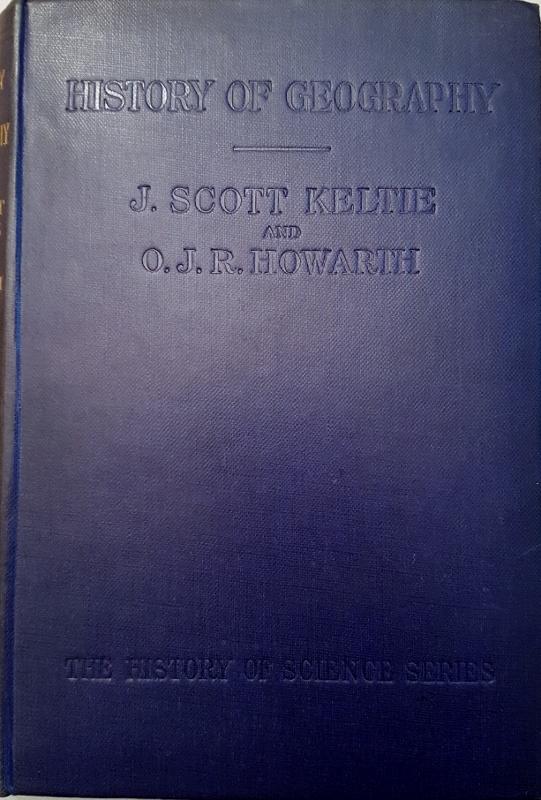
He co-wrote a history of Geography with fellow President John Scott Keltie, see references. This would have been a significant work at the time.

He wrote and edited numerous Geographical books for Oxford University Press, including 'A Geography of Ireland'. He co-wrote a book on the British Empire with fellow President A J Herbertson.

He was a great advocate of the Commonwealth replacing the Empire.

He even chose this theme for his Presidential Address, which was called "The Commonwealth in the Geography Syllabus".

"The British Association: A Retrospect" by O J R Howarth. The first edition, published in 1922 covers the years 1831-1922; a second edition published to coincide with the British Science Association’s centenary in 1931 covers the hundred years from 1831-1931.

He had a life long interest in the GA, but sadly died in 1954, just after completing his Presidential term.
This is described in this report on the following year's conference.

Some of his other publications:


Image result for O.J.R HowarthRelated image

His Presidential address was published in 1954 in 'Geography'.

I like his starting point about the positioning of the address within the President's tenure, and the ability to speak freely. He then said that having never taught geography he was going to tell geography teachers what he thought they ought to be doing, particularly teaching about 'world citizenship' and range further afield rather than a focus on the UK as it had at the time, from Howarth's perspective. This is an interesting position from which to start as GA President of course, but not uncommon in the earlier years of the GA.


It seems that he did a good job as President, as reported in the Annual Report for 1953


He wrote a 'History of Geography' with John Scott Keltie. This was published in 1913 and is available to read from this link.

References

If anyone knows anything more about this President, or has images, please let me know. I am lacking a decent photograph of this President.

One copyrighted image is here.
https://artuk.org/discover/artworks/dr-o-j-r-howarth-18771954-194318 - Artist is Robert Darwin.


Howarth, O. J. R. “THE COMMONWEALTH IN THE GEOGRAPHY SYLLABUS. Address to the Geographical Association.” Geography, vol. 39, no. 1, 1954, pp. 5–13. JSTOR, www.jstor.org/stable/40564669

Howarth, O. J. R. (Osbert John Radcliffe), 1877-1954. The British Association for the Advancement of Science: a Retrospect 1831-1921. London: The Association , 1922.

https://www.thegazette.co.uk/London/issue/31840/supplement/3791/data.pdf
- according to this he connected with the Naval Intelligence Division of the Admiralty, and his son served with the Naval Reserve I think according to this source
https://www.unithistories.com/officers/RNVR_officersH2.html
which describes him as a "scholar in geography".

1922: Book on the Scope of School Geography - book on the Internet Archive site.

The Study of the Geographical Environment - book on the Internet archive site.

https://openlibrary.org/books/OL7178190M/The_British_association_for_the_advancement_of_science
http://www.aughty.org/pdf/historical_geog_irl.pdf

A book called "History of Geography" was written with John Scott Keltie and published in 1913. It can be read on the Internet Archive site.


http://www.gutenberg.org/files/58349/58349-h/58349-h.htm - readable Project Gutenberg book which explores the 'history of geography"...

I contacted the British Association for the Advancement of Science to see whether they had an image, or more information on this President.
I'm still waiting for a response at the time of posting. Actually still waiting over two years later.

Update - this book was co-written with two others, including a familiar name in R N Rudmose Brown.


Readable on the Internet Archive and quite useful...

Updated August 2021
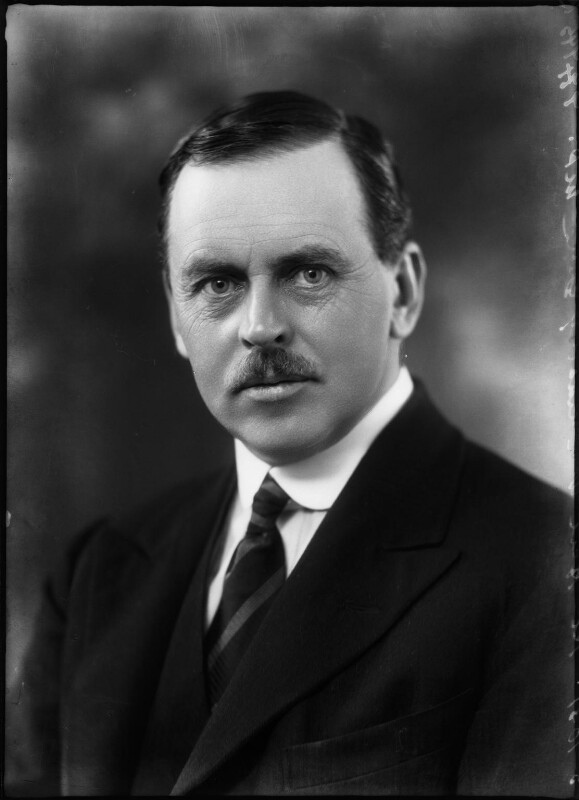
National Portrait Gallery photo.

Updated October 2023


He's on here somewhere then...


The Archives of Down House and BAAS have letters from Howarth in them, as does the Bodleian Library.

I discovered in an issue of the Elizabethan the confirmation that he went to Westminster School, followed by Oxford University.  This makes him an Old Westminster.

https://elizabethan.westminster.org.uk/Filename.ashx?tableName=ta_elizabethan&columnName=filename&recordId=609

The extra information about him being involved with the production of the geography section of Encyclopaedia Brittanica was also really interesting. Another avenue to explore...


The magazine also had information on his wedding.


Monday, 29 July 2019

1926: Rt. Hon. William George Arthur Ormsby Gore (later Lord Harlech)

William Ormsby-Gore, 4th Baron Harlech.jpg
Updated November 2020

The 4th Baron Harlech was a Conservative politician: another President during this period who didn't have an obvious connection with either geography or education.

He obviously had influence in other areas, and could perhaps 'speak up' for geography at a time when this was needed (which is pretty much always it seems...)

He was a Conservative politician, and during his political career, held the office of Secretary of State for the Colonies (making him another GA President with a colonial background) and also an MP.

He served in Egypt during World War 1, and worked as a liaison officer in Palestine.

In 1936 he was appointed colonial secretary, a post he resigned two years later because of his elevation to the peerage (on the death of his father, the 3rd Baron Harlech) and because of his outspoken criticism of Nazi Germany.

He promoted educational policies in keeping with the needs of the region. He also championed scientific research to aid in solving the medical and agricultural problems afflicting the underdeveloped portions of the British Empire. 
In line with his interest in and commitment to education, he served as prochancellor of the University of Wales from 1945 to 1957.

He seems to have made some very reasonable choices during his Political career.

I perhaps need to start keeping count of the various Presidents who were MPs and establish the general political leaning of GA Presidents. I wonder also whether that has changed over the years...

His Presidential Address was on the theme of 'The Economic Geography of the British Empire'.
It was mentioned by the previous President: Linton Myres in his 'Wayside Geography' piece in the same issue of the journal as the Address was published.


He starts by setting out the size of the Empire at the time, which in this time of Brexit puts our current status on the world stage into even sharper relief.


There was little that I could find about his further involvement with the GA on reading through all the journals at the time. He wrote about various parts of the country with respect to the Ancient Monuments that could be found there, so could perhaps be described as a geographer that way.

I am unsure as to which stories relate specifically to him, as he had other family members.

References

Wikipedia page: https://en.wikipedia.org/wiki/William_Ormsby-Gore,_4th_Baron_Harlech
Source of image.

https://www.britannica.com/biography/William-George-Arthur-Ormsby-Gore-4th-Baron-Harlech

Papers (which may have further information on his time at the GA)
https://archives.library.wales/index.php/papers-of-william-george-arthur-ormsby-gore

https://livesofthefirstworldwar.iwm.org.uk/lifestory/1392688

I edited this page to include the fact that he was the President of the GA, as usual.

Gore, W. G. A. Ormsby. “THE ECONOMIC GEOGRAPHY OF THE BRITISH EMPIRE.” The Geographical Teacher, vol. 13, no. 4, 1926, pp. 268–275. JSTOR, www.jstor.org/stable/40556127.

If you know anything further about this President, and what he did during his time in office let me know. This is one of the briefest entries on the blog so far.

For example, was this him?
He looks similar and of the right age.

Saturday, 1 June 2019

1916: Sir Halford J Mackinder MP

Original post last updated September 2023

Halford Mackinder (1).jpg
Halford Mackinder was another of the original members of the Geographical Association, who helped set it up.

He was present at the first meeting of the nascent association in the Common room of Christchurch College, Oxford University. I have previously blogged about this meeting, and the Presidency of Douglas Freshfield, who was also present at the meeting.

Halford Mackinder was a real giant of early 20th century Geography, although his legacy is certainly problematic and needs criticising.

At the time when he became President of the Association, during the First World War, he was already the Chairman of the GA Council, and Member of Parliament (for the constituency of Glasgow Camlachie), and doubtless was sitting on lots of committees and chairing meetings across London. He was also a qualified Barrister.

As with many of the GA's Presidents, he was an influential and tireless promoter of Geography, but also worked in other spheres. He was a prolific author as well. I shall list some of his publications later.

He was born in Gainsborough, Lincolnshire - there is a location I will need to visit on my tour of GA places of interest. The house he was born in has a plaque which describes him as a:

GEOGRAPHER, ADMINISTRATOR, AUTHOR,
EXPLORER, POLITICIAN, PUBLIC SERVANT.


Here's an image of the plaque.


Source: John Spooner.

In 1895, he was also one of the founders of the London School of Economics - another very significant achievement, and was Professor Geographer there from 1923.
He was a Scottish Unionist MP (1910-1922)

He was the British High Commissioner in Southern Russia for some time.

It's just as well that I don't compare myself with some of the exploits of former Presidents, as I've not got quite as impressive a CV, although I did work in King's Lynn for 20 years.

Prior to that, Mackinder had travelled the country expounding his "new geography". He had also travelled in Africa and other parts of the world at the end of the 19th Century (see later for more on this period.)

In 1911, Mackinder spoke at the Board of Education's Imperial Geography Conference. 
This was a time of Empire, which naturally influenced the nature of Geography, both in the UK, but also in those countries which Britain administrated. The lecture was later published in 'The Geographical Teacher' but introduced the idea that Geography involves... "a special mode and habit of thought... a special kind of visualisation" which he referred to as "thinking geographically" (a phrase we still use today - the idea of 'thinking like a geographer'. Although Mackinder would have thought like an Imperialist too.

During his Presidency, Mackinder set the Association back on a stronger footing, following the previous Presidency of Hilaire Belloc's, and this despite the fact that the First World War was now in its second year (it had not been 'all over by Christmas', and many more men had signed up to fight in the trenches.

He referred to Belloc's time as President in his address the following year as being undertaken "very brilliantly, but perhaps with a little of the waywardness of the literary artist... I am not sure that we all feel that he wholly carried out his purpose."

It will be interesting to see if more recent Presidents have a habit of talking about their predecessors in quite the same way. (Perhaps not in public anyway...)

In 1914, following Keltie's Presidential Address, Mackinder also talked about some of his early geographical memories. This can be read using the references in the blog post on Keltie's time as President.

During the time that Mackinder worked with the GA, he had his 'lieutenant' to support him: A. J. Herbertson, who had a great influence on the GA. I have blogged previously about Herbertson's work, and the gratitude that Mackinder had for his work for the Association. One of the things he did was to reflect on the contributions made by Andrew John Herbertson, in a long and emotional tribute to one of the founders of the GA, who died in July 1915, and who has his own entry in this blog, despite never having been President.

His own Presidential Address doesn't have a stated title and was fairly brief and unfocussed. He does start it by giving a perfectly reasonable excuse though:
"My good intentions were to have a printed text of what I am going to say to put before you. But this is a time of war, and an important Treasury Committee has, of late, occupied my time". I won't have that same excuse I'm sure. It was delivered at University College, on Gower Street in London on the 6th of January 1916. He suggested that "I think we may say that in this war the geographer has come into his own."
This was in reference to the need for the general public to follow the events taking place in the war, and realising the value of maps to understand what was happening in locations around the globe, and where they were in relation to the UK.

In 1919, Mackinder published a book which was very influential in geopolitics and introduced some key ideas that were adopted by many geography teachers and academics. The book, Democratic Ideals and Reality explored some global risks for the future.
He was knighted in 1919, as reported in the GA's Annual Report of that year.

This New Statesman article from a year ago, outlines the prescience of Mackinder in recognising some possible future threats to the stability of the world order, and describes him as the "father of geopolitics". He would have got on well with Tim Marshall no doubt with his views on how the world developed.

Halford Mackinder's name is commemorated in a Professorship chair at Oxford University: a position held, at the time of writing, by the most excellent Professor Danny Dorling. There is also a lecture theatre named after him at the University. This sounds like another place I need to try to get to visit during my Presidential year of visiting places associated with the GA.
Mackinder was influential in his teaching, and many other GA Presidents owe him a debt of gratitude for the work that he did during the early decades of the Association, and for setting out some of the expectations of the role, and a benchmark for how it might be performed.

Mackinder's Presidential year ended with the GA in a stronger position than when he took it on, but the First World War was still raging, and there were some fresh challenges ahead for the GA, as we shall explore in future posts.

Update
He also had a remarkably long lasting career in Geography, and was active in the GA even through into the 1940s.
He presented at the GA Conference in 1943, where he said:

 Has not the time come when we should base at least the secondary stage of our teaching on a global outlook? Is not the entire planetary surface now, for many purposes, the only 'natural' region, but with the advantage that, being a closed area, it admits of the accurate comparison of many orders of pattern?

He was Chair of Council until 1946. The IBG itself was founded in 1933, and eventually joined with the RGS.

He published a great many books - a partial list is shown here:
Books and Publications - taken from Wikipedia

Mackinder, H.J. "On the Scope and Methods of Geography", Proceedings of the Royal Geographical Society and Monthly Record of Geography, New Monthly Series, Vol. 9, No. 3 (Mar. 1887), pp. 141–174.

Mackinder, H.J. Sadler, M.E. University extension: has it a future?, London, Frowde, 1890.

Mackinder, H.J. "The Physical Basis of Political Geography", Scottish Geographical Magazine Vol 6, No 2, 1890, pp. 78-84.

Mackinder, H.J. "A Journey to the Summit of Mount Kenya, British East Africa", The Geographical Journal, Vol. 15, No. 5 (May 1900), pp. 453–476.

Mackinder, H.J. Britain and the British Seas. New York: D. Appleton and company, 1902.

Mackinder, H.J. "An Expedition to Possil, an Outpost on the Frontiers of the Civilised World", The Times. 12 October 1903.

Mackinder, H.J. "The geographical pivot of history". The Geographical Journal, 1904, 23, pp. 421–37. Available online as Mackinder, H.J. "The Geographical Pivot of History", in Democratic Ideals and Reality, Washington, DC: National Defence University Press, 1996, pp. 175–194.

Mackinder, H.J. "Man-Power as a Measure of National and Imperial Strength", National and English Review, XLV, 1905.

Mackinder, H.J. "Geography and History", The Times. 9 February 1905.

Mackinder, H.J. as editor of The Regions of the World series which includes the 1902 Britain and the British Seas mentioned above—which included The Nearer East by D.G. Hogarth London, Henry Frowde, 1902 and 1905

Mackinder, H.J. Our Own Islands: An Elementary Study in Geography, London: G. Philips, 1907

Mackinder, H.J. The Rhine: Its Valley & History. New York: Dodd, Mead. 1908.

Mackinder, H.J. Eight Lectures on India. London : Waterlow, 1910.

Mackinder, H.J. The Modern British State: An Introduction to the Study of Civics. London: G. Philip, 1914.

Mackinder, H.J. Democratic Ideals and Reality: A Study in the Politics of Reconstruction. New York: Holt, 1919.

Mackinder, H.J. 1943. "The round world and the winning of the peace", Foreign Affairs, 21 (1943) 595–605. Available online as Mackinder, H.J. "The round world and the winning of the peace", in Democratic Ideals and Reality, Washington, DC: National Defence University Press, 1996, pp. 195–205.

Taken from Wikipedia.

Looking at a few sources it's clear that Mackinder's works are still valuable as they command high second hand prices.

References

https://en.wikipedia.org/wiki/Halford_Mackinder
Source of image at the top of the entry

https://www.britannica.com/biography/Halford-Mackinder

Edited to include Mackinder's GA Presidency, as I have with all the Presidents' Wikipedia entries during this project.

Appreciation of A.J. Herberton:

Mackinder, H. J., et al. “ANDREW JOHN HERBERTSON.” The Geographical Teacher, vol. 8, no. 3, 1915, pp. 143–146. JSTOR, www.jstor.org/stable/40555835.
Image credit: Royal Geographical Society / Geographical Association

Presidential Address: KELTIE, J. SCOTT. “THIRTY YEARS' PROGRESS IN GEOGRAPHICAL EDUCATION.” The Geographical Teacher, vol. 7, no. 4, 1914, pp. 215–227. JSTOR, www.jstor.org/stable/40555979.

New Statesman: https://www.newstatesman.com/halford-mackinder-father-geopolitics

Critique of Mackinder's idea of the geographical 'pivot': https://www.cairn-int.info/article-E_HER_146_0139--the-geographical-pivot-of-history.htm

Dodds, Klaus, and James D. Sidaway. “Halford Mackinder and the 'Geographical Pivot of History': A Centennial Retrospective.” The Geographical Journal, vol. 170, no. 4, 2004, pp. 292–297. JSTOR, www.jstor.org/stable/3451459.

Entry in Dictionary of Geographical Biographies: https://www.sciencedirect.com/science/article/pii/B9780080449104006283

Presidential Address:
https://www.jstor.org/stable/40544791

https://journals.sagepub.com/doi/abs/10.1177/147447409400100203?journalCode=cgja

Image of Mackinder's house with plaque: http://tonyshaw3.blogspot.com/2013/02/halford-mackinder-in-gainsborough.html

If anyone has further information relating to Mackinder which you think would improve this post, please get in touch.

Update (June 2019)

Perhaps the definitive account of this era of the GA, when Mackinder was president, was written by H. J. Fleure, and can be read on the JSTOR by subscribers to 'Geography'

Access it here.

Thanks also to Carl Lee for, first of all being one of the few people actively reading the blog at the moment, and secondly for suggesting some other links to update me on some of Halford Mackinder's other travels, and some more controversial elements of those. I will be adding some further information here, relating to his ascent of Mt. Kenya, and the associated expedition once I've had a chance to do a bit more reading. There are some additional sources mentioned below which weren't included in the original thinking and research, showing how he led to poor treatment of local people on his African journeys.

There is a biography of Halford Mackinder written by Brian Blouet, which Carl refers to, and which I shall try to get access to.
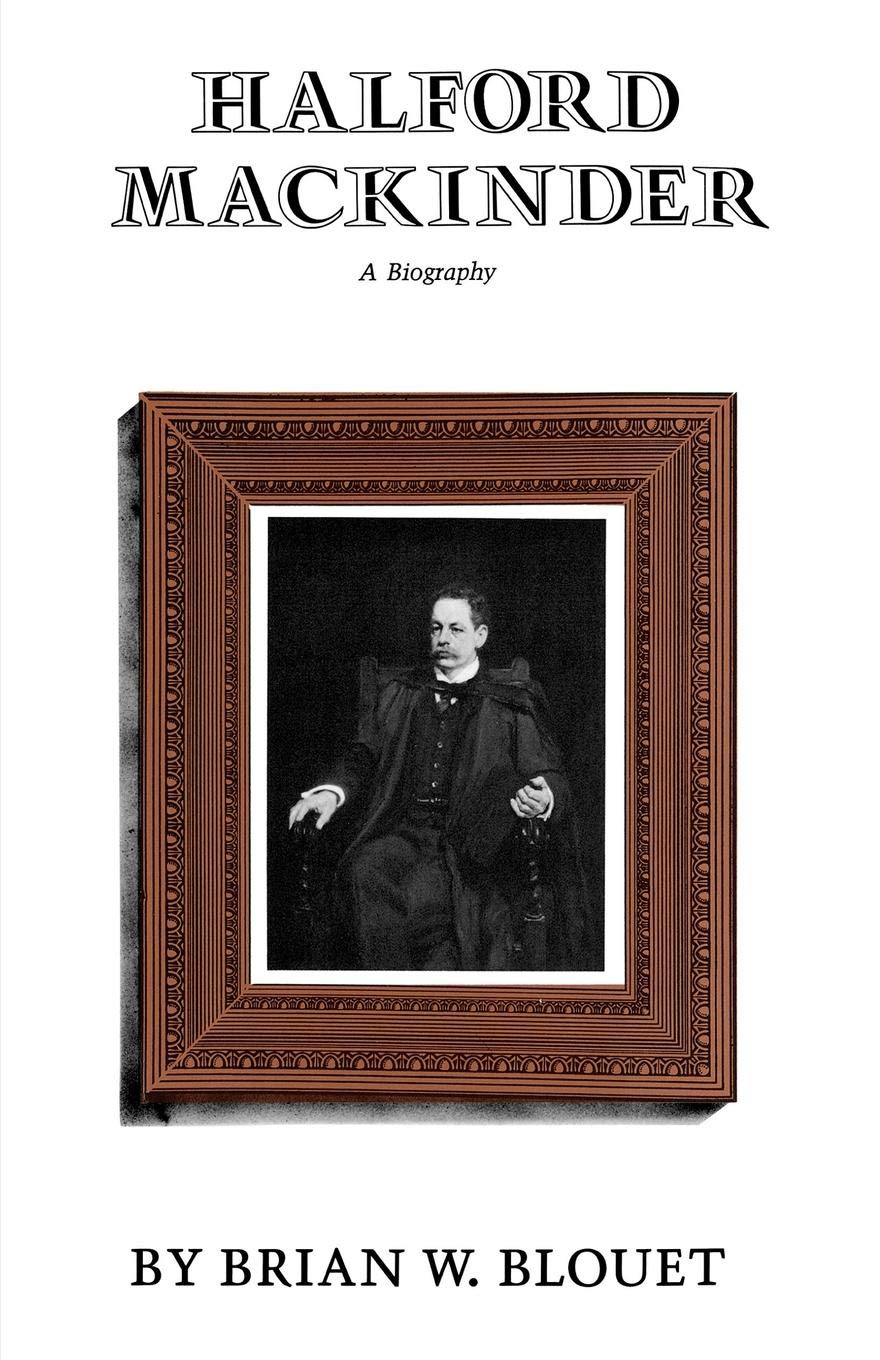
I also found this related article on Mackinder on the Perspectives on Africa blog.
It's written by Simone Pelizza of the University of Leeds
A few extracts...
"...he also became famous in his era for the first successful ascent of Mount Kenya in 1899, when he reached the peak of this great African mountain after three months of dramatic efforts. Indeed, this achievement is still highly debated among biographers of the character, due to the obscure events surrounding its lucky conclusion."

and also, Mackinder and his travelling companions:
"...did not show any humanitarian concern in the fulfilling of their ambitious African project, sharing the crude racial prejudices of their time. In this sense, the expedition to Mount Kenya perfectly represent the spirit of European imperialism at the end of the nineteenth century, full of violence, greed, and psychological obsession. A toxic mixture well captured by Joseph Conrad in his great novel Heart of Darkness, published some years later as part of the wide international campaign against Belgian atrocities in the Congo.'

Mackinder also has a rare species of owl named after him: Bubo capensis mackinderi - possibly the only GA President to have an owl named after him - unless you know different...
Also this article readable on JSTOR:

Blouet, Brian W. “The Imperial Vision of Halford Mackinder.” The Geographical Journal, vol. 170, no. 4, 2004, pp. 322–329. JSTOR, www.jstor.org/stable/3451461.

Update - June 2019
A big addition to the post...
On the impact of 'On the Scope and Methods in Geography'
Drawn from Emily Hayes' PhD
Geographical projections: lantern-slides and the making of geographical knowledge at the Royal Geographical Society c.1885 – 1924
Read more at https://ore.exeter.ac.uk/repository/handle/10871/23096#PSdvQPc7baSCXDiL.99


http://hdl.handle.net/10871/23096
Emily describes the lecture, and the impact that it had. It predates the GA.

Mackinder is described by Hudson as "one of the fathers of modern geography". Hayes describes it as a "multi-media lantern slide lecture performance". 

Lantern slides were the keynote of their day.

Clements Markham said the lecture was...

"a brilliant production, most suggestive, and calculated to establish geography’s place among the sciences. I read it with great interest."

Additional references
Gilbert, The Right Honourable Sir Halford J. Mackinder, P. C., 1861-1947, 93; Cosgrove, Geography and Vision, 125 and 133-34.

Hudson, The new geography and the new imperialism, 1870-1918, Antipode 9 (2), (1972), 12-13; Stoddart, Geography and war, 87; Scargill, The RGS and the foundations of geography at Oxford.

Update: late June 2019
While researching some other Presidents, I came across a Rex Walford article on the GA, and Mackinder in wartime. I haven't read the article yet, but I think it is going to provide a wealth of additional detail on this period of the GA, and the work of the Presidents.

Walford, Rex. “Mackinder, the GA in Wartime and the National Curriculum.” Geography, vol. 78, no. 2, 1993, pp. 117–123. JSTOR, www.jstor.org/stable/40572493.

Another update Late June 2019

Writing the blog post for Edmund William Gilbert in 1922, and came across reference to Mackinder's Seven Lamps of Geography.

These need to be added in here, and I will do that shortly.

Update, early July 2019

The seven lamps are referred to in the article by V. W. Tidswell from 1990.

They are the areas which are mentioned in a paper by Gilbert (another GA President) in 1951 called 'The Seven Lamps of Geography'.
These are described by Tidswell as 'burning on today' as the attainment targets in the National Curriculum.
"The idea of the region was fundamental to all Mackinder's teaching. He was concerned with distributions in space and their inter-relationships, and aimed to answer the same questions as we pose today: Where? How? Why there? But not, where ought..."

Seven Lamps of Geography
The Region
The Homeland and the Empire
World Geography
The Unity of Geography
The Map
Applied Geography
The Philosophy of Geography

References
Coones, Paul. “The Centenary of the Mackinder Readership at Oxford.” The Geographical Journal, vol. 155, no. 1, 1989, pp. 13–23. JSTOR, www.jstor.org/stable/635377.
https://www.sciencedirect.com/science/article/pii/096262989290021K?via%3Dihub

Capes, Concepts and Conscience: Continuity in the Curriculum, V. W. Tidswell - Geography, Vol 75 No. 4 (1990)
https://www.jstor.org/stable/40571878

MACKINDER, H. J. “THE TEACHING OF GEOGRAPHY FROM AN IMPERIAL POINT OF VIEW, AND THE USE WHICH COULD AND SHOULD BE MADE OF VISUAL INSTRUCTION.” The Geographical Teacher, vol. 6, no. 2, 1911, pp. 79–86. JSTOR, www.jstor.org/stable/40554112.

Update
Additional image, found on Twitter.
Image


Also found some details of the exhibition that Mackinder curated in London in 1932.

Also some BBC videos.

Orford, E. J. “THE 'TEACHING OF GEOGRAPHY' EXHIBITION.” Geography, vol. 17, no. 3, 1932, pp. 216–218. JSTOR, www.jstor.org/stable/40558338.


Update August 2019 - from Brotton's book.

Mackinder is also mentioned in "A History of the World in Twelve Maps" by Jerry Brotton (Penguin, 2012)
There is a chapter called 'Geopolitics' which mentions him, and also Colonel Sir Thomas Holdich, who was also President, at a time when they were linked with the RGS. Brotton says that Mackinder "would almost single-handedly both transform the study of geography in England, and create a whole new way of understanding and using the subject: geopolitics".

Brotton says that Mackinder recalled, at the age of 82, hearing news about Napoleon III. He was also caned at school "for drawing maps instead of writing Latin prose". His boyhood games apparently included "being King of an island on which 'civilised its usually backward inhabitants'."

He became the President of the Oxford Union in 1883.

Brotton describes the travels in 1886-7 when Mackinder lectured on his "New Geography" apparently with the aim of 'gradually familiarising intelligent people throughout the country with the idea that geography consisted neither of lists of names nor of traveller's tales".

He also added some detail on Mackinder's lecture on Geography at the RGS in 1887 when he presented his ideas. He said 'a worthy Admiral, a member of Council, sat in the front row and kept muttering "Damn cheek" throughout the lecture, particularly when Mackinder suggested the RGS might close as tales of adventure grew fewer.

He concluded by saying, that geography might represent a study of the classics as "the common element in the culture of all men, a ground on which specialists could meet".

Sir Francis Galton, a council member was not sure about Mackinder's claim that geography was a science.

Mackinder's 'Presidential address' to the GA in 1895 according to Brotton, which is impossible of course, as he wasn't President.
It was called 'Modern Geography, German and English", explaining how our maps were ahead of the German, but with von Humboldt and Ritter, we were behind the Germans in other respects.

For Mackinder, "a map was not the territory it claimed to depict, but an interpretation of the geological, biological and anthropological elements which made up that territory".

When he climbed Mt. Kenya in 1899, he was invited by Colonel Sir Thomas Holdich to speak at the RGS.

Pivot of history: https://en.wikipedia.org/wiki/The_Geographical_Pivot_of_History


Image from the 1940s

Another of Mackinder's contributions was a slogan:

Who rules East Europe commands the Heartland
Who rules the Heartland commands the World Island
Who rules the World Island commands the World

Updated August 18th 2019


A BBC Radio 4 programme from today.

What can the ideas of two long-dead geopolitical thinkers tell us about relations between Russia, China and America today?

Documentary-maker Phil Tinline traces how, in the late 19th century, an American sea captain turned scholar, Alfred Thayer Mahan, drew on the historic successes of Britain’s Royal Navy to argue that sea power was a decisive force in world history, and that the rising United States should establish its own permanent naval forces.

But then a British geographer, Sir Halford Mackinder, spotted the revolutionary potential of the new Trans-Siberian Railway, and argued that land power, in the form of the Eurasian Heartland could now mobilise its resources to outdo British sea power.

Both men’s ideas have had profound influence on geopolitical thinking ever since. Today, as the post-war international order falters, Phil talks to leading scholars and strategists to discern what influence Mahan’s and Mackinder’s ideas are having on our new era of great power rivalry – between NATO and Russia in the Black and Baltic Seas, between Russia and China in the Eurasian heartland as the Belt and Road stretches westward, and between China and the USA, in the hotly-disputed waters of the South China Sea.

And he asks whether, in a globalised world, ends that were once pursued by military means are now being achieved through commerce, but in pursuit of the same hard geopolitical aims.


With contributions from: Professor James R. Holmes, Professor Charles Kupchan, Dr Nick Megoran, Professor Rana Mitter, Air Chief Marshal Sir Stuart Peach, Professor Angela Stent, Dr Dmitri Trenin

October 2019

A contribution in Darby's recollections of the period.


Darby, H. C. “Academic Geography in Britain: 1918-1946.” Transactions of the Institute of British Geographers, vol. 8, no. 1, 1983, pp. 14–26. JSTOR, www.jstor.org/stable/622271.

https://books.google.co.uk/books?id=UI7020CCNsoC&lpg=PA7&ots=NHbnZgpoRx&dq=the%20british%20isles%20ogilvie%201928&pg=PA6#v=onepage&q&f=false

the development of the REGION as a concept

Update: December 2019

https://journals.openedition.org/cybergeo/2966 - a reference in a journal by Hugh Clout

Updated January 2021
Within the context of the current Black Lives Matter movement and the emergence of the Black Geographers group, the GA is reassessing previous connections and involved with moves to decolonise the curriculum.
An article in 'Geography' by Gerry Kearns in Spring 2021 edition explores Mackinder's role in this, and some of his actions which were racist:
It can be read here by subscribers:
It was the 2nd article in a series.
To find out more about the series, check out the Uncomfortable Oxford webpage which describes a lecture that Kearns gave in Oxford, in what was called the Halford Mackinder Lecture Theatre.


Description:
The first in Oxford Geography's 'All School Seminar Series' tackled the uncomfortable history of the School's founder, Halford Mackinder. Halford Mackinder, practised Geography as an 'aid to statecraft.' Statecraft required the geographical knowledge and geographical claims that came from the tradition of Exploration. However, the institutionalisation of Geography as a subject in universities and schools gave it a more modern purpose. 
In large part this was an educational mission, evangelising British people to think 'imperially'. And this bequeaths us a troubling legacy. It is a legacy of force and racism; and we need to be honest about this.

Updated May 2021
Readers of Tim Marshall's 'Prisoners of Geography' will know that Halford MacKinder is mentioned several times. Having read a good chunk of the new book 'The Power of Geography' which came out a week or so ago, I can confirm that MacKinder is mentioned once again...

Updated January 2022

This thread appeared in my feed earlier.


Updated July 2022

A search on Twitter will currently bring up a whole range of tweets mentioning Mackinder's Heartland theory because of the situation in the Ukraine and other recent geopolitical events.

Mackinder is also mentioned in an essay on Aberystwyth University's Geography department, which was co-edited by Emrys Bowen and also features H J Fleure.

In 1917-18 it was MacKinder who asked H J Fleure to be the Honorary Secretary of the GA.

Updated August 2023

References to MacKinder and Herbertson and early days of geography in universities.


Charles W. J. Withers, et al. “Geography’s Other Histories? Geography and Science in the British Association for the Advancement of Science, 1831-c.1933.” Transactions of the Institute of British Geographers, vol. 31, no. 4, 2006, pp. 433–51. JSTOR, http://www.jstor.org/stable/4639988. Accessed 24 Aug. 2023.

Saturday, 27 April 2019

1912: Dr George Robert Parkin, KCMG DCL LLD

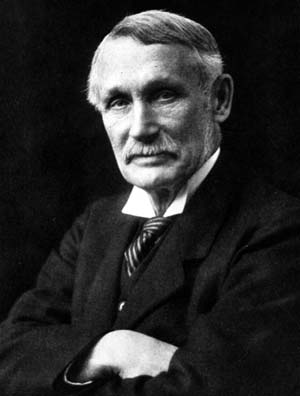
George Robert Parkin.jpgUpdated August 2023

Following the departure of Douglas Freshfield, the following President had a particular responsibility to oversee the next stage in the Association's development.

At this time, a decision was made to bring in distinguished outsiders with geographic interests to strengthen the standing of the Association.

George Robert Parkin was just such a person. 

He was the organising Secretary of the Rhodes Scholarship Trust when he was elected, having been a GA member for some time, and also contributing to 'The Geographical Teacher' using his knowledge of the Empire.

Rhodes is of course problematic by association.


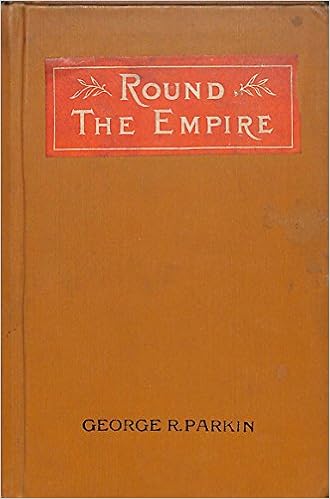
The book referred to seems to have been written in 1892 for use in schools, and was called 'Round the Empire'.

Cecil Rhodes himself was particularly problematic and there has been a campaign to have his name removed from buildings at a number of universities and statues removed. This Empire connection needs unpicking.

To see Mr. Parkin's Presidential Address, see the following link:

PARKIN, G. R. “THE PRESIDENTIAL ADDRESS.” The Geographical Teacher, vol. 6, no. 4, 1912, pp. 189–198. JSTOR, JSTOR, www.jstor.org/stable/40554149.

One might want to avoid reading p.192-3 of that address though, as it seems to express views that wouldn't be ideal to express today on the impact of the cold temperatures of Canada on immigration patterns.

One of the things that has started to emerge in the years since the turn of the 21st Century has been the connections between organisations and universities and some attitudes and activities which are no longer 'politically correct' and need to be addressed directly.

(See update at the end of the post)

Other quotes are more interesting and relevant perhaps:

 "There is one thing more that I should like to say. If you take an interest in the political thought of this country, it is absolutely impossible to make that adequate unless you teach the people geography. Anyone who does not know the essential needs of this country, that it draws its raw materials from the ends of the Earth and sends back its manufactures to the ends of the Earth, who does not know the sources of that supply, the conditions which exist on both sides, and the necessity of communication between the two in order to secure our national life, is not fit to be a voting citizen of this Empire."

The association with Cecil Rhodes is also one that has been revisited by a number of universities, including the University of Oxford with the Rhodes Must Fall campaign active at the moment.

George Robert Parkin was born in New Brunswick in Canada in 1846, the son of a Yorkshire farmer. His biography is an interesting one, and can be read in more detail on the Wikipedia page linked to below.

He travelled widely in his role with the Rhodes Scholarship, and became knowledgeable about the Empire and its geography. He seems to have been a Headmaster - hence the education connection.

He was awarded the KCMG in 1920, along with other honours in his lifetime. 

I wonder whether this practice of awarding honours to GA Presidents might be resurrected.

Parkin contributed a number of articles to 'The Geographical Journal' in its early volumes, often co-authored with Halford MacKinder. 
He also worked as a correspondent for 'The Times' newspaper in the late 1890s.

Interestingly, he was also involved in the production of a map of the Empire, published by Bartholomew.


Read the review of this resource and you can see that even back in 1903, the Mercator projection was not being favoured by the Geographers who used these maps, and wanted "a large, clear physical wall map of the World on an equal area projection", which "would be a boon to every progressive teacher of geography."

Also in 1912, according to 'The Geographical Teacher':

"The number of members is now 1,000, an increase of 38 during the year. While 137 old members have been lost by death, resignation, or lapse of payment of subscription, 175 new members have joined."

A reminder of the rapid turnover in membership that can often occur in any organisation, and which the GA is always mindful of.

Source: The Geographical Teacher, vol. 2, no. 2, 1903, pp. 93–93. JSTOR, www.jstor.org/stable/40554264.

References

https://en.wikipedia.org/wiki/George_Robert_Parkin - describes Parkin as an educator, imperialist and author.

I edited the Wikipedia entry to add the fact that he was the President of the Geographical Association. I shall do that for each President, as hardly any of their entries mentioned that before I started the blog.

PARKIN, G. R. “THE PRESIDENTIAL ADDRESS.” The Geographical Teacher, vol. 6, no. 4, 1912, pp. 189–198. JSTOR, JSTOR, www.jstor.org/stable/40554149.

Amazon page for 'Round the Empire' book: https://www.amazon.co.uk/Round-Empire-George-R-Parkin/dp/B001AV3JBU

Further research opportunity:

https://lib.unb.ca/archives/finding/parkin/parkin.html - University of Brunswick archive, which has some documents relating to Parkin

If anyone can supply further information relating to George Robert Parkin, please get in touch.

Update April 2019

Thanks to the GA's Chief Executive Alan Kinder for this perspective on the importance of reading outdated views involving 'environmental determinism' as they have not necessarily been consigned to History and are part of the ongoing EDI work the GA is engaged in:

Updated November 2019
Parkin wrote a book about the history of the Rhodes Scholarships, now the Rhodes Trust
https://archive.org/details/rhodesscholarsh01parkgoog/page/n11

More details here:
https://www.rhodeshouse.ox.ac.uk/about/history-of-the-rhodes-trust/

Updated November 2020

This is one of several tweets that I came across. Parkin's association with the Rhodes Scholarship and Oxford University is noted.

Updated July 2022

Updated August 2023 

Article in the New York Times archive from 1919 on post-war education.

A link to a book that he owned describes him as:

"a biographer of Sir John A. Macdonald and Headmaster of Upper Canada College"

1895: George R. Parkin appointed eighth principal of UCC

1923: Parkin Building opens

Named after Parkin?


John Macdonald was the first Prime-minister of Canada.

Margaret Mackintosh RIP

Updated post. Sad news at the end of last week from colleagues who have organised the Charney Conference over the years of the passing of Ma...