Showing posts with label Travel. Show all posts

Thursday, 5 October 2023

Fanny Copeland and the Le Play Society

I didn't know anything about Fanny Copeland until I came across this article while looking for something on the work of Laurence Dudley Stamp.

Special thanks to Richard Clarke for his work on this research.

Born in Ireland, raised in Scotland, she made her life as an adopted Slovene, having lived in a number of European countries.

In this capacity, she welcomed a field trip from members of the Le Play Society, which I have mentioned several times on the blog.

This section talks about Copeland's involvement:

She had invited George Ingle Finch, to lecture.

Finch was also an activist within the London Le Play House Organisation (LPHO).  

The LPHO was a key organisation in the development of inter-war British geography.  

It had been established in 1920 by a curious mix of geographers, sociologists and educationalists to take forward ‘regional studies’ using an interdisciplinary analytical framework based on the trilogy of ‘place’ (the natural environment, physical and biological), ‘work’ (the economy, and daily life of its people) and ‘folk’ (their community and social organisation).  

This approach was itself derived from the work of the 19th century French sociologist Frederick Le Play (who emphasised ‘family’ as the basic unit of society, rather than ‘folk’).  

The LPHO provided a home for several bodies, including student groups and a ‘foreign fieldwork committee’ whose emphasis on ‘human ecology’ during the late 1920s became increasingly at variance from that of the Sociological Society (another body within the LPHO which was championing the ‘professional’ disciplinary practice of academic sociology).  

The two bodies split in 1931, with the Sociological Society recasting itself as a professional institute - the Institute of Sociology - and the foreign fieldwork committee becoming the nucleus of a separate organisation, the Le Play Society (LPS), under its first President, Patrick Geddes.  Geddes died in 1932, shortly after the formation of the LPS and was succeeded as its President by Halford Mackinder. 

I'd been unaware of this earlier incarnation of the Le Play Society, or the close link with the IBG. I need to go back to some of my earlier sources perhaps.

The LPS (a precursor of the Institute of British Geographers) became a major influence on the development of geographical fieldwork between the two World Wars.  Its first ‘foreign study’ (in August 1932) led by Dudley Stamp was of SolĨavsko, a then ‘remote’ Alpine valley system on the Slovene - Austrian border.

It resulted in some outputs:


Dudley Stamp (1933) 'Slovene Studies'

This review of the book mentions two other former GA Presidents:

"Halford Mackinder in his Foreword to Slovene Studies described it as ’an honestly made brick for the palace we are rearing.’ (in Stamp 1933)  The LPS subsequently held up the 1932 visit as a model of how regional studies should be carried out.  The Society's own (1935) guide to regional fieldwork describes it as 'An excellent example of regional survey by a Le Play Society group doing field work as a summer vacation course abroad'. (Barnard 1935: 114, 1948)  Thirty years later (after the LPS had been wound up) the visit was described by Beaver (1962: 236) as 'one of the best examples' of the LPS’s work.  Beaver did much within the Joint School of Geography at King’s College and LSE during the 1930s to promote fieldwork and his own interest in the Balkans were fostered by his leadership of several LPS ‘expeditions’ (Phillips and Turton 1975)."

At this point the British Association and Section E appear - something else which has appeared quite a few times on the blog.

And this is followed by two more references to former GA Presidents: Sir John Russell (President in 1960) and K C Edwards.

"In 1947, well before the Society’s eventual closure, its ‘student group’ had become a separate body (Turnock 1991), recasting itself as the ’Geographical Field Group’ (GFG) with K C Edwards, by now Head of Nottingham University’s Geography Department as its President.  The GFG as a body of ‘professional geographers’ regarded the LPS as elderly amateurs and too ‘sociological’; the emphasis on civics and the Le Play method was dropped (Merchant 2000)"

I now need to find out more about the Geographical Field Group (GFG).

References can be found in the bibliography of the article below.

Copeland lived a long life, full of mountains and connections, and she was described as a "buzzing fly" (hopefully in a positive way).

Clarke says of her:

"In Copeland’s own work one can find elements of the idealism of Patrick Geddes, the mysticism of Vaughan Cornish (especially in her writing on mountains) and the pragmatism of Dudley Stamp."

Hilda Ormsby crops up here too - I love all the connections and interconnections here. There is so much that could be done with this era and the work of GA Presidents...

Source:

Clarke, Richard (2011) "Fanny Copeland and the geographical imagination. Scottish Geographical Journal 127(3) ,pp.163-192

https://eprints.bbk.ac.uk/8156/1/ClarkeAnteric_2011_FannyCopelandGeogImag_SGJ_Pre-Pub.pdf

Stamp, L. Dudley, ed. 1933. Slovene Studies: Being Studies Carried Out by Members of the Le Play Society in the Alpine Valleys of Slovenia (Yugoslavia). London: Le Play Society 

Edwards, K.C. 1932. Anglezi studirajo Slovenijo. Planinski vestnik, no. 10: 193-198

Beaver, Stanley H. 1962. The Le Play Society and Fieldwork. Geography 47: 225-240

A quote I got from here as well:

‘Geographical knowledge needs to be understood as something that is constituted through a range of embodied practices (such as travelling, seeing and recording).  

The ‘field’ is not some self-evident place, something ‘out there’ to be ‘discovered’ in an unproblematic sense, it is produced in the ideas and the recorded or remembered movements of geographical actors, created through their discourse and shared through the networks of academic (and amateur) exchange.’ 

(Stoddart and Adams, 2004)   


Stoddart, David R and William M Adams. 2004. Fieldwork and Unity in Geography. In Unifying geography: common heritage, shared future, ed. John A Matthews and David T Herbert, London: Routledge. 

Thursday, 14 September 2023

Belloc and the Fens

Hilaire Belloc was GA President in 1915.

He wrote about the Fens - the location of my school - in a collection of over 30 essays called 'Hills and the Sea'. In it, he intersperses pieces on England with others from France, including places like Carcassonne and other locations around the world - a reminder of his travel literature which perhaps drew him to the attention of the GA Council who had the job of finding a new President.

The book was first published in 1906 and was critically acclaimed.

It can be accessed via Project Gutenberg.

It is called 'A Family of the Fens' and focusses on the drainage of the Fens and its ruinous cost.

In 'On Ely' he visits the Cathedral, passing through its doors.

He ends this piece by talking about the allure of getting to know Ely and that "no man lives in Ely for a year without beginning to write a book. I do not say that all are published, but I swear that all are begun."

He visits 'The Sea Wall of the Wash', crossing the Nene at Sutton Bridge and heading for the coast.

This takes him to a piece called 'Lynn': the town where I lived for some years and taught for twenty years. I can follow his walking route from the Ferry, up to the Customs House, and onwards to St. Margaret's Church. 

At Manea in the Fens he talks to a local person, and captures the conversation:

MYSELF: This land wanted draining, didn't it?

THE OTHER MAN: Ah!

MYSELF: It seems to be pretty well drained now.

THE OTHER MAN: Ugh!

MYSELF: I mean it seems dry enough.

THE OTHER MAN: It was drownded only last winter.

MYSELF: It looks to be good land.

THE OTHER MAN: It's lousy land; it's worth nowt.

MYSELF: Still, there are dark bits—black, you may say—and thereabouts it will be good.

THE OTHER MAN: That's where you're wrong; the lighter it is the better it is ... ah! that's where many of 'em go wrong. (Short silence.)

MYSELF: (cheerfully): A sort of loam?

THE OTHER MAN (calvinistically): Ugh!—sand!... (shaking his head). It blaws away with a blast of wind. (A longer silence.)

Here's a talk which goes into a great deal of further detail on Belloc's work and influence, from Chris Hare.


It's part of a Lottery Funded project. Belloc lived for most of his life at Kingsland in Shipley.

Tuesday, 26 May 2020

Gladys Hickman

Updated October 2023

Another influential person in the life of the GA was Gladys Hickman.

She was described in this piece in the GA Magazine as "an inspirational enthusiast for geographical education". She was made an Honorary member of the GA.
She was born in 1912 in East Sussex and grew up on a sheep farm on Romney Marsh.
She gained a first in Geography from UCL and took part in the first land use survey of Great Britain, becoming a close friend of former GA President Dudley Stamp.
Gladys was linked with the Bristol GA branch, having worked in teacher education at Goldsmiths and then Bristol University.
She worked on the Schools Council 14-18 project.
She was a well travelled geographer, and chaired the GA's Field Group in the 1960s and helped launch the Study Tours which the GA's International SIG still runs to this day.

She was also the tutor of former GA President Sheila Jones who told me in a personal communication:
Education year (1950-51), was a revelation with Dr. Gladys Hickman who introduced us to fieldwork opportunities and was a great innovator. Many of her students owe much of their success in teaching to her.

Sheila also wrote a history of the GA Bristol branch. This piece in the GA Magazine gives a flavour of her work.
She attended the 1993 Centenary Celebration of the GA, and Sheila Jones remembered her being there and wrote a little note in the letters she sent to me.


She was working into her 90s in retirement in Edinburgh, and supporting the work of the RSGS.


She wrote a book about Africa which stayed in publication for many years.


She died in 2006, and an appreciation was featured in the GA Magazine and an obituary in the Geographical Journal.


I read about Glady's life in this book as well.


Source:
https://books.google.co.uk/books?id=p_xfuY8CJ48C&pg=PT115&lpg=PT115&dq=%22marguerita+oughton%22+sheffield&source=bl&ots=xln_U09sEO&sig=ACfU3U0BVaFI8t74PC7xxPHMiijd8QoLyQ&hl=en&sa=X&ved=2ahUKEwjbrsfys43pAhXKQEEAHeGlCCIQ6AEwAnoECAoQAQ#v=onepage&q&f=false

An Obituary, written by her son Richard, was published in The Guardian
https://www.theguardian.com/news/2006/oct/19/obituaries.mainsection

https://onlinelibrary.wiley.com/doi/abs/10.1111/j.0028-8292.1975.tb00753.x

https://books.google.co.uk/books?id=6xWsAgAAQBAJ&lpg=PA1913&ots=Tsc_l8fz68&dq=gladys%20hickman%20geography&pg=PA1915#v=onepage&q=gladys%20hickman%20geography&f=false


Updated August 2021
Found this in my Flickr account. It's a book in the Victorian Schoolhouse at Gressenhall Rural Life Museum a few miles from where I live in Norfolk.

Source:


Wednesday, 11 December 2019

1952: Professor Frank Debenham, OBE

Last updated August 2023

Perhaps one of the most illustrious of all GA Presidents was Professor Frank Debenham.


2022 marks the 70th anniversary of his Presidency - a fact that appeared in my Presidential Address.

Frank Debenham was born in Bowral, New South Wales, and educated at the University of Sydney, where he studied geology.

Debenham took part in Captain Scott's Terra Nova expedition, and was a survivor of that fateful trip to Antarctica which ended with the death of the Polar party. He was a geologist on the expedition, surveying the mountains near McMurdo Sound, and also took over from the renowned Herbert Ponting (who took some of the most iconic images of Polar exploration ever) as expedition photographer when Ponting left in 1912.
He is shown on many of the photographs from that expedition, including the one shown here.

A knee injury, from playing football in the snow, apparently partly prevented him from going on the ill-fated Polar journey.
Just let that sink in for a moment...

I also caught him on the Blu Ray I have of 'The Great White Silence', emerging from a hut.
See the screengrab below.
The Epic of Everest & The Great White Silence [DVD & Blu-ray]


Debenham returned to Cambridge to write up his expedition notes, but the First World War intervened and he saw active service in a number of places, rising to the ranks of Major, before being wounded and returned home.

Image source: Public Domain

Image credit:
Herbert Ponting - National Library of New Zealand Reference Number: PA1-f-067-045-2
Frank Debenham and a plane table, during the Terra Nova Expedition 1910-1913 under the command of Robert Falcon Scott


Debenham was also the Director of the Scott Polar Institute in Cambridge between 1926 and 1946.

I have visited here many times, and am hoping to make a visit to see what further connections we can make with the GA during my Presidential year.

Debenham was also a fellow of Caius College, and Professor of Geography. I wonder whether they have further relevant material in their archive?

From the Cambridge University alumnus page:
Debenham was an Australian petrologist who had served on Scott's ill-fated Terra Nova expedition. He had originally arrived in Cambridge in 1914 to begin compiling records of the mission in the attics of the Sedgwick Museum, but then had been on service throughout the war. Debenham arrived at a time when a number of other polar individuals were also present within Cambridge: Charles Wright, who had also been on the Terra Nova, briefly lectured at Cambridge but continued to live in the area for much longer; Raymond Priestley, who had been with Shackleton on the British Antarctic Expedition of 1907-1909 was Assistant Registrar; and James Wordie, who would become Master of St John's College, and who had been a member of the crew of the Endurance. It was Debenham's dream to set up a polar research centre in memory of Scott at Cambridge, and he successfully won over the support of the Scott Memorial Fund to create it in 1920. The Scott Polar Research Institute (SPRI) continues to form an important part of Department life today, from its base on Lensfield Road.
The first candidates for the Geography Tripos sat the exam in 1920, resulting in 2 students receiving a 1st Class for their Part 2 exams, one of whom was JA Steers, who would go on to become Professor of Geography and Head of Department 1949-66.
When Philip Lake retired as Chair of the Department, he was succeeded by Frank Debenham, who became the Department's first Professor of Geography in 1933.
Source:
https://www.geog.cam.ac.uk/alumni/earlyyears/

Debenham travelled extensively in Africa, and published on such subjects as the water resources of arid regions, the construction of small earthen dams, the ecology of the Kalahari, and on David Livingstone.

Between 1951 and 1953 he was also Vice President of the Royal Geographical Society (yet another President who helped to connect the two institutions - this is a common thread through many of the blog posts, as those of you who have been following the blog will perhaps have noted)

Debenham's Presidential address, on the subject of Travel is well worth reading, taking place as it did in the GA's Diamond Jubilee year.
A few quotes from the Address are worth repeating here.

"Travel, either or own or that of others, is the very essence of geography... it can be satisfied to some extent when done by proxy, with the aid of imagination. In fact, both at the beginning of life and at its latter end, that form of travel - armchair travel - is the normal one... It is far more comfortable than real travel and can be just as exciting as your imagination likes to make it."

He follows with some important ideas on the importance of narrative where a book is

"a magic casement (window) through which, at will, they can gaze upon not only perilous seas and faery lands forlorn, but tropic isles and priate lairs..."

He gave some advice which I think would have gone down well with Frank Zappa.

"one can study a country in its biergartens.... nearly as profitably as at its Department of Statistics" (one for the Presidential lecture I think)

He moved on to advice for the traveller.

"In my opinion it is best to do your travelling as slowly as possible.... Shank's ponies by preference. If you must have transport of some time, let it be a donkey rather than a bicycle."

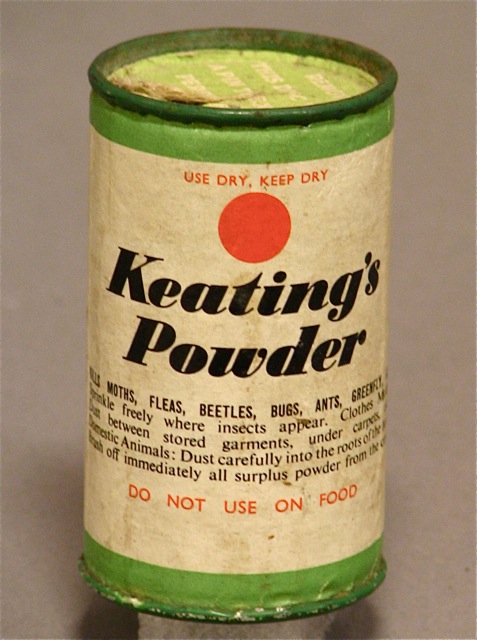
Image result for keating's powder"...it is always wise to travel comfortably, which is an entirely different thing from travelling in luxury.... get a good night's sleep... or even making sure you have a supply of Keating's Powder" 

"I would say that the better informed a man is before he visits a country, the more he will appreciate it; and certainly he will cause less annoyance to the local inhabitants who will not have to answer so many silly questions. I think that most of us could quote instances where fore-knowledge of what one was about to see was very helpful and timesaving..."

Debenham followed this quote by providing an anecdote from his time travelling with Captain Scott.

He was a great fan of sketching, rather than photography.

"It is only when you sketch a thing, be it a mountain or a cathedral or a native hut that you really take in its details and appreciate it fully. To my mind, the artist is the most skilled observer there is, and to observe with care is the duty of every geographer."

It is worth noting that Debenham's name really was put on the map:
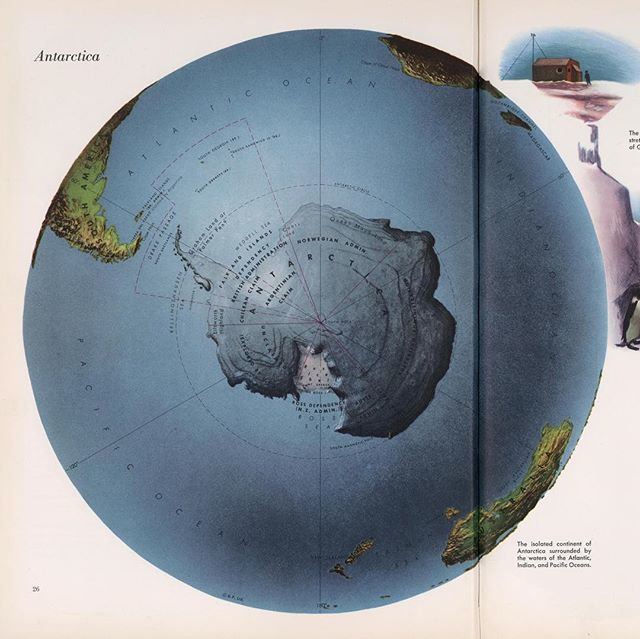
Debenham is commemorated in the Antarctic by Debenham Glacier (77°10' S 162°38' E), which flows into the northern part of Wilson Piedmont Glacier, the Debenham Islands (68°8' S 67°7' W), between Millerand Island and the west coast of Graham Land, and by Debenham Peak (67°21' S 50°26' E.) in the Scott Mountains.

A challenge for the readers: which other GA Presidents had landscape features named after them?
Some others appear on this blog, but there may be others...

Debenham was the author of a number of books on the theme of map making, and geography as a discipline. I am going to try to track a few of them down in the next few years. I have a few places to explore to get hold of copies.
I liked this passage from his book on 'Map Making' - which is accessible on the Web Archive site, as are many others of the early Presidents' books.

This is my kind of cartography, taking place on a pub table.

Quote attributed to him here.

Debenham's Ice Pick sold in March 2019 for £22 000.

References
Wikipedia page: https://en.wikipedia.org/wiki/Frank_Debenham

I have edited his Wikipedia page to reflect the fact that he was a President of the GA, as with all Presidents.

Debenham, F. “TRAVEL: Address to the Geographical Association.” Geography, vol. 38, no. 3, 1953, pp. 117–124. JSTOR, JSTOR, www.jstor.org/stable/40564829

Obituary: Steers, J. A. “Obituaries: FRANK DEBENHAM.” Geography, vol. 51, no. 2, 1966, pp. 150–151. JSTOR, www.jstor.org/stable/40566075.

Cambridge University Page: https://www.geog.cam.ac.uk/alumni/earlyyears/

Scott Polar Institute page: https://www.spri.cam.ac.uk/people/debenham/ with some biographic details - they will also presumably have some Archived material relating to his work and associations with the SPRI.

Books published: https://www.abebooks.co.uk/servlet/SearchResults?sts=t&cm_sp=SearchF-_-home-_-Results&an=Frank+Debenham&tn=&kn=&isbn= (ABE Books search)

Image: https://www.davidrumsey.com/luna/servlet/detail/RUMSEY~8~1~247001~5515217:View--Solar-System?sort=Pub_List_No_InitialSort%2CPub_Date%2CPub_List_No%2CSeries_No&qvq=q:space;sort:Pub_List_No_InitialSort%2CPub_Date%2CPub_List_No%2CSeries_No;lc:RUMSEY~8~1&mi=366&trs=470#

Image

As always, if you know more about the work of Frank Debenham while President of the GA, please get in touch.

I'll finish this entry with the final paragraph from Frank Debenham's Presidential Address

"Even though the geographer... has the ability to see more than others on his travels because he has cultivated special faculties for seeing, he will, I hope, remain a normal person. Though his work will give him infinite satisfaction, his keenest pleasure in travel will still come through his senses. 
Travel, to a geographer, should be a richer experience than it is to other people..... 
Bon Voyage, Good Travelling to you all..."

Update December 2019

There was a useful piece mentioning Frank Debenham that I came across in an unpublished thesis called 'A Frozen Field of Dreams'.
He was educated in Sydney, and had connections with the work of James Wordie and Raymond Priestley.

Extract from thesis above by Peder William Chellew Roberts and online here: https://purl.stanford.edu/qh833rs4632 (PDF) - start reading from around p.200 - p.220 contains a lot of information about Debenham's work at the RGS, SPRI and Cambridge University, as their first Professor of Geography.

More here too: https://www.amazon.co.uk/British-Geography-1918-1945-Robert-Steel/dp/0521067715 - I may need to get a copy of this to add some more detail to the early part of the century over time.
This has a lot more information about the work of Frank Debenham

Update June 2020
An excellent film from the East Anglian Film Archive (in 1961) was added to the SPRI Facebook page. It includes a clip with an interview with Frank Debenham - 50 years on from the Terra Nova expedition.


Lovely to hear the voice of a former GA President from almost 70 years ago.

Updated November 2020

Centenary of SPRI was in November 2020

The Scott Polar Research Institute was founded in 1920, in Cambridge, as a memorial to Captain Robert Falcon Scott, RN, and his four companions, who died returning from the South Pole in 1912. When Scott's last words, "For God's sake look after our people" were made known to the British nation, the response was tremendous. Scott himself had emphasised the importance of science and from this plea, the Institute was born.

Polar Museum

Frank Debenham, Geologist on the British Antarctic Expedition 1910-13 (Terra Nova), was the driving force behind the founding of the Scott Polar Research Institute. He wanted to establish a place that brought together polar researchers and resources for the improvement of polar expeditions and scientific investigation. Debenham asked that the new institute perform two roles: it should be a centre of study, preferably as part of a university, and it must also stand alone as a national memorial to Captain R. F. Scott and the men who died with him in the Antarctic. As Debenham and other veterans of the British Antarctic Expedition 1910-13 (Terra Nova) had found themselves in Cambridge writing up their findings, and, as Debenham argued, because Cambridge had 'furnished more polar scientists than all the other English universities put together', a home within the University of Cambridge was the obvious choice.


Source: https://www.spri.cam.ac.uk/centenary/past/

In November 2020, a Grace was granted by the University of Cambridge Senate, formally establishing the new Scott Polar Research Institute.

In its early years, the Institute occupied rooms above the Sedgwick Museum, where Frank Debenham was based as Emeritus Professor of Geography for the University of Cambridge Department of Geography. 


Updated April 2022 - following the GA Conference.

I used a few quotes and images of Professor Frank Debenham in my GA Presidential Address.

I also visited the Scott Polar Research Institute and found this book which I hadn't seen before and which was very useful in giving details of his career, although it doesn't mention his GA Presidency or anything that he did while holding the office.


More to come on this once I've read the book.

Here is the surveying equipment that Deb used in the Antarctic.


Plenty here on the origins of the Scott Polar Research Institute by Isobel Williams - loads of detail and images here.

Updated April 2023

A book that Debenham compiled on his time in the Arctic.


June 2023

Via the Facebook Sir Ernest H Shackleton Appreciation group.
Visit the post - why not join the group if interested.

The book is also available to purchase.


Updated August 2023

A mention in this piece on Cold War travels by Geography:

It references his GA Presidential lecture - which I also quoted from in my own:

Travel in mid-twentieth century British geography was the subject of Frank Debenham's 1952 Presidential Address to the Geographical Association, with travel presented as 
'the essence of geography' (Debenham 1953, 117), though not as 
'mere roaming . . . pleasant as roaming can be' (118). 
The geographer had the urge to 'travel intelligently' (119), and 'the ability to see more than others on his travels because he has cultivated special faculties for seeing' (124). Intelligence did not however preclude field pleasure: 'it is possible to be too earnest about one's purpose in travelling and to forget that one can study a country in its biergartens or at sundowner parties nearly as profitably as at its Department of Statistics' (119).


Sunday, 24 November 2019

Sir Clements Markham - a detour

While researching the early period of the GA, the name Clements Markham kept appearing.
He was not particularly linked with the GA, but would certainly have spent some time working with other GA Presidents.
The first pictures shows Markham aged 25, when he was elected to the Royal Geographical Society. At the bottom is a picture of him later in life.
It's a reminder of the close links between the GA and the RGS (later the RGS-IBG) which have persisted from the early meetings of the GA, and the use of RGS premises following the war.
Clements Markham was the Honorary Secretary of the RGS from 1863-1888 and later President for a further 12 years.
The Royal Society provides further details on his impressive geographical credentials:

He was mainly responsible for organising the National Antarctic Expedition of 1901–04, and for launching the polar career of Robert Falcon Scott, who named a peak Mount Markham in Antarctica in his honour.

Markham began his career as a Royal Naval cadet and midshipman, during which time he went to the Arctic with HMS Assistance in one of the many searches for the lost expedition of Sir John Franklin. 

Markham served as a geographer to the India Office, and was responsible for the collection of cinchona plants from their native Peruvian forests, and their transplantation in India. By this means the Indian government acquired a home source from which quinine could be extracted. 

Markham also served as geographer to Sir Robert Napier's Abyssinian expeditionary force, and was present in 1868 at the fall of Magdala. 

The main achievement of Markham's RGS presidency was the revival at the end of the 19th century of British interest in Antarctic exploration, after a 50-year interval. He had strong and determined ideas about how the National Antarctic Expedition should be organised, and fought hard to ensure that it was run primarily as a naval enterprise, under Scott's command. To do this he overcame hostility and opposition from much of the scientific community. In the years following the expedition he continued to champion Scott's career, to the extent of disregarding or disparaging the achievements of other contemporary explorers. 

He was also linked with the Hakluyt Society.

This film from the BFI shows the visit of the President of Peru to the RGS, and laying a wreath at Markham's memorial outside the entrance.


References

Image credit - public domain
http://www.npg.org.uk/collections/search/portraitExtended/mw08208/Sir-Clements-Robert-Markham

https://en.wikipedia.org/wiki/Clements_Markham

https://makingscience.royalsociety.org/s/rs/people/fst00055875 - Royal Society
https://discovery.nationalarchives.gov.uk/details/r/2898f105-6ee9-4a79-8554-b01a8b5a3c51
P1070577
Memorial - image taken from Dr. Ursula Rack's blog https://arcticandantarctic.wordpress.com/2018/05/10/fellow-of-the-royal-geographical-society-in-london/

Monday, 2 September 2019

1933: Professor Percy Maude Roxby

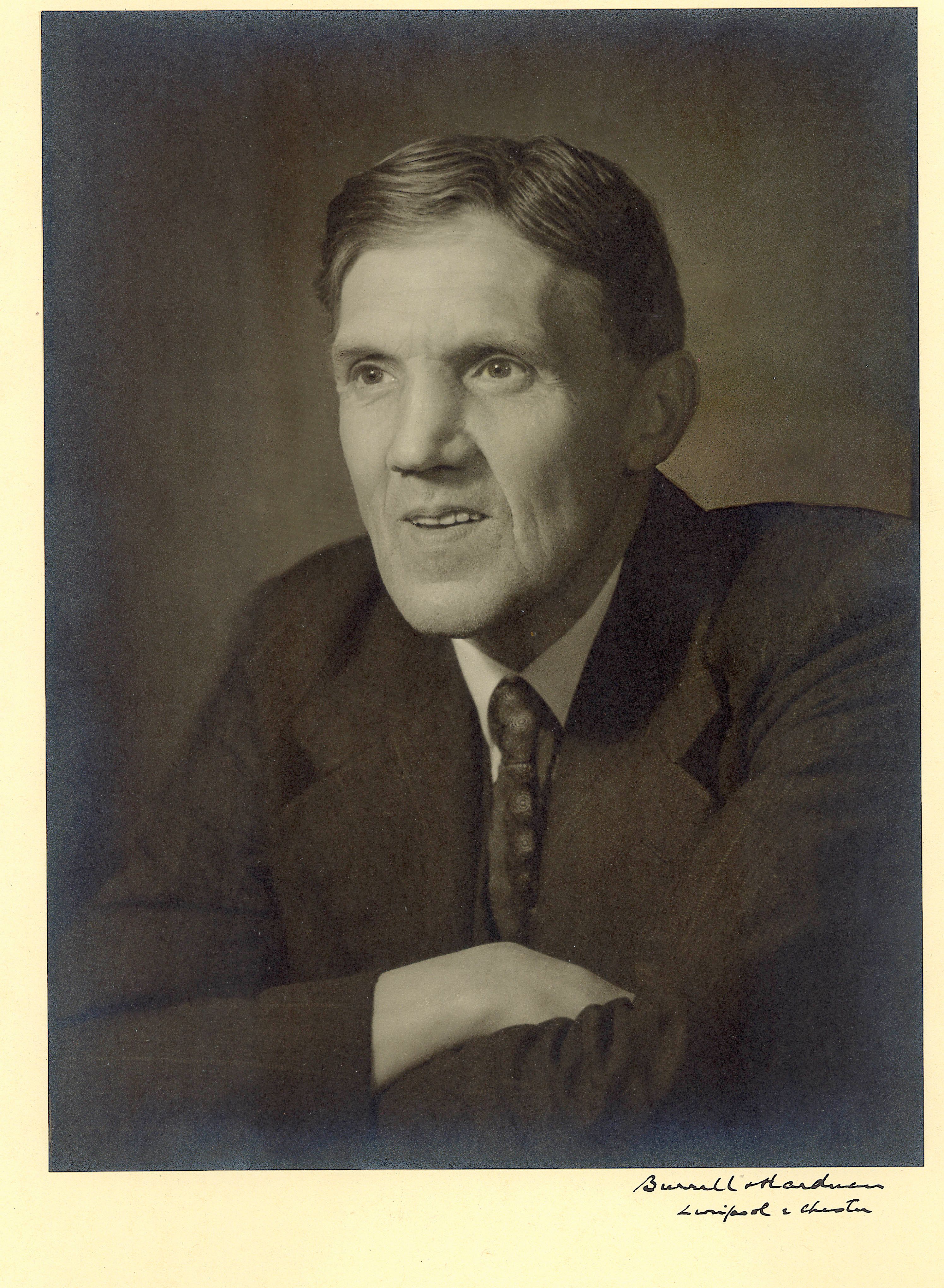
Image result for percy maude roxbyLast updated June 2024


Percy Maude Roxby was  an academic geographer connected with the University of Liverpool, and an expert on the geography of China.

He was born in 1880, and educated in History at Oxford University, but was appointed as lecturer in Regional Geography at the University of Liverpool in 1906.

He was one of the many people who were influenced by, and responded to, the work and teachings of A. J. Herbertson, who has featured previously on the blog.

He wrote a paper called "What is a natural region" in response to Herbertson's work and set out ideas for organising how geography could be taught in secondary schools. This connection with school geography has been an important part of many GA President's roles and legacies, and Roxby was particularly important in this regard.

He was also involved with the GA for a considerable period of time before being President, and so became one of the group of GA Presidents who were being 'rewarded' for their service to the Association during this period in its history.

The honours school of Geography at the University was formally approved in 1917-18, when Percy Maude Roxby was appointed as the first named chair of Geography in the British Isles.

Roxby visited China several times and wrote a book on the country as well, at a time when relatively little was known about the country. This is one of his great contributions to the work of the GA.

He traveled extensively in China, and both studied and wrote about Chinese geography. This was his particular passion.
Meanwhile, he promoted mutual understanding between China and Britain through geography. He also supervised the Department of Geography at Liverpool University and trained Chinese geographers. 
Overall, Percy Maude Roxby played a significant role in Chinese geography including his own research, the internationalization of Chinese geography, and cultivation of Chinese scholars, all of which should be included in the history of modern Chinese geography.
This becomes even more significant now, given the growing power of China on the world stage.

He wrote a whole series of articles for GA journals. His Presidential Address was on the theme of China as an Entity, compared with Europe, as one would have expected.


Roxby died in 1947, and a prize in his name was introduced at the University of Liverpool after his death. This was to pay for a geographer to travel - something Roxby was a big promoter of.

His name was also connected with another, later President, who will have his own entry in due course.

Dick Lawton was inspired by lectures from Roxby to pursue his own geographical career at the University of Liverpool and become involved with the GA in due course.

He was also mentioned by another GA President, Roger Carter in his Presidential address:

"I came across the details of the Staffordshire Geographical Exhibition of 1934. The Exhibition gave rise to an account, edited by Jasper H. Stembridge. Here is an extract from Stembridge's account:

 'The Staffordshire Geographical Exhibition proved that the popular press and the general public are deeply interested in education. On the second day the Exhibition was thronged. On the third and subsequent days it was so crowded in the afternoons and evenings that it was often difficult to make one's way round the rooms. Owing to requests received from all parts of the country it was decided to keep it open for a further three days' (Stembridge, 1934, p. 12). 

 The then President of the GA, Professor PM. Roxby, was equally enthusiastic about the event: 

'Here was the new geography - pulsating with life - presented with a freshness of outlook, but with a deep conviction of the importance of the subject and its underlying principles' (Roxby quoted in Stembridge, 1934, p. 13).

References

No Wikipedia entry exists. Perhaps one needs to be written.

There is an archive of his lectures and notes held at the University of Liverpool.
https://discovery.nationalarchives.gov.uk/details/c/F58505
https://www.liverpool.ac.uk/geography-and-planning/about/
https://www.nature.com/articles/159462a0
Lei ZHANG. Percy Maude Roxby and Chinese geography[J].Acta Geographica Sinica, 2015, 70(10): 1686-1693.
Available in Chinese it seems... anyone able to translate?


In May 2017, his centenary was announced in a Tweet from the Liverpool University account, including his portrait.
Roxby, Percy Maude. “CHINA AS AN ENTITY: THE COMPARISON WITH EUROPE. ADDRESS TO THE GEOGRAPHICAL ASSOCIATION.” Geography, vol. 19, no. 1, 1934, pp. 1–20. JSTOR, www.jstor.org/stable/40558758.

https://www.jstor.org/stable/40563887?seq=1#page_scan_tab_contents - details of Roxby Prize

Liverpool University Facebook page: https://d.facebook.com/livunigeog/photos/a.579114048787869/1640924519273478/?type=3&__tn__=EH-R

A prize winning essay from 1902 while studying at Christchurch, Oxford: https://archive.org/details/henrygrattanbein00roxb/page/n10

As always, if anyone knows anything more about Percy Maude Roxby, or has a contribution to make to the blog, please get in touch... 

Major update October 2019
Quite a lot of additional detail on Roxby and his work is included in an article by Professor H C Darby, who was also a Professor at Liverpool University. He talks first about the time following the First World War.


I like the idea of Roxby's long cycling tours, particularly in East Anglia and like to think that I have travelled along the same routes as Roxby. He wrote a chapter in a volume on Great Britain.
When searching for this book, I found this biographical reference in another book.


This told me the book was called 'Great Britain' and edited by A. Ogilvie (1928) and that he also contributed chapters to other publications. such as 'The Geographer's Craft'.

H C Darby then talked about the time when he succeeded Roxby at Liverpool University.


I also found an obituary of Roxby, which I hadn't found previously, written by H J Fleure.


References
Darby, H. C. “Academic Geography in Britain: 1918-1946.” Transactions of the Institute of British Geographers, vol. 8, no. 1, 1983, pp. 14–26. JSTOR, www.jstor.org/stable/622271.


https://archive.org/details/henrygrattanbein00roxb/page/n10 - prize-winning essay

https://archive.org/details/chinaproper0002grea/page/n425 - China manual for naval intelligence - showing his great knowledge of the city

Crone, G. R. “British Geography in the Twentieth Century.” The Geographical Journal, vol. 130, no. 2, 1964, pp. 197–220. JSTOR, www.jstor.org/stable/1794582.

Fleure, H. J. “OBITUARY: PROFESSOR P. M. ROXBY.” Geography, vol. 32, no. 1, 1947, pp. 36–36. JSTOR, www.jstor.org/stable/40562545.

CARTER, ROGER. “Connecting Geography: An Agenda for Action.” Geography, vol. 84, no. 4, 1999, pp. 289–297. JSTOR, www.jstor.org/stable/40573334. Accessed 22 Nov. 2020.

Update: December 2020
In 2003, Chris Kington asked a number of former Presidents what had sparked their passion for geography. 
He lent me the letters and Dick Lawton mentioned the influence of Roxby and other geographers including Clifford Darby and Bill Mead on his own academic career at the time.
He says they taught him not only about geography, but how to be a geographer...
Upated July 2022
Roxby contributed to some guides to China written for military intelligence, found on the Internet Archive. Another wartime contribution by a former GA President.
Updated August 2023
As with many Geographers, Roxby was involved with the British Association's Section E committee meetings. He became the President in the 1930s and spoke about his work. He had many interests aside of his trips to China.
Finally found his Biogeographical volume description:


On his links with the GA it has this to say:


Updated June 2024

From 'The Geographer's Craft' by T.W. Freeman (1967) 
Available from the Internet Archive

A superb half chapter all about Roxby and his life and career. 


Saturday, 6 July 2019

1922: The "touring" branch

1922: The ‘Touring Branch’ conducts five home motor tours and two abroad (to France and Switzerland) in its first year. The ‘Branch’ closes in the late 1920s due to a tax issue.
This entry in Peter Fox's Chronology interested me.

I got out my copies of Balchin and Walford to find out more, and also did some searches through the Notes and minutes section of the relevant issues of 'The Geographical Teacher'.

Walford talks about the obvious attraction of fieldwork to geographers, so the idea of a branch excursion was an obvious extension of this.
It seems that there was a Touring Branch set up in the early 1920s, which offered "continental tours and domestic excursions". These involved luxury coaches (a charabanc no doubt) and various hotel stays. As the branch developed, there were more and more tours to different parts of the country, and then finally into Europe.
There will be another post on the Touring Branch later in the blog, as it develops towards the middle of the 1920s.
Here's a sample tour itinerary with prices.
In 1926, there was a slight issue with the RGS, when a typo in one of the brochures said they were offered by the Geographical Society rather than Geographical Association. This apparently didn't go down well.

There's an ad here from the same year's issue of 'The Geographical Teacher', showing some of the tours, which conveniently started from Bradford very often.


The branches had to end due to a tax issue. It appears that there were some concerns that the commercial nature of these activities might conflict with the Association's Charitable status.

2022 will be my Presidential year, and it would be nice to perhaps reintroduce the Touring Branch for that year, and for me to set up my stall in locations around the country to do a talk which will be linked to my Presidential lecture.

Perhaps this will be our anthem...


References
Various issues of 'The Geographical Teacher'
Balchin's Centenary book
Rex Walford's 'Geography in British Schools, 1850-2000'

Wednesday, 19 June 2019

1919: Professor Grenville A J Cole, FSA

Updated September 2023


The president 101 years ago this year was a geologist, and a cyclist.

Grenville Arthur James Cole took over the Presidency of the Association just after the end of the First World War. He had been involved with the Association for some time, and there are several articles of his in the GA journal JSTOR archives.

This must have been a time of turmoil and change as soldiers returned to their previous life as teachers, and families were reunited, and the GA moved back into peace time. However, it was also a time of great growth in terms of numbers of new members and activity following years of semi-dormancy, and a desire to be creative and 'keep busy'.

Grenville Cole was a geologist by background and was apparently known as the "cycling geologist". You can perhaps guess why.

He undertook many cycling tours around continental Europe and Ireland. These trips were recounted in two early travel books. The Gypsy Road: a Journey from Krakow to Coblentz, published in 1894, which apparently provides a delightful account of a tour undertaken by him on a tricycle and his companion on a penny farthing, across what is now Poland, the Czech Republic, and eastern Germany.
Details here: https://sp.lyellcollection.org/content/287/1/135

In a later slim volume entitled 'As We Ride', co-authored with his wife, a number of expeditions to France and the Balkans are eloquently described. I am going to endeavour to get some copies of those books, certainly the first one at least.

Between 1902 and 1908, Cole organised a week-long geological excursion to various parts of Ireland for his students, and transport was by train and bicycle.

His links to the Geographical Association started at this time, and he became involved with their work in many ways, particularly in the area of Geology. He wrote a good many books on geology, as well as a rare guide to Dublin, which is going for £300 on eBay.

In 1919, his Presidential Address was called  “The Narrow Seas and the Arctic Route to Muscovy.” As is customary at the time (before the Bank Holiday arrived and the conference moved to Spring) it was held in the first week of the year.
Not surprisingly he started by talking about the geology of the seas around the country, and the role that they had played in shaping the country's history and destiny.

He also talked about the little-known expedition in the 1550s by Sir Hugh Willoughby and Richard Chancellor, where they headed North into Muscovia, to try to find a great circle route over the Pole to Cathay, and "secure that route for the English."
It didn't end well for Willoughby, with his fate being told in his journals. They were found on the ship in 1554 after he and the crews of the Bona Esperanta and the Bona Confidentia had perished, ice bound in the Varzina River during the winter. Chancellor was separated in a storm off the Lofoten Islands and found safety in Norway. The adventures of Chancellor were recounted in the address, along with 'what happened next'. There were echoes in Willoughby's Arctic disappearance of the tale of 'Erebus' told so well most recently by Sir Michael Palin.

Cole was unwell in 1920 after his Presidency ended, but took up the post of President of the Irish Geographical Association
He delivered a series of Summer lectures entitled "Ireland the Outpost" and these were later turned into a book.

His Presidential Address to the Irish Association was published in 'The Geographical Teacher' in 1920. In this one, he suggested that every geography teacher should "receive a grant for travel... as the world at large is our laboratory"


This is a reminder that there are many national Geographical Associations, and I hope during my Presidency to connect with as many of these as possible.

Grenville Cole sadly died in 1924, relatively young compared to many of the Presidents.

References

http://sp.lyellcollection.org/content/287/1/135 - detail on Cole's career as the cycling geologist
Image copyright: Geological Society of London
Citation:
Grenville Arthur James Cole (1859–1924): the cycling geologist
P. N. Wyse Jackson
Geological Society, London, Special Publications, 287, 135-147, 1 January 2007,https://doi.org/10.1144/SP287.11


Wyse Jackson, P.N. ‘Grenville Cole (1859 – 1924): cycling geologist’ Four centuries of geological travel: the search for knowledge on foot, bicycle, sledge and camel Wyse Jacskson, P.N., ed. London: The Geological Society, 2007: p143
Other images can be seen from this source, including some of the routes that Cole cycled

Presidential Address
Cole, Grenville A. J. “The Narrow Seas and the Arctic Route to Muscovy.” The Geographical Teacher, vol. 10, no. 1, 1919, pp. 4–8. JSTOR, www.jstor.org/stable/40555794.
https://www.jstor.org/stable/40555643?seq=1#page_scan_tab_contents - Irish connections outlined

Cole, G. A. J. “Presidential Address to the Irish Geographical Association.” The Geographical Teacher, vol. 10, no. 6, 1920, pp. 276–279. JSTOR, www.jstor.org/stable/40555713.

Books for sale on ABE Books: https://www.abebooks.co.uk/servlet/SearchResults?sts=t&cm_sp=SearchF-_-home-_-Results&an=Grenville+Cole&tn=&kn=&isbn=

https://en.wikipedia.org/wiki/Grenville_Cole - Wikipedia entry

I edited the Wikipedia entry to add the fact that he was the President of the Geographical Association. I shall do that for each President, as hardly any of their entries mentioned that before I started the blog.

Poetry about Cole by Michael McKimm: https://writtenintherocks.wordpress.com/2012/07/04/the-cycling-geologist/


As always, if anyone know any more information about Grenville Cole, please get in touch.

POSTSCRIPT

1919 was also the year that the GA looked to organise a memorial to Professor Herbertson, who was the subject of a previous post.
This was the Herbertson Memorial Lecture, and an endowment meeting the expenses of a lecture and printing.

Update - June 2019

An appreciation, published in 1924 in 'The Geographical Teacher'
“EDITORIAL.” The Geographical Teacher, vol. 12, no. 5, 1924, pp. 329–332. JSTOR, www.jstor.org/stable/40556361.

Updated August 2020

While looking for something else, I came across a book called 'Geography and Education' exploring the development of fieldwork education.
It describes Grenville's attempts to bring the same sort of opportunities for fieldwork to Ireland that were being developed in the UK by the GA and other organisations.

Grenville gets a chapter almost to himself, alongside the efforts of John Scott Keltie.

It pulls in mentions for many other former GA Presidents along the way:

Born in London and with a solid background in geology he visited Ireland for the first time in 1884, the year Keltie undertook his eclectic survey on the state of geography education in England and Wales.

In 1890, Cole took a position in the Royal College of Science in Dublin. As a geologist he was a practical field worker, and he conducted many practical geological surveys in Ireland. In 1911, accompanied by Davis the celebrated American Geomorphologist, he undertook an expedition incorporating the Munster Blackwater River Valley. Davies, lecturer in Geography at Trinity College Dublin, said "They went there to see the sininge bend in the Blackwater described by Jukes in l862." Though working and residing in Dublin, Cole maintained a close contact with the Geographical Association in Britain.

His contribution to that organisation culminated in his election as its president in 1919. He worked in close harmony with the guiding intellectuals of the Association in England: Mackinder, Fleure, Roxby, Freshfield and Geddes.

Cole consequently spearheaded a movement to set up and establish an Irish version of the Geographical Association. 
The I.G.A. was affiliated with its British counterpart and many ideas and methods which had originated in England were introduced in Dublin by Cole. In 1921, he utilized the Mackinder and Herbertson Summer School idea to promote in-service courses for teachers.

Davies recorded the eleven-day summer school organised by the Irish Geographical Association in that year for geography teachers.

"The programme for that school looks surprisingly modern. There were lectures on landforms and scenery, maps and map reading, field work in biogeography, historical cartography, Ii Industry and power resources, and geographical modelling together with field-excursions to Howth, Dunsink Observatory, the Dublin and Wicklow mountains, Killiney and the Dublin Docks." Indeed the program looked surprisingly modern in the Irish context, yet, on a comparative note, those methods and activities had been integral parts of geography education at third level institutions in Britain for a decade or more. 
Cole simply transferred the techniques and experience to the Dublin Summer School.

Cole also campaigned for the inclusion of geography in the curriculum of the Universities. He realized that no improvements could come about in the schools unless teachers were properly trained in the new methods. He proposed a motion to that effect in 1923, at a meeting of the Irish Geographical Association, stating that "this meeting instructs the committee of the IGA to take steps to bring the need for higher geographical teaching in Ireland before the authorities responsible for the curriculum of courses for degrees in the several Irish Universities, and to urge the inclusion of Geography among the subjects that may be selected by undergraduates as the principal study of their fmal years for degrees both in science and the arts."

His work had only really begun, when he sadly died in 1924.

Source, where you can read the whole book:
https://files.eric.ed.gov/fulltext/ED331742.pdf

References


Updated August 2023


Updated September 2023

A piece in the Irish Naturalist journal discovered by another sweep of JSTOR.

From 1924 - a new image of Cole.


Wright, W. B., and M. C. Wright. “Grenville Arthur James Cole, F.R.S.” The Irish Naturalist, vol. 33, no. 6, 1924, pp. 57–60. JSTOR, http://www.jstor.org/stable/25525353. Accessed 16 Sept. 2023. 


And some more description of his work.


It describes his travels and wider involvement, including with the British Association.

What's unusual in a piece like this is that the GA is mentioned as part of his work... he "took a keen interest" in the development of geography.


He also wrote poetry it seems, as did a few other Presidents.

Margaret Mackintosh RIP

Updated post. Sad news at the end of last week from colleagues who have organised the Charney Conference over the years of the passing of Ma...