Showing posts with label John Linton Myres. Show all posts

Sunday, 9 June 2024

The Geographer's Craft (1967) - Percy Maude Roxby

While researching something on the history of the RGS, I came across a book called 'The Geographer's Craft' by Emeritus Professor T.W. Freeman (of Manchester University) published in 1967.

It can be accessed via the Internet Archive site and borrowed if you have a free account.

One of the chapters focussed on two British Geographers, and one of them was Percy Maude Roxby.

It included the image opposite.

Roxby was GA President in 1933.

The chapter starts with a description of Roxby which is excellent - he had panache.

He was 6'5" tall and saw each lecture as a performance.


There is a reminder that he trained as a Historian originally. He was influenced by lectures by Herbertson and Mackinder, and also Linton Myres.

He became particularly interested in China, which became a preoccupation.

He was also interested in the geography of East Anglia.

He produced his own regionalisation of East Anglia.


According to Roxby, I live in an area he called High Norfolk (some of this is now called Breckland)

It is described by Roxby as having:

Mainly heavy and tenacious boulder clays, mixed arable farming, many commons.

He died suddenly in 1946, 2 years after retiring from his Chair at Liverpool University.

Monday, 2 October 2023

Emyr Estyn Evans

From a piece on Emyr Estyn Evans.

"When Estyn Evans (EEE) completed his honours degree course in Geography and Anthropology with H. J. Fleure in 1925, Fleure's Department at the University College of Wales at Aberystwyth and P. M. Roxby's Department at the University of Liveipool were then the only two honours Geography Schools in the British Isles. Fleure had invited Sir John Linton Myres to act as external examiner. Myres realised that EEE had exceptional ability and suggested that he did his graduate work with him at New College, but EEE never got to Oxford - he was found to be suffering from tuberculosis and spent the next months in a sanatorium near Ironbridge. Fleure rescued him and arranged that he be looked after physically and mentally by R. M. Fleming's medical friend."

"Throughout the 1920s, the battle for recognition of Geography as a university discipline was being bitterly fought. Geography grew out of various university departments, some out of Geology and others out of History, thus there was diversity of input to the new schools. H. J. Fleure FRS had previously been Professor of Biology, and EEE found that the knowledge he acquired from his close contact with archaeologists over this period to be an extension of what he had learnt in Fleure's Department. He began to think like an archaeologist and to see man's development in a context of thousands of years. However, EEE always felt that he was a professional Geographer and archaeology was his relaxation - EEE was back at Aberystwyth, working under Fleure's supervision on geographical items for Encyclopaedia Brittanica."

"He founded a local branch of the Geograpbical Association shortly after his arrival. In 1917, after the sudden death of Professor Herbertson, Fleure took over the management of the Geographical Association which was then at a low ebb. He appointed R. M. Fleming as assistant secretary and under her management membership rose rapidly. The office remained at Aberystwyth until Fleure moved to Manchester in 1930. What was more natural than that a student who had grown up in the shadow of its head office and had been appointed to promote Geography teaching, should establish a branch in a new area? His objectives were to facilitate meetings between Geography teachers and perhaps to help raise the standard of their teaching and the quality of students entering the University. His aim was to promote the quality and status of his subject and not to glorify the state of Northern Ireland as Stout suggests."

"Stout says that EEE was 'Ireland's only professional geographer at this stage ' - this is not true. I do not know the position in the Republic. J. W. Darbyshire (an honours graduate of Liverpool University) had come to Belfast's Royal Academical Institution two years previously. Mr Murray lectured at Stranmillis Training College and there were geography teachers at Belfast's Royal Academy, Methodist College and other secondary schools and Thomas Dunne at the Technical College. After he had founded the local branch of the Geographical Association, teachers met monthly - there were lectures and excursions, and this kindled friendships and mutual support that became the strength of the Geography Department. 

In the early 1930s, EEE ran a series of popular Geography Summer Schools. During the first years EEE was laying the foundations of what became one of the largest and happiest departments in the University  it attracted students from Britain, Europe and overseas. He had to devise courses, compose and deliver lectures, supervise practical work, fight his corner at the University's Faculty and other meetings, all with no help - not even a lab assistant! In his foreword to the 1978 Jubilee Publication of the Geography Department, Eric Ashby (Lord Ashby of Brandon and Chancellor of Queen's) wrote of EEE: 'He had to establish the discipline of Geography against material resistances, such as shortage of cash and space, and psychological resistance. He succeeded also in mobilizing some of the expertise of the Department to tackle important social and economic problems in the community".

"At the end of the first year, in July 1929, he joined H. J.Fleure, R. M. Fleming, and other British geographers on the Llandovety Castle, and sailed with the British contingent to the British Association meeting in South Africa. He did not publish an account of the experience but later donated his diary notebook of the trip and his sketch book to the Royal Geographical Society. I have the letter the Society sent him expressing their thanks."

Source:

Evans, Gwyneth. “Emyr Estyn Evans.” Ulster Journal of Archaeology, vol. 58, 1999, pp. 134–42. JSTOR, http://www.jstor.org/stable/20568235. Accessed 16 Sept. 2023.

If anyone has an image of Emyr that would be appreciated...

Tuesday, 5 September 2023

John Beddoe

John Beddoe was mentioned in a piece called 'Wayside Geography' by John Linton Myres (GA President in 1925), which I blogged about recently. He was a doctor who pioneered some of the techniques of observation in scientific recording which are still used in some of the ethnographic fieldwork that is carried out even now.


Source:

Image: Wikimedia Commons

Wednesday, 23 August 2023

Wayside Geography

John Nowell Linton Myres was the GA President in 1925. His entry on the blog is here. He was an archaeologist, closely linked with the Pitt Rivers Museum in Oxford.

In 1925, at a GA Annual Meeting he spoke on 'Wayside Geography' which was apparently broadcast on BBC Radio. He expanded that into a longer piece, published in 1926 which is worth reading, as it has connections with the idea of everyday geographies.


Source:

Myres, J. L. “WAYSIDE GEOGRAPHY.” The Geographical Teacher, vol. 13, no. 4, 1926, pp. 285–95. JSTOR, http://www.jstor.org/stable/40556130

Tuesday, 22 August 2023

British Association (BAAS) Section E (and L)

From a PhD thesis, and discovered while searching for information on Richard Arman Gregory. It has plenty about him here, as well as references to John Linton Myres, Halford MacKinder and others as part of his work with the British Association for Advancement of Sciences - founded in 1831.

Section E was Geography.

Chapter XII is particularly relevant for Geography, although there are over 150 references to the term.

It repeats something I've read elsewhere:

The Royal Geographical Society (founded in 1830), which together with the British Association had been instrumental in establishing geography at the ancient universities, set up the Geographical Association in 1893 to represent secondary school geography teachers. 

Which is not the case of course...

It describes the GA as acting as a "pressure group" for school geography.

Thec hairman of the Manchester branch of the Geographical Association, T. W. F. Parkinson was elected Secretary of the new Manchester Geographical Society (still in existence today)

In a conference in 1919, Parkinson delivered a speech where he emphasised Geography's links with Empire - not everyone agreed that focussing on this was a good idea:

C. B Fawcett said that geography's sphere of interest was the whole world, not the Empire.
The Prince of Wales also appears speaking up for Geography.

Another pair of former GA Presidents get a mention here: Halford MacKinder and Sir John Russell.

H.J. Fleure then pops up!

Various committees and Sections discussed and passed around the idea of a proper report into school geography. It ended up in the hands of T Percy Nunn.

He chaired a committee with the following members:

Respectively W.H. Barker, L. Brooks, H.J.Fleure, O.J.R. Howarth, H.J. Mackinder, J.L. Myres andJ.F. Unstead; G.H.J. Adlam, D. Berridge, C.E. Browne, Richard Gregory, E. Sharwood Smith, E.R. Thomas and Miss O. Wright.

One woman only.. and Richard Gregory was not listed as a geographer at the time...

Some very familiar names and almost all of them GA Presidents in their time - that seems to have been the route into the Presidency at that time.

Speaking at the end of the First World War

Source: PhD Thesis - University of Leeds - 1978 - Peter Michael Digby Collins

https://etheses.whiterose.ac.uk/4621/1/uk_bl_ethos_574464.pdf

In 2009, BAAS became the British Science Association (BSA). The new association has expanded on the original mission of putting science at the center of society, culture and education, and is focused on increasing the number, range and diversity of people actively engaged with scientific studies, activities and developments.

Other reading:
Charles W. J. Withers, et al. “Geography’s Other Histories? Geography and Science in the British Association for the Advancement of Science, 1831-c.1933.” Transactions of the Institute of British Geographers, vol. 31, no. 4, 2006, pp. 433–51. JSTOR, http://www.jstor.org/stable/4639988. Accessed 24 Aug. 2023.

A great many former GA Presidents were involved here, and received grants from the BAAS.
See the Grants page in the article above for some examples...
Here's an extract from the table:


For more on the BAAS I referred to a paper by Stanley Henry Beaver (also a former GA President with his own entry on the blog...)
Section E was set up in 1851.

Early meetings are described here:


There was a close link with exploration and travel...

Geographical education then emerged as a new facet of the work of Section E, again thanks to former GA Presidents:

In 1885, Scott Keltie, who had been appointed Inspector of geographical education' by the RGS in the previous year, spoke on 'Geographical education'; he criticized heavily the very unsatisfactory position of the subject, which 'scarcely counts at all as a subject of education', largely owing to overcrowded school curricula and the ignorance of teachers, an ignorance that was hardly surprising in view of the absence of the subject from universities. 

In 1887, the Section Presidential Address, by Col. Sir Charles Warren, was on 'The teaching of geography'. He defined the subject as 'all that knowledge of common things connected with the surface of the earth, including the seas and the atmosphere, which it necessary for every human being to be acquainted with in order that progress in other knowledge may be acquired and acquaintance with the world be made which will fit man for life in any capacity'. 

He stressed the need 'to train the minds of youth in the power of observation', and in regretting the absence of geography from the public schools, emphasized the importance of geographical knowledge to government servants. 

At the same meeting, H. J. Mackinder, a young Oxford University Extension lecturer, was speaking on 'Geography at the universities', and J. J. Cardwell on 'A natural method of teaching geography'. Mackinder was about to take up his appointment as Reader at Oxford; he referred to the necessity to teach physiography, because the schools did not do it; but, he went on, 'physiography is not geography; it lacks the topography, which is the essential element in geography'. 

This paper is packed with former GA Presidents.

Source:
Beaver, S. H. “Geography in the British Association for the Advancement of Science.” The Geographical Journal, vol. 148, no. 2, 1982, pp. 173–81. JSTOR, https://doi.org/10.2307/633769. Accessed 24 Aug. 2023.

Monday, 21 August 2023

V C Spary

While writing other entries, e.g. the one for Leonard Brooks (1951 President), I was linked to the William Ellis School.

I found this image on their website - I taught in a room with a similar vibe early in my career, and my own school days were in a room with one of those globes in the corner, which tended to get stuck in position. There were also roller boards, and a raised dais at the front, and heavy dark wood furniture with moldings on the top. I like the addition of explorers names around the top of the walls.


The teacher shown here, wearing a Masters gown in 1939 is identified as V C Spary.
This room was apparently unchanged up to 1972.


He was also connected with the GA for many years.
He organised meetings / conference related events in the 1920s and the 1930s.
Apparently the conference dinner organised by Mr and Mrs. Spary was a very popular social occasion at these events.
He also edited and wrote other books, and wrote book reviews for The Geographical Teacher.

Here's a mention in 1935 below:

“EDITORIAL.” The Geographical Teacher, vol. 13, no. 1, 1925, pp. 1–3. JSTOR, http://www.jstor.org/stable/40556432.


Also published in 1931:


Spary was also involved with the Tours committee. I have blogged separately about the wonderful (and very nicely priced) tours the GA ran across Europe for some years. These would have been to a Europe that has now disappeared and even then, changed after the First World War. Fascinating times!

Here's a mention from the journal 'Nature' in September 1925:


Mr. E. E. Lupton gets another mention here.

Saturday, 10 September 2022

GA Summer Schools

While in the archive, I found a few boxes of folders of materials linked with the GA's involvement in Summer Schools.

These were held in the Summer (naturally) as an additional event at a time when the GA's main Annual conference took place over the New Year period. There were also Spring Conferences for some time.

They involved a great many of the 'great and the good' including academics and teachers. They were abandoned in the 1940s, and revived for a while in the 1950s and 1960s with many international locations for these courses which ran for 2 or 3 weeks and included travel.

Here's a description of one from 1949 in 'Geography'.

When I next head for Solly Street, my plan is to dig out the box and look at some of these events that happened in interesting locations and find out who was involved.

Source

British Geography: edited by Robert Steel (PDF download)

Sunday, 10 May 2020

Robert Neal Rudmose Brown


I came across this geographer while researching Marguerita Oughton, who was a stalwart of the GA for many years, and retired in 1965. 'Ruddy' Brown or RB is described as an 'explorer' geographer. He fell out with former GA President Percy Maude Roxby over his thoughts on China.
His father was a prominent Geographer of the time, who went on expeditions to Spitsbergen and wrote popular books.
Rudmose Brown also worked as an assistant to another person who has reappeared several times: Patrick Geddes.

He wrote about the influence of Geddes and Herbertson in a paper in Geography in 1948, which I missed at the time of going through the 1940s.

According to the link below, he also raised funds for an expedition to Antarctica. It is worth reading his Herbertson Memorial Lecture from 1948 which is referenced at the end.

Updated August 2023
Source above:

The section on Rudmose Brown references a great many GA Presidents, plus Patrick Geddes - who was a GA Vice President.

A nice quote from J L Myres.

Source: Robert Neal Rudmose Brown - Delivered to geographers at the University of Sheffield
Scottish Geographical Magazine (Vol 30) 1914 p.467-79

Wednesday, 1 January 2020

1953: Dr Osbert John Radclyffe Howarth, OBE

Updated October 2023

Dr. Osbert J R Howarth was a curator of Down House (the former home of Charles Darwin), for English Heritage.
He was Secretary of the British Association, 1909-1946 and wrote a centenary history of the association in this capacity.

When I started researching Dr Howarth, there wasn't a lot of information on him to be found at all, and this still remains one of the more scant entries on the blog even after my researches. It has thankfully grown over time.

W.G.V Balchin's centenary book mentioned him in a brief few lines shown below:

Born 1877- Died: 1954. Westminster and Christ Church, Oxford. History degree and Geography diploma.
1904-1911 Geographical assistant to the editor of Encyclopaedia Brittanica.


He was linked with the British Association for the Advancement of Science, for whom he was Secretary from 1909 to 1946.
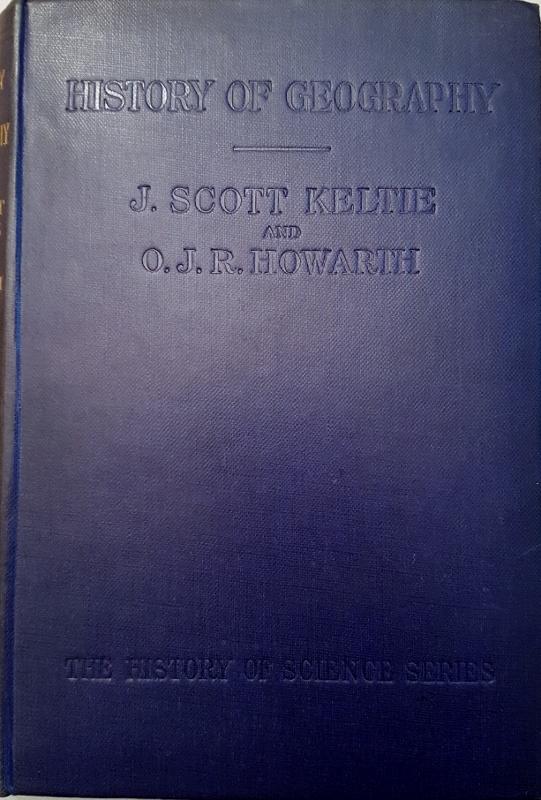
He co-wrote a history of Geography with fellow President John Scott Keltie, see references. This would have been a significant work at the time.

He wrote and edited numerous Geographical books for Oxford University Press, including 'A Geography of Ireland'. He co-wrote a book on the British Empire with fellow President A J Herbertson.

He was a great advocate of the Commonwealth replacing the Empire.

He even chose this theme for his Presidential Address, which was called "The Commonwealth in the Geography Syllabus".

"The British Association: A Retrospect" by O J R Howarth. The first edition, published in 1922 covers the years 1831-1922; a second edition published to coincide with the British Science Association’s centenary in 1931 covers the hundred years from 1831-1931.

He had a life long interest in the GA, but sadly died in 1954, just after completing his Presidential term.
This is described in this report on the following year's conference.

Some of his other publications:


Image result for O.J.R HowarthRelated image

His Presidential address was published in 1954 in 'Geography'.

I like his starting point about the positioning of the address within the President's tenure, and the ability to speak freely. He then said that having never taught geography he was going to tell geography teachers what he thought they ought to be doing, particularly teaching about 'world citizenship' and range further afield rather than a focus on the UK as it had at the time, from Howarth's perspective. This is an interesting position from which to start as GA President of course, but not uncommon in the earlier years of the GA.


It seems that he did a good job as President, as reported in the Annual Report for 1953


He wrote a 'History of Geography' with John Scott Keltie. This was published in 1913 and is available to read from this link.

References

If anyone knows anything more about this President, or has images, please let me know. I am lacking a decent photograph of this President.

One copyrighted image is here.
https://artuk.org/discover/artworks/dr-o-j-r-howarth-18771954-194318 - Artist is Robert Darwin.


Howarth, O. J. R. “THE COMMONWEALTH IN THE GEOGRAPHY SYLLABUS. Address to the Geographical Association.” Geography, vol. 39, no. 1, 1954, pp. 5–13. JSTOR, www.jstor.org/stable/40564669

Howarth, O. J. R. (Osbert John Radcliffe), 1877-1954. The British Association for the Advancement of Science: a Retrospect 1831-1921. London: The Association , 1922.

https://www.thegazette.co.uk/London/issue/31840/supplement/3791/data.pdf
- according to this he connected with the Naval Intelligence Division of the Admiralty, and his son served with the Naval Reserve I think according to this source
https://www.unithistories.com/officers/RNVR_officersH2.html
which describes him as a "scholar in geography".

1922: Book on the Scope of School Geography - book on the Internet Archive site.

The Study of the Geographical Environment - book on the Internet archive site.

https://openlibrary.org/books/OL7178190M/The_British_association_for_the_advancement_of_science
http://www.aughty.org/pdf/historical_geog_irl.pdf

A book called "History of Geography" was written with John Scott Keltie and published in 1913. It can be read on the Internet Archive site.


http://www.gutenberg.org/files/58349/58349-h/58349-h.htm - readable Project Gutenberg book which explores the 'history of geography"...

I contacted the British Association for the Advancement of Science to see whether they had an image, or more information on this President.
I'm still waiting for a response at the time of posting. Actually still waiting over two years later.

Update - this book was co-written with two others, including a familiar name in R N Rudmose Brown.


Readable on the Internet Archive and quite useful...

Updated August 2021
National Portrait Gallery photo.

Updated October 2023


He's on here somewhere then...


The Archives of Down House and BAAS have letters from Howarth in them, as does the Bodleian Library.

I discovered in an issue of the Elizabethan the confirmation that he went to Westminster School, followed by Oxford University.  This makes him an Old Westminster.

https://elizabethan.westminster.org.uk/Filename.ashx?tableName=ta_elizabethan&columnName=filename&recordId=609

The extra information about him being involved with the production of the geography section of Encyclopaedia Brittanica was also really interesting. Another avenue to explore...


The magazine also had information on his wedding.


Friday, 18 October 2019

1943: the 50th Anniversary conference

This was held in Cambridge at Newnham College and other venues in the city. It was a subdued affair given the circumstances of the ongoing war, so the Anniversary celebrations were a little muted.
One of the important elements of the event was a trio of papers from three giants of the GA's past - all former Presidents: Halford Mackinder, H J Fleure, and John Linton Myres.

They shared their views on the Development of the subject.

The resulting papers weren't actually reproduced until 1953 because of a paper shortage.


References
Mackinder, Halford J., et al. “THE DEVELOPMENT OF GEOGRAPHY.” Geography, vol. 28, no. 3, 1943, pp. 69–77. JSTOR, www.jstor.org/stable/40563379.


Thursday, 25 July 2019

1925: Professor John Nowell Linton Myres OBE FBA (later Sir)

Last updated August 2023

Professor John Linton Myres was an archaeologist and historical geographer, and was linked to the University of Oxford, as were many GA Presidents during the early decades of the 20th Century.

Several other presidents have also had a strong connection with both Archaeology and Historical geography.

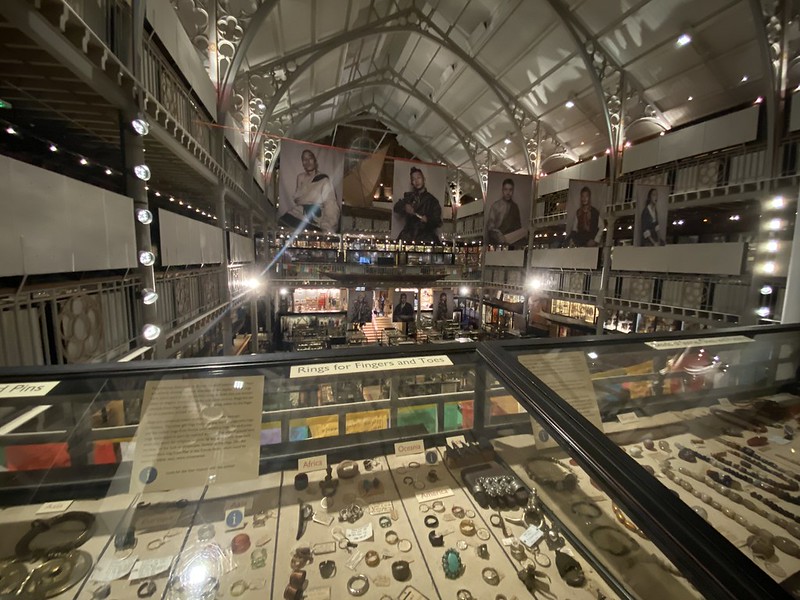
Myres was connected with the Pitt-Rivers Museum in Oxford, one of my favourite museums for its eclectic mix of artefacts all over the world, and the overwhelming view you get when you first walk in. 

This is a wonderful place for a geographer to lose themselves.

In 1926, Myres was also President of the Folklore Society.

From one description of him:

Myres will perhaps be best known to posterity for his many contributions to the history of the ancient Greeks, their origins, distribution and culture. But the keynote of all his studies and writings was his broad outlook and versatility, his grasp of studies other than his own speciality, and his power to fit in all the many elements that make up a finished picture. ... Myres brought his knowledge of many subjects, both in the arts and sciences, to bear on his main problem -- the Greeks, ... and he was always seeking from others some item he might have overlooked, it was this sense that he might have missed some factor that kept him always so free of dogmatism and finality. [K.M., 1954: 541]

He had been involved with the Association for some time before becoming a President, and was involved with it for some time afterwards.
In 1920, he sent a number of lantern slides to the Association for their collection, which was growing rapidly at this time.

In 1925, he also featured in 'The Geographical Teacher' talking about 'Wayside Geography'. This is described as a 'broadcast address' as it was played on the BBC - I wonder if a copy exists anywhere. 
He says in this piece:

"like any other science.... geography is simply a convenient name for a particular way of observing what goes on in [the] world"

He also finds opportunity in the every day:


In 1926, a longer version of this piece appeared in 'The Geographical Teacher', developing his ideas further, and worth a read if you have a subscription to 'Geography' and can access the archive via JSTOR.

In this expanded version, he mentions more examples of geography's power to describe and explain the world.

His Presidential Address was on the theme of Ethnology.


In 1926, he was thanked for a gift to the Association of over 700 slides, with notes.
“EDITORIAL.” The Geographical Teacher, vol. 13, no. 2, 1925, pp. 87–89. JSTOR, www.jstor.org/stable/40554985.

He was knighted in 1943.


Image credit:
Sir John Linton Myres
by Walter Stoneman
bromide print, 1923
NPG x162242© National Portrait Gallery, London

National Dictionary of Biography entry reads...

He founded no school. In his lifetime he saw classical archaeology grow from a dilettante study to a discipline which has much to contribute to all departments of classical scholarship. 
His part in this development was to show how historian, archaeologist, anthropologist, and geographer should combine their skills in the study of antiquity.

His obituary, written by H. J. Fleure, was published in 'Geography' in 1954, and outlined his contributions to the subject in a long and varied career.


References
https://en.wikipedia.org/wiki/John_Myres

I have edited this entry to add the fact that Myres was the President of the GA, as I have done with each President as I have come to them.

http://england.prm.ox.ac.uk/englishness-John-Linton-Myres.html - Pitt Rivers Museum connections
https://www.encyclopedia.com/social-sciences/applied-and-social-sciences-magazines/myres-john-linton
Myres, J. Linton. “Geography and the Classics.” The Geographical Teacher, vol. 10, no. 5, 1920, pp. 236–238. JSTOR, www.jstor.org/stable/40555132.

Myres, John L. 1925 'Presidential Address: The methods of magic and science' Folklore, Vol. 36, No. 1 (Mar. 31, 1925), pp. 15-47

Myres, John L. 1926 'Presidential Address: Folkmemory' Folklore, Vol. 37, No. 1 (Mar. 31, 1926), pp. 12-34

Myres, J. L. “WAYSIDE GEOGRAPHY.” The Geographical Teacher, vol. 13, no. 1, 1925, pp. 65–66. JSTOR, www.jstor.org/stable/40556448.

Myres, J. L. “WAYSIDE GEOGRAPHY.” The Geographical Teacher, vol. 13, no. 4, 1926, pp. 285–295. JSTOR, www.jstor.org/stable/40556130.

Myres, John L. “A GEOGRAPHICAL VIEW OF THE HISTORICAL METHOD IN ETHNOLOGY.” The Geographical Teacher, vol. 13, no. 1, 1925, pp. 9–29. JSTOR, www.jstor.org/stable/40556436

Fleure, H. J. “OBITUARY: Sir John Linton Myres.” Geography, vol. 39, no. 2, 1954, pp. 128–128. JSTOR, www.jstor.org/stable/40564578

If you know anything about him, please get in touch.

Here's a picture of mine of part of the Pitt Rivers Museum.


'The Pitt Rivers is packed beautifully, and practically to the ceiling with the most wonderful array of ethnographic objects, all soothingly lit and artistically arranged.'
Bill Bryson, The Road to Little Dribbling


Image: Alan Parkinson, shared under CC license.

Update - late July 2019

Myres' continuing support of the Association was mentioned in the 1928 Annual Report.

It is described as "long continued, intimate and unsparing help... especially valuable in some past times of some difficulty"
In 1928, he was elected as the President of the Royal Anthropological Institute and the Presidency of Section E. (Geography) of the British Association for the Advancement of Science.

Fleure, H. J. “ANNUAL REPORT.” Geography, vol. 14, no. 4, 1928, pp. 338–341. JSTOR, www.jstor.org/stable/40558279

Update - early August 2019

Found a reference to his work and photography in this blog. It also said that he had a brother with an almost identical name, but doesn't say what that was. From the Oxford Archaeology blog.
Myres is shown here in his white hat that he apparently wore, in a lantern slide, which is relevant of course...

ad34428_185-scr

A nice piece by Alice Jaspars.

Image from Facebook of Myres wearing his white hat...


Update October 2019
Visited the museum as part of a visit which also involved meeting the Halford Mackinder Professor of Geography: Danny Dorling.


It remains an astonishing mix of objects, artefacts and scholarship.
Some of them were donated by Linton Myres

Myres' English collections given to the Pitt Rivers Museum
Myres' donation of English objects were few:
1934.37.1-3 3 Percussion Tower muskets, dated 1856, 1858 and 1862. ENGLISH.
1942.1.422-3 2 tallies, records of vegetables planted delivered by donor’s gardeners, Richard Smith, at the Copse, Hinksey Hill. V. File.

In the museum files there is a letter from John Linton Myres to Henry Balfour dated 27 August, 1935:

 'The enclosed records were made about five years ago by my gardener at the Copse-Hinksey Hill, for vegetables delivered to the kitchen. His name is Richard Smith; he was about 75 years of age then; practically illiterate, though he recognized & distinguished unfailingly any packets of seed with printed labels that I gave him. He was very shy about these lists, and usually destroyed them; but these two we secured. They were always in this long tally-like form. The different arrangements of dots stood for different vegetables, but we only ascertained the meaning of a few (marked in ink) by comparing with the supplies received on each occasion. I see that I have put a note, at the time of collection, on the back of them.'
 
1946.10.55 Box containing experimental flakes of glass to illustrate the flaking-angle of 'eoliths' - made by Walter Charles Brice in 1941
 
[Bequest after his death] 1959.4.4-9 A set of six groups of Chinese scenes hand-painted in glass. These are an early form of lantern slide, and belonged to the late Sir J.L. Myres.

Updated July 2022
A holiday photo with his wife in Greece


Described as a 'father of Cypriot archaeology' and also a Freemason.


In 1941, he read a paper at the GA Conference on Greece.


Updated August 2023
Some small tweaks and changes.


Margaret Mackintosh RIP

Updated post. Sad news at the end of last week from colleagues who have organised the Charney Conference over the years of the passing of Ma...