Showing posts with label 'Geography' Journal. Show all posts

Tuesday, 18 May 2021

Wartime - mass observation

Bill Mead, a future President of the GA wrote a letter in to the 'Geography' journal in March 1945. In it, he suggested that the disruption of the Second World War could be turned to advantage as there were doubtless lots of members of the GA who had been posted overseas, and whose experiences could perhaps be harnessed. I'm not sure whether his suggestion was taken up in an organised way,  but certainly many GA Presidents during the 1950s had seen active service, many of them in aerial surveillance and intelligence as can be seen in their entries on the blog. These fed into articles in 'Geography' through the 1940s and 1950s and undoubtedly shaped the next generation of geography teachers.

Source:

Mead, W. N. “CORRESPONDENCE.” Geography, vol. 30, no. 1, 1945, pp. 15–17. JSTOR, www.jstor.org/stable/40562423. Accessed 15 May 2021.

Tuesday, 16 February 2021

2000: Dr. Derek J Spooner

Update July 2024

Dr. Derek J Spooner was the Head of the Geography Department at the University of Hull for many years, which has a strong association with GA Presidents. When he became GA President he was a Senior Lecturer in Geography.
I have a personal connection with the University of Hull as I completed my PGCE there in 1986 under W Vincent Tidswell, so possibly met him back then in one of the sessions we had which involved departmental staff. One of Derek's colleagues was Professor Allan Patmore, who was the GA President in 1979, and other well known geographers have been linked with the University, including some featured on this blog. 

Derek's Presidential Address was entitled 'Odysseys in a Regional World'. This went along with the conference theme that year: "2001: a Spatial Odyssey"


In it, Derek discussed the changing nature of geography.

He was the editor of 'Geography' at a time when the journal changed, and included colour printing. This led to a slight change in the nature of contributions, and forms part of the regular updates that the journal has gone through as the subject's position as an academic discipline has evolved too. The journal has been an important part of the GA's 'credentials' as a professional association.

Derek contributed a chapter on Changing Geographies of Energy to another former GA President: Ashley Kent's book on 'Reflective Practice (which also featured contributions from many other GA Presidents) - I have a copy in my library which has grown substantially since the start of this project. Derek and Ashley were also involved in the celebrations of the life of Michael Bradford in 2019 at the University of Manchester. 
See the post on Michael for a link to the video of the celebration where you can see and here Derek in action.

Dr. Spooner is an Honorary Member of the GA. A distinction few have been awarded.


Derek is sat on the floor, third on the right in this image, next to the late Professor Michael Bradford. You should hopefully be able to identify the other Presidents by now. Margaret Roberts MBE is standing in the middle of the group. There are a few GA Trustees in there as well. Derek introduced Michael Bradford's Presidential lecture as well.


Derek in fact also wrote an obituary for the former GA President Michael Bradford in the Guardian, who sadly died in Summer 2019. Michael will have his own post on the blog in due course. He also sent me a significant update to the entry for Allan Patmore, his friend and colleagues for many years.

He told me that:
One thing you might like to note is that three closely-linked Presidents all went to St Catharine's College, Cambridge - Ashley Kent, Mike Bradford and me. This is something which I have developed a little more in some separate blog posts. There were links with other Presidents too, including J A Steers.

Derek kindly responded to my request for more information in a questionnaire that I sent through, and the following information was supplied by Derek.

I was born in Bournemouth in 1943. However I regard myself as coming from Southampton, which is where I grew up. I was born in Bournemouth because my family was evacuated from Southampton during the war, returning there in 1945. I regard myself as coming from Hampshire, though Bournemouth was made part of Dorset in 1974. Dorset is a lovely county (though second-class in cricketing terms) but my allegiance is to Hampshire.

I went to Taunton's School, Southampton, at that time a boys grammar school. It is now a mixed Sixth Form College. My love of Geography was fostered by a brilliant teacher, Ted Colenutt. I went up to St Catharine's College, Cambridge in 1962 and after graduation stayed another three years for my PhD, which was a study of post-war industrial development in Devon and Cornwall.

I then embarked on an academic career spent almost entirely at the Department of Geography, University of Hull, where I stayed until I retired in 2003. I was Head of Department there for eight of those years. I also spent a sabbatical term at the University of Maryland in 1976 and another at the University of West Virginia in 1985.

I was GA President in 2000-2001, and taking my cue from the world of cinema chose the theme 'A Spatial Odyssey'. I have always been interested in Geography as the study of place and space, and my presidential address focused upon three places that had captured my interest - Hull, West Virginia and The Mezzogiorno (Southern Italy). My involvement in the GA was fostered by my colleague Allan Patmore, but my involvement in the work of the Association really took off when I became Editor of 'Geography' in 1989 (until 1995). I regard this as the most important element in my service to the GA. 
It was a particularly challenging time for the journal as it struggled to maintain a flow of articles from university staff who were being increasingly pressurised to concentrate on research publications and grants. 

My main memories are of the sheer professionalism and hard work (not to mention unflagging good humour) of those doing paid or voluntary work for the GA. On a personal level, my main memory is of the stress of preparing my Presidential address, despite having done numerous talks to geography teachers over the years. I vowed never to voluntarily put myself into such a stressful situation ever again!! I'll bear that in mind :)
Derek was also involved in the lead up to the appointment of David Lambert as Chief Executive.

The Annual Conference was held at the University of Sussex in Brighton, the most southerly location for the conference that I can remember, and was I like to think a very successful event. The Coastline 2000 project also ran that year and sought to involve schools in the survey of the coast."

After he retired in 2003, Derek moved to Cornwall and had some involvement with the Plymouth branch of the GA for a few years. 

He also had time to complete 'Discovering Cities: Kingston upon Hull', published in the GA series.


Image: Jeremy Krause and Derek Spooner - image copyright Bryan Ledgard / GA - Jeremy is next up on the blog.

Derek published several articles on coal during the 1980s, ahead of the Miner's strike, and also knew John Fernie, who was one of my lecturers at Huddersfield Polytechnic at that time, who also wrote about the geography of the energy industry.  
Derek told me:
"My interest in the geography of energy was triggered in the 1970s by the development of the Selby coalfield, not far to the west of Hull. I remember writing an article about it in the Geographical Magazine in 1976. That led into a wider interest in the coal industry's changing geography, especially in Yorkshire. I well remember the miners' strike - an awful time. Sabbaticals in the Eastern USA (Maryland 1976) and West Virginia (1985) enhanced my interest in the coalfields of Appalachia."


I also have a letter that Derek sent to Chris Kington who asked him about the spark that had triggered his love for Geography in the first place.

He describes his teacher Ted Colenutt, "a great geography teacher drew a sketch map of Argentina on the blackboard. This representation of a different exotic place caught my interest. I was eleven." He gets a mention in Derek's Presidential address. There are a few of my teachers and colleagues who will similarly get a mention. Their task was to copy the diagram (I had a colleague when I first started teaching who used the same methods 30 years later). After Argentina, they did Chile, then Brazil.

"A favourite lesson among his charges was on Volcanoes, Glaciers and Monsoons. He himself had a passion for sketch maps, drawn on a blackboard with coloured chalks. Social behaviour in and out of school were different in past days. Unlike today's College, Ted said, we had to - and could - make more effort at form room discipline. He had heard of masters throwing chalk at disruptive pupils, while one actually threw six-inch long, inch-thick blackboard dusters at trouble makers in the back row!" 
I remember my teachers doing the same in the 1970s, particularly the DT teachers.

As mentioned earlier in the post, Derek was also a great friend of Ashley Kent, and together he and Ashley were involved in the celebrations of the life of Michael Bradford, about whom much has been added to the blog over the last few weeks and which can be seen on video (see Michael Bradford's entry on the blog for the Vimeo link)
Ashley told me about Derek in an email some weeks ago when he gave me his own biography:

Re Hull...as you probably know Derek was ...for years...head of the geography department at Hull and I remember staying with him and his wife to give GA talks there. Derek was at St Catharines, Cambridge University with Mike Bradford and I and I played quite a lot of college football with him. 
He and I plus Janet Pickering, former head of Withington Girls were the ‘front’ of the farewell to Mike at the University.
Derek was a fine cricketer as well as geographer. He was captain of Hull Cricket Club for many years in the famous Yorkshire League, and edited 'Geography' the journal forever."

It seems there may be a cricketing theme for many Presidents too then, with Sheila Jones and fellow Bristolians also being big cricket fans!

Derek also remembers those times editing 'Geography' fondly, telling me:

"In many ways the time I spent as editor of 'Geography' was the time I enjoyed most with the GA. I was particularly proud of the GA centenary issue I produced in April 1993 (No 339), with mainly invited contributions. The October issue (No 341)  was also a special one, with the text of lectures given at the centenary conference, including some by well-known politicians like David Blunkett. It also included a guest editorial by the GA President Andrew Goudie which focused on the 'Great Divide' between Schools and Universities, which was something that I strove to diminish both in my time as Editor, and during my period as President.  It is perhaps worth noting that I  was the last Editor of Geography from one of the older Universities, until the new arrangement introduced as the Editorial Collective. (I was followed by Hazel Barrett (another former GA President) and Kenny Lynch from Coventry and Cheltenham respectively).

In my time as Editor I was also conscious of the declining input to 'Geography' from physical geographers, and made a conscious effort to rectify that - with some success. Although my career was spent largely as an economic geographer I considered that physical geography was most important to the integrity of the subject."

Derek also told me about his experiences on GA Study Tours:
"After I retired at Hull my wife Christine (another geographer by training) and I went on an extraordinary study tour with the GA - to South Africa. We had never been anywhere in Africa before. And what a fantastic set of fellow travellers - including several other Presidents - Chris Kington, Margaret Roberts and Tony Binns (an Africa specialist). We travelled in a large minibus enabling Tony to give us non-stop commentary, driving from Durban to Cape Town. High spots for me included Robben Island, the Addo Elephant Park and travelling up into the Drakensberg to visit Lesotho. I also remember with pleasure listening to a lecture somewhere near Cape Town which was interrupted by a penguin (they bray rather like a donkey). 
We enjoyed this busman's holiday so much that the following year we went on another equally memorable study tour to Kenya. And finally in 2008 we went on a tour of Mexico, which was overrun with GA Presidents. Chris Kington described it as the Presidents and their WAGs! (For the record Chris, Ashley Kent, Mike Bradford and myself, with partners, plus Margaret Roberts!"

Chris Kington also told me about his memories of that trip:
"I think that South Africa trip secured the ascendancy of digital photography over the reluctant to die traditional SLR cameras and the ubitquitous Kodak film. Always keen on photography Derek - now an absolutely brilliant wildlife photographer - really got very excited by the possibilities of digital and re-doubled his determination to become a photographer rather than a snap shooter. This study tour seemed to mark the tipping point. Thereafter the prolific geographers had tens of thousands of shots by the end of a study tour."

Derek also told me a little more about his cricketing experiences:

"Cricket played a big part in my life - in my youth I played several matches for the MCC, including England (the MCC) v the Isle of Wight! For the MCC v Ampleforth College I came on to bowl after Fred Trueman and Brian Statham! Unfortunately I dropped a catch of Trueman. I played for Hull in the Yorkshire League for nearly 30 years (my last season was 1996) and played several times at Headingley."

References
SPOONER, DEREK. “Odysseys in a Regional World.” Geography, vol. 86, no. 4, 2001, pp. 287–303. JSTOR, www.jstor.org/stable/40573609

North, John, and Derek Spooner. “The Yorkshire, Nottinghamshire and Derbyshire Coalfield: The Focus of the Coal Board's Investment Strategy.” The Geographical Journal, vol. 148, no. 1, 1982, pp. 22–37. JSTOR, www.jstor.org/stable/634240.

Spooner, D. (1981). The Geography of Coal's Second Coming. Geography, 66(1), 29-41. Retrieved September 14, 2020, from http://www.jstor.org/stable/41414463
https://rgs-ibg.onlinelibrary.wiley.com/doi/abs/10.1111/j.1475-4762.2000.tb00131.x - a piece on Larkin and Hull

If anyone has other memories of Derek Spooner's time as GA President please get in touch.

Updated March 2021
A memory of Derek from Jeremy Krause

1998 My good friends Wendy Garner and Elaine Jackson persuading me to stand for election as President, and the embarrassing situation, for all concerned, when it was announced at GA Council that there had been a tie in the voting for President between Derek Spooner and myself. It was resolved in the meeting by a ‘drawing of straws’ which Derek won. I then had to decide whether to continue. It was decided that I would be put forward uncontested for President the following year. 
After the meeting, Derek suggested that we should have gone down the ‘single stump in cricket’ route. I would have still have lost! 

Updated August 2022
Here's an image of Derek with Wendy Morgan.


Updated July 2024

Derek was also listed as an inspiration by Claire Birkenshaw, who has had a lecture theatre named after them.
John Pethick is also mentioned here, and he had a high profile back in the day, presenting schools geography videos.

Friday, 15 January 2021

Bertie Roberson

Bertie Roberson worked at the Institute of Education: which has links with many former GA Presidents, particularly Molly Long.

His obituary was published in 'Geography' in 1995, and written by Norman Graves. He was also a colleague of former GA President Molly Long. He was also a long-serving member of the Secondary Section Committee, of which I was also a member for many years.

Reference

Graves, Norman. “B.S. Roberson 1911-1994.” Geography, vol. 80, no. 3, 1995, pp. 290–290. JSTOR, www.jstor.org/stable/40572678. Accessed 15 Jan. 2021.

Wednesday, 29 April 2020

Patrick Geddes on 'Geography' and the specialist

From the Herbertson Memorial Lecture of 1948, given by Robert Neal Rudmose Brown.


Source:
Brown, R. N. Rudmose. “SCOTLAND AND SOME TRENDS IN GEOGRAPHY: JOHN MURRAY, PATRICK GEDDES and ANDREW HERBERTSON.” Geography, vol. 33, no. 3, 1948, pp. 107–120. JSTOR, www.jstor.org/stable/40564415. Accessed 29 Apr. 2020.

Friday, 17 April 2020

1964: GA Branches

Cartography by J E Hall, Dept of Geography University of Sheffield 
Original copyright: Geographical Association, published in 'Geography' journal in 1964

GA Branches still had gaps in coverage - something which we are still tackling and conscious of today.

As we gather electronically for the GA's eConference. It's worth noting the importance of GA Branch activity which can hopefully continue in some way, perhaps using Zoom or similar to gather people together.

Sunday, 22 March 2020

1961: Climate to the fore in 'Geography'

The present focus on climate change means that climate has come to the fore.
In 1961, there were some important papers published in Geography by people whose work was still significant a quarter of a century later.
H H Lamb wrote the definitive book on the research done to reconstruct past climates and I remember using his materials with my lecturer Lance Tufnell, who was also doing similar work to collect proxy data to reconstruct past climates, particularly in the West Yorkshire area as part of his work exploring glacier change.


T J Chandler wrote the definitive paper on the London Heat Island effect and in this paper he revisited the idea to see whether it was changing.


It's a reminder that even today, the GA Journals contain the very best and latest scholarship which teachers can use to keep themselves up to date. Also remember that the temperature readings for this were taken by individuals and we can all take part in similar citizen science work to help each other.


References
LAMB, H. H. “Atmospheric Circulation, Climate and Climatic Variations.” Geography, vol. 46, no. 3, 1961, pp. 208–222. JSTOR, www.jstor.org/stable/40565262

CHANDLER, T. J. “The Changing Form of London's Heat-Island.” Geography, vol. 46, no. 4, 1961, pp. 295–307. JSTOR, www.jstor.org/stable/40565541

Thursday, 7 November 2019

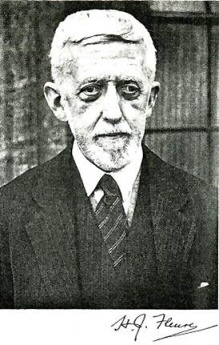
1948: Professor Herbert John Fleure FRS


Last updated December 2023

This is another of the most long serving of the Geographical Association's Presidents, and whose work ensured its survival when it was fairly young.

We come next to Professor Herbert John Fleure - another of the great names who will be forever associated with the Geographical Association, and to whom is owed a great deal by the present day Association, but whose legacy is problematic because of some of the views he held at the time.

In compiling this blog, it is clear that there are several names who are intertwined with the DNA of the Association as it is now, and one of those is H. J. Fleure or HJF as he wrote on so many documents, articles, book reviews and other documentation throughout his long time at the GA.

By the time Fleure became President, he had been linked with the GA for many decades, acting as its librarian and holding other roles, including the compilation of the Annual Report as far back as 1920 in his role as Secretary.

The Annual Report in 1920, for example talked about the progress of the association. The 2020 Conference theme, chosen by Gill Miller, is "Geography really matters", and in 1920, H. J. Fleure was already onto Gill's idea of each teacher doing something to show that geography matters,  in this statement.

"The Report of the progress of the Association should encourage teachers all over the country to put an extra dose of enthusiastic interest into their exposition of Geography and their co-operation with other subjects for a more synthetic education..... [Geography] is a subject that the pupils can go on with, must go on with, all through their lives. It is the one subject which really tries to face the problem of the interpretation of our modern world. it is the most hopeful line of work towards a better understanding between the peoples of the world.... the opportunity and responsibility of teachers of Geography is a great one, and we are confident they are rising to it."

Fleure, in addition to being a long serving Secretary of the Association, was also the editor of 'Geography' for a time, amongst many other contributions that he made to the workings of the GA.
ImageHe was born in Guernsey in 1877.
He went to Aberystwyth University, and also studied in Zurich, Switzerland.
Fleure was an academic geographer for his lengthy career, and was associated with the Universities of Aberystwyth and Manchester in particular where he held posts which allowed him to support the development ot the GA as well.

His research in Wales is described here.

Fleure wanted to look at how place influenced people, and the way that geography affected identity


During his Presidential year, he did a great deal also for the Le Play Society. The Le Play society organised overseas tours as the earlier Touring Branch had done, and also held an annual conference. I also notice the address of the Secretary on the bill below.
I wonder if the Birlings at Birling Gap is still there, or has succumbed to the coastal erosion that has taken place there in recent decades particularly.

The Le Play Society continued after the end of the GA's own Touring Branch had to close.
Someone who is also associated with the Le Play Society and the GA is Frederick Soddy, in whose name grants are now provided for teachers to provide fieldwork opportunities for their students, for both the GA and the RGS.

Here is Fleure in 1927 - 2nd from the right on the Front Row

Source: https://www.llyfrgell.cymru/fileadmin/fileadmin/docs_gwefan/amdanom_ni/cylchgrawn_llgc/cgr_erth_XXXVrh1_2010_4.pdf

Fleure was awarded an Honorary Fellowship from the American Geographical Society in 1930, and its Daly Medal in 1939.
He received the Victoria Medal of the RGS in 1946, as have a few former Presidents of the GA. A precedent that I think is worth renewing ;)

Fleure was also one of only three geographers to have been elected as a Fellow of the Royal Society - bonus points if you can name the other two...

The Fleure Library is the name of the GA's archive of materials, and it has been quite mobile, and found several homes, as has been described in the blog. Some elements of the library are now on display in the Patrick Bailey room at Solly Street (a room named after another former GA President)

As I blogged about previously, back in 1917 Fleure took the library with him when the GA relocated to Aberystwyth and he was able to secure premises in the town with appropriate space for the archive.


https://royalsocietypublishing.org/doi/pdf/10.1098/rsbm.1970.0009

He later relocated to the University of Manchester, where he had a Professorship, and the library followed him there, until 1947.
Here is an announcement from 'Geography' in 1947


As one can imagine, as with many other Geographers of the time, we have to look at his work through the lens of history.
According to this piece, Fleure made his name originally through writing about Race, although he was not a racist, and spoke out against those who were.

I wonder what this publication suggested were the particular problems... answers on a carte postale.

When he retired from the Professorship at Manchester, this piece was written about his time at the GA.
https://www.nature.com/articles/153489c0
It describes his major work called 'The Corridors of Time' which ran to several volumes.
A Natural History of Man in Britain Hardcover  by
Fleure also wrote several books on the landscape of the UK and the influence of man, and worked with Harold Peake on a series of archaeological books.

No scholar in Great Britain has done more to justify the claims of human geography, closely linked with both the natural sciences and the humanities but pursuing its own distinct objectives and devising its own technique and methods, to be one of the most illuminating approaches to the study of civilisation and its problems.
From a notice in 'Nature' in 1944

Fleure also wrote an excellent 33 page long account of the first 60 years of the GA and Education, which I have referred to several times during the production of this blog.
This is proper scholarship though, compared to my scribblings on this blog.

Updated May 2021
Fleure retired in 1944 and travelled in the USA. This was ahead of him taking up the Presidency.

Source:
“GEOGRAPHICAL ASSOCIATION. ANNUAL REPORT FOR 1944.” Geography, vol. 30, no. 1, 1945, pp. 18–19. JSTOR, www.jstor.org/stable/40562425. Accessed 15 May 2021.

Fleure died at the age of 92, having a lived a life full of geography. He finally had his own obituary, after the very many that he had written for other GA Presidents before that.

Addendum
While communicating with Ricky Buck at the GA recently, he told me that he had been in touch with an academic who was researching the life of H J Fleure.
She is exploring his life, and I hope to perhaps find out more about H. J. Fleure through chatting to her.

Another of Fleure's books, with M. Davis.
Related image

References

Matless, David. “Nature, the Modern and the Mystic: Tales from Early Twentieth Century Geography.” Transactions of the Institute of British Geographers, vol. 16, no. 3, 1991, pp. 272–286. JSTOR, www.jstor.org/stable/622948.


I have edited the page to add Fleure's Presidency to the page, as I have with all those who didn't have this information.

Fleure, H.J. (1953) "Sixty years of geography and education", Geography, vol.38, pp.231-264

https://royalsocietypublishing.org/doi/pdf/10.1098/rsbm.1970.0009 - biography from Royal Society pages.

Fleure, H. J. “GEOGRAPHY AND THE SCIENTIFIC MOVEMENT.” Geography, vol. 22, no. 3, 1937, pp. 178–188. JSTOR, www.jstor.org/stable/40560279.

Mentioned in: https://www.geography.org.uk/write/MediaUploads/Journals/Boardman_McPartland_Building_on_the_foundations.pdf

Invited to speak at Edinburgh University: https://www.ed.ac.uk/geosciences/about/history/school-history

His part in the founding of the IBG: Stoddart, D. R. “Progress in Geography: The Record of the I. B. G.” Transactions of the Institute of British Geographers, vol. 8, no. 1, 1983, pp. 1–13. JSTOR, www.jstor.org/stable/622270.
Obituary: https://www.therai.org.uk/archives-and-manuscripts/obituaries/herbert-john-fleure - written by another former President: E G Bowen (or EGB as he was known)

Fleure's account of the 60 years of the GA on JSTOR. I've mined this for lots of details on other Presidents as well, and they will appear in the next few months.

Fleure, H. J. “NEW ENGLAND-AND OLD.” Geography, vol. 31, no. 3, 1946, pp. 105–110. JSTOR, www.jstor.org/stable/40563882.
https://www.llyfrgell.cymru/fileadmin/fileadmin/docs_gwefan/amdanom_ni/cylchgrawn_llgc/cgr_erth_XXXVrh1_2010_4.pdf

http://www.geocurrents.info/geographical-thought/racial-classification-h-j-fleure-and-the-decline-of-geography

As always, if anyone has further information relating to H. J. Fleure and his time at the GA. he is one of the most influential figures in the history of the Association. Please let me know so that I can expand on this post.
 I am sure there is plenty more to say about him. 

Image - books from the Fleure library

Added August 2019

Fleure is also mentioned in Crone's chronology of Geography in the 20th Century.

Reference
Crone, G. R. “British Geography in the Twentieth Century.” The Geographical Journal, vol. 130, no. 2, 1964, pp. 197–220. JSTOR, www.jstor.org/stable/1794582.

Updated November 2019

Thanks to Jamie Woodward from the University of Manchester. He references a document which relates to Fleure's work at the University.


Also thanks for the lead to this article by another former GA president E.G.Bowen, who is yet to feature.


https://books.google.co.uk/books?id=N81mDwAAQBAJ&lpg=PT67&ots=RtCfAEEQvA&dq=charles%20close%20OS%20geographer&pg=PT79#v=onepage&q=charles%20close%20OS%20geographer&f=false

Updated March 2020

In Balchin's Centenary volume, he describes how, when Fleure reached the age of 85 in 1962, he was presented with a book of congratulatory messages and good wishes from several hundred members, together with a portrait in oils, which hung on the wall at Fulwood Road. I wonder where that is now.
At this age, he was still working as Chairman of the GA Council.

Updated July 2022

As with other Presidents I have been adding any details that emerge with respect to controversial views helf by Presidents, alongside the EDI work of the GA.
H J Fleure was a proponent of eugenics, and this needs to be remembered alongside his other achievements. Many of his books have elements of this racist theory within them.

A new image is found in a book of essays to mark the centenary of the department, which was edited by another former GA President: 'EGB' or Emrys Bowen.

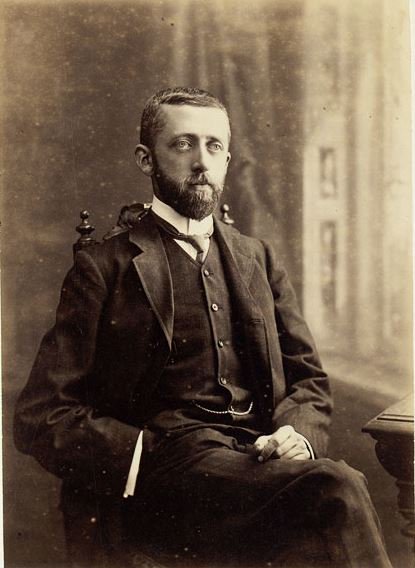
This has a new image to me of Fleure.

The book was dedicated to H J Fleure.
It provides a summary of his time at Aberystwyth as well.


There is also mention of how Halford J MacKinder asked Fleure to be the Honorary Secretary of the GA, which resulted in the GA moving to Aberystwyth.


There is mention later in the foreword of the essay collection of Fleure's research:


Updated August 2023

A few tweaks and amendments.


Last updated Decembr 2023

An appreciation by Alice Garnett for the Royal Society.

Fleure was elected as a member in 1936.


Garnett, Alice. “Herbert John Fleure. 1877-1969.” Biographical Memoirs of Fellows of the Royal Society, vol. 16, 1970, pp. 253–78. JSTOR, http://www.jstor.org/stable/769590. Accessed 19 Dec. 2023.

From this article:

The last occasion when he addressed a formal gathering of geographers was in his ninety-first year. Then, from his home in Surrey, 'cocooned'-as his family described him-in rugs and shawls, in a wheel chair, he was transported to participate in 'The President's Evening' in the course of the Geographical Association's Annual Conference held at the London School of Economics.

It was a raw, bitterly cold night early in January that must have daunted many far younger than himself but for Fleure this was an occasion that come what may, no matter how 'hard the going' might be-he refused to miss, as it was designed also to mark the retirement of his successor in office after twenty-one years of service since his own day.

Unable himself to read close print, his son had read to him-at his request-every detail of the Association's Balance Sheet and Statement of Accounts presented at a recently held Annual Meeting. Fleure astonished officers whom he met that evening by the searching questions he then asked, seeking explanations for numerous small changes and variations in financial procedures, in what would, at any age, have been a prodigious feat of memory.

Before a large audience - and inevitably without the help of notes - he then delivered without faltering, a most memorable and moving speech, reiterating in this, his last public utterance, his plea through the teaching of geography, for toleration and mutual understanding amongst peoples.


Eighteen months later, he died peacefully on 1 July 1969 at his home in his ninety-second year, after an unexpected and short attack of bronchitis. Amongst geographers, he was a leader whose ideals, wisdom and strength of purpose can hardly be surpassed.

Presidential Address:
 1949. Geography and evolution. Geography, 34, 1-9. Presidential

Update December 2023
A series of tweets on the Relief Model of Wales. 

Thursday, 10 October 2019

1942: Textbooks - how to use them...

"Ideally a textbook should be an attractive piece of descriptive literature bound together as a story of human life upon some portion of the earth 's surface."

"The region chosen, the particular human life in that region selected, and the kind of detail given, as well as the conclusions drawn, must depend on the age of the children. The descriptive literature must lend itself to study - i.e., properly selected exercises and questions should ensure that the necessary geographical facts can be deduced and organised from it. It will be necessary, therefore, to include many pictures not as illustrations, but as study exercises, so that the descriptive text may take on greater reality. Similarly, there may be statistics and outside references which need graphing or mapping and subsequently investigating. In addition, there should be certain detailed maps not readily available in any school - e.g., a particular farm, a logging camp, a factory, a city, etc., which will require directed study.

The teacher may be able to supply other data, such as samples, specimens, films, wireless talks, but what- ever happens the teacher must use the textbook and see that stimulating exercises and questions are asked, that additional facts are supplied where necessary, and that a proper summary in note and map form is built up by each child."

Neville Scarfe

References

Scarfe, N. V. “GEOGRAPHY TEXTBOOKS FOR SCHOOLS.” Geography, vol. 27, no. 3, 1942, pp. 106–119. JSTOR, www.jstor.org/stable/40562229.

Neville Vincent Scarfe, UBCʹs first Dean of Education, was born in Essex, England in 1908. He attended the University of London graduating with first class honours in geography. After teaching geography until 1935, Scarfe became Senior Lecturer in the Institute of Education at the University of London where he remained until 1951. Internationally recognized for his research work in the teaching of geography and in the principles and philosophy of education, he became Dean of Education at the University of Manitoba in 1951 and remained there for five years. In 1956, Scarfe became the founding Dean of Education at UBC. A consolidation of the Universityʹs School of Education and the Provincial Normal School had given rise to the new Faculty of Education. He continued to guide the faculty until his retirement in 1973. 

Friday, 26 July 2019

1926: 'The Geographical Teacher' name change occurs

1926 saw a change in name of the journal: "The Geographical Teacher" to just "Geography"

The Spring 1927 issue was the first to bear the new name.

Note the address of Aberystwyth, where H J Fleure was back then.

The journal is still called 'Geography'.
Two years later, the Journal became quarterly, before going back to three issues.

James Fairgrieve (who later became President) generously offered to guarantee any losses during the period following the name change.

The first article in the newly named journal was by Charles Close: the President for 1926, shown below.


References

“Front Matter.” Geography, vol. 14, no. 1, 1927. JSTOR, www.jstor.org/stable/40557855.

Margaret Mackintosh RIP

Updated post. Sad news at the end of last week from colleagues who have organised the Charney Conference over the years of the passing of Ma...