Showing posts with label GA Council. Show all posts

Sunday, 14 July 2024

1921: Halford Mackinder

I've been doing some reading to prepare for some work in my new role as VP: Education of the Royal Geographical Society.

I came across a speech by Halford MacKinder, delivered in the famous Map Room in 1921.


I was intrigued at the description of the GA as 'the dutiful daughter' of the RGS, asking for 'maternal help'.

This came at a time when the discipline was strong in universities, but not so much in schools.


This led to a report by John Scott Keltie.
I was interested that MacKinder was caned at school for drawing maps.... see below...

"About this time a step had been taken the significance of which was not at first recognized. Mr. Dickinson of Rugby had been using lantern slides in his classroom, and wanted to organize a system of exchanging slides between school and school. 

The Royal Geographical Society referred him to me, and at my invitation the first meeting of the Geographical Association was held at Christ Church, Oxford. Herbertson soon became Secretary of the Association, which under his auspices flourished, and began to publish a journal, the Geographical Teacher."

Source: Mackinder, Halford. “Geography as a Pivotal Subject in Education.” The Geographical Journal, vol. 57, no. 5, 1921, pp. 376–84. JSTOR, https://doi.org/10.2307/1780845. Accessed 11 July 2024.

Saturday, 19 August 2023

1930

A spot of history. I was looking for some more detail on the connection between Sir Patrick Geddes and the GA.

Here's the Council for 1930 - a great many past and future Presidents were Vice Presidents on Council at this time. The meetings must have been quite some event...


I wonder what happened to Miss A Shipperbottom and the other female members of council mentioned here.

Saturday, 27 August 2022

From the archive: Centenary Celebrations 1993

I visited the GA Archive in Solly Street two weeks ago.

I came across some pictures from the GA's Centenary celebrations.

There were some of the Centenary dinner held at Keble College, Oxford and others of the visit by Princess Anne. 

Here's a few of the GA Council meeting in November 1993 when the centenary was celebrated, along with a special cake.


There are some familiar faces here, including the President at the time: Andrew Goudie with the cake.

If anyone spots someone in particular, please get in touch.

Friday, 19 August 2022

R J Unstead

While in the GA Archive I came across the manuscript of an appreciation of the work of A J Herbertson: a legend from the very origins of the GA, handwritten by R J Unstead.

R J Unstead was a connection with the early days of the GA as well, having been a teacher who was influenced by hearing Halford Mackinder speak. He wrote about Herbertson, and that was featured in a 1955 issue of 'Geography'.

Source:

UNSTEAD, J. F. “A. J. Herbertson and His Work.” Geography, vol. 50, no. 4, 1965, pp. 343–47. JSTOR, http://www.jstor.org/stable/40565958. Accessed 19 Aug. 2022.

Here is the piece as it featured in 'Geography', in a special issue devoted to A J Herbertson.


Here is the manuscript:


He wrote a great many books which were published during the middle part of the 20th Century.

His obituary was published in 'Geography' in 1966, and written by Olive Garnett.


Source

Garnett, Olive. “JOHN FREDERICK UNSTEAD.” Geography, vol. 51, no. 2, 1966, pp. 151–53. JSTOR, http://www.jstor.org/stable/40566076. Accessed 19 Aug. 2022.

I lack an image of R J Unstead if anyone has any memories or is able to provide one from the 1960s.

Monday, 19 April 2021

Trevor Bennetts

Updated October 2025

One of the names which has been cropping up throughout my work on the blog has been that of Trevor Bennetts. He was Senior Geography HMI during the 1980s: a time when the GA had to fight hard to ensure that geography found a place on the curriculum.

He lived in Eastleigh and was associated with the University of Southampton, where he was a Visiting Fellow in the School of Education. He was one of the attendees of the GA's Centenary weekend in 1993 at the University of Oxford. He can be seen chatting to Patrick Bailey in the centre of the image, in the light coloured jacket and trousers.

He was a long-standing member of the GA's Council - a key position.

In 1985, he published an article in 'Geography' on Geography from 5-16, which also remains significant.

Trevor Bennetts has written a great many important papers and articles and some are referenced at the end of the piece.

He was also involved in the development of the GCSE's in the late 80s (when I started teaching)

Richard Daugherty provided some details on Trevor's association with the GA, describing him as a 'long time supporter of the GA'.

"Trevor told me at the time that, against all expectations that ministers’ speeches are usually mainly written by officials, Joseph took great trouble to prepare what he said to the GA. Trevor was sent away more than once to supply Keith Joseph with further reading so that the Minister could satisfy himself that he had his arguments right when it came to speaking to the GA.
That tallies with my own experience of seeing the early drafts of the first ever GCSE geography criteria. As Pat Wilson, geography officer at SEC and SEAC, will confirm, their draft versions of the geography criteria came back from the Department of Education with insertions and amendments in Keith Joseph’s own handwriting. Not a Secretary of State who left things to his officials! "

His work on Progression in Geography from 2008 is still useful today.

Trevor was also included in the list by Jeremy Krause of people who should perhaps have been GA Presidents but never were.

References

Researchgate entries.

https://www.taylorfrancis.com/chapters/edit/10.4324/9780203994238-17/continuity-progression-trevor-bennetts?context=ubx&refId=620ebb2b-1c9a-42a3-ae5b-3772303f1406 

Bennetts, Trevor. “Geography from 5 to 16: A View from the Inspectorate.” Geography, vol. 70, no. 4, 1985, pp. 299–314. JSTOR, www.jstor.org/stable/40571001. Accessed 28 Mar. 2021.

Bennetts, T.H. (1981) ‘Progression in the geography curriculum’ in Walford, R. (ed) Signposts for Geography Teaching. Harlow: Longman, pp. 165-85. 

Bennetts, T.H. (1995) ‘Continuity and progression’, Teaching Geography, 20, 2, pp. 75-9. 

Bennetts, T.H. (1996) ‘Progression and differentiation’ in Bailey, P. and Fox, P. (eds) Geography Teachers’ Handbook. Sheffield: Geographical Association, pp. 81- 93.

Image: thanks to Sheila Jones, GA President in 1975

All comments on Trevor Bennetts work with the GA welcome as always.

Update

Was sorry to hear that Trevor passed away in May this year. An appreciation of his work will feature in a future issue of GA Magazine. Condolences to Janice, family and friends.

Update September 2025

Here is the piece by former GA Presidents Eleanor Rawling and Richard Daugherty from GA Magazine's Autumn 2025 issue.


Update October 2025

Some memories from former President Jeremy Krause on the impact of Trevor's work.

"Firstly as an 'A' Level student in Harrow I am grateful to Trevor and others for running the Harrow and Wembley GA Branch. It was lectures from the likes of Prof Eric Brown that fired up my enthusiasm for geography beyond school. 

Secondly, Trevor and I found ourselves on the SEAC Geography Committee in the late '80s. It was a privilege to be party to the key debates about the nature of geography and its assessment. Trevor's clarity about what geography was and how it could be assessed with validity, were often at the heart of the debates and decisions we made. I recall the lengthy discussions about Humanities and how the proposals that we considered lessened the place of geography.

He also supported me when I was GA President.

What a loss, but weren't we fortunate to have him with us along the way."

Any other memories of Trevor and his work are welcome.

Friday, 5 March 2021

2002: Chris Kington

Many geographers will be familiar with Chris Kington's publishing output.
His Publishing included some classic books for geography teachers including David Leat's 'Thinking through Geography', Liz Taylor's 'Representing Geography', 'Living Geography', and Rex Walford's 'Games in Geography'.

Many of these spiral bound books sit by my desk in my classroom, or on my shelves at home, along with others. Chris worked mostly in educational publishing (school books and books for teachers). He also spent time in magazines, newspapers and broadcasting.

Chris is delightful company and has been a member of many of the GA's overseas Study Tours over the years. 
He was born in Bristol (another President with a link to the city) in 1946. He remembers bombsites still around in the city during his childhood. He told me about his education:
Education:
Speedwell Boys' School, Bristol.
He enjoyed making models, and remembers a geography teacher called Mr. Alves who drew amazing chalk diagrams on the board, and also a neighbour who sent postcards from exotic overseas locations. While at school he won a prize and was able to choose a book, and chose 'Human Geography' by D C Money. 
Failed 11+ (an early bi-lateral later to become comprehensive).
He was in the frst cohort to form a sixth form and the first to go to university (I think 5 of us)
He studied at the University of Exeter, for a BA in Geography.
Here, he came across the teaching of Peter Toyne, who had come under the influence of Haggett and Chorley.

He describes himself as an 'outsider President' in that he was not from a geographical background, although he completed a geography degree at the University of Exeter.
One early previous outsider President was the author Hilaire Belloc, early in the 20th century, who has been previously featured here on the blog.

He started his Presidential address by saying: "I am not an academic. I am not a practising geographer. But I am a geography graduate and I have been involved in aspects of geographical education and with the GA for the best part of 30 years."

Chris's Presidential theme was "Valuing Geography", although he said it could just as easily be "Valuing Geographers". 

His Presidential address was entitled:
"You can't judge a book by looking at the cover."
It is very well worth reading, as it goes through some of the changes in textbook publishing which those of us who have been teaching for a while will remember. 
Chris himself says that it is about:
"...the wow factor in the classroom, the sparks that lit the fire in the young mind and the desire for concerned teachers (in particular) to win back control of the curriculum and the control of their professional lives in order they could realise the ambitions that took them into the classroom in the first place."

He mentions early texts such as Preece and Wood, and Rex Walford's book on School geography, before talking about his own publishing career and various encounters with geographers. He mentions a Bill Marsden book which he also loaned me: 'The School Textbook" (2001)
He also looked ahead to the future for publishing, which 19 years on has been proved to be quite prescient:
"the future knowledge economy will rapidly change our perception of how learning takes place as content is increasingly commoditised and contextualised and print and broadcast media merge together. This is the challenge for the government and for the Geographical Association too."

His Presidential address ends as follows:
"I am concerned that the children we teach better become not just better geographers, but better people as a result of studying geography".

He has worked with some famous geography authors, including Harry Robinson, who was Head of the Geography Department at Huddersfield Polytechnic just before I started my degree there in the early 1980s, D C Money - who I have mentioned in previous posts and Vincent Tidswell - my PGCE tutor at Hull University and someone else who I have blogged about previously. He also mentions Bill Chambers and Karl Donert working on a book together, and the involvement of Mary Biddulph: another former GA President.

Chris told me about his various roles within the GA, many of which I had been unaware of.

"I have kept my hand in throughout my working life with geography - Trustee of Field Studies Council, a Non Executive Director of the Ordnance Survey (both of whom subsequently became major supporters/strategic partners of the GA), and three stints of six years each on the GA Council."

In 1987(ish?) Bryan Coates (who was then Honorary Treasurer, but later to be President himself) asked me to conduct the Strategic Review of the GA which took three years to develop then two years to get through Council and a further five years to implement (a decade of work in total) - including the appointment of the new roles of Chief Executive, Finance Director, setting up a proper publishing and marketing arm to the business and a re-focus on (Continuing) Professional Development.

This moved the GA from being an organisation with many volunteers in key voluntary positions to a professional Association with salaried officers, and also brought Richard Gill and others into the GA story,

Thanks partly to the work of Chris Kington before his Presidency we have the GA as it currently stands, and which I helped all aspects of while working at Solly Street. Something that, looking back, I hadn't fully appreciated. Chris is also still active in the GA Cambridge Branch, and was chair for 5 years. He hosts events, and leads guided walks for members each year and also supports ITE students. This work will continue once we are able to move more freely again I am sure.

Chris is also one of the founding member of the Worldwise Quiz (along with Rex Walford, Mike Morrish, Ellie Rawling etc) - plenty more on those Presidents in their own blog entries of course as Former Presidents.

Chris still lives in Cambridge and I have met up with him several times in recent years. One of the great things that Chris did to help me with the blog project was to unearth a range of letters from former Presidents which he collected for his own Presidential years.

These explore the 'spark' which led to their initial interest in geography, and have been mentioned in the posts of a lot of recent Presidents.
Of his achievements he said:
I convened the Strategic Review which took 5 years to work through and to implement and a further 5 years to work throughout the system. Broadly this advocated: 
1) the move from an organisation run and managed by good hearted amateurs to one run by appropriately qualified professionals. Appoint a full time Chief Executive and a qualified Business Manager. 
2) a focus on the increasing professional requirements of teachers as the nature of the subject, schools and exams changed. 
3) the provision of high quality CPD and publications through all phases of schooling and teacher training. 
4) the re-organisation of the entire GA to reflect these new demands whilst re-committing to a Branch structure. 
5) asserting professionalism at all levels and the primacy of the Annual conference and its professional journals - something that remains very important.
6) anticipating technological innovation (mostly unspecified) and need to equip both teachers and students for a changed brave new dynamic world.

I last saw Chris at the FSC 75th Anniversary event at the Linnean Society in London just a few months ahead of the lockdown. Since the lockdown in March 2020, Chris has been treating his followers on Facebook to a daily poem. I'm looking forward to being able to return the letters and books that Chris loaned me in due course.

References
See Chris Kington publications - for sale by resellers and from other bookshops.
'Thinking through Geography 1 and 2' - David Leat, Adam Nichol et al
Also books with Fran Martin (former GA President) and Jeff Battersby
'Representing Geography' - Liz Taylor - still an important book and one I got a 2nd hand copy of recently so that I could reread a section for a project I was writing.
A photography pack with Harry Cory Wright, with Primary and Secondary handbooks was also excellent. It is reviewed here for TES by former GA President Keith Grimwade.
'Contemporary Approaches to Geography' - 2 volumes written by Charles Rawding
'Living Geography' - a number of authors with GA connections, including several GA Presidents - edited by David Mitchell

I also have a copy of 'Reading our Landscapes' by Charles Rawding which won a GA Silver Award

Image copyright:Bryan Ledgard and the GA (from Flickr account) at the 125th Anniversary event.
2nd image courtesy of Joseph Kerski

Friday, 29 January 2021

1998: Mr. Roger C Carter

Updated August 2022
When I first started writing this blog entry, I couldn't find much about Roger C Carter, and he remained a bit of a mystery, but I have assembled more with thanks to the Presidents who served near to him, particularly Jeremy Krause.

Roger was the editor of the first Primary Geography Handbook in the year of his Presidency and was working as Geography advisor and school inspector at the time.

Jeremy Krause told me:

"Roger was born in 1938 in Hove and attended Hove County Grammar School. His childhood was spent camping on the South Downs, reading maps, earning badges and proudly becoming a Queen’s Scout before studying at Nottingham University. A grounding for his love of geography, life and Brighton and Hove Albion!"
He was the youngest of four children.
After University he embarked on a career in education, first as a teacher and then as an Inspector. He was one of those teachers who would regularly have ex-pupils approaching them to say hello, often
years after the said pupils had left school. He mixed professionalism and competence with humour, approachability and a passion for his subject: Geography. This mix would be the hallmark of his whole
professional career."

From the family eulogy, via Jeremy Krause:
"He taught at Coalbrookdale School and at Abraham Darby School, and although his professional life then moved to Staffordshire, he continued to live in Shropshire. He fell in love with this county and
lived for the majority of his life there. He loved the beauty of the countryside and the view of Wenlock Edge from the house, not to mention the interesting oxbow lakes on the Severn near Buildwas."

Roger was also involved in an intiative called TVEI, which for a while was very significant in education. In my own school, in the late 1980s we had a colleague who was actually geography trained, but worked on the TVEI initiative. TVEI stands for Technical and Vocational Education Initiative. 
Roger wrote about the TVEI and Geography as well.

Professor Simon Catling told me that he was a LEA Inspector in Staffordshire which gave me something to go on, and do some more research.

He was an advisory teacher and Inspector in Staffordshire for over 20 years, according to items submitted to 'Teaching Geography', so he must have predated Chris Durbin in the role (more on Chris in a future post as we approach the founding of SLN close to this time)

I also found him featured on the front cover of the GA News in 1998. This also mentions the appointment of the GA's first new Chief Executive Martin Curry, who will have a post on the blog later. Roger was helpful in supporting Jeremy Krause, who will also have a post on the blog in due course, in organising the running of the Association for a while around this time. There was also significant work to respond to consultations:

Carter, Roger. “A Modular Approach to a Relevant Curriculum.” Teaching Geography, vol. 13, no. 2, 1988, pp. 57–60. JSTOR, www.jstor.org/stable/23754721. Accessed 22 Jan. 2021.

Carter, Roger. “The GA Responds to the Draft Proposals for Geography.” Teaching Geography, vol. 19, no. 4, 1994, pp. 158–159. JSTOR, www.jstor.org/stable/23756163. Accessed 22 Jan. 2021.

Details of Roger's Presidential Address were published in GA News in July 1999, and in Geography in October 1999. It was delievered at UMIST, and was on the theme of 'Connecting Geography'.


Keith Grimwade also has memories of him from his own time working on GA Committees, and also the Action Plan for Geography.

"I remember Roger Carter’s choice of hotels - he was always looking to save the GA money and we stayed at some interesting places, some of which seemed very busy in the early hours of the morning!"

In his Presidential Address, Roger talked about 'An Agenda for Action' and connecting up Key Stages and other geographies.


Roger says in his address that:

"I came across the details of the Staffordshire Geographical Exhibition of 1934. The Exhibition gave rise to an account, edited by Jasper H. Stembridge. Here is an extract from Stembridge's account:

 'The Staffordshire Geographical Exhibition proved that the popular press and the general public are deeply interested in education. On the second day the Exhibition was thronged. On the third and subsequent days it was so crowded in the afternoons and evenings that it was often difficult to make one's way round the rooms. Owing to requests received from all parts of the country it was decided to keep it open for a further three days' (Stembridge, 1934, p. 12). 

Sir Frances Goodenough, wrote, in a letter to The Times: 
A remarkable and valuable exhibition. An exhibition of modern methods of teaching geography as practised in every type of institution in the county, from the infant school to Birmingham University. The Exhibition is the product of unusually complete teamwork in which teachers, the LEA, the Board of Education and the employers have all co-operated' 
(Sir Frances Goodenough quoted in Stembridge, 1934)

The then President of the GA, Professor PM. Roxby, was equally enthusiastic about the event: 'Here was the new geography - pulsating with life - presented with a freshness of outlook, but with a deep conviction of the importance of the subject and its underlying principles' (Roxby quoted in Stembridge, 1934, p. 13).

The following came from Jeremy Krause:
At the start of his GA Presidential Address in 1999 Roger looked around the packed lecture theatre and said, ‘There’s a lot of you… I’m used to seeing you in small groups in pubs and meeting rooms.’ We were those in small groups and as individuals who gained so much from being with Roger. This wasn’t a random action, it was central to Roger’s being.

It’s best summed up by a quote from the ‘Geovisions’ project, in which he played such an important part, used in the conclusion of his Address.
‘We need: A renewed emphasis on the professionalism of teachers.
We need fewer voices telling us what to do and how to do it.
Equally, we must reassert our own professional responsibility.’

Roger was so generous of spirit, we were all blessed to know him, work with him, share a joke, but also be prepared to be challenged and expected to find a better way to teach and learn geography.

His employment over the years involved schools in Shropshire and Staffordshire; Madeley College; Staffordshire LA, the GA’s Geography Adviser Network; the Geography North-West Consortium, TIDE and Government Agencies.

In the late 1990s, when he chaired the Education Committee of the GA (a position which is now held by the acting President during their Presidential year, Roger started a discussion about the future of Geography in the National Curriculum.


Roger died in 2017. His obituary was written by Jeremy Krause, who also passed me further documents on his life.

This is the cover of the first Primary Geography handbook which Roger edited - some reading this may well have copies on their shelves. Roger was also instrumental in shaping the GA's CPD programme, which continues to this day, and which I had the privilege of being involved with for many years.


If anyone knows more about Roger Carter and his work for the GA, or has other memories please get in touch. Particular thanks to Jeremy Krause here.

References

Carter, R. (ed.) (1998), Handbook of Primary Geography, Sheffield: Geographical Association

Carter, Roger. “Millennium 2000 Geography.” Teaching Geography, vol. 22, no. 4, 1997, pp. 195–195. JSTOR, www.jstor.org/stable/23755757. Accessed 22 Jan. 2021.

Carter, Roger. “A Modular Approach to a Relevant Curriculum.” Teaching Geography, vol. 13, no. 2, 1988, pp. 57–60. JSTOR, www.jstor.org/stable/23754721. Accessed 22 Nov. 2020.

LYNCH, KENNETH. “The Future of Geography: The Debate Continues.” Geography, vol. 87, no. 2, 2002, pp. 155–159. JSTOR, www.jstor.org/stable/40573671. Accessed 22 Nov. 2020.

CARTER, ROGER. “Connecting Geography: An Agenda for Action.” Geography, vol. 84, no. 4, 1999, pp. 289–297. JSTOR, www.jstor.org/stable/40573334. Accessed 22 Nov. 2020.

Ofsted Revisited
Campion, Kate, et al. “OFSTED Revisited: How to Make the Best Use of Prior Experience.” Teaching Geography, vol. 22, no. 4, 1997, pp. 170–172. JSTOR, www.jstor.org/stable/23755750. Accessed 16 Jan. 2021.
Written with Jeremy Krause.

Updated February 2021
A really interesting article that Roger wrote for Primary Geography.
Thanks to Simon Catling for the image from his archive.

The photo at the top of the blog post is courtesy of Kate Russell, via Jeremy Krause, and was taken at Roger's retirement do from his Staffordshire Advisory service job.

Updated March 2021

While doing some preparation for some CPD for Primary colleagues, I noticed that Tessa Willy's 
Primary Handbook published by the GA called 'Leading Primary Geography' is dedicated to Roger.

A memory from Jeremy Krause

At the start of his GA Presidential Address in 1999, Roger Carter looked around the packed lecture theatre and said, ‘There’s a lot of you… I’m used to seeing you in small groups in pubs and meeting rooms.’ We were those in small groups and as individuals who gained so much from being with Roger. This wasn’t a random action, it was central to Roger’s being. It’s best summed up by a quote from the ‘Geovisions’ project, in which he played such an important part, used in the conclusion of his Address.
‘We need: A renewed emphasis on the professionalism of teachers. We need fewer voices telling us what to do and how to do it. Equally, we must reassert our own professional responsibility.’ 

Roger’s impact on us as individuals was best expressed in his son Alan’s eulogy where he referred to messages from former colleagues, ’ Dad was an inspiration to them, or gave them the start which defined their subsequent career, or helped them at a difficult time. ‘ I am proud to say I was one of those who Roger valued and supported. 

Saturday, 16 January 2021

1996: W(illiam) Ashley Kent

Updated August 2023

Ashley Kent had a long career as an academic geographer.
As with quite a few other former GA Presidents, Ashley Kent worked at the Institute of Education for many years.

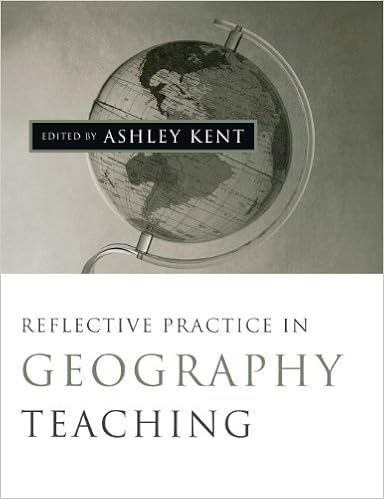
I own a copy of the book whose cover is shown below, which has proved useful in the past, and has several chapters written by a number of other former Presidents as well. Like many of his books, it has run to several editions.

His PhD thesis was on the adoption of CAL (computer assisted learning) and acts as a useful summary of the development of IT in Geography classrooms - this connects with the work of another President: Peter Fox, (and I will discuss his role at the appropriate time). See the link at the end of the post to download a copy if you are interested.

He also wrote an influential book with Michael Bradford (another former President, who sadly died in 2019) called just 'Bradford and Kent' by the many teachers who used it. I mentioned that book in a recent blog post.

He was also part of the authoring team of the Oxford Geography Project, which I used back in the day when I first started teaching. Copies of this can still be obtained second hand.

Ashley proved elusive to track down for some further information for some time, from the start of my blog writing. 

I was able to swap e-mails with Ashley earlier this year, and he provided me with further information, which is now included below:

I was born in 1945. 
I attended St. Catharine's college, Cambridge - as did at least three other GA Presidents including Derek Spooner. 
My teaching career began as a student teacher at St Dunstan’s College, Catford where Brian Fitzgerald was head of department and Neville Grenyer a member of staff…both became HMI’s!

I then taught at Haberdashers’ Aske’s School, Elstree where my colleagues included John Rolfe, Neville Grenyer, Rosie Grenyer and Clive Rowe.

I was then head of department at John Mason School, Abingdon with Eleanor Rawling as a close colleague.
What a powerful department that must have been!

Eleanor and I then moved to the Geography 16-19 Project at the Institute of Education with Michael Naish.
I then became a lecturer and eventually a professor and pro-Director at the Institute of Education.

My major textbooks were the Oxford Geography Project written by the Haberdashers’ team for years 7-9; and two textbooks written with Michael Bradford: Human Geography: Theories and their applications (1977) - and Understanding Human Geography: People and their changing environments (1993). 
Both were aimed at A level and first year university students. 
All published by Oxford University Press…and fortunately sold quite a few copies!?

I joined the GA in 1969 so have been a member for over 50 years!

Further details from his CV:
He has taught in a variety of secondary schools; the University of Wisconsin-Madison; the UK’s
Open University and was Associate Director of the Geography 16-19 Project a nationally funded
curriculum development project.
He has longstanding professional and research interests in: curriculum development and evaluation;
innovation and change (the focus of his PhD work); teaching strategies including fieldwork; the
marketing and image of geography; the school/HE interface; information technology, including
remote sensing; developments in human geography; 16-19 geography; initial teacher education;
stereotyping and bias; and environmental hazards.
He has directed a number of research and development projects including: Project HIT (Humanities
and Information Technology); Remote Sensing in the Geography National Curriculum Project; Centre
for ‘A’ level Curriculum Support; Eurogame Project, a large scale European funded multi media
development; Geography 16-19; Learning Geography with Computers; YoungNet; DUNES; and
pillar leader of the HERODOT Project.

On his involvement with the GA, Ashley sent me this resumé:

He has been fully involved with the Geographical Association (GA) since 1969. He was on GA
Council for 15 years and has been its President. He was a member of COBRIG (Council for British
Geography) and has been its chairman. Over the years, he has been engaged in a number of
geography education research projects, both in the UK and for the International Geographical
Education (IGU), Geography Education Commission. He has presented papers at IGU conferences
across the world and was both a full member of the IGU Geography Education Commission and a
former chair of the British Sub-Committee. He has published widely in geography education and
education both for professional and academic audiences. This has included a number of successful
school and university textbooks.
The common thread in his career has been an involvement and passion for education at a variety of
levels and specifically curriculum development and teacher education.

I tracked down his PhD Thesis from 1996, which was titled:
"Process and Pattern of a Curriculum Innovation".

The innovation in question was introduced at the start:
The innovation in question is the use made by secondary school geography departments of computer assisted learning.
Ashley mentioned 2 key documents that sum up his approach to Geography

‘Geography’ October 1997 ‘Challenging Geography’----my Presidential Lecture presented at the Institute of Education

KENT, ASHLEY. “Challenging Geography: A Personal View.” Geography, vol. 82, no. 4, 1997, pp. 293–303. JSTOR, www.jstor.org/stable/40572948. Accessed 15 Jan. 2021. 

James Fairgrieve featured in the Presidential Address, where Ashley outlined his life and also the strong connections between the IoE and the GA. It is well worth reading to get an idea for the links and the changing nature of Geography. 

Ashley provides additional detail on Fairgrieve's life.

His inaugural professorial lecture in 2004 entitled ‘Windows on Geographical Education’….published by the University of London Institute of Education…2004

He was the tutor on the IoE's MA in Geography Education for many years. This went online from 2001, having been offered at UCL since the 1960s
He contributed to an IoE publication on retired academics in 2009, and was described as follows:

Ashley Kent retired as Professor of Geography Education at the Institute of Education, University of London - the culmination of a lifetime as a geography teacher.

“Exciting demanding, relevant and worthwhile – geography prepares pupils to critically understand and fully participate in the changing worlds in which they live” — Ashley Kent

In 2003, Chris Kington asked a number of former Presidents what had sparked their passion for geography. He lent me the letters and Ashley replied to Chris.
He talked about a "gradual realisation" that geography was for him. His geography teacher at school was described as "rigorous - a bit terrifying and gave us lots of autonomy...". He also remembers taking part in the 2nd Land Use survey, at Pilling Marshes and realising that it was all 'rough grazing'. He remembered his PGCE year and the influence of Walford and Fitgzerald et al. He also remembered his first year teaching at Haberdasher's Aske.
Many thanks to Chris Kington for the loan of the letters.
Ashley told me about his connections with Hull University and Derek Spooner, with whom he led celebrations of the life of Michael Bradford (far more on Mike to come as we get closer to the present day)
He also had memories of my own PGCE tutor at Hull: Vincent Tidswell. He told me:
Vincent I knew through his work and the ‘new’ geography ....his Pattern and Process in Human Geography was followed by Keith Hilton’s Process and Pattern in Physical Geography. 
Keith was a colleague of mine at the Institute of Education....and knew Vincent through working at Hereford College of Education. 
Vincent also had links with Brian Fitzgerald who I met at St Dunstans College. 
That was for me as a keen young man/geographer....a really exciting time...we felt very much at the frontier of the ‘new’ geography, both new in terms of content and pedagogy. 
Oxford Geography Project was really at the leading edge....as were the Schools Council Projects....GYSL and 14-18 ...and the one I was very much part of...the 16-19 Project. 

People like Brian, Rex et al were at the forefront....it was great fun being part of it! 
The first book Mike and I wrote was a direct effort to help teachers to keep up to date with the ‘new’ geography then in several school and university syllabuses. 
Of course Mike and I were helped by being a part of Cambridge and US developments....we went to Madison Wisconsin after Cambridge...where a great deal of that stuff was going on.

Exciting times, and Vincent was very much part of that. I like to think he passed on a little of that love for exciting new approaches and pedagogies to his trainees, of which I am proud to have been one. I remember using GYSL in my first job in January 1988 at John Flamsteed School in Denby, Derbyshire.

Ashley also shared some memories of the next important phase in the GA's History: the move from Fulwood Road to Solly Street, where it has its HQ to this day. Ashley is amongst the Presidents and former staff who were involved in locating the GA's new premises. That story will be told next.

Image from GA News.

Update January 2021

Some memories of his Presidential conference from Ashley Kent.
In my Presidential Year we had the Conference at the Institute on Bedford Way, which I thought was appropriate given the long-standing links between the IOE and the GA. The Presidential Dinner was held at the Imperial Hotel on Russell Square. My guest of honour was the Crown Princess of Thailand: a much revered member of their royal family: very environmentally aware and active. He had been suggested by Professor Philip Scott: an extraordinary and alternative academic from SOAS. 
The assembled diners were kept waiting by the Princess, who had been having tea with Prince Charles at Highgrove and then visiting SOAS.
We were kept waiting by the guest of honour for quite a while...so much so I suggested more booze was supplied to all the waiting guests.
On her eventual entrance/arrival the assembled throng, on the advice we were given, all stood up and did the slow handclap, which apparently in Thailand is a mark of real respect.
She was accompanied by two armed generals and sat next to me at the top table and the generals became anxious ( I was told by folk sitting with them at one of the tables) when I engaged in a lively/animated story involving props, including a scroll given to her in memory of her visit.
It was all right on the night! 

Is there anyone who was there and has their own memories of this event?

References


KENT, ASHLEY. “Innovation, Change and Leadership in Geography Departments.” Geography, vol. 91, no. 2, 2006, pp. 117–125. JSTOR, www.jstor.org/stable/41555403. Accessed 15 Jan. 2021.

Presidential Lecture, exploring the life of James Fairgrieve
KENT, ASHLEY. “Challenging Geography: A Personal View.” Geography, vol. 82, no. 4, 1997, pp. 293–303. JSTOR, www.jstor.org/stable/40572948. Accessed 15 Jan. 2021.

I would be pleased to receive any further details of Ashley Kent's time as GA President.

Updated August 2023

A link with the forthcoming GA President (as I write this) for 2023-24: Denise Freeman.

Thursday, 12 November 2020

1987: Dr. Graham Humphrys

Updated February 2021 with a major update from Graham himself...

Dr. Graham Humphrys was the Head of the Geography department and previously sub-Dean of the Faculty of Economic and Social studies at the University of Swansea.

He served as the Chair of the GA's Publications and Communications Committee during the late 1970s and into the 1980s.

I was unable to find a decent image of Graham, close-up. When I first started the project I did come across a small image on a Flickr account by Tehmina Goskar.

She sent me the image here and told me:
It's not that high res but in the photo he is talking about the Lower Swansea Valley Project which was one of the first post-industrial reclamation projects. 
The symposium took place in November 2010 at the National Waterfront Museum, Swansea. All the best with the project.
Tehmina

From the GA Annual Report of 1983:
Dr. Graham Humphrys completed six years as Chairman of the Publications and Communications Standing Committee. Under his chairmanship this committee has been responsible for the recent surge in GA publications and the organisation of successful national and regional conferences.

In this capacity, he wrote reviews of quite a few publications which were published in GA journals - have been looking at journals from this period to try to get some images.
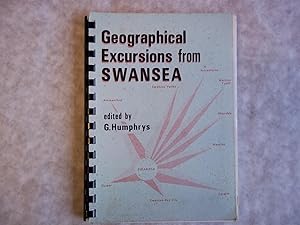
Geographical Excursions from Swansea.: Humphrys. G.He also edited and wrote or co-wrote a series of books related to his geographical work, which included economic and industrial geography and heritage a subject about which he was obviously passionate according to this account of an event in the year 2000.

He was an expert on Swansea and Cardiff's industrial heritage and the restoration of old industrial landscapes and gave regular talks on this theme.
His fieldwork excursions publications series ran to several editions and were a good seller as well apparently.
Graham contributed an article on Swansea Bay City to the 'Geographical' magazine in 1971.

A special edition of 'Teaching Geography' in 1986 was all about economic and industrial geography, and Humphrys contributed to this, as well as other journal articles on this theme as part of his Presidential year.

He is also remembered here, from a former student who remembers his lectures on industrial change and the development of the S Wales area as a city region.

Graham's GA Presidential Address was on a theme which has gained recent currency: 'Changing Places'.


The idea of Changing Places is now more significant than it was back then.
In his Address, Graham explored the factors that influence places.

A former student, David Herbert reflected on that time and his influence here:

I was away from the Department of Geography for six years during which time I completed a PhD at Birmingham University and had my first academic appointment at Keele University. During the early summer of 1965 a post of Lecturer in Human Geography was advertised at Swansea and it was suggested that I should apply. This I did successfully and after a semester at Toronto University I returned to Swansea in the Autumn of 1965. 
My former teachers were still there but there had been new arrivals, most notably Graham Humphrys, the first South Wales-based staff member. His interests were in Economic Geography focused on South Wales and often his concept of the Swansea Bay City.

At Swansea University, Graham was following on from the legacy of W. G. V. Balchin.

In 2015, a journal article said:

Graham Humphrys has degrees from the universities of Bristol, McGill and Swansea, and is a former Senior Lecturer in Geography and former Dean of the Faculty of Social Sciences at Swansea University. His research interests focus on economic geography, the environment and geographical education. He is currently acting chairman of the Canadian Studies in Wales Group.

Updated February 2021

Thanks to Richard Daugherty for putting me in touch with Graham, who provided the following significant personal details to add to the post:

I was born in 1934 in the town of Maesteg in the middle of the South Wales Coalfield. 
I went to the local Grammar School and then in 1953 I won an entrance scholarship to Bristol University to study for an Honours Degree in Geography. In my second year Bill Birch, one of my lecturers, persuaded me to take out a student membership of the Geographical Association.

I graduated in 1956 and then spent a year working at the McGill Subarctic Research Laboratory in Schefferville, northern Quebec to start working towards a Masters degree. The next two years I was at McGill University in Montreal as a Teaching Assistant and finishing my M.A.. As part of this I spent the summer of 1958 in the West Indies looking into the alumina industry in Jamaica, Trinidad and what was then British Guiana. I also visited the research centre that McGill had in Barbados. I gained my MA in 1959 and was then appointed as an Assistant Lecturer in Geography at Edinburgh University for the academic year 1959-60.

In 1960 I was appointed as an Assistant Lecturer in Geography at Swansea University. 
I gained my Ph.D. in 1967, and then stayed until I retired as a Senior Lecturer in 1997. 
My Head of Department at Swansea was Professor W.G.V. Balchin who was a keen member of the GA and very active in the Swansea GA Branch. (He served on the GA Council from 1949 until 1976, was a Trustee 1955-76, and President in 1971.) 
I re-joined the GA as a full member when I came to Swansea, and was active in the local Branch until the early 1990s. I was a Committee Member throughout that time, and at various times I was Chairman and Secretary of the Branch. During my career I gave lectures at other Branches whenever I was invited. I also contributed to various GA publications. In the early 1970s I was one of the leaders on two field excursions to North America for Geography Teachers organised under the GA banner. 
The first was Trans Canada in 1971 and the second down the western Cordillera in 1973. (Bill Balchin and Alice Coleman were the main organisers for both and I think they may have been based in the Isle of Thanet GA Branch). 

I was elected as an ordinary member of the GA Council in 1976. The GA at Headquarters was reorganising at the time and in 1977, much to my surprise, I was invited to Chair the newly formed Publications and Communications Committee. (The Honorary GA Secretary for that committee was Michael Williams).
At the time he was in the Education Department at Manchester University but subsequently he was appointed to a Chair in Education in Swansea where he still lives. We met regularly until the lockdown.

The Publications Committee was worked hard. The GA urgently needed a publications policy which it did not have previously, and this had financial implications. For example, there were shelves stacked with unsold publications which, if my memory serves me rightly, went back to pre-war days. Until then decisions on occasional publications were very ad hoc which had resulted in further accumulation of unsold stock. I also remember that there were decisions to be made to get Primary Geography published.

Fortunately the Headquarters staff provided tremendous support. They were very professional and well organised and got through an enormous amount of work. I stayed as Chairman until 1983 but remained on the Council until my year as President : 1987-8. 
During my year as President it was the GA’s turn to Chair the joint meetings of representatives of British Geography organisations. At the time the three main national organisations were the RGS, the IBG and the GA, but there were others on the committee representing the Heads of University Geography Departments, The Royal Society, The Royal Scottish Geographical Society and so on. By the end of 1988 it had been decided to reform the Committee into The Council of British Geography which I believe still meets. 
My involvement with the GA reduced after my year as President. At the Swansea level, restructuring of local schools had reduced the number of geography school teachers involved and it was difficult to maintain a programme. By this time there was little support for the local GA from the staff of the University Geography Department. I was away from Swansea for a couple of semesters in the 1990s, at Rhodes University in South Africa and at a University in Hokkaido and the Swansea GA Branch faded away, which was very sad. To end on a more cheerful note. Swansea did make a useful contribution to the GA at the local and national level in the second half of the twentieth century, with three national Presidents - Bill Balchin, Richard Daugherty and me, and an Honorary Secretary – Michael Williams, and three of us are still here. 
All happy memories. 
Good luck with your year as President.

Thanks so much to Graham for sending that through.

References

HUMPHRYS, GRAHAM. “Japanese Industry at Home.” Geography, vol. 80, no. 1, 1995, pp. 15–22. JSTOR, www.jstor.org/stable/40572605.

https://ucl.scienceopen.com/hosted-document?doi=10.14324/111.444.ljcs.2015v30.002 - from 2015

Humphrys, Graham. “Changing Places.” Geography, vol. 73, no. 4, 1988, pp. 298–307. JSTOR, www.jstor.org/stable/40571462.
https://www.iwa.wales/click/2010/11/making-our-past-work-for-the-present/

https://www.researchgate.net/publication/240442920_The_economic_development_of_the_British_coal_industry_From_industrial_revolution_to_the_present_day

Humphrys, Graham. “Recent Trends in Industrial Geography.” Teaching Geography, vol. 11, no. 3, 1986, pp. 120–121. JSTOR, www.jstor.org/stable/23751638

Humphrys, G. (1972) South Wales: An Industrial Geography, David and Charles, Newton Abbot.

https://collections.swansea.ac.uk/s/swansea-2020/page/on-our-doorstep - memories by David Herbert, who was associated with the University of Swansea for over 40 years.


Updated December 2020

In 2003, Chris Kington asked a number of former Presidents what had sparked their interest in geography. He lent me the letters and here is the response that Graham sent. At the time he was living in Swansea.

He talked about the place in which he was born and grew up in: Maesteg, and how he came to appreciate the importance of the physical geography of this place on the people who lived there, and the rise of the coal industry He didn't appreciate this until he got into the 6th form of the local Grammar School. 
"What made this all click academically was good teaching. I had two good geography teachers, a man who taught physical geography and a woman who taught human geography...."

GA Publications 
The regional distribution of Growth Industries in Britain, Geography, V 39, 1964. 
Industrial change; Lessons from South Wales, Geography, V 61, 1976
What University Geographers expect from their new students, Teaching Geography, V 3, 1977
Patterns on the map: Land utilisation survey maps as resources for teaching and learning, (with Alice Coleman, H. A. Sandford and J Bale), Geographical Association, Sheffield, 1982. 
Trends in Textiles, Geography, V. 69 (2), pp. 150 ‑ 153, 1984. Recent trends in Industrial Geography, Teaching Geography, V. 11, No. 3, 120 ‑ 121, 1986

Thanks to Chris Kington for the loan of the letters.

As always. further memories of Graham Humphrys would be welcome.

Updated August 2025

Graham also received the RGS Gill Memorial award in 1994.

Thursday, 5 November 2020

The GA's responses to curriculum debates in the 1970s and early 80's - 2 of 2

This is the second part of an article written for me by Richard Daugherty, GA President in 1989. See Part 1 yesterday for the context: a move towards a National Curriculum framework.

During that time, the GA was also one of the leading members of the Council of Subject Teaching Associations (COSTA). When the House of Commons Select Committee invited a COSTA delegation to submit evidence to it about the school curriculum in April 1981, the GA sent me, as Honorary Secretary (Education) as its representative.

An extract (page 174) from the Hansard minute of that meeting offers some insights into two of the main issues that were raised by Select Committee members.

Hansard - GA Response to Framework Curriculum Proposals (1) by Alan Parkinson on Scribd

A Conservative MP, Patrick Cormack, clearly believed that knowledge of place names was being undervalued in the GA's leaflet (see previous post). Referring to the capitals of European countries, he says "I went to one school recently and none of them (the pupils) knew any of them."

Which hindsight,  could acknowledgement that place knowledge had a role, if not a major role in the teaching of geography have helped the GA be better prepared for the National Curriculum arguments later in the 1980s? 

On the same page of the Hansard report (above) is my attempt to respond to a question from the Committee Chair: Christopher Price by welcoming on behalf of the GA, a potential "common system of examination" for 16 year olds. 

This would within a short period become the GCSE that was introduced in 1986.

Thanks again to Richard Daugherty for both of these posts.

Wednesday, 4 November 2020

The GA's responses to curriculum debates in the 1970s and early 80s - 1 of 2

I am grateful to Richard Daugherty for taking the time to send me a number of contributions to the blog. Richard was the GA President in 1989, and his own entry on the blog will appear in a month or so.

In the 1980s, Richard was heavily involved in the GA's response to the proposals for a National Curriculum. This sort of advisory work has gone on for decades and often happens in the background, with many GA members being unaware of the effort that goes into shaping curriculum and assessment. I have been involved in a little bit of this myself, going back about 15 years.

GA Council, which used to make decisions on GA Policy and other work were aware of the emerging National framework for Geography following an earlier speech by James Callagham which I have blogged about recently.

The following text and documents were provided by Richard. The documents themselves were uploaded for Scribd for ease of access and reading.

Throughout the late 1970s and into the 1980s, the GA was responding to emerging ideas from Government and from the Inspectorate that would eventually result in a statutory National Curriculum for schools in England and Wales. The first section of a discussion paper for a meeting of GA Council in March 1980 summarises developments up to that point.

GA Council Paper March 1980 by Alan Parkinson


Shortly after that meeting, I co-wrote an article with Rex Walford for the Times Educational Supplement (TES), published on 18th April 1980, commenting on the curriculum proposals.

It was titled "Overlooked in the Secret Garden".
Here's Part 1 of the article.

TES Article Page 1 18th Apr... by Alan Parkinson


Here's Part 2 of the article

TES Article Page 2 18 April... by Alan Parkinson


The GA then decided to prepare and circulate a leaflet to summarise the main features of what we believed to be the subject's contribution to the education of young people'.
'Geography in the School Curriculum 5-16' was published in January 1981.
It can be seen below:

GA Pamphlet Re School Curri... by Alan Parkinson


The GA leaflet 'Geography in the School Curriculum 5-16' was distilled from lengthy discussions in GA committees into a summary of what was then agreed as the Association's view on geography's contribution to the curriculum.

Part 2 to come tomorrow.

Margaret Mackintosh RIP

Updated post. Sad news at the end of last week from colleagues who have organised the Charney Conference over the years of the passing of Ma...