Showing posts with label Education Committee. Show all posts

Tuesday, 6 April 2021

2006: Keith Grimwade

Updated October 2023

When Keith Grimwade became President, he was working as the Head of Professional Development for Cambridgeshire County Council, with responsibility for the Schools Advisory Service, as well as training and development for the Council’s Children’s Services staff.


I have had the pleasure of knowing Keith for many years, and have continued this friendship partly through his association with the Cambridge GA Branch. This is my local branch, and I have had the pleasure of speaking to students there quite a few times. Our paths have also crossed en route to the GA Conference in the past. He organises social event for the GA Cambridge branch to the present day, and regular attends meetings. The Pandemic has paused this activity for a while, although the GeogMeet and Worldwise Quiz continues thanks to a lively committee. 

As with more recent Presidents, much of this entry has been written thanks to contributions from Keith to a questionnaire which I sent round to as many Presidents as possible.

Keith was born in 1957 in Southend on Sea, in Essex. He spent five years in London.

He told me, "I benefited from two very skilled teachers who saw my interest in geography and knew how to nurture it.

First, there was Miss Foster, my Year 3 teacher at Prince Avenue Junior School. 
We had to choose reading books from a trolley and I picked out a book about Thailand that was far too hard for me to read but I was fascinated by the photographs. Miss Foster let me keep it, so while my classmates were developing their reading skills I was absorbing images of Thailand, and then I moved on to other countries in the subsequent weeks.

Second, there was Jim Alves, my geography teacher at Southend High School for Boys. He led a school trip to the Lake District at the end of my first year. I had never been on holiday and the whole week was an amazing experience. I remember studying an OS map at the top of Cat Bells. Mr Alves looked over my shoulder and began to point out features. The map came alive, I could now see it in 3D and I was hooked. So, I think I’ve always been a geographer and I’ve spent my life looking at photographs and OS maps, and not much else! I read geography at Jesus College, Oxford - it was an alien culture (these days I would be helping their ‘disadvantaged background’ quota).
Not all of the teaching was that good, to be honest, but the opportunities and access to resources were phenomenal and ideal for someone who was quite happy to work independently and plough his own furrow.
The mid to late 70s was also an exciting time to be an Oxford geographer because having lost out to Cambridge and elsewhere in the quantitative revolution, it was just beginning to pull ahead with its work on the environment and climate, led by someone else who was to become a GA President, Andrew Goudie".
Andrew has his own entry on the blog of course, with plenty of contributions from Andrew himself.

In terms of his teacher training, Keith told me:

I did a PGCE at Goldsmiths and was accepted into the ILEA ‘pool’, having been interviewed by another future GA President, Michael Storm. I requested a posting in a mixed comprehensive in NE London, so they sent me to Henry Compton Boys School in Fulham. I know that ‘it was a rough, tough school’ is a bit of a cliche but it really was but I learnt a lot about how to motivate a wide range of abilities and manage a wide range of attitudes and behaviours very quickly. I was there for 5 years and then became Head of Geography at Hinchingbrooke School, Huntingdon, where I stayed for 12 years.
In 1997 I joined Cambridgeshire County Council as County Adviser for Geography, and I stayed there until my retirement at the end of 2017, having been Director of Education for the last 5 years of my career.

In the 80s / 90s and early 2000s I authored / co-authored a range of curriculum materials and text books, and regularly contributed to the TES.

His Presidential theme was ‘The Future of Geography’. Keith says:
"we were twenty years on from the original National Curriculum debates and in something of an existential crisis. I re-visited the Case for Geography (which has had its own post on the blog previously) and explored possible, probable and preferred futures. 

My sub-theme was young people’s involvement in curriculum making. I managed to combine both into my Presidential Address. 

My route to becoming President was via the Secondary Education Section Committee (on which I also served for 14 years) and the Education Standing Committee, and I was encouraged, supported and guided by two wonderful but very different geographers,
Patrick Bailey and Roger Carter.

Read Keith's Presidential Address here:

It is called 'The Future of Geography'.
(Slideplayer)
In it, he considers the new National Curriculum and some strategies for the future.
He also mentions the Young People's Geographies project, which I was involved in.
Keith told me back in 2019 why he believes the GA matters.

"Geography teachers need a ‘community of practice’ - that is the GA, it’s one and only unique selling point - that is why the GA matters. I joined the Secondary Education Section Commitee in 1991 and was involved with many committees, including chairing the Education Standing Committee. I have been a long-standing member of the local branch, helping to keep it going through some difficult times, and I have just attended my 35th consecutive annual WorldWise quiz local round; and I still don’t know all of the answers."
He told me that:

"My Presidential year was the highlight of my professional career as a geographer. It is, of course, part of a 4 year term (Junior, Vice, President, Senior) so ‘achievements’ are spread out over a period of time. 
The big curriculum initiative was the Action Plan for Geography. 

Lord Adonis was a great supporter of geographical education but could not understand why we had the RGS/IBG and the GA - politicians prefer dealing with just one organisation. Negotiating and securing the GA’s distinctive role was, I think, one of my biggest achievements, much of which went on behind closed doors and could not be broadcast. 
I keep a letter from Lord Adonis acknowledging my work, and recognising the GA’s contribution. I also helped the GA develop its strategic framework."

He also talked about the importance of David Lambert to the GA, something I certainly appreciated when in post.

"My biggest achievement was probably retaining the services of David Lambert, who was in danger of heading off to the Institute of Education full time; David did for the GA what few, if any, others could have done over the next few years."

He was also mentioned by Jeremy Krause as being very supportive.

Ketih finished with some thoughts:
These days, I attend GA events mainly for social reasons.

What really gives me hope for the future is the energy and enthusiasm of our young teachers. They will spark a lifelong love of our subject in many ‘young Grimwades’ in the years to come. And the GA must remember that its purpose is to support their passion.

Keith was also influenced by the work of the GeoVisions project.

Keith Grimwade reflects on Geo Visions as “one of the most enjoyable and influential projects that I have been involved with …” in his 2007 Presidential Address [reported in journal 'Geography' Autumn 2007]. He highlighted the strap line:

‘Create the future … don’t just let it happen’


“ The GA adopted GeoVisions under Di Swift’s leadership (see more in Di's own blog post) and over a period of two years it inspired a range workshops and publications including the GA’s [2002] Position Statement on Geography and it initiated the GA's involvement with ‘third stream’ activities. GeoVisions introduced many of us to possible, probable and preferred futures and, I now realise, to my presidential theme. To create the future of geography rather than just letting just happen we need a strategy for change.”
Keith retired as Director of Learning at the end of 2017 after 37 years in education.

He continues to be generous with his time in the local community, and to support the work of the Cambridge GA Branch.

He is also a Governor of the Cambridge and Peterborough NHS Foundation Trust.

He is also a supporter of Peterborough Football Club, who I have been to see play with colleagues from Ely.

References

GRIMWADE, KEITH. “Presidential Address 2007: The Future of Geography.” Geography, vol. 92, no. 3, 2007, pp. 175–178. JSTOR, JSTOR, www.jstor.org/stable/40574331


Image copyright: Geographical Association and Bryan Ledgard - used with permission

Any further memories of Keith welcome. 

Updated October 2023

Keith is the guest on a podcast, exploring ideas of Hope. It was published on October 17th 2022.
He speaks openly about his career and personal challenges, and connection with caring.

He talks about his career in education: 20 years as a geography teacher, and later as an education administrator for Cambridgeshire, and as the county's adviser for geography.

He describes again the influence of his teacher Miss Foster, and his love of Ordnance Survey maps.

He retired at the end of 2017.

It's lovely to hear Keith talking about his "hope kit".


Wednesday, 22 July 2020

1972: Mr. Alan Durward Nicholls

Updated November 2023

Alan Nicholls
was another of those relatively rare people who was a geography teacher when he became GA President, and a great proponent of Environmental Studies. 


In Balchin's Centenary book, he is described as an "active Head teacher" and in an Annual Report in 1971 as a "revered practising schoolmaster".

I delved and found out that he served on the Secondary Section Committee (as I did for many years) and was a member of the Central London Branch of the GA - which suggests he taught in London, and later found out that he succeeded another GA President Leonard Suggate as the Head of Geography at St. Clement Danes School in Hammersmith, London.

Here's an image from a Facebook page for the school. For a while, the only one I could find.

New Geographies over Forty Years was the name of his Presidential Address, given in January 1973, and by all accounts from the description, a humorous one, although it was not apparently printed in 'Geography' and not available to view unfortunately. I wonder whether a copy exists anywhere?

1971 saw a surge of interest in the quantitative methods, so perhaps he referred to those, and how the might translate into school geography? I would like to guess that he did, given the timing of his address a few years after the Madingley Conferences.

In that year, the GA Spring Conference (as it was called) was held at the London School of Economics, where it was held quite regularly.
Prior to being President, Nicholls was also Assistant Honorary Treasurer of the GA as well - another President to hold that significant (and voluntary) role.

Environmental Studies was one area of interest which he pursued, and this is a reminder of the different strands of geography which are picked up by different Presidents for their theme, address and also perhaps areas of interest while in the Presidency.
This area was also picked up in the Professorial Address of C. A Fischer, I have previously blogged about from my British Library research.

Nicholls article on Environmental Studies was also useful - see the link below


This was featured in a book on the development of this branch of Geography


Nicholls was chosen as the GA's representative on the Inner London Education Authority (ILEA) geography board in 1966, and I assumed from early research that he was more of an academic geographer, but this was not the case.

I presumed from that appointment he taught in London, and that was what Richard Daugherty (another former GA President) thought when I asked him about connections with Presidents who were in post near to his own Presidency.

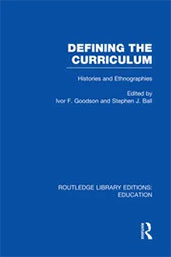
Defining the CurriculumHe is mentioned in this book 'Defining the Curriculum'.

Ten years ago almost to the day and from this platform, Professor Kirk said 'modern geography was created by scholars, trained in other disciplines, asking themselves geographical questions and moving inwards in a community of problems; it could die by a reversal of the process whereby trained geographers moved outwards in a fragmentation of interests seeking solutions to non-geographical problems'. Might not this be prophetic for us today? Could it not all too soon prove disastrous if the trained teachers of geography moved outwards as teachers of environmental studies seeking solutions to non-geographical problems? (Nicholls, 1973, p. 201)

A contribution described here is from Nicholls too.

This quote would also chime with those who explore the value of teacher subject knowledge, a current interest of many.

Following another thread, I found a small obituary tucked away in Geography in 1981.
He was born in 1910 in Cornwall, and died in 1981. He went to Truro School. He was made an Hononrary Member in 1980 just before his death.


I'm grateful to Fiona Hirst, archivist from the Clement Danes School for sending me another image of Alan Nicholls from later in his career.


References

Book link: https://books.google.co.uk/books?id=W9GHPA3zK0IC&lpg=PA1651&dq=mr%20a%20d%20nicholls%20geographical%20association&pg=PA1651#v=onepage&q&f=false 

NICHOLLS, A. D. “Environmental Studies in Schools.” Geography, vol. 58, no. 3, 1973, pp. 197–206. JSTOR, www.jstor.org/stable/40568109.

“The Geographical Association.” Geography, vol. 66, no. 4, 1981, pp. 320–322. JSTOR, www.jstor.org/stable/40570442.

I managed to find some images on a Facebook group page that was dedicated to the school, including an excellent image shared from a field trip back in 1953. This is one of my favourite images on the whole blog.

Thanks to the people who put the website together.
Here's Alan Nicholls on a Geography fieldtrip (presumably to North Wales)
Top of Snowdon, North Wales, 1953. Photograph taken by Jack Harvey and sent in by Geoff Skinner


He is fourth from the right on the front row and is described as "Old Nick" which seems fair. He seems to be having a good time as well. Some good fieldwork wear on display here, and great to see a President actually 'in action' doing some geography.

Thanks to Fiona Hirst for the additional details and image from the school magazine 'The Dane'

Updated November 2023

Revisiting past Presidents to see if I could find updates and came across an obituary in the RGS's Geographical Journal.


This reinforces his links with the RGS as well as the GA. He was the Chairman of their Education Committee and also served on Council. He studied at the University of Exeter. He travelled extensively.
He was a Cornishman.

"Good teachers are keen on their chosen subject and find it stimulating."


“Obituary: Alan Durward Nicholls (1910-1981).” The Geographical Journal, vol. 147, no. 3, 1981, pp. 394–394. JSTOR, http://www.jstor.org/stable/633763. Accessed 1 Nov. 2023. 

Friday, 19 June 2020

Geographers in Wartime

We are coming to a period when many survivors of the Second World War are in their 80s and 90s and the memories are fading.
Many geographers played an important part in the Second World War.
In 1985, the Royal Geographical Society asked W. G. V. Balchin, who was then the Chairman of the RGS' Education Committee (and a former GA President), the job of collating a report and interviewing survivors on their role.

A report was published in 1987 and can be read on JSTOR (free accounts available)

Balchin explains that geographers proved their worth already in the First World War. He also outlines how an understanding of geography is important during wartime, particular when preparing.

He mentions a number of people with connections to the GA and the Ordnance Survey's role is featured prominently of course.

There are several areas where Geographes are particularly mentioned as being important.
These included the aerial interpretation CIU unit which looked at aerial images and worked out what was on the ground and what had changed since the area had last been photographed.

People like Frank Debenham and David Linton worked in this field.

See previous blog post for more details on this.

Source:
Balchin, W. G. V. “United Kingdom Geographers in the Second World War: A Report.” The Geographical Journal, vol. 153, no. 2, 1987, pp. 159–180. JSTOR, www.jstor.org/stable/634869. Accessed 16 June 2020.

Saturday, 4 April 2020

1961: Mr. Geoffrey E Hutchings

Updated August 2023

Geoffrey Hutchings' background was in fieldwork, which is surprisingly rare amongst GA Presidents, given the nature of the subject. 

More recent Presidents with this as an interest include Sidney Wooldridge of course, and very recently, we have had Nick Lapthorn, who has also been associated with some of the same Field Centre experiences as Geoffrey. Nick self-identified as an accidental geographer though during his Presidential lecture. More to come in a future post.
Hutchings was elected as President by the GA Council in 1960, in place of George Joseph Cons, who sadly died prior to taking up office, and who I described in recent blog posts, along with his work for the BBC.

Announcing his appointment in the GA's Annual Report of 1960, it says of Geoffrey Hutchings that:
"this will be the first occasion when we shall welcome as our President a distinguished field geographer and teacher"

Hutchings was the Warden and geography tutor of Juniper Hall centre in the Weald during the late 40's and early 50's.
At the time, it was run by the Council for the Promotion of Field Studies which later became the Field Studies Council.
He wrote a lot about the scenery of this area, and these were often illustrated books too as Hutchings was an accomplished illustrator.


A book on fieldwork was also published, co-written with another former President, S. W Wooldridge in 1957.

This book had a focus on London's Countryside, a reminder of the connection with the regional and local studies that was a feature of Geography at this time. It's a lovely looking volume as well.

He also published a book called 'Landscape Drawing' in 1960 which had plenty of information on field sketches and examples of the craft.


I was also interested to read about the influence of Geoffrey Hutchings on the development of the Field Studies Council., which celebrated its 75th anniversary recently.

A Cambridge University Geography department alumni page provides more detail on this relationship with the FSC. There is an image in the Balchin book too, which I have included above. Images are hard to come by.

This section is taken from the document and describes his role in developing the FSC's offering for students and teachers which have remained so important.


Source: Freeman and Pinchemel, 2016

I like the description of the GA Presidency as 'the culmination of his career".

Hutchings felt that his selection as President could not have been for services to the Association as, like many members, he felt he benefitted more from being a member than vice versa.

Unsurprisingly, his Presidential Address was on the theme of field teaching, and is well worth reading - follow the JSTOR link in the references section. It was given at the LSE in January 1962 (when the conference was still held at that time of year, as it was until relatively recently).


In the address, he provides lots of useful guidance for those preparing for fieldwork such as:

 "It is a mistake to conduct an instructional expedition which has not been thoroughly rehearsed. Teaching does not go smoothly if the leader has trouble in finding his way, or if the timing goes wrong. There may be something appealing in the idea of teacher and students joining together in the spirit of exploration and discovery, but a teacher who tries to break new ground in company with his students can be putting himself to a severe test. He may come out of it well as a companion but he will seldom in such circumstances be able to give a first-class piece of teaching".

He also talked about the importance of drawing:

Hutchings located landscape drawing in a tradition of geographical field teaching which sought to challenge students who seemed “to accept the rural scene as something inevitable, immutable, earthy, picturesque,” and “build up for themselves the geographical picture of the piece of country they were exploring,” both in itself and to extend their visual experience.

“Without such pictures they could not consider the operation of physical processes, organic relations and human activities” (Hutchings 1962: 3–4).

He is remembered here by a Cambridge graduate who he spoke to while a grammar school pupil.


Brendan Conway also sent an image he had created including a field sketch done in the 1950s.

References

Some book links

'Geographers: Some biobibliographical studies Vol 2' - T. W. Freeman, Philippe Pinchemel
Bloomsbury Publishing, 28 Jan 2016
This has an image and some very useful biographical detail on Geoffrey.


 HUTCHINGS, GEOFFREY E. “Geographical Field Teaching: Address to the Geographical Association.” Geography, vol. 47, no. 1, 1962, pp. 1–14. JSTOR, www.jstor.org/stable/40565627

David Mattless:
Landscape and Englishness: Second Expanded Edition (2018) also mentions him, as do other books.

This is an excellent book by the way, and well worth getting a copy of.

He wrote a regional study of part of Kent. (ABE Books)

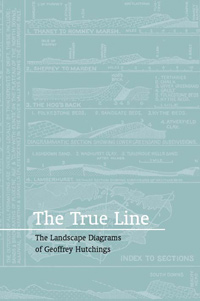
http://www.colinsackett.co.uk/thetrueline.php - features some of Hutchings' drawings.

There is also a mention of Hutchings on the excellent Some Landscapes blog, which is also well worth checking out for those interested in writing on landscapes.
https://some-landscapes.blogspot.com/2007/10/true-line.html

He was also referenced in this presentation here by Tim Burt, who was one of my lecturers, and also tutor of my dissertation at Huddersfield Polytechnic, and went on to Durham University, and to become President of the Field Studies Council. He was also mentioned at the recent 75th Anniversary of the FSC which I was privileged to be able to attend, at the Linnean Society in London.


Tim Burt – Curious about nature: A passion for fieldwork from IES / IAQM

Also mentioned in this chapter: http://www.blackwellpublishing.com/content/bpl_images/content_store/ThumbNail/LONGHURST9781405126458/9781405175654_028.PDF

"In the face of the increasing popularity of photography in geography texts, and what he saw as its limitations as a medium of landscape interpretation (as opposed to reproduction), Hutchings set out a series of basic graphical guidelines, including advice on materials as well as techniques. 
Allied to the arts of drawing maps, sections, and profiles, landscape drawing could portray articulations of structure and scenery, land and life, and with annotations, specify details of land use, vegetation cover, and settlement pattern. Geographical drawing did not just reflect an informed knowledge of what is seen, it was itself an act of observation."

From 1960s Geography journal, comes this ad:


A relatively brief entry - would love a few more images of Geoffrey at work if possible, and any more memories from his time working with the GA.

Updated May 2020


Updated August 2020

I came across a book on the history of fieldwork in geographical education, which can all be read in full on this link.
In the 1940s we get a mention for Geoffrey Hutchings, and the opening of Flatford Mill centre.

Ideally Hutchings thought that "educational field work should continue through the whole of a child's school life. If it did so the curiosity of the young child and his joy in the world of nature, would never end abruptly as they so often do, but would lead in later youth to a critical interest in his environment and a capacity to gain reliable and usable knowledge from what he sees around him [sic]." 
Hutchings transmitted his expertise and enthusiasm for the study of geography by first-hand observation and deductive methods to the many teachers and pupils who came under his influence. Under his guidance field-work activities grew rapidly. 

As president of the Geographical Association in 1960, Hutchings realized the unique opportunity within his reach to further geographical field-work. 

The title of his address "Geographical Field Teaching" outlined the theme of the Association's Annual Conference. Methodology related to outdoor work dominated the entire conference. Papers on related topics were read by some of his colleagues, and an exhibition in field work in schools was successfully organized. Geographical field activities, therefore, were firmly established by the 1960s, and prospered under enthusiastic guidance. 

Source: https://files.eric.ed.gov/fulltext/ED331742.pdf

Sunday, 29 March 2020

1961: Mr. George Joseph Cons

Updated September 2023

Just a note on the 1961 Presidency from 'Geography'. 
It appears that Mr. George Joseph Cons was due to have been the president for this year, but unfortunately died quite suddenly in 1960 so was unable to take up the post.


Mr. G J Cons was the author of a Handbook on teaching, and was also a member of the Standing Committee for Visual Aids (which later become Teaching Aids)

He was a Senior Lecture in Geography at Goldmsiths' College.

Balchin's Centenary volume talks about him playing an active role in the Association for many years.
He is quoted in a paper on the teaching of war and peace.
Front Cover
Cons wrote that Geography is probably the best equipped subject for training the young in ‘world citizenship’ and internationalism (Cons, 1932)

This quote was included in a GA Handbook edited by Miss D M Forsaith

Cons also Chaired a number of events over the years, including a debate on the future of Geography at the 1945 conference.

He was the editor of a handbook for Geography Teachers, published by Methuen in the 1950s

Mr. Geoffrey Hutchings was elected as President in his place at the Spring meeting of the GA Council.

I noticed that he was obviously involved in helping make a number of short TV pieces.
I noticed a few fieldwork related pieces on the channel called Talking Pictures TV which shows brief vintage documentaries and films in between vintage films.


An Obituary was published in 'Geography'


Thanks to Brendan Conway for the tipoff to these films in these tweets.
Here's the 2nd tweet


And here is the film, from the Huntley Film Archives


References

W. Wallace (1956) Geography in further education, The Vocational Aspect of Education, 8:16, 40-46, DOI: 10.1080/03057875680000061

“GEOGRAPHICAL ASSOCIATION. Annual Conference Discussions on the Future for Geography.” Geography, vol. 30, no. 2, 1945, pp. 50–62. JSTOR, www.jstor.org/stable/40563427

Bull, G. B. J. “GEORGE JOSEPH CONS.” Geography, vol. 45, no. 1/2, 1960, pp. 123–124. JSTOR, www.jstor.org/stable/40565120
If anyone knows more about Mr. G. J. Cons, or has an image of him that would be appreciated.


Updated September 2023

The McNair Report gets a mention here.

H was linked with the NW Kent Branch of the GA.
He served for many years on the Education Committee of the GA.


https://www.raremaps.com/mapmaker/6716/G_J_Cons - an article that describes his map collecting.

Cons was a pioneer in pioneer in the field of geography films for schools and authored ‘Films and Living Geography’, Sight and Sound, 4/14 (Summer 1935)

The following is excerpted from Traces

A very different proposal comes from one of the few professional geographers involved in animated mapmaking for documentary films – G. J. Cons, who collaborated with the British Film Institute as scientific consultant for the production of educational documentaries. Referring to the series Indian Town Studies made by Gaumont-British Instructional, Cons highlights that ‘these films were made effective geographically by the use of animated maps’. It is evident that this effectiveness is based on the power of the trace since it allows a purely explanatory discourse which consists of the plain transmission of data and information even though no element really legitimises it. For him, there is little difference here between animated maps and informational images; the constitutive properties of motion and animation, whose consequences are far from being neutral, is relegated to a blurry allusion to a ‘living accurate’ vision. Does this prove the ineffectiveness of the attempt to acquire animated maps into the project of geography for ordering the world, or does it confirm Cons’ statement that ‘the genius of documentary film reveal[s] the screen as a magic casement through which our geographical vision of the Earth and its peoples is heightened’? In other terms, does the author’s faith in documentaries negate any concerns about the fabricated spectacle that animated maps present?

Apparently, and with a certain naivety, Cons seems to advocate a perfect analogy between the map, the mirror, and the screen – a position that may surprise coming from a professional geographer. However, as explained by Priya Jaikumar in an insightful essay on the series, the result is not the faithful and plain reproduction of Cons claims but rather an attestation of the role of animated maps in the building of that ideology that put together positivist, modernist, and colonial contents: ‘[t]owns in India were visualised to make them intelligible and transparent, with vision transforming a place, its people and fullness of their lives, into abstract space.’ Again, thanks also to the power of the trace the pretensions of correct visualisation and geographical accuracy have been overthrown and transformed into something completely different: the colonial fiction of mastery and control through alleged scientific instruments used in narrative and visual devices for making this very same fiction true.

Giuseppe Fidotta: Animated maps and the power of the trace.

He also participated in the creation of visual maps such as the one here.

https://www.raremaps.com/gallery/detail/65476/the-peopling-of-the-usa-cons


If anyone can find an image of G J Cons that would be appreciated.

Margaret Mackintosh RIP

Updated post. Sad news at the end of last week from colleagues who have organised the Charney Conference over the years of the passing of Ma...