Showing posts with label Canada. Show all posts

Thursday, 12 November 2020

1987: Dr. Graham Humphrys

Updated February 2021 with a major update from Graham himself...

Dr. Graham Humphrys was the Head of the Geography department and previously sub-Dean of the Faculty of Economic and Social studies at the University of Swansea.

He served as the Chair of the GA's Publications and Communications Committee during the late 1970s and into the 1980s.

I was unable to find a decent image of Graham, close-up. When I first started the project I did come across a small image on a Flickr account by Tehmina Goskar.

She sent me the image here and told me:
It's not that high res but in the photo he is talking about the Lower Swansea Valley Project which was one of the first post-industrial reclamation projects. 
The symposium took place in November 2010 at the National Waterfront Museum, Swansea. All the best with the project.
Tehmina

From the GA Annual Report of 1983:
Dr. Graham Humphrys completed six years as Chairman of the Publications and Communications Standing Committee. Under his chairmanship this committee has been responsible for the recent surge in GA publications and the organisation of successful national and regional conferences.

In this capacity, he wrote reviews of quite a few publications which were published in GA journals - have been looking at journals from this period to try to get some images.
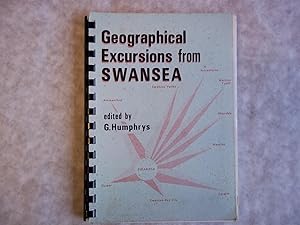
Geographical Excursions from Swansea.: Humphrys. G.He also edited and wrote or co-wrote a series of books related to his geographical work, which included economic and industrial geography and heritage a subject about which he was obviously passionate according to this account of an event in the year 2000.

He was an expert on Swansea and Cardiff's industrial heritage and the restoration of old industrial landscapes and gave regular talks on this theme.
His fieldwork excursions publications series ran to several editions and were a good seller as well apparently.
Graham contributed an article on Swansea Bay City to the 'Geographical' magazine in 1971.

A special edition of 'Teaching Geography' in 1986 was all about economic and industrial geography, and Humphrys contributed to this, as well as other journal articles on this theme as part of his Presidential year.

He is also remembered here, from a former student who remembers his lectures on industrial change and the development of the S Wales area as a city region.

Graham's GA Presidential Address was on a theme which has gained recent currency: 'Changing Places'.


The idea of Changing Places is now more significant than it was back then.
In his Address, Graham explored the factors that influence places.

A former student, David Herbert reflected on that time and his influence here:

I was away from the Department of Geography for six years during which time I completed a PhD at Birmingham University and had my first academic appointment at Keele University. During the early summer of 1965 a post of Lecturer in Human Geography was advertised at Swansea and it was suggested that I should apply. This I did successfully and after a semester at Toronto University I returned to Swansea in the Autumn of 1965. 
My former teachers were still there but there had been new arrivals, most notably Graham Humphrys, the first South Wales-based staff member. His interests were in Economic Geography focused on South Wales and often his concept of the Swansea Bay City.

At Swansea University, Graham was following on from the legacy of W. G. V. Balchin.

In 2015, a journal article said:

Graham Humphrys has degrees from the universities of Bristol, McGill and Swansea, and is a former Senior Lecturer in Geography and former Dean of the Faculty of Social Sciences at Swansea University. His research interests focus on economic geography, the environment and geographical education. He is currently acting chairman of the Canadian Studies in Wales Group.

Updated February 2021

Thanks to Richard Daugherty for putting me in touch with Graham, who provided the following significant personal details to add to the post:

I was born in 1934 in the town of Maesteg in the middle of the South Wales Coalfield. 
I went to the local Grammar School and then in 1953 I won an entrance scholarship to Bristol University to study for an Honours Degree in Geography. In my second year Bill Birch, one of my lecturers, persuaded me to take out a student membership of the Geographical Association.

I graduated in 1956 and then spent a year working at the McGill Subarctic Research Laboratory in Schefferville, northern Quebec to start working towards a Masters degree. The next two years I was at McGill University in Montreal as a Teaching Assistant and finishing my M.A.. As part of this I spent the summer of 1958 in the West Indies looking into the alumina industry in Jamaica, Trinidad and what was then British Guiana. I also visited the research centre that McGill had in Barbados. I gained my MA in 1959 and was then appointed as an Assistant Lecturer in Geography at Edinburgh University for the academic year 1959-60.

In 1960 I was appointed as an Assistant Lecturer in Geography at Swansea University. 
I gained my Ph.D. in 1967, and then stayed until I retired as a Senior Lecturer in 1997. 
My Head of Department at Swansea was Professor W.G.V. Balchin who was a keen member of the GA and very active in the Swansea GA Branch. (He served on the GA Council from 1949 until 1976, was a Trustee 1955-76, and President in 1971.) 
I re-joined the GA as a full member when I came to Swansea, and was active in the local Branch until the early 1990s. I was a Committee Member throughout that time, and at various times I was Chairman and Secretary of the Branch. During my career I gave lectures at other Branches whenever I was invited. I also contributed to various GA publications. In the early 1970s I was one of the leaders on two field excursions to North America for Geography Teachers organised under the GA banner. 
The first was Trans Canada in 1971 and the second down the western Cordillera in 1973. (Bill Balchin and Alice Coleman were the main organisers for both and I think they may have been based in the Isle of Thanet GA Branch). 

I was elected as an ordinary member of the GA Council in 1976. The GA at Headquarters was reorganising at the time and in 1977, much to my surprise, I was invited to Chair the newly formed Publications and Communications Committee. (The Honorary GA Secretary for that committee was Michael Williams).
At the time he was in the Education Department at Manchester University but subsequently he was appointed to a Chair in Education in Swansea where he still lives. We met regularly until the lockdown.

The Publications Committee was worked hard. The GA urgently needed a publications policy which it did not have previously, and this had financial implications. For example, there were shelves stacked with unsold publications which, if my memory serves me rightly, went back to pre-war days. Until then decisions on occasional publications were very ad hoc which had resulted in further accumulation of unsold stock. I also remember that there were decisions to be made to get Primary Geography published.

Fortunately the Headquarters staff provided tremendous support. They were very professional and well organised and got through an enormous amount of work. I stayed as Chairman until 1983 but remained on the Council until my year as President : 1987-8. 
During my year as President it was the GA’s turn to Chair the joint meetings of representatives of British Geography organisations. At the time the three main national organisations were the RGS, the IBG and the GA, but there were others on the committee representing the Heads of University Geography Departments, The Royal Society, The Royal Scottish Geographical Society and so on. By the end of 1988 it had been decided to reform the Committee into The Council of British Geography which I believe still meets. 
My involvement with the GA reduced after my year as President. At the Swansea level, restructuring of local schools had reduced the number of geography school teachers involved and it was difficult to maintain a programme. By this time there was little support for the local GA from the staff of the University Geography Department. I was away from Swansea for a couple of semesters in the 1990s, at Rhodes University in South Africa and at a University in Hokkaido and the Swansea GA Branch faded away, which was very sad. To end on a more cheerful note. Swansea did make a useful contribution to the GA at the local and national level in the second half of the twentieth century, with three national Presidents - Bill Balchin, Richard Daugherty and me, and an Honorary Secretary – Michael Williams, and three of us are still here. 
All happy memories. 
Good luck with your year as President.

Thanks so much to Graham for sending that through.

References

HUMPHRYS, GRAHAM. “Japanese Industry at Home.” Geography, vol. 80, no. 1, 1995, pp. 15–22. JSTOR, www.jstor.org/stable/40572605.

https://ucl.scienceopen.com/hosted-document?doi=10.14324/111.444.ljcs.2015v30.002 - from 2015

Humphrys, Graham. “Changing Places.” Geography, vol. 73, no. 4, 1988, pp. 298–307. JSTOR, www.jstor.org/stable/40571462.
https://www.iwa.wales/click/2010/11/making-our-past-work-for-the-present/

https://www.researchgate.net/publication/240442920_The_economic_development_of_the_British_coal_industry_From_industrial_revolution_to_the_present_day

Humphrys, Graham. “Recent Trends in Industrial Geography.” Teaching Geography, vol. 11, no. 3, 1986, pp. 120–121. JSTOR, www.jstor.org/stable/23751638

Humphrys, G. (1972) South Wales: An Industrial Geography, David and Charles, Newton Abbot.

https://collections.swansea.ac.uk/s/swansea-2020/page/on-our-doorstep - memories by David Herbert, who was associated with the University of Swansea for over 40 years.


Updated December 2020

In 2003, Chris Kington asked a number of former Presidents what had sparked their interest in geography. He lent me the letters and here is the response that Graham sent. At the time he was living in Swansea.

He talked about the place in which he was born and grew up in: Maesteg, and how he came to appreciate the importance of the physical geography of this place on the people who lived there, and the rise of the coal industry He didn't appreciate this until he got into the 6th form of the local Grammar School. 
"What made this all click academically was good teaching. I had two good geography teachers, a man who taught physical geography and a woman who taught human geography...."

GA Publications 
The regional distribution of Growth Industries in Britain, Geography, V 39, 1964. 
Industrial change; Lessons from South Wales, Geography, V 61, 1976
What University Geographers expect from their new students, Teaching Geography, V 3, 1977
Patterns on the map: Land utilisation survey maps as resources for teaching and learning, (with Alice Coleman, H. A. Sandford and J Bale), Geographical Association, Sheffield, 1982. 
Trends in Textiles, Geography, V. 69 (2), pp. 150 ‑ 153, 1984. Recent trends in Industrial Geography, Teaching Geography, V. 11, No. 3, 120 ‑ 121, 1986

Thanks to Chris Kington for the loan of the letters.

As always. further memories of Graham Humphrys would be welcome.

Updated August 2025

Graham also received the RGS Gill Memorial award in 1994.

Tuesday, 28 July 2020

1973: Professor Robert Walter Steel, CBE

Last updated July 2024

Professor Robert W Steel
was an academic geographer. He was connected with the University of Liverpool for much of his career and also had a connection with Swansea University.


He was involved in writing a history of the Institute of British Geographers and a number of books on the geography of Africa, and the Tropics.

He also edited the book: British Geography, 1918-1945, published by Cambridge University Press, which described the early part of the 20th Century, and which I have referred to online during the writing of this blog.

One chapter was written by J A Patmore, another former GA President.

I was not initially able to find very much about Professor Steel, as with other Presidents from this period, as it predates most online documents but is also after the period when other documents exist.
Robert was born in East Anglia, and was a fan of Norwich City FC, which provides a small personal connection.

I did find a description from the Liverpool University Archives.

Professor Robert Walter Steel CBE (1915-1997) began his academic career at Oxford University in 1938. As University Lecturer in Commonwealth Geography (1947-56), Lecturer in Geography, St Peter's Hall (1951-56) and Official Fellow and Tutor in Geography at Jesus College (1954-56), to which he had previously been affiliated as both an undergraduate and postgraduate, His wife Eileen was a fellow Oxford geography graduate.

Steel's main area of academic interest concentrated upon the political geography of Tropical Africa. He carried out early fieldwork in Sierra Leone.

Upon the death of Professor Wilfred Smith in 1956, he was offered and accepted the position of John Rankin Professor of Geography at the University of Liverpool.
Fully integrating himself into university life, Steel quickly became an important figure and was instrumental in the establishment of the Faculty of Social and Environmental Studies. 

Indeed, until his departure from the University of Liverpool in 1974 to take up the position of Principal Designate at University College Swansea, he assumed much administrative responsibility and in addition to his role as Head of the Geography Department, he acted as Dean of the Faculty of Arts (1965-1968) and Pro-Vice Chancellor (1971-1973). Positions of great responsibility.

He had considered staying at Liverpool to end his career but was persuaded to move to Swansea.

In these days of decolonising the curriculum it's interesting that he taught Colonial Geography, which then became Commonwealth Geography.

Keenly involved with many geographic associations, Steel played a central role within the Institute of British Geographers IBG; acting as Member of the Council (1947-60), Acting Secretary (1948), Assistant Secretary (1949-50), Honorary Editor of Publications (1950-60), Vice-President (1966-67), President (1968) and Honorary Member (1974). Furthermore, he occupied the position of President in several other societies, including Section 'E' of the British Association for the Advancement of Science (1966), (1970-71) and the Inter-Universities Council for Higher Education Overseas (1971-81). He also wrote a Jubilee history of the IBG in 1984.

He was made an Honorary Member of the GA, its highest honour, in 1982.

Steel's commitment to all geographic concerns is similarly demonstrated by his work for various government bodies. As well as spending the inter-war years working with the Naval Intelligence Division in an attempt to produce a handbook for soldiers posted to the Tropics, he was also employed by the War Office, Colonial Office, Social Science Research Council and Merseyside Social and Economic Survey. This makes him another of several GA Presidents who saw military service in this area, using their skills in intelligence.

Professor Steel sadly died in 1997, after being involved with the GA for over fifty years. A tremendous length of service to the Association. There are a few members with similar length of service around - they received badges during 2020.

His obituary was written by another former GA President and colleague: Richard Lawton.

References
Professor Steel's papers are held at the University of Liverpool. Within those would be plenty of further information to complete this blog post:
http://sca-arch.liv.ac.uk/ead/search?operation=full&recid=gb141unistaffs-t-d91

Steel, R. W. “Some Geographical Problems of Land Use in British West Africa.” Transactions and Papers (Institute of British Geographers), no. 14, 1948, pp. 27–42. JSTOR, www.jstor.org/stable/621259

Image: thanks to former GA President, Professor Andrew Goudie for sourcing this image. 

If anyone has further information on Robert, and his time as GA President it would as always be appreciated.

British Geography 1918-1945, Edited by Robert.W Steel - published in 1987.
Chapter 12 was by J A Patmore, where he gave a personal perspective on the period.

In 1972, he gave a paper at the 22nd International Geographic Congress in Canada, which referenced several previous Presidents.
Steel, Robert W., and J. Wreford Watson. “Geography in the United Kingdom 1968-72: Report to the 22nd International Geographical Congress at Montreal, Canada, in August 1972.” The Geographical Journal, vol. 138, no. 2, 1972, pp. 139–153. JSTOR, www.jstor.org/stable/1795958. Accessed 24 Apr. 2020.

Obituary published in 'Geography':
Lawton, Richard. “R.W. Steel 1915-1997.” Geography, vol. 83, no. 2, 1998, pp. 188–188. JSTOR, www.jstor.org/stable/40573164. Accessed 20 July 2020.

Update
Thanks to Chris Kington for telling me that Robert Steel was good friends with Sheila Jones and Pat Cleverley - see later blog posts for more images.

Update October 2020

Image from University of Swansea post, written by David Herbert. The best image I've found so far of Robert.


Image: Courtesy of the Richard Burton Archives, Swansea University (reference UNI/SU/PC/9/1/2;75)


David Herbert said:

The RAE had a dramatic impact on universities. Now we had to focus on research and staff became much more aware of the need to publish; teaching was definitely pushed down the list of priorities. We saw that many staff were ‘research inactive’ and had not published for some time. Years later I was part of a conversation with Martin Harris, then Vice Chancellor at Manchester and one of the original authors of RAE. He admitted that they had sought to stimulate research at UK universities but had not fully anticipated some of the knock-on effects. There were of course other University level issues arising at that time, not least those emanating from the Department of Philosophy. These were not new. They had impacted immediately on Robert Steel when he became Principal. Robert was a geographer and I had known him before he came to Swansea. He once confided to me that he had been happily contemplating ending his career as John Rankin Professor of Geography at Liverpool before being tempted with the Swansea post. Certainly his early experience with the Swansea philosophers did not convince him that he had made the right choice. He settled well though with help from his successive Vice Principals, T.J. Morgan, Ivor Isaac and David Pritchard.

Update: December 2020
In 2003, Chris Kington asked a number of former Presidents what had sparked their passion for geography. He lent me the letters and a long standing member of the GA: David Cooper mentioned Robert as being particularly supportive of his plans to become a geographer.
He describes in Autumn 1954 having gained a scholarship "unexpectedly being taken into the care of Robert Steel. When he asked me what I wanted to be, I told him 'a University lecturer'. At Oxford, besides Robert Steel the other influences were Martyn Webb who I used to cycle up and down Cowley Road with...It was Robert Steel who encouraged me to research the Oxford Clay Vale Landforms."
Many thanks to Chris Kington for the loan of the letters.
Updated January 2021
Thanks to Elizabeth Steel for getting in touch in early January 2021 to provide a few additional details and corrections on this entry. I am very grateful.
Robert Steel was awarded a CBE in 1983, and joins other former GA Presidents who have received honours.
After he retired from being Principal of Swansea he became the Chairman of the Welsh Advisory Board from 1982-86. He also became an Honorary Fellow of Jesus College , Oxford from 1982.
In retirement he continued with his interest in Africa and was the British Council representative on the Councils of several African Universities. He went to meetings, I remember in Malawi and Lesotho
During his time at Liverpool three of his colleagues became Professors of Geography and have also been Presidents of the GA: Professors Gregory, Lawton and Patmore.
Updated August 2021
Also date of birth: 31 July 1915 – 29 December 1997

Robert Steel was educated at Great Yarmouth Grammar School and the Cambridge and County High School for Boys. 
He then attended Jesus College, Oxford, matriculating in 1934 and obtaining a first-class degree in 1937.
He also presented at the GA Conference in 1980 at the LSE.


Updated July 2024

A mention for Robert in an article published in the Journal of Historical Geography. 


For British geographer L. Dudley Stamp, by the early 1960s geography had established itself as an academic discipline because it had taken ‘its place among the older disciplines of science, the social sciences and the liberal arts in every university of Britain’.14 Still, its quest for institutional recognition pivoted upon its applications more so than its theories. In a paper published in the journal Nature in 1960, and with reference to Stamp's Land Utilisation Survey of Britain (1930s–1940s) and 1960 book Applied Geography, as well as the Polish Academy of Sciences' Institute of Geography's Anglo-Polish (1959, 1962 and 1967) and Polish-American (1964) seminars on Problems in Applied Geography, Robert Steel sought to raise awareness within the wider scientific community of geography's applied credentials:


The application of geography to the study of a wide range of problems has made remarkable progress in recent years, partly during, and partly because of, the Second World War. Geography made a substantial contribution to the British War effort both in the planning of campaigns and in the reorganization of the nation's economy, and since the War geographers have been active in the field of planning.15

Ref: Robert W. Steel, ‘Applied Geography’ Nature 192 (1961) 715–717 (p. 715).

Friday, 17 July 2020

1970: Canada Study Tour

The 1970 Study Tour was 50 years ago. It was the Trans-Canada tour, and an interesting event for the GA. The tour took a large group of educators to Canada - the largest ever GA tour.  There were 152 people involved, who travelled to locations across Canada.

Graham Humphrys told me of his involvement in February 2021
In the early 1970s I was one of the leaders on two field excursions to North America for Geography Teachers organised under the GA banner. 
The first was Trans Canada in 1971 and the second down the western Cordillera in 1973. (Bill Balchin and Alice Coleman were the main organisers for both and I think they may have been based in the Isle of Thanet GA Branch)

Study tours are still continuing now - run by the International SIG.
2020 saw the tour to Malawi.
I have previously blogged about a tour to Poland run by Patrick Bailey, which Chris Kington told me all about.

The 2021 GA tour to Nicaragua was launched in the latest issue of the GA Magazine.
More details will come later in the year.


Tuesday, 14 July 2020

Neville Scarfe

Updated August 2023

Neville Scarfe was an influential tutor at the Institute of Education who was connected with several GA Presidents, because of their own association with UCL. Molly Long, President in 1970 was closely connected with the Institute during her career.


A brief biography:

Neville Vincient Scarfe was born in 1909. 
In 1927 he achieved a first-class honours B.A. in Geography, at age 19 heading the honours list. The following year he acquired a teaching diploma, which from 1928 to 1931 he put to good use as senior geography master at Bemrose Grammar School, Derby. Thence he transferred to the University of Nottingham, where for four years he lectured in geography and earned a master’s degree as well. 

From 1935 to 1951 he worked as senior lecturer and head of geography at the University of London Institute of Education. From this last position he took leave of absence on war work (1939-1945), serving as director of press censorship, Ministry of Information, London. 

After the war a visiting professorship (1948-1949) at Syracuse University, New York State, and the task of co-ordinating the UNESCO International Seminar at McGill University preluded his five years (1951-1956) as Dean of Education at the University of Manitoba. From the latter position he submitted his application for the corresponding deanship at University of British Columbia.

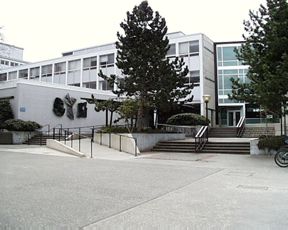
The Neville Scarfe Education Building (University of British Columbia)

The University, in Vancouver, has a Neville Scarfe building and Lecture Theatre. 
He was Dean of Education there for 18 years and achieved a huge amount.
https://studiohub.ca/on-the-boards/ubc-neville-scrafe-lecture-theatre

He contributed an article on games in geography to 'Geography' in 1971.
His son is an actor.
He died in 1985.
I wonder what he may have made of the current status of Canadian Geography. There is an excellent Royal Canadian Geographical Society, but geography doesn't have a high status in the school curriculum in Canada.

Source:
SCARFE, N. V. “Games, Models and Reality in the Teaching of Geography in School.” Geography, vol. 56, no. 3, 1971, pp. 191–205. JSTOR, www.jstor.org/stable/40567554. Accessed 6 July 2020.
Neville Scarfe and British Columbia


Throughout his career, Neville wrote over 100 articles and gave numerous speeches on education around the world. His intuition and progressive understanding of post-war learning instilled in the Faculty the idea that teachers are made, not born. With this spirit in mind, he created rigorous, specialized streams taught by enthusiastic professors to produce dynamic and informed educators. Always an advocate for educational reform, Neville was particularly critical of the findings of the 1960 Report of the Royal Commission on Education (the “Chant Report”), calling it “contradictory and conservative”*. He took particular issue with its recommendations for harsh discipline in classrooms and the assumption that children will behave belligerently unless taught otherwise.

Image source:

Further memories of Neville Scarfe welcome - he was an important geographer on both sides of the Atlantic and I am sure there is plenty more to come.

Updated August 2023


After World War II, Neville Scarfe returned to the Institute of Education of the University of London, where he taught the principles and practices of the teaching of geography. This sparked his interest in the philosophy of education—this was a pursuit he continued for the rest of his life, so it was probably what could be considered his main interest.


They included James Fairgrieve, who he described as 
"a down to earth geographer bent on assisting students to imagine world characteristics accurately, the better to imagine political and social problems"

https://snaccooperative.org/view/64845894

Scarfe was a proponent of play in education.
https://www.tandfonline.com/doi/abs/10.1080/00094056.1962.10726996

Saturday, 27 April 2019

1912: Dr George Robert Parkin, KCMG DCL LLD

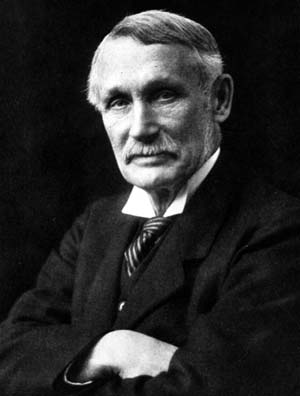
George Robert Parkin.jpgUpdated August 2023

Following the departure of Douglas Freshfield, the following President had a particular responsibility to oversee the next stage in the Association's development.

At this time, a decision was made to bring in distinguished outsiders with geographic interests to strengthen the standing of the Association.

George Robert Parkin was just such a person. 

He was the organising Secretary of the Rhodes Scholarship Trust when he was elected, having been a GA member for some time, and also contributing to 'The Geographical Teacher' using his knowledge of the Empire.

Rhodes is of course problematic by association.


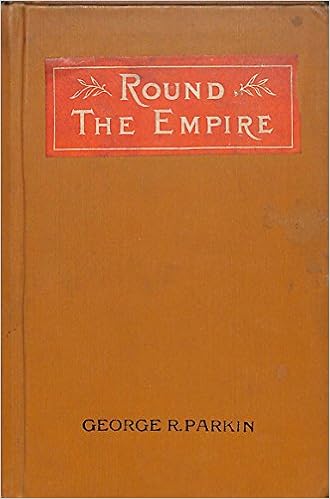
The book referred to seems to have been written in 1892 for use in schools, and was called 'Round the Empire'.

Cecil Rhodes himself was particularly problematic and there has been a campaign to have his name removed from buildings at a number of universities and statues removed. This Empire connection needs unpicking.

To see Mr. Parkin's Presidential Address, see the following link:

PARKIN, G. R. “THE PRESIDENTIAL ADDRESS.” The Geographical Teacher, vol. 6, no. 4, 1912, pp. 189–198. JSTOR, JSTOR, www.jstor.org/stable/40554149.

One might want to avoid reading p.192-3 of that address though, as it seems to express views that wouldn't be ideal to express today on the impact of the cold temperatures of Canada on immigration patterns.

One of the things that has started to emerge in the years since the turn of the 21st Century has been the connections between organisations and universities and some attitudes and activities which are no longer 'politically correct' and need to be addressed directly.

(See update at the end of the post)

Other quotes are more interesting and relevant perhaps:

 "There is one thing more that I should like to say. If you take an interest in the political thought of this country, it is absolutely impossible to make that adequate unless you teach the people geography. Anyone who does not know the essential needs of this country, that it draws its raw materials from the ends of the Earth and sends back its manufactures to the ends of the Earth, who does not know the sources of that supply, the conditions which exist on both sides, and the necessity of communication between the two in order to secure our national life, is not fit to be a voting citizen of this Empire."

The association with Cecil Rhodes is also one that has been revisited by a number of universities, including the University of Oxford with the Rhodes Must Fall campaign active at the moment.

George Robert Parkin was born in New Brunswick in Canada in 1846, the son of a Yorkshire farmer. His biography is an interesting one, and can be read in more detail on the Wikipedia page linked to below.

He travelled widely in his role with the Rhodes Scholarship, and became knowledgeable about the Empire and its geography. He seems to have been a Headmaster - hence the education connection.

He was awarded the KCMG in 1920, along with other honours in his lifetime. 

I wonder whether this practice of awarding honours to GA Presidents might be resurrected.

Parkin contributed a number of articles to 'The Geographical Journal' in its early volumes, often co-authored with Halford MacKinder. 
He also worked as a correspondent for 'The Times' newspaper in the late 1890s.

Interestingly, he was also involved in the production of a map of the Empire, published by Bartholomew.


Read the review of this resource and you can see that even back in 1903, the Mercator projection was not being favoured by the Geographers who used these maps, and wanted "a large, clear physical wall map of the World on an equal area projection", which "would be a boon to every progressive teacher of geography."

Also in 1912, according to 'The Geographical Teacher':

"The number of members is now 1,000, an increase of 38 during the year. While 137 old members have been lost by death, resignation, or lapse of payment of subscription, 175 new members have joined."

A reminder of the rapid turnover in membership that can often occur in any organisation, and which the GA is always mindful of.

Source: The Geographical Teacher, vol. 2, no. 2, 1903, pp. 93–93. JSTOR, www.jstor.org/stable/40554264.

References

https://en.wikipedia.org/wiki/George_Robert_Parkin - describes Parkin as an educator, imperialist and author.

I edited the Wikipedia entry to add the fact that he was the President of the Geographical Association. I shall do that for each President, as hardly any of their entries mentioned that before I started the blog.

PARKIN, G. R. “THE PRESIDENTIAL ADDRESS.” The Geographical Teacher, vol. 6, no. 4, 1912, pp. 189–198. JSTOR, JSTOR, www.jstor.org/stable/40554149.

Amazon page for 'Round the Empire' book: https://www.amazon.co.uk/Round-Empire-George-R-Parkin/dp/B001AV3JBU

Further research opportunity:

https://lib.unb.ca/archives/finding/parkin/parkin.html - University of Brunswick archive, which has some documents relating to Parkin

If anyone can supply further information relating to George Robert Parkin, please get in touch.

Update April 2019

Thanks to the GA's Chief Executive Alan Kinder for this perspective on the importance of reading outdated views involving 'environmental determinism' as they have not necessarily been consigned to History and are part of the ongoing EDI work the GA is engaged in:

Updated November 2019
Parkin wrote a book about the history of the Rhodes Scholarships, now the Rhodes Trust
https://archive.org/details/rhodesscholarsh01parkgoog/page/n11

More details here:
https://www.rhodeshouse.ox.ac.uk/about/history-of-the-rhodes-trust/

Updated November 2020

This is one of several tweets that I came across. Parkin's association with the Rhodes Scholarship and Oxford University is noted.

Updated July 2022

Updated August 2023 

Article in the New York Times archive from 1919 on post-war education.

A link to a book that he owned describes him as:

"a biographer of Sir John A. Macdonald and Headmaster of Upper Canada College"

1895: George R. Parkin appointed eighth principal of UCC

1923: Parkin Building opens

Named after Parkin?


John Macdonald was the first Prime-minister of Canada.

Margaret Mackintosh RIP

Updated post. Sad news at the end of last week from colleagues who have organised the Charney Conference over the years of the passing of Ma...