I have had the privilege of working with Mary Biddulph
on a range of projects over the years.
Mary worked for many years in teacher education at the University of Nottingham.
We worked together on the Young People's Geographies project, which ran from 2006-2011. I started as a teacher, but was involved with the final stages of the project as a GA employee.
Mary has kindly filled in the Zoom form that I created for the recent Presidents.
Mary was born in Brighton in 1960.
She started school in the West Midlands, her family having moved there when she was four years old. However, she then moved to Maidstone in Kent when she was 12 and went to school there until she finished her A levels.
Of her time in education she said:
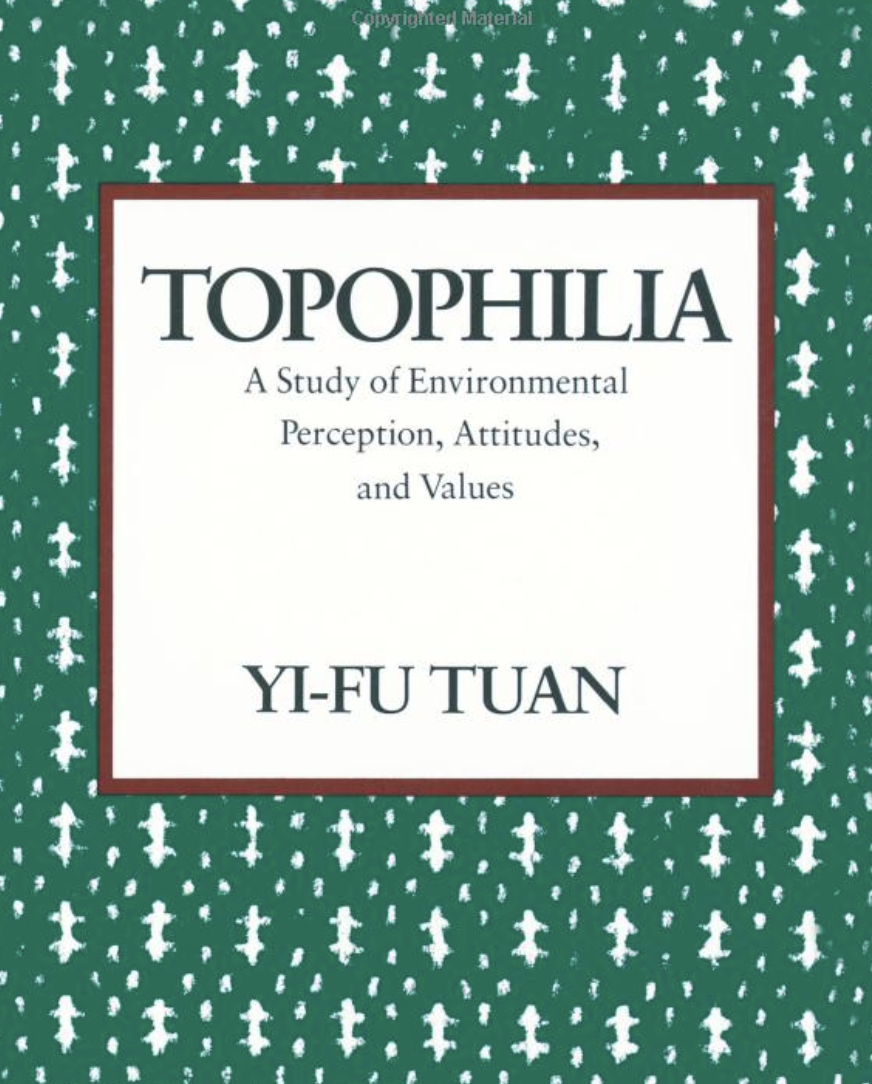
"My geography education was relatively uninspiring...except for the fieldwork at A level - geography made so much sense after the field week in Swanage. I did my degree at the University of Sussex, where there was a lot of emphasis on International development (many thanks to (former GA President) Tony Binns for his enthusiastic teaching) and historical geography (many thanks to Brian Short for his wisdom and insight). It was here I first read 'Topophilia' by Yi Fu Tuan - this changed my view of geography for ever. I recommend it to everyone.
I did my PGCE at the University of Nottingham and have lived in the East Midlands ever since. Harry Tolley and Frank Molyneux were my tutors, and it is fair to say they were both, in very different ways, inspirational."
This is a reminder of the importance of those previous generations of ITE trainers who trained the current generations of teachers - people like Vincent Tidswell who I was fortunate to have had train me.... I may need to investigate these two gentlemen next...
Mary responded next to this question, which I have asked all the available Presidents: "What has your career been e.g. teacher / academic / author / other work outside the obvious geography sphere?"
Mary said:
"I feel I have done bits of all of the above in my time. However, I started my career in geography education as a young (and very naive) teacher in an inner-city school in Derby. The students there were magnificent - so skilled at running rings round me!
I had to learn fast. I became a PGCE tutor at the University of Nottingham after eight years in the classroom. The transition was just luck - right place at the right time - Harry Tolley needed a part-time colleague and I was lucky enough to be it.
Working alongside Harry was wonderful, and I learnt so much from him during my early years as a PGCE tutor. His boundless enthusiasm for and commitment to geography education made him an excellent role model for this early-career PGCE tutor. I worked in ITE Geography at the University of Nottingham for nearly 30 years. It sounds like a long time, but it isn't. The time flew by. The University afforded me many professional opportunities for which I am forever grateful. Yes, the chance to travel to many interesting places was a benefit of working at the University, but there were three other and much more significant benefits:
1. The freedom to think / read / reflect on geography education and its significance to children's education.
2. The opportunity to work with many wonderful hard-working PGCE students and their subject mentors in schools - this was a real privilege.
3. The chance to be part of a wider community (including the GA) of committed geography educationists who fed my ideas and challenged my thinking.
Part of the freedom of working in the University was being able to seize opportunities as they came along. For me, an example of such an opportunity was my involvement in the Young People's Geographies (YPG) project. The project comprised a unique combination of teachers, academic geographers and school students all working together developing the geography curriculum - it was both great fun and so inspiring. The school students involved in the project had such rich ideas about geography and were so perceptive about what the curriculum could be. We need to listen to them more than we do."
As one of those teachers I certainly learned a great deal from my involvement in the project.
She told me more about her Presidential theme.
Inclusive Geographies? was the theme I selected.
I chose this theme because I wanted the geography community to think about the extent to which school geography, and geography more generally is (or is not) inclusive of a diverse range of students and teachers. The question mark is significant to the theme.
I am convinced that there was then, and there still is, important work to be done to ensure all young people access the kind of geographical education that will serve them well in their current and future lives. I also think there is work to be done in ensuring the geography teaching profession better reflects the communities it serves.
These are complex issues and there are no simple answers, but nonetheless they are issues not to be sidestepped. Prior to being president I edited the journal 'Teaching Geography' for three years, and while in this role served on the GA's Education Committee. I was also a member of the YPG project team (the project was funded by the Action Plan for Geography) and had also been involved in the evaluation of a couple of other GA projects. Since being president I have stepped back a bit but am currently on the Geography Education Research Working Group (GERWG) and am also a member of a group looking at developing a curriculum framework for geography."
I ask all former GA Presidents why the GA matters:
"The GA matters to me because
it provides me, and many others, with membership of a community of practice committed to high quality geography education. It is home to, and even a refuge for, a wide range of geography education professionals who debate, discuss, argue and pontificate on the question: What exactly is a 'high quality geography education'. It provides a place where assumptions about school geography are challenged and where teachers can be sure of the quality of the ideas it encourages. School geography has not always had a secure place in the school curriculum, and the GA has been crucial in advocating for the subject in policy circles where the significance of geography to young people's education has been often been completely misunderstood. The GA continues to play an essential and ongoing role in ensuring geography is part of the education project. I'm not really sure how I got involved. It just seemed to happen a gradually.
I asked her about any successes of her Presidential year:
"I think it's difficult to judge 'successes', but my sense of achievement just came from working with the excellent staff at HQ and working with the 'team' of presidents to support the mission of the GA. Whilst the presidential lecture is the big public event for the president, it is really a small part of the presidential year - the rest of the year is really a team effort and HQ staff and the vice presidents and the past-president are key to that effort.
Having said this, being president is good fun and it does mean that you get to engage with a wide range of enthusiastic geographers - attending the final weekend of Worldwise quiz in Blencathra, seeing the hard work of the different committees and enjoying the less formal aspects of the annual conference are all special parts of the role that I remember with great affection."
She also trained the current Nottingham University PGCE tutor Mal Kerr, just as she herself was trained by the previous generation.
Thanks to Mary for answering the questions so thoughtfully, and thanks in advance for the ongoing curriculum work which will be one feature of my own Presidential year.
"I still think there is work to do in helping a wider range of teachers and educators to get involved in the work of the GA. In particular, we need to think about how to engage the enthusiasm of early career teachers before they are no longer 'early career'."
References
'TG' editorials feature in many issues too of course.
YPG has its own blog posts which includes some of the references, particularly a paper Mary co-wrote with Roger Firth and a special issue of 'Teaching Geography'.
Images - Copyright: Bryan Ledgard / Geographical Association