Showing posts with label First World War. Show all posts

Sunday, 11 August 2019

1929: Colonel Sir Henry G Lyons FRS

Last updated August 2023

Colonel Henry Lyons was another President with a varied CV and an interesting one. He was particularly linked with museums, and Polar exploration, and was also director of the Science Museum for a time.


He was born in 1864, and died in 1944, so also had a long life - as have many Presidents it seems.

He was educated at Wellington College, and then went to the Military Academy at Woolwich, before being elected to the Geological Society. He was commissioned as a Lieutenant in the Royal Engineers (a few GA Presidents had served with them) and was posted to Cairo.

The Royal Society obituary describes the source of his interest in geology:

He attributed his first interest in science to an acquaintance made during holidays in 1879-1880 with a neighbour at his Dublin home, who was then being ‘crammed’ for Sandhurst and taking Geology as a subject. The two boys collected fossils from blocks of Carboniferous Limestone lying on the canal wharves, and, with his interest thus aroused, young Lyons spent all his spare time at Wellington in reading Lyell’s Elements of Geology and then the same author’s Principles, being encouraged in these voluntary studies by the science master, Rev. B. A. Irving

From 1909 - this changed things a little when I found this document. I presume this is the same Henry Lyons.

At a meeting of the University Court, the highest decision-making body in the University of Glasgow, on 14 January 1909,

[I]t was announced that Capt. Henry George Lyons, FRS, FRGS, (Hon.) DSc Oxford & Dublin, at present Director-General of the Survey Dept. of Egypt, had been appointed Uni. Lecturer in Geog. for a period of four years from 1st Oct, 1909, at an annual salary of £250. (CM, 1908–09, C1/1/16, p. 46f)

While forms of ‘Geography’ had been taught previously in the University, at different times and as part of other courses of instruction – Ronald Miller (1972, 17) suggests that from at least 1577 it was present on Glasgow curricula – these words in January 1909 formally instituted Geography as an identifiable subject for teaching and, by implication, scholarly inquiry within the University. As noted at an earlier Court Meeting deliberating on the conclusions of a Committee set up to consider this matter, the appointment of a ‘Lecturer in Geography’ meant that Geography would now be taught ‘on a standard equal to a graduating course for Arts or Science’ (CM, 1907–08, C/1/1/15, p. 116f). A later Court meeting of 6 May 1909 also noted a proposal from the University General Council for ‘the addition of the subject of Geography under Depts. of Study’ (CM, 1908–09, C1/1/16, p. 98f). While the term ‘Department’ here does not quite mean what we now routinely understand by it (see Lorimer & Philo, 2009) the effect was still to put Geography on a relatively firm footing within the organisational structure of the University. 

Source: (2009) Guest Editorial, Scottish Geographical Journal, 125:3-4, 221-226, DOI: 10.1080/14702540903364260

Lyons was appointed as a Director of the Science Museum in 1920.
It seems he was a particularly impressive Director. The Science Museum's Facebook page describes his impact:

A strong believer in the needs of the ordinary visitor being more important than those of the specialist, Sir Henry Lyons was hugely important to broadening the Science Museum’s appeal and popularity.
Lyons introduced the first interactive exhibits and the first ever gallery designed specifically to engage children with science and technology.

Between 1921 and 1932 – a year before he retired – the number of visitors to the Science Museum per year increased from about 400,000 to nearly 1.25 million. Today, just under 3 million people visit the Museum each year.

He took over as Honorary Treasurer of the GA in 1926 following the death of E. F. Elton, who had held the post since 1908. He retired from the council when he joined the Science Museum, and the post passed to Sir William Himbury, the Chief Officer of the British Cotton Growing Association.

His Presidential Address was called 'The Geographer and his Material'. it was delivered in January 1929 at the London School of Economics (as were many Addresses during the first part of the Century, before the change to the Easter conference). 

He started by sharing the great honour that he felt at being the President, and spoke glowingly of the impact of Vaughan Cornish's presidency.


He talked about the role of specialist knowledge and skills in supporting the teaching of geography.

Here he is on Cartography, for example...


Because of a change in the time when the President made his address from the very start of the year to later in the year, Lyons ended up doing two addresses.

Lyons, H. G. “Relief in Cartography.” The Geographical Journal, vol. 43, no. 3, 1914, pp. 233–248. JSTOR, www.jstor.org/stable/1778611. Accessed 23 Nov. 2020.

His 2nd was in 1930.
He was elected as a Fellow of the Royal Society.
His obituary was published in various journals.

I like this description of him from one of them.


He died, aged 80 in Great Missenden, later home of Roald Dahl.

References

Wikipedia: https://en.wikipedia.org/wiki/Henry_George_Lyons
I amended this entry to reflect his
Obituary: https://royalsocietypublishing.org/doi/10.1098/rsbm.1944.0023

Correspondence in SPRI archive: https://archiveshub.jisc.ac.uk/search/archives/ea55fcaa-eb80-3fc8-b57b-d7f991aaf417 (I really need to take a trip there)

https://science.sciencemag.org/content/78/2028/429
Ernest M. Dowson. “Colonel Sir Henry Lyons, F.R.S.” The Journal of Egyptian Archaeology, vol. 31, 1945, pp. 98–100. JSTOR, www.jstor.org/stable/3855389.

I know relatively little about Henry Lyons' time as President, so if anyone has further information please get in touch.

Image - there is one linked to here, I am still looking for a CC licensed one

Presidential Address:

Lyons, Henry G. “THE GEOGRAPHICAL ASSOCIATION. THE PRESIDENT'S ADDRESS.” Geography, vol. 15, no. 5, 1930, pp. 353–359. JSTOR, JSTOR, www.jstor.org/stable/40559150.

Fleure, H.J. (1953) "Sixty years of geography and education", Geography, vol.38, pp.231-264

Cabinets of curiosities were mentioned by my colleague Claire Kyndt in her GA Conference session in 2015, which was excellent. Search Slideshare for the presentation.
This book explains more:
Read Chapter 6 by geographer David Matless.

Lyons introduced the first visitor-operated models in museums - the interactive displays we are so used to these days and which are found in most modern museums with a few exceptions, such as the Pitt Rivers (which has links to another former GA President Linton Myres of course).

Updated November 2020
From an obituary in a journal devoted to Egyptian Archaeology
Ernest M. Dowson. “Colonel Sir Henry Lyons, F.R.S.” The Journal of Egyptian Archaeology, vol. 31, 1945, pp. 98–100. JSTOR, www.jstor.org/stable/3855389. Accessed 23 Nov. 2020.


Updated July 2022
There is a book titled 'The rise of the Science Museum under Henry Lyons' which was published in the 1970s.
You can read a review here. via Google Books.

Updated August 2023


Henry George Lyons was born on 11 October 1864 in London. He was educated at Wellington College, and in 1882 entered the Royal Military Academy in Woolwich. In 1884, he attended a two-year course of military engineering at Chatham, after which he was posted to Gibraltar and then to Egypt, where he studied geology in his spare time. In 1901, Lyons retired from the army and was appointed director of the geological survey in Egypt, a post he held until 1909 when he returned to Britain. During the First World War, Lyons served with the Royal Engineers, retiring with the rank of colonel in 1919, and in the same year was appointed secretary-general of the International Union of Geodesy and Geophysics. In 1920, he became director of the Science Museum in London, where he remained until his retirement in 1933. He was knighted in 1926 and died on 10 August 1944 at Great Missenden.

This Royal Society documented provides all the information you would want to know about him. It doesn't mention his Presidency of the Geographical Association, which is disappointing...

It includes his work on meteorology during World War I, showing how vital weather information was militarily.

It includes an excellent image of an older Lyons shown here.


Also President of IUGG. (PDF download)


Thursday, 18 July 2019

1924: Professor Sir Richard Arman Gregory - (1st Baronet)

Updated August 2023

The surname Gregory has cropped up a few times in the Presidential ranks.

Sir Richard Arman Gregory became the GA President in 1924.
He had a background as an astronomer and scientist rather than a geographer.

He was also editor of 'Nature' during the time of his Presidency, and helped secure the reputation of the journal as a learned source.

He had an inauspicious start, as the son of a cobbler. He started out working as an apprentice in a boot and shoe factory, before moving into a laboratory as an assistant. He was also a Science demonstrator at HM Dockyard School in Portsmouth (an intriguing title).
He eventually became assistant to Sir Norman Lockyer (editor of 'Nature', and later became his assistant on 'Nature', before eventually becoming editor himself from 1919-1939, when the journal was growing in prominence.

He published a book in 1894 called:
The Planet Earth: An Astronomical Introduction To Geography which sounds useful.

According to his biography:

After 1919 (when he was knighted) Gregory became more and more a public figure. With his boundless energy and curiosity and his optimism about new causes, he was a member of some seventy organisations and served as president of twenty-five.

He was a serial President it seems, as were quite a few GA Presidents.
He was a member of over seventy different organizations, and of these he became Vice-President of twelve and President of twenty-five. 

1924, when Gregory was in office, was described in 'The Geographical Teacher' as being "one of the most difficult and depressing in the educational world", which threw up a bit of a mystery as to why. I looked back through other issues, but couldn't find out why, other than perhaps some prominent deaths amongst GA officers, and the growing sense of financial issues that would result in the depression of the 1930s...

The article also welcomes Gregory, and thanks Sir John Russell for his time in office.


Gregory's Presidential Address was on the theme of British Climate through history.


It starts with a curious phrase for me: that he had feelings of 'diffidence and satisfaction'. I feel proud and excited...
Firstly he says that he "offered himself for election", so we have now moved from Council deciding, to some sort of election or choice (although not yet amongst all the membership I don't think...)
The topic of his lecture would certainly have been of interest to one of my lecturers at Huddersfield Polytechnic back in the early 1980s: Lance Tufnell, who spent many years reconstructing past climates, and wrote widely on the topic.


He goes on to talk about the Association's great work in supporting school geography, and moving from "a voice crying in the wilderness" to "the established centre of geographical progress in instruction in school, college or university".

It also mentions an early connection with the GA back in 1908, when he gave a lecture as part of a GA organised series.


In 1925, he was thanked by the Association for his support, and also served on the Executive for the year after his Presidency.

Apart from that, I couldn't find further mentions of what Gregory might have done during his time as President. Would be interested to find out more.

The University of Sussex keeps an archive of his letters and correspondence in an archive called the Gregory Papers, should anyone want to delve deeper than I intend to do for this blog post.

In particular he was the moving spirit of the British Science Guild until its merger with the British Association for the Advancement of Science - to which he also had a very close attachment, serving as president throughout the Second World War.

He was created a baronet in 1931, and elected, for 'conspicuous services to the cause of science', a Fellow of the Royal Society in 1933

In 1924, when Gregory was the President, the GA was in a strong position, with a membership, according to the Annual Report, of 4,610 (up 100 on the previous year). The GA has a library of over 500 Lantern Slides and an active library loan system. This year also saw the death of Grenville Cole (President in 1919). There was also mention of Frank Debenham (another future President) for assisting with the delivery of the Herbertson Memorial lecture in that year.

Gregory sadly died in 1952 after a short illness.

His obituary by the Royal Society stated: 
"Gregory was always very interested in the international contacts of science, and in the columns of Nature he always gave generous space to accounts of the activities of the International Scientific Unions."

Image credit:
Sir Richard Arman Gregory, 1st Bt
by Lafayette
whole-plate nitrate negative, 16 March 1928
NPG x49604
© National Portrait Gallery, London
Image sourced from National Portrait Gallery, and shared under CC license

https://www.npg.org.uk/collections/search/use-this-image.php?mkey=mw177784

References

More details of the University of Sussex's collection of papers is here: http://www.thekeep.info/collections/getrecord/GB181_SxMs14
Images: https://www.npg.org.uk/collections/search/person/mp01900/sir-richard-arman-gregory-1st-bt

Wikipedia page: https://en.wikipedia.org/wiki/Sir_Richard_Gregory,_1st_Baronet

I edited this entry to add the fact that he was the GA President.

Books
Discovery: https://archive.org/details/discoveryorspiri00greguoft/page/n8
https://www.amazon.com/Sir-Richard-Gregory-life-work/dp/B0007KFICI

Presidential Address: Gregory, Richard. “BRITISH CLIMATE IN HISTORIC TIMES.” The Geographical Teacher, vol. 12, no. 4, 1924, pp. 248–258. JSTOR, www.jstor.org/stable/40556482.

As always, if anyone knows anything more about Professor Gregory, and his connections to the GA, please get in touch.


"Science - ranked with arts and religion as the guide and expression of man's fearless quest for truth."
Richard Arman Gregory

Updated August 2023

Not sure how I missed this Royal Society biography first time round.

It includes a picture of Gregory later in life, and a signature.

It has a great deal of information about his life and exploits.
Following details and image opposite from that document:

Other offices held:
Presidency of the Ethical Union and his Vice-Presidency of the Rationalist Press Association; but that his interest in religion had been maintained is clear from his membership of the National Unitarian Fellowship and his Vice-Presidency of the World Congress of Faiths, the body founded by Sir Francis Younghusband.

In 1889 Gregory returned to South Kensington to work under the Solar Physics Committee as a computer and as assistant to J. N. (later Sir Norman) Lockyer. During the three years that he spent at South Kensington Gregory was engaged for the first and only time in his life in active scientific work, but it was mainly of a routine nature: measurement of the positions and areas of sunspots, examination of the spectra of spots and prominences, study of the direct heating effect of solar radiation, comparison of the solar spectrum with those of various elements, photography of the flame spectra of elements —these would be the lines upon which he was working. 

For twenty-one years (1897-1918) he was Professor of Astronomy at Queen’s College, Harley Street, London. 

He also lectured in 1918 to troops in France and Belgium, under the auspices of the Y.M.C.A., becoming Chairman of its Education Committee and later, for many years, Vice-Chairman of its National Council

It has been said that Gregory made Nature a journal of science, published for men of science and written by men of science. In his farewell message on his retirement from the editorial chair {Nature, 7 January 1939), he wrote: ‘Throughout its existence Nature has had the active support of leading workers in scientific fields in many parts of the world. The aim has always been to record results of research of wide interest or particular importance, wherever it has been carried out and to present authoritative thought and opinion upon progressive scientific developments and their influence . . . My particular mission has been to make men of science conscious of their power and influence in shaping civilized life.’

He was knighted in 1919 after organizing for the British Science Guild a successful Exhibition of British Scientific Products; he became a Baronet in 1931. He was an honorary doctor of the Universities of Leeds, Bristol and St Andrews. He was elected to the Athenaeum under Rule II. Perhaps the honour which pleased him most was his election to a Fellowship of the Royal Society in 1933 under section 12 of Chapter I of the Statutes for ‘conspicuous service to the cause of science’.

I wonder whether I can find a cheap copy of this book:


Friday, 7 June 2019

1917: Colonel Sir Thomas Hungerford Holdich, KCMG, KCIE, CB, RE

Boundaries are the inevitable product of advancing civilisation; they are human inventions not necessarily supported by nature's dispositions, and as such they are only of solid value so long as they can be made strong enough and secure enough to prevent their violation and infringement.
Sir Thomas Hungerford Holdich (1916)


Thomas Holdich wwwholdichescomwpcontentuploads201306SirTLast update, August 2023

In 1917, Sir Halford Mackinder returned to focussing on his MP duties, although he was still heavily active in various roles at the GA, and continued to be so for many years, acting as President of the GA's Council through into the 1930s.

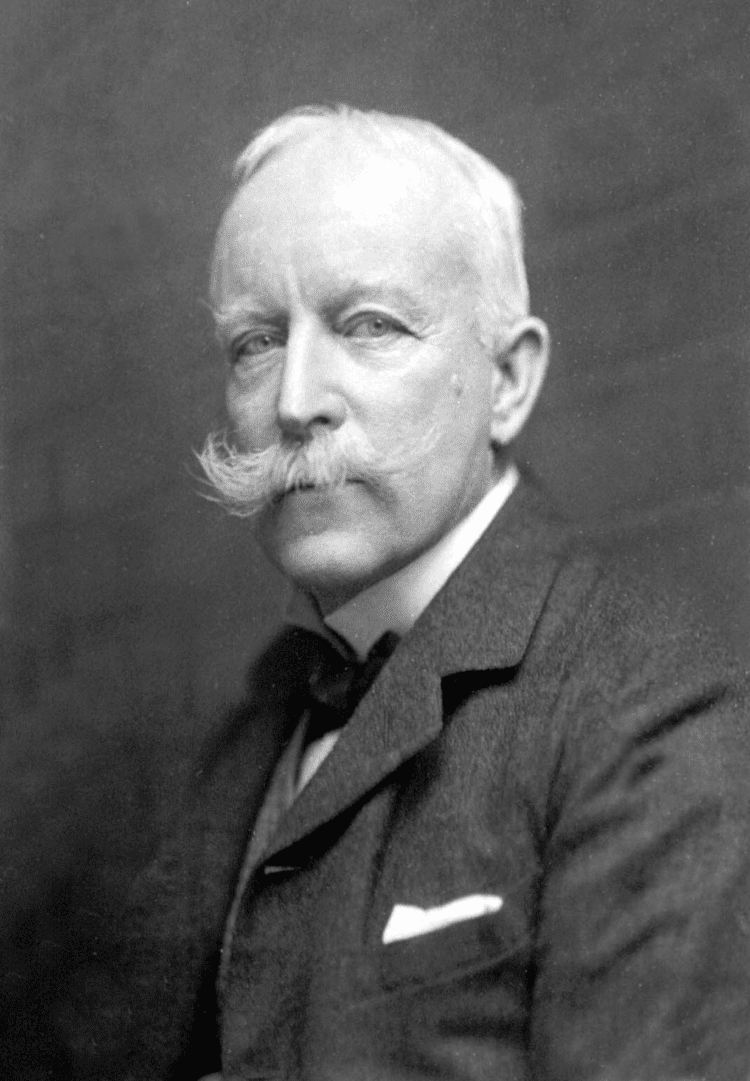
The new President for 1917 was Colonel Sir Thomas Hungerford Holdich. He was very much a military man - with a suitably impressive moustache as can be seen from the image.

When he took over as GA President, he was also serving as Vice-President of the RGS, with which he had been associated for over 50 years - another impressive service to geography being shown.

He was educated at Godolphin Grammar School and the Royal Military Academy, obtaining a commission in the Royal Engineers in 1862.

He saw active service in the Bhutan expedition of 1865, the Abyssinian campaign of 1867-68 and the Second Afghan War of 1878-79.

During peacetime, he was largely occupied with the survey of India, and served on the Afghan Boundary Commission of 1884-86, the Tasmar Boundary Commission of 1894, the Pamir Boundary Commission of 1895 and the Perso-Baluchistan Boundary Commission of 1896. He was also engaged in The Cordillera of the Andes Boundary Case by the governments of Argentina and Chile in 1902 to define the boundary along the Andes Mountains.

Holdich was awarded the Royal Geographical Society’s Gold Medal in 1887 and knighted in 1896.

As mentioned, Colonel Holdich was also Vice President of the Royal Geographical Society at the time, another person to have strong connections with both organisations.

As a military man, Colonel Holdich seemed to have a specific view on the value of Geography, particularly maps - bearing in mind these were produced by the Ordnance Survey, so had a military background to them as well.
He was a Royal Engineer, and had a role supervising surveying in India, as well as other locations in his career.
Holdich's Presidential address aparently had no obvious title.

He starts the address by talking about the concerns he had about speaking to geography educators.

"The science of geography covers so vast a field in all its varied aspects that it is impossible for any one man to be capable of expressing a useful opinion on many of the important questions involved in that careful consideration of the science as a whole which must necessarily result from a deep study of it such as you, as teachers of geography, have doubtless accorded to it. To put it shortly, you are far more capable of instructing me than I am of instructing you." 
(Holdich, 1917)

On the subject of maps he says:
"I say, with all confidence, that it is maps which afford us the surest outward and visible sign of a very real growth of public interest in the science of geography. They are indeed our best advertisement at present."
(Holdich, 1917)


Quite a bit of his Presidential Address dwelt on the present conflict (the First World War) and possible outcomes for different parts of the world, and the influence of these on the future map of the world. On the matter of geopolitics, which was perhaps beyond the realm of the classroom, he said to those attending:

"You are a band of geographical thinkers. I expect that many of you are what Mr. Mackinder calls 'map thinkers'. It is for the Geographical Association which you represent, and for the Geographical Society and schools of geography generally, to impress, and if possible educate, public opinion in important questions such as these..."
(Holdich, 1917)

Holdich described the war as being "a geographical education in itself" and invited the GA's members and volunteers to prepare for the post-war period. This would be a period of upheaval and challenge for all organisations.

He is described in an earlier Bibliographical Study as "a distinguished imperial surveyor", which was his particular area of interest.
https://books.google.co.uk/books?id=itckCwAAQBAJ&lpg=PT30&ots=Plar_gEAgW&dq=charles%20close%20OS%20geographer&pg=PT35#v=onepage&q=charles%20close%20OS%20geographer&f=false

Update

Holdich also referred to the importance of a home education, "which takes young children out of doors to observe natural features" and which teaches Boy Scouts to take stock of topographical details.

Image result for thomas hungerford holdichIn retirement he wrote about Indian and Afghan geography and his own experiences.

He was also an accomplished artist.

Holdich died in 1929, and his obituary was published in 'Geography'. It referred to his military service of course, as well as the other achievements.

References
Wikipedia: https://en.wikipedia.org/wiki/Thomas_Holdich

I edited the Wikipedia entry to add the fact that Colonel Holdich was the President of the Geographical Association. I shall do that for each President, as hardly any of their entries mentioned that before I started the blog.

Holdich, T. H. “PRESIDENTIAL ADDRESS TO THE GEOGRAPHICAL ASSOCIATION, 1917.” The Geographical Teacher, vol. 9, no. 1, 1917, pp. 13–24. JSTOR, JSTOR, www.jstor.org/stable/40554527.

Obituary: “SIR THOMAS HUNGERFORD HOLDICH. Ob. November 4th, 1929.” Geography, vol. 15, no. 4, 1929, pp. 308–308. JSTOR, www.jstor.org/stable/40557380.

Holdich's archive of correspondence with the RGS is stored in the RGS Archives and accessible to Fellows: https://discovery.nationalarchives.gov.uk/details/c/F33549

The Gates of India - a historical narrative: http://www.gutenberg.org/ebooks/42970

"The Englishman who got muddy in El Manso" - Chilean-Argentine diplomacy: https://www.elcordillerano.com.ar/noticias/2018/05/22/67758-el-ingles-que-se-lleno-de-barro-en-el-manso

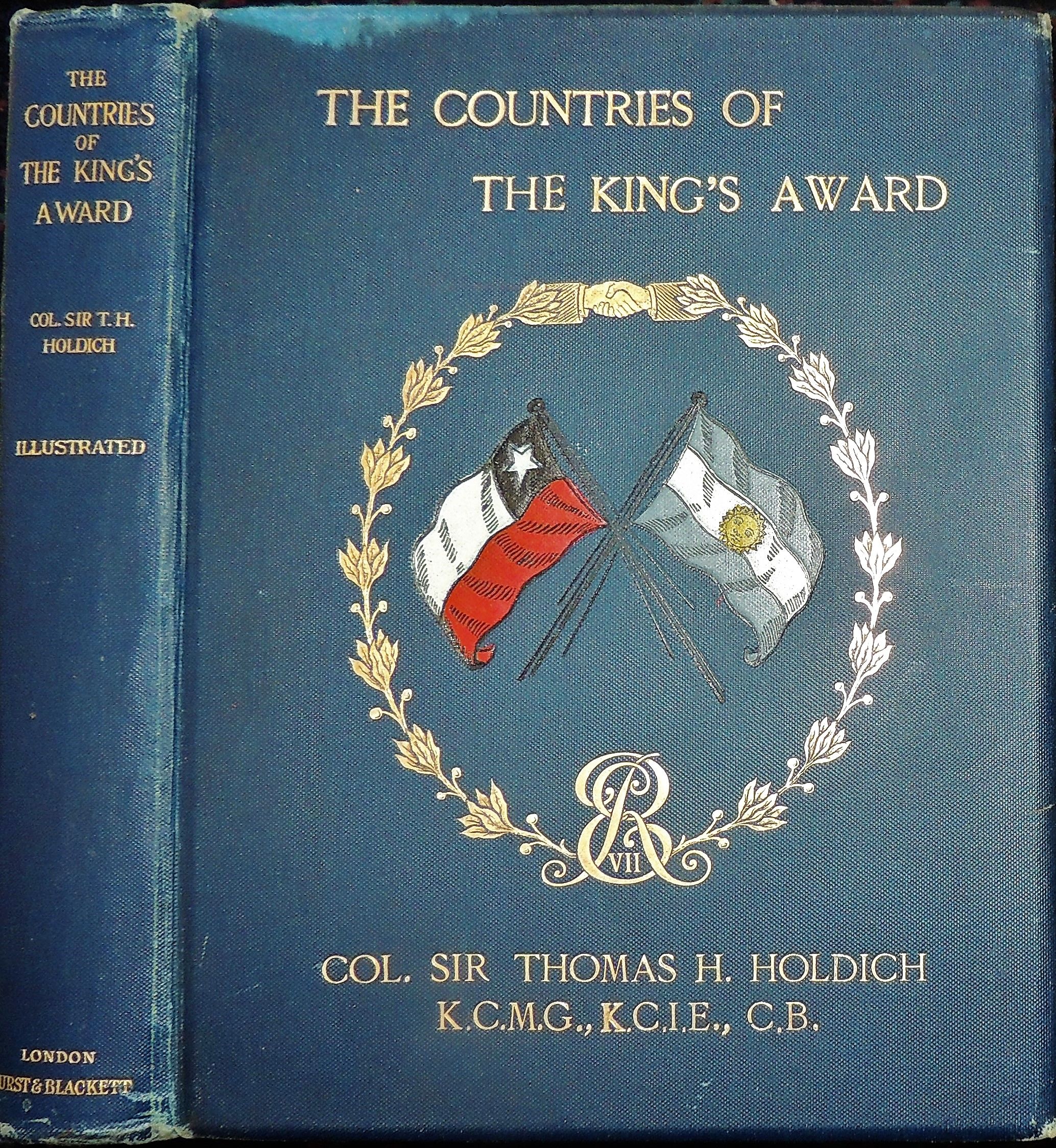
“Colonel Holdich, a true gentleman, immediately captivated everyone by his presence, his cordial treatment, impartiality and rectitude. The result of his intellectual restlessness and the affection that he had for South American countries was the work that he published in London under the name The Countries of the Kings Award. In it, in addition to recounting his trip, he describes in their geographical, social and political aspects the countries he visited ”.

Book on 'Political Frontiers and Boundary Making': https://www.amazon.co.uk/Political-Frontiers-Boundary-Hungerford-Holdich/dp/1347139095 - given the current concerns about national and international borders such as Trump's wall, this focus on borders remains important.

Image source: https://alchetron.com/Thomas-Holdich and Pinterest galleries.

As always, if anyone has further information relating to Colonel Holdich, please let me know so that I can expand on this post.

Updated August 2019

Holdich is also mentioned in "A History of the World in Twelve Maps" by Jerry Brotton (Penguin, 2012)
There is a chapter called 'Geopolitics' which mentions him, although it focusses on Halford Mackinder, who was also President, at a time when they were linked with the RGS. Brotton says that Mackinder "would almost single-handedly both transform the study of geography in England, and create a whole new way of understanding and using the subject: geopolitics".

When he climbed Mt. Kenya in 1899, Halford Mackinder was invited by Colonel Sir Thomas Holdich to speak at the RGS. Another Presidential connection. I shall highlight many more of those as the blog develops.

Updated August 2021

Thomas H. Holdich was superintendent of Frontier Surveys in India from 1842 to 1848. At the beginning of the twentieth century, he was selected to establish the boundary between Argentina and Chile in Patagonia. He successfully used geographical methods in the solution of a particular set of problems, arising out of territorial disputes between Russia and Afghanistan; Argentina and Chile.

Even the delimitation of the McMahon Line on the map (8 inch to the mile) by Great Britain and Tibet, delimiting the Tibet-Assam boundary in 1914 at Simla was another example of the application of geographical principles and skill to solve the vexed problem of the boundary which had remained ill-defined for centuries.

It was an example of ‘applied’ work, because it was designed to resolve the problem of boundary delimitation in the Eastern Himalayan region. The British geographers and scholars who were in India during their colonial period had done extensive works of ‘applied’ nature.


Updated August 2023

Some tweaks and amendments.

Thursday, 6 June 2019

1916-18: Geography and the First World War

"The war has been a geographical education in itself. It is impossible that you should have missed the geographical application to the movements of the war. Mountains and rivers, deserts and marshes have all played their part, and in many cases have exhibited new and unexpected values.... The value of map reading and map thinking is generally if not universally recognised."
(Holdich, 1917)


By 1916, the impacts of the war were being felt in all areas, and the GA was not immune from this. There were issues with membership, and renewals and administration around contacting people. Some members were called up, of course.

The Spring issue of 'The Geographical Teacher' was slimmer than usual because of a rise in costs associated with printing and distributing the journal to its subscribers. The Summer issue was even slimmer. These issues were mostly concerned with GA business rather than new articles on pedagogy and curriculum, and fewer books to review were published.

There was also an Editorial on the war on p.2 of the journal.
The new editors were H. O. Beckit and P. M. Roxby, who took over from the late A. J. Herbertson

It's interesting to hear how they realised that subjects would be reappraised for their value at this time. and that this was an area where Geography had its strengths.

This theme was also taken up in 1917, when the GA President was a military man: Colonel Sir Thomas Holdich.
In his Presidential Address he referred to the was as "a geographical education in itself."

Considering the period once the war ended, he suggested that this was an opportunity.

"I do not know what shape our representations in Government in the matter of giving a better placeto geography in the new educational programme may take, but whatever it is, we shall certainly be faced by the practical question of demand. Is it wanted?"

"Well then, we must set to work to create the demand, and it is for the Association to set the example. We must revise if necessary our system of education in our elementary and secondary schools.."

Following the war, there was a rebound and a rapid growth in GA membership. Things were starting to happen... and this blog will share the story of what happened over the coming decades...

Update
This was H. J. Fleure's call to arms at the end of the war, in the Annual Report of 1918 that he wrote:


References
Holdich, T. H. “PRESIDENTIAL ADDRESS TO THE GEOGRAPHICAL ASSOCIATION, 1917.” The Geographical Teacher, vol. 9, no. 1, 1917, pp. 13–24. JSTOR, JSTOR, www.jstor.org/stable/40554527.

Source: “EDITORIAL.” The Geographical Teacher, vol. 8, no. 4, 1916, pp. 211–215. JSTOR, www.jstor.org/stable/40554491.

Image: from National Library of Scotland - Trench Maps near Amiens, France.
'Reproduced with the permission of the National Library of Scotland'

FLEURE, H. J. “The Geographical Association: ANNUAL REPORT, 1918.” The Geographical Teacher, vol. 10, no. 1, 1919, pp. 35–36. JSTOR, www.jstor.org/stable/40555811.

Update 2 (July 2019)

I came across an article by Rex Walford in 1993 called 'Mackinder, the GA in Wartime and the National Curriculum' which provided more details on the activities of the GA during the First World War and also the Second World War.
This also provided more information on Mackinder himself.

Reference
Walford, Rex: ' Mackinder, the GA in Wartime and the National Curriculum' (Geography, Vol 78, 1993)
https://www.jstor.org/stable/40572493


Margaret Mackintosh RIP

Updated post. Sad news at the end of last week from colleagues who have organised the Charney Conference over the years of the passing of Ma...