Showing posts with label S H Beaver. Show all posts

Wednesday, 17 July 2024

Dudley Stamp - a memorial volume #1

Another discovery while following a few leads.

It's a memorial volume to Professor Dudley Stamp.

Can be borrowed from the Internet Archive.

Image: Dudley and Elsa Stamp

It was published in 1968 by the Institute of British Geographers.

The contents are a Who's Who of prominent geographers at the time, 

The first section of the book was written by another former GA President: Robert Ogilvie Buchanan.

He talks about his first encounter with Dudley Stamp.

It talks about his time at the Geographical Association:

More to come in future posts.

Sunday, 26 November 2023

Spring Conferences in the 1950s and 1960s

More images of finds in the GA Archive in Solly Street. I need to spend some more time exploring these documents to see who was involved in presenting the sessions and any other secondary details locked away in their contents... All I had time to do was capture their front cover showing the different venues and Presidents overseeing them e.g. the Spring Conference of 1962 was hosted by Stanley Henry Beaver at Keele University.

These are the front covers of some of the programmes from back in the day. Part of the albums on my Flickr account.


Also a Summer School brochure. Another initiative that no longer takes place. These were organised from the GA's HQ at the time: the Park Branch Library. In 1959, they took place in Spain and Switzerland.

Thursday, 5 October 2023

Fanny Copeland and the Le Play Society

I didn't know anything about Fanny Copeland until I came across this article while looking for something on the work of Laurence Dudley Stamp.

Special thanks to Richard Clarke for his work on this research.

Born in Ireland, raised in Scotland, she made her life as an adopted Slovene, having lived in a number of European countries.

In this capacity, she welcomed a field trip from members of the Le Play Society, which I have mentioned several times on the blog.

This section talks about Copeland's involvement:

She had invited George Ingle Finch, to lecture.

Finch was also an activist within the London Le Play House Organisation (LPHO).  

The LPHO was a key organisation in the development of inter-war British geography.  

It had been established in 1920 by a curious mix of geographers, sociologists and educationalists to take forward ‘regional studies’ using an interdisciplinary analytical framework based on the trilogy of ‘place’ (the natural environment, physical and biological), ‘work’ (the economy, and daily life of its people) and ‘folk’ (their community and social organisation).  

This approach was itself derived from the work of the 19th century French sociologist Frederick Le Play (who emphasised ‘family’ as the basic unit of society, rather than ‘folk’).  

The LPHO provided a home for several bodies, including student groups and a ‘foreign fieldwork committee’ whose emphasis on ‘human ecology’ during the late 1920s became increasingly at variance from that of the Sociological Society (another body within the LPHO which was championing the ‘professional’ disciplinary practice of academic sociology).  

The two bodies split in 1931, with the Sociological Society recasting itself as a professional institute - the Institute of Sociology - and the foreign fieldwork committee becoming the nucleus of a separate organisation, the Le Play Society (LPS), under its first President, Patrick Geddes.  Geddes died in 1932, shortly after the formation of the LPS and was succeeded as its President by Halford Mackinder. 

I'd been unaware of this earlier incarnation of the Le Play Society, or the close link with the IBG. I need to go back to some of my earlier sources perhaps.

The LPS (a precursor of the Institute of British Geographers) became a major influence on the development of geographical fieldwork between the two World Wars.  Its first ‘foreign study’ (in August 1932) led by Dudley Stamp was of SolĨavsko, a then ‘remote’ Alpine valley system on the Slovene - Austrian border.

It resulted in some outputs:


Dudley Stamp (1933) 'Slovene Studies'

This review of the book mentions two other former GA Presidents:

"Halford Mackinder in his Foreword to Slovene Studies described it as ’an honestly made brick for the palace we are rearing.’ (in Stamp 1933)  The LPS subsequently held up the 1932 visit as a model of how regional studies should be carried out.  The Society's own (1935) guide to regional fieldwork describes it as 'An excellent example of regional survey by a Le Play Society group doing field work as a summer vacation course abroad'. (Barnard 1935: 114, 1948)  Thirty years later (after the LPS had been wound up) the visit was described by Beaver (1962: 236) as 'one of the best examples' of the LPS’s work.  Beaver did much within the Joint School of Geography at King’s College and LSE during the 1930s to promote fieldwork and his own interest in the Balkans were fostered by his leadership of several LPS ‘expeditions’ (Phillips and Turton 1975)."

At this point the British Association and Section E appear - something else which has appeared quite a few times on the blog.

And this is followed by two more references to former GA Presidents: Sir John Russell (President in 1960) and K C Edwards.

"In 1947, well before the Society’s eventual closure, its ‘student group’ had become a separate body (Turnock 1991), recasting itself as the ’Geographical Field Group’ (GFG) with K C Edwards, by now Head of Nottingham University’s Geography Department as its President.  The GFG as a body of ‘professional geographers’ regarded the LPS as elderly amateurs and too ‘sociological’; the emphasis on civics and the Le Play method was dropped (Merchant 2000)"

I now need to find out more about the Geographical Field Group (GFG).

References can be found in the bibliography of the article below.

Copeland lived a long life, full of mountains and connections, and she was described as a "buzzing fly" (hopefully in a positive way).

Clarke says of her:

"In Copeland’s own work one can find elements of the idealism of Patrick Geddes, the mysticism of Vaughan Cornish (especially in her writing on mountains) and the pragmatism of Dudley Stamp."

Hilda Ormsby crops up here too - I love all the connections and interconnections here. There is so much that could be done with this era and the work of GA Presidents...

Source:

Clarke, Richard (2011) "Fanny Copeland and the geographical imagination. Scottish Geographical Journal 127(3) ,pp.163-192

https://eprints.bbk.ac.uk/8156/1/ClarkeAnteric_2011_FannyCopelandGeogImag_SGJ_Pre-Pub.pdf

Stamp, L. Dudley, ed. 1933. Slovene Studies: Being Studies Carried Out by Members of the Le Play Society in the Alpine Valleys of Slovenia (Yugoslavia). London: Le Play Society 

Edwards, K.C. 1932. Anglezi studirajo Slovenijo. Planinski vestnik, no. 10: 193-198

Beaver, Stanley H. 1962. The Le Play Society and Fieldwork. Geography 47: 225-240

A quote I got from here as well:

‘Geographical knowledge needs to be understood as something that is constituted through a range of embodied practices (such as travelling, seeing and recording).  

The ‘field’ is not some self-evident place, something ‘out there’ to be ‘discovered’ in an unproblematic sense, it is produced in the ideas and the recorded or remembered movements of geographical actors, created through their discourse and shared through the networks of academic (and amateur) exchange.’ 

(Stoddart and Adams, 2004)   


Stoddart, David R and William M Adams. 2004. Fieldwork and Unity in Geography. In Unifying geography: common heritage, shared future, ed. John A Matthews and David T Herbert, London: Routledge. 

Tuesday, 22 August 2023

British Association (BAAS) Section E (and L)

From a PhD thesis, and discovered while searching for information on Richard Arman Gregory. It has plenty about him here, as well as references to John Linton Myres, Halford MacKinder and others as part of his work with the British Association for Advancement of Sciences - founded in 1831.

Section E was Geography.

Chapter XII is particularly relevant for Geography, although there are over 150 references to the term.

It repeats something I've read elsewhere:

The Royal Geographical Society (founded in 1830), which together with the British Association had been instrumental in establishing geography at the ancient universities, set up the Geographical Association in 1893 to represent secondary school geography teachers. 

Which is not the case of course...

It describes the GA as acting as a "pressure group" for school geography.

Thec hairman of the Manchester branch of the Geographical Association, T. W. F. Parkinson was elected Secretary of the new Manchester Geographical Society (still in existence today)

In a conference in 1919, Parkinson delivered a speech where he emphasised Geography's links with Empire - not everyone agreed that focussing on this was a good idea:

C. B Fawcett said that geography's sphere of interest was the whole world, not the Empire.
The Prince of Wales also appears speaking up for Geography.

Another pair of former GA Presidents get a mention here: Halford MacKinder and Sir John Russell.

H.J. Fleure then pops up!

Various committees and Sections discussed and passed around the idea of a proper report into school geography. It ended up in the hands of T Percy Nunn.

He chaired a committee with the following members:

Respectively W.H. Barker, L. Brooks, H.J.Fleure, O.J.R. Howarth, H.J. Mackinder, J.L. Myres andJ.F. Unstead; G.H.J. Adlam, D. Berridge, C.E. Browne, Richard Gregory, E. Sharwood Smith, E.R. Thomas and Miss O. Wright.

One woman only.. and Richard Gregory was not listed as a geographer at the time...

Some very familiar names and almost all of them GA Presidents in their time - that seems to have been the route into the Presidency at that time.

Speaking at the end of the First World War

Source: PhD Thesis - University of Leeds - 1978 - Peter Michael Digby Collins

https://etheses.whiterose.ac.uk/4621/1/uk_bl_ethos_574464.pdf

In 2009, BAAS became the British Science Association (BSA). The new association has expanded on the original mission of putting science at the center of society, culture and education, and is focused on increasing the number, range and diversity of people actively engaged with scientific studies, activities and developments.

Other reading:
Charles W. J. Withers, et al. “Geography’s Other Histories? Geography and Science in the British Association for the Advancement of Science, 1831-c.1933.” Transactions of the Institute of British Geographers, vol. 31, no. 4, 2006, pp. 433–51. JSTOR, http://www.jstor.org/stable/4639988. Accessed 24 Aug. 2023.

A great many former GA Presidents were involved here, and received grants from the BAAS.
See the Grants page in the article above for some examples...
Here's an extract from the table:


For more on the BAAS I referred to a paper by Stanley Henry Beaver (also a former GA President with his own entry on the blog...)
Section E was set up in 1851.

Early meetings are described here:


There was a close link with exploration and travel...

Geographical education then emerged as a new facet of the work of Section E, again thanks to former GA Presidents:

In 1885, Scott Keltie, who had been appointed Inspector of geographical education' by the RGS in the previous year, spoke on 'Geographical education'; he criticized heavily the very unsatisfactory position of the subject, which 'scarcely counts at all as a subject of education', largely owing to overcrowded school curricula and the ignorance of teachers, an ignorance that was hardly surprising in view of the absence of the subject from universities. 

In 1887, the Section Presidential Address, by Col. Sir Charles Warren, was on 'The teaching of geography'. He defined the subject as 'all that knowledge of common things connected with the surface of the earth, including the seas and the atmosphere, which it necessary for every human being to be acquainted with in order that progress in other knowledge may be acquired and acquaintance with the world be made which will fit man for life in any capacity'. 

He stressed the need 'to train the minds of youth in the power of observation', and in regretting the absence of geography from the public schools, emphasized the importance of geographical knowledge to government servants. 

At the same meeting, H. J. Mackinder, a young Oxford University Extension lecturer, was speaking on 'Geography at the universities', and J. J. Cardwell on 'A natural method of teaching geography'. Mackinder was about to take up his appointment as Reader at Oxford; he referred to the necessity to teach physiography, because the schools did not do it; but, he went on, 'physiography is not geography; it lacks the topography, which is the essential element in geography'. 

This paper is packed with former GA Presidents.

Source:
Beaver, S. H. “Geography in the British Association for the Advancement of Science.” The Geographical Journal, vol. 148, no. 2, 1982, pp. 173–81. JSTOR, https://doi.org/10.2307/633769. Accessed 24 Aug. 2023.

Saturday, 2 July 2022

Stamp and Beaver

I started in on a rereading of J B Priestley's classic 'English Journey' (published in 1934) yesterday, and on the very first page, there is a mention of a book by two former GA Presidents: L Dudley Stamp and Stanley Beaver.

Wednesday, 28 July 2021

Images for Warrington

Another find from the GA Archives at Solly Street. In 1938, Thomas Cotterill Warrington was seemingly asking a whole range of GA volunteers to send him images from wherever they were travelling, or perhaps of specific locations for a book that he was compiling. I discovered a whole stack of replies to his request. This envelope was sent by Stanley Beaver, who was later to become GA President. At the time, the GA was based in Manchester as you can see from the address on the envelope.


This was labelled as mid-Severn. There were several pictures in the envelope, which also included pictures of Ironbridge Gorge from Stanley Beaver taken in 1938. Here's one below. The quality of reproduction is really good on these little prints.

Here is a letter from Percy Rowley, who was the Honorary Secretary of the Shewsbury and District Branch at the time, accompanying some images that he had provided.

And here are some images which were sent by James Fairgrieve, showing the South Wales valleys and coal mining villages.


I will return to these images on my next visit to Solly Street and investigate further.

Useful additional colour for the 'A Geographer's Gaze' project.

Thomas Cotterill Warrington was GA President from 1942-1945.

Monday, 15 June 2020

Geddes and Le Play

Updated April 2021


The Le Play Society has been mentioned in quite a few posts on the blog so far.
It was linked with the work of someone else who has been mentioned: Patrick Geddes.
Le Play was actually named after a French sociologist.
Patrick Geddes influenced, and helped to train several GA Presidents, and also present day geographers remain intrigued by his work.


Sources:
https://en.wikipedia.org/wiki/Pierre_Guillaume_Fr%C3%A9d%C3%A9ric_le_Play

Beaver, S. H. “The Le Play Society and Field Work.” Geography, vol. 47, no. 3, 1962, pp. 225–240. JSTOR, www.jstor.org/stable/40565418. Accessed 3 May 2020.

Update April 2021
According to this piece in the GA journal 'The Geographical Teacher' (1921), Patrick Geddes was a GA Vice President... I wonder whether he may have become President.

“Editorial.” The Geographical Teacher, vol. 11, no. 2, 1921, pp. 3–5. JSTOR, www.jstor.org/stable/40555898. Accessed 11 Apr. 2021.

Find out more about him in this short film - plenty more to explore here.

Patrick Geddes - Renascence Man from Stephen Robinson on Vimeo.

Patrick Geddes was an amazing late Victorian polymath who had far reaching ideas about the environment and Man's place within it. I was commissioned by McManus Galleries, Dundee to film and direct a short documentary to accompany an exhibition about his professional life.

Wednesday, 3 June 2020

Lionel William Lyde

Updated August 2023

Lionel Lyde was a prominent geographer in the early part of the 20th century.

Lyde, Lionel William (1863–1947), geographer, was born on 28 March 1863 at the vicarage, Wigton, Cumberland, the eldest son of William Lyde (1829/30–1914), vicar of Wigton, and his wife, Elizabeth Emily Hart.

He was a prolific author, and his books sold particularly well.

In an early book 'The Teaching of Geography' he provided this advice:


Lionel Lyde was an influential pioneer among British geographers, writing a series of short textbooks for schoolchildren during the 1890s and giving extension lectures in economic geography at the universities of Glasgow and Oxford before the Oxford diploma was instituted at the turn of the century.

His conception of the discipline was very much of his own making. Trained in the classics and history at Oxford, he taught English at two schools in Scotland before becoming headmaster of Bolton School. He also played an important role as an examiner and lecturer to trainee and novice teachers of geography. In 1903, he accepted an invitation to occupy the newly created chair of economic geography at University College London, being the only geographer in the United Kingdom to hold professorial title at that time. His major textbooks on Europe and Asia served several generations of undergraduates.

His books sold in huge quantities, totalling sales of over 4 million apparently! Giving David Waugh a run for his (D C) money.

He taught at UCL for many years.

He apparently, according to the Huch Clout piece, used to arrive at his lectures wearing a top hat which he would then remove and it contained his lecture notes.

He was also connected with the Geographical Association, other than the articles that he wrote for its journals in the early years of publication.


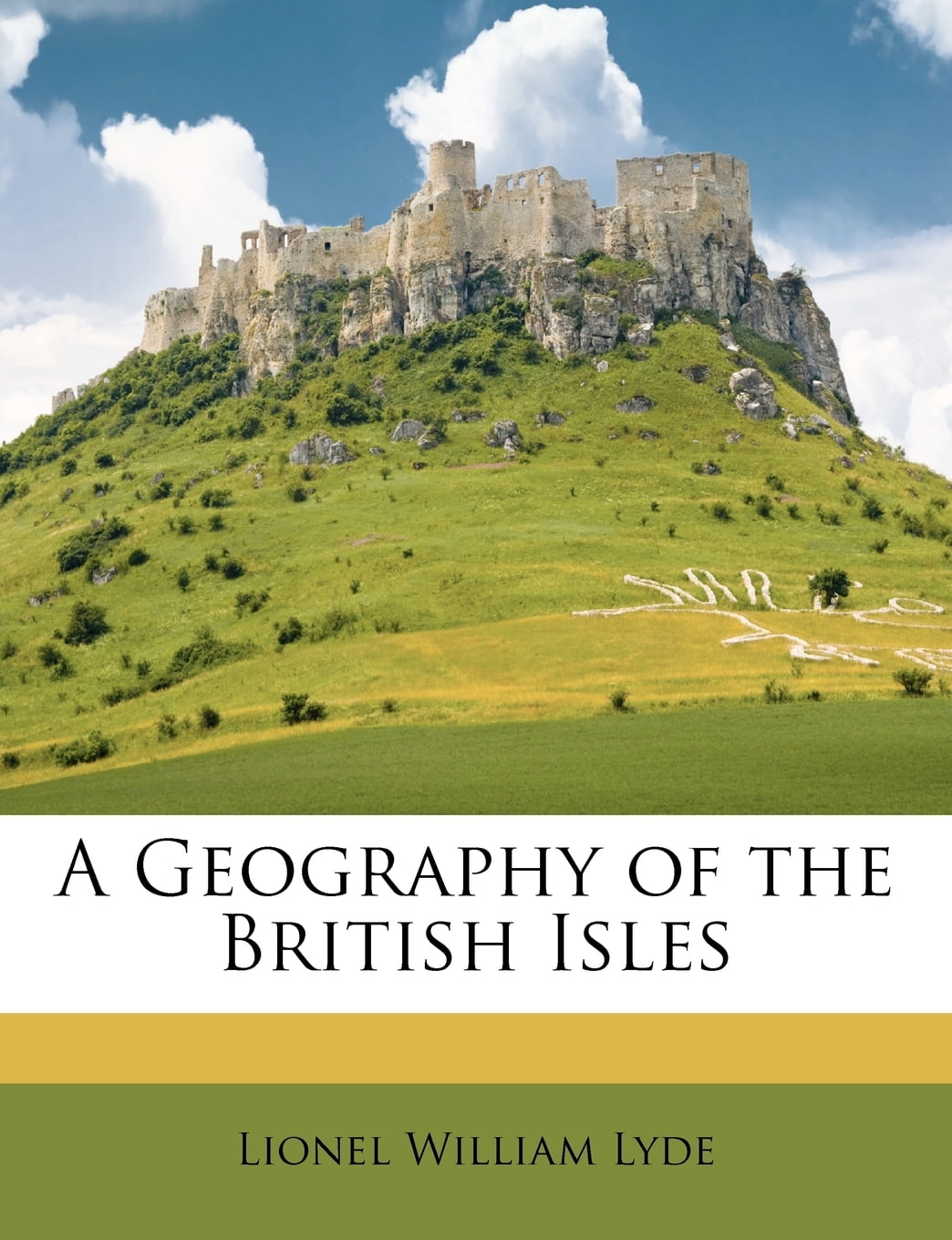
A Geography of the British Isles - Walmart.com

Source:
Hugh Clout wrote this detailed biography of him:

https://books.google.co.uk/books?id=7BQSBwAAQBAJ&lpg=PA16&ots=qyoQUQmILd&dq=lyde%20geography%20definition&pg=PA3#v=onepage&q&f=false

https://www.nature.com/articles/133361a0.pdf?proof=true&draft=collection

I could do with some images of Lionel William Lyde - apparently the archive of UCL was destroyed in a fire / bombing raid.

Update
From the GA collection


Involved with Section E of the BAAS.

Friday, 22 May 2020

1966: Professor Stanley Henry Beaver

Last updated August 2023

Professor Stanley Henry Beaver was an academic geographer, who was particularly associated with the LSE and Keele University, as well as being a great supporter of the work of the GA.

A prolific author, he authored books on a wide range of topics, from Sand and Gravel, to more general human geographies of the world, and geomorphology.
He had a very long association with the GA, as did many Presidents of course, working with them for over 30 years before becoming President in a number of roles, and providing content for journals.
He was involved with L Dudley Stamp's Land Utilisation Survey, and co-authored many of the reports that came out of that survey in the 1930s and beyond.

He also became involved in the planning and delivery of the Annual Conference in 1933, after Dr. H J Wood stood down.
During the 1930s, the GA Conference actually moved around a lot more than it had previously, where it was mostly held at the LSE. The 1930s saw it in cities including Liverpool, Glasgow, Nottingham and Sheffield. In 1932, the conference was even planned to be overseas in Heidelburg, but political and currency problems meant it had to be cancelled.

He had an association with the RGS (as many other GA Presidents have) and the IBG.

When he left the LSE he was succeeded by Michael Wise: another former GA President.

He also co-wrote a classic book with another GA President, L Dudley Stamp called 'The British Isles' as part of the 'Regional Geography' series.

He was born in London in 1907, and went to UCL where he graduated with first class honours in Geography in 1928. He completed his Diploma in Education in 1929, and according to an obituary published in the Transactions of the IBG, was influenced by L. W. Lyde, who apparently regarded geography as:
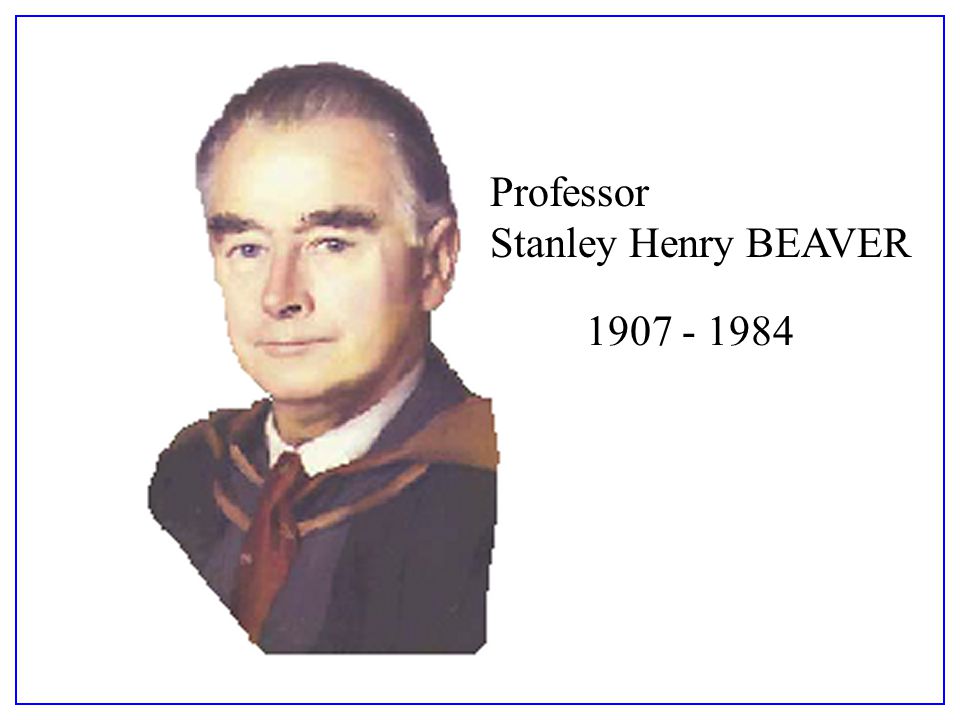
Image result for Professor Stanley Henry Beaver
"a body of knowledge coupled with an attitude of mind". 

He worked at the LSE between 1929 and 1950,  along with L Dudley Stamp

For some time, I couldn't find a contemporary image of Stanley Beaver, but was fortunate to receive one from Dr. Philip Kivell which can be seen at the top of the blog post.

In 1962, he had a piece published in 'Geography' on the Le Play Society and their contribution to fieldwork.

By this time, he was Head of the Geography department at the University of Keele. He stayed at Keele until his retirement in 1974 when he became Emeritus Professor.


In it, he references the work of Patrick Geddes, who had A. J. Herbertson as his assistant.


I am grateful to Dr. Peter Knight for helping me get in touch with Dr. Philip Kivell, who very kindly gave me a range of additional details on Professor Beaver's career and personal life. 
What follows was provided very kindly by Dr. Kivell.

S.H.BEAVER 1907-1984
Stanley Henry Beaver was born in Willesden, North London in August 1907. He graduated from University College London in 1928 with first class honours in Geography having already been awarded the Morris Prize and a University Scholarship in Geology. His first academic post was at the London School of Economics, where a very productive period resulted in appointment as Ernest Cassel Reader in 1946. His major work at this time, together with L Dudley Stamp was “The British Isles: a geographic and economic survey” which went though many editions before and after the war and provided a geographical grounding for  many thousands of students. 
During the war he worked for Naval Intelligence and used his geographical training to produce a number of regional handbooks. 
He was appointed as the founding professor of Geography at the new University College of North Staffordshire, subsequently Keele University, in 1950. 
Here he built up the first new post- war Geography Department in the country, including being closely involved in the physical design of the building. 
This included finding a home for millions of RAF air photographs taken over Europe during the war, and the establishment of a meteorological station on the campus.
Beaver could fairly be described as a traditional geographer, a product of an age that largely pre-dated the increasing specialization that reshaped the discipline from the 1960s. 
Having said that, his interests and skills were enormously diverse.  Most obviously he was a Human Geographer concerned with economic and regional matters, but his interests also ranged widely over transport geography, land use and dereliction and he was equally well informed about climate, meteorology, and mineral extraction. He was a practical academic, always interested in how environments and human processes worked and in this context he helped enormously to put “The Potteries” region on the map of public and academic awareness.
He was a superb and well organised teacher and was always in demand as a guest speaker by organisations across the country. From a student point of view he was extremely well respected but perhaps not the most approachable teacher. He belonged to an era when staff- student relations were more formal and respectful so the informality and student politics of the 1960s and 70s did not always sit easily with him. 
He could appear austere and remote but those who experienced his excellent field excursions soon saw a more relaxed side of him and were perhaps party to his dry sense of humour, his love of puns and his stock of limericks. At heart he was kind and immensely supportive to his staff and colleagues.
Apart from his teaching and research Beaver played a very active role in numerous groups and committees. Some of these were tied up with the University and local region, but others were national or international.  For many years he chaired Keele University Grounds Committee, responsible for the largest, and some would say, most attractive university campus in the country. It was not unknown for him to open his office window to berate students who were walking on the grass. 
He was President of the Geographical Association, active in the RGS and in the founding of the IBG, the IGU and the Anglo-Polish seminars. 
As Chair of the Geography Board of the CNAA he played a major role in promoting the new Polytechnic sector. Amongst all of this he found time to translate several important French texts into English.
During his quarter century at Keele  Stanley lived on the campus with his wife Elsie, who also worked as curator in the departmental map library, and four children. He enjoyed his large garden which he said (tongue in cheek) lay astride the watersheds between the Trent, Severn and Weaver catchments. One of his enduring passions had been steam railways, about which he was enormously knowledgeable. When the locomotive Keele Hall was withdrawn from service in 1963 Stanley Beaver bought the nameplate and displayed it proudly in his new department. On numerous overseas travels he would manage to arrange a trip on the footplate of whatever local steam locomotive took his fancy.
Upon retirement he and Elsie bought a large house in Eccleshall , a few miles from the campus, where he continued to garden, to enjoy his stamp collection and to continue his involvement in local Staffordshire organisations, especially the CPRE. He and Elsie endowed separate funds for student prizes and for fieldwork in the local area. 
Stanley Beaver was undoubtably one of the great geographers of his generation.
Professor Beaver died in 1984.

References
http://worldcat.org/identities/lccn-n50006237/

Obituary: “Stanley Henry Beaver, 1907-1984.” Transactions of the Institute of British Geographers, vol. 10, no. 4, 1985, pp. 504–506. JSTOR, www.jstor.org/stable/621896

Beaver, S. H. “The Le Play Society and Field Work.” Geography, vol. 47, no. 3, 1962, pp. 225–240. JSTOR, www.jstor.org/stable/40565418

British Geography 1918-1945, Edited by Robert.W Steel - published in 1987.
Chapter 12 was by J A Patmore, where he gave a personal perspective on the period.

Article in Geography in 1978
BEAVER, S. (1978). Some Observations on the Climate and Weather of New Zealand. Geography, 63(1), 14-22. Retrieved August 25, 2020, from http://www.jstor.org/stable/4056883
Patmore describes Beaver in this chapter.
A chapter in this book is here:
https://books.google.co.uk/books?id=9NSDx4DxfVcC&lpg=PA76&ots=uk5vMrcPG4&dq=stanley%20henry%20beaver%20geographer&pg=PA76#v=onepage&q&f=false

RGS Archives: http://discovery.nationalarchives.gov.uk/details/c/F46114 - I won't be able to visit the archive for a while, but there are quite a lot of papers

Updated - May 2020

A few updates to add following the posting.

There was a connection revealed between Professor Beaver and another former GA President who will have his own entry in due course (sometime in 2021) Bob Digby.
Bob told me that:


Bob apparently spent the £25 in the Keele University bookshop, buying geography textbooks from the time.

I also discovered another bit of information on Professor Beaver, from when he was a student at UCL in the 1920s. He was taught by Lionel William Lyde, another high profile Geographer from the early part of the 20th century.

His wife Elsie Rogers was also a student at UCL, and her memories of Lyde's teaching were also featured in the same document.


Taken from UCL Geography Department Archives.

Keele University offers an Elsie Beaver Prize for the best undergraduate dissertation by final year student involving fieldwork in physical geography, so the connection to Beaver continues.
It seems that she worked in the Map Library at the University as Map Curator. 


Beaver was also taught by another former GA President: Edmund Garwood. More connections...

Source:
https://books.google.co.uk/books?id=7BQSBwAAQBAJ&lpg=PA16&ots=qyoQUQmILd&dq=lyde%20geography%20definition&pg=PA8#v=onepage&q&f=false
- this link is to one of the many Biogeographical Studies, which are 'proper' versions of what I'm doing on this blog.

I also found his own entry, after all that, in the Biogeographical Studies series.


This included an image of him, and also details of his links with the GA, as well as a lot more detail.

Beaver was Honorary conference organiser from 1934-1949 and also declared an intention to visit every branch in Britain while President - something I hoped to do, but didn't quite manage it.


https://books.google.co.uk/books?id=R-48DwAAQBAJ&lpg=PA130&ots=vx3Y5ASsYg&dq=lionel%20lyde%20UCL&pg=PA129#v=onepage&q=lionel%20lyde%20UCL&f=false 

As always, if you have further information relating to this President please get in touch. 

Thanks to Dr. Philip Kivell for the image of Professor Beaver used at the top of the blog and substantive text later on.
Thanks to Dr. Peter Knight for his assistance as well.

Updated March 2023

Mentioned on first page of J B Priestley's 'English Journey'.

Updated August 2023


This flagged up his involvement with Section E of the BAAS, which I have been investigating over the last few days and have found plenty of details in the Transactions of the IBG and elsewhere that show Beaver's substantial involvement in discussions around geography in schools and universities. 


GA Obituary

Rodgers, H. B. “The Geographical Association.” Geography, vol. 70, no. 1, 1985, pp. 77–80. JSTOR, http://www.jstor.org/stable/40571501. Accessed 24 Aug. 2023. 

Friday, 3 May 2019

1913: Professor Edmund Johnston Garwood

Last updated August 2023

Edmund Johnston Garwood was another person involved as part of the drive to bring in distinguished outsiders with geographic interests to strengthen the standing of the Association in its early years.

Garwood was born in 1864 in Bridlington, and educated at Eton College and Trinity College, Cambridge, where he took his degree in 1886.

Between 1887 and 1892, he served as director of the Jarrow Chemical Company and as lecturer at the Cambridge University Extension Lecture Syndicate between 1891 and 1898.

In 1896, he accompanied the British Exploring Expedition (led by Sir William Conway) to Spitzbergen where he studied glaciological phenomena and geology. For this work, he was awarded the Gill Memorial Fund by the Royal Geographical Society and the Wollaston Fund by the Geological Society of London. This provided his entry into the sphere of geography.

The following year he returned to Spitzbergen. At the end of July, Garwood and the assistant Nielsen ascended Nielsenfjellet to survey the scene inland, later setting off inland up the Kongsvegen glacier. They ascended the glacier to the vicinity of Kongsfjella, then turned back to examine the vicinity of Tre Kroner before finally returning to Kongsfjorden. Conway named the region of this exploration King James Land (now James I Land).

Read their journals from this expedition here. They are beautifully illustrated and well worth reading.

Here's a comment on Garwood's involvement in the party:


In 1899, Garwood accompanied Douglas Freshfield (a previous President of the GA) on an expedition to Kangchenjunga and was responsible for the accounts of the geological structure and physical features of Sikkim. 

In 1901, he was appointed Professor of geology and mineralogy at University College, London, a chair he held until his retirement in 1931. Another link with UCL for GA Presidents.

He produced a series of maps during this time - one of which can be seen here. This is a wonderful piece of cartography from the days before GIS and StoryMaps.

In 1913, Garwood was proposed and seconded into the post (these were the days before a ballot of members was held to decide between those who were proposed and named). This article describes the AGM where this took place, and Garwood's contribution to it, as he took the Chair.

Garwood's Presidential Address was on 'Arctic Glaciers and British Ice Sheets' and can be read on JSTOR by 'Geography' subscribers.

Presidential Address: Garwood, Edmund J. “ARCTIC GLACIERS AND BRITISH ICE SHEETS.” The Geographical Teacher, vol. 7, no. 2, 1913, pp. 73–89. JSTOR, www.jstor.org/stable/40554273.

Between 1930 and 1932, Garwood served as President of the Geological Society of London as well as other posts of responsibility. He published a number of articles in the Society's journals during this period, and also in the period before he took up the post. 
He was also succeeded in that post by another former GA President, Thomas Henry Holland.


From 'The Geographical Teacher' 1921

His published work includes:

The first crossing of Spitsbergen by (Sir) Martin Conway, J W Gregory, Aubyn Trevor-Battye and E J Garwood, J M Dent & Co. London (1897) SPRI Library Shelf (32)91(08)[1896 Conway
A northern highway of the Tsar by Aubyn Trevor-Battye, Constable London (1898) SPRI Library Shelf (50)91(08)[1894-95

During the time of Garwood's Presidency, there was another significant change in the development of the Geographical Association. Prior to this, there wasn't the same financial strength, but now it had significant financial assets, which meant that the GA needed Trustees and a Constitution. 

The GA President is now a Trustee for the period of their Presidency, but there is a Chair of Trustees, who Chairs the Governing Body meetings.

The GA's Constitution was formally adopted on the 9th of January 1913.

At this time, life membership of the Association could be purchased for £3.50. Quite a bargain.


Garwood died on 12 June 1949 after a long and varied career of which this entry only tells a fraction.

References:
Source:
https://archiveshub.jisc.ac.uk/search/archives/4888f487-98b6-30e3-aad9-f081d053f20f

https://en.wikipedia.org/wiki/Edmund_Johnston_Garwood

I edited the Wikipedia entry to add the fact that he was the President of the Geographical Association. I shall do that for each President, as hardly any of their entries mentioned that before I started the blog.

“THE ANNUAL MEETING OF THE GEOGRAPHICAL ASSOCIATION.” The Geographical Teacher, vol. 7, no. 1, 1913, pp. 40–41. JSTOR, www.jstor.org/stable/40554231
Some details from Balchin's centenary History of the Association were used in this post.

Presidential Address: Garwood, Edmund J. “ARCTIC GLACIERS AND BRITISH ICE SHEETS.” The Geographical Teacher, vol. 7, no. 2, 1913, pp. 73–89. JSTOR, www.jstor.org/stable/40554273.

Spitzbergen Journals at SPRI: https://discovery.nationalarchives.gov.uk/details/r/N13920016

Image copyright details:

Edmund Johnston Garwood
by Walter Stoneman
bromide print, 3 March 1926
NPG x162525
© National Portrait Gallery, London

As with each post, if you know more about E J Garwood, please get in touch. This is a relatively brief entry, and I'd love to know more.

Updated May 2019

1913 was the year when the RGS admitted women as Fellows. This brought an end to what previous GA President, Douglas Freshfield had referred to as 'the lady question' and was the reason why he wanted to start a new Association.

Read more about this in:

Bell, Morag, and Cheryl McEwan. “The Admission of Women Fellows to the Royal Geographical Society, 1892-1914; the Controversy and the Outcome.” The Geographical Journal, vol. 162, no. 3, 1996, pp. 295–312. JSTOR, www.jstor.org/stable/3059652.


Further research opportunities:
Geological Society of London Archives

Updated May 2020
When he was teaching at UCL, he taught another former GA President: Stanley Henry Beaver.

Updated November 2020


Updated August 2023

A geology map of NW England by Garwood - follow the search for a few more items.

https://picryl.com/media/geological-map-nw-england-garwood-1912-01-9075a0 


Margaret Mackintosh RIP

Updated post. Sad news at the end of last week from colleagues who have organised the Charney Conference over the years of the passing of Ma...