PATRICK BAILEY was one of Britain's finest and foremost geographical educators. Over the years, he did much to promote Geography as a school subject and to enhance the teaching of the subject in schools.
Alan Sutton, 'The Independent"
Visitors to the Geographical Association's current headquarters at Solly Street in Sheffield, may well visit the main meeting room at the front of the 2nd floor. It is called the Patrick Bailey room.
Upated September 2023
When working for the GA between 2008 and 2011 I spent many days in the room named after him, which has his picture and a biography on the wall, and have spent a great many days in there since for meetings and Quality Mark moderation. My forthcoming Presidency will also add to the time I will spend in that room (Covid-19 permitting), and I hope to be visiting it for many years to come for various reasons.)
Patrick Bailey was the first editor of 'Teaching Geography', which was introduced in 1975, at a time when new pedagogies were emerging. He was involved with the GA for the next 25 years.


He was also the editor of an edition of the first modern edition of the Secondary Geography Handbook: one of the most prominent publications of the GA.
To conclude his Editorial of the first issue of Teaching Geography P. J. M. Bailey wrote:
"The teaching of geography has never been so difficult or challenging as it is today. Unless geographers in the universities and schools help in some measure to interpret the problems of the changing world, geography will neither maintain nor deserve its continuing place in the curriculum. However, many of us believe that geography has important things to say about the human condition and that its distinctive message can and must be made effective in the schools."
The Obituary in the Independent provides a lot more information on Patrick's career. It was written by Alan Sutton.
He studied at Corpus Christi College, Cambridge, and then moved on to McGill University in Canada.


Bailey was a keen photographer, and used his Zeiss camera to explore the 'Orkneys' and wrote a book about the island. A sample of his images are shared on this RSGS project website.
Here's one of his images of Scarista Sands on the Isle of Harris, taken in 1987
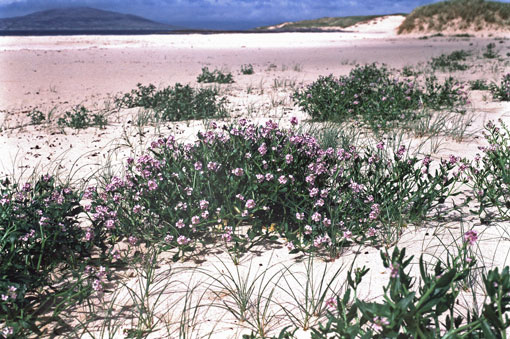
Source: https://www.geos.ed.ac.uk/~rsgs/ifa/gems/landformscarista.html

 His last major publication for the association, the Geography Teachers' Handbook (1996), which he co-edited with another former GA President Peter Fox, was a mammoth effort. This remained in print for many years until more recent editions were published.
Bailey's enthusiasm for his subject was infectious, his love of teaching boundless - sometimes he even found it difficult not to intervene in the classroom when advising and supporting students on teaching practice. He was equally at ease introducing interested lay people into the delights of town trails and countryside walks.
Behind the teacher/scholar, Patrick Bailey was a very compassionate, thoughtful and caring man, generous in his praise of work done well, and very supportive of his close colleagues as well as his tutees. It was a measure of his inner strength and belief - he was a Christian Scientist - that in spite of a very debilitating illness he continued to be stimulating, interested, alert, and active in promoting the cause of geographical education.
References
https://www.independent.co.uk/arts-entertainment/obituary-patrick-bailey-1195260.html -Obituary by Alan Sutton
Bailey, Patrick. “A Reply to Sir Keith Joseph's Seven Questions, from the President of the Geographical Association.” Teaching Geography, vol. 11, no. 2, 1986, pp. 64–67. JSTOR, JSTOR, www.jstor.org/stable/23751212.
https://www.geos.ed.ac.uk/~rsgs/ifa/gemlandforms.html - Patrick Bailey's images used in this book
King, Russell. “Geography in the School Curriculum: A Battle Won but Not Yet Over.” Area, vol. 21, no. 2, 1989, pp. 127–136. JSTOR, www.jstor.org/stable/20002700. Accessed 31 Oct. 2020.
Patrick Bailey was the first editor of 'Teaching Geography', which was introduced in 1975, at a time when new pedagogies were emerging. He was involved with the GA for the next 25 years.


He was also the editor of an edition of the first modern edition of the Secondary Geography Handbook: one of the most prominent publications of the GA.
To conclude his Editorial of the first issue of Teaching Geography P. J. M. Bailey wrote:
"The teaching of geography has never been so difficult or challenging as it is today. Unless geographers in the universities and schools help in some measure to interpret the problems of the changing world, geography will neither maintain nor deserve its continuing place in the curriculum. However, many of us believe that geography has important things to say about the human condition and that its distinctive message can and must be made effective in the schools."
The Obituary in the Independent provides a lot more information on Patrick's career. It was written by Alan Sutton.
He was born in London in December 1925.
He studied at Corpus Christi College, Cambridge, and then moved on to McGill University in Canada.
Patrick started his career as a Geography teacher, and he was also linked to Norfolk, and to several teaching jobs, including a school not far from where I live, called Wymondham College. We still play them at sport (Covid-19 has put an end to that temporarily).
He moved on to lecture at Ponteland College in Northumberland in 1964-8.
In 1969, he moved to the University of Leicester to get involved in teacher training and also do some teaching in the University of Geography, and stayed there for well over a decade, lending his knowledge and experience to generations of new geography teachers - something I've always thought of as a privilege when I've spoken to them.
In the late Eighties, he was significantly President of the association at a time when Geography was obliged by the then Secretary of State for Education, Sir Keith Joseph, to justify its place in the school curriculum.
In A Case for Geography (1987, co-edited with another former President Tony Binns), a spirited advocacy of the subject was argued on behalf of the members of the Geographical Association.
In 1969, he moved to the University of Leicester to get involved in teacher training and also do some teaching in the University of Geography, and stayed there for well over a decade, lending his knowledge and experience to generations of new geography teachers - something I've always thought of as a privilege when I've spoken to them.
In the late Eighties, he was significantly President of the association at a time when Geography was obliged by the then Secretary of State for Education, Sir Keith Joseph, to justify its place in the school curriculum.
In A Case for Geography (1987, co-edited with another former President Tony Binns), a spirited advocacy of the subject was argued on behalf of the members of the Geographical Association.

This appeared in a recent blog post.
His Presidential Address was entitled "A geographer's view" contributions of geography to the school curriculum".

In his address, which was relatively rare at the time in focussing on pedagogy and teaching, Patrick suggested that teachers needed to raise awareness in young people of the powerful knowledge of the subject.
He had a particular focus on map-making and map use and the graphical representation of information, mirroring, Billy Balchin's 'graphicacy' work.
From the introduction:
Geography is a view of the world. It is a unique way of observing and recording the
features of that world: of analysing our observations and experience and of setting them in
order. It is both a body of knowledge and a way of thinking.
Indeed, the way geographers
think determines what they study and also how they study it. It is my conviction that the
knowledge and the processes of thought which can be acquired through a study of
geography are valuable parts of a general education. They need not, indeed they should
not, be confined to lessons labelled 'geography'.
All geography starts with observation: with somebody, somewhere, going out and
looking at a part of the earth's surface. On that surface, two broad categories of
phenomena are to be observed: those which are natural and those which Mankind
produces.
Observations show that the two are often closely linked, reminding us that
geography is one subject, not two. Sometimes the links between what is natural and what
is of human origin are obvious, but more often than not they are subtle, indirect, hard to
observe, let alone to explain and understand.
The whole address is well worth reading.
Bailey finished by quoting the legendary H. J. Fleure.
H. J. Fleure once remarked that "Geography is the study of
things becoming".
This, I think, should be our watchword for the modern teaching of
geography.
Bailey was a keen photographer, and used his Zeiss camera to explore the 'Orkneys' and wrote a book about the island. A sample of his images are shared on this RSGS project website.
Here's one of his images of Scarista Sands on the Isle of Harris, taken in 1987
Source: https://www.geos.ed.ac.uk/~rsgs/ifa/gems/landformscarista.html
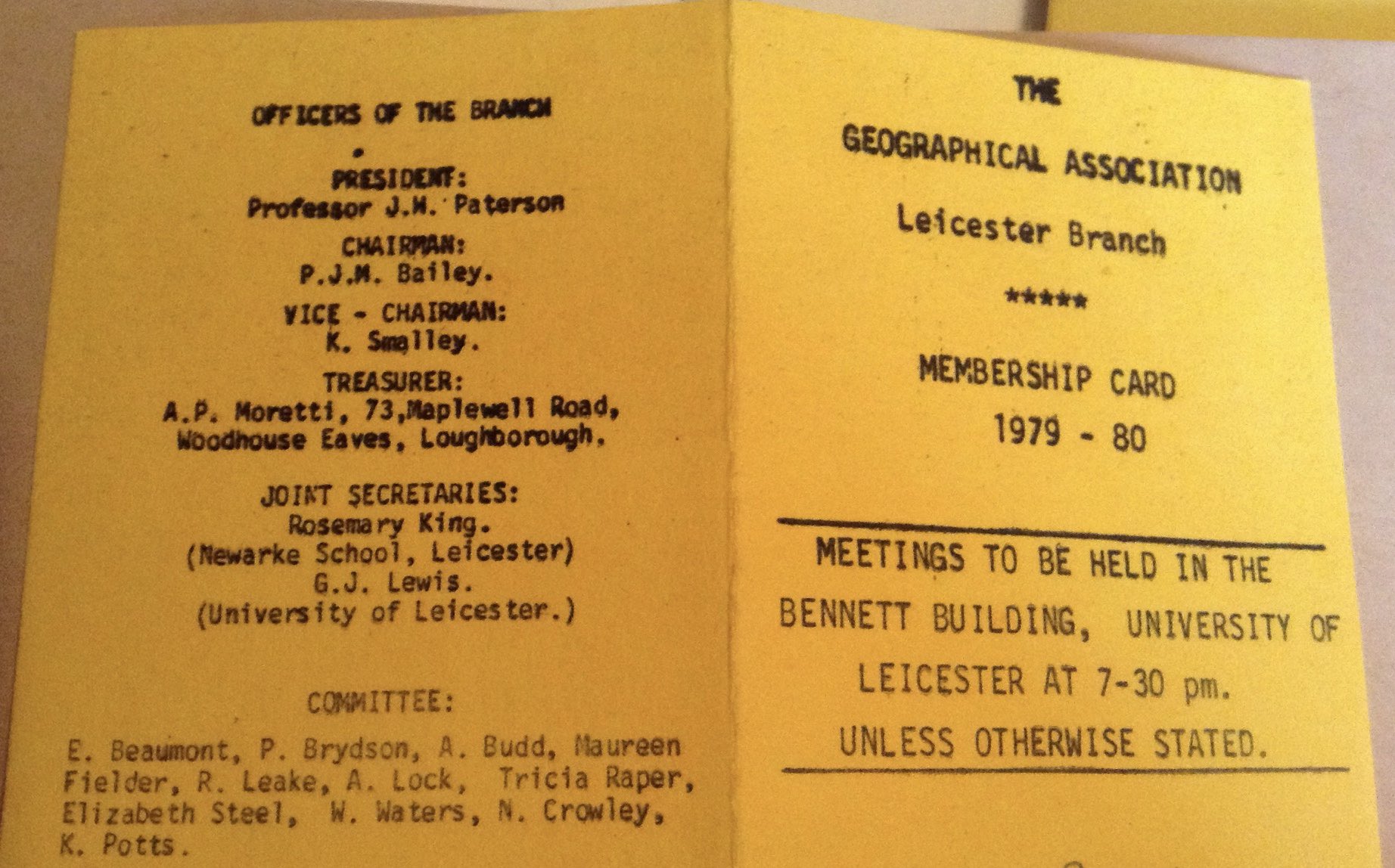
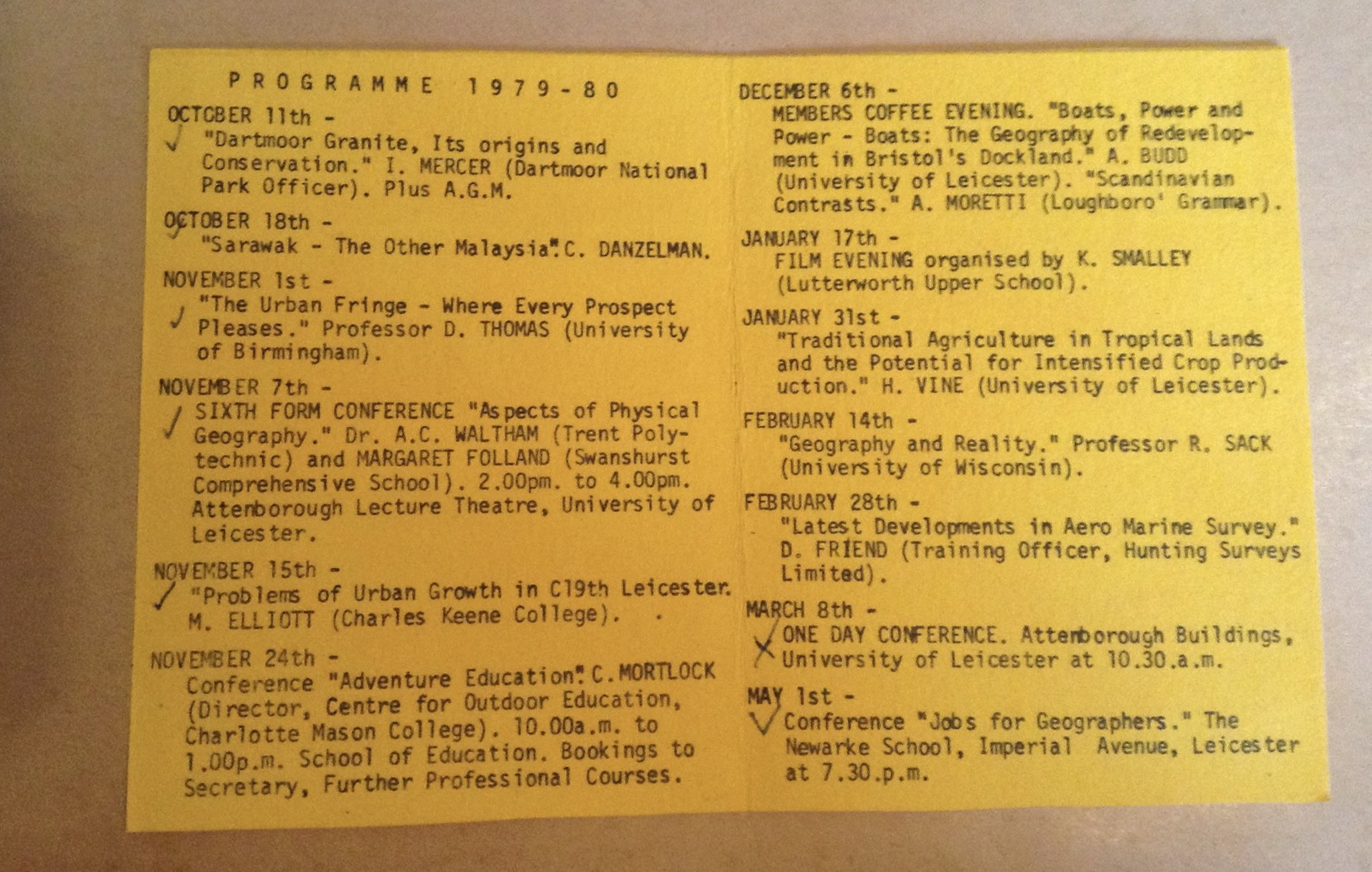
He was heavily involved in the Leicester GA Branch, delivering many lectures and organising other visitors to their meetings.

He was a prolific writer of books, articles and reviews.
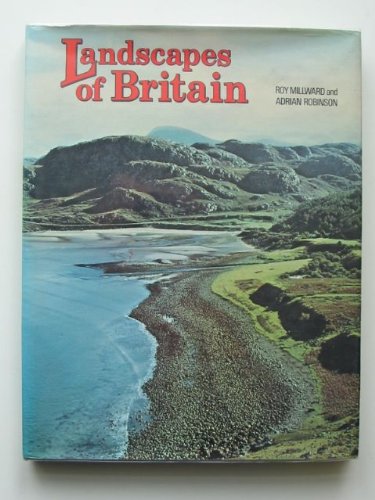
He was the author of The Norwich Area (1971) in the British Landscapes through Maps series - I have a copy of that particular publication - Orkney (1971), part of the Islands series, and also of Teaching Geography (1974).

Once Patrick retired from Leicester University, he continued to get involved with the teacher training at nearby Loughborough University.
Patrick is another former President whose involvement with the GA went far beyond his Presidential year, and for which the GA will always be grateful.
Patrick is another former President whose involvement with the GA went far beyond his Presidential year, and for which the GA will always be grateful.
Bailey's obituary by Alan Sutton paints a lovely portrait of his enthusiasm for the subject.
Bailey's enthusiasm for his subject was infectious, his love of teaching boundless - sometimes he even found it difficult not to intervene in the classroom when advising and supporting students on teaching practice. He was equally at ease introducing interested lay people into the delights of town trails and countryside walks.
Behind the teacher/scholar, Patrick Bailey was a very compassionate, thoughtful and caring man, generous in his praise of work done well, and very supportive of his close colleagues as well as his tutees. It was a measure of his inner strength and belief - he was a Christian Scientist - that in spite of a very debilitating illness he continued to be stimulating, interested, alert, and active in promoting the cause of geographical education.
Following his GA Presidency he became Honorary Secretary and also served as a Trustee for another decade.
Patrick Bailey was awarded an Honorary Fellowship by the Royal Geographical Society shortly before his death.
References
https://www.independent.co.uk/arts-entertainment/obituary-patrick-bailey-1195260.html -Obituary by Alan Sutton
Bailey, Patrick. “A Reply to Sir Keith Joseph's Seven Questions, from the President of the Geographical Association.” Teaching Geography, vol. 11, no. 2, 1986, pp. 64–67. JSTOR, JSTOR, www.jstor.org/stable/23751212.
https://www.geos.ed.ac.uk/~rsgs/ifa/gemlandforms.html - Patrick Bailey's images used in this book
Article on the creation of Teaching Geography:
Richard Daugherty also mentions Patrick in his article on the origins of 'Teaching Geography'.
King, Russell. “Geography in the School Curriculum: A Battle Won but Not Yet Over.” Area, vol. 21, no. 2, 1989, pp. 127–136. JSTOR, www.jstor.org/stable/20002700. Accessed 31 Oct. 2020.
Bailey, Patrick. “A Geographer's View: Contributions of Geography to the School Curriculum.” Geography, vol. 71, no. 3, 1986, pp. 193–205. JSTOR, www.jstor.org/stable/40571121. Accessed 31 Oct. 2020.
https://www.tes.com/news/geographer-dies?amp - TES mention in 1998
Image of Patrick Bailey room by Alan Parkinson, CC licensed
Image of Patrick Bailey room by Alan Parkinson, CC licensed
If anyone has more memories of Patrick Bailey they would be gratefully recieved. This initial post is a little briefer than Patrick deserves.
Updated September 2023
As mentioned before, Bailey was awarded Honorary Fellowship of the Royal Geographical Society in 1999. Here is the transcript of the citation:

Source:
“Meetings: Session 1998-1999.” The Geographical Journal, vol. 164, no. 3, 1998, pp. 365–72. JSTOR, http://www.jstor.org/stable/3060640. Accessed 16 Sept. 2023.
Obituary

Lewis, Gareth. “Obituaries: Patrick J.M. Bailey 1925-1998.” The Geographical Journal, vol. 165, no. 2, 1999, pp. 244–244. JSTOR, http://www.jstor.org/stable/3060432. Accessed 16 Sept. 2023.