Biographies of all the Presidents of the Geographical Association since the founding of the Association in 1893. Researched by Alan Parkinson (GA President 2021-22), with contributions from others, including the former Presidents themselves where possible.
Showing posts with label Games Based Learning. Show all posts
Showing posts with label Games Based Learning. Show all posts
I worked on behalf of the GA to produce the Education materials for the project.
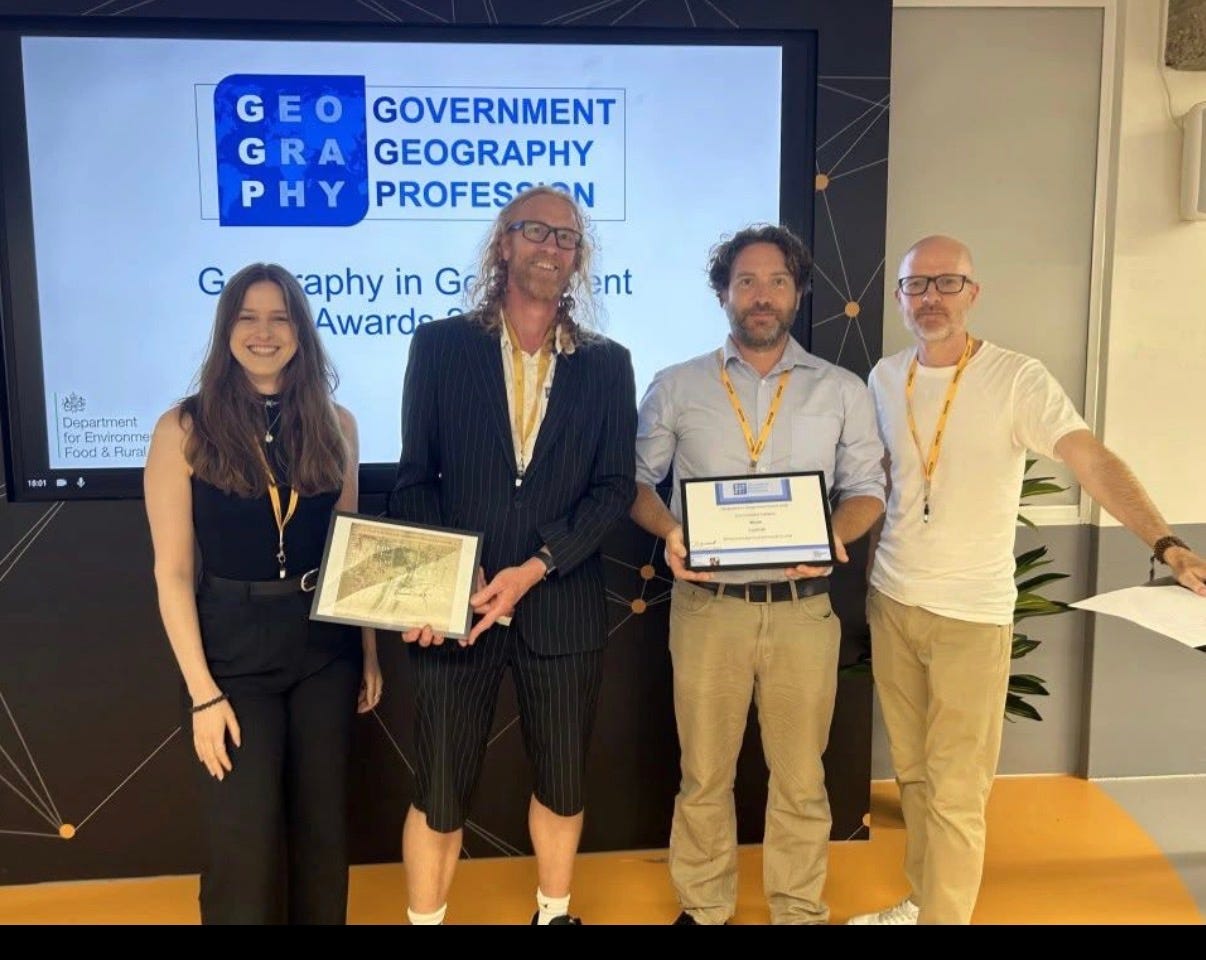
The Geography in Government (GiG) Awards are annual awards organised by the Government Geography Profession, recognisng outstanding applications of geographic knowledge and skills in government policy and practice.
The CoastCraft educational game was shortlisted for in the Communications category, which recognises government teams, individuals or products who effectively use geographic knowledge and skills to improve public communication. This includes creating clear, engaging and informative materials that help policymakers, stakeholders, and the public understand complex geographic data and its real-world impact.
The project is overjoyed that the CoastCraft game won in this category. It is a reflection of the value of educational gaming in improving coastal literacy and helping game users understand the challenges associated with adaptation pathways.’
This follows the BETT Award the project won in January of this year.
Learn about the features of coastal landscapes along with coastal processes.
Understand the characteristics of sand dune ecosystems, sand dune succession and how sand dunes are used as a nature-based solution for flooding and coastal erosion.
Explore a range of coastal management strategies to respond to predicted changes resulting from climate change and sea level rise.
Explore and visualise a range of potential futures influenced by the interactions with communities and stakeholders and the choices made by coastal managers.
And did I mention that we won a BETT award!
The Judges praised Coast Craft as an
“authentic digital learning experience that brings climate change and coastal geography vividly to life. By connecting curriculum content with real-world data and presenting it in a Minecraft-style environment, it enables pupils to learn through interactive simulations and understand the future impact of decision-making."
I worked on Coastcraft to create the Teacher Pack and also inform the creators about the best way to link to the curriculum, and what it should focus on. This work was as a consultant to the Geographical Association - another of many projects I've completed.
CoastCraft places the player in the role of managing the coast and making decisions for the needs of the community and the environment. The player can explore and visualise the future impacts of the decisions made and evaluate varying approaches to managing the coast.
CoastCraft is an educational game designed for students aged 9-14 (in England - Upper Primary Key stage 2 and lower secondary key stage 3.).
This game transports players to the coastal town of Bude in North Cornwall, modelled in Minecraft Education™ by BlockBuilders. Playing CoastCraft introduces students to the dynamic processes shaping coastal areas and challenges them to make decisions that balance the needs of various stakeholders while protecting the environment.
It was great to work with Tom Collins and colleagues from the Environment Agency. I learned a great deal from the coastal experts that were also involved in the project.
Learning objectives General
Learn about the features of coastal landscapes along with coastal processes.
Understand the characteristics of sand dune ecosystems, sand dune succession and how sand dunes are used as a nature-based solution for flooding and coastal erosion.
Explore a range of coastal management strategies to respond to predicted changes resulting from climate change and sea level rise.
Explore and visualise a range of potential futures influenced by the interactions with communities and stakeholders and the choices made by coastal managers.
Stage 1: Mini-games Mini-game 1: Storm Tower Erosion: 1. Learn about the processes of weathering and erosion acting on the coast. 2. Understand the impacts of coastal erosion on people and the environment. Mini-game 2: Dune Rollback and Succession: 1. Learn about the processes of sand dune formation. 2. Understand the characteristics of sand dune ecosystems, the process of sand dune succession and how healthy dune ecosystems develop. 3. Learn how sand dunes are used as a nature-based solution for flooding and erosion at the coast.
Stage 2: Main Game 1. Understand the concept of sustainability in relation to sustainable decision making in coastal locations. 2. Learn about the strategies and complexities of coastal management and how experts make informed decisions to manage coastal challenges. 3. Model how climate change, physical processes, and human decision-making interact to shape and transform coastal landscapes over time. 4. Explore and visualise a range of potential futures influenced by the interactions with communities, stakeholders and the choices made by coastal managers.
Please refer to the CoastCraft Teachers Pack in Supporting Files for more information.
I worked on this and I'm really pleased with how it's turned out. Here's the front cover. This can be downloaded from the link above and acts as a guide to coastal erosion as well as providing guidance on how the game works.
Finally, here's an excellent video guide made by Block Builders.
Caroline Douglass, Executive Director for Flood and Coastal Risk Management at the Environment Agency, said:
Coastal erosion is a natural and ongoing process and England’s coastline has never been static, but we know climate change is increasing the risks.
CoastCraft inspires young people to use their creativity to experiment with solutions to real world problems within the virtual Minecraft world, ensuring the next generation has the knowledge they need to face challenges now and in the future.
Floods Minister Emma Hardy said:
As a former teacher, I’m thrilled that CoastCraft will help young people understand the impacts of our changing climate, empowering a new generation of scientists.
This virtual Minecraft world brings coastal change in communities like Cornwall to life, to show how the risk of flooding and coastal erosion is increasing due to climate change.
We’re investing a record £7.9 billion in capital funding over 10 years to better protect these coastal communities and are committed to making sure flood risk management is fit for the challenges we face now and in the future.
Loic Rich, Cornwall Council’s cabinet member for environment and climate change, said:
We’re really proud that our coastal community of Bude serves as the backdrop to this innovative game that teaches young people about coastal and flood resilience.
We want to say a big thank you to students at Sir James Smith School in Camelford and Windmill Hill Academy in Launceston, both of whom worked with our climate adaptation team to help develop and test CoastCraft which can now be played by young people across the globe.
Simulation in the Classroom is a book in the 'Penguin papers in education' series. It is written by John Taylor and former GA President Rex Walford.
It explores the idea of role playing games and other simulations
There are a few examples of games in the book.
There is the classic Herefordshire Farm Game, which involves students taking over the management of Canon Pyon farm on the Welsh border and deciding which crops to grow in its fields, whose yields are dependent on the weather experienced in each year they are in charge. The game was developed by W. V. Tidswell and was a regular part of my teaching when I first started .
It works well.
There is also a game developed by another former GA President when she was still teaching: Sheila Jones. This was developed along with David Gowing. It is an Urban Growth model, based on the city of Bristol, and developed following a session as part of the Madingley Lectures in 1967.
Check out John Taylor's work on simulation as well.