Showing posts with label Headteacher. Show all posts

Friday, 22 January 2021

1997: Wendy (Morgan) Atkins

Updated December 2025

Wendy Morgan
was the first editor of 'Primary Geographer' when it launched in 1988-9, and the very existence of the journal is partly down to her efforts over the years. She is a 'rare' President in that she came from a Primary background.

Wendy Morgan was also the GA President when the GA officially opened its Solly Street HQ, having moved from Fulwood Road as described in recent posts on the blog. 
Wendy was the person who officially 'cut the ribbon' on what had previously been called 'Greco House' when it was opened in 1997.

She worked for a time at Elmsett Primary School in Suffolk.

"I made friends with a geography lecturer at the college and she encouraged me to attend a GA conference in the early 1960s, to see what the Primary Section was doing. In those days, the Primary Section comprised four men and one woman, who would meet together in the bowels of the London School of Economics. It was very much the Cinderella of the GA at that time. It proceeded from there and I became Chair after Ron Barker. Meanwhile, I became an assistant teacher in a leafy suburb of London and then head of Elmsett Primary School in Suffolk."

She was also part of the the National Curriculum Working Group which has been mentioned elsewhere on the blog, with the work of other GA luminaries including Eleanor Rawling, Michael Storm and Rex Walford (also all former Presidents) which did such important work during the late 1980s to shape school geography and the curriculum - important work for the GA over the decades since it was founded.

Other members of this NCWG were:

Mrs. Kay Edwards—Head of Geography, Penglais Comprehensive School, Aberystwyth
Mr. Richard Lethbridge—Former chairman, Tower Steel (Holdings) plc, now a branch secretary of the Country Landowners' Association
Mrs. Wendy Morgan—Recently retired headmistress of Elmsett Primary School, Suffolk
Dr. Keith Paterson—Senior Lecturer in Geography, Liverpool Institute of Higher Education
Mrs. Eleanor Rawling—National Co-ordinator, Geography Schools and Industry Project
Mr. Michael Storm—Staff Inspector for Geography and Environmental Studies, Inner London Education Authority
Mrs. Rachel Thomas—Member of the Countryside Commission and Exmoor National Park Committee
Mr. Rex Walford—Lecturer in Geography and Education, University of Cambridge

It's worth reading this interview in the TES, which provides a lot more information about her work to promote Primary Geography.

Wendy's Presidency took us back to former teachers being GA President as well, which was rare in a period when a lot of teacher educators and academics held the post. The 90s and early 2000s were light on teacher Presidents.

This was also in the run up to the increasing professionalisation of the GA.

Wendy edited the first 23 issues of the GA's Primary Geographer journal as well, which is a fantastic contribution as each journal takes a lot of effort to produce to a high quality that is expected of GA publications. The journal currently has guest editors from within the Primary community rather than a permanent editor, which provides a number of different perspectives across the year and the Primary Geography Editorial board is chaired by a former President Steve Rawlinson.

This is the announcement of Wendy's Presidency in the GA News at the time.


Simon Catling told me:

Wendy Morgan was interviewed in Primary Geography recently. Wendy was a primary teacher who was briefly a rural school head. 
She was involved with the old Primary and Middle Schools Committee for many years, was its secretary and chaired it during the mid/latter 1980s into the 1990s.
Wendy says in the interview in PG journal that: 
I wasn’t a trained geographer. I did set out to be a geography graduate but was turned down because I didn’t have Latin, so I wasn’t able to pursue it that way.

Wendy was awarded for her efforts over the year with Honorary GA Membership.
This was recorded in the GA News also.

Simon Catling, former President said of her Presidency: 

Wendy Morgan (1997-98) brought the freshness of the primary teacher to her year, as well as her long service on the Primary and Middle Schools Committees. 
In an interview with the TES in 1998, she talked about her first experiences with geography:

As with many geographers, she explains the importance of family holidays:

When Wendy Morgan was preparing to sit her geography O-level in the 1950s, her father didn't buy her a revision guide. "He realised that I had never seen a mountain, because we lived on the outskirts of London, so he whisked me up to the Peak District on a train one Saturday," she recalls. "Dad was an engineer, not an educationist, but he had a very wide interest in places he'd been to and fantastic knowledge. I grew up in the war, and people didn't travel about much, but he remembered everywhere he'd ever been. There's so much opportunity for fieldwork, taking children outside. You can do a huge amount inside the school grounds. Then there's another wonderful dimension just beyond the school gates, then the excitement of bringing places overseas close to home."

She collaborated with Vincent Bunce on a number of her writing projects.

Bill Chamber, President in 2004 described her as follows:
She was the first Primary School President of the GA. She was responsible for the launch of the journal Primary Geographer and was its first editor. She was an indefatigable and creative person. She was responsible for the St Lucia Resources Pack which was used by many primary schools in the early days of the Geography National Curriculum. 

Her GA Presidential theme was called 'Geography for All'. 
Her address was given at the University of Leeds.

She starts by describing herself as an "amateur geographer".


She was particularly active in promoting Primary geography within the GA:

She was the only primary teacher on the national curriculum geography working group, was instrumental in doubling the primary membership of the GA, and launched its influential journal, Primary Geographer, which she edited until 1995.

As a freelance lecturer and consultant she also provided the training and inspiration that non-specialists needed to break new ground in the subject, including three years at Homerton College, Cambridge.

"I've made it my crusade to try to help teachers with no background in geography, who may have given it up at 14, who were at first horrified by the demands of the curriculum," she says. There was little advice available during her own 27 years in the classroom: "I relied heavily on the association for support."
Others have talked about this.

References

Interview in the TES, 1998: https://www.tes.com/news/top-mountainsubject-week-geographyinterviewwendy-morgan

Article in 'Primary Geographer' from Spring 2019 with an interview

https://www.geography.org.uk/Journal-Issue/689d27ef-ae38-4403-9943-a67e667d5c0d
Chapter in this book:
https://www.taylorfrancis.com/books/primary-school-geography-bill-marsden-jo-hughes/e/10.4324/9781351028783 

1987 Primary Geography Article
Morgan, Wendy. “Making Opportunities for Primary Geography.” Teaching Geography, vol. 12, no. 4, 1987, pp. 149–151. JSTOR, www.jstor.org/stable/23751406. Accessed 20 Jan. 2021

A mention in Graham Butt's PhD thesis:
https://core.ac.uk/download/pdf/76353.pdf
Graham mentions that Wendy was annoyed that she was the only Primary representative on the Working Group, and thought there should be more representation... she also felt that she was not always listened to, and also that Primary specialists should be listened to, rather than Secondary making decisions on what they should be learning. She felt there was a "golden thread" running through Primary Geography that needed to be appreciated more.
If you are interested in how a National Curriculum comes about, it's worth having a look at this document to see how this group worked, as there are plenty of comments to show the involvement and relative influence of other Presidents: Eleanor Rawling, Michael Storm, Rex Walford and others.... 

Presidential Address:
MORGAN, WENDY. “Geography for All.” Geography, vol. 83, no. 4, 1998, pp. 301–307. JSTOR, www.jstor.org/stable/40573103. Accessed 16 Jan. 2021.

Wendy wrote the book 'Plans for Primary Geography' and also a series of Primary study units called 'Geography in a Nutshell'.

1998 Conference Logo - a really inclusive Conference theme


Image is taken from this article.

Updated August 2022

An image of Derek Spooner and Wendy which was taken at the Centenary Conference in 1993. The best image I've found of Wendy so far and was taken at the Long Standing members dinner I believe.


Further details on Wendy very welcome. This is still a relatively short entry on the blog.

Wednesday, 22 July 2020

1972: Mr. Alan Durward Nicholls

Updated November 2023

Alan Nicholls
was another of those relatively rare people who was a geography teacher when he became GA President, and a great proponent of Environmental Studies. 


In Balchin's Centenary book, he is described as an "active Head teacher" and in an Annual Report in 1971 as a "revered practising schoolmaster".

I delved and found out that he served on the Secondary Section Committee (as I did for many years) and was a member of the Central London Branch of the GA - which suggests he taught in London, and later found out that he succeeded another GA President Leonard Suggate as the Head of Geography at St. Clement Danes School in Hammersmith, London.

Here's an image from a Facebook page for the school. For a while, the only one I could find.

New Geographies over Forty Years was the name of his Presidential Address, given in January 1973, and by all accounts from the description, a humorous one, although it was not apparently printed in 'Geography' and not available to view unfortunately. I wonder whether a copy exists anywhere?

1971 saw a surge of interest in the quantitative methods, so perhaps he referred to those, and how the might translate into school geography? I would like to guess that he did, given the timing of his address a few years after the Madingley Conferences.

In that year, the GA Spring Conference (as it was called) was held at the London School of Economics, where it was held quite regularly.
Prior to being President, Nicholls was also Assistant Honorary Treasurer of the GA as well - another President to hold that significant (and voluntary) role.

Environmental Studies was one area of interest which he pursued, and this is a reminder of the different strands of geography which are picked up by different Presidents for their theme, address and also perhaps areas of interest while in the Presidency.
This area was also picked up in the Professorial Address of C. A Fischer, I have previously blogged about from my British Library research.

Nicholls article on Environmental Studies was also useful - see the link below


This was featured in a book on the development of this branch of Geography


Nicholls was chosen as the GA's representative on the Inner London Education Authority (ILEA) geography board in 1966, and I assumed from early research that he was more of an academic geographer, but this was not the case.

I presumed from that appointment he taught in London, and that was what Richard Daugherty (another former GA President) thought when I asked him about connections with Presidents who were in post near to his own Presidency.

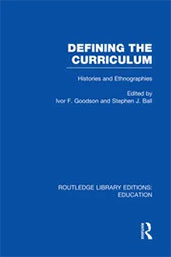
Defining the CurriculumHe is mentioned in this book 'Defining the Curriculum'.

Ten years ago almost to the day and from this platform, Professor Kirk said 'modern geography was created by scholars, trained in other disciplines, asking themselves geographical questions and moving inwards in a community of problems; it could die by a reversal of the process whereby trained geographers moved outwards in a fragmentation of interests seeking solutions to non-geographical problems'. Might not this be prophetic for us today? Could it not all too soon prove disastrous if the trained teachers of geography moved outwards as teachers of environmental studies seeking solutions to non-geographical problems? (Nicholls, 1973, p. 201)

A contribution described here is from Nicholls too.

This quote would also chime with those who explore the value of teacher subject knowledge, a current interest of many.

Following another thread, I found a small obituary tucked away in Geography in 1981.
He was born in 1910 in Cornwall, and died in 1981. He went to Truro School. He was made an Hononrary Member in 1980 just before his death.


I'm grateful to Fiona Hirst, archivist from the Clement Danes School for sending me another image of Alan Nicholls from later in his career.


References

Book link: https://books.google.co.uk/books?id=W9GHPA3zK0IC&lpg=PA1651&dq=mr%20a%20d%20nicholls%20geographical%20association&pg=PA1651#v=onepage&q&f=false 

NICHOLLS, A. D. “Environmental Studies in Schools.” Geography, vol. 58, no. 3, 1973, pp. 197–206. JSTOR, www.jstor.org/stable/40568109.

“The Geographical Association.” Geography, vol. 66, no. 4, 1981, pp. 320–322. JSTOR, www.jstor.org/stable/40570442.

I managed to find some images on a Facebook group page that was dedicated to the school, including an excellent image shared from a field trip back in 1953. This is one of my favourite images on the whole blog.

Thanks to the people who put the website together.
Here's Alan Nicholls on a Geography fieldtrip (presumably to North Wales)
Top of Snowdon, North Wales, 1953. Photograph taken by Jack Harvey and sent in by Geoff Skinner


He is fourth from the right on the front row and is described as "Old Nick" which seems fair. He seems to be having a good time as well. Some good fieldwork wear on display here, and great to see a President actually 'in action' doing some geography.

Thanks to Fiona Hirst for the additional details and image from the school magazine 'The Dane'

Updated November 2023

Revisiting past Presidents to see if I could find updates and came across an obituary in the RGS's Geographical Journal.


This reinforces his links with the RGS as well as the GA. He was the Chairman of their Education Committee and also served on Council. He studied at the University of Exeter. He travelled extensively.
He was a Cornishman.

"Good teachers are keen on their chosen subject and find it stimulating."


“Obituary: Alan Durward Nicholls (1910-1981).” The Geographical Journal, vol. 147, no. 3, 1981, pp. 394–394. JSTOR, http://www.jstor.org/stable/633763. Accessed 1 Nov. 2023. 

Thursday, 24 October 2019

1946: Sir Cyril Norwood


Updated August 2023

Following the Second World War, the Presidency returned to a one year tenure, and has stayed that way since. The first post-war President was Sir Cyril Norwood.

The career of Sir Cyril Norwood, who took on the role in the immediate Post War period, is tied up with that of Clement Cyril Carter, who was President at the outbreak of the Second World War and held the post for several years. It must have been a great delight to Carter to be followed a few years later by someone who had no doubt nurtured him and supported him in his own teaching.

It is also the story of someone who influenced the education of generations of schoolchildren, as well as giving a lifetime of service as a teacher, Headteacher and leadership of the HMC, which continues to this day.

Norwood was the son of a Reverend and educated at Merchant Taylor's School, and the University of Oxford.
He was a classics schoolmaster at Leeds Grammar School (1901–1906), before serving as Headmaster of Bristol Grammar School (1906–1916), Master of Marlborough College (1917–1925), Headmaster of Harrow (1926–1934) and President of St John's, Oxford, from 1934-1946.

That's quite a list of schools to have been linked with, and an Oxford college to conclude his career.

Cyril Norwood was Master at Marlborough College, and this is where C C Carter taught at the same time.
There is a Norwood Hall at Marlborough College named after him. I may even try and get to see it as part of my Presidential year travels.

Norwood was knighted in 1938 for services to education.

He had a major influence on the 1944 Education Act, and the division of schools into three categories, which persisted for decades. I started my secondary education after other changes had taken place such as ROSLA, and the introduction of Comprehensive schools - some of the books and folders I used still had 'High School' written on them.

R. A. Butler, then minister for education, chose Norwood to chair a committee on secondary education, which produced a report on Curriculum and Examinations in Secondary Schoolsthat in turn influenced the 1944 Education Act, setting out the template for the division of state schools in England into three categories: secondary modern, technical, and grammar.
Little wonder that Gary McCulloch described Norwood as “one of the most prominent and influential English educators of the part century”. He was also a died-in-the-wool establshment figure who had passed the civil service entrance examination before devoting himself to a career in education. He served as a teacher in Leeds Grammar School, then as Master of Marlborough College, then headteacher of Harrow for eight years, before becoming Master of an Oxford College in 1934.
(Source)

Book link to read: https://epdf.tips/cyril-norwood-and-the-ideal-of-secondary-education-secondary-education-in-a-chan.html

He had a long career in teaching before he took over the Presidency, at the age of 70 years old.

His Presidential address was simply called 'Geography', and he started by reminiscing about what he had noticed during his 'three score years and ten'.


He started with a useful and positive quote saying:
"there is no subject in the school curriculum which has improved in scope and content more than geography".
"the true geographer finds nothing human alien to his interest"

A book on Norwood's contributions to the development of education was written by G McCulloch

Norwood also co-wrote Carter's obituary.

Norwood retired to Iwerne Minster in Dorset where he died in 1956.

A building is named after him as part of Bristol Grammar School's Elton Road Houses and is primarily used for the teaching of modern languages. 

Marlborough College has not forgotten him. 
The main dining hall at Marlborough College is named the Norwood Hall. 
Norwood also wrote the lyrics, in Latin, for Bristol Grammar School's song, Carmen Bristoliense, which is still sung today apparently.

During his career he fulfilled other prominent roles, including: Chairman of the Secondary School Examinations Council (1921-46); Chairman, Allied Schools (1934-54); and Chairman of the Committee on Curricula and Examinations, which in 1943 produced the influential report Curriculum and examinations in secondary schools (the "Norwood Report") which led to the post-war tripartite system of secondary education. 
A committed Christian, he was also President of the Modern Churchmen's Union (1937-47).

His publications, in addition to the Norwood Report, include: The higher education of boys in England (1909), The English educational system (1928), and The English tradition of education (1929).

I contacted Marlborough College to see if their archivist could help fill in some gaps in his entry, given his long association with the school.

Grainne very kindly sent me a range of additional information on Cyril Norwood, as she did previously for Clement Cyril Carter (see that entry)


Educated at Merchant Taylor’s School and Scholar of St John’s College, Oxford, 1st Lit. Hum.
Civil Service (Admiralty) 1899-1900
Assistant Master Leeds Grammar School 1901-06    
Head Master Bristol Grammar School 1906-16
Master Marlborough College 1916-25
Member of Marlborough College Council 1926
Head Master Harrow School 1926-34
Hon. Fellow of St John’s College, Oxford 1927, President 1934-36
Chairman of Secondary School Exam Council 1921-46
Editor of Report on Curriculum and Examinations 1943
Past chairman of Head Masters Conference
Knighthood in 1938

Quite a CV

She sent an image of Norwood with the Duke of Connaught, from 1925, the only photograph I could source of him. He's on the left in the image.


Grainne also sent me an image of Norwood's obituary in the 

References

Norwood, Cyril. “Address to the Geographical Association.” Geography, vol. 31, no. 1, 1946, pp. 1–9. JSTOR, www.jstor.org/stable/40563684.

Wikipedia page: https://en.wikipedia.org/wiki/Cyril_Norwood

I added his GA Presidency to this page, as I have with all the other GA Presidents.

https://thelearningprofessor.wordpress.com/2015/03/04/cyril-norwood-and-a-national-labour-service/

https://discovery.nationalarchives.gov.uk/details/r/df921236-0085-49e4-8360-da7efdf7bbb6

https://link.springer.com/chapter/10.1057/9780230603523_3

http://www.educationengland.org.uk/documents/norwood/norwood1943.html

Papers at Sheffield University: https://www.sheffield.ac.uk/library/special/norwood

Book: https://epdf.pub/cyril-norwood-and-the-ideal-of-secondary-education-secondary-education-in-a-chan.html

https://books.google.co.uk/books?id=LvJ5CwAAQBAJ&lpg=PT293&ots=_1Lsigvfcz&dq=cyril%20norwood%20geography&pg=PT293#v=onepage&q&f=false

http://www.educationengland.org.uk/documents/norwood/ - the Norwood Report

If anyone has further information on Cyril Norwood, please get in touch.

Update - late October 2019

Here's a YouTube clip of Dr Cyril Norwood, as he was then, welcoming boys back to Harrow School for the new year in 1926 as their new Headmaster.
An early clip of a GA President.


Updated August 2021.


https://thelearningprofessor.wordpress.com/2015/03/04/cyril-norwood-and-a-national-labour-service/ 

https://www.theguardian.com/books/2014/oct/15/nicol-russel-obituary

At his 90th birthday, Nick recalled a "lost" poem composed by Larkin one evening at dinner, mocking the then president of St John's: 
"If approached by Sir Cyril Norwood
Any respectable whore would
Charge double
For her trouble."

Updated August 2023
On the Norwood Report


“The education that has so far been given to the people is at most partial and second best, and has little in common whether in range or in spirit with the universal education that may be. It was but the least possible with which the people would be contented, and it was calculated to equip not citizens, but servants… But education has to fit us for something… so incomparably precious that it will save a man from being a mere unit, a cipher: it will give him a life of his own, independent of the machine. And therefore at any cost our education must never sink to the level at which it will be merely vocational.” (1929)

There is plenty to read of Norwood's time at Harrow, and opposing views on how successful it was.

McCulloch, Gary. “Cyril Norwood and the English Tradition of Education.” Oxford Review of Education, vol. 32, no. 1, 2006, pp. 55–69. JSTOR, http://www.jstor.org/stable/4618644. Accessed 24 Aug. 2023.

I found this quote, which needs to be referenced:


A few thoughts on girls...

Daily Mail October 1928:

When you consider the 100,000 or so of girls of 12 to 18 who are now being educated in the secondary and public schools - the number has increased two and three times since the war - is it not very short-sighted to suppose that a stereotyped course of learning will suit all of them? The majority will eventually marry. At school they are taught exactly as if they were going on to university (quoted in McCulloch 2007:70).


Saturday, 27 April 2019

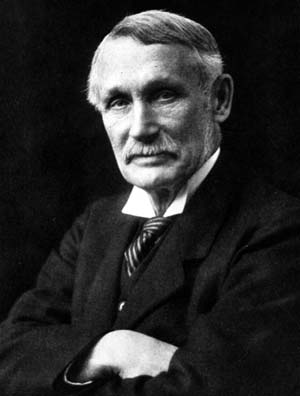
1912: Dr George Robert Parkin, KCMG DCL LLD

George Robert Parkin.jpgUpdated August 2023

Following the departure of Douglas Freshfield, the following President had a particular responsibility to oversee the next stage in the Association's development.

At this time, a decision was made to bring in distinguished outsiders with geographic interests to strengthen the standing of the Association.

George Robert Parkin was just such a person. 

He was the organising Secretary of the Rhodes Scholarship Trust when he was elected, having been a GA member for some time, and also contributing to 'The Geographical Teacher' using his knowledge of the Empire.

Rhodes is of course problematic by association.


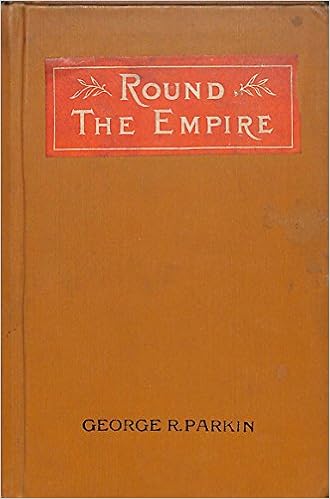
The book referred to seems to have been written in 1892 for use in schools, and was called 'Round the Empire'.

Cecil Rhodes himself was particularly problematic and there has been a campaign to have his name removed from buildings at a number of universities and statues removed. This Empire connection needs unpicking.

To see Mr. Parkin's Presidential Address, see the following link:

PARKIN, G. R. “THE PRESIDENTIAL ADDRESS.” The Geographical Teacher, vol. 6, no. 4, 1912, pp. 189–198. JSTOR, JSTOR, www.jstor.org/stable/40554149.

One might want to avoid reading p.192-3 of that address though, as it seems to express views that wouldn't be ideal to express today on the impact of the cold temperatures of Canada on immigration patterns.

One of the things that has started to emerge in the years since the turn of the 21st Century has been the connections between organisations and universities and some attitudes and activities which are no longer 'politically correct' and need to be addressed directly.

(See update at the end of the post)

Other quotes are more interesting and relevant perhaps:

 "There is one thing more that I should like to say. If you take an interest in the political thought of this country, it is absolutely impossible to make that adequate unless you teach the people geography. Anyone who does not know the essential needs of this country, that it draws its raw materials from the ends of the Earth and sends back its manufactures to the ends of the Earth, who does not know the sources of that supply, the conditions which exist on both sides, and the necessity of communication between the two in order to secure our national life, is not fit to be a voting citizen of this Empire."

The association with Cecil Rhodes is also one that has been revisited by a number of universities, including the University of Oxford with the Rhodes Must Fall campaign active at the moment.

George Robert Parkin was born in New Brunswick in Canada in 1846, the son of a Yorkshire farmer. His biography is an interesting one, and can be read in more detail on the Wikipedia page linked to below.

He travelled widely in his role with the Rhodes Scholarship, and became knowledgeable about the Empire and its geography. He seems to have been a Headmaster - hence the education connection.

He was awarded the KCMG in 1920, along with other honours in his lifetime. 

I wonder whether this practice of awarding honours to GA Presidents might be resurrected.

Parkin contributed a number of articles to 'The Geographical Journal' in its early volumes, often co-authored with Halford MacKinder. 
He also worked as a correspondent for 'The Times' newspaper in the late 1890s.

Interestingly, he was also involved in the production of a map of the Empire, published by Bartholomew.


Read the review of this resource and you can see that even back in 1903, the Mercator projection was not being favoured by the Geographers who used these maps, and wanted "a large, clear physical wall map of the World on an equal area projection", which "would be a boon to every progressive teacher of geography."

Also in 1912, according to 'The Geographical Teacher':

"The number of members is now 1,000, an increase of 38 during the year. While 137 old members have been lost by death, resignation, or lapse of payment of subscription, 175 new members have joined."

A reminder of the rapid turnover in membership that can often occur in any organisation, and which the GA is always mindful of.

Source: The Geographical Teacher, vol. 2, no. 2, 1903, pp. 93–93. JSTOR, www.jstor.org/stable/40554264.

References

https://en.wikipedia.org/wiki/George_Robert_Parkin - describes Parkin as an educator, imperialist and author.

I edited the Wikipedia entry to add the fact that he was the President of the Geographical Association. I shall do that for each President, as hardly any of their entries mentioned that before I started the blog.

PARKIN, G. R. “THE PRESIDENTIAL ADDRESS.” The Geographical Teacher, vol. 6, no. 4, 1912, pp. 189–198. JSTOR, JSTOR, www.jstor.org/stable/40554149.

Amazon page for 'Round the Empire' book: https://www.amazon.co.uk/Round-Empire-George-R-Parkin/dp/B001AV3JBU

Further research opportunity:

https://lib.unb.ca/archives/finding/parkin/parkin.html - University of Brunswick archive, which has some documents relating to Parkin

If anyone can supply further information relating to George Robert Parkin, please get in touch.

Update April 2019

Thanks to the GA's Chief Executive Alan Kinder for this perspective on the importance of reading outdated views involving 'environmental determinism' as they have not necessarily been consigned to History and are part of the ongoing EDI work the GA is engaged in:

Updated November 2019
Parkin wrote a book about the history of the Rhodes Scholarships, now the Rhodes Trust
https://archive.org/details/rhodesscholarsh01parkgoog/page/n11

More details here:
https://www.rhodeshouse.ox.ac.uk/about/history-of-the-rhodes-trust/

Updated November 2020

This is one of several tweets that I came across. Parkin's association with the Rhodes Scholarship and Oxford University is noted.

Updated July 2022

Updated August 2023 

Article in the New York Times archive from 1919 on post-war education.

A link to a book that he owned describes him as:

"a biographer of Sir John A. Macdonald and Headmaster of Upper Canada College"

1895: George R. Parkin appointed eighth principal of UCC

1923: Parkin Building opens

Named after Parkin?


John Macdonald was the first Prime-minister of Canada.

Margaret Mackintosh RIP

Updated post. Sad news at the end of last week from colleagues who have organised the Charney Conference over the years of the passing of Ma...