Showing posts with label RSGS. Show all posts

Tuesday, 29 November 2022

Congratulations to Alan Kinder

The GA's Chief Exective, Alan Kinder has been awarded an Honorary Fellowship by the Royal Scottish Geographical Society.

The certificate was presented by the current GA President: Professor Alastair Owens earlier this month.

Well done to Alan. I was presented with Honorary Fellowship myself back in 2013, when I also received their Joy Tivy Education Medal.


Image: Alan Parkinson, shared under CC license 

Saturday, 21 May 2022

COBRIG Meeting

As part of my Presidential journey I was asked to attend a meeting of COBRIG: the Council of British Geography.

This includes members from the following organisations - some educational and others from awarding bodies, inspectorates and government bodies. 

British Science Association (Geography group recorder) (BSA)
Conference of Heads of Geography in British Universities
Council for Curriculum, Examinations and Assessment, Northern Ireland (CCEA)
ESTYN
Geographical Association (GA)
Office of Standards in Education, Children’s Services and Skills, England (OFSTED)
Royal Geographical Society (with the Institute of British Geographers) (RGS with IBG)
Royal Scottish Geographical Society (RSGS)
Scottish Association of Geography Teachers (SAGT)
Welsh Joint Education Committee/Cyd-bwyllgor Addysg Cymru (WJEC / CBAC)

COBRIG has been in existence since 1988.

It was created:

"to advance the interests of geography, and is made up of all the main organisations of geographers and geographical educationists in Britain."

Prominent among its initiatives in the educational context has been the recent COBRIG-inspired Geography into the Twenty-First Century (Rawling and Daugherty, (1996)), which has at its heart the central issue to which this article has been addressed: putting the  geography back into geographical education. This offers the basis of a fruitful agenda as represented, among other things, in Haggett’s delineation of ‘the central and cherished aspects of geographical education: a love of landscape and of field exploration, a fascination with place, a wish to solve the spatial conundrums posed by spatial configurations’ (Haggett, 1996, p. 17); in Johnston’s advocacy of a refreshed, dynamic, and distinctive place geography (pp. 73-4); and in Jackson’s concern for developing sensitivity to place connections at a variety of scales (p. 91); or, as Allen and Massey have put it: 

‘We live local versions of the world and in so doing we have to locate ourselves within a wider global context. We only understand the changes taking place in our own backyard when we begin to understand how changes taking place elsewhere affect our world’ (1995, p. 1)

Source: https://www.open.edu/openlearn/pluginfile.php/631169/mod_resource/content/1/geog_sk6_06t_5.pdf 

Neil Simmonds and Eleanor Rawling were originally involved from the GA's perspective, along with Richard Daugherty.

COBRIG previously ran seminars for geographers as well through the 1990s in particular.

This meeting was held at the Royal Geographical Society - the first time I'd been there for about three years and it was good to be back in such a historic location.

It was lovely to meet some old friends - particularly Erica Caldwell who was representing SAGT / RSGS, and also to make new acquaintances.


Image: Alan Parkinson, shared under CC license.

Sunday, 14 March 2021

Saturday, 18 January 2020

Joy Tivy

Updated July 2023

In 2013, I was delighted to receive the Joy Tivy Education Medal from the Royal Scottish Assocation for Geography Teachers, presented to me by Professor Iain Stewart.
A more recent winner of the award was the late Sir Ken Robinson.


It is awarded for exemplary, outstanding and inspirational teaching, educational policy or work in formal and informal educational arenas. 

Joy Tivy after whom the medal is named, is a name that has cropped up several times during the production of this blog.
From her Wikipedia page, shared under CC license

Human Impact on the Ecosystem (Conceptual frameworksJoy Tivy was a 20th century Irish physical geographer at the University of Glasgow. 
She specialised in biogeography and has been credited for having helped raise the profile of biogeography as a distinct sub-discipline of geography. She published over 40 papers, books and reports and she was often asked to advise government agencies and other organisations.
She was a strong advocate of the importance of field studies for providing essential skills for geography graduates.
Her capacity as a teacher was as highly regarded as her research — she was known to be enthusiastic and engaging to a wide range of audiences - a medal has been created by the Royal Scottish Geographical Society in honour of her commitment to Geographical Education and Teaching.

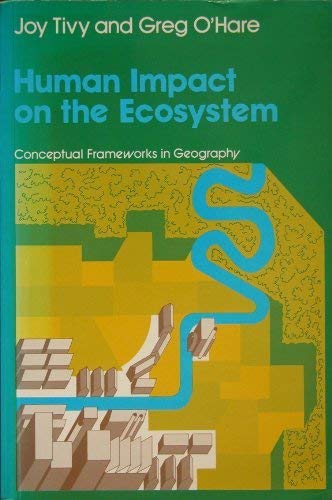
She was the co-author of a book which I used during the early part of my teaching career when teaching 'A' level Geography. It is shown here. Some of you may recognise it. It's a classic, which helped biogeography become more recognised.


Sunday, 8 September 2019

1934: Rt. Hon Lord James Scorgie Meston

Last updated August 2023

When I started this blog post, I couldn't find a great deal about Lord Meston's geographical 'credentials', so had to do a little more digging than usual. 

We are moving into a period when the Presidents don't have Wikipedia pages which are as detailed in all cases as some of the earlier, or slightly later ones.

I then came across a piece on the RSGS website, which gave me a way in to finding out more.

Lord Meston was involved with Geography for many years it seems, particularly in Scotland, although there was still little about his time at the GA.

On 24th October 1934, the Royal Scottish Geographical Society celebrated its Golden Jubilee. The newspapers were full of the arrival of the Duke and Duchess of York, who were visiting the Society as representatives of its Patron, King George V.
In the Usher Hall in Edinburgh, RSGS members joined delegates from other scientific and geographical societies at an afternoon reception for 2,000 guests. This was the opening session of the Society’s Edinburgh branch, and the Duke of York had agreed to present some awards. Among the recipients were Isobel Wylie Hutchison, who was awarded the Mungo Park Medal for her explorations in the Arctic, and Lord Meston of Agra and Dunnottar, who received the Scottish Geographical Medal “for distinguished services to geography over a period of many years.” 

After the ceremony, Lord Meston, a statesman whose family hailed from Aberdeen, addressed the company on the subject of India.

Source: https://rsgs.org/the-kings-speech/

His interests were wide, and he was also the President of the Royal Statistical Society.
There was a strong connection with the Royal Scottish Geographical Society, which continued.

He received the Scottish Geographical Medal from the Royal Scottish Geographical Society in 1934. This led me to a useful biography, and as an RSGS medal winner myself gave me a connection with Scorgie Meston.

Sir James Scorgie Meston. 1st Baron Meston KCSI, was a prominent British civil servant, financial expert and businessman. He served as Lieutenant-Governor of the United Provinces of Agra and Oudh from 1912 to 1918. He passed the Indian civil service examination in 1883 and was posted to the North-Western Provinces and Oudh in 1885 (which later became the United Provinces of Agra and Oudh), where he was director of land records between 1897 and 1899 and financial secretary to the government between 1899 and 1903. From 1905 to 1906 he briefly left India to act as an adviser to the Cape Colony and Transvaal governments in South Africa.

After his return to India in 1906, Meston was secretary to the finance department of the government of India until 1912, when he was appointed Lieutenant-Governor of the United Provinces of Agra and Oudh. He remained in this position until 1918, when he became finance member of the Viceroy of India's executive council. In 1917, along with Sir Satyendra Prasanno Sinha and Maharaja Ganga Singh, he assisted the Secretary of State for India in representing India in the Imperial War Cabinet and Conference.
After the war, Meston, along with Lionel Curtis, was the main designer of the Institute of International Affairs, and served as chairman of its first governing body from 1920 to 1926, of its publications committee and of the editorial board of International Affairs. Apart from this, Meston was also vice-chairman of the Supervisory Commission of the League of Nations. He sat on the Liberal benches in the House of Lords and served as President of the Liberal Party organization. He was also involved in business and served as chairman and as a board member of several companies.

Meston was made a CSI in 1908 and a KCSI in 1911 and in 1919 he was further honoured when he was raised to the peerage as Baron Meston, of Agra in the Indian Empire and Dunottar in the County of Kincardine.

In 1935, he gave his Presidential Address, which was on 'The Geography of an Indian Village.' He had spent a considerable time involved in the administration of India.


In the Address, he described his travels in India, from the perspective of someone who had lived there for a long period.
He also suggested that, as Fairgrieve explained the following year, the object of the Association was to spread interest in the population about the subject through supporting teachers.
I could find little else about his time working for the GA, but then came across an obituary. See the Update.

Image from the National Portrait Gallery.
Image - shared under CC license
James Scorgie Meston, 1st Baron Meston
by Bassano Ltd
whole-plate glass negative, 9 October 1923
NPG x122702
© National Portrait Gallery, London

A plaque with his name can be seen at Aberdeen University.

References
https://rsgs.org/the-kings-speech - link to medal ceremony at the RSGS

https://en.wikipedia.org/wiki/James_Meston,_1st_Baron_Meston - more details once I'd established the correct Lord Meston. Added his GA Presidency to the page.

“THE GEOGRAPHY OF AN INDIAN VILLAGE. ADDRESS TO THE GEOGRAPHICAL ASSOCIATION, By the Rt. Hon. BARON MESTON OF AGRA AND DUNOTTAR President, 1934-35.” Geography, vol. 20, no. 1, 1935, pp. 1–12. JSTOR, www.jstor.org/stable/40559216.

Obituary: G. F. S. “Lord Meston 1865-1943.” Journal of the Royal Statistical Society, vol. 106, no. 3, 1943, pp. 294–296. JSTOR, www.jstor.org/stable/2979981.
I amended this entry to add his GA Presidential role and RSGS Medal award.

Some papers: https://discovery.nationalarchives.gov.uk/details/c/F42492

https://saalg.blogspot.com/2018/04/meston-formation-of-civil-servant.html

If anyone has further information on this President and his time at the GA please get in touch. This is quite a slight entry compared with some of the others.

Update - late September

“LORD MESTON.” Geography, vol. 28, no. 4, 1943, pp. 120–120. JSTOR, www.jstor.org/stable/40562330

Updated November 2020
Sir James Scorgie Meston succeeded Sir John Hewett as the Lieutenant Gov. of the United Provinces of Agra & Oudh in 1912. He was looked upon as progressive and was very keen on public constructive works.

This may not have been the view of those in the United Provinces at the time of course.

Updated August 2021


James Scorgie Meston, 1st Baron Meston

by Bassano Ltd
whole-plate glass negative, 9 October 1923
NPG x122705

© National Portrait Gallery, London

Updated August 2021


Updated August 2022

I came across this document with his Presidential Address in 1934 from the Scottish Educational Journal. It has been posted separately.


Updated August 2023


He was appointed Secretary to the Finance Department, the Government of India in 1906 and, while holding that position was a temporary Finance Member of the Governor-General's Council and a member of the Imperial Legislative Council. Awarded the C.S.I. in 1908, he was knighted in 1911.
In 1912, he was made Lieut-Governor of the United Provinces and was in that post when the last World War began.
His wide knowledge of conditions in India led to his being summoned to London in 1917 and made representative for India in the Imperial War Cabinet.

Tuesday, 27 August 2019

1932: Dr Hugh Robert Mill

Last updated July 2023

Hugh Robert Mill
was a Scottish Geographer and meteorologist, and a very important figure in the history of the GA and the RGS, as well as a Polar historian.

He was born in Thurso in Caithness, and educated in Edinburgh.
Follow this link to see an image

As with other Presidents of the GA, there is a strong connection with other organisations, notably the RGS, where he was Librarian from 1892. At this time, the RGS was based at 1, Savile Row in London.

There was also a strong exploration link as well, as with several other GA Presidents.

He was particularly linked with the Royal Scottish Geographical Society as well, when it was founded in 1885. This brought him into contact with all the main travellers of the day, as Mill was particularly involved with the RSGS throughout this time.

He held the post of secretary to the Royal Geographical Society during the Society's involvement with the leading British Antarctic expeditions of the late 19th and early 20th centuries.
He was a friend and confidant to Scott, Shackleton, and especially to William Speirs Bruce, who led the Scottish National Antarctic Expedition, 1902–04 (Wikipedia entry)

Early in the century he also became President of the British Rainfall Association. That's an Association I could get behind.

He published a very useful compilation called 'Hints to Teachers of Geography on the Choice of Books for Research and Reading' in 1897. He actually gave copyright of this book to the GA, which started off the GA's publishing work.

This can be read on this Internet Archive entry along with other of Hugh Robert Mill's books.
Here's a spicy little entry.


In 1921, he gave the Herbertson Memorial Lecture to the Manchester Branch of the GA. I have also had that privilege - in 2008. His was on the Value of Regional Geography.


Herbertson himself (see my earlier blog post on Herbertson in 1915) was grateful for Mill's help with his own work on the Oxford OS Sheet which formed part of his courses. He used the approach that Mill had used on his own local area of SW Sussex, which was the first to do an in-depth study of an OS sheet "from the viewpoint of the teachers' requirements".
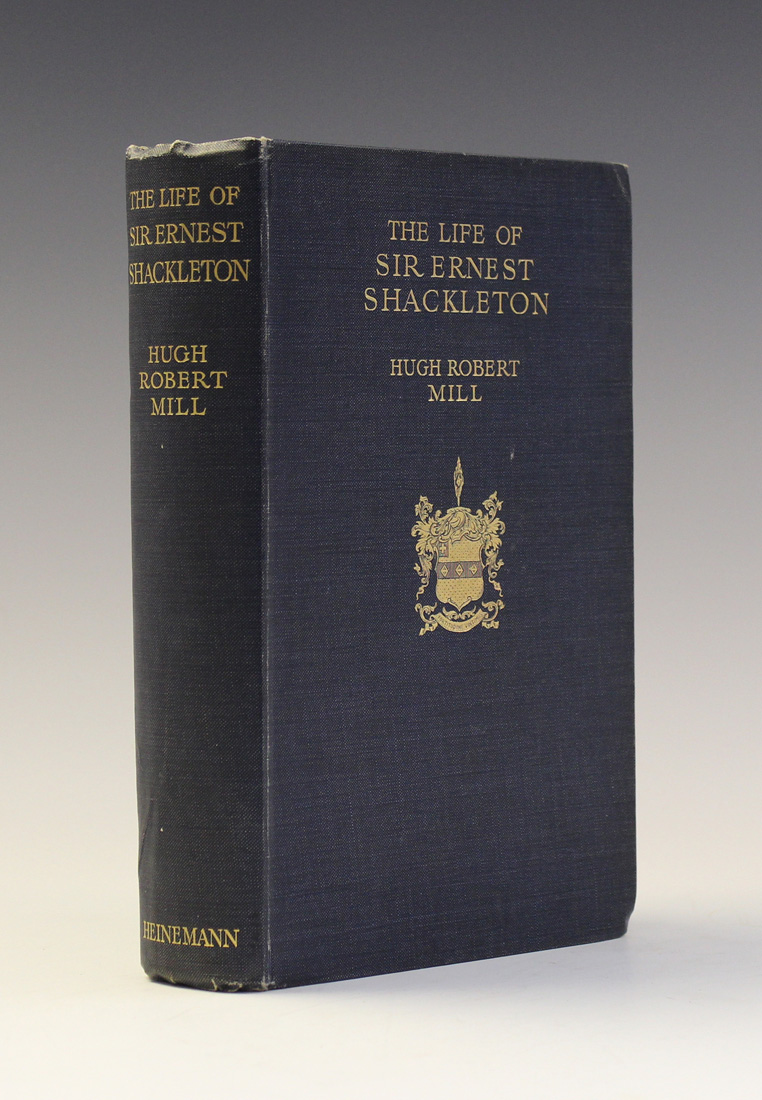

In 1923 he produced the first full-length biography of Sir Ernest Shackleton, a noted explorer and who was also connected with the RSGS. If you can find a copy be prepared to pay around £500. He wrote this with the assistance of Shackleton's widow.

He also wrote the introduction to Shackleton's book "The Heart of the Antarctic' about the 1907-9 expedition.
In his Presidential Address, he started with a nice image of the significance of geography.

The Address was called "An Approach to Geography", and he described geography as being like a picture of the world in the opening lines.


In 1934, Hugh Robert Mill gave another address to conference which is well worth reading. This time he had a focus on Scotland.
He was also connected with Imperial College.

He also had a connection with Antarctica, and the SPRI.


He has a glacier named after him in Antarctica, a branch of the Beardmore Glacier.
Frank Debenham, who we will meet in several decades time, also had some land named after him in Antarctica.

His likeness is also shown on a medal which is awarded by the Royal Meteorological Society for research into rainfall.

Mill died in 1950, in his 89th year: another GA president to live to an old age. I hope he set a precedent for future Presidents.

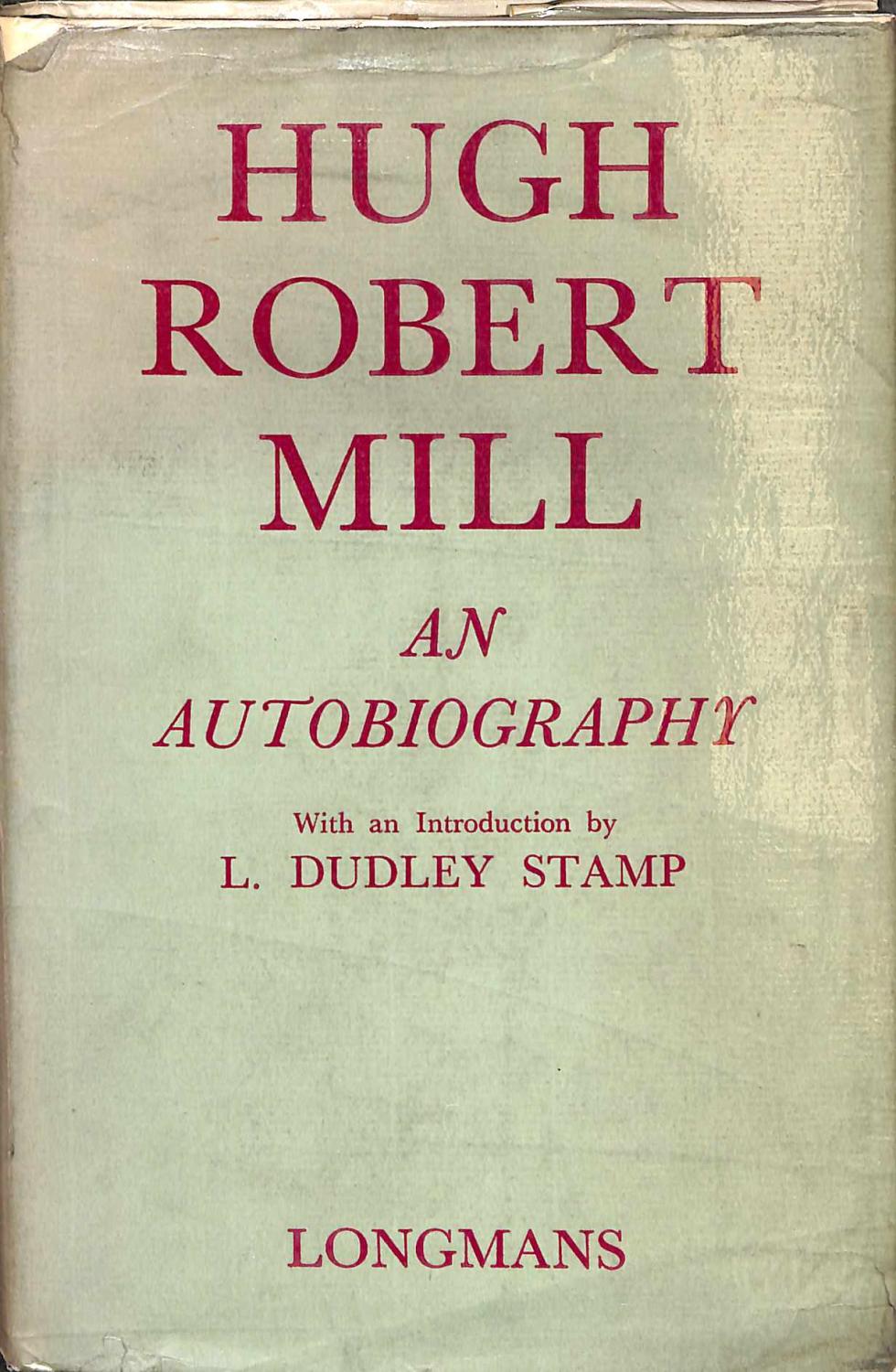
He also published his autobiography, which would be worth obtaining to find out even more about his time at the GA.

 There is apparently a copy in the Fleure collection that he donated to the GA.

He also left a legacy to the GA, which helped ensure its financial stability at a crucial time.

When he died, Balchin reminds us, he had been associated with the GA from the start - over 50 years of service to the Association.

References

Wikipedia: https://en.wikipedia.org/wiki/Hugh_Robert_Mill - shared under CC license and extracts used on this page.

Edited to add the GA Presidency role.

MILL, HUGH ROBERT. “ADDRESS TO THE GEOGRAPHICAL ASSOCIATION.” Geography, vol. 18, no. 1, 1933, pp. 1–16. JSTOR, www.jstor.org/stable/40560362.
Internet Archive searches. http://www.archive.org

Archibald Geikie: https://babel.hathitrust.org/cgi/pt?id=umn.31951000910377x;view=1up;seq=7

Obituary: Brown, R. N. Rudmose, and H. J. Fleure. “OBITUARY: Hugh Robert Mill.” Geography, vol. 35, no. 2, 1950, pp. 124–127. JSTOR, www.jstor.org/stable/40563009 

From the above:


Mill, Hugh Robert. “The Value of Regional Geography.” The Geographical Teacher, vol. 11, no. 2, 1921, pp. 7–19. JSTOR, www.jstor.org/stable/40555902

Please get in touch if you have anything further to add.

Updated October 2019

While investigating some resources for the entry on a later president, Percy Maude Roxby,  I came across a chronology of Geography in the 20th century written by G. R. Crone, at the time the librarian of the RGS, and it had an image of Hugh Robert Mill as shown below.... a fine moustache - perhaps I need to grow one for my Presidential year...

The article also outlines how Mill wrote the entry on Geography for the 11th edition of the Encyclopaedia Brittanica, which means that he could provide his own thoughts on what the subject actually was...
Source of image: 
Crone, G. R. “British Geography in the Twentieth Century.” The Geographical Journal, vol. 130, no. 2, 1964, pp. 197–220. JSTOR, www.jstor.org/stable/1794582. - available to read with a free JSTOR account.

Mill wrote an autobiography which was called 'The Life Interests of a Geography - an experiment in Autobiography'.

This was published privately by friends in the USA. 
A copy was presented to the Association - I tracked it down in the archive. A signed copy.

Details of this are provided in an article by another former GA President T C Warrington. 
Update: I found some letters related to this in the GA archive.


It seems his final years were one of reflecting on what he had achieved against a variety of challenges.


Warrington, T. C. “THE AUTOBIOGRAPHY OF HUGH ROBERT MILL.” Geography, vol. 32, no. 4, 1947, pp. 166–168. JSTOR, www.jstor.org/stable/40562610.

Not only was he a connection right back to the early days of the GA, when he died in 1950, he also left what is described by another future President: Alice Garnett as a bequest made from Mill's will which helped reduced anxiety about rising costs, and staff salaries

Source: Garnett, Alice. “GEOGRAPHICAL ASSOCIATION.” Geography, vol. 36, no. 1, 1951, pp. 57–62. JSTOR, www.jstor.org/stable/40563090.

JSTOR articles: https://www.jstor.org/action/doBasicSearch?Query=hugh+robert+mill&filter=


Mill, Hugh Robert. “Proposed Geographical Description of the British Islands Based on the Ordnance Survey.” The Geographical Journal, vol. 7, no. 4, 1896, pp. 345–356. JSTOR, www.jstor.org/stable/1773547

and discussion afterwards
Wilson, Charles, et al. “Proposed Geographical Description of the British Islands Based on the Ordnance Survey: Discussion.” The Geographical Journal, vol. 7, no. 4, 1896, pp. 356–365. JSTOR, www.jstor.org/stable/1773548.


Updated November 2019

https://books.google.co.uk/books?id=N81mDwAAQBAJ&lpg=PT67&ots=RtCfAEEQvA&dq=charles%20close%20OS%20geographer&pg=PT79#v=onepage&q=charles%20close%20OS%20geographer&f=false


Updated December 2019

I found another reference to his autobiography while researching Frank Debenham

H.R. Mill, Life interests of a geographer 1861-1944: an experiment in autobiography, self-issued 1946, 122. 
In print Mill felt compelled to refute media characterizations of the expedition as an “advertising stunt” as “quite unjust” – although the presence of two Boy Scouts on its crew – chosen from a nationwide competition in cooperation with the tabloid Daily Mail – might truly be described as one aspect of the expedition that was ahead of its time. 
Mill, The life of Sir Ernest Shackleton (London: Heinemann, 1923), 271. The competition to attract the Scouts is described in Frank Wild and Alexander H. Macklin, Shackleton’s last voyage: the story of the Quest (New York: Frederick A. Stokes, 1923), 14-15

In it, he described Shackleton's last voyage to the Antarctic.

ABE BOOKS has a wide range of books written by Mill. He seems to have been prolific
https://www.abebooks.co.uk/servlet/SearchResults?an=hugh%20robert%20mill&cm_sp=det-_-bdp-_-author

Mill and Debenham seem to be tied up in a number of things connected with the SPRI.
The thesis by Peder William Chellew Roberts in 2010 features a number of references to Mill.

A book by Charles Withers quotes Mill's memories of his childhood, which perhaps shows an early interest in Geography.

https://books.google.co.uk/books?id=DGRrF0CV8BYC&lpg=PA194&ots=ALTTdk_XQs&dq=Life%20interests%20of%20a%20geographer%201861-1944%3A&pg=PA194#v=onepage&q=Life%20interests%20of%20a%20geographer%201861-1944:&f=false


New image

Updated April 2021
A book that I came across...

Last updated August 2021


I found a copy of a self-published autobiography in the archive of the GA which had lots of interesting snippets on Shackleton, the 'Titanic' and his time at the RGS, including how he funded the payment for the statue of Shackleton that sits outside the RGS.

https://victorianweb.org/sculpture/jagger/1.html

Last updated August 2022

I discovered a bath of letters which had been written to 'Mill' as he seems to have been referred to in most of the letters from the great and the good of the GA. These were passed to the GA in 2000 and now reside in the archive. There are pictures of quite a few of them in this Flickr album.

There are quite a few from the time that he was asked to be the GA President for 1932 and he seems to have been quite reluctant at first.

This letter from B B Dickinson sent in 1931 expresses his thanks when Mill finally said that he would take the role on.

And here's one from Fleure in May 1931 asking him to come and talk about his proposed Presidential theme and mentioning some of the people who had been invited and others who couldn't make it.

One was Professor Gerhard Schott who it turns out was a renowned German oceanographer.

Also a famous geologist Percy Fry Kendall.

Apparently Sir Wilfred Grenfell was out of the country - probably in Newfoundland.

A prolific letter writer and who travelled a great deal it seems. 

Mill was GA President 90 years before my own tenure. 

Updated April 2023

Some more detail on Mill in this post on the Facebook group I am a member of called 'Sir Ernest H Shackleton Appreciation Society'. Mill has featured a number of times in fact.

Updated July 2023

The RMetS Award named after Hugh Robert Mill was awarded to Ed Hawkins this year, originator of the important Climate Stripes.

Margaret Mackintosh RIP

Updated post. Sad news at the end of last week from colleagues who have organised the Charney Conference over the years of the passing of Ma...