Showing posts with label Natural Regions. Show all posts

Saturday, 20 August 2022

Professor Eva G R Taylor

Updated August 2023

Eva Taylor was the first woman to hold a Chair in Geography in the UK: at Birkbeck.


Eva G R Taylor worked with R J Unstead on work on regions and within the Birkbeck Geography department.

She was a ground-breaking female geographer and historian.

Regional geography was a key idea in geography for many decades, even through to the 1980s when I started my teaching career.


Source:

British Geography, edited by Robert Steel. (PDF download)

PROFESSOR Eva G. R. Taylor, an Honorary Member of the Institute since 1954, died in Wokingham on 5 July 1966, aged 85. She was a Fellow of Birkbeck College and Victoria Medallist of the Royal Geographical Society. From 1930 to 1934 she was Professor and Head of the Department of Geography in the University of London, and in 1944 became Professor Emeritus.

There are links here to a range of former GA Presidents and also A J Herbertson.

Image source:

https://www.cambridge.org/core/services/aop-cambridge-core/content/view/2F941C5513B80DB4D1C8F4BCEF0F6B57/S0373463300042946a.pdf/div-class-title-eva-g-r-taylor-div.pdf

https://en.wikipedia.org/wiki/Eva_Germaine_Rimington_Taylor

According to this, the first woman to hold an academic chair of geography in the United Kingdom.

From the document above:

In a broadcast talk about town-planning, Professor Taylor once said that to plan a new town on the lines she was criticizing was like 'trying to stop Tommy growing by refusing to buy him a new pair of boots'. It was typical of her forthright use of English. 

Many people know and respect her as a geographer and historian, but to many she is endeared by her absolute mastery of language: no stylist in the prissy sense of the word, but a writer in whom two great literary virtues were eminently found. First, the absolute reflection of the writer in the words—so that her tone and personality come through so unmistakably that no other person could have written them. And secondly, so complete a certainty of what she had to say that the language she used took on a natural, unforced, direct form that gave it immense pungency and punch. 

That clarity of mind extended not simply to the construction of each sentence but to the whole plan of the essay or book—an essentially classical virtue even more admirable when found in a person who had a poor opinion of the exclusively classical—to put it in terms that are probably historically out of date and that would (God rest her) perhaps infuriate her, an Oxford rather than a Cambridge virtue. As a historian, Professor Taylor was constantly dealing with movements, inventions, discoveries, manifesting themselves in persons: and no matter which of her writings you turn to, you will find (and this is what gives her writing such ease and clarity) that she never wrote until she had a clear picture of the personality behind the person. There are no lay figures in her work. It is supreme craftsmanship, even supreme artistry. 

RENE HAGU

Updated August 2023

Obituary in Transactions of the IBG

“Eva Germaine Rimington Taylor.” Transactions of the Institute of British Geographers, no. 45, 1968, pp. 181–86. JSTOR, http://www.jstor.org/stable/621401. Accessed 24 Aug. 2023.


She was the President of Section E

She started out as a Chemistry Teacher

In 1905, while attending a vacation course in education at Oxford, she was introduced to geographical field studies. Early in 1906, she moved to a teaching post at a convent school in Oxford in order to complete her study for the Diploma in Education. In October of the same year, she became a student at the School of Geography and two years later obtained the Certificate of Regional Geography and the Diploma of Geography, both with a mark of distinction. 

From 1908 to 1910, she served as a private research assistant to A. J. Herbertson who 'considered her the most brilliant and able of the many women students trained under him at Oxford' (H. O. Beckit, in a testimonial dated 27 April 1916). 

She spent the years 1910 to 1916 writing school text-books and drafting wall-maps (in collaboration with J. F. Unstead whom she first met at Oxford in 1906); and in starting her family. From 1916 to 1918, she lectured in geography and in educational method at Clapham Training College for Teachers and at the Froebel Educational Institute. In 1920, she gave a course of lectures at Queen Mary College (then the East London College).

Also published in 'The Geographical Teacher' - 1916

Taylor, E. G. R. “THE FIRST STEPS IN GEOGRAPHY TEACHING.” The Geographical Teacher, vol. 8, no. 4, 1916, pp. 224–30. JSTOR, http://www.jstor.org/stable/40554496. Accessed 24 Aug. 2023.

Worth a read.

Source:

Beaver, S. H. “Geography in the British Association for the Advancement of Science.” The Geographical Journal, vol. 148, no. 2, 1982, pp. 173–81. JSTOR, https://doi.org/10.2307/633769. Accessed 24 Aug. 2023.

Eva Taylor lectures were started in 1960.
The one described here was chaired by another former GA President: Michael Wise.
Of the speaker here he described his work during the war...


Wise, M. J., et al. “Planning and Geography in the Last Three Decades: Discussion.” The Geographical Journal, vol. 137, no. 3, 1971, pp. 330–38. JSTOR, https://doi.org/10.2307/1797270. Accessed 24 Aug. 2023.

Further memories of Eva Taylor are very much welcome.

"Professor Eva Taylor of Birkbeck College London University, the foremost authority on Tudor geography, arranged a facsimile publication and provided commentary on Forty Plates from John Speed’s Pocket Atlas of 1627.

Professor Emeritus Taylor, 1879–1966, was the first female professor of geography in the U.K., published prolifically, and was also renowned for her unconventional use of a walking stick: 

An academia.edu bio describes how “she used to point it at students when asking a question, as well as using it to hail taxies or even to hook Professor Darby’s leg to join her taxi from a crowd of people waiting.”

“Her writings were characterized by the extensive use of original sources and documentary evidence and they were always a delight to read.” This included “her two monumental volumes of the mathematical practitioners of Tudor and Stuart England (1954), and then those of Hanoverian England (1966)….”

Source: https://simanaitissays.com/2022/03/15/touring-tudor-england-with-professor-eva-taylor-and-google-maps/


And another biography here:

Taylor continued working well into her 80s, dying at Wokingham on July 5, 1966.

https://www.encyclopedia.com/women/encyclopedias-almanacs-transcripts-and-maps/taylor-eva-1879-1966

https://www.hakluyt.com/downloadable_files/Journal/DeClercqTaylor.pdf - an updated version of a lecture given in 2005. Mentions Bill Mead.

She was a partner of one of the Dunhills of tobacco fame it seems.

A Bill Mead mention of her lecturing at the GA Conference here (in 1946 just after WWII)


Another Eva Taylor lecture transcript:

Monday, 2 September 2019

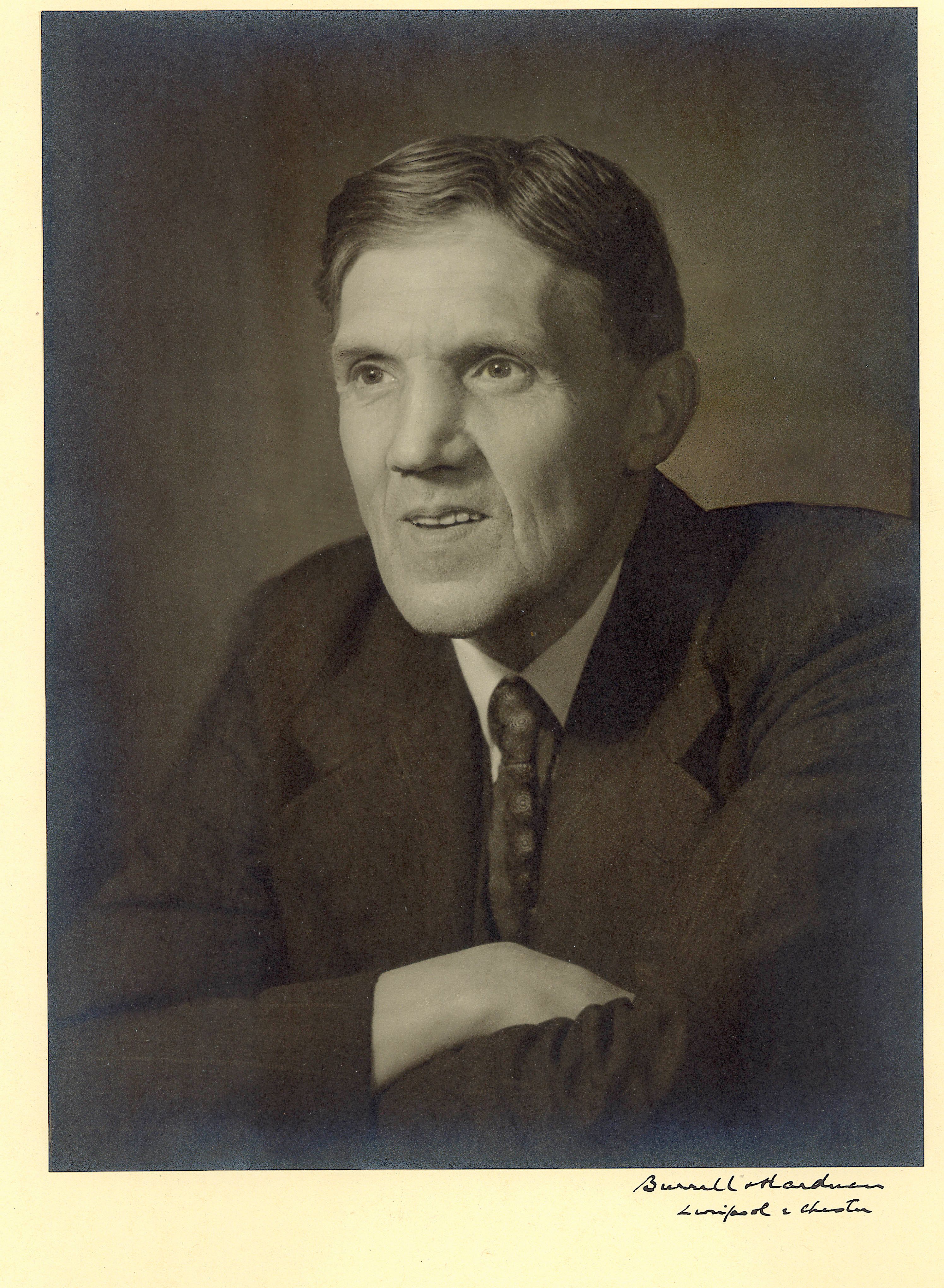
1933: Professor Percy Maude Roxby

Image result for percy maude roxbyLast updated June 2024


Percy Maude Roxby was  an academic geographer connected with the University of Liverpool, and an expert on the geography of China.

He was born in 1880, and educated in History at Oxford University, but was appointed as lecturer in Regional Geography at the University of Liverpool in 1906.

He was one of the many people who were influenced by, and responded to, the work and teachings of A. J. Herbertson, who has featured previously on the blog.

He wrote a paper called "What is a natural region" in response to Herbertson's work and set out ideas for organising how geography could be taught in secondary schools. This connection with school geography has been an important part of many GA President's roles and legacies, and Roxby was particularly important in this regard.

He was also involved with the GA for a considerable period of time before being President, and so became one of the group of GA Presidents who were being 'rewarded' for their service to the Association during this period in its history.

The honours school of Geography at the University was formally approved in 1917-18, when Percy Maude Roxby was appointed as the first named chair of Geography in the British Isles.

Roxby visited China several times and wrote a book on the country as well, at a time when relatively little was known about the country. This is one of his great contributions to the work of the GA.

He traveled extensively in China, and both studied and wrote about Chinese geography. This was his particular passion.
Meanwhile, he promoted mutual understanding between China and Britain through geography. He also supervised the Department of Geography at Liverpool University and trained Chinese geographers. 
Overall, Percy Maude Roxby played a significant role in Chinese geography including his own research, the internationalization of Chinese geography, and cultivation of Chinese scholars, all of which should be included in the history of modern Chinese geography.
This becomes even more significant now, given the growing power of China on the world stage.

He wrote a whole series of articles for GA journals. His Presidential Address was on the theme of China as an Entity, compared with Europe, as one would have expected.


Roxby died in 1947, and a prize in his name was introduced at the University of Liverpool after his death. This was to pay for a geographer to travel - something Roxby was a big promoter of.

His name was also connected with another, later President, who will have his own entry in due course.

Dick Lawton was inspired by lectures from Roxby to pursue his own geographical career at the University of Liverpool and become involved with the GA in due course.

He was also mentioned by another GA President, Roger Carter in his Presidential address:

"I came across the details of the Staffordshire Geographical Exhibition of 1934. The Exhibition gave rise to an account, edited by Jasper H. Stembridge. Here is an extract from Stembridge's account:

 'The Staffordshire Geographical Exhibition proved that the popular press and the general public are deeply interested in education. On the second day the Exhibition was thronged. On the third and subsequent days it was so crowded in the afternoons and evenings that it was often difficult to make one's way round the rooms. Owing to requests received from all parts of the country it was decided to keep it open for a further three days' (Stembridge, 1934, p. 12). 

 The then President of the GA, Professor PM. Roxby, was equally enthusiastic about the event: 

'Here was the new geography - pulsating with life - presented with a freshness of outlook, but with a deep conviction of the importance of the subject and its underlying principles' (Roxby quoted in Stembridge, 1934, p. 13).

References

No Wikipedia entry exists. Perhaps one needs to be written.

There is an archive of his lectures and notes held at the University of Liverpool.
https://discovery.nationalarchives.gov.uk/details/c/F58505
https://www.liverpool.ac.uk/geography-and-planning/about/
https://www.nature.com/articles/159462a0
Lei ZHANG. Percy Maude Roxby and Chinese geography[J].Acta Geographica Sinica, 2015, 70(10): 1686-1693.
Available in Chinese it seems... anyone able to translate?


In May 2017, his centenary was announced in a Tweet from the Liverpool University account, including his portrait.
Roxby, Percy Maude. “CHINA AS AN ENTITY: THE COMPARISON WITH EUROPE. ADDRESS TO THE GEOGRAPHICAL ASSOCIATION.” Geography, vol. 19, no. 1, 1934, pp. 1–20. JSTOR, www.jstor.org/stable/40558758.

https://www.jstor.org/stable/40563887?seq=1#page_scan_tab_contents - details of Roxby Prize

Liverpool University Facebook page: https://d.facebook.com/livunigeog/photos/a.579114048787869/1640924519273478/?type=3&__tn__=EH-R

A prize winning essay from 1902 while studying at Christchurch, Oxford: https://archive.org/details/henrygrattanbein00roxb/page/n10

As always, if anyone knows anything more about Percy Maude Roxby, or has a contribution to make to the blog, please get in touch... 

Major update October 2019
Quite a lot of additional detail on Roxby and his work is included in an article by Professor H C Darby, who was also a Professor at Liverpool University. He talks first about the time following the First World War.


I like the idea of Roxby's long cycling tours, particularly in East Anglia and like to think that I have travelled along the same routes as Roxby. He wrote a chapter in a volume on Great Britain.
When searching for this book, I found this biographical reference in another book.


This told me the book was called 'Great Britain' and edited by A. Ogilvie (1928) and that he also contributed chapters to other publications. such as 'The Geographer's Craft'.

H C Darby then talked about the time when he succeeded Roxby at Liverpool University.


I also found an obituary of Roxby, which I hadn't found previously, written by H J Fleure.


References
Darby, H. C. “Academic Geography in Britain: 1918-1946.” Transactions of the Institute of British Geographers, vol. 8, no. 1, 1983, pp. 14–26. JSTOR, www.jstor.org/stable/622271.


https://archive.org/details/henrygrattanbein00roxb/page/n10 - prize-winning essay

https://archive.org/details/chinaproper0002grea/page/n425 - China manual for naval intelligence - showing his great knowledge of the city

Crone, G. R. “British Geography in the Twentieth Century.” The Geographical Journal, vol. 130, no. 2, 1964, pp. 197–220. JSTOR, www.jstor.org/stable/1794582.

Fleure, H. J. “OBITUARY: PROFESSOR P. M. ROXBY.” Geography, vol. 32, no. 1, 1947, pp. 36–36. JSTOR, www.jstor.org/stable/40562545.

CARTER, ROGER. “Connecting Geography: An Agenda for Action.” Geography, vol. 84, no. 4, 1999, pp. 289–297. JSTOR, www.jstor.org/stable/40573334. Accessed 22 Nov. 2020.

Update: December 2020
In 2003, Chris Kington asked a number of former Presidents what had sparked their passion for geography. 
He lent me the letters and Dick Lawton mentioned the influence of Roxby and other geographers including Clifford Darby and Bill Mead on his own academic career at the time.
He says they taught him not only about geography, but how to be a geographer...
Upated July 2022
Roxby contributed to some guides to China written for military intelligence, found on the Internet Archive. Another wartime contribution by a former GA President.
Updated August 2023
As with many Geographers, Roxby was involved with the British Association's Section E committee meetings. He became the President in the 1930s and spoke about his work. He had many interests aside of his trips to China.
Finally found his Biogeographical volume description:


On his links with the GA it has this to say:


Updated June 2024

From 'The Geographer's Craft' by T.W. Freeman (1967) 
Available from the Internet Archive

A superb half chapter all about Roxby and his life and career. 


Friday, 31 May 2019

Quote of the Day

Jaime Batalha Reis.png
"every child knows how to apply the words mountain, plain, valley, river, lake to the objects they have constantly seen designated by such words.
 The difficulty only begins when we have to impress on the children's intelligences the notion of how all the relations those entities have between themselves, make up a locality; how this locality is part of country, the latter part of a vaster region; and how the Earth is composed of such large regions".

Paper to the International Geographical Congress in 1895

Quoted in Jay, 1965

I guess he was after some sort of schema to help organise the knowledge...


Reference: JAY, L. J. “A. J. Herbertson : His Services to School Geography.” Geography, vol. 50, no. 4, 1965, pp. 350–361. JSTOR, www.jstor.org/stable/40565960.

Margaret Mackintosh RIP

Updated post. Sad news at the end of last week from colleagues who have organised the Charney Conference over the years of the passing of Ma...