Showing posts with label Aberystwyth. Show all posts

Tuesday, 15 June 2021

2015: Steve Rawlinson

Steve Rawlinson was a Principal Lecturer in Primary Geography Education at the University of Northumbria. 
He is now retired, but is still involved with GA committees and the creation of 'Primary Geography' magazine.

“GEOGRAPHY IS A SUBJECT THAT BECOMES A WAY OF LIFE.”
This was at the forefront of Steve's GA Presidential lecture in April 2016.
His lecture can be viewed here on SlidePlayer (note the 115 slides... that's one to aim to beat...)

I'd also like to thanks Steve as he was one of the people who were involved in me ultimately becoming the Junior Vice President of the GA. 

Here's Rebecca Priest's
summary of Steve's Presidential Lecture from the OUP blog:

Steve Rawlinson’s Presidential Lecture set the tone for the whole conference. He spoke on the topic of ‘making connections’, by drawing on experiences from his own life and career. Steve encouraged every person in the room to think about their own connections with geography and how they can inspire and discover the geographical connections of those whom they teach.

He spoke first of ‘personal connections’ to geography and how it is important to take a step back from our busy lives as teachers and reflect on how people, places and events have affected our own personal geographies. This can be as simple as thinking about landscapes that have inspired your love of the subject or appreciating the professional relationships you have fostered and how these have shaped your understanding and your career. He then moved on to make an important point about ‘curriculum connections’ which emphasized how the integrated nature of our subject is at its core. This inherent characteristic of geography should not be undervalued and Steve made historical, cultural, technological, scientific, economic and artistic connections to just one of his favourite places; the mining town of Blaenau Ffestiniog in Wales. This has inspired me to take the time to think of one of my favourite places and to make as many interdisciplinary connections to it as I can – geography has the ability to connect many different elements of the world. The lecture ended with the notion of ‘future connections’ and how the future of geography, of teachers and of our pupils needs to be carefully nurtured.

Steve left us with this: geography is a subject that becomes a way of life – embrace it, and yours and the life of the children and young people you teach will be richer because of it.


Steve is an Honorary Member of the Geographical Association.
He is also Chair of the Primary Geography Editorial Board
Geographical Association Primary Geography Champion
Consultant to the Geographical Association
Fellow of Royal Geographical Society

http://www.rgs.org/

Steve kindly wrote a detailed summary of his experiences with the GA and it is used for the main body of this blog entry.

As with some of the more recent Presidents, Steve is on Twitter
I'm assuming Dudley Stamp would have been as well :)


Image supplied by: Steve Rawlinson

The following text was also provided by Steve.

When and where were you born? 
"Weston Turville in Buckinghamshire in the early 50’s. The village used to be the centre of the Aylesbury Duck industry. The village pond was still a feature when I was young. It was a very typical Buckinghamshire village where everyone knew everyone."

Career details:
1963-1970 – Aylesbury Technical High School (now the Sir Henry Floyd Grammar school) 
1970 – 1973 – University College of Wales Aberystwyth – BSc Geography 
1973 – 1974 – Assistant lecturer in Geography and Statistics – Cassio College Watford 
1974- 1975 – University College of Wales Aberystwyth - MSc in Biogeography. University demonstrator 
1975 – 1991 – Senior Lecturer in Geography & Environmental Studies – Cricklade Community College, Andover – teaching all ages primary, secondary and up to and including senior citizens! 
1991 – 2012 – Principal Lecturer in Geography Education – teaching on Primary ITE (PGCE & UG), & UG Geography. Also Senior admissions tutor – responsible for admissions to all education courses (Primary and Secondary). 
2008 – present became Chair of the Primary Geography Editorial Board 
2012 Retired – became GA consultant, continued with work on Primary Geography Quality Mark and as Chair of the Primary Geography Editorial Board. Member of the Geography Expert Group. 
2012 -16 Member of the DfE Geography Expert Group. 
2013 Elected as Junior Vice President of GA 
2015-2016 President of GA. 
2018 – present – Member of the WorldWise Committee 
2020 – awarded Honorary Membership of the GA 

Where did you go to school/university? 
"I went to the local primary school, just a mile from my house, and for a while was taught by the same Headmaster and his wife as taught my mother and father. Johnny Lawton described himself as ‘a nice kind man with a nice kind face’. Though his strict disciplinary tactics made some of us question this! He probably started my interest in the environment by the frequent nature walks we undertook around the village. Geography was about drawing maps carefully and of course colouring the sea and the land! I also developed a love for exploration, during the daily walk to school – often resulting in a frantic run as the bell tolled at the start of the school day. No one wanted to be late for school with Mr Lawton waiting by the gate! I passed the 11 plus and rather than going to the local grammar school I went to the Technical High School – now the Sir Henry Floyd Grammar school. It rather saddens me to think it lost its ‘technical name’ as this was a new type of school which offered so much. Going to ‘the Tech’ was really at the behest of my father who had dreams of me becoming an engineer like him. But it was an inspired decision because the Tech had a visionary Headmaster who really was ahead of his time. Though another strong disciplinarian he worked hard to offer what we would now call a ‘rounded education’ to everyone and was at pains to avoid gender stereotyping. Boys and girls were positively encouraged to cross gender boundaries. Thus, we had girls in our metalwork and woodwork classes, and I learnt touch typing – a skill for which I am forever grateful. This of course now looks quite revolutionary for the time. Dad’s ambitions for me were thwarted when I struggled with the sciences – I have the distinction of failing chemistry 3 times each time with a lower grade. My A level choices were therefore English, Geography and British Constitution (the latter really coming in handy with the Brexit discussions!).

Geography was chosen because of an inspirational teacher – Mr Geography Green (yes, we also had a Mr History Green!). He had a way of bringing the subject to life even if he was constrained by a very rigid syllabus. I well remember ‘doing’ the whole of the USSR and SE Asia for A level. 

He sent my friend and I to Dale Fort FSC centre for our fieldwork study. There I was enthralled by the enthusiastic and friendly tutors and found an ambition to be a field tutor – an ambition still unfulfilled though I did build all my teaching around fieldwork. 

I was the first person from the Tech to go to University. Aberystwyth was chosen simply because I had fallen in love with Wales while on holidays with my parents and I wanted to be near the mountains. The presence of the sea was an added bonus – Weston Turville is one of the furthest places from the sea in the country. There followed three very happy years studying under some inspiring if sometimes eccentric lecturers. I initially went to study geology – a foolish decision in retrospect given my chemistry record – and after 6 weeks of struggling with crystallography - changed to geography. 

It was at Aber that I first encountered the GA – the history of geography module had references to the Association and the Aber GA connection with H.J. Fleure. And of course, there was the ever-delightful presence of E.G. Bowen a former president of the Association who did so much to fuel my passion for the subject and teaching – see the entry for E G Bowen. 
I got very involved in the Geography department’s Geog Soc. and was their expeditions officer organising field trips utilising the wealth of knowledge available at the university and outside. This experience was invaluable in my later teaching and running of fieldwork. 
On graduation I got a job in an FE college in Watford which had many resonances with the novel ‘Wilt’ by Tom Sharp. But my mentor, Peter Baker, was wonderfully supportive and somehow, I got through that first year without too many mishaps. It was then that Aber called me back – I got the offer of a research place to study animal diseases under ‘Big Jim’ Taylor – the prospect of another year by the sea visiting farms all across Mid-Wales was too alluring and I blew most of the money I had saved from my first years teaching on taking up the place! My parents thought I was crazy giving up the job in Watford, but it was another good decision. I loved the research year and learnt so much about how academic/research geography works and offers relevance to the wider world. My thesis identified some improvements that vets in the area could make to their strategies for combating animal diseases, which were based less on the physical constraints of the disease but more on the farmers perception of the causes. It was during this work that I shifted from being a physical geographer to one with a behaviourist approach."

What has your career been e.g. teacher / academic / author / other work outside the obvious geography sphere? 

"My first job in Watford on graduation was less a calling but a necessity to get a job. But I loved teaching thanks to the wonderfully supportive colleagues. I think I learnt an important lesson from them – that support during those early years in the profession is crucial. After my MSc year I was lucky enough to be offered a job at Hampshire’s new show college in Andover and there I found myself working with under Geoff Dinkele who was in the middle of writing the 'Reformed Geography' series with Rex Walford and Stephen Hancock. 
Suddenly I was in the middle of a revolution in geography teaching and rubbing shoulders with some of the key people in the subject. It was Geoff who encouraged me to make my first foray into writing with an article on using Lego to represent Population Pyramids which appeared in 'Classroom Geographer'. (See the earlier post which showed this article) 

I was also blessed to have as Principal of the college another visionary. We were encouraged to engage with the wider community in our teaching and as a result my day could find me teaching in the local primary schools in the morning, grappling with A level geography in afternoon and then teaching on the adult education provision in the evening. 
My first job was also at a community school with similar courses.
Running a course on weather forecasting for gardeners sticks in my mind as particularly challenging, but I was never short of vegetables. As a result of my time in Andover I have been lucky enough to have taught all ages and abilities! The GA became a natural part of my work. I ran the local GA WorldWise quiz for many years shamelessly using it as a recruiting tool for geography O and A level! 
Somehow, I managed to run 4 fieldwork courses a year for A levels in Geography and Environmental Education, as well as one for the GCE geography evening class. 
My love of fieldwork seemed to be recognised and encouraged, again thanks to a highly supportive Principal. 
It is really because of this work and my subsequent work at the university that I have led 100+ fieldtrips up Cadair Idris – the mountain where my ashes will be scattered when the time comes! 
The retirement of the Principal who had appointed me signalled changes in the college which I began to get uneasy about and resulted in the move to Northumbria University to take up the post of Senior Lecturer in Primary Geography Education. It was a speculative application based really on the desire to live ‘up north’ following a number of holidays in the area. Another lucky decision. I was teamed with a brilliant humanities team and an incredibly effervescent geography colleague – Liz Essex-Cater. 
I had never enjoyed a working relationship like the one we forged – we often talk about teamwork, but I like to think Liz and I took it to a different level – we were able to complement each other’s skills and knowledge to the extent as one ran out of the steam the other was able to take over seamlessly. We brought different skills to our role: Liz loved timetabling which I hated; she did not enjoy organising fieldwork which I found easy. So, our relationship enabled us to bring a high level of enthusiasm and a variety of experiences to our students. We both worked on and were members of the committee for the local GA so the links with the Association continued. 

We presented our first contribution at one of the LSE conferences – remember those paternoster lifts? 
In 2004 Liz attended the Charney Primary Geography conference and encouraged me to go the next year and that started a long-standing relationship with that wonderful community. I now find myself part of the co-ordinating group organising the annual event in Oxfordshire which has become a showcase for all that is excellent about Primary Geography. 
Liz took early retirement to ‘live the dream’ in France and then was cruelly struck by Motor Neurone Disease. I lost my best friend, colleague and critic in one fell swoop and life at the university was never quite the same. 

When I had been appointed, I could not understand why there was no link between the education department and the geography department – it just seemed to make no sense especially as at that time there was shortage of geography teachers – an issue on which Liz and I had researched and written about. It took a while but eventually I was teaching on the fieldwork module undertaken by the 1st year students. This eventually led to me developing and teaching an assessed module on Geography in Education which sought to encourage more geographers to enter teaching. This quickly became an important module for the department and the university in raising their employment on graduation statistics. I am pleased so many other universities are adopting similar approaches to cultivate members of the teacher profession from their home-grown students. Expanding access to education became a theme for the later part of my career at Northumbria, particularly when I gained promotion and became the Admissions Tutor for all education courses in the department. I led courses which specifically sought to encourage Men into Primary Education and Ethnic Minorities into Teaching. This work was undertaken with our Access department which offered adults non-standard routes into the university – another example of how innovative courses can lead to having a home-grown market for teaching. We were so successful in this work that we were praised by Ofsted for the number of high-quality mature students we consistently attracted onto our courses. 

A spin off from this work was the development of a link with the London Borough of Newham which saw all our undergraduate and postgraduate students on education courses benefitting from an experience of working in the Borough’s schools. This experience was highly praised by Ofsted and saw us become an official London provider of teachers – which felt a little ironic as we were one of the most distant providers in England for the capital! 
Fieldwork continued to be the golden thread through all of my teaching. Modules on all courses were based around giving students the confidence to take children outside and provide a variety of experiences in different environments. This led to both articles and conference presentations which got me increasingly engaged with the national GA community, a move not always positively received by the Senior Management – who did not seem to appreciate how important those contributions were to me both personally and professionally. 

Change is inevitable in education and sadly the university decided that it wanted to raise its status in the research field, and as a result abandoned all those innovative approaches to access opportunities, which had gained it such a high reputation in the local area. As the wonderfully satisfying work I was doing with my admissions hat on began to get closed down, and my geography work was increasingly having to be undertaken under the management radar, the job became less attractive and more demanding in ways that were not ‘me’. 
A voluntary redundancy package offered a way out which I eagerly took. 
The prospect of more time to do what I wanted, when I wanted it coupled with the lure of the nearby Northumberland hills was too a good a chance to overlook. 
In 2012 I left Northumbria and entered retirement..."

Image: Bryan Ledgard

What was your job when you became President? 

"I became President in 2015 so I had three years of enjoying exploring the glorious Northumberland countryside, and pursuing aspects of geography that I had not had time for before retirement. I had become Chair of the Primary Geography editorial board in 2008 and now I had a bit more time for this work. I felt it was particularly important to try to shape the journal to changing needs and demands and ensuring a strong voice for primary geography within the Association and beyond. The GA continued to be an important part of my life – I continued to attend conference and work with the local GA. I was also a moderator for the Primary Geography Quality Mark – work I found to be incredibly inspiring, and which kept me firmly in touch with schools and the changing primary world, even though I was theoretically ‘retired’. 
It was especially rewarding to help schools achieve the award and to see departments thrive in not always inspiring circumstances. The resilience of geography teachers, and their ability to enthuse the children in their care never fails to humble me. 
But the most significant change that occurred after I retired was a strengthening friendship with Paula, Sharon and Tess which was to blossom into the WildThinkers research group. 

I cannot thank them enough for all the inspiration they gave me and how they slowly and subtly changed my thinking, opening my eyes to a whole new world of geography. I look back on my career and think how I could have done things so much better now I know what I know… I am not quite sure when the plot developed to nominate me for President. 

I know there was some talk at a Charney conference but how it all became a reality and who was ultimately responsible I can’t really remember. The reality struck me for the first time at the Derby conference when it was announced that I was the next Junior Vice President. From the reaction it was clear I had a lot to do to convince others I was up to the job! I hope subsequent events have vindicated the decision to vote me in."

What theme did you choose when President, and why did you pick it? 
What had been your involvement with the GA leading up to that time, and since that time? 

"I chose the theme of Making Geographical Connections. This is the piece advertising the conference which explains the theme. 

I am looking forward to welcoming you to the 2016 Annual GA Conference in Derby, which will explore the connections that give geography its dynamism and relevance to the lives of our students, whatever their age and ambition. By its very nature geography is a ‘connected subject’ with obvious spatial and temporal links across many subjects as well as connections to research in a variety of fields, ranging from emotional, cultural and socio-economic environments to climate change and glaciology. The Annual Conference is an opportunity to not only celebrate and share those links which we have developed in all phases and across all areas, but also consider future connections that could and should be made. It provides an arena for considering questions such as: 
• How do young children connect with the world around them and how could this change in the future? 
• Our older students appear to be globally connected via technology, but how does this impact upon their knowledge and understanding of geography? 
• What is the nature of the connections we, as professionals, make that influence the content and approaches to our teaching? 
• How can we become ‘better connected’ and how can we achieve this? 
The theme asks important questions about the nature, development and future of our subject. Contributions from all sectors of the geographical community are welcomed to encourage a shared understanding of geography and its vital place in education. It would be especially valuable to have examples of how a connection with geography has offered a pathway, and utility, to other professions. The Conference will offer something for all those connected with geography, from the EYFS teacher to the academic researcher. Don’t miss it! 
Steve Rawlinson GA Senior Vice President 2014-15 

Being elected as President of the GA by the members is both an honour and privilege which I never really expected."

Memories of the conference 2016 - Manchester 
"Within days of becoming President in Sept 2015 I faced my first crisis – we had to pull out of our planned commitment to holding the conference at Derby. A pity as Derby was my favourite conference venue.

Luckily, Manchester became a viable alternative and indeed looking back, Derby’s loss was our gain. The centre at Manchester was an exciting location, the facilities excellent and the conference was a great success. The sessions were inspiring and the exhibition one of the best we had held, the facilities at Manchester provided exhibitors with a really stunning space to show off their wares. And everything went off like clockwork thanks to the incredible planning and attention to detail of all the staff at HQ but especially Lucy Oxley, who was the dynamo behind the scenes. 
My other memories of the conference include: 
• The Young Geographers event (guided by the ever supportive and much missed Mike Bradford and facilitated by the staff at Manchester University) - we invited Myra Rose Craig (@Bird Girl) to address the young students. She has gone on to make a name for herself in many fields 
• The conference dinner held underneath the dinosaur in the museum 
• The amazing buzz of excitement and inspiration that persisted throughout the three days and meeting so many enthusiastic geographers – there really is something about being part of the geography community. 
• Bringing a dog into the conference – my chosen charity was Dogs for Good and we were delighted to have one of their trainees join us – he caused quite a stir wherever he went as he knew how to play to the crowd. 
• Thoroughly enjoying giving the presidential lecture, despite the hours spent planning it. It is probably the one thing that people remember from your year as President so getting it right is so important. As I got into my stride on the morning, I suddenly realised I did not need my copious notes. I hope people remember my lecture for more than the fact that I threw them across the stage! 
• Having my daughter at the event – she was the only member of my family able to be there at that time, but I know my parents would have been so proud. 
• Seeing people leaving the conference enthused and excited about their subject and eager to put into practice what they had picked up."

What would you say were the successes / main memories of your GA Presidential year? 
"What were my successes? 
I think that is for others to judge but my own thoughts include: 
• Raising the profile of primary geography both within and outside the Association and encouraging others from the primary field to step into the Presidency role – which of course has happened with Stephen Scoffham and Susan Pike 
• Bringing a touch of humanity to the Association, in the way it works and trying to make it more welcoming and accessible for everyone. Interesting that this has now become a major initiative with the positive attempts to broaden representation. 
• Trying to bring more transparency in decision making and ensuring the Association really does represent all its members. 
• Bringing some fun and creativity into geography at all levels."

Memories of being president. 
"Aside from the frantic but inspiring three days of the conference my other memories of being president include: 
• Working with the wonderfully supportive team at Solly Street to further the cause of geography in all our schools. Their dedication to the cause is second to none. 
• Visiting branches and engaging with geographers and geography teachers doing some inspiring work with young people. 
• Visiting schools to see what was happening at grass roots level to ensure I was grounded in reality. 
• Representing the Association at a number of events e.g. Scottish Association of Geography Teachers where I made so many good friends and is a conference I always go out of my way to attend still 
• Being at the centre of a thriving community both leading and supporting teachers to instil in others my own love of our subject. 
• Great sadness when it all came to an end and a feeling that I could do an even better job if I were start again… "

Involvement with the GA since being President:
"I have to confess that once I left the Presidential group, I felt rather bereft. From being at the centre of things, one moves to the periphery and it does leave a bit of a void. I do think that greater use could be made by the Association of the expertise and experience embedded in the body of Past Presidents. Some moves have been made in this direction but it would be good to see these develop further for everyone’s benefit. I continue to be very honoured to be part of the Primary Geography editorial team. I feel that we have developed a style and approach to the journal which makes it stand out and offer leadership to all primary teachers. It is the only journal of its type in the world, so we have a big responsibility! The team have worked hard to ensure that contributions come in from a wide spectrum of authors, schools and of course children – we strive to ensure that children’s voices are heard e.g. ten-year-old Aedhan Brown probably never dreamed that his story would spread across LEGO Foundations and enthusiasts around the world. Winner of Liberty’s ‘Human Rights Young Person of the Year’ Award and The Herald’s ‘Public Campaigner of the year’
Martha Payne had won numerous awards for her NeverSeconds blog, the subject of a BBC documentary, fĂȘted by celebrity chefs, and raised nearly £130,000 for the charity ‘Mary’s Meals’ and had her own book out. She was ten years old when she was interviewed. We are also very pleased to have had a kind of ‘who’s who’ of ‘celebrity’ contributors. 
There are some big names in the list as well as rising stars e.g. in the last edition we interviewed teenagers Amy and Ella Meek, founders of Kids Against Plastic. 
Our list of luminaries includes Simon Reeve, Rob Macfarlane, Tim Marshall, Dame Alison Peacock, Justine Greening, when she was Secretary of State for International Development, Commander Chris Hadfield, actor Timothy Spall, Dame Ellen MacArthur, Michael Rosen, Christopher Somerville, Steve Backshall, Alastair Humphreys and Satish Kumar to name but a few! 
We are also especially pleased to have interviewed members of minority groups such as Sascha Kindred OBE paralympian, and (then) 14-year-old zoologist Kabir Kaul. 
I have recently become part of the WorldWise team and am enjoying the challenges and opportunities that working with young people in that context presents. It is an aspect of GA work which is inspiring and should have greater recognition both inside the Association and without – something I hope I can help achieve. When you are elected as President of the GA you wonder how anything can top that - where else is there to go as a geographer and teacher? 
So, it was an amazing honour to receive, in 2020, the Association’s highest honour – Honorary Membership. That was a really proud moment and one I will never forget. 

Why does the GA matter to you? 
• It has been a way of life and a constant for me throughout my career. 
• It provided the occasions and opportunities to meet some of the most wonderful colleagues and friends who I continue to work with and whose company I enjoy 
• It gave me the support and opportunities that would otherwise would have passed me by 
• Expanded my horizons and developed my thinking – I would not now be working on a book with a colleague if it were not for the experiences the GA gave me 
• I got involved at university, supported it throughout my teaching career, held a variety of posts with my local branch and of course became the President. I cannot encourage young geographers enough to take up membership and become involved…it is a doorway to so many paths for your career. I still find it hard to believe that my name appears alongside so many giants of the geography world – I am both proud and humbled to be in such company. "

Teaching/Research Interests: 
• Developing awareness of the value of fieldwork in the primary sector 
• The development of all aspects of environmental education within the curriculum, and the link with outdoor education 
• Promoting excellence in Primary Geography teaching via research and chairing the Primary Geography Editorial Board 
• Developing and delivering CPD programmes based around the Wildthink approach 
• Looking for fun and happiness in all my continuing geography adventures and promoting this wherever and whenever I can 
Nothing gives me greater pleasure than exploring the more remote, secret and wilder places of the British Isles with my dog, especially the border country in my home county of Northumbria. I am always very happy to share this love of the outdoors and its mysteries with friends and colleagues. 
Steve’s Desert island discs: 
"Crispian St Peters – You Were on my Mind  – Weston Turville Memories – audio lessons with dad – this was the test record used on our sound equipment 
Led Zeppelin – Stairway to Heaven  – Aberystwyth Memories – most memorable concert while a student in the now vanished King’s hall 
Kate Bush – Them heavy people from the album the Kick inside  – Andover Memories – taking students up Cadair Idris on fieldwork. 
One group bought this album for me and this song with the lyric ‘Rolling the ball’ became the anthem for all future parties sung on the way up 
Queen – These are the Days of our Lives - Andover – watching Live Aid with my daughter – went out and bought Queen albums as result of performance. 
Bruce Springsteen – Born to Run – Newcastle Memories – running the great north run – annual event of personal significance to me as I have ‘run’ it 24 times 
Holst – Mars from the Planet Suite - Weston Turville Memories – listening to classical music with my granddad on a home-built record player and big bass reflex speaker. He could play the piano – I tried the violin but failed. 
The Four Seasons – December, 1963 (Oh what a night) - Andover Memories - meeting Sally, my wife The Who – Tommy - Newcastle Memories – taking my eldest daughter to her first musical 
The one disc I would save would be ‘These are the days of our lives’ by Queen simply for its optimism My book would be Wainwright's complete Lake District guides so I can capture the feel of wild places 
My luxury would be a complete set of 1:25000 OS maps so I can revisit past adventures in the hills and plan those I will undertake when I finally escape." 

References
Rawlinson, S. & Willy, T. (2019) Introduction. In Willy, T. (Ed) Leading Primary Geography Sheffield: Geographical Association, 7-15 
Rawlinson, S. (2019) Celebrating 30 Years of Primary Geography GA Magazine 42, p24 
Rawlinson, S. & Willy, T. (2019) Editorial. Primary Geography 99, p4-5 
Ballin, B., Owens, P., Rawlinson, S. & Willy, T. (2019) Graveyard Geography Primary Geography (98), pp16-17 
Rawlinson, S. (2017) From Charney to President. In Catling, S (Ed). In Reflections on Primary Geography. Sheffield: The Register of Research in Primary Geography, 28-36 
Rawlinson, S. (2016) It's all a matter of connections...', Primary Geography (91), pp5-6 
Rawlinson, S. (2011) Look to the Future’ Primary Geography, 74 pp 5-6 
Martin, F & Rawlinson, S. (2009) Britain and Britishness Primary Geographer, Summer, pp 6-7 
Catling, S. et al (2007) Education Matters: The State of Geography in English Primary Schools Geography, 92 (2), pp118-136 
Boyle, A et al (2007) Fieldwork is good: the student perception and the affective domain, Journal of Geography in Higher Education, Vol 31 (2) pp299-317 
Rawlinson, S., Essex-Cater, E., Bolden, D., Constable, H., (2003) Have Geographers Lost Their Way? Issues Relating to the Recruitment of Geographers into School Teaching Journal of Geography in Higher Education, Vol. 27(1), pp39-56 
Rawlinson, S. & Soni, V. (2002) Improving the Recruitment of Ethnic Minorities into Primary Teaching; Developments in the North-East of England in Emerging Issues in Teacher Supply and Retention Proceedings of the second conference of the Teacher Supply and Retention Project, North London University, an IPSE publication. 
Fuller, I., Rawlinson, S., & Bevan, R. (2000) An Evaluation of Students Learning Experiences in Physical Geography Fieldwork: Fluvial Studies. Paddling or Pedagogy?” Journal of Geography in Higher Education. Vol. 24 (2), pp. 199-215 
Book contributions 
Rawlinson, S. & Willy, T. (2019) Introduction. In Willy, T. (Ed) Leading Primary Geography Sheffield: Geographical Association, 7-15 
Rawlinson, S. & Essex-Cater, E. (2010) revised chapter on Environmental Geography in Scoffham, S. (2010) Primary Geography Handbook The Geographical Association. 
Rawlinson, S. & Essex-Cater, E. (2005) Chapter on Environmental Geography in Scoffham, S. (2005) Primary Geography Handbook The Geographical Association. 
Rawlinson, S. (2004) ‘Don’t forget the Trainees: Issues relating to the Recruitment of Geographers into Primary Teaching’ Special Publication No 1 Researching Primary Geography Ed 
Simon Catling and Fran Martin Conference papers: February 2021 Gathering the Light: MindWalking, presented at the Charney Primary Geography Conference February 2017 
The Machine Stops: exploring children’s futures through storytelling, presented with Tessa Willy at the Charney Primary Geography conference April 2016 
Presidential Address: Making Geographical Connections presented at GA Annual Conference, Manchester February 2016 
Every picture tells a story presented at the Charney Manor Primary Geography Conference. April 2012 The Sensual Geographies of Difference presented at the GA Annual Conference, Manchester April 2010 Living Geography: 8 Ways thinking with iPods and new technology, Presented at GA Annual Conference, Derby April 2009 
Living Geography – 8 Way Thinking; Evolution and Evaluation. Presented at Geographical Association’s Annual Conference, Manchester February 2009 
Primary ITE Recruitment: Issues, quality and retention. Presented at Charney Manor Primary Geography conference April 2008 
Living Geography - 8 Ways Fieldwork. Presented at Geographical Association's Annual Conference, Guildford Feb 2005 
Developing the Fieldwork Experience of Trainees; some thoughts and approaches. Presented at Charney Manor Primary Geography conference June 2004 
Encouraging Students to Consider Teaching as a Career. Presented with Cath White at the IGU Congress Glasgow March 2004 
So You Want to Teach? Or how we get the students in! Presented at the Charney Manor conference – Enhancing Primary Geography Sept 2003 
Change and the Newcastle Quayside: a report on at TTA funded initiative to encourage more students into teaching. Presented with Catherine White at the RGS Annual Conference, London June 2001 
Where Have All the Geographers Gone? Presented with Liz Essex-Carter at the conference on Teacher Supply and Retention: Emerging Issues North London University April 1998 
Geographical Simulations within the context of Fieldwork: A Northumberland Experience Presented at the Geographical Association’s Annual Conference, University of Leeds. April 1997 
You Can Do It Too - introducing environmental education in primary schools Presented with Liz Essex Cater at the Geographical Association Annual conference, LSE 

Top image copyright: Bryan Ledgard / Steve Rawlinson
As always, memories of Steve Rawlinson and his time as GA President welcome.

Tuesday, 24 November 2020

1989: Professor Richard A Daugherty

Updated July 2025

After a first degree in geography at the University of Oxford and a Diploma in Education, Richard Daugherty taught geography at Manchester Grammar School before moving into academia.

He became Lecturer/Senior Lecturer at Swansea University and Dean of the Faculty of Educational Studies before becoming Professor of Education and Head of the Education Department at Aberystwyth University, providing a connection back to the early days of the GA, when H J Fleure moved to work there, and took the growing GA library and office with him.

Richard also became Dean of the Faculty of Arts at Aberystwyth where he is an Emeritus Professor.  In October 2010 he was appointed Director, of the Oxford University Centre for Educational Assessment (OUCEA). 

Richard writes: 
My working life in education was in two distinct parts. From the mid 1960s to the late 1980s I was very much involved in geography both as a teacher and through GA activities at national level. After teaching at Manchester Grammar School I moved to Swansea University as a Lecturer in Education. That brought me into fruitful contact with many geography teacher colleagues, through initial teacher training, in service courses, the Swansea GA branch and a term as Chief Examiner for WJEC A level Geography. I was learning from them about the day to day realities of teaching the subject that my own experiences at MGS had only partly prepared me for. 

Being appointed in 1987 to be a Council member of two Government advisory bodies, the School Examinations and Assessment Council (SEAC) and the Curriculum Council for Wales (CCW) took my career in a new direction. Since then my work has focussed, as an adviser and an academic researcher, on the school curriculum more broadly, educational assessment and education policy. Among publications from that period are those with colleagues in the U.K. based group of assessment researchers, the Assessment Reform Group, and policy papers commissioned by governments. Some of those papers date back to the early 90s when I chaired the CCW and others include the Daugherty Assessment Review Group’s report for the Welsh Government In 2004. More recently I have been contributing as an adviser to the Welsh Government and to Qualifications Wales on the radical school reforms currently under development following the 2015 report, Successful Futures. 

My life has, however, always been coloured, professionally and privately, by my love of geography. That goes back to an inspirational teacher at my grammar school in Birkenhead, George Willan, who later became an HMI. It was further fostered by two of my tutors at Oxford, Ian Scargill and Frank Emery. When I moved to Swansea I discovered that Frank Emery had been a much respected local landscape historian, in particular of the Gower peninsula, before he moved on to a distinguished academic career in historical geography. Returning in retirement to my own interest in landscape history, inspired originally by Frank Emery as my tutor, I have joined the ranks of local landscape historians myself with several articles in the two local history journals.

Richard has spent a lot of his career exploring curriculum and worked along with Eleanor Rawling on this sort of work, another former GA President, who was President three years after Richard.

‘The idea of progression is implicit in any discussion of the nature of the learning we hope students will engage in. If we did not hope that our students would, in some sense, progress we would have no foundation on which to construct a curriculum or to embark on the act of teaching’ 
(Daugherty, 1996).

Here, taken from an issue of GA News in 2005, is the news of the award of an OBE to Richard for his services to education in the New Year's Honours List that year.

1989, Richard's Presidential year was an important one for school Geography given the changes to the National Curriculum and the need to cover many attainment targets as they were called. I started teaching in 1987 when the National Curriculum was coming in, along with changes to other assessments. He wrote a book for Macmillan to help teachers prepare for the changes that were to come - this was at a time when I was just starting teaching, so I never actually taught the 'O' Level as the change to GCSE came in just as I started teaching.

Richard had already been working as Honorary Secretary of the GA from 1976-1981 and he has kindly provided more information on Presidents from that period from his own memories of the time, which saw quite a few important events. He also wrote a book for the GA, "Geography in the National Curriculum", published in 1989.

GA NC Book Cover 1989 by Alan Parkinson on Scribd


To a greater or lesser extent I knew all the GA presidents from 1971 (Bill Balchin) through to 1999 (Mike Bradford). I worked more closely over a longer period with some of them - Sheila Jones, Rex Walford, Graham Humphrys, Bryan Coates, Eleanor Rawling - and have a particular respect for how much certain others on the list, such as Michael Wise, Stan Gregory, Patrick Bailey and Denys Brunsden, gave to the Association.
I am grateful to Richard for his additional details on many of these Presidents that he worked with, but also for sending this biographical note which adds extra details to those I was able to discover from my own research. He has also reported on the GA's involvement in curriculum development.

"My involvement with the GA at national level was from the mid 1960s to the early 1990s, from the exciting prospect of a 'new geography' challenging what should be taught, and how, in schools to the near disaster of a poorly designed National Curriculum for Geography. 

I was a newly appointed teacher in 1965 for whom a sleepy and unchallenging degree course at Oxford had told me nothing about the way the academic subject was transforming itself (at Cambridge, amongst other places). The chance in 1966 of a GA weekend course in Sheffield, led by Professor Stan Gregory, was too good to miss. Much to my surprise I then found myself invited ("we need young classroom teachers") to join a newly formed GA committee. It must still surely lay claim to have had the longest GA committee title ever - 'Standing Committee on the Role of Models and Quantitative Techniques in Geography Teaching'. I was thus fortunate to find myself learning from an exceptional group - including Rex Walford, John Everson, Brian Fitzgerald and Vincent Tidswell (my own PGCE tutor at Hull University) - who were seeking to translate the academic 'new geography' into approaches appropriate to school level learning. 

My own first book, 'Science in Geography: Data Collection' (OUP 1974), would not have happened if Brian Fitzgerald had not been series editor. That period was also the beginning of a longer term collaboration with another schoolteacher and future GA President, Sheila Jones (see recent post on Sheila by Richard). 

By the early 1970s I was Chair of what had thankfully become known more snappily as 'M&QT' and I was also therefore a GA Council member. I picked up on a general recognition that the GA's committee structure was in need of reform which led to a working party chaired by another future President, Denys Brunsden. The proposed reforms would prove to be vital in that they ensured the Association was much better able than most subject teacher associations to respond when the 'secret garden' of the school curriculum was opened up to wider scrutiny following Prime Minister Callaghan's Ruskin College speech in 1976.

Concurrently with the GA's committee structure reforms the Association also responded to pressure from a group of younger teachers, including myself, to establish a second journal, 'Teaching Geography'. Although the initiative had come from others, Patrick Bailey, as its first editor, was to provide the shrewdness and energy to ensure that the new journal was an immediate success (see article in Teaching Geography, October 2003). 

From 1976 until 1981 I was the GA's joint honorary secretary, a role initially shared with Malcolm Lewis and then with Bryan Coates. The new committee structure meant that the Association now had two main policy committees, one dealing with Publications & Communications and the other with Education. As secretary to the latter I shared responsibility for responding to radical changes to the school curriculum being proposed in England with its Chair, Rex Walford, plus a committed group of committee members. The national developments led to lively internal debates about justifying geography as a school subject, policy papers and presenting our case to a House of Commons Committee.

Richard told me:

"My term as President coincided with the turbulent period when the way the subject should be defined in the new Natonal Curriculum was being hotly debated. A delegation from the GA made representation to the Government's Working Group and I found myself involved in the case made to the Group by the Curriculum Council for Wales. Even when I turned up at the Group a third time, as the then Chair of the Assessment Council's (SEAC) Geography Committtee it was to no avail. In spite of the valiant efforts of some Working Group members, notably Eleanor Rawling, it was determined to define what later emerged, a deeply flawed blueprint for geography in the schools of England and Wales."

More to come on this area in the years ahead...

Richard was also present at the 125th Anniversary of the GA dinner. The image above was taken by Bryan Ledgard at this event, and shows Richard with a number of other former Presidents.
References
GA News - Summer 2005 - OBE announcement
Images: Richard Daugherty and Derek Spooner (GA President 2000) at the 125th Anniversary Celebration of the GA and other former Presidents group - copyright Bryan Ledgard / Geographical Association
If anyone has other details on Richard's time as GA President, please get in touch.
Update: December 2020
In 2003, Chris Kington asked a number of former Presidents what had sparked their passion for geography. He lent me the letters and here is the response that Richard sent:
He talks about being a new Scholarship boy arriving at Birkenhead School at the age of 10 and enjoying and achieving in geography. He talks about his teacher: George Willan, who was then HoD at Birkenhead and subsequently an HMI before retiring to the Lake District being a great influence on him.
He describes George generously as being:
"an exceptionally efficient and endlessly enthusiastic teacher who was able to embrance the full range of geography syllabus content from the regional geography that was then in vogue to the recent developments in geomorphology. His field trips were classic experiences in the best tradition of Wooldridge. It is some measure of his success with my year group that at least two of my exact contemporaries: Ian Evans and Glen Norcliffe went on to careers in academic geography".
George Willan apparently went to Tbilisi in the 1970s and helped formulate an important environmental declaration.
Many thanks to Chris Kington for the loan of the letters.
Update April 2022
What a real pleasure to meet Richard for the first time at the GA Conference 2022. Thanks once again for all your help with the blog Richard, and for attending the Long Standing Members' meal. I hope to see you again next year.
Lovely to meet up with Richard once again in April 2023 at the GA Conference in Sheffield.
Updated 2025
Lovely to meet Richard and have a meal with him in Oxford in April this year.

Wednesday, 28 October 2020

Richard Daugherty on H. J. Fleure

Another contribution to the blog which has been very kindly  provided by Richard Daugherty, GA President in 1989.

He writes here about H. J. Fleure. This is drawn on research he did at the Sheffield City Archives on the history of certain episodes in the GA's history. Once we are able to visit such place more freely I hope to get there. 

Fleure's original entry, from 1948 can be viewed here.


I also wrote about the move of the GA to Aberystwyth and the role of Fleure (and his assistants in the library) at that time.

The blog already refers to Fleure as being one of the 'true greats' in the Association's history. But should he perhaps be seen as the true great? 

There has been no other Honorary Secretary in the GA' s history who served in that office for as long as 29 years (1917 to 1946). And there is certainly no other past Honorary Secretary who increased the GA membership fourfold during their first three years in that office. 

One episode that reveals how much work, in addition to building up the Association's profile and membership, Fleure put in behind the scenes is the GA's office move from Aberystwyth to Manchester in 1930. Correspondence lodged in the GA records held in the Sheffield City Archives shows how he achieved such a satisfactory result, free office and library accommodation in Manchester City Council's High School of Commerce Building. 
Until Fleure's move from what is now Aberystwyth University to a post as Professor in Manchester University's Geography Department he carried out his work for the GA from an office located at 11 Marine Terrace, Aberystwyth. 

With Fleure due to take up his new post in Manchester later in the year, the GA Executive considered offers of office accommodation from both the University, Fleure's new employers, and from the city's Education Committee. The University's offer was of a three year tenancy at 18 Lime Grove at a rent of £20 per year. Correspondence between Fleure and a Mr Stevenson, Chief Inspector of Schools for Manchester City Council, resulted in a better deal and the eventual move to the Council's High School of Commerce building. 

A letter from Fleure to Stevenson dated 1st March 1930 explains that the GA by then needed space for a library of 4000 books and its collection of lantern slides as well as room for an office. 
Fleure said:
"The possibility of my continuing my work for the Association as Hon Secretary depends on my having its office and library either in the Department of Geography or very near it" 

Where would the Association be today without such influential individuals as Fleure, who arranged and carried out the move to Manchester, and his successors who negotiated later office moves, first to university accommodation in Sheffield and then to the current offices in Solly Street?

Monday, 11 May 2020

Rachel Mary Fleming

Updated October 2025

Another in a succession of women who gave a great deal to the Association was Rachel Fleming. She was a great support to H J Fleure when the library and GA Offices moved to Aberystwyth and was his Assistant.

She was mentioned in Fleure's own entry on the blog as someone who supported his work and kept the library running smoothly at a time of great demand for its contents.
She did however get involved in some problematic work which is detailed later in this entry.


Update - October 2025

I was contacted by Vas who had located a letter for sale on eBay which was part of Aberystwyth's history.
The letter for sale was shown on the post and is included below:


It was sent in April 1921 to a Miss D M A Dickinson, who was it seems teaching at Rugby School, but had presumably paid for herself and a colleague to go on a GA organised trip to Guernsey of some kind, and is advising her to book boats and rooms for the trip.

It's lovely to see the handwriting of someone from over 100 years ago.


Miss Fleming is well known among teachers for her skill in using folk tales to impart a general knowledge of history and geography to children.

This sounds interesting.

Assistant to Professor H.J. Fleure at Aberystwyth, Miss R.M. Fleming, who had conducted research on 'half-castes' in Britain

This sounds... inappropriate... to modern geographers for certain... and very problematic. The link with eugenics is particularly troubling.


Aspinall, P. and Caballero, C. (2021) Rachel Fleming’s Anthropometric Study. The Mixed Museum.


Rachel Mary Fleming is one of the category of people who are often invisible even in institutional histories, one of those who do their work with quiet devotion.

Text from some source which has been added to the Wiki entry:

"The work of the Geographical Association is still expanding rapidly, and we are all, as usual, deeply indebted to Miss R. M. Fleming, who, though without any official connection with the College, gives endless time to students to help them with problems and difficulties. It is therefore a special pleasure to state that this has been a year of very marked personal success for Miss Fleming, whose work has so long merited greater recognition. Her papers to the British Association at Edinburgh have appeared, one in the  "Scottish Geographical Magazine " (Geography and Tradition), and one in "Man" (Sex and Growth Characters in delation to Race Study). 
The latter was the subject of an evening lecture by Miss Fleming at the Royal Anthropological Institute. 

In addition to this Miss Fleming's book, "Ancient Tales from Many Lands" (1922), has had a quite unusually good reception, and has sold very rapidly
I hope it may influence not only educational methods, but anthropological research as well. 

This book is still available in reprinted versions.

Miss Fleming adds in an appendix three essays in which she expounds her philosophy of the use of the folk-tale in education and the principles of selection. If any further indication were needed of the thought, wide reading, and experience which have been laid under contribution in the making of this book, it would be afforded by these essays.

Finally Miss Fleming has been invited to become one of the Secretaries of Section H (Anthropology) of the British Association. 

She has been President of the local branch of the Geographical Association during the current session.

Other publications

"The new geography". Times Educational supplement, 1920 - would be interesting to find this...

Fleming, Rachel M. 1933 A Study of Growth and Development: Observations in Successive Years on the Same Children. With a statistical analysis by W. J. Martin. Report to the Medical Research Council. London: is Majesty’s Stationary Office, Code No. 45-5-90

Tuesday, 14 April 2020

1962: Professor Emrys George Bowen - 'EGB'

Emrys George Bowen.jpg
Last updated July 2022

1962 saw another academic Geographer take over as President.

Professor Bowen worked at Aberystwyth University as a human geographer, where the GA was based for many years. 
He was known to all as 'EGB'.
He was born in 1900 in Carmarthen, Wales.

He studied at the University of Aberystwyth under another previous President: H. J. Fleure, graduating in 1923.
He also later wrote an obituary for Fleure on behalf of the Royal Anthropological Institute.

The following year he entered the Education department and obtained a teacher's diploma. Subsequently, and after a year's research at Aberystwyth, he became the first Cecil Prosser Fellow at the Welsh National School of Medicine at Cardiff.

During 1928-9 he was an assistant editor with the 14th edition of the Encyclopedia Britannica (writing some geography content) before being appointed an assistant lecturer in the department of Geography and Anthropology at Aberystwyth in 1929. There he stayed for the rest of his academic career as lecturer, senior lecturer and ultimately Gregynog Professor from 1946.
During the Second World War he remained at Aberystwyth and lectured in meteorology to the Initial Training Wing (ITW) of the RAF which was located there - like many Presidents of this time, he had wartime experience.

He had pieces published in GA journals as early as 1932, over 30 years before he eventually became the President - this was a time when longevity and continuity of GA membership was perhaps greater than today, with a few notable exceptions who I always look forward to seeing at the GA conference.

Bowen's Presidential Address was on the theme of 'The Geography of Nations', connecting with his interests in anthropology, and was given in 1963 at the London School of Economics.


EGB was President of The Institute of British Geographers in 1958, President of section E of the British Association in 1962, and President of the Cambrian Archaeological Society in 1967.

He was awarded the Murchison grant of the Royal Geographical Society in 1958.

This makes him another one of many GA Presidents to have gone on to receive RGS Medals.

In 1949 Bowen was elected a Fellow of the Society of Antiquaries. He was awarded an honorary Ll.D. by the University of Wales and an honorary Doctorate by the Open University. He was also an honorary member of the Gorsedd of Bards.

The Annual E. G. Bowen Lecture was established by Aberystwyth University in 2014 in memory of Professor E. G. Bowen, who had a particular interest in the social and physical geographies of Wales.

I liked this final honour, because it links in with my own ideas of storytelling as being one of the great gifts of any teacher, and the Bardic tradition is strong in this element of teaching and listening.

The Biography of Wales piece also has this comment:

"it was in the tradition of the cyfarddwyddiaid, of the story-tellers of early Wales and of the Welsh preachers of later times rather than of the academic disquisition, just as his research was based on intuition rather than on the systematic analysis of data bases."

Former GA President Steve Rawlinson (who will have his own entry in due course) has some very happy memories of Professor Bowen. They are included here:

EG Bowen – memories from Steve Rawlinson.

My first meeting with EG was during Freshers week. It was a long tradition that he would give a
lecture to all the new students at the university in the Kings Hall – a building now sadly demolished. I
was warned by roommate who knew about this event not to dress up for the occasion. We freshers
were herded into the stalls while the second and third years occupied the upper tiers. EG appeared
on the stage to riotous applause and then promptly disappeared behind the lectern – he was a
diminutive figure, although as I was to later discover one with a huge personality. From then on we
only saw the top of his head as he gave what I subsequently heard was a superb lecture delivered in
an inimitable style. His words were rather lost to us as we fended off an almost continuous hail of
missiles of water and flour and the occasional egg from above. This barrage only stopped when the
pictures of the fire in 1885 that engulfed the original college appeared to huge applause and cheers
from those above. The end of his lecture was marked by further enthusiastic applause from the
whole audience though none had heard very much of it.

Always smiling EG was a legend at the uni – long retired by the time I got there he was still an almost
continuous presence during my undergrad years and I was highly privileged to get to know him when
I became expeditions officer for the Geog Soc. I enjoyed many trips to various locations with him
sitting next to me giving an almost continuous commentary about the places we passed through. It
was a privilege to hear him speak in more formal settings where I came to appreciate his
consummate skill as a presenter and teacher. He always had three points/themes/threads to his
arguments and his timing was that of the professional actor. It was a delight to be in his company.
It seemed he never turned down a speaking engagement and put as much energy into talking to a
village WI meeting as he did that of more academic gatherings. No one got short changed at an EG
lecture. His enthusiasm and that twinkle in his eyes always drew his audience in. His travelling
around Wales giving lectures was truly in the spirit of the founders of the University who undertook
such trips to convince people of the importance of having a university on their doorstep.
Personally he gave me an immeasurable amount of encouragement during my MSc year and was
always interested to hear how the research was going and offer advice and thought. I think it was EG
that suggested I employ a Welsh speaker to carry out my interviews with farmers – a cunning move
as it increased the response rate considerably. It was a delight to have him on the stage at my
graduation for that degree and meet my parents afterwards. I always remember him removing his
hat when introduced to my mother – a real gentleman. I was so pleased to recently discover the
reference he wrote for me.

EG tales are part of the myths and legends of Aber – everyone has their favourites. I have two
particular stories that seem to sum up EG. 
When his yellow mini was sold – the car in which he travelled all over Wales – it was advertised as never having been out of second gear. Having survived two journeys with him I can vouch that the garage had got that right.
Others have written that being an administrator was not his forte – his filing system was really to
have tables on which piles of papers accumulated. How he found anything always was a mystery. He
had offices in the old college originally which had a rather ancient heating system consisting of gas
fires in each room. EG was very wary of these and would turn the gas on and then retreat to the far
side of the room and proceed to throw lighted matches at the fire. The eventual loud explosion as
the gas caught was the signal that ‘the prof is in’.

EG really was a one off – a story teller, a supreme teacher and communicator whose passion for and curiosity for all things geographical was irresistible. 
His twinkling eyes, his every present smile and his ability to talk to anyone made him the best of company. He features hugely in my many happy memories of Aber and my deep love of the ‘college by the sea’.

Updated January 2021

Steve included a picture of EGB in his Presidential lecture in 2016.

https://slideplayer.com/slide/10339855/ 

Bowen also wrote many reviews of other GA Presidents' work, including H J Fleure, as mentioned in his own blog post from 1948.

He was welcomed to the Presidency in a piece in 'Geography', where he was described as being "already well known to numerous members through his own inspired teaching and scholarship".


EGB died in 1983.

An obituary, written by Harold Carter, was published in the Transactions of the IBG


He was also remembered by another former GA President Sheila Jones as "a very kind member of the hierarchy". Further memories of EGB may follow, and I am happy to add them here, along with other images and memories.

References

Wikipedia: https://en.wikipedia.org/wiki/E._G._Bowen - source of the image above

Added the GA Presidency role to this entry.

https://www.therai.org.uk/archives-and-manuscripts/obituaries/herbert-john-fleure


BOWEN, E. G. “The Geography of Nations: Address to the Geographical Association.” Geography, vol. 48, no. 1, 1963, pp. 1–17. JSTOR, JSTOR, www.jstor.org/stable/40565501.

Bowen, E. G. “EARLY CHRISTIANITY IN THE BRITISH ISLES: A STUDY IN HISTORICAL GEOGRAPHY.” Geography, vol. 17, no. 4, 1932, pp. 267–276. JSTOR, www.jstor.org/stable/40558508.
Biography: https://biography.wales/article/s8-BOWE-GEO-1900

British Geography 1918-1945, Edited by Robert.W Steel - published in 1987.
Chapter 12 was by J A Patmore, where he gave a personal perspective on the period.

Obituary: Carter, Harold. “Emrys G. Bowen, 1900-1983.” Transactions of the Institute of British Geographers, vol. 9, no. 3, 1984, pp. 374–380. JSTOR, www.jstor.org/stable/622242. Accessed 4 Apr. 2020.

Emrys Bowen is described as "with nonconformist fervour, always happy to show that every worthwhile innovation had its roots in Aberystwyth"

“Obituary: E. G. Bowen, 1900-1983.” The Geographical Journal, vol. 150, no. 2, 1984, pp. 297–297. JSTOR, www.jstor.org/stable/635050. Accessed 4 Apr. 2020.

Updated August 2021
A portrait of EGB:
One of his books

Updated July 2022

These are mostly on themes related to Wales.


If you have further information relating to EGB, please get in touch.

Thursday, 7 November 2019

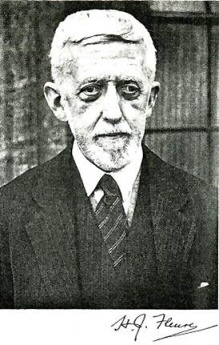
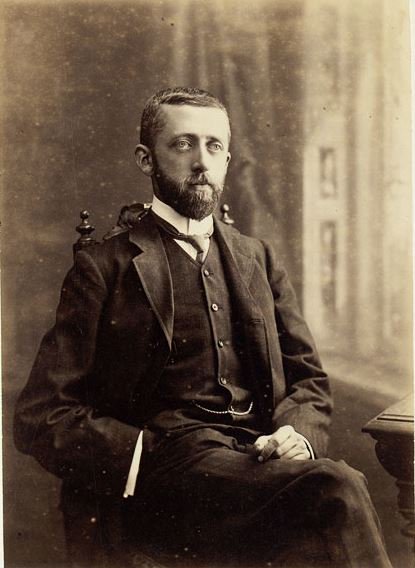
1948: Professor Herbert John Fleure FRS


Last updated December 2023

This is another of the most long serving of the Geographical Association's Presidents, and whose work ensured its survival when it was fairly young.

We come next to Professor Herbert John Fleure - another of the great names who will be forever associated with the Geographical Association, and to whom is owed a great deal by the present day Association, but whose legacy is problematic because of some of the views he held at the time.

In compiling this blog, it is clear that there are several names who are intertwined with the DNA of the Association as it is now, and one of those is H. J. Fleure or HJF as he wrote on so many documents, articles, book reviews and other documentation throughout his long time at the GA.

By the time Fleure became President, he had been linked with the GA for many decades, acting as its librarian and holding other roles, including the compilation of the Annual Report as far back as 1920 in his role as Secretary.

The Annual Report in 1920, for example talked about the progress of the association. The 2020 Conference theme, chosen by Gill Miller, is "Geography really matters", and in 1920, H. J. Fleure was already onto Gill's idea of each teacher doing something to show that geography matters,  in this statement.

"The Report of the progress of the Association should encourage teachers all over the country to put an extra dose of enthusiastic interest into their exposition of Geography and their co-operation with other subjects for a more synthetic education..... [Geography] is a subject that the pupils can go on with, must go on with, all through their lives. It is the one subject which really tries to face the problem of the interpretation of our modern world. it is the most hopeful line of work towards a better understanding between the peoples of the world.... the opportunity and responsibility of teachers of Geography is a great one, and we are confident they are rising to it."

Fleure, in addition to being a long serving Secretary of the Association, was also the editor of 'Geography' for a time, amongst many other contributions that he made to the workings of the GA.

ImageHe was born in Guernsey in 1877.
He went to Aberystwyth University, and also studied in Zurich, Switzerland.
Fleure was an academic geographer for his lengthy career, and was associated with the Universities of Aberystwyth and Manchester in particular where he held posts which allowed him to support the development ot the GA as well.

His research in Wales is described here.

Fleure wanted to look at how place influenced people, and the way that geography affected identity


During his Presidential year, he did a great deal also for the Le Play Society. The Le Play society organised overseas tours as the earlier Touring Branch had done, and also held an annual conference. I also notice the address of the Secretary on the bill below.
I wonder if the Birlings at Birling Gap is still there, or has succumbed to the coastal erosion that has taken place there in recent decades particularly.

The Le Play Society continued after the end of the GA's own Touring Branch had to close.
Someone who is also associated with the Le Play Society and the GA is Frederick Soddy, in whose name grants are now provided for teachers to provide fieldwork opportunities for their students, for both the GA and the RGS.

Here is Fleure in 1927 - 2nd from the right on the Front Row

Source: https://www.llyfrgell.cymru/fileadmin/fileadmin/docs_gwefan/amdanom_ni/cylchgrawn_llgc/cgr_erth_XXXVrh1_2010_4.pdf

Fleure was awarded an Honorary Fellowship from the American Geographical Society in 1930, and its Daly Medal in 1939.
He received the Victoria Medal of the RGS in 1946, as have a few former Presidents of the GA. A precedent that I think is worth renewing ;)

Fleure was also one of only three geographers to have been elected as a Fellow of the Royal Society - bonus points if you can name the other two...

The Fleure Library is the name of the GA's archive of materials, and it has been quite mobile, and found several homes, as has been described in the blog. Some elements of the library are now on display in the Patrick Bailey room at Solly Street (a room named after another former GA President)

As I blogged about previously, back in 1917 Fleure took the library with him when the GA relocated to Aberystwyth and he was able to secure premises in the town with appropriate space for the archive.


https://royalsocietypublishing.org/doi/pdf/10.1098/rsbm.1970.0009

He later relocated to the University of Manchester, where he had a Professorship, and the library followed him there, until 1947.
Here is an announcement from 'Geography' in 1947


As one can imagine, as with many other Geographers of the time, we have to look at his work through the lens of history.
According to this piece, Fleure made his name originally through writing about Race, although he was not a racist, and spoke out against those who were.

I wonder what this publication suggested were the particular problems... answers on a carte postale.

When he retired from the Professorship at Manchester, this piece was written about his time at the GA.
https://www.nature.com/articles/153489c0
It describes his major work called 'The Corridors of Time' which ran to several volumes.
A Natural History of Man in Britain Hardcover  by
Fleure also wrote several books on the landscape of the UK and the influence of man, and worked with Harold Peake on a series of archaeological books.

No scholar in Great Britain has done more to justify the claims of human geography, closely linked with both the natural sciences and the humanities but pursuing its own distinct objectives and devising its own technique and methods, to be one of the most illuminating approaches to the study of civilisation and its problems.
From a notice in 'Nature' in 1944

Fleure also wrote an excellent 33 page long account of the first 60 years of the GA and Education, which I have referred to several times during the production of this blog.
This is proper scholarship though, compared to my scribblings on this blog.

Updated May 2021
Fleure retired in 1944 and travelled in the USA. This was ahead of him taking up the Presidency.

Source:
“GEOGRAPHICAL ASSOCIATION. ANNUAL REPORT FOR 1944.” Geography, vol. 30, no. 1, 1945, pp. 18–19. JSTOR, www.jstor.org/stable/40562425. Accessed 15 May 2021.

Fleure died at the age of 92, having a lived a life full of geography. He finally had his own obituary, after the very many that he had written for other GA Presidents before that.

Addendum
While communicating with Ricky Buck at the GA recently, he told me that he had been in touch with an academic who was researching the life of H J Fleure.
She is exploring his life, and I hope to perhaps find out more about H. J. Fleure through chatting to her.

Another of Fleure's books, with M. Davis.
Related image

References

Matless, David. “Nature, the Modern and the Mystic: Tales from Early Twentieth Century Geography.” Transactions of the Institute of British Geographers, vol. 16, no. 3, 1991, pp. 272–286. JSTOR, www.jstor.org/stable/622948.


I have edited the page to add Fleure's Presidency to the page, as I have with all those who didn't have this information.

Fleure, H.J. (1953) "Sixty years of geography and education", Geography, vol.38, pp.231-264

https://royalsocietypublishing.org/doi/pdf/10.1098/rsbm.1970.0009 - biography from Royal Society pages.

Fleure, H. J. “GEOGRAPHY AND THE SCIENTIFIC MOVEMENT.” Geography, vol. 22, no. 3, 1937, pp. 178–188. JSTOR, www.jstor.org/stable/40560279.

Mentioned in: https://www.geography.org.uk/write/MediaUploads/Journals/Boardman_McPartland_Building_on_the_foundations.pdf

Invited to speak at Edinburgh University: https://www.ed.ac.uk/geosciences/about/history/school-history

His part in the founding of the IBG: Stoddart, D. R. “Progress in Geography: The Record of the I. B. G.” Transactions of the Institute of British Geographers, vol. 8, no. 1, 1983, pp. 1–13. JSTOR, www.jstor.org/stable/622270.
Obituary: https://www.therai.org.uk/archives-and-manuscripts/obituaries/herbert-john-fleure - written by another former President: E G Bowen (or EGB as he was known)

Fleure's account of the 60 years of the GA on JSTOR. I've mined this for lots of details on other Presidents as well, and they will appear in the next few months.

Fleure, H. J. “NEW ENGLAND-AND OLD.” Geography, vol. 31, no. 3, 1946, pp. 105–110. JSTOR, www.jstor.org/stable/40563882.
https://www.llyfrgell.cymru/fileadmin/fileadmin/docs_gwefan/amdanom_ni/cylchgrawn_llgc/cgr_erth_XXXVrh1_2010_4.pdf

http://www.geocurrents.info/geographical-thought/racial-classification-h-j-fleure-and-the-decline-of-geography

As always, if anyone has further information relating to H. J. Fleure and his time at the GA. he is one of the most influential figures in the history of the Association. Please let me know so that I can expand on this post.
 I am sure there is plenty more to say about him. 

Image - books from the Fleure library

Added August 2019

Fleure is also mentioned in Crone's chronology of Geography in the 20th Century.

Reference
Crone, G. R. “British Geography in the Twentieth Century.” The Geographical Journal, vol. 130, no. 2, 1964, pp. 197–220. JSTOR, www.jstor.org/stable/1794582.

Updated November 2019

Thanks to Jamie Woodward from the University of Manchester. He references a document which relates to Fleure's work at the University.


Also thanks for the lead to this article by another former GA president E.G.Bowen, who is yet to feature.


https://books.google.co.uk/books?id=N81mDwAAQBAJ&lpg=PT67&ots=RtCfAEEQvA&dq=charles%20close%20OS%20geographer&pg=PT79#v=onepage&q=charles%20close%20OS%20geographer&f=false

Updated March 2020

In Balchin's Centenary volume, he describes how, when Fleure reached the age of 85 in 1962, he was presented with a book of congratulatory messages and good wishes from several hundred members, together with a portrait in oils, which hung on the wall at Fulwood Road. I wonder where that is now.
At this age, he was still working as Chairman of the GA Council.

Updated July 2022

As with other Presidents I have been adding any details that emerge with respect to controversial views helf by Presidents, alongside the EDI work of the GA.
H J Fleure was a proponent of eugenics, and this needs to be remembered alongside his other achievements. Many of his books have elements of this racist theory within them.

A new image is found in a book of essays to mark the centenary of the department, which was edited by another former GA President: 'EGB' or Emrys Bowen.

This has a new image to me of Fleure.

The book was dedicated to H J Fleure.
It provides a summary of his time at Aberystwyth as well.


There is also mention of how Halford J MacKinder asked Fleure to be the Honorary Secretary of the GA, which resulted in the GA moving to Aberystwyth.


There is mention later in the foreword of the essay collection of Fleure's research:


Updated August 2023

A few tweaks and amendments.


Last updated Decembr 2023

An appreciation by Alice Garnett for the Royal Society.

Fleure was elected as a member in 1936.


Garnett, Alice. “Herbert John Fleure. 1877-1969.” Biographical Memoirs of Fellows of the Royal Society, vol. 16, 1970, pp. 253–78. JSTOR, http://www.jstor.org/stable/769590. Accessed 19 Dec. 2023.

From this article:

The last occasion when he addressed a formal gathering of geographers was in his ninety-first year. Then, from his home in Surrey, 'cocooned'-as his family described him-in rugs and shawls, in a wheel chair, he was transported to participate in 'The President's Evening' in the course of the Geographical Association's Annual Conference held at the London School of Economics.

It was a raw, bitterly cold night early in January that must have daunted many far younger than himself but for Fleure this was an occasion that come what may, no matter how 'hard the going' might be-he refused to miss, as it was designed also to mark the retirement of his successor in office after twenty-one years of service since his own day.

Unable himself to read close print, his son had read to him-at his request-every detail of the Association's Balance Sheet and Statement of Accounts presented at a recently held Annual Meeting. Fleure astonished officers whom he met that evening by the searching questions he then asked, seeking explanations for numerous small changes and variations in financial procedures, in what would, at any age, have been a prodigious feat of memory.

Before a large audience - and inevitably without the help of notes - he then delivered without faltering, a most memorable and moving speech, reiterating in this, his last public utterance, his plea through the teaching of geography, for toleration and mutual understanding amongst peoples.


Eighteen months later, he died peacefully on 1 July 1969 at his home in his ninety-second year, after an unexpected and short attack of bronchitis. Amongst geographers, he was a leader whose ideals, wisdom and strength of purpose can hardly be surpassed.

Presidential Address:
 1949. Geography and evolution. Geography, 34, 1-9. Presidential

Update December 2023
A series of tweets on the Relief Model of Wales. 

Margaret Mackintosh RIP

Updated post. Sad news at the end of last week from colleagues who have organised the Charney Conference over the years of the passing of Ma...