Showing posts with label University of Nottingham. Show all posts

Friday, 27 August 2021

2020: Dr Susan Pike

Updated August 2025

Dr Susan Pike is Assistant Professor (Education) at Trinity College Dublin (TCD) and was previously Lecturer in Geography Education in the School of STEM Education, Innovation and Global Studies at the Institute of Education in Dublin City University, in the Republic of Ireland. 

She moved to Ireland from England in 2000.

School and University
Susan had a shaky start with geography. 

She remembers copying off the board in primary school in Scotland and learning off examination answers and standing up when getting questions wrong in secondary school in England. Luckily for her last year of A level, she had an inspiring teacher Mrs Fairclough, as she remembers

"Jane was amazing, she realised very quickly we had pretty poor experiences of Geography so far. She listened to our complaints, and acted upon them! She took is out on fieldwork, passing on her passion for Geography and the environment. She was so caring, she also persuaded me to apply for university, something I had never considered before. For this I remain so grateful to her." 

Susan attended Nottingham University's School of Geography from 1987. One of her lecturers was Professor John Cole. Susan had lovely memories of him: 

"As geography students we were a social lot, most of the class went out on Thursday nights to Rock City. But we were all there at 9 am on Fridays for his 'Developing World' lectures. He was so interesting, teaching us geography through story. I was very lucky to have him as my tutor in 2nd Year, through his stories and questions, he never failed to get us thinking geographically". 

Her other memorable lecturers were numerous, and included Dr Catherine Delano-Smith and Professor Louise Crewe. Over the past 20 years Susan has designed and taught on a range of modules in Geography,

Teaching
After graduating, Susan worked for Compassion in World Farming for three years, hence the idea for her GA Conference theme in 2021. She worked in all sections, from despatch to campaigns but also knew that she wanted to move on and teach. 
She gained a place on the PGCE at the University of Southampton, and her tutor was Professor Nick Foskett. She had very positive experiences at Southampton. 

"I was so fortunate on the PGCE. My tutor was Nick, who was so dedicated to his role. he really cared for us all. At Bournemouth School for Boys, we were treated with such care, as we were the first PGCE students there and at Oaklands Community School in Southampton, the same was so as they always took students." 

During this time Susan realised the importance of her subject association:

"I was always aware of the GA, having read Geography at university. But on the first day of our PGCE, Nick told us to join the GA and that the Conference would be in Southampton that year, so I joined and went the Conference. I remember being 'star-struck' by meeting so many of the people whose work I had read. And they were all so lovely!" 

Susan worked at King Richard School in Paulsgrove, Portsmouth, then back to Oaklands Community School in Southampton. All whilst completing her Masters in Geographical and Environmental Education at Southampton. She then became Head of Geography at Hayling School near Portsmouth. She fondly remembers all the roles she held as well as the students and teachers she worked for. 

"I was so fortunate to work in great schools, with such dedicated teachers. All the school I worked in were challenging in terms of the issues some students' experiences, but luckily as a geography teacher you were able to link the learning to the students' lives and engage them. Most of them eventually liked geography and many did better than they thought they would at GCSE! We also went on many trips, working out the very cheapest ways to travel, from down to the local beach or shops and all the way to EuroDisney and the Christmas Markets in Germany." 

Working in teacher education.
Susan continued to be a member of the GA, and on moving to Ireland and working in teacher education, she started writing for the GA. She first wrote about research on children's national identity in Primary Geography in 2001. She went on to become more involved in the work of primary geographers, presenting at several GA Conferences, Geography Teacher Educators' Conferences and Charney Primary Geography Conferences. 
During this time Susan completed her doctorate in education at Queen's University Belfast as well as other published research in geography education and teacher education. As can be seen from her DCU profile, she has written numerous books, papers, chapters and resources all related to geography and geography teacher education. She is also on the Committee of the Geography Society of Ireland, a member of the Geography Education Research Collective (GERECO), the editorial board of International Research in Geography and Environmental Education (IRGEE). 

Susan and the GA Presidential Role 
Over time, Susan became more involved in the work of the GA. In 2016 Susan's first book was published, 'Learning Primary Geography: Ideas and Inspirations from Classrooms', featuring theory and practice in primary geography. Over this time Susan wrote articles, many with teachers for Primary Geography. 
She received the Geographical Association Award for Excellence in 2016. 
She worked extremely hard as Secretary of the GA’s Early Years and Primary Phase Committee from 2017. She then became Junior Vice President in 2018. 
Over the past two years she has chaired the GA’s Education Group meetings for the last year in her role as GA Vice-President and President, and is currently a GA Trustee. Susan’s 2021 Presidential theme of ‘Compassionate Geographies’ grew in significance and resonance since it was first announced, as we all became increasingly aware of our own personal geographies and connections with others. The Conference, held online, was a great success. Session downloads are still available to obtain by those who attended, and can be purchased by those who didn't attend the event. Susan was delighted about how the Conference went: 

"Thanks to all the GA member and staff who got involved, the event went as well as it could! The keynote speakers, the workshops and lectures as well as the Wonder Room were all wonderful." 

The online format of the conference allowed those who could not normally attend the event to come along. As Susan says:

"My original reasons for wanting to become President were to encourage more people to get involved in the Association, as the restrictions this year has actually helped this process. I think people are more likely to say they can volunteer for the GA, as it's been easier to meet up online. However, I also know folk are really looking forward to seeing each other for real! There's also more to do to make the GA more diverse and inclusive, but we are all working on that as you can see in each issue of GA News. It's been a strange year to be GA President, but I've enjoyed every moment of it. It has been a privilege everyday. Luckily I was in the presidential cycle for the two years before, working with Education Group and Governing Body before our movements were restricted. However, there are many GA members I've only really got to know online, many of whom have become more involved in the Association. All of them are so dedicated to the Association and promoting and developing geography in their settings. So, like many of us, I am really looking forward to Conference in 2022, for many missed cups of coffee and chats, as well as the quiz, BeerMeet and other events in Guildford!" 

As she steps down from being GA President, she is looking forward to continuing her work for the GA, as a member of Governing Body and working on various projects for the Association. Most of all she is looking forward to linking up her students with schools, principals, teachers and children again, something that has been impossible recently. 


Images copyright: Bryan Ledgard / Geographical Association - the next images were provided by Susan Pike.


Susan with teachers involved in Learning Primary Geography, and Dr Harold Hislop, Chief Inspector of Schools in Ireland in 2016


Some of Susan's Geography Specialism students at the GA Conference in 2017


Some of Susan's BEd2 students 2011, out of fieldwork with Barnaby Bear


Rethinking risk by making fire with BEd3 students at DCU, 2018

References

Monday, 21 June 2021

2016: Mary Biddulph

I have had the privilege of working with Mary Biddulph
on a range of projects over the years.
Mary worked for many years in teacher education at the University of Nottingham.

We worked together on the Young People's Geographies project, which ran from 2006-2011. I started as a teacher, but was involved with the final stages of the project as a GA employee.

Mary has kindly filled in the Zoom form that I created for the recent Presidents.

Mary was born in Brighton in 1960.
She started school in the West Midlands, her family having moved there when she was four years old. However, she then moved to Maidstone in Kent when she was 12 and went to school there until she finished her A levels.
Of her time in education she said:
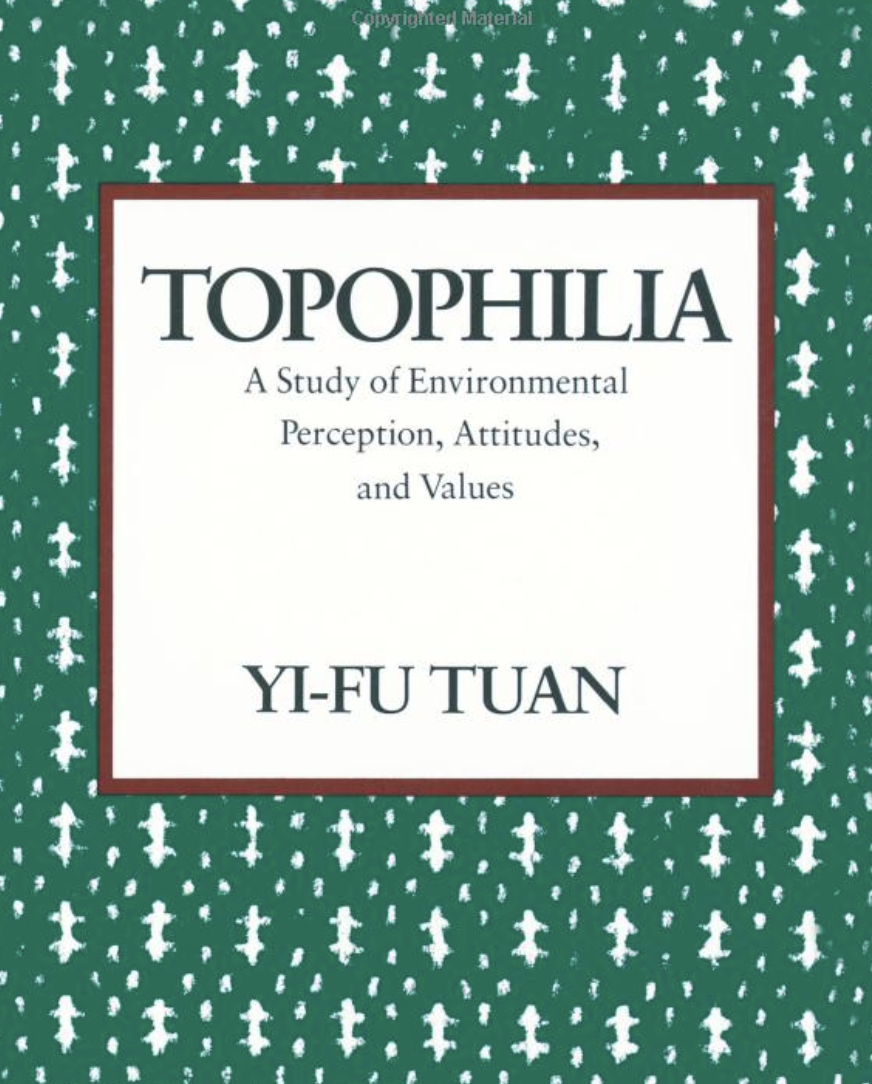
"My geography education was relatively uninspiring...except for the fieldwork at A level - geography made so much sense after the field week in Swanage. I did my degree at the University of Sussex, where there was a lot of emphasis on International development (many thanks to (former GA President) Tony Binns for his enthusiastic teaching) and historical geography (many thanks to Brian Short for his wisdom and insight). It was here I first read 'Topophilia' by Yi Fu Tuan - this changed my view of geography for ever. I recommend it to everyone. 

I did my PGCE at the University of Nottingham and have lived in the East Midlands ever since. Harry Tolley and Frank Molyneux were my tutors, and it is fair to say they were both, in very different ways, inspirational."

This is a reminder of the importance of those previous generations of ITE trainers who trained the current generations of teachers - people like Vincent Tidswell who I was fortunate to have had train me.... I may need to investigate these two gentlemen next...

Mary responded next to this question, which I have asked all the available Presidents: "What has your career been e.g. teacher / academic / author / other work outside the obvious geography sphere?"
Mary said:

"I feel I have done bits of all of the above in my time. However, I started my career in geography education as a young (and very naive) teacher in an inner-city school in Derby. The students there were magnificent - so skilled at running rings round me!

I had to learn fast. I became a PGCE tutor at the University of Nottingham after eight years in the classroom. The transition was just luck - right place at the right time - Harry Tolley needed a part-time colleague and I was lucky enough to be it. 

Working alongside Harry was wonderful, and I learnt so much from him during my early years as a PGCE tutor. His boundless enthusiasm for and commitment to geography education made him an excellent role model for this early-career PGCE tutor. I worked in ITE Geography at the University of Nottingham for nearly 30 years. It sounds like a long time, but it isn't. The time flew by. The University afforded me many professional opportunities for which I am forever grateful. Yes, the chance to travel to many interesting places was a benefit of working at the University, but there were three other and much more significant benefits: 
1. The freedom to think / read / reflect on geography education and its significance to children's education. 
2. The opportunity to work with many wonderful hard-working PGCE students and their subject mentors in schools - this was a real privilege. 
3. The chance to be part of a wider community (including the GA) of committed geography educationists who fed my ideas and challenged my thinking. 

Part of the freedom of working in the University was being able to seize opportunities as they came along. For me, an example of such an opportunity was my involvement in the Young People's Geographies (YPG) project. The project comprised a unique combination of teachers, academic geographers and school students all working together developing the geography curriculum - it was both great fun and so inspiring. The school students involved in the project had such rich ideas about geography and were so perceptive about what the curriculum could be. We need to listen to them more than we do."

As one of those teachers I certainly learned a great deal from my involvement in the project.

She told me more about her Presidential theme.

Inclusive Geographies? was the theme I selected. 
I chose this theme because I wanted the geography community to think about the extent to which school geography, and geography more generally is (or is not) inclusive of a diverse range of students and teachers. The question mark is significant to the theme. 

I am convinced that there was then, and there still is, important work to be done to ensure all young people access the kind of geographical education that will serve them well in their current and future lives. I also think there is work to be done in ensuring the geography teaching profession better reflects the communities it serves. 

These are complex issues and there are no simple answers, but nonetheless they are issues not to be sidestepped. Prior to being president I edited the journal 'Teaching Geography' for three years, and while in this role served on the GA's Education Committee. I was also a member of the YPG project team (the project was funded by the Action Plan for Geography) and had also been involved in the evaluation of a couple of other GA projects. Since being president I have stepped back a bit but am currently on the Geography Education Research Working Group (GERWG) and am also a member of a group looking at developing a curriculum framework for geography."

I ask all former GA Presidents why the GA matters:

"The GA matters to me because it provides me, and many others, with membership of a community of practice committed to high quality geography education. It is home to, and even a refuge for, a wide range of geography education professionals who debate, discuss, argue and pontificate on the question: What exactly is a 'high quality geography education'. It provides a place where assumptions about school geography are challenged and where teachers can be sure of the quality of the ideas it encourages. School geography has not always had a secure place in the school curriculum, and the GA has been crucial in advocating for the subject in policy circles where the significance of geography to young people's education has been often been completely misunderstood. The GA continues to play an essential and ongoing role in ensuring geography is part of the education project. I'm not really sure how I got involved. It just seemed to happen a gradually.

I asked her about any successes of her Presidential year:
"I think it's difficult to judge 'successes', but my sense of achievement just came from working with the excellent staff at HQ and working with the 'team' of presidents to support the mission of the GA. Whilst the presidential lecture is the big public event for the president, it is really a small part of the presidential year - the rest of the year is really a team effort and HQ staff and the vice presidents and the past-president are key to that effort. Having said this, being president is good fun and it does mean that you get to engage with a wide range of enthusiastic geographers - attending the final weekend of Worldwise quiz in Blencathra, seeing the hard work of the different committees and enjoying the less formal aspects of the annual conference are all special parts of the role that I remember with great affection."

She also trained the current Nottingham University PGCE tutor Mal Kerr, just as she herself was trained by the previous generation.
Thanks to Mary for answering the questions so thoughtfully, and thanks in advance for the ongoing curriculum work which will be one feature of my own Presidential year.

"I still think there is work to do in helping a wider range of teachers and educators to get involved in the work of the GA. In particular, we need to think about how to engage the enthusiasm of early career teachers before they are no longer 'early career'."

References
Academic writing: https://www.tandfonline.com/author/Biddulph%2C+Mary - some very recent papers.


'TG' editorials feature in many issues too of course.

YPG has its own blog posts which includes some of the references, particularly a paper Mary co-wrote with Roger Firth and a special issue of 'Teaching Geography'.

Images - Copyright: Bryan Ledgard / Geographical Association

Tuesday, 14 July 2020

Neville Scarfe

Updated August 2023

Neville Scarfe was an influential tutor at the Institute of Education who was connected with several GA Presidents, because of their own association with UCL. Molly Long, President in 1970 was closely connected with the Institute during her career.


A brief biography:

Neville Vincient Scarfe was born in 1909. 
In 1927 he achieved a first-class honours B.A. in Geography, at age 19 heading the honours list. The following year he acquired a teaching diploma, which from 1928 to 1931 he put to good use as senior geography master at Bemrose Grammar School, Derby. Thence he transferred to the University of Nottingham, where for four years he lectured in geography and earned a master’s degree as well. 

From 1935 to 1951 he worked as senior lecturer and head of geography at the University of London Institute of Education. From this last position he took leave of absence on war work (1939-1945), serving as director of press censorship, Ministry of Information, London. 

After the war a visiting professorship (1948-1949) at Syracuse University, New York State, and the task of co-ordinating the UNESCO International Seminar at McGill University preluded his five years (1951-1956) as Dean of Education at the University of Manitoba. From the latter position he submitted his application for the corresponding deanship at University of British Columbia.

The Neville Scarfe Education Building (University of British Columbia)

The University, in Vancouver, has a Neville Scarfe building and Lecture Theatre. 
He was Dean of Education there for 18 years and achieved a huge amount.
https://studiohub.ca/on-the-boards/ubc-neville-scrafe-lecture-theatre

He contributed an article on games in geography to 'Geography' in 1971.
His son is an actor.
He died in 1985.
I wonder what he may have made of the current status of Canadian Geography. There is an excellent Royal Canadian Geographical Society, but geography doesn't have a high status in the school curriculum in Canada.

Source:
SCARFE, N. V. “Games, Models and Reality in the Teaching of Geography in School.” Geography, vol. 56, no. 3, 1971, pp. 191–205. JSTOR, www.jstor.org/stable/40567554. Accessed 6 July 2020.
Neville Scarfe and British Columbia


Throughout his career, Neville wrote over 100 articles and gave numerous speeches on education around the world. His intuition and progressive understanding of post-war learning instilled in the Faculty the idea that teachers are made, not born. With this spirit in mind, he created rigorous, specialized streams taught by enthusiastic professors to produce dynamic and informed educators. Always an advocate for educational reform, Neville was particularly critical of the findings of the 1960 Report of the Royal Commission on Education (the “Chant Report”), calling it “contradictory and conservative”*. He took particular issue with its recommendations for harsh discipline in classrooms and the assumption that children will behave belligerently unless taught otherwise.

Image source:

Further memories of Neville Scarfe welcome - he was an important geographer on both sides of the Atlantic and I am sure there is plenty more to come.

Updated August 2023


After World War II, Neville Scarfe returned to the Institute of Education of the University of London, where he taught the principles and practices of the teaching of geography. This sparked his interest in the philosophy of education—this was a pursuit he continued for the rest of his life, so it was probably what could be considered his main interest.


They included James Fairgrieve, who he described as 
"a down to earth geographer bent on assisting students to imagine world characteristics accurately, the better to imagine political and social problems"

https://snaccooperative.org/view/64845894

Scarfe was a proponent of play in education.
https://www.tandfonline.com/doi/abs/10.1080/00094056.1962.10726996

Saturday, 6 June 2020

John Cole

Another long-lived and influential geographer has sadly passed, on the 30th of May.
John Cole was particularly associated with the University of Nottingham where he studied himself and then returned for a long career.

John Cole was an early enthusiast for computers
Cole was born in Sydney, Australia. He graduated from the University of Nottingham in 1950. He later returned there to join the staff of the Geography Department, rising to become Professor of Urban and Regional Geography. He was Emeritus Professor of Geography at the university. From 1957 he wrote or co-authored over 25 books on geography, including Geography of World Affairs, first published in 1959. His work ran from school texts to academic papers, and he was an early adopter of computers in geographical studies.
It seems he was an early innovator with ICT in Geography during the quantitative revolution and also wrote on poverty.
I remember a couple of his books in particular:
  • Quantitative Geography: Techniques and Theories in Geography (with Cuchlaine. A. M. King - who also sadly passed away relatively recently and had an obituary in the recent issue of 'Geographical Journal') (1968)
  • New Ways in Geography: A Guide for Teachers (with N. J. Beynon) (1969)
He was a prolific writer.
An obituary in the Times described him as a "popular, gentle geographer", which is a lovely thing to be remembered as.
Update
He was also mentioned in the Presidential Lecture of E.C. Marchant in 1967 who talked about him working to produce resources for teachers following the arrival of ICT.

An article in 'Geography' in 1969.


Sources:
Wikipedia page: https://en.wikipedia.org/wiki/John_Cole_(geographer)
https://www.thetimes.co.uk/article/professor-john-cole-91-popular-gentle-geographer-and-writer-on-world-poverty-nncdf8sp9 - paywall

COLE, J. P. “Mathematics and Geography.” Geography, vol. 54, no. 2, 1969, pp. 152–164. JSTOR, www.jstor.org/stable/40566781. Accessed 12 June 2020.

Margaret Mackintosh RIP

Updated post. Sad news at the end of last week from colleagues who have organised the Charney Conference over the years of the passing of Ma...