Showing posts with label EGB. Show all posts

Wednesday, 22 April 2020

1964: A Scilly excursion

1964: Nearly disastrous expedition from the Falmouth Spring Conference to the Scilly Isles, in the SS Scillonian - one of the roughest passages for many years. 

This passage in Peter Fox's chronology intrigued me.
At the time there were some summer and spring field excursions, which were very popular as they predated (just) the main travel agents / package holiday business.

The excursion formed part of the 1964 Spring Conference in April, which took place in Cornwall.


You woll see reference to many former Presidents in the speakers list, including David Leslie Linton. who will be coming up next in 1964, talking about tors and granite, which must have been a great pleasure for those involved.

It seems that there was a voyage on a ship to the Scilly Isles which encountered particularly rough weather.


Source: “The Geographical Association.” Geography, vol. 49, no. 3, 1964, pp. 346–348. JSTOR, www.jstor.org/stable/40566391. Accessed 22 Apr. 2020.

Tuesday, 14 April 2020

1962: Professor Emrys George Bowen - 'EGB'

Emrys George Bowen.jpg
Last updated July 2022

1962 saw another academic Geographer take over as President.

Professor Bowen worked at Aberystwyth University as a human geographer, where the GA was based for many years. 
He was known to all as 'EGB'.
He was born in 1900 in Carmarthen, Wales.

He studied at the University of Aberystwyth under another previous President: H. J. Fleure, graduating in 1923.
He also later wrote an obituary for Fleure on behalf of the Royal Anthropological Institute.

The following year he entered the Education department and obtained a teacher's diploma. Subsequently, and after a year's research at Aberystwyth, he became the first Cecil Prosser Fellow at the Welsh National School of Medicine at Cardiff.

During 1928-9 he was an assistant editor with the 14th edition of the Encyclopedia Britannica (writing some geography content) before being appointed an assistant lecturer in the department of Geography and Anthropology at Aberystwyth in 1929. There he stayed for the rest of his academic career as lecturer, senior lecturer and ultimately Gregynog Professor from 1946.
During the Second World War he remained at Aberystwyth and lectured in meteorology to the Initial Training Wing (ITW) of the RAF which was located there - like many Presidents of this time, he had wartime experience.

He had pieces published in GA journals as early as 1932, over 30 years before he eventually became the President - this was a time when longevity and continuity of GA membership was perhaps greater than today, with a few notable exceptions who I always look forward to seeing at the GA conference.

Bowen's Presidential Address was on the theme of 'The Geography of Nations', connecting with his interests in anthropology, and was given in 1963 at the London School of Economics.


EGB was President of The Institute of British Geographers in 1958, President of section E of the British Association in 1962, and President of the Cambrian Archaeological Society in 1967.

He was awarded the Murchison grant of the Royal Geographical Society in 1958.

This makes him another one of many GA Presidents to have gone on to receive RGS Medals.

In 1949 Bowen was elected a Fellow of the Society of Antiquaries. He was awarded an honorary Ll.D. by the University of Wales and an honorary Doctorate by the Open University. He was also an honorary member of the Gorsedd of Bards.

The Annual E. G. Bowen Lecture was established by Aberystwyth University in 2014 in memory of Professor E. G. Bowen, who had a particular interest in the social and physical geographies of Wales.

I liked this final honour, because it links in with my own ideas of storytelling as being one of the great gifts of any teacher, and the Bardic tradition is strong in this element of teaching and listening.

The Biography of Wales piece also has this comment:

"it was in the tradition of the cyfarddwyddiaid, of the story-tellers of early Wales and of the Welsh preachers of later times rather than of the academic disquisition, just as his research was based on intuition rather than on the systematic analysis of data bases."

Former GA President Steve Rawlinson (who will have his own entry in due course) has some very happy memories of Professor Bowen. They are included here:

EG Bowen – memories from Steve Rawlinson.

My first meeting with EG was during Freshers week. It was a long tradition that he would give a
lecture to all the new students at the university in the Kings Hall – a building now sadly demolished. I
was warned by roommate who knew about this event not to dress up for the occasion. We freshers
were herded into the stalls while the second and third years occupied the upper tiers. EG appeared
on the stage to riotous applause and then promptly disappeared behind the lectern – he was a
diminutive figure, although as I was to later discover one with a huge personality. From then on we
only saw the top of his head as he gave what I subsequently heard was a superb lecture delivered in
an inimitable style. His words were rather lost to us as we fended off an almost continuous hail of
missiles of water and flour and the occasional egg from above. This barrage only stopped when the
pictures of the fire in 1885 that engulfed the original college appeared to huge applause and cheers
from those above. The end of his lecture was marked by further enthusiastic applause from the
whole audience though none had heard very much of it.

Always smiling EG was a legend at the uni – long retired by the time I got there he was still an almost
continuous presence during my undergrad years and I was highly privileged to get to know him when
I became expeditions officer for the Geog Soc. I enjoyed many trips to various locations with him
sitting next to me giving an almost continuous commentary about the places we passed through. It
was a privilege to hear him speak in more formal settings where I came to appreciate his
consummate skill as a presenter and teacher. He always had three points/themes/threads to his
arguments and his timing was that of the professional actor. It was a delight to be in his company.
It seemed he never turned down a speaking engagement and put as much energy into talking to a
village WI meeting as he did that of more academic gatherings. No one got short changed at an EG
lecture. His enthusiasm and that twinkle in his eyes always drew his audience in. His travelling
around Wales giving lectures was truly in the spirit of the founders of the University who undertook
such trips to convince people of the importance of having a university on their doorstep.
Personally he gave me an immeasurable amount of encouragement during my MSc year and was
always interested to hear how the research was going and offer advice and thought. I think it was EG
that suggested I employ a Welsh speaker to carry out my interviews with farmers – a cunning move
as it increased the response rate considerably. It was a delight to have him on the stage at my
graduation for that degree and meet my parents afterwards. I always remember him removing his
hat when introduced to my mother – a real gentleman. I was so pleased to recently discover the
reference he wrote for me.

EG tales are part of the myths and legends of Aber – everyone has their favourites. I have two
particular stories that seem to sum up EG. 
When his yellow mini was sold – the car in which he travelled all over Wales – it was advertised as never having been out of second gear. Having survived two journeys with him I can vouch that the garage had got that right.
Others have written that being an administrator was not his forte – his filing system was really to
have tables on which piles of papers accumulated. How he found anything always was a mystery. He
had offices in the old college originally which had a rather ancient heating system consisting of gas
fires in each room. EG was very wary of these and would turn the gas on and then retreat to the far
side of the room and proceed to throw lighted matches at the fire. The eventual loud explosion as
the gas caught was the signal that ‘the prof is in’.

EG really was a one off – a story teller, a supreme teacher and communicator whose passion for and curiosity for all things geographical was irresistible. 
His twinkling eyes, his every present smile and his ability to talk to anyone made him the best of company. He features hugely in my many happy memories of Aber and my deep love of the ‘college by the sea’.

Updated January 2021

Steve included a picture of EGB in his Presidential lecture in 2016.

https://slideplayer.com/slide/10339855/ 

Bowen also wrote many reviews of other GA Presidents' work, including H J Fleure, as mentioned in his own blog post from 1948.

He was welcomed to the Presidency in a piece in 'Geography', where he was described as being "already well known to numerous members through his own inspired teaching and scholarship".


EGB died in 1983.

An obituary, written by Harold Carter, was published in the Transactions of the IBG


He was also remembered by another former GA President Sheila Jones as "a very kind member of the hierarchy". Further memories of EGB may follow, and I am happy to add them here, along with other images and memories.

References

Wikipedia: https://en.wikipedia.org/wiki/E._G._Bowen - source of the image above

Added the GA Presidency role to this entry.

https://www.therai.org.uk/archives-and-manuscripts/obituaries/herbert-john-fleure


BOWEN, E. G. “The Geography of Nations: Address to the Geographical Association.” Geography, vol. 48, no. 1, 1963, pp. 1–17. JSTOR, JSTOR, www.jstor.org/stable/40565501.

Bowen, E. G. “EARLY CHRISTIANITY IN THE BRITISH ISLES: A STUDY IN HISTORICAL GEOGRAPHY.” Geography, vol. 17, no. 4, 1932, pp. 267–276. JSTOR, www.jstor.org/stable/40558508.
Biography: https://biography.wales/article/s8-BOWE-GEO-1900

British Geography 1918-1945, Edited by Robert.W Steel - published in 1987.
Chapter 12 was by J A Patmore, where he gave a personal perspective on the period.

Obituary: Carter, Harold. “Emrys G. Bowen, 1900-1983.” Transactions of the Institute of British Geographers, vol. 9, no. 3, 1984, pp. 374–380. JSTOR, www.jstor.org/stable/622242. Accessed 4 Apr. 2020.

Emrys Bowen is described as "with nonconformist fervour, always happy to show that every worthwhile innovation had its roots in Aberystwyth"

“Obituary: E. G. Bowen, 1900-1983.” The Geographical Journal, vol. 150, no. 2, 1984, pp. 297–297. JSTOR, www.jstor.org/stable/635050. Accessed 4 Apr. 2020.

Updated August 2021
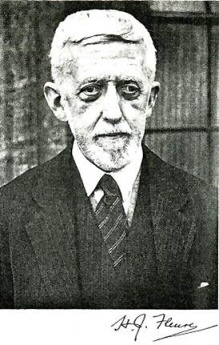
A portrait of EGB:
One of his books

Updated July 2022

These are mostly on themes related to Wales.


If you have further information relating to EGB, please get in touch.

Thursday, 7 November 2019

1948: Professor Herbert John Fleure FRS


Last updated December 2023

This is another of the most long serving of the Geographical Association's Presidents, and whose work ensured its survival when it was fairly young.

We come next to Professor Herbert John Fleure - another of the great names who will be forever associated with the Geographical Association, and to whom is owed a great deal by the present day Association, but whose legacy is problematic because of some of the views he held at the time.

In compiling this blog, it is clear that there are several names who are intertwined with the DNA of the Association as it is now, and one of those is H. J. Fleure or HJF as he wrote on so many documents, articles, book reviews and other documentation throughout his long time at the GA.

By the time Fleure became President, he had been linked with the GA for many decades, acting as its librarian and holding other roles, including the compilation of the Annual Report as far back as 1920 in his role as Secretary.

The Annual Report in 1920, for example talked about the progress of the association. The 2020 Conference theme, chosen by Gill Miller, is "Geography really matters", and in 1920, H. J. Fleure was already onto Gill's idea of each teacher doing something to show that geography matters,  in this statement.

"The Report of the progress of the Association should encourage teachers all over the country to put an extra dose of enthusiastic interest into their exposition of Geography and their co-operation with other subjects for a more synthetic education..... [Geography] is a subject that the pupils can go on with, must go on with, all through their lives. It is the one subject which really tries to face the problem of the interpretation of our modern world. it is the most hopeful line of work towards a better understanding between the peoples of the world.... the opportunity and responsibility of teachers of Geography is a great one, and we are confident they are rising to it."

Fleure, in addition to being a long serving Secretary of the Association, was also the editor of 'Geography' for a time, amongst many other contributions that he made to the workings of the GA.
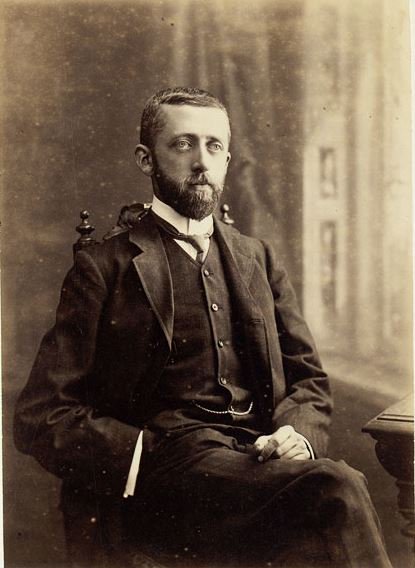
ImageHe was born in Guernsey in 1877.
He went to Aberystwyth University, and also studied in Zurich, Switzerland.
Fleure was an academic geographer for his lengthy career, and was associated with the Universities of Aberystwyth and Manchester in particular where he held posts which allowed him to support the development ot the GA as well.

His research in Wales is described here.

Fleure wanted to look at how place influenced people, and the way that geography affected identity


During his Presidential year, he did a great deal also for the Le Play Society. The Le Play society organised overseas tours as the earlier Touring Branch had done, and also held an annual conference. I also notice the address of the Secretary on the bill below.
I wonder if the Birlings at Birling Gap is still there, or has succumbed to the coastal erosion that has taken place there in recent decades particularly.

The Le Play Society continued after the end of the GA's own Touring Branch had to close.
Someone who is also associated with the Le Play Society and the GA is Frederick Soddy, in whose name grants are now provided for teachers to provide fieldwork opportunities for their students, for both the GA and the RGS.

Here is Fleure in 1927 - 2nd from the right on the Front Row

Source: https://www.llyfrgell.cymru/fileadmin/fileadmin/docs_gwefan/amdanom_ni/cylchgrawn_llgc/cgr_erth_XXXVrh1_2010_4.pdf

Fleure was awarded an Honorary Fellowship from the American Geographical Society in 1930, and its Daly Medal in 1939.
He received the Victoria Medal of the RGS in 1946, as have a few former Presidents of the GA. A precedent that I think is worth renewing ;)

Fleure was also one of only three geographers to have been elected as a Fellow of the Royal Society - bonus points if you can name the other two...

The Fleure Library is the name of the GA's archive of materials, and it has been quite mobile, and found several homes, as has been described in the blog. Some elements of the library are now on display in the Patrick Bailey room at Solly Street (a room named after another former GA President)

As I blogged about previously, back in 1917 Fleure took the library with him when the GA relocated to Aberystwyth and he was able to secure premises in the town with appropriate space for the archive.


https://royalsocietypublishing.org/doi/pdf/10.1098/rsbm.1970.0009

He later relocated to the University of Manchester, where he had a Professorship, and the library followed him there, until 1947.
Here is an announcement from 'Geography' in 1947


As one can imagine, as with many other Geographers of the time, we have to look at his work through the lens of history.
According to this piece, Fleure made his name originally through writing about Race, although he was not a racist, and spoke out against those who were.

I wonder what this publication suggested were the particular problems... answers on a carte postale.

When he retired from the Professorship at Manchester, this piece was written about his time at the GA.
https://www.nature.com/articles/153489c0
It describes his major work called 'The Corridors of Time' which ran to several volumes.
A Natural History of Man in Britain Hardcover  by
Fleure also wrote several books on the landscape of the UK and the influence of man, and worked with Harold Peake on a series of archaeological books.

No scholar in Great Britain has done more to justify the claims of human geography, closely linked with both the natural sciences and the humanities but pursuing its own distinct objectives and devising its own technique and methods, to be one of the most illuminating approaches to the study of civilisation and its problems.
From a notice in 'Nature' in 1944

Fleure also wrote an excellent 33 page long account of the first 60 years of the GA and Education, which I have referred to several times during the production of this blog.
This is proper scholarship though, compared to my scribblings on this blog.

Updated May 2021
Fleure retired in 1944 and travelled in the USA. This was ahead of him taking up the Presidency.

Source:
“GEOGRAPHICAL ASSOCIATION. ANNUAL REPORT FOR 1944.” Geography, vol. 30, no. 1, 1945, pp. 18–19. JSTOR, www.jstor.org/stable/40562425. Accessed 15 May 2021.

Fleure died at the age of 92, having a lived a life full of geography. He finally had his own obituary, after the very many that he had written for other GA Presidents before that.

Addendum
While communicating with Ricky Buck at the GA recently, he told me that he had been in touch with an academic who was researching the life of H J Fleure.
She is exploring his life, and I hope to perhaps find out more about H. J. Fleure through chatting to her.

Another of Fleure's books, with M. Davis.
Related image

References

Matless, David. “Nature, the Modern and the Mystic: Tales from Early Twentieth Century Geography.” Transactions of the Institute of British Geographers, vol. 16, no. 3, 1991, pp. 272–286. JSTOR, www.jstor.org/stable/622948.


I have edited the page to add Fleure's Presidency to the page, as I have with all those who didn't have this information.

Fleure, H.J. (1953) "Sixty years of geography and education", Geography, vol.38, pp.231-264

https://royalsocietypublishing.org/doi/pdf/10.1098/rsbm.1970.0009 - biography from Royal Society pages.

Fleure, H. J. “GEOGRAPHY AND THE SCIENTIFIC MOVEMENT.” Geography, vol. 22, no. 3, 1937, pp. 178–188. JSTOR, www.jstor.org/stable/40560279.

Mentioned in: https://www.geography.org.uk/write/MediaUploads/Journals/Boardman_McPartland_Building_on_the_foundations.pdf

Invited to speak at Edinburgh University: https://www.ed.ac.uk/geosciences/about/history/school-history

His part in the founding of the IBG: Stoddart, D. R. “Progress in Geography: The Record of the I. B. G.” Transactions of the Institute of British Geographers, vol. 8, no. 1, 1983, pp. 1–13. JSTOR, www.jstor.org/stable/622270.
Obituary: https://www.therai.org.uk/archives-and-manuscripts/obituaries/herbert-john-fleure - written by another former President: E G Bowen (or EGB as he was known)

Fleure's account of the 60 years of the GA on JSTOR. I've mined this for lots of details on other Presidents as well, and they will appear in the next few months.

Fleure, H. J. “NEW ENGLAND-AND OLD.” Geography, vol. 31, no. 3, 1946, pp. 105–110. JSTOR, www.jstor.org/stable/40563882.
https://www.llyfrgell.cymru/fileadmin/fileadmin/docs_gwefan/amdanom_ni/cylchgrawn_llgc/cgr_erth_XXXVrh1_2010_4.pdf

http://www.geocurrents.info/geographical-thought/racial-classification-h-j-fleure-and-the-decline-of-geography

As always, if anyone has further information relating to H. J. Fleure and his time at the GA. he is one of the most influential figures in the history of the Association. Please let me know so that I can expand on this post.
 I am sure there is plenty more to say about him. 

Image - books from the Fleure library

Added August 2019

Fleure is also mentioned in Crone's chronology of Geography in the 20th Century.

Reference
Crone, G. R. “British Geography in the Twentieth Century.” The Geographical Journal, vol. 130, no. 2, 1964, pp. 197–220. JSTOR, www.jstor.org/stable/1794582.

Updated November 2019

Thanks to Jamie Woodward from the University of Manchester. He references a document which relates to Fleure's work at the University.


Also thanks for the lead to this article by another former GA president E.G.Bowen, who is yet to feature.


https://books.google.co.uk/books?id=N81mDwAAQBAJ&lpg=PT67&ots=RtCfAEEQvA&dq=charles%20close%20OS%20geographer&pg=PT79#v=onepage&q=charles%20close%20OS%20geographer&f=false

Updated March 2020

In Balchin's Centenary volume, he describes how, when Fleure reached the age of 85 in 1962, he was presented with a book of congratulatory messages and good wishes from several hundred members, together with a portrait in oils, which hung on the wall at Fulwood Road. I wonder where that is now.
At this age, he was still working as Chairman of the GA Council.

Updated July 2022

As with other Presidents I have been adding any details that emerge with respect to controversial views helf by Presidents, alongside the EDI work of the GA.
H J Fleure was a proponent of eugenics, and this needs to be remembered alongside his other achievements. Many of his books have elements of this racist theory within them.

A new image is found in a book of essays to mark the centenary of the department, which was edited by another former GA President: 'EGB' or Emrys Bowen.

This has a new image to me of Fleure.

The book was dedicated to H J Fleure.
It provides a summary of his time at Aberystwyth as well.


There is also mention of how Halford J MacKinder asked Fleure to be the Honorary Secretary of the GA, which resulted in the GA moving to Aberystwyth.


There is mention later in the foreword of the essay collection of Fleure's research:


Updated August 2023

A few tweaks and amendments.


Last updated Decembr 2023

An appreciation by Alice Garnett for the Royal Society.

Fleure was elected as a member in 1936.


Garnett, Alice. “Herbert John Fleure. 1877-1969.” Biographical Memoirs of Fellows of the Royal Society, vol. 16, 1970, pp. 253–78. JSTOR, http://www.jstor.org/stable/769590. Accessed 19 Dec. 2023.

From this article:

The last occasion when he addressed a formal gathering of geographers was in his ninety-first year. Then, from his home in Surrey, 'cocooned'-as his family described him-in rugs and shawls, in a wheel chair, he was transported to participate in 'The President's Evening' in the course of the Geographical Association's Annual Conference held at the London School of Economics.

It was a raw, bitterly cold night early in January that must have daunted many far younger than himself but for Fleure this was an occasion that come what may, no matter how 'hard the going' might be-he refused to miss, as it was designed also to mark the retirement of his successor in office after twenty-one years of service since his own day.

Unable himself to read close print, his son had read to him-at his request-every detail of the Association's Balance Sheet and Statement of Accounts presented at a recently held Annual Meeting. Fleure astonished officers whom he met that evening by the searching questions he then asked, seeking explanations for numerous small changes and variations in financial procedures, in what would, at any age, have been a prodigious feat of memory.

Before a large audience - and inevitably without the help of notes - he then delivered without faltering, a most memorable and moving speech, reiterating in this, his last public utterance, his plea through the teaching of geography, for toleration and mutual understanding amongst peoples.


Eighteen months later, he died peacefully on 1 July 1969 at his home in his ninety-second year, after an unexpected and short attack of bronchitis. Amongst geographers, he was a leader whose ideals, wisdom and strength of purpose can hardly be surpassed.

Presidential Address:
 1949. Geography and evolution. Geography, 34, 1-9. Presidential

Update December 2023
A series of tweets on the Relief Model of Wales. 

Margaret Mackintosh RIP

Updated post. Sad news at the end of last week from colleagues who have organised the Charney Conference over the years of the passing of Ma...