Showing posts with label BAAS. Show all posts

Thursday, 24 August 2023

GA and Internationalism

From a PhD thesis, and discovered while searching for information on Richard Arman Gregory. It explores the work of the British Association Sections and Nunn's report on school geography in 1919, and the need to promote 'global citizenship' and internationalism / the League of Nations.


The TES in 1920

In order, then, to take a share in the general citizenship of the world thus forced upon humanity it is essential that a knowledge of the factors underlying life and its problems the wide world over should form a part, and an important part, of a sound education.


At this point, yet another former GA President appears: Cyril Norwood - early on it what was to become another illustrious career.

There is a great deal to unpick here. I am sure other PhD theses may have explored this period.

Source: PhD Thesis - University of Leeds - 1978 - Peter Michael Digby Collins

https://etheses.whiterose.ac.uk/4621/1/uk_bl_ethos_574464.pdf

The British Association referred to here is the British Association for the Advancement of Sciences which has been around since 1831.

It has digital archives which I may well dig into if time and circumstances permit. Apparently I can have a 30 day free trial to delve into the papers that it contains as part of the Wiley Digital Archives service.


In 2009, BAAS became the British Science Association (BSA). The new association has expanded on the original mission of putting science at the center of society, culture and education, and is focused on increasing the number, range and diversity of people actively engaged with scientific studies, activities and developments.


Tuesday, 22 August 2023

British Association (BAAS) Section E (and L)

From a PhD thesis, and discovered while searching for information on Richard Arman Gregory. It has plenty about him here, as well as references to John Linton Myres, Halford MacKinder and others as part of his work with the British Association for Advancement of Sciences - founded in 1831.

Section E was Geography.

Chapter XII is particularly relevant for Geography, although there are over 150 references to the term.

It repeats something I've read elsewhere:

The Royal Geographical Society (founded in 1830), which together with the British Association had been instrumental in establishing geography at the ancient universities, set up the Geographical Association in 1893 to represent secondary school geography teachers. 

Which is not the case of course...

It describes the GA as acting as a "pressure group" for school geography.

Thec hairman of the Manchester branch of the Geographical Association, T. W. F. Parkinson was elected Secretary of the new Manchester Geographical Society (still in existence today)

In a conference in 1919, Parkinson delivered a speech where he emphasised Geography's links with Empire - not everyone agreed that focussing on this was a good idea:

C. B Fawcett said that geography's sphere of interest was the whole world, not the Empire.
The Prince of Wales also appears speaking up for Geography.

Another pair of former GA Presidents get a mention here: Halford MacKinder and Sir John Russell.

H.J. Fleure then pops up!

Various committees and Sections discussed and passed around the idea of a proper report into school geography. It ended up in the hands of T Percy Nunn.

He chaired a committee with the following members:

Respectively W.H. Barker, L. Brooks, H.J.Fleure, O.J.R. Howarth, H.J. Mackinder, J.L. Myres andJ.F. Unstead; G.H.J. Adlam, D. Berridge, C.E. Browne, Richard Gregory, E. Sharwood Smith, E.R. Thomas and Miss O. Wright.

One woman only.. and Richard Gregory was not listed as a geographer at the time...

Some very familiar names and almost all of them GA Presidents in their time - that seems to have been the route into the Presidency at that time.

Speaking at the end of the First World War

Source: PhD Thesis - University of Leeds - 1978 - Peter Michael Digby Collins

https://etheses.whiterose.ac.uk/4621/1/uk_bl_ethos_574464.pdf

In 2009, BAAS became the British Science Association (BSA). The new association has expanded on the original mission of putting science at the center of society, culture and education, and is focused on increasing the number, range and diversity of people actively engaged with scientific studies, activities and developments.

Other reading:
Charles W. J. Withers, et al. “Geography’s Other Histories? Geography and Science in the British Association for the Advancement of Science, 1831-c.1933.” Transactions of the Institute of British Geographers, vol. 31, no. 4, 2006, pp. 433–51. JSTOR, http://www.jstor.org/stable/4639988. Accessed 24 Aug. 2023.

A great many former GA Presidents were involved here, and received grants from the BAAS.
See the Grants page in the article above for some examples...
Here's an extract from the table:


For more on the BAAS I referred to a paper by Stanley Henry Beaver (also a former GA President with his own entry on the blog...)
Section E was set up in 1851.

Early meetings are described here:


There was a close link with exploration and travel...

Geographical education then emerged as a new facet of the work of Section E, again thanks to former GA Presidents:

In 1885, Scott Keltie, who had been appointed Inspector of geographical education' by the RGS in the previous year, spoke on 'Geographical education'; he criticized heavily the very unsatisfactory position of the subject, which 'scarcely counts at all as a subject of education', largely owing to overcrowded school curricula and the ignorance of teachers, an ignorance that was hardly surprising in view of the absence of the subject from universities. 

In 1887, the Section Presidential Address, by Col. Sir Charles Warren, was on 'The teaching of geography'. He defined the subject as 'all that knowledge of common things connected with the surface of the earth, including the seas and the atmosphere, which it necessary for every human being to be acquainted with in order that progress in other knowledge may be acquired and acquaintance with the world be made which will fit man for life in any capacity'. 

He stressed the need 'to train the minds of youth in the power of observation', and in regretting the absence of geography from the public schools, emphasized the importance of geographical knowledge to government servants. 

At the same meeting, H. J. Mackinder, a young Oxford University Extension lecturer, was speaking on 'Geography at the universities', and J. J. Cardwell on 'A natural method of teaching geography'. Mackinder was about to take up his appointment as Reader at Oxford; he referred to the necessity to teach physiography, because the schools did not do it; but, he went on, 'physiography is not geography; it lacks the topography, which is the essential element in geography'. 

This paper is packed with former GA Presidents.

Source:
Beaver, S. H. “Geography in the British Association for the Advancement of Science.” The Geographical Journal, vol. 148, no. 2, 1982, pp. 173–81. JSTOR, https://doi.org/10.2307/633769. Accessed 24 Aug. 2023.

Saturday, 20 August 2022

Professor Eva G R Taylor

Updated August 2023

Eva Taylor was the first woman to hold a Chair in Geography in the UK: at Birkbeck.


Eva G R Taylor worked with R J Unstead on work on regions and within the Birkbeck Geography department.

She was a ground-breaking female geographer and historian.

Regional geography was a key idea in geography for many decades, even through to the 1980s when I started my teaching career.


Source:

British Geography, edited by Robert Steel. (PDF download)

PROFESSOR Eva G. R. Taylor, an Honorary Member of the Institute since 1954, died in Wokingham on 5 July 1966, aged 85. She was a Fellow of Birkbeck College and Victoria Medallist of the Royal Geographical Society. From 1930 to 1934 she was Professor and Head of the Department of Geography in the University of London, and in 1944 became Professor Emeritus.

There are links here to a range of former GA Presidents and also A J Herbertson.

Image source:

https://www.cambridge.org/core/services/aop-cambridge-core/content/view/2F941C5513B80DB4D1C8F4BCEF0F6B57/S0373463300042946a.pdf/div-class-title-eva-g-r-taylor-div.pdf

https://en.wikipedia.org/wiki/Eva_Germaine_Rimington_Taylor

According to this, the first woman to hold an academic chair of geography in the United Kingdom.

From the document above:

In a broadcast talk about town-planning, Professor Taylor once said that to plan a new town on the lines she was criticizing was like 'trying to stop Tommy growing by refusing to buy him a new pair of boots'. It was typical of her forthright use of English. 

Many people know and respect her as a geographer and historian, but to many she is endeared by her absolute mastery of language: no stylist in the prissy sense of the word, but a writer in whom two great literary virtues were eminently found. First, the absolute reflection of the writer in the words—so that her tone and personality come through so unmistakably that no other person could have written them. And secondly, so complete a certainty of what she had to say that the language she used took on a natural, unforced, direct form that gave it immense pungency and punch. 

That clarity of mind extended not simply to the construction of each sentence but to the whole plan of the essay or book—an essentially classical virtue even more admirable when found in a person who had a poor opinion of the exclusively classical—to put it in terms that are probably historically out of date and that would (God rest her) perhaps infuriate her, an Oxford rather than a Cambridge virtue. As a historian, Professor Taylor was constantly dealing with movements, inventions, discoveries, manifesting themselves in persons: and no matter which of her writings you turn to, you will find (and this is what gives her writing such ease and clarity) that she never wrote until she had a clear picture of the personality behind the person. There are no lay figures in her work. It is supreme craftsmanship, even supreme artistry. 

RENE HAGU

Updated August 2023

Obituary in Transactions of the IBG

“Eva Germaine Rimington Taylor.” Transactions of the Institute of British Geographers, no. 45, 1968, pp. 181–86. JSTOR, http://www.jstor.org/stable/621401. Accessed 24 Aug. 2023.


She was the President of Section E

She started out as a Chemistry Teacher

In 1905, while attending a vacation course in education at Oxford, she was introduced to geographical field studies. Early in 1906, she moved to a teaching post at a convent school in Oxford in order to complete her study for the Diploma in Education. In October of the same year, she became a student at the School of Geography and two years later obtained the Certificate of Regional Geography and the Diploma of Geography, both with a mark of distinction. 

From 1908 to 1910, she served as a private research assistant to A. J. Herbertson who 'considered her the most brilliant and able of the many women students trained under him at Oxford' (H. O. Beckit, in a testimonial dated 27 April 1916). 

She spent the years 1910 to 1916 writing school text-books and drafting wall-maps (in collaboration with J. F. Unstead whom she first met at Oxford in 1906); and in starting her family. From 1916 to 1918, she lectured in geography and in educational method at Clapham Training College for Teachers and at the Froebel Educational Institute. In 1920, she gave a course of lectures at Queen Mary College (then the East London College).

Also published in 'The Geographical Teacher' - 1916

Taylor, E. G. R. “THE FIRST STEPS IN GEOGRAPHY TEACHING.” The Geographical Teacher, vol. 8, no. 4, 1916, pp. 224–30. JSTOR, http://www.jstor.org/stable/40554496. Accessed 24 Aug. 2023.

Worth a read.

Source:

Beaver, S. H. “Geography in the British Association for the Advancement of Science.” The Geographical Journal, vol. 148, no. 2, 1982, pp. 173–81. JSTOR, https://doi.org/10.2307/633769. Accessed 24 Aug. 2023.

Eva Taylor lectures were started in 1960.
The one described here was chaired by another former GA President: Michael Wise.
Of the speaker here he described his work during the war...


Wise, M. J., et al. “Planning and Geography in the Last Three Decades: Discussion.” The Geographical Journal, vol. 137, no. 3, 1971, pp. 330–38. JSTOR, https://doi.org/10.2307/1797270. Accessed 24 Aug. 2023.

Further memories of Eva Taylor are very much welcome.

"Professor Eva Taylor of Birkbeck College London University, the foremost authority on Tudor geography, arranged a facsimile publication and provided commentary on Forty Plates from John Speed’s Pocket Atlas of 1627.

Professor Emeritus Taylor, 1879–1966, was the first female professor of geography in the U.K., published prolifically, and was also renowned for her unconventional use of a walking stick: 

An academia.edu bio describes how “she used to point it at students when asking a question, as well as using it to hail taxies or even to hook Professor Darby’s leg to join her taxi from a crowd of people waiting.”

“Her writings were characterized by the extensive use of original sources and documentary evidence and they were always a delight to read.” This included “her two monumental volumes of the mathematical practitioners of Tudor and Stuart England (1954), and then those of Hanoverian England (1966)….”

Source: https://simanaitissays.com/2022/03/15/touring-tudor-england-with-professor-eva-taylor-and-google-maps/


And another biography here:

Taylor continued working well into her 80s, dying at Wokingham on July 5, 1966.

https://www.encyclopedia.com/women/encyclopedias-almanacs-transcripts-and-maps/taylor-eva-1879-1966

https://www.hakluyt.com/downloadable_files/Journal/DeClercqTaylor.pdf - an updated version of a lecture given in 2005. Mentions Bill Mead.

She was a partner of one of the Dunhills of tobacco fame it seems.

A Bill Mead mention of her lecturing at the GA Conference here (in 1946 just after WWII)


Another Eva Taylor lecture transcript:

Saturday, 23 July 2022

Fawcett Fellowship 2022-23

I was pleased to hear yesterday that I have been awarded one of the Fawcett Fellowships for 2022-23

Fawcett Fellowships are awarded each year by the UCL Institute of Education.

Edith Fawcett endowed annual Fellowships in the Department of Geography at UCL in 1987 in memory of her father, Professor C B Fawcett, who was head of the department between 1928 and 1949. 

C B Fawcett's obituary is here. He served as Vice President of the RGS from 1949-1951.

Charles Bungay Fawcett had a link with the early years of the Geographical Association in that he joined the staff under A. J Herbertson at the then-new School of Geography at Oxford University. He was later a lecturer at University College, Southampton, and Leeds University. In 1928, he was appointed Professor of Geography at University College London, where he remained until his retirement in 1949.

The Fellowships were originally designed to enable UK-based teachers and other professional geographers in mid-career to spend a sabbatical term studying at UCL. The teaching Fellows continued to be paid their full salary and the scheme funded replacement geography teaching.

In 2018, a second option was added, which provided a format based around twilight workshops and a focus for research rather than the sabbatical term. Fellows are given access to research libraries and the experienced staff of UCL IOE.

I wrote a statement outlining my proposed focus of Everyday Geographies and their place within the curriculum, to allow me to pursue the thinking I had already completed in preparation for my GA Presidential year, the lecture and related sessions through that year.

This classic book by C B Fawcett is still in print. He also wrote a Political Geography of the British Empire first published in 1933.
In the introduction to the book he thanks Robert Ogilvie Buchanan, another former President of the GA.


I shall be sharing my progress and thinking here, so that others can see what is involved and perhaps considers putting themselves forward for a Fellowship next year.


Updated August 2023

While researching a number of updates for other Presidents I came across the papers of Charles and Frank Fenner and their travels to the UK.
Describing a visit to the BAAS Section E committee in the 1930s...

2 to 3 September 1937, Nottingham, BAAS Meeting

Professor Fawcett (London) gave his Presidential address on World Movements of Population. He stressed the fact, and supported it with unanswerable figures, that the Southern Hemisphere could never be of any great importance in world history. Have often stressed to my students the same thing, based on the same facts, but presented differently. He brought out many other remarkable facts about world tendencies in population. It was a very fine effort, indeed, one of the best I’ve heard at any time.

I am just back from the Geography dinner. A most excellent and pleasant meeting. I was seated by the President as an honoured guest, with Mrs Haile, wife of the Trent waterworks engineer, who has made all those wonderful flood models, on my right. And Mrs Roach, sister of Brigadier General Winterbottom, who has had charge of surveys all over the world, on my left. Both were very pleasant and we talked freely so that the hours went by without noticing. Next on the left was Dr Bews, of Natal, South Africa, who has written a geographical book that I must get hold of. 
Next on the right was, of course, Professor Fawcett.

Fawcett, London, is a very fine man, and I have told you of his excellent Presidential address. Opposite was Dudley Stamp, who has written geographies of all the world, and all its countries. We talked of possible Land Utilization mapping in Australia. He it was, I suspect, who gave the President material for the remark in his speech of the quiet-spoken man from Australia whose books they knew and who had lately travelled 35,000 miles at the rate of 150 miles per day. A bit of a stretch of my figures. Just before I left a young man of the London University came up and said he must meet me, as he gave two lectures every year from my books! And, in general, everyone was very friendly and nice. Saw Stevens and Maclaren to say goodbye. General Winterbottom is the most charming fellow, fine after-dinner speaker.


Source:

Wednesday, 3 June 2020

Lionel William Lyde

Updated August 2023

Lionel Lyde was a prominent geographer in the early part of the 20th century.

Lyde, Lionel William (1863–1947), geographer, was born on 28 March 1863 at the vicarage, Wigton, Cumberland, the eldest son of William Lyde (1829/30–1914), vicar of Wigton, and his wife, Elizabeth Emily Hart.

He was a prolific author, and his books sold particularly well.

In an early book 'The Teaching of Geography' he provided this advice:


Lionel Lyde was an influential pioneer among British geographers, writing a series of short textbooks for schoolchildren during the 1890s and giving extension lectures in economic geography at the universities of Glasgow and Oxford before the Oxford diploma was instituted at the turn of the century.

His conception of the discipline was very much of his own making. Trained in the classics and history at Oxford, he taught English at two schools in Scotland before becoming headmaster of Bolton School. He also played an important role as an examiner and lecturer to trainee and novice teachers of geography. In 1903, he accepted an invitation to occupy the newly created chair of economic geography at University College London, being the only geographer in the United Kingdom to hold professorial title at that time. His major textbooks on Europe and Asia served several generations of undergraduates.

His books sold in huge quantities, totalling sales of over 4 million apparently! Giving David Waugh a run for his (D C) money.

He taught at UCL for many years.

He apparently, according to the Huch Clout piece, used to arrive at his lectures wearing a top hat which he would then remove and it contained his lecture notes.

He was also connected with the Geographical Association, other than the articles that he wrote for its journals in the early years of publication.


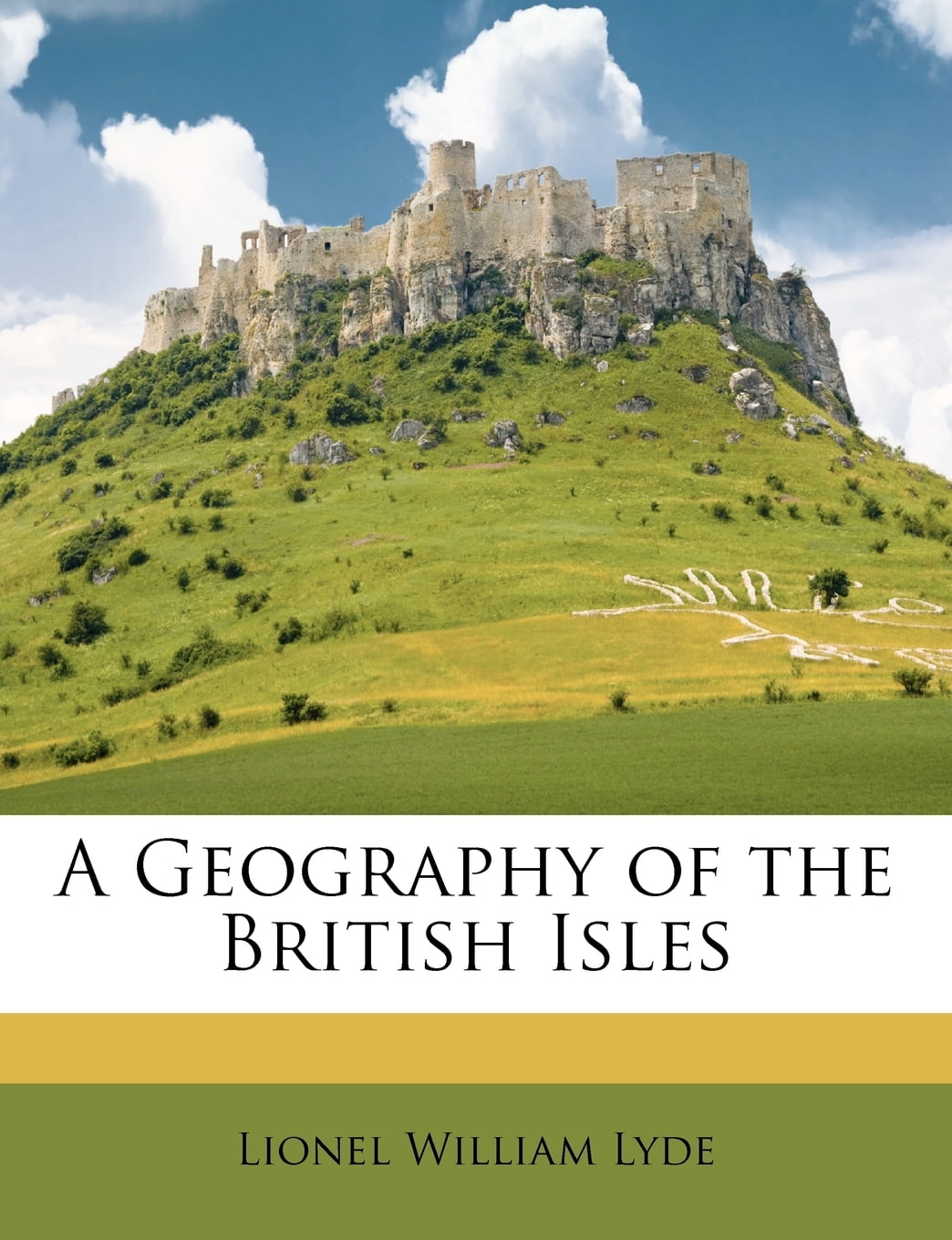
A Geography of the British Isles - Walmart.com

Source:
Hugh Clout wrote this detailed biography of him:

https://books.google.co.uk/books?id=7BQSBwAAQBAJ&lpg=PA16&ots=qyoQUQmILd&dq=lyde%20geography%20definition&pg=PA3#v=onepage&q&f=false

https://www.nature.com/articles/133361a0.pdf?proof=true&draft=collection

I could do with some images of Lionel William Lyde - apparently the archive of UCL was destroyed in a fire / bombing raid.

Update
From the GA collection


Involved with Section E of the BAAS.

Friday, 22 May 2020

1966: Professor Stanley Henry Beaver

Last updated August 2023

Professor Stanley Henry Beaver was an academic geographer, who was particularly associated with the LSE and Keele University, as well as being a great supporter of the work of the GA.

A prolific author, he authored books on a wide range of topics, from Sand and Gravel, to more general human geographies of the world, and geomorphology.
He had a very long association with the GA, as did many Presidents of course, working with them for over 30 years before becoming President in a number of roles, and providing content for journals.
He was involved with L Dudley Stamp's Land Utilisation Survey, and co-authored many of the reports that came out of that survey in the 1930s and beyond.

He also became involved in the planning and delivery of the Annual Conference in 1933, after Dr. H J Wood stood down.
During the 1930s, the GA Conference actually moved around a lot more than it had previously, where it was mostly held at the LSE. The 1930s saw it in cities including Liverpool, Glasgow, Nottingham and Sheffield. In 1932, the conference was even planned to be overseas in Heidelburg, but political and currency problems meant it had to be cancelled.

He had an association with the RGS (as many other GA Presidents have) and the IBG.

When he left the LSE he was succeeded by Michael Wise: another former GA President.

He also co-wrote a classic book with another GA President, L Dudley Stamp called 'The British Isles' as part of the 'Regional Geography' series.

He was born in London in 1907, and went to UCL where he graduated with first class honours in Geography in 1928. He completed his Diploma in Education in 1929, and according to an obituary published in the Transactions of the IBG, was influenced by L. W. Lyde, who apparently regarded geography as:
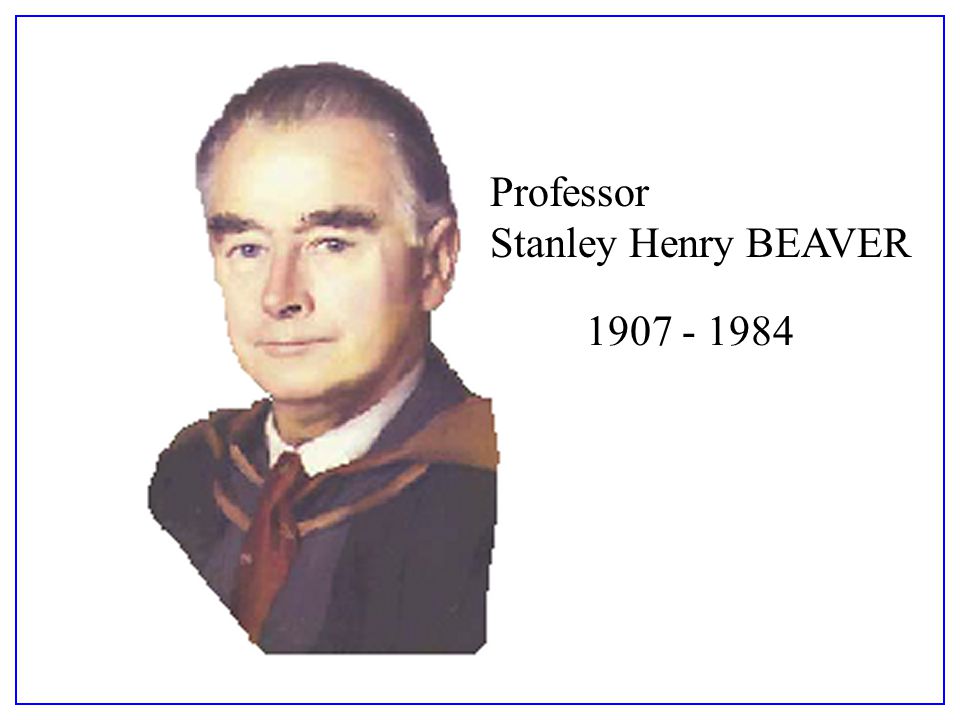
Image result for Professor Stanley Henry Beaver
"a body of knowledge coupled with an attitude of mind". 

He worked at the LSE between 1929 and 1950,  along with L Dudley Stamp

For some time, I couldn't find a contemporary image of Stanley Beaver, but was fortunate to receive one from Dr. Philip Kivell which can be seen at the top of the blog post.

In 1962, he had a piece published in 'Geography' on the Le Play Society and their contribution to fieldwork.

By this time, he was Head of the Geography department at the University of Keele. He stayed at Keele until his retirement in 1974 when he became Emeritus Professor.


In it, he references the work of Patrick Geddes, who had A. J. Herbertson as his assistant.


I am grateful to Dr. Peter Knight for helping me get in touch with Dr. Philip Kivell, who very kindly gave me a range of additional details on Professor Beaver's career and personal life. 
What follows was provided very kindly by Dr. Kivell.

S.H.BEAVER 1907-1984
Stanley Henry Beaver was born in Willesden, North London in August 1907. He graduated from University College London in 1928 with first class honours in Geography having already been awarded the Morris Prize and a University Scholarship in Geology. His first academic post was at the London School of Economics, where a very productive period resulted in appointment as Ernest Cassel Reader in 1946. His major work at this time, together with L Dudley Stamp was “The British Isles: a geographic and economic survey” which went though many editions before and after the war and provided a geographical grounding for  many thousands of students. 
During the war he worked for Naval Intelligence and used his geographical training to produce a number of regional handbooks. 
He was appointed as the founding professor of Geography at the new University College of North Staffordshire, subsequently Keele University, in 1950. 
Here he built up the first new post- war Geography Department in the country, including being closely involved in the physical design of the building. 
This included finding a home for millions of RAF air photographs taken over Europe during the war, and the establishment of a meteorological station on the campus.
Beaver could fairly be described as a traditional geographer, a product of an age that largely pre-dated the increasing specialization that reshaped the discipline from the 1960s. 
Having said that, his interests and skills were enormously diverse.  Most obviously he was a Human Geographer concerned with economic and regional matters, but his interests also ranged widely over transport geography, land use and dereliction and he was equally well informed about climate, meteorology, and mineral extraction. He was a practical academic, always interested in how environments and human processes worked and in this context he helped enormously to put “The Potteries” region on the map of public and academic awareness.
He was a superb and well organised teacher and was always in demand as a guest speaker by organisations across the country. From a student point of view he was extremely well respected but perhaps not the most approachable teacher. He belonged to an era when staff- student relations were more formal and respectful so the informality and student politics of the 1960s and 70s did not always sit easily with him. 
He could appear austere and remote but those who experienced his excellent field excursions soon saw a more relaxed side of him and were perhaps party to his dry sense of humour, his love of puns and his stock of limericks. At heart he was kind and immensely supportive to his staff and colleagues.
Apart from his teaching and research Beaver played a very active role in numerous groups and committees. Some of these were tied up with the University and local region, but others were national or international.  For many years he chaired Keele University Grounds Committee, responsible for the largest, and some would say, most attractive university campus in the country. It was not unknown for him to open his office window to berate students who were walking on the grass. 
He was President of the Geographical Association, active in the RGS and in the founding of the IBG, the IGU and the Anglo-Polish seminars. 
As Chair of the Geography Board of the CNAA he played a major role in promoting the new Polytechnic sector. Amongst all of this he found time to translate several important French texts into English.
During his quarter century at Keele  Stanley lived on the campus with his wife Elsie, who also worked as curator in the departmental map library, and four children. He enjoyed his large garden which he said (tongue in cheek) lay astride the watersheds between the Trent, Severn and Weaver catchments. One of his enduring passions had been steam railways, about which he was enormously knowledgeable. When the locomotive Keele Hall was withdrawn from service in 1963 Stanley Beaver bought the nameplate and displayed it proudly in his new department. On numerous overseas travels he would manage to arrange a trip on the footplate of whatever local steam locomotive took his fancy.
Upon retirement he and Elsie bought a large house in Eccleshall , a few miles from the campus, where he continued to garden, to enjoy his stamp collection and to continue his involvement in local Staffordshire organisations, especially the CPRE. He and Elsie endowed separate funds for student prizes and for fieldwork in the local area. 
Stanley Beaver was undoubtably one of the great geographers of his generation.
Professor Beaver died in 1984.

References
http://worldcat.org/identities/lccn-n50006237/

Obituary: “Stanley Henry Beaver, 1907-1984.” Transactions of the Institute of British Geographers, vol. 10, no. 4, 1985, pp. 504–506. JSTOR, www.jstor.org/stable/621896

Beaver, S. H. “The Le Play Society and Field Work.” Geography, vol. 47, no. 3, 1962, pp. 225–240. JSTOR, www.jstor.org/stable/40565418

British Geography 1918-1945, Edited by Robert.W Steel - published in 1987.
Chapter 12 was by J A Patmore, where he gave a personal perspective on the period.

Article in Geography in 1978
BEAVER, S. (1978). Some Observations on the Climate and Weather of New Zealand. Geography, 63(1), 14-22. Retrieved August 25, 2020, from http://www.jstor.org/stable/4056883
Patmore describes Beaver in this chapter.
A chapter in this book is here:
https://books.google.co.uk/books?id=9NSDx4DxfVcC&lpg=PA76&ots=uk5vMrcPG4&dq=stanley%20henry%20beaver%20geographer&pg=PA76#v=onepage&q&f=false

RGS Archives: http://discovery.nationalarchives.gov.uk/details/c/F46114 - I won't be able to visit the archive for a while, but there are quite a lot of papers

Updated - May 2020

A few updates to add following the posting.

There was a connection revealed between Professor Beaver and another former GA President who will have his own entry in due course (sometime in 2021) Bob Digby.
Bob told me that:


Bob apparently spent the £25 in the Keele University bookshop, buying geography textbooks from the time.

I also discovered another bit of information on Professor Beaver, from when he was a student at UCL in the 1920s. He was taught by Lionel William Lyde, another high profile Geographer from the early part of the 20th century.

His wife Elsie Rogers was also a student at UCL, and her memories of Lyde's teaching were also featured in the same document.


Taken from UCL Geography Department Archives.

Keele University offers an Elsie Beaver Prize for the best undergraduate dissertation by final year student involving fieldwork in physical geography, so the connection to Beaver continues.
It seems that she worked in the Map Library at the University as Map Curator. 


Beaver was also taught by another former GA President: Edmund Garwood. More connections...

Source:
https://books.google.co.uk/books?id=7BQSBwAAQBAJ&lpg=PA16&ots=qyoQUQmILd&dq=lyde%20geography%20definition&pg=PA8#v=onepage&q&f=false
- this link is to one of the many Biogeographical Studies, which are 'proper' versions of what I'm doing on this blog.

I also found his own entry, after all that, in the Biogeographical Studies series.


This included an image of him, and also details of his links with the GA, as well as a lot more detail.

Beaver was Honorary conference organiser from 1934-1949 and also declared an intention to visit every branch in Britain while President - something I hoped to do, but didn't quite manage it.


https://books.google.co.uk/books?id=R-48DwAAQBAJ&lpg=PA130&ots=vx3Y5ASsYg&dq=lionel%20lyde%20UCL&pg=PA129#v=onepage&q=lionel%20lyde%20UCL&f=false 

As always, if you have further information relating to this President please get in touch. 

Thanks to Dr. Philip Kivell for the image of Professor Beaver used at the top of the blog and substantive text later on.
Thanks to Dr. Peter Knight for his assistance as well.

Updated March 2023

Mentioned on first page of J B Priestley's 'English Journey'.

Updated August 2023


This flagged up his involvement with Section E of the BAAS, which I have been investigating over the last few days and have found plenty of details in the Transactions of the IBG and elsewhere that show Beaver's substantial involvement in discussions around geography in schools and universities. 


GA Obituary

Rodgers, H. B. “The Geographical Association.” Geography, vol. 70, no. 1, 1985, pp. 77–80. JSTOR, http://www.jstor.org/stable/40571501. Accessed 24 Aug. 2023. 

Sunday, 8 March 2020

1959: Professor J A Steers, CBE

Updated August 2023

Professor Steers is probably the definitive expert on coastal processes and landscapes, particularly those which have influenced the coastline of England and Wales. He was one of several GA Presidents to be associated with St Catharine's College, Cambridge and Gus Caesar.

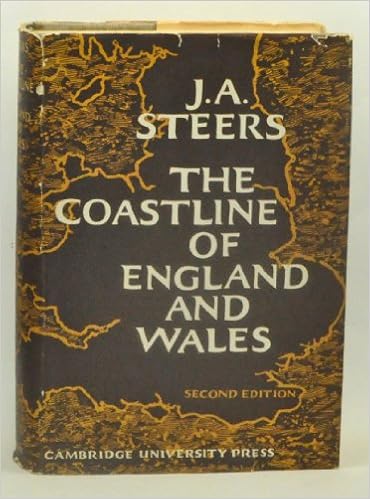
His book on the coastal landforms of the UK is one that sits on my shelves to this day. I have a nice old edition with a green binding which dates back to the 1950s, and which I referred to quite recently to answer a question on Chesil Beach that someone asked.

He sits alongside Denys Brunsden, who will appear in the blog several decades hence, as key coastal geographers, who have shaped how we understand and teach these dynamic landscapes.

Steers was linked to the University of Cambridge, and also with a previous President: Frank Debenham. This, from the University of Cambridge alumnus page, describing the introduction of the Geography Tripos to the university following GA an RGS campaigning which has been well covered in earlier posts near the start of the 20th Century:

The first candidates for the Geography Tripos sat the exam in 1920, resulting in 2 students receiving a 1st Class for their Part 2 exams, one of whom was JA Steers, who would go on to become Professor of Geography and Head of Department 1949-66.

Source: https://www.geog.cam.ac.uk/alumni/earlyyears/

This piece from Nature in 1949 announced the arrival of Steers at the University of Cambridge, where he replaced another former GA President: Frank Debenham. (who had his own extensive entry in the blog a few months ago)

MR. J. A. STEERS, who, in September, is to succeed Prof. F. Debenham as professor of geography in the University of Cambridge, was one of the first generation of geographers to take the newly constituted Geographical Tripos after the First World War. After a short spell of teaching at Framlingham, Mr. Steers returned to Cambridge to join the staff of the Geographical Department under Philip Lake. His College elected him to a fellowship, and before many years St. Catharine's became the first men's college to offer scholarships in geography. This led to a remarkable concentration of able geographical students in the College, which has resulted in a rapidly lengthening list of St. Catharine's geographers entering university posts–fifteen in the last ten years. In his College, Mr. Steers has served successively as dean, tutor, senior tutor, and president.

Professor Steers' address was on the subject of Physiography (also known as geomorphology) and he spoke about the importance of this aspect of geography.


Steers wrote many books on coastal landscapes, several of which I used for my own teaching over the years.
This quote is taken from Rex Walford's book, and dates to 1944, when Steers was campaigning to help "save the coast" by educating the public about its value. This sort of policy work was vital following the war.


This campaigning of Steers was mentioned by G. R. Crone in his chronology of 20th Century geography.


There are some references to J A Steers in a piece by D Stoddart in a piece on the founding of the IBG. I love this image, showing J A Steers talking, and which was apparently taken around the year 1938.

Source: Stoddart, D. R. “Progress in Geography: The Record of the I. B. G.” Transactions of the Institute of British Geographers, vol. 8, no. 1, 1983, pp. 1–13. JSTOR, www.jstor.org/stable/622270

I have some lovely memories of Professor Steers from a former student of his, who would later become a GA President himself: Derek Spooner. 

In July 2019, he shared his memories of Professor Steers to me in an e-mail.

I first encountered this name in 1960, when I was in the sixth form and was given Steers' 'The Sea Coast' as a school prize. A marvellous, inspiring book in the wonderful New Naturalist series, which hooked me at the time on physical geography. Two years later I found myself at Cambridge studying Geography in the Department where Steers was Professor, and in St Catharine's College where he was a Fellow....

Truth to tell his lectures were rather disappointing - he was rather a shy man and certainly not a showman. He was very tall and bespectacled. He had been Head of Geography since 1949. He had been extremely influential in developing Geography in my College to an outstanding position within the University. By the time I arrived in Cambridge, Steers had become the leading coastal geomorphologist of his era. His studies of Scolt Head Island on the Norfolk coast were famous and the student trips he took there were legendary, with students getting stuck in the mud - certainly wouldn't have passed a risk assessment! I was not aware that he had just been President of the GA, or that he was also very active in the RGS, or indeed had become a leading figure in conservation policy.

'Alfie' was his nickname. He retired in 1966. I had started doing postgraduate work and I can remember being invited to a sherry party at his house in the posh western suburbs of Cambridge. His wife, Harriet, was also a Geography lecturer. Her speciality was the regional and historical geography of the USSR......

In his retirement I believe he continued his coastal studies. Ron Martin, another lecturer in the Department, told me that some times he would get a call from 'Alfie' asking him to drive him up to Scolt Head Island. Sounded as if he never really retired.

Here's a image from the copy of one of Steers' books that sits on my shelf. It has some lovely plates in it.


His author profile on the Harper Collins site is useful as well.
(1899–1987). Geomorphologist, Cambridge geographer, graduate and later Fellow of St Catherine's College. Professor of Geography at Cambridge 1949–66 and the authority on the moulding of coastlines.
Member of expeditions to coral reefs Australia 1928, 1936 and Caribbean 1939.

Concerned above all with surveys of British coast from a classic study of Scolt Head Island (1934) to the standard work The Coastline of England and Wales (1946). Much involved with coastal protection and a keen exponent of coastline preservation on Nature Conservancy, National Parks Commission and National Trust’s Enterprise Neptune.

He was awarded a CBE in 1973.

He was also involved in the committee which was established to ensure that an event like the 1953 East Coast Floods could not happen again in the same way.

His wife was also a geographer and published her own books, although I was interested to see that in this ad for one of her books in 'Geography' that she also added 'Mrs. J. A. Steers' in brackets after her own name Harriet Wanklyn. See image opposite.

An obituary was published in 'Geography' in 1987, written by David Keble.

References
Wikipedia - Professor Steers has no entry - he surely deserves one given his significance

STEERS, J. A. “Physiography: Some Reflections and Trends: Address to The Geographical Association.” Geography, vol. 45, no. 1/2, 1960, pp. 1–15. JSTOR, JSTOR, www.jstor.org/stable/40565103.

Cambridge University alumnus page: https://www.geog.cam.ac.uk/alumni/earlyyears/

Crone, G. R. “British Geography in the Twentieth Century.” The Geographical Journal, vol. 130, no. 2, 1964, pp. 197–220. JSTOR, www.jstor.org/stable/1794582

The RGS-IBG present an annual prize for the best undergraduate dissertation named in Steers' honour.

Referenced here for his work on Scolt Head Island: http://archive.jncc.gov.uk/pdf/gcrdb/GCRsiteaccount2038.pdf

STEERS, J. A. “Physiography: Some Reflections and Trends: Address to The Geographical Association.” Geography, vol. 45, no. 1/2, 1960, pp. 1–15. JSTOR, www.jstor.org/stable/40565103

Stoddart, D. R. “Progress in Geography: The Record of the I. B. G.” Transactions of the Institute of British Geographers, vol. 8, no. 1, 1983, pp. 1–13. JSTOR, www.jstor.org/stable/622270

As always, if anyone has further information on J A Steers or images, please don't hesitate to get in touch.

Updated June 2020

When writing a post on Tim Burt and Des Thompson's book 'Curious about Nature' I found a picture of J A Steers taken in Oxford in 1954 by E W Gilbert - shown here.... at a meeting of Section E of the BAAS.


Source: https://books.google.co.uk/books?id=2onPDwAAQBAJ&lpg=PA80&dq=cuchlaine%20king%20nottingham&pg=PA79#v=onepage&q&f=true


Updated November 2020
There is a prize in his name for geomophology


Updated January 2021

From the St Catharine's college magazine - the text of a memorial address.


The magazine of the College society has details of his memorial address by Dr David Keeble, who was also linked with the GA:

https://www.society.caths.cam.ac.uk/Public_Magazines/1987r.pdf

Find it on p.31 here.

Each of us brings to this celebration our own personal memories of Alfred: of a tall, dignified presence crossing the College court, walking-stick in hand; of the personal warmth yet directness of his greeting in the Senior Combination Room - "sit down, sit down, have a glass of sherry"; of lectures in the semi-darkness of the Department of Geography's lecture theatre, where Alfred's impressive expositions of slides of coastal landforms sometimes demanded careful listening for those seated beyond the second row; of his famous field trips to Scolt Head Island, where an immaculate dark suit would be exchanged for shorts in the warden's hut, followed immediately, and to the horror of inappropriately dressed visitors, by a plunge into the muddiest and roughest salt marsh!

He was Church warden of St. Botolph's Church

As postwar governments grappled with growing planning pressures on Britain's precious but vulnerable coastline; as Britain's coastal defences crumbled under the 1953 North Sea surge; as the National Parks Commission, the Nature Conservancy, and the National Trust sought to devise effective and appropriate management policies for their coastal areas, it was to Alfred that they turned for scientific advice and informed appraisal. So too did the Council of Europe, who appointed him Coastal Consultant to their Conservation Committee. Alfred could be forthright in his condemnation of bad coastal management, criticising the War Office for example for such coastal eyesores as derelict huts, looking, as he scathingly remarked, "like a lot of false teeth sticking up!" But his writings and lectures on coastal problems - especially a major Royal Geographical Society lecture he gave in 1944 - were enormously influential in shaping the thinking of such ministers as W. S. Morrison

Updated August 2023

Tuesday, 19 November 2019

1950: Professor Sir Laurence Dudley Stamp, CBE

Dudley Stamp.jpg
Updated July 2024

Another geographical great was President this year. One whose work is still referenced today, and who was very prolific and started young.

Just two years after H. J. Fleure, we had another geographical 'big hitter'.

Professor (Laurence) Dudley Stamp was one of the leading lights in geography of the 20th Century, and his work is still referenced today, and some of his books are still in print and available to purchase.

He was prolific in his output, and served on a great many committees and supported the work of many different organisations. He was a real globe-trotter in an era when aircraft began to open up the world to those who could afford to use them - or who had their flights paid for.

Stamp held numerous influential posts, and had tremendous energy to publicise the importance of Geography.

He was born in 1898 in Catford, London and died in 1966 in Mexico City. A life very well lived, but which still ended a little prematurely.

He was the youngest of seven children, and his older brother was Josiah Stamp, who was President of the GA in 1936, who has his own post on this blog. He had poor health as a child.

I presume these are the only brothers to have been GA Presidents. I wonder whether that will ever happen again. I don't think my brother will be applying...

Stamp saw active service during the First World War, as had other Presidents in the early part of the 20th Century. This period of the GA's history is well worth further investigation I would say by those who have the appropriate connections.

The first mention of Dudley Stamp that I came across in connection with the GA is from 1924, when he is mentioned in 'The Geographical Teacher' as having started a new GA branch in Burma. 
At the time he was Professor of Geology and Geography at the University of Rangoon. 
This was an early foray into the work overseas carried on now, through the auspices of the International SIG of the GA and others.

Dudley Stamp was also Chief Advisor of Rural Land Use, Ministry of Agricultural between 1942 and 1955. He was appointed Commander, Order of the British Empire (C.B.E.) in 1946. He was Professor of Social Geography between 1948 and 1958 at the London School of Economics (another former President with a strong connection to that institution which was co-founded by a previous GA President)

He was President of the International Geographic Union between 1952 and 1956 
He was member of the Royal Commission on Common Land between 1955 and 1958.
He was appointed a Knight in January 1965, the year before his death, while he was President of the Royal Geographical Society, and later the IBG.

He inspired Bill Mead: another former GA President, who I shall come on to later, and who referred to a lecture that he attended given by Dudley Stamp on the country of Finland, which led to his own lifelong interest in Scandinavia which was a real feature of his own Presidency.

The Land Use Survey that Dudley Stamp initiated was an important aspect of the GA's public facing work during this time, work which continues today. The GA led on several large national projects which will feature on the blog.

For more on this work, it is worth getting hold of the book that recorded the findings.
Data from this survey can also still be accessed by those in Higher or Further Education via Edina. Thanks to Edina for pursuing this for me.
https://digimap.edina.ac.uk/webhelp/environment/data_information/dudleystamp.htm - more details

1930s Land Utilisation Survey of Britain (Dudley Stamp)

You can see the Scottish sheets on the National Library of Scotland Mapping site. They look hand drawn, which is excellent.

G. R. Crone in his chronology of the 20th Century growth of Geography says of the maps that they


Dudley Stamp's rather good Presidential Address was on the theme of "Some neglected aspects of geography".


In it, he explores the foundations of the subject, and the development of exploration.

I liked a definition of exploration that he referred to at the time:

"Exploration at this period [earlier in the century] has been defined as the first discovery of new lands by a white man, preferably an English man, and only really authentic if sponsored by the Royal Geographical Society"

He referenced a previous GA President: Hugh Robert Mill early in the address, along with A. J. Herbertson.
He was concerned with the work of P. W Bryan's work 'Man's adaptation of Nature". He described the focus on 'cultural landscapes' as a 'short-cut', which led to 'facile correlations'.

Stamp provided his own definition of geography as "the study of the earth as the home of man".

He also waded into the idea of research in the classroom.

"How soon dare we introduce into our teaching.... the findings of research workers knowing that there is always the possibility that their results may not be confirmed by later investigations".

He also gave some nice examples of textbooks being out of date. He referred to a book that was still being used in the 1930s in schools which had been published in 1864 and was in its 122nd printing. The book stated "the turnpike roads of England are generally in good repair". The idea of textbooks being up to date is still an issue now.

Here's an image of Stamp from the 1940s
https://www.flickr.com/photos/lselibrary/4113983031/in/photolist-7gBb8U-7gxePV-fjt8aX-fjt8ex-fjt8at


In the 1950s, Stamp said he was still being asked "by biologists, when you geographers are going to make your mind up about continental drift". He wondered about the truth of some aspects of this theory, and in 1931, also mentioned weather fronts (a new idea at the time from Bergeron) as being contentious for a while, but then accepted.
It was interesting hearing him talk about the early plans for commercial flights to the USA.

He also mentions the neglect of the globe as the best way of teaching about the world's continuity.

"It is appropriate that the opening of the new HQ of the Geographical Association at Sheffield should have been marked by the presentation of a globe to adorn the library"

Where is this I wonder?

Stamp wrote a great many books during his long career.

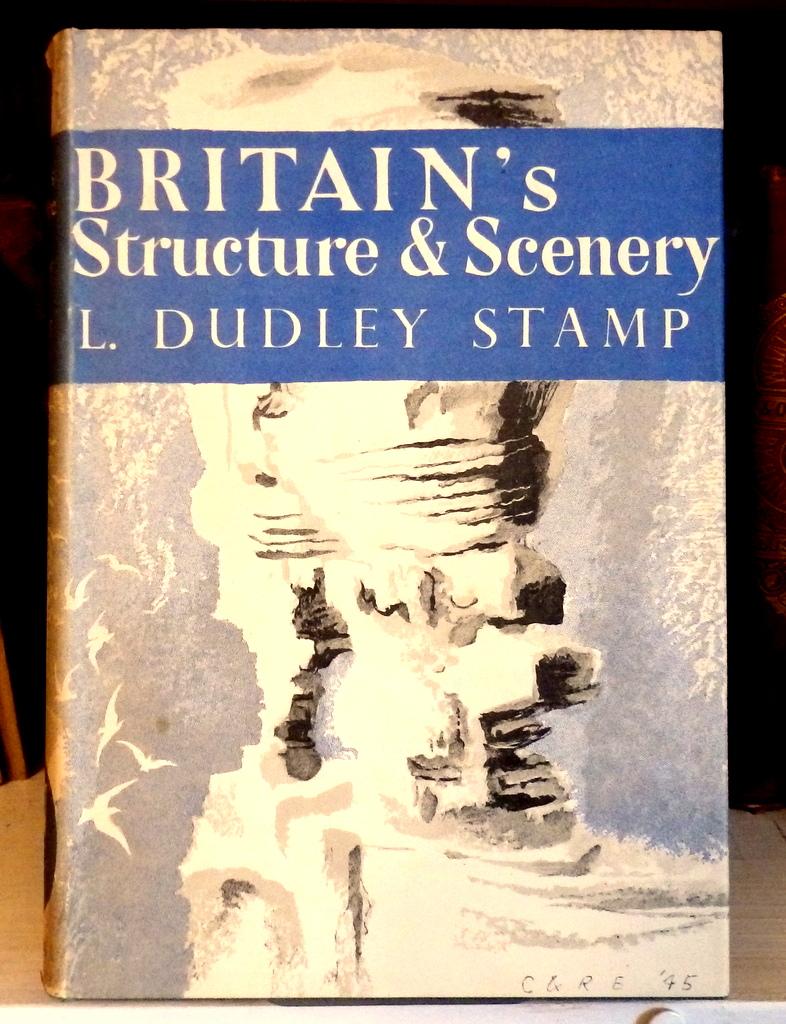
One of his most famous book covers is shown here.
He was one of the founders of the New Naturalists series as well, which has wonderful illustrated covers.

Thanks to Brendan Conway for providing the following additional detail:

Dudley Stamp was also president of the International Geographical Union 1952–56. When the IGU met in London in 1964 he engineered a particularly high profile for the subject with this set of stamps. The themes chosen for the abstract images were curious, to say the least. It is also interesting that he should get a STAMP of course as his contribution.


I managed to get hold of some copies of the stamps via eBay for my own growing Geographical archive. I will bring them along in 2020.

Thanks also to Steve Brace
for also pointing out that L Dudley Stamp appeared on 'Desert Island Discs' - sadly only a brief extract remains of Stamp being interviewed by Roy Plomley.

He may be the only Geographer to have had that privilege.

This was broadcast in 1963, and allowed Stamp to explain his Land Use Survey and the pressures on land and the use of chemicals (in the era of Rachel Carson's 'Silent Spring', and also overfishing of the oceans. Good to see that his Desert Island luxury was wine.

A year earlier he had been honoured by Poland.


Stamp was also a very prolific author of geography books.


His most significant book in terms of influence and market share was 'The World'.
This was the textbook used in many schools during the 1930s, 40s and beyond, and Rex Walford says that
"Stamp is the only geography textbook writer to have sold a million copies of a single book".

So this set me off on a bit of a journey.
I thought that perhaps David Waugh's books must have sold a million, and wanted to see whether this had now changed.
I contacted a few people at Hodder, who were involved in the publication of the Key Geography series and also GAIA. This led to quite a few e-mails going backwards and forwards.
I shall share the results of this research in a future post on the blog.

I also discovered in April 2020 that the Herbertsons sold 1.4 million copies of their books in the early part of the century.


Here's my copy -  the book was in print for over 50 years.

Here's another copy of one of Stamp's books that I own. This one is called 'The Face of Britain" and is a good little read. You will find plenty of Stamp's books still in 2nd hand book shops. This book was published in 1940, and on the title page, Stamp is described as the:
Sir Ernest Cassel Reader in Economic Geography in the University of London (LSE)


There were several notable obituaries, including one published in the journal of the American Geographical Society, and another in the Geographical Journal (written by another former GA President Michael Wise)

Updated March 2020
Balchin's Centenary volume describes how Stamp was attending an International Geographical Union Regional Conference when he died in Mexico City, after 40 years of service to the GA.
He outlines how:
"with a flat in London, a main residence in Bude, Cornwall and a country cottage in British Columbia, Sir Dudley was a "global" geographer.... he once dropped in to a GA Executive meeting at the LSE between changing planes at Heathrow on his way from Stockholm to New York. "

I'd love to find out more about his life and travels. He certainly presaged the sort of travelling which we all became used to before the coronavirus put a halt to that in March 2020.


References

Wikipedia page: https://en.wikipedia.org/wiki/Dudley_Stamp

Source of the main image above - other image of Desert Island Discs copyright BBC.

Stamp, L. Dudley. “SOME NEGLECTED ASPECTS OF GEOGRAPHY. Address to the Geographical Association.” Geography, vol. 36, no. 1, 1951, pp. 1–14. JSTOR, JSTOR, www.jstor.org/stable/40563084.

Walford, R. (ed) (1997), Land-Use UK: A Survey for the 21st Century. Sheffield: Geographical Association.

https://digimap.edina.ac.uk/webhelp/environment/data_information/dudleystamp.htm

https://snaccooperative.org/ark:/99166/w6tb5p4p - Biography with details of Stamp

Crone, G. R. “British Geography in the Twentieth Century.” The Geographical Journal, vol. 130, no. 2, 1964, pp. 197–220. JSTOR, www.jstor.org/stable/1794582

Obituary:

George H. T. Kimble. “Obituary: Laurence Dudley Stamp 1898-1966.” Geographical Review, vol. 57, no. 2, 1967, pp. 246–249. JSTOR, www.jstor.org/stable/213163.

If anyone has any further details on Dudley Stamp and his legacy, please get in touch.

Updated December 2019

1961: NATHAN, LORD. “GEOGRAPHY AND THE BUSINESS WORLD TO-DAY.” Journal of the Royal Society of Arts, vol. 109, no. 5059, 1961, pp. 516–526. JSTOR, www.jstor.org/stable/41369050. - a nice comment following the piece, which looks at the value of geography to the world of business and for those seeking employment following their graduation....

Updated November 2020
Dudley Stamp Memorial Award was set up in 1967, the year after Stamp's death to support geographers in the early stages of their careers to travel.
It was featured in the latest bulletin (Spring 2021) for RGS Fellows. 
Lily Bradshaw has put together a StoryMap all about the Award. See it here.

Sir Lawrence Dudley Stamp (1898-1966) was an internationally renowned British geographer who championed the study of geography in universities and schools. In recognition of his services to education and science, the British National Committee for Geography established the Dudley Stamp Memorial fund from which the award is given. Sir Dudley Stamp had a strong belief in the value of international research and co-operation, and this ethos continues through the award today.

The Dudley Stamp Memorial Award supports research across the whole spectrum of geography from the intersections between sovereignty, territory, and development in Myanmar to the relationship between fluvial sediment characteristics and floodplain initiation in North America.

Updated August 2021
The RGS-IBG Bulletin for Autumn 2021 has arrived.
Later this year (2021), there is a session on the 22nd of November at the RGS on the Relief Models of Sir L Dudley Stamp.
The description of the session says that the society holds a collection of relief models which represent a part of Stamp's life's work and of "the creative and engaging ways which defined his approach to the teaching of geography throughout the mid-20th century".

There was also an update on this year's funded trips from the Stamp Memorial Fund.

Updated August 2022

An obituary for L Dudley Stamp.


Here's the cover of the Memorial Service which was held at King's College London on the 3rd of November 1966. Located in the GA Archives.


Updated August 2023

From the papers of Frank and Charles Fenner.  Virologists linked with eradication of smallpox.
Referring to serving on the BAAS Section E Committee.

2 to 3 September 1937, Nottingham, BAAS Meeting

Got a note that I was on the Section C (Geology) committee, and I believe I am now on Section E (Geography) committee also. 

Met Dudley Stamp, who had very kindly had me elected a Vice President of Section E (Geography) and asked me to their Section Dinner on Monday evening as their guest. Since I last saw him, he has visited every country in South America, and (at invitation of USA) inspected every state of that country, and (for British Government?) has inspected Nigeria re soil conservation, and who has now been invited to visit and report on the mapping of India and China. 

He is a smart fellow, and an indefatigable traveller. 

But I fancy it’s a fine thing for an ambitious man if he has the good fortune to live in London and has the further good fortune to have so influential an uncle as Sir Josiah. 

We talked of world geography and of Australia’s north and soils, and soil utilization, and culture patterns in England. 

He stresses (as I have lately in these notes) that the land pattern of England is something that has evolved through 2,000 years of struggle between man and nature, roads, rivers, products, traditions, and cannot be lightly set aside by the whim of thoughtless 'town planners' who have never allowed these things to enter their heads. 

And he spoke of opening up the waste lands of the world, and of us in Australia having to give Australia to Indians. 

And I said Cui Bono? If lands are productive, population increases, and the pressure becomes as great as ever. Why should we try to fill up the earth with struggling people. 
Look at Fiji. To whom the good? 
Why indeed should we try to increase the world’s population at all?

Source:

https://press-files.anu.edu.au/downloads/press/p34751/mobile/ch17s13.html

Updated September 2023

A point made following a lecture in 1961 by another GA President: Lord Nathan of Churt:

"I feel that I cannot let this occasion pass without expressing thanks on behalf of the professional geographers for the very able way in which Lord Nathan (who has come to us as it were from outside with a very wide experience) has put before this gathering the crucial problems of the geographer and his position in the world. I stand before you as a Professor of Geography who has never had a lecture in geography, for the simple reason that it was not a subject of Honours standard in our universities at the time when I was at college. So I had to take my training in other subjects, and came into geography because of a very deep conviction that there is an important work to be done in the application of what we now know as geographical principles to world and everyday events. It is a very great joy to me to hear, after these years of struggle, that point of view being vindicated from the lips of one so eloquent and so eminent as our lecturer this evening. I would say this in reply to questions which have been put : geography is, as you have rightly said, Sir, a point of view, a training which I think the late Field Marshal Smuts would have called a 'holistic' training, which enables one to take a view which is the view of the whole, and in that sense we do try to take in all factors which are concerned. 

In a way I was delighted to hear of the five geographers from Cambridge who have taken jobs other than as geographers. I hope they will take the geographical point of view into their respective spheres, which is after all what we want. In the old days a man who got a degree in classics did not therefore get employment as a Greek or Latin scholar. He went into administration and showed us how to run the government, because of his background in a good discipline. We like to think of geography to-day as giving that broad point of view which is a real training in citizen ship. I feel, Sir, that you have put before us very eloquently indeed that real objective. Geography as a discipline in the university to-day fits its students for a very wide range of posts (not necessarily called geographers; probably in most cases."

Source:
NATHAN, LORD. “GEOGRAPHY AND THE BUSINESS WORLD TO-DAY.” Journal of the Royal Society of Arts, vol. 109, no. 5059, 1961, pp. 516–26. JSTOR, http://www.jstor.org/stable/41369050. Accessed 16 Sept. 2023.

See also a recent addition to the LSE blog - all about the Land Utilisation Survey

Also a character reference following his passing. 
From the Journal of Glaciology in 1967

Copyright © International Glaciological Society 1967

This Society has lost one of its original members by the sudden death of Sir Dudley Stamp in Mexico City, at the age of 68, while attending a committee of the World Land Utilization Survey in August last.

A graduate of King’s College in the University of London, as a geographer he had held his Chair at the London School of Economics for many years until he resigned some years ago to devote himself to the wider international field. Like many others, he began as a geologist. Many younger glaciologists will have seen him in action when, as President of the Royal Geographical Society at the time of the 1964 meeting of the International Geographical Congress in London, the duties of representing the host country frequently fell to him.

His lively and genial personality, reinforced by a supreme breadth of knowledge about the world and those who wrote about it, by a formidable energy and capacity for work, zest for travel and an accurate memory, was indeed widely appreciated. 

His accomplishment in developing studies of land utilization, starting from the great survey of Britain that he initiated in the depths of the 1931 depression, was justly honoured.

He was one of the first members to join this Society, and while his travels in his later years more commonly took him to the great cities of the world rather than the silent ice, he retained his sympathy with the aims of a new and developing branch of the earth sciences. It was characteristic of him that his interests should extend well beyond the particular field in which he was active. Many have benefited from his interest and advice and on more than one occasion this Society has been grateful for his influential assistance.

A lovely piece.

He travelled widely with his wife Elsa.

Here's one of the books they co-wrote.

Here's an analysis of his work from a piece in Science Direct.


Lawrence Dudley Stamp was born in London in 1898 and admitted to King's College at the age of 15 to study botany and geology. 

Following graduation he joined the Royal Engineers and served briefly in France during World War I. 

Illustrating his exuberance for the subject and his phenomenal work rate, he gained his doctorate in geology in 1921 while simultaneously taking the London BA in geography. He was then employed as a geologist in Burma (Myanmar). 

While stationed there, he was appointed as the first professor of geography in Rangoon in 1923, where he taught until 1926. 

In Burma, Stamp first specialized in tropical geography. In one of his first books – The Vegetation of Burma from an Ecological Standpoint – he enrolled researchers from of the Indian Forest Service to collect data and adopted a classic chorographic method to describe the country. 

Drawing upon the ecological theories of A. G. Tansely and a model for the systematic classification of natural regions developed by the geographer A. J. Herbertson, his technique examined the causes and the interrelations of phenomena in the landscape, primarily in terms of climate and geology. While he would continue to innovate – he was among the first geographers, for example, to promote the use of aerial photography – this approach to the analysis of land-use and resource management would characterize his career. 

His land-use survey technique and representation first developed in Burma, was later scaled up to encompass Britain in the 1930s, and underwrote his ideas for a world land-use survey sponsored by United Nations Educational, Scientific and Cultural Organization (UNESCO) he directed in the 1960s.

A postcolonial reading of Stamp's work in tropical geography can align his interests with the demands of the colonial state. His paper on Burma published in 1933 in The Geographical Review concluded that the country's ‘wasteland’ – which he depicted as unoccupied – was open for further colonization: “Upcountry one is struck by the immense areas of cultivable land which remain waste for want of cultivators” (Stamp, 1933: 87). He could also indulge his reader with a dash of adventure and hint of the exotic: “The Salween still indulges on the quiet in the time honoured practice of head-hunting and their territory has been placed out of bounds to Europeans” (Stamp, 1933: 83). 

Most of Stamp's work, however, was very applied in orientation. This was well reflected in his stewardship of Commercial Geography which he inherited from the economic geographer G. G. Chisholm. This is not so much a book but a database of commodities and the ever expanding resource frontier required by a colonial empire. At this time, it is arguable that Stamp – notably with his work on the ‘colonial soil’ – participated in a school of Western intellectuals who mobilized science in an attempt to guarantee the effective management of imperial sources.

In 1926, Stamp returned to England to take up a post at the London School of Economics (LSE). The LSE positioned him in a metropolitan network that supported a career at home and abroad. 

During this period, Stamp consolidated his activities as a successful author of popular geography textbooks. For example, he collaborated with his wife Elsa Rea to produce an innovative New Age series for junior schools, based around photographs taken during his world travels. 

'The World', first prepared for the school market in India in the mid-1920s, was adapted widely throughout the British Empire and, over 40 years, sold over a million copies, running to some 17 editions. 
His work on school textbooks for both the national and colonial marketplace enhanced his association with the Geographical Association which he used to build support for the first Land Utilisation Survey of Great Britain. 
The idea of a land-use survey of Britain had been an objective of the Royal Geography Society from the late 1880s, when the survey “…was regarded as a project of Imperial importance” (Stamp, 1931: 42). Drawing upon his work in the tropics, Stamp mobilized a chorographical technique to devise six categories of land use for the purpose of the survey: meadow and permanent grass, arable land, heath land, and moor land or rough hill pasture forests and woodland, gardens, and unproductive agricultural land. This survey – which began in 1930 – was a huge undertaking but by framing it in the context of both geographic and civic education, Stamp was able to enrol school children and their teachers to collect primary data on land use, and transfer this data by hand onto 6″ to 1 mile paper maps. 

The results are summarized in The Land of Britain: Its Use and Misuse. H. C. Darby concluded it was the greatest achievement of British geography. The survey success and its immediate value for agricultural and physical planning during World War II and after was Stamp's entrée into public service in Britain.

As questions around physical planning and issues of environment and habitat management have intensified in Britain, Stamp's work on the Land Utilisation Survey remains highly regarded. 

But as one of the stalwarts of regional geography, the paradigm shifts in the 20 following this death – first toward quantification and then to radical geography – have often undermined his reputation among contemporary geographers. 

In 1974, when David Harvey characterized geography's history as a shift from a concern with empire into “…the technics and mechanics of urban, regional and environmental management guided by a principles of benevolence and reformism…” Stamp could well have been his model (Harvey, 1974: 20).

Ron Johnston argued that Stamp's promotion of applied geography defined geographers “…as information gathers and synthesisers who stood outside the political process within which planning goals were formulated and pursued” (Johnston 1979: 30). 

Even one of his warmest observers H. C. Darby conceded that his approach to geography was firmly pragmatic: “…it was said that he had a tidy mind and a passion for facts” (Darby 1983: 20).

These summaries are more problematic than first assumed. In its various forms, versions of ‘applied geography’ had always been central to the activities of the state. They came into their ascendancy in post-war Britain, when the increased state intervention in the economy and environment presented geographers with innumerable opportunities to identify practical applications for geographical techniques and expertise. 

In this context, Stamp saw applied geography as the application of geography for the public good. Any claim that Stamp saw geographers as ‘outside’ the political process cannot be sustained. 

Stamp was part of a group of intellectuals in the 1930s that included Max Nicholson, Vaughan Cornish, and Julian Huxley who foresaw the role science would play in the planning and reconstruction of Britain. 

Geography for Stamp was a matter for action and intervention. 

During World War II, he served as vice chairperson of the Scott Committee, which set out the framework for the establishment of the town and country planning policy. He was also employed as Chief Adviser in Rural Land Utilisation at the Ministry of Agriculture. In the post-war period Stamp served a member or chairperson of four major official committees – Land Use in Rural Areas, Nature Conservancy, Common Land, and National Resources. 

Undoubtedly he played a key role in shaping the post-war spatial settlement in Britain. 

It is also clear in this period that he revised his perspective on the Global South. His work in tropical geography turned from a concern with colonial interests to issues related to the ‘developing world’. His collaboration with the International Geographical Union (IGU) and UNESCO in particular presented him with new challenges and in their own way are reflected in clear pleas for global responsibility in Geographies of Life and Death and criticism of neocolonialism in his book The Developing World.

Toward the end of his life, Stamp reacted strongly against quantification which he saw a major challenge to applied and regional geography. 

As president of the Institute of British Geographers (IBG), he controversially compared Peter Haggett to a theosophist and concluded that “Quantification has many points in common with Communism: it has become a religion to its devotees, its golden calf is the computer” (Stamp 1965: 18). 

Rather than this path, he argued for public engagement over academic specialization. He also saw geography as a holistic discipline, the unification of the physical and human worlds. 

Despite the growing challenge then emerging from spatial science, Stamp's profile as Britain's foremost public geographer was assured. 

In 1965 he was knighted by Queen Elizabeth II. This honor extended to an invitation on to the British Broadcasting Corporation's (BBC) flagship radio program ‘Desert Island Discs’ where guests are asked to imagine which music and texts they would take with them as if cast away on a tropical island. As he had done with audiences all his life, Stamp charmed the public with a discussion on his work with the world land-use survey, the demographic pressure on land resources, the use and abuse of toxic chemicals in intensive farming, the possibilities of land reclamation, and marveled at the possible future cultivation of the sea's harvests. 

The radio show confirmed his vivid interests in environmental issues and his wide geographical imagination. It seems that throughout his life Stamp epitomized the motto of his old regiment, the Royal Engineers – Ubique (everywhere).

In spite of the turn toward continental social theory in Anglo-American geography, Stamp's contribution to geography remains more central to the discipline than often realized. Stamp exemplified a philosophy about geographical knowledge which located it at the interface of pubic service, education, and civic responsibility. He understood the central role that geography played in the organization of social, environmental, and economic life and was able to articulate those ideas to broad and mixed constituency: school children, the general public, and policymakers. 

He helped create a geographical discourse which continues to frame many debates about the role of the discipline, particularly those concerning the application of geographic information system (GIS), remote sensing, and land-use studies to matters of public policy.

Source: https://www.sciencedirect.com/topics/social-sciences/land-utilization

Updated October 2023

He was the son of Charles Stamp and Clara Jane Evans. He married Else Clara Rea, daughter of Arthur Unett Rea, on 5 May 1923


He was member of the Royal Commission on Common Land between 1955 and 1958. Another possible avenue for research.


Some probate information.

Geologist and Geographer
1925 Geologist (sailing from China to USA)
1925 Geologist (sailing from Hong Kong to Vancouver
1931 Professor (sailing from UK to Jamaica)
1931 Professor (sailing from Columbia to UK)
1933 Professor (sailing from UK to USA)
1934 Professor (sailing from Trinidad to USA)
1936 Professor (sailing from UK to Spain)
1939 University Reader & Doctor of Science - Company Director (Foodstuffs & Publisher)
1942 University Reader (probate of mother)
1947 Professor (arrival in Alaska, USA)
1949 (not readable) sailing from UK to Canada)
1951 Professor (sailing from Canada to England)
1952 Professor (sailing from USA to England)
1954 Professor (sailing from UK to India)
1956 Professor (sailing from USA to England)
1957 Professor (sailing from Fiji to Honolulu)
1959 Professor (sailing from USA to England)

Plenty of travelling...

Stamp is buried in Bude, Cornwall.


Updated July 2024

A mention for Stamp in an article published in the Journal of Historical Geography. 


For British geographer L. Dudley Stamp, by the early 1960s geography had established itself as an academic discipline because it had taken ‘its place among the older disciplines of science, the social sciences and the liberal arts in every university of Britain’.14 Still, its quest for institutional recognition pivoted upon its applications more so than its theories. In a paper published in the journal Nature in 1960, and with reference to Stamp's Land Utilisation Survey of Britain (1930s–1940s) and 1960 book Applied Geography, as well as the Polish Academy of Sciences' Institute of Geography's Anglo-Polish (1959, 1962 and 1967) and Polish-American (1964) seminars on Problems in Applied Geography, Robert Steel sought to raise awareness within the wider scientific community of geography's applied credentials:

The application of geography to the study of a wide range of problems has made remarkable progress in recent years, partly during, and partly because of, the Second World War. Geography made a substantial contribution to the British War effort both in the planning of campaigns and in the reorganization of the nation's economy, and since the War geographers have been active in the field of planning.15

Ref: Robert W. Steel, ‘Applied Geography’ Nature 192 (1961) 715–717 (p. 715).

And heree's some information on his sister: an illustrator.


Updated July 2024

I came across reference to a memorial volume, which proved to be very valuable.

It has pieces on Stamp from two former GA Presidents: Robert Ogilvie Buchanan and Michael Wise.

It can be read on the Internet Archive. 


The first of several blog posts on this source can be read here.

I recommend you pay a visit.

Margaret Mackintosh RIP

Updated post. Sad news at the end of last week from colleagues who have organised the Charney Conference over the years of the passing of Ma...