Last updated August 2023
W. G. V. Balchin (William George Victor) was the author of a book which has been one of the most useful sources when writing this blog, and he finally gets his own entry in 1971, when he was chosen as the President of the GA for that year. He had a very interesting life.
In the intro to the book, he is named as:
MA, PhD
Emeritus Professor of Geography, University College of Swansea, Fellow of King's College London and he was certainly a tremendous geographer.
He was born in Aldershot, and was known as Billy.
"When he went up to Cambridge and found a treasure house of geography books, he described it as an Aladdin's cave and read voraciously." (from Coleman's Obituary)
After graduating he joined the Cambridge academic staff as a demonstrator. The next summer he became an Arctic explorer, based beside a glacier about 600 miles from the Pole at the head of Billefjord in Spitsbergen (another of several GA Presidents to have visited)
While sailing up the fjord he spotted something that enabled him to test another contemporary speculation - isostasy. This postulated that the immense weight of the Quaternary ice had depressed the land surface and squeezed out some of the plastic sima layer at depth. When the melting ice front retreated, the sima gradually oozed back, raising the land again.
He knew that such recent uplift would not have allowed time to cut wide beach platforms like the Cornish ones but noticed shingle ridges, which are sometimes the product of a single storm. The further from the ice front, the more the returning sima would have lifted the land, so that while the ridges were only at sea level near the glacier, they should fan up southward. He proved this by professionally surveying 50 miles of coast, camping out when it became too far to return to the base at night.

This image above is thanks to Sheila Jones. More to come when I reach 1993.
One of the features of the Geography course was field-work. Apart from scouring the Gower and adjacent areas, we went off once a year to distant field-week locations. One year it was Devon and Cornwall, based in Exeter, another it was Ireland, based in Dublin. Memorable from the former were a long, seemingly endless trek across Dartmoor looking for tors. Each time our leader, John Oliver stopped at one, Derek Maling would say “Call that a tor” and on we went until he was satisfied. All of this would have been more tolerable if it had not been pouring with rain the whole time.
In the intro to the book, he is named as:
MA, PhD
Emeritus Professor of Geography, University College of Swansea, Fellow of King's College London and he was certainly a tremendous geographer.
He was born in Aldershot, and was known as Billy.
"When he went up to Cambridge and found a treasure house of geography books, he described it as an Aladdin's cave and read voraciously." (from Coleman's Obituary)
After graduating he joined the Cambridge academic staff as a demonstrator. The next summer he became an Arctic explorer, based beside a glacier about 600 miles from the Pole at the head of Billefjord in Spitsbergen (another of several GA Presidents to have visited)
While sailing up the fjord he spotted something that enabled him to test another contemporary speculation - isostasy. This postulated that the immense weight of the Quaternary ice had depressed the land surface and squeezed out some of the plastic sima layer at depth. When the melting ice front retreated, the sima gradually oozed back, raising the land again.
He knew that such recent uplift would not have allowed time to cut wide beach platforms like the Cornish ones but noticed shingle ridges, which are sometimes the product of a single storm. The further from the ice front, the more the returning sima would have lifted the land, so that while the ridges were only at sea level near the glacier, they should fan up southward. He proved this by professionally surveying 50 miles of coast, camping out when it became too far to return to the base at night.
The Norwegian government added his work to the incomplete survey of Spitsbergen and named a 5000-ft mountain after him at 79° North, now called Balchinfjellet.
This makes him, after Debenham, another GA President who literally has his name on the map.
Balchin's Presidential Address, delivered at the London School of Economics was called just 'Graphicacy". It included some useful images such as the one shown here, and has been referenced by other people quite recently and I recommend that you read it.
He had become closely linked with the GA in 1954 when he was first elected as a trustee of the GA, following the death of a number of former Presidents in close succession.
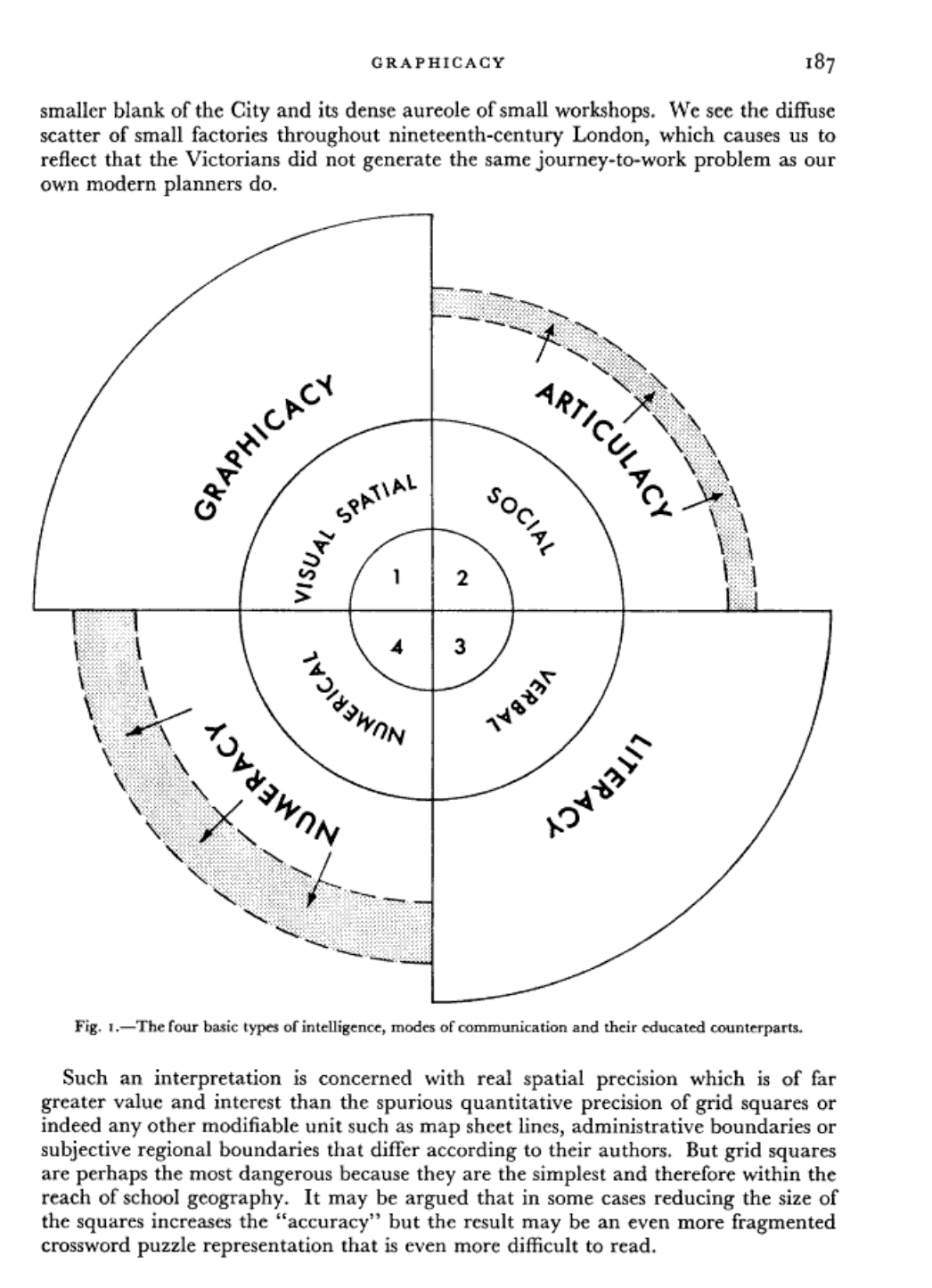
At the end of Balchin's Presidential year, there were proposals for a new Standing Committee on Graphicacy, which was the title of Balchin's Presidential Lecture.
From the obituary listed earlier...
William and Alice Coleman coined the term ‘graphicacy’ and when he was President of the Geographical Association, he chose speakers on this subject for the Presidential day, beginning with his own address.
This makes him, after Debenham, another GA President who literally has his name on the map.
Balchin's Presidential Address, delivered at the London School of Economics was called just 'Graphicacy". It included some useful images such as the one shown here, and has been referenced by other people quite recently and I recommend that you read it.
He had become closely linked with the GA in 1954 when he was first elected as a trustee of the GA, following the death of a number of former Presidents in close succession.
At the end of Balchin's Presidential year, there were proposals for a new Standing Committee on Graphicacy, which was the title of Balchin's Presidential Lecture.
From the obituary listed earlier...
William and Alice Coleman coined the term ‘graphicacy’ and when he was President of the Geographical Association, he chose speakers on this subject for the Presidential day, beginning with his own address.
He created a warm welcome for the concept, which was taken in the art world also and potentially included engineering. At the time of the National Curriculum, graphicacy was considered an important element for Geography and Rex Walford has recently written that the graphicacy concept ‘… will always remain a defining landmark in the history of geographical education and those articles you [both] wrote about it in the 60s are still regularly quoted today in geographical magazines.’
Graphicacy was still important when I trained as a teacher in Hull in the late 80s. Here's a scan of some notes I typed up during my PGCE course, from October 1986 to be specific.

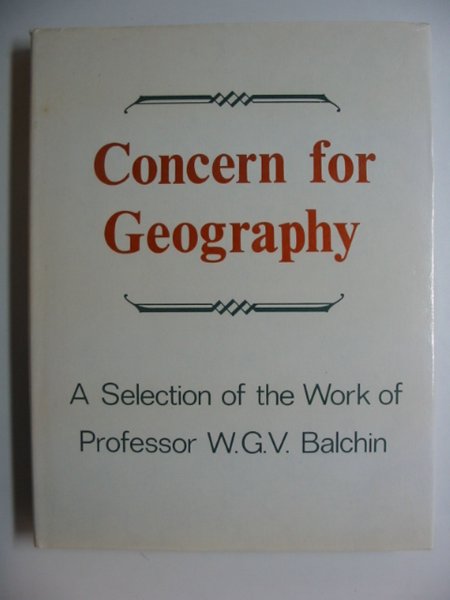
Balchin retired in 1981, and to mark the occasion, a book was published, of which 500 copies were printed.
It is called 'Concern for Geography'.
I got myself a copy, in a different binding. Mine is number 137 of 500.
Here's Balchin's photo from the front of the book.

In 1996, he was guest of honour at a dinner for the Isle of Thanet GA Branch.
Here's a description:
The 40th Anniversary Dinner was celebrated at the Walpole Bay Hotel in December 1996; the guest speaker was Professor Balchin of University College, Swansea. The attendees were welcomed by Elsie Weir, the Chairman. After an excellent meal, everyone was entertained by ‘The Serenaders’ led by Mrs Janice Reagan. This was followed by reminiscences from Alice Coleman, Prof William Balchin, Marjorie Woodward and Fred Fielder
Also a wonderful image: Source and Copyright: https://www.geography.org.uk/write/MediaUploads/Get%20involved/GA_IOT_History_booklet.pdf

From the Balchin Society Obituary
He and Lily retired to her home county of Yorkshire, to the lovely little town of llkley, not far from Leeds where two of their children were working. He continued his work for Geography, supporting the various organizations. In the Royal Geographical Society he won the distinction of serving on the Council for 17 years. Thirteen of these were as Chairman of the Education Committee, when each year he arranged for speakers on a range of careers for geographers to speak to packed audiences of sixth-formers, and as the careers were different every year, the accompanying teachers also found these occasions fascinating. In retirement he helped frame the lecture programme of the Society’s branch in York.
He was also a keen supporter of the Geographical Association. During his years at King’s College he was the organizer of its annual conference, and he was a Trustee for many years. In Yorkshire he joined the committee of the GA’s Bradford Branch.
William always had a great sense of perspective, both looking ahead to the future and relating it to the past. For example, he was well ahead in his recognition of impending anniversaries, such as the 150th of the Royal Geographical Society where he outlined a schedule of celebrations that was closely adhered to in the event. He also wrote a the history of the Geographical Association on the occasion of its centenary and edited a book on the 75 years of the Joint School of Geography – a saga of cooperation between King’s College and the London School of Economics.
For the Royal Geographical Society he prepared an archive of all the geographers who contributed to the success of World War II, with some intriguing revelations. For example, it was a geographer, J F N Green, who cracked the Italian code, using his meteorological knowledge to identify and interpret their weather bulletins. This feat must have been just as impressive as the well-known non-geographical cracking of the German code, but unfortunately it was never written up in similar detail.
 I also got hold of a digital copy of an excellent book that Balchin edited in 1970, with contributions from several other Presidents along the way.
This is from the Internet Archive.
Check out other books that can be borrowed and read after a download of Adobe Digital Editions.
Balchin died quite recently, in 2007, aged 91 - another GA President to live a very long life.
His obituary was written by Alice Coleman - a familiar name linked with many GA Presidents during her time at the GA.
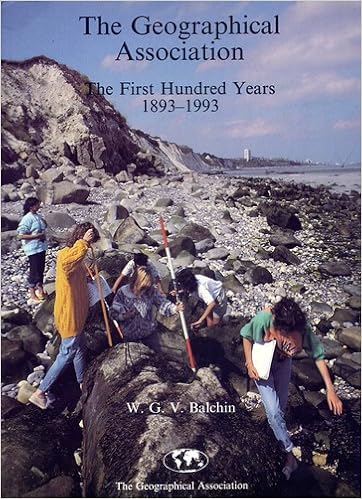
Of course, Balchin has also been influential in most entries so far as he was the author of a centenary history of the Association which is pictured below, and is worth seeking out as a second hand copy as I did.
There is a Balchin Family Society, which provided the image for this post.
References
The Internet Archive has scans of several of Balchin's books, and others you can borrow.
No Wikipedia page - perhaps one is needed for Balchin, and several other Presidents too.
Balchin obituary: https://www.questia.com/library/journal/1P3-1521973781/obituary-professor-w-g-v-balchin
Image source: https://medium.com/nightingale/dvs-historic-datavisualization-may2019-6885f80780d5
https://balchinfamily.uk/professor-william-balchin-and-mount-balchin
https://books.google.co.uk/books?id=nbGcAQAAQBAJ&lpg=PA47&ots=FWDWaCsx5p&dq=norman%20pye%20geographical%20association&pg=PA48#v=onepage&q=norman%20pye%20geographical%20association&f=false - Oxford Dictionary of National Biography 2005-8
Graphicacy was still important when I trained as a teacher in Hull in the late 80s. Here's a scan of some notes I typed up during my PGCE course, from October 1986 to be specific.

Balchin retired in 1981, and to mark the occasion, a book was published, of which 500 copies were printed.
It is called 'Concern for Geography'.
I got myself a copy, in a different binding. Mine is number 137 of 500.
Here's Balchin's photo from the front of the book.

In 1996, he was guest of honour at a dinner for the Isle of Thanet GA Branch.
Here's a description:
The 40th Anniversary Dinner was celebrated at the Walpole Bay Hotel in December 1996; the guest speaker was Professor Balchin of University College, Swansea. The attendees were welcomed by Elsie Weir, the Chairman. After an excellent meal, everyone was entertained by ‘The Serenaders’ led by Mrs Janice Reagan. This was followed by reminiscences from Alice Coleman, Prof William Balchin, Marjorie Woodward and Fred Fielder
Also a wonderful image: Source and Copyright: https://www.geography.org.uk/write/MediaUploads/Get%20involved/GA_IOT_History_booklet.pdf

From the Balchin Society Obituary
He and Lily retired to her home county of Yorkshire, to the lovely little town of llkley, not far from Leeds where two of their children were working. He continued his work for Geography, supporting the various organizations. In the Royal Geographical Society he won the distinction of serving on the Council for 17 years. Thirteen of these were as Chairman of the Education Committee, when each year he arranged for speakers on a range of careers for geographers to speak to packed audiences of sixth-formers, and as the careers were different every year, the accompanying teachers also found these occasions fascinating. In retirement he helped frame the lecture programme of the Society’s branch in York.
He was also a keen supporter of the Geographical Association. During his years at King’s College he was the organizer of its annual conference, and he was a Trustee for many years. In Yorkshire he joined the committee of the GA’s Bradford Branch.
William always had a great sense of perspective, both looking ahead to the future and relating it to the past. For example, he was well ahead in his recognition of impending anniversaries, such as the 150th of the Royal Geographical Society where he outlined a schedule of celebrations that was closely adhered to in the event. He also wrote a the history of the Geographical Association on the occasion of its centenary and edited a book on the 75 years of the Joint School of Geography – a saga of cooperation between King’s College and the London School of Economics.
For the Royal Geographical Society he prepared an archive of all the geographers who contributed to the success of World War II, with some intriguing revelations. For example, it was a geographer, J F N Green, who cracked the Italian code, using his meteorological knowledge to identify and interpret their weather bulletins. This feat must have been just as impressive as the well-known non-geographical cracking of the German code, but unfortunately it was never written up in similar detail.
 I also got hold of a digital copy of an excellent book that Balchin edited in 1970, with contributions from several other Presidents along the way.
 This is from the Internet Archive.
Check out other books that can be borrowed and read after a download of Adobe Digital Editions.
Balchin died quite recently, in 2007, aged 91 - another GA President to live a very long life.
His obituary was written by Alice Coleman - a familiar name linked with many GA Presidents during her time at the GA.
Of course, Balchin has also been influential in most entries so far as he was the author of a centenary history of the Association which is pictured below, and is worth seeking out as a second hand copy as I did.
There is a Balchin Family Society, which provided the image for this post.
References
The Internet Archive has scans of several of Balchin's books, and others you can borrow.
No Wikipedia page - perhaps one is needed for Balchin, and several other Presidents too.
Balchin obituary: https://www.questia.com/library/journal/1P3-1521973781/obituary-professor-w-g-v-balchin
Image source: https://medium.com/nightingale/dvs-historic-datavisualization-may2019-6885f80780d5
https://balchinfamily.uk/professor-william-balchin-and-mount-balchin
https://books.google.co.uk/books?id=nbGcAQAAQBAJ&lpg=PA47&ots=FWDWaCsx5p&dq=norman%20pye%20geographical%20association&pg=PA48#v=onepage&q=norman%20pye%20geographical%20association&f=false - Oxford Dictionary of National Biography 2005-8
If anyone has further information on W.G.V Balchin, please get in touch.
Updated October 2020
I've been sent a number of other images featuring Billy Balchin by Sheila Jones. Here he is talking to Sheila at the start of a GA Centenary Quiz in 1993 which will appear in a more detailed report on that event nearer the time. Bill Mead is standing in the background. I am not sure of the identity of the lady in red.

This image above is thanks to Sheila Jones. More to come when I reach 1993.
It shows the longevity of his involvement with the GA that this was over 20 years after he was President and he was still heavily involved.
https://collections.swansea.ac.uk/s/swansea-2020/page/on-our-doorstep - some memories of Balchin are here too, by David Herbert.
In Ireland, we viewed numerous overflow channels and there was a typical Balchin moment. We stopped in an abandoned rural area, walled empty fields and broken down buildings and Professor Balchin asked for comments. As I had been to lectures by Stuart Cousens on the famine and its consequences, I waxed lyrical about the impact on landscape of poverty, starvation and migration. Professor Balchin listened and then said, “That is all very well, but what are the walls made of?” Granite was really the answer he wanted; the course was still mainly seen through the lens of physical geography!
Herbert later says of Balchin:
Updated August 2023
From the GA Magazine in 2006 on the occasion of his 90th birthday.

A selection of of some local history books
— Gwyn Davies (@Gwynstato) August 26, 2022
10. Swansea and its Region
ed. by W.G.V.Balchin, 1971@SwanseaCouncil @Discovermore @WelshBiography@LibrariesWales @swanseamuseum@SwanUniArchives @SwanseaHistory @SwanseaHA @BernardLewis8 @KevJohnscymru@MikeDoyleComedy pic.twitter.com/M2w3Az02hB