Showing posts with label Curriculum Making. Show all posts

Wednesday, 6 August 2025

Oak KS3 Curriculum - coming soon

I've just completed my last contribution to the Oak National Geography Curriculum project for KS3. I helped to work on the Primary Geography curriculum which is already available on the Oak website free of charge to use it as you see fit.


The Curriculum Plan can be downloaded from here.

14 units are already available, and the rest will be available for the upcoming Autumn Term.

Oak National - geography curriculum complete

I've been involved with this project for several years and it's finally at an end with the final bits of the curriculum to be uploaded ready for September. I wrote a bit, and reviewed quite a lot of both the primary and the KS3 along with a whole team of people.


You can find the Primary resources here.

Thursday, 30 January 2025

We are all Gravesian

 Earlier this week was Norman Graves' 100th birthday, as mentioned in a previous post.

John Morgan has written a piece on the enduring importance of his work for those involved in curriculum design and teacher education for the GERECO blog. This blog has infrequent posts, but they are always worth reading.

GEReCo is the Geography Education Research Collective / UK Commission on Geographical Education of the International Geographical Union

Members are listed here. Some very well known names there, including former GA Presidents.


Monday, 27 January 2025

Happy 100th birthday to Norman Graves

Norman Graves was GA President in 1978. 

He reaches the milestone age of 100 years old today.

Happy Birthday Norman!

Read all about him here.

There are quite a lot of very long-lived former GA Presidents (I hope that's a good omen) but I think Norman may be the first to have reached the century...

Norman's work on curriculum continues to be referenced in academic work, and many of a certain age (such as me) will remember using his white school textbook written with John Talbot White.

A picture of my personal copy can be seen below:


Saturday, 27 May 2023

Fawcett Fellowship Research Questionnaire - your help is requested

Updated

Thanks to those colleagues who helped out.

I'm proud to have been a UCL-IOE Fawcett Fellow for this academic year, working with others to explore curriculum thinking and epistemic quality in the curriculum.

In 1987 Edith Fawcett endowed annual Fellowships in the Department of Geography at UCL in memory of her father, Professor C B Fawcett, who was head of the department between 1928 and 1949. The Fellowships were originally designed to enable UK-based teachers and other professional geographers in mid-career to spend a sabbatical term studying at UCL. The teaching Fellows continued to be paid their full salary and the scheme funded replacement geography teaching. This has now been opened up to a second model, where regular meetings are held across a year. 

This year's group of fellows has had regular meetings at UCL, and discussions about curriculum, curriculum making and the influences which shape our professional practice. We have been discussing our decisions over what to teach, how to sequence it, and how to assess it. We have been using a number of books for inspiration, which have included the excellent David Gardner book published by the GA and others, including Alex Standish. We are drawn from different stages of our careers and different school contexts. It's been fascinating to learn from the other fellows, and I have a bulging notebook of notes and documents. We also have an input from Dr. Alex Standish during each session, and are also encouraged to follow up the Fellowship by applying for Masters level study.

We are now reaching the final stage of the year, and writing up our research and thinking. I've now got ethics clearance to launch the questionnaire which will inform the final part of my work and writing. The questionnaire is linked to and also embedded below.

This questionnaire is aimed at teachers who teach GEOGRAPHY, and refers to these lessons specifically. You don't have to be a full time Geography teacher to get involved. All responses are anonymous and may be referenced in a chapter for a forthcoming publication on curriculum thinking in geography. 

The aim of my Fawcett Fellowship is to research the impact of "everyday geographies" and how these are unpicked and taught by individual schools. My GA Presidential theme for 2021-22 was Everyday Geographies, and an exploration of the quotidian. 
As significant local / national / global news stories and related content (such as images and videos on social media accounts) appear, I'm keen to discover  how  you, as geography  teachers, react  to them and make time for them. 
This is particularly aimed at KS3 Geography teachers, but KS2 teachers would also be welcome to respond.

At  what point might these news stories prove weighty enough to displace other content in your curriculum and earn a place in your curriculum for the next few years, and what thought is given to the longevity of these stories placed against topics which form a stronger foundation for GCSE courses as they appear in the specification?  How are these stories combined with existing curriculum content, or used to displace previous case studies? Is thought given to how this might create an imbalance in the parts of the world covered, or the extent to which this reinforces partial views of the world?

Is there a tendency for these topics to skew curriculum offerings away from ‘physical geography’ or what might be considered important disciplinary knowledge because of their nature? Are more news stories likely to be what might be termed 'human' or 'environmental geography'?

I'd be interested in your thoughts on the questions below. 
Please provide as much detail as you are happy to provide.


You can fill in the survey on the embedded form below, or by clicking this link.

I am very grateful for any and all contributions.

If you want to let me know more thoughts, feel free to add a comment on the blogpost below, or DM me on Twitter: @GeoBlogs.


The application process for next year's Fawcett Fellowship will be open shortly, and I shall let you know all the details as soon as they are available.

Sunday, 28 November 2021

Norman Graves and the IGU

A few weeks ago, we heard that a sesssion proposal that I put in has been accepted for the IGU.

The International Geographical Union (IGU) has its centenary conference in Paris in 2022.

Its title is: 

Developing a curriculum framework for Geography at national level

The session is described as follows: 

The Geographical Association (GA) has pursued its mission ‘to further geographical knowledge and understanding through education’ since 1893, during which time it has undertaken successive exercises to reframe the school geography curriculum in the UK and further afield. 

One of the GA’s flagship initiatives at present is a fundamental review of curriculum thinking in geography education. 

This initiative has taken a very wide range of evidence and perspectives into account in order to produce a geography curriculum framework that is informed by research and practice, reflects the contemporary world and discipline and can be used by the Association to exert influence on national and international curriculum conversations in the future. 

Its presentation, for discussion, at the IGU’s centennial conference continues a long tradition of GAIGU engagement, involving former GA Presidents including Norman Graves and Sir Dudley Stamp. There will be inputs, possibly remote or pre-recorded from those people involved in the development of the curriculum framework: an initiative led by Eleanor Rawling, Honorary Research Fellow, University of Oxford Department of Education. 

The curriculum framework will be introduced, along with a description of some of the other projects which influenced the thinking. Key issues around such work will be explored, with reference to other national curricula. 

One aim is to create a ‘Curriculum Vitae’ - a curriculum for life: to engage young people and equip them with key questions that they will carry forward with them beyond their schooling. The Climate Emergency and other global issues should be threads running through any new curriculum, but teachers need support in considering how such issues can become objects of study, so that they may be examined in school without the attendant real-world pressures we otherwise face when dealing with complex social, political and environmental challenges. Should this be part of the framework, or the associated guidance? Such questions will be discussed. 

The curriculum framework also creates opportunities for teachers to develop deeper (powerful) knowledge and equip students with choices about whether and how they wish to act, as well as a better understanding of how and why others do/do not act in the same way. 

Current GA President Alan Parkinson was previously the Geographical Association’s Curriculum Leader and is a practising teacher with much experience in developing curriculum artefacts and vignettes to help bring curriculum documents to life. Ideas for breathing life into the framework will also be explored and shared. This will hopefully be the start of a renewed international conversation about curriculum: to reconnect with each other after several years of enforced separation.

If you would like to get involved, please get in touch. The IGU website will be reopened during December and early January for the submission of papers and there will then be a selection process to create the programme for the session that I will chair.

I will be channelling a former GA President who was heavily involved with the IGU for many years, and wrote this excellent book in 1979: Professor Norman Graves. He has his own entry on the blog. It will also draw on the current work of another former GA President: Eleanor Rawling.

Monday, 21 June 2021

2016: Mary Biddulph

I have had the privilege of working with Mary Biddulph
on a range of projects over the years.
Mary worked for many years in teacher education at the University of Nottingham.

We worked together on the Young People's Geographies project, which ran from 2006-2011. I started as a teacher, but was involved with the final stages of the project as a GA employee.

Mary has kindly filled in the Zoom form that I created for the recent Presidents.

Mary was born in Brighton in 1960.
She started school in the West Midlands, her family having moved there when she was four years old. However, she then moved to Maidstone in Kent when she was 12 and went to school there until she finished her A levels.
Of her time in education she said:
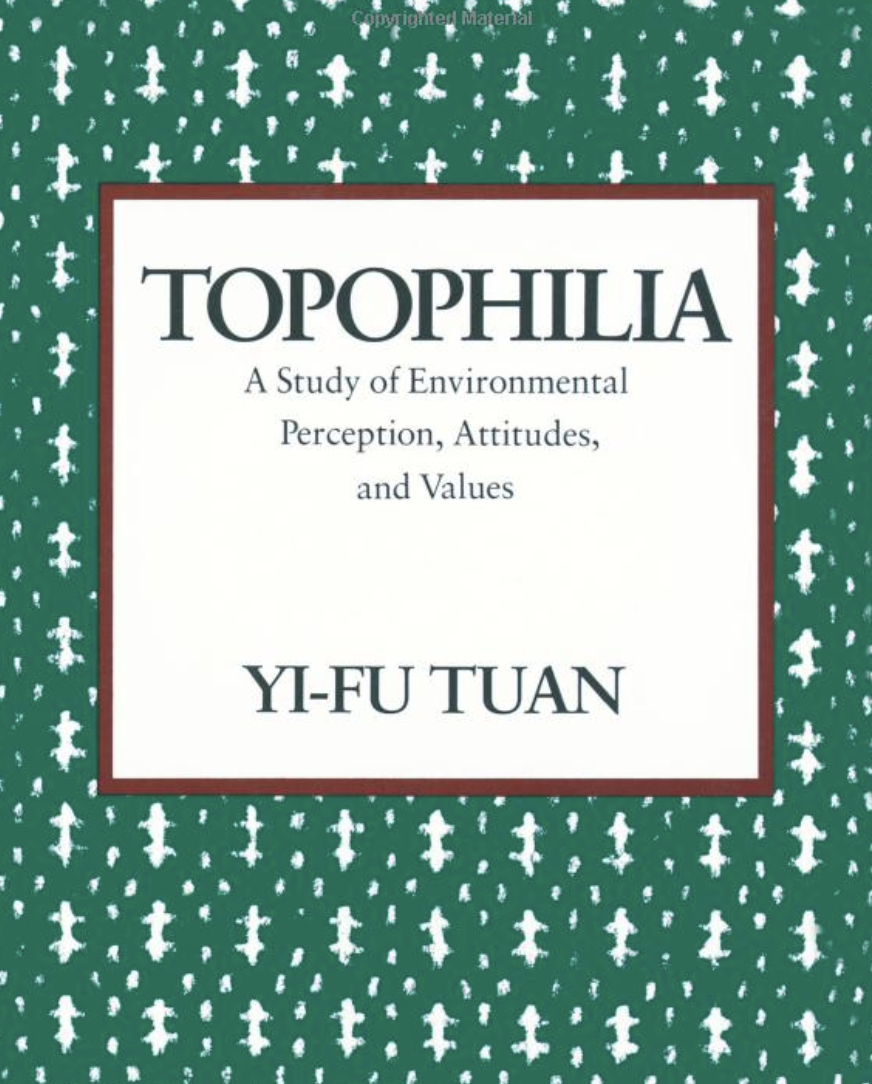
"My geography education was relatively uninspiring...except for the fieldwork at A level - geography made so much sense after the field week in Swanage. I did my degree at the University of Sussex, where there was a lot of emphasis on International development (many thanks to (former GA President) Tony Binns for his enthusiastic teaching) and historical geography (many thanks to Brian Short for his wisdom and insight). It was here I first read 'Topophilia' by Yi Fu Tuan - this changed my view of geography for ever. I recommend it to everyone. 

I did my PGCE at the University of Nottingham and have lived in the East Midlands ever since. Harry Tolley and Frank Molyneux were my tutors, and it is fair to say they were both, in very different ways, inspirational."

This is a reminder of the importance of those previous generations of ITE trainers who trained the current generations of teachers - people like Vincent Tidswell who I was fortunate to have had train me.... I may need to investigate these two gentlemen next...

Mary responded next to this question, which I have asked all the available Presidents: "What has your career been e.g. teacher / academic / author / other work outside the obvious geography sphere?"
Mary said:

"I feel I have done bits of all of the above in my time. However, I started my career in geography education as a young (and very naive) teacher in an inner-city school in Derby. The students there were magnificent - so skilled at running rings round me!

I had to learn fast. I became a PGCE tutor at the University of Nottingham after eight years in the classroom. The transition was just luck - right place at the right time - Harry Tolley needed a part-time colleague and I was lucky enough to be it. 

Working alongside Harry was wonderful, and I learnt so much from him during my early years as a PGCE tutor. His boundless enthusiasm for and commitment to geography education made him an excellent role model for this early-career PGCE tutor. I worked in ITE Geography at the University of Nottingham for nearly 30 years. It sounds like a long time, but it isn't. The time flew by. The University afforded me many professional opportunities for which I am forever grateful. Yes, the chance to travel to many interesting places was a benefit of working at the University, but there were three other and much more significant benefits: 
1. The freedom to think / read / reflect on geography education and its significance to children's education. 
2. The opportunity to work with many wonderful hard-working PGCE students and their subject mentors in schools - this was a real privilege. 
3. The chance to be part of a wider community (including the GA) of committed geography educationists who fed my ideas and challenged my thinking. 

Part of the freedom of working in the University was being able to seize opportunities as they came along. For me, an example of such an opportunity was my involvement in the Young People's Geographies (YPG) project. The project comprised a unique combination of teachers, academic geographers and school students all working together developing the geography curriculum - it was both great fun and so inspiring. The school students involved in the project had such rich ideas about geography and were so perceptive about what the curriculum could be. We need to listen to them more than we do."

As one of those teachers I certainly learned a great deal from my involvement in the project.

She told me more about her Presidential theme.

Inclusive Geographies? was the theme I selected. 
I chose this theme because I wanted the geography community to think about the extent to which school geography, and geography more generally is (or is not) inclusive of a diverse range of students and teachers. The question mark is significant to the theme. 

I am convinced that there was then, and there still is, important work to be done to ensure all young people access the kind of geographical education that will serve them well in their current and future lives. I also think there is work to be done in ensuring the geography teaching profession better reflects the communities it serves. 

These are complex issues and there are no simple answers, but nonetheless they are issues not to be sidestepped. Prior to being president I edited the journal 'Teaching Geography' for three years, and while in this role served on the GA's Education Committee. I was also a member of the YPG project team (the project was funded by the Action Plan for Geography) and had also been involved in the evaluation of a couple of other GA projects. Since being president I have stepped back a bit but am currently on the Geography Education Research Working Group (GERWG) and am also a member of a group looking at developing a curriculum framework for geography."

I ask all former GA Presidents why the GA matters:

"The GA matters to me because it provides me, and many others, with membership of a community of practice committed to high quality geography education. It is home to, and even a refuge for, a wide range of geography education professionals who debate, discuss, argue and pontificate on the question: What exactly is a 'high quality geography education'. It provides a place where assumptions about school geography are challenged and where teachers can be sure of the quality of the ideas it encourages. School geography has not always had a secure place in the school curriculum, and the GA has been crucial in advocating for the subject in policy circles where the significance of geography to young people's education has been often been completely misunderstood. The GA continues to play an essential and ongoing role in ensuring geography is part of the education project. I'm not really sure how I got involved. It just seemed to happen a gradually.

I asked her about any successes of her Presidential year:
"I think it's difficult to judge 'successes', but my sense of achievement just came from working with the excellent staff at HQ and working with the 'team' of presidents to support the mission of the GA. Whilst the presidential lecture is the big public event for the president, it is really a small part of the presidential year - the rest of the year is really a team effort and HQ staff and the vice presidents and the past-president are key to that effort. Having said this, being president is good fun and it does mean that you get to engage with a wide range of enthusiastic geographers - attending the final weekend of Worldwise quiz in Blencathra, seeing the hard work of the different committees and enjoying the less formal aspects of the annual conference are all special parts of the role that I remember with great affection."

She also trained the current Nottingham University PGCE tutor Mal Kerr, just as she herself was trained by the previous generation.
Thanks to Mary for answering the questions so thoughtfully, and thanks in advance for the ongoing curriculum work which will be one feature of my own Presidential year.

"I still think there is work to do in helping a wider range of teachers and educators to get involved in the work of the GA. In particular, we need to think about how to engage the enthusiasm of early career teachers before they are no longer 'early career'."

References
Academic writing: https://www.tandfonline.com/author/Biddulph%2C+Mary - some very recent papers.


'TG' editorials feature in many issues too of course.

YPG has its own blog posts which includes some of the references, particularly a paper Mary co-wrote with Roger Firth and a special issue of 'Teaching Geography'.

Images - Copyright: Bryan Ledgard / Geographical Association

Wednesday, 28 April 2021

2006-11: Young People's Geographies

"Childhood has always been a disputed territory, its true geography quickly forgotten as we grow older, replaced by an adult-imagined universe." 

Libby Brooks, 2006

I've mentioned the Young People's Geographies project before, but this is a more detailed post as we enter the period of the GA's history when funded project work became more significant.

I wrote about it at the time in my GeographyPages website.

YPG was about making school geography more exciting and relevant to students by involving them in curriculum making and by focusing on their own lived geographies. 
Young people have their own distinct geographies, often very different to those of adults, and the YPG team investigated whether the learning process was richer for students if these geographies were taken into account.

At the heart of the project was the idea of conversation. These changes required teachers and students talk to each other. A big part of the first phase of the project was about establishing those conversations, and the was a key ingredient for keeping those conversations going throughout the next phase.

A key element of the YPG project was the way it crossed boundaries between academic and school geography. By working together, academics, teacher trainers, school teachers and students explored ways in which academic ideas can effectively develop the school geography curriculum and students' geographical learning.
I remember the first project meeting very well. The second one took place on a very windy day and we nearly cancelled the travelling because of it. We had a school minibus which we parked at Peterborough Railway Station to pick up the train to Leicester and on the way the train hit a fallen tree. By the time we finished for the day, the trains were all cancelled. Luckily we were a small enough group to just grab a taxi from outside Leicester train station and ask it to take us to Peterborough station. 

The project was also the first time that I met people who I have since met several times and been involved with in projects and other work.

We all met a few more times with the students. and had a final presentation event in Leicester.

Some more details below taken from documents and my own GeographyPages website (which ran from 2001 to 2013)

The Young People’s Geographies Project 

Further Information 

Phase One 

Phase One of the YPG project was split into two years, covering September 2006 – July 2008 

Year One: September 2006 - July 2007 

 Four key groups of collaborators: school students, teachers, professional geographers with research interests in young people’s geographies and teacher educators 

 Seven schools from East Midlands, Kings Lynn, London, Reading and Bedford 

 One or more teachers from each school 

 Four students from each school (Years 9, 10 & 12) variously selected 

 Open-ended approach 

 Four project days and school-based work 

 Project days (November, January, March, July) involving all groups coming together to share ideas and support the development of the project in individual schools 

 School-based work: ‘taking ideas back’, students and teachers in conversation about young people’s lived geographies and how their experiences can be used to develop the geography curriculum and ways of learning. Developing new aspects of the geography curriculum. 

Year Two: September 2007 - July 2008 

 Individual schools continue to develop YPG project 

 Development of YPG project website 

 Evaluation of Year Two and Phase One of the project Key Activities Year One: September 2006 - July 2007 

 Young People’s Geographies Project developed by project co-ordinators: Mary Biddulph and Dr Roger Firth, University of Nottingham; David Balderstone, Sharnbrook Upper School; Di Swift, Geographical Association 

 Professional geographers recruited with research interests in young people’s geographies: Dr Ian Cook, University of Exeter; Dr Tracey Skelton, then at the University of Loughborough; Helen Griffiths, a PhD student, University of Exeter 

 External evaluator appointed: Dr Nick Hopwood, University of Oxford 

 Consultant appointed: Dr John Morgan, Institute of Education, University of London 

 Seven partner schools recruited: 

King Edward VII School, King’s Lynn - my school at the time

Archbishop Tenison’s C of E School, London; 

Langtree School, Reading - where Dan Raven Ellison was teaching at the time

Sharnbrook Upper School, Bedfordshire - including Dee Saran and David Balderstone

Nottingham Emmanuel School, Nottingham 

Arnold Hill School, Nottingham 

Bramcote Hills Sports and Community College, Nottingham 

 Four project days organised (November 2006, January, March, July 2007) to bring the four participating groups together to work on activities in order to: 

  • create a context for perspective and ideas sharing 
  • support the ongoing development of the project within individual schools
  • showcase and share the work of each school 

 Individual schools develop their own YPG project

Year Two: September 2007 - July 2008

Seven schools continue to develop the geography curriculum 

 Two project days (November 2007, July 2008) to support the ongoing development of the project within individual schools, share a framework for curriculum development and showcase the work of each school and evaluate Phase One 

 Project coordinators visit individual schools 

 Development of YPG website 

 Evaluation of Year Two and Phase One of YPG project

We ended with the presentation event which was in a room at Leicester City Hall.

I also have DVDs showing the footage of the day, and will hunt them out and snip some little elements from that.

More to come on this project in future posts as we get nearer the present day.


Images from the teacher evaluation day and exhibition in 2008 at Solly Street, while I was working for the GA - images by Alan Parkinson

Monday, 7 December 2020

1991: Eleanor Rawling MBE

Update July 2022
The GA is and has always played a vital role as a source of geography subject expertise, advice and community for geography teachers and geographers.
It is crucial that such a body exists in times of continuing educational and curriculum change and so I have felt it important to be involved and to contribute when I can.
I have also found it a place of friendship, intellectual challenge and social activity.
Eleanor Rawling (personal correspondence)

Eleanor Rawling has been involved in a wide range of geographical education activity for many decades, and has influenced the practice of many classroom teachers. Indeed, one could argue that she has done more than most to influence the geography that is taught in schools, particularly those that follow the National Curriculum.

Thanks to Eleanor for providing some useful information on her career and involvement with the Geographical Association.

Eleanor was born in Gloucestershire in 1949, and grew up in the Cotswolds.
She attended Chosen Hill Grammar/Technical School, Churchdown, Gloucestershire (a new school opened in 1959/60) and St Hilda's College, University of Oxford 

After attaining a degree in geography and a PGCE (1967-72) at the University of Oxford, she taught geography (11-18 years) at the John Mason School in Abingdon, Oxfordshire. 

From 1976, she worked on two curriculum development projects: Schools Council Geography 16-19 at the University of London Institute of Education (1976-85) and the Geographical Association's Geography, Schools and Industry Project at the University of Oxford Department of Educational Studies (National Coordinator 1987-91). 

In 1984, she became Chair of Publications and Communications Committee of the GA, in which capacity she initiated the proposal for a GA Newsletter. In 1985, she became Editor of 'Teaching Geography' after Patrick Bailey finished his period of office.

In 1989, she was part of the National Curriculum Geography Working Group established by the government, and managed by the Department for Education and Science (DES) to outline a National Geography Curriculum. You may notice the names of several other Past Presidents on this group as well.
  • Mrs. Kay Edwards—Head of Geography, Penglais Comprehensive School, Aberystwyth
  • Mr. Richard Lethbridge—Former chairman, Tower Steel (Holdings) plc, now a branch secretary of the Country Landowners' Association
  • Mrs. Wendy Morgan—Recently retired headmistress of Elmsett Primary School, Suffolk
  • Dr. Keith Paterson—Senior Lecturer in Geography, Liverpool Institute of Higher Education
  • Mrs. Eleanor Rawling—National Co-ordinator, Geography Schools and Industry Project
  • Mr. Michael Storm—Staff Inspector for Geography and Environmental Studies, Inner London Education Authority
  • Mrs. Rachel Thomas—Member of the Countryside Commission and Exmoor National Park Committee
  • Mr. Rex Walford—Lecturer in Geography and Education, University of Cambridge
https://api.parliament.uk/historic-hansard/written-answers/1989/may/05/geography

Although Eleanor remained a member of the Group through to its report in 1991, she was unhappy with the approach taken to the curriculum and submitted a minority report which was not published.

In 1991, Eleanor was made a Research Fellow at the Oxford University Department of Educational Studies (later re-named Department of Education) and also became President of the Geographical Association (1991-2) and Chair of the Council of British Geography (1993-5). In her Presidential Address to the GA in 1992, Eleanor explained her concerns about the new national geography curriculum and her proposals for a more workable curriculum structure.
As Chair of the Council of British Geography she initiated the CoBRIG Seminars, bringing together those in schools and in higher education, research and teaching to consider big issues about the state and future of geography education. The 1994 seminar resulted in a book Geography into the 21st Century, co-edited/written with Richard Daugherty.

Eleanor told me that her MBE which was awarded in the New Year's Honours 1995 was specifically for her work with the GA and with the Council of British Geography.
From Eleanor's University Biography.

From 1993-2005, Eleanor was Professional Officer for Geography with the Qualifications and Curriculum Authority, during which time, she also maintained her research activity and publications via links with the Oxford Department. 
A Leverhulme Research Fellowship 1999-2000 allowed her to take secondment from QCA to carry out a study of the impact of curriculum policy on school geography and the resulting book Changing the Subject; the impact of national policy on school geography 1980-2000 has been widely cited both in and beyond the geography education world. This was followed by a BERA publication Connecting Policy and Practice; Research in Geography Education. Eleanor’s contribution to policy studies was recognised by the award of the Royal Geographical Society’s prestigious Back Award for contributions to geography and education policy in 2003.
She has given papers at a number of international conferences, including Brisbane, Washington DC, Toronto, New York and Boston. In 1992, she was a key speaker at the IGU International Congress held in Washington DC. and hosted by the National Geographic Society. She was also a visiting scholar to the NGS in that same year.
Since 2005, Eleanor has undertaken consultancy work for numerous organisations, including the Department for Education (England), edited the academic journal Geography, played roles in both the Royal Geographical Society and the Geographical Association and been an active member of the Geography Education Research Collective (GEReCo). 
Eleanor kindly answered some questions via a Google Form.
Most recently, I have worked as an independent consultant in geography and education, doing work for the Department of Education, England on National Curriculum (2013-4), GCSE and A/AS Level (2014-17) and for the Welsh Assembly Government's Curriculum Department on the Welsh Curriculum Review (2017-19).
"My year was characterised by 'making the most of the National Curriculum' i.e. I and many others were not happy with the new geography National Curriculum we had but I was determined that we would provide teachers with all the help and support they needed to implement it. The GA produced a full range of leaflets, resources and publications and also ran teacher inset, designed to do just that. 

Behind the scenes, I also worked hard to try and change/amend/improve the curriculum - a theme which has coloured a lot of my working life. I was instrumental in setting up GA News - and appointing Mike Morrish (another former GA President in due course) to be the first editor. I count this as a huge success as the Newsletter has flourished and continues to the present day. 
Also I planned out a GA regional structure which got off the ground with a very successful pilot region (the North West, managed by some enterprising and enthusiastic lecturers and LEA advisers). The full structure never really ran successfully because we didn't have the funding to make it work on more than a voluntary basis. I made close contact with both the Association of American Geographers and the National Geographic Society and their growing work on supporting school teachers. This resulted in close relations and some sharing of ideas/resources.

When she was GA President, Eleanor was also being a mother to two young children, one of whom needed constant medical treatment and doing independent geography education consultancy work.
 
After my Presidential year, I was involved in the committee that reviewed the GA structure and committees and produced a new structure, and I continued on Council until I had to give up due to joining SCAA."

John Westaway was another former President who was also involved with SCAA. More on that to come in John's own entry on the blog.

Eleanor was also involved in the development of the OCR Pilot GCSE Geography in the mid 2000s. She developed the module on Cultural Geography, and helped shape this innovative curriculum.

This is where I first encountered Eleanor myself, at an event for those teachers who were teaching this wonderful qualification, which reinvigorated the final few years of my teaching before I started to work for the Geographical Association (and probably contributed to me getting that job in a small way as it was so creative and opened my eyes to the possibilities - along with the influence of Chris Durbin.)

Eleanor also attended the Geography Teacher Educators' conferences. These are excellent, and I have attended several over the years and remember chatting to Eleanor at the Oxford event a few years back, where I had been presenting on the GeoCapabilities project.

I've also had the pleasure of working with Eleanor since on the more recent GA working party on the curriculum which the GA convened around the time I was working for the GA, and also discussions at the GTE conferences I've attended. I remember this involved producing some mapping along with ESRI, I wonder if the maps still exist.

Eleanor also had the privilege of being the author of the first article to be included in the GA's new journal for teachers in 1975:  'Teaching Geography'.


She contributed many other pieces as well over the years, and co-wrote a number of books including one with Richard Daugherty (GA President in 1989). She was also part of the Editorial Collective of the journal 'Geography' for many years, guiding the relaunch of the journal.
Eleanor is still very active in geography and curriculum matters.
Eleanor attended the special dinner held to celebrate the GA's 125th Anniversary, and is pictured here.


Images copyright: Geographical Association and Bryan Ledgard

In recent years, Eleanor remains active as a curriculum consultant.
She also has an interest in place, and the use of poetry.
She has written a book on the poetry of place of Ivor Gurney and the county of Gloucestershire.

She comes at this from the perspective of a Geographer and someone who knows the area that Gurney wrote about well: https://ivorgurneytrust.com/who-we-helped-3/ 

Eleanor continues to be involved with the GA, and told me why she thinks this is so important:

"As a new teacher in the 1970s, I found the GA particularly helpful in giving me access to the wider community of teachers and the expertise of other geographers and educationalists. Writing for the journals (TG and Geography) and being a member of various committees and working groups was an essential part of my professional development and growth of confidence. (Very significant was the fact that, as a young teacher, I had an article accepted for the very first issue of Teaching Geography)".

She still keeps active as well:

I am a fell runner (still at 70 years of age) and a long distance walker. My enjoyment of exploring wild places has also provided a personal and emotional perspective on my activities as a geographer and GA member.

References
http://www.education.ox.ac.uk/people/eleanor-rawling/ - departmental profile and biography

Hansard - Working Party for NC - mention of Eleanor's involvement
https://api.parliament.uk/historic-hansard/written-answers/1989/may/05/geography

Books
Changing the Subject; the impact of national policy on school geography 1980-2000

RAWLING, ELEANOR. “Supermarket for Llandovery: —an Exercise in Field Research.” Teaching Geography, vol. 1, no. 1, 1975, pp. 7–10. JSTOR, www.jstor.org/stable/23749911

Article on Place: https://www.questia.com/magazine/1P4-2122398093/reflections-on-place

Rawling E, 2001, Changing the Subject; the impact of national policy on school geography 1980-2000 Sheffield, Geographical Association. 

Rawling E, 2004, School Geography Around the World,; a sample of 14 countries, in Kent, Rawling and Robinson , forthcoming IGU-CGE publication with Scottish Association of Geography Teachers for IGU Glasgow Congress August 2004. 

Westaway J and Rawling E, 2001, The Rises and Falls of School Geography Teaching Geography 26 (3) pp108-111. 

Rawling, Eleanor, and John Westaway. “Exploring Creativity.” Teaching Geography, vol. 28, no. 1, 2003, pp. 5–8. JSTOR, www.jstor.org/stable/23756441. Accessed 23 Dec. 2020.

RAWLING, ELEANOR. “Village in the Green Belt — an Introduction to Planning for Second Year Pupils.” Teaching Geography, vol. 1, no. 4, 1976, pp. 151–156. JSTOR, www.jstor.org/stable/23751249.

GA Thinkpiece:

I am grateful to Eleanor Rawling for her assistance with the entries for several other GA Presidents as well as her own.

If anyone has other memories of Eleanor's work with the Geographical Association please get in touch.

Simon Catling told me:
Eleanor Rawling is a particular friend who has provided great service for the geography education community for very many years, as one of our leading thinkers, essayists and promoters, always arguing geography’s case rigorously.

Update December 2020

Eleanor Rawling and Bryan Coates
(c) Bryan Ledgard / Geographical Association
At the relaunch of 'Geography'
(c) Bryan Ledgard / Geographical Association


Updated July 2022
I've met Eleanor a few times recently - at the GA Conference and also a COBRIG meeting at the RGS.
I worked on a paper for the recent IGU in Paris based on her work.
The paper is shared on ResearchGate.


Wednesday, 4 November 2020

The GA's responses to curriculum debates in the 1970s and early 80s - 1 of 2

I am grateful to Richard Daugherty for taking the time to send me a number of contributions to the blog. Richard was the GA President in 1989, and his own entry on the blog will appear in a month or so.

In the 1980s, Richard was heavily involved in the GA's response to the proposals for a National Curriculum. This sort of advisory work has gone on for decades and often happens in the background, with many GA members being unaware of the effort that goes into shaping curriculum and assessment. I have been involved in a little bit of this myself, going back about 15 years.

GA Council, which used to make decisions on GA Policy and other work were aware of the emerging National framework for Geography following an earlier speech by James Callagham which I have blogged about recently.

The following text and documents were provided by Richard. The documents themselves were uploaded for Scribd for ease of access and reading.

Throughout the late 1970s and into the 1980s, the GA was responding to emerging ideas from Government and from the Inspectorate that would eventually result in a statutory National Curriculum for schools in England and Wales. The first section of a discussion paper for a meeting of GA Council in March 1980 summarises developments up to that point.

GA Council Paper March 1980 by Alan Parkinson


Shortly after that meeting, I co-wrote an article with Rex Walford for the Times Educational Supplement (TES), published on 18th April 1980, commenting on the curriculum proposals.

It was titled "Overlooked in the Secret Garden".
Here's Part 1 of the article.

TES Article Page 1 18th Apr... by Alan Parkinson


Here's Part 2 of the article

TES Article Page 2 18 April... by Alan Parkinson


The GA then decided to prepare and circulate a leaflet to summarise the main features of what we believed to be the subject's contribution to the education of young people'.
'Geography in the School Curriculum 5-16' was published in January 1981.
It can be seen below:

GA Pamphlet Re School Curri... by Alan Parkinson


The GA leaflet 'Geography in the School Curriculum 5-16' was distilled from lengthy discussions in GA committees into a summary of what was then agreed as the Association's view on geography's contribution to the curriculum.

Part 2 to come tomorrow.

Saturday, 26 September 2020

1980: Myopic Geographers

In 1980, an item was published in 'Teaching Geography' called 'Do myopic geographers ignore the world?'
It explored the areas that teachers chose to study and whether we tend to focus on particular parts of it and neglect others, particularly at 6th form level.


Reference
Do Myopic Geographers Ignore the World? From the Sixth-Form/Universities Working Group of the Geographical Association. (1980). Teaching Geography, 6(2), 50-52. Retrieved September 14, 2020, from http://www.jstor.org/stable/23752265

Saturday, 25 July 2020

Constructing school geographies

It's worth reading this piece by John Morgan, which forms part of an Open University online course.
John talks about the importance of knowing something about the development of the subject.
He references the important work of Halford Mackinder.


While the 'old' geography was concerned with the collection of mere 'useless' information about places, the new geography was about 'training the faculty of sight in a detached pictorialisation of the drama of the world'. 

Wednesday, 28 August 2019

1932: Young People's Geographies

I am proud to have been involved in the Young People's Geographies project - 2006-11
I will be talking about that more when we get to that period, and the involvement of Mary Biddulph.
Of course, the thinking behind the project was not necessarily a new idea... there aren't any really.
Researching this blog has meant reading through over 100 years of journals, and back in 1932, there was an article by L Garrard.


References

Garrard, L. “SCHEMES OF WORK IN GEOGRAPHY MADE BY CHILDREN.” Geography, vol. 17, no. 4, 1932, pp. 293–295. JSTOR, www.jstor.org/stable/40558511.

Margaret Mackintosh RIP

Updated post. Sad news at the end of last week from colleagues who have organised the Charney Conference over the years of the passing of Ma...