
Showing posts with label Meteorology. Show all posts
Showing posts with label Meteorology. Show all posts
Sunday, 6 September 2020

Thursday, 11 June 2020
Cuchlaine A M King
Professor Cuchlaine Audrey Muriel King died in December 2019.
She was an expert in glaciation and I remember using her book on periglaciation when I started teaching in the late 1980s and wondering how you pronounced her name... She was very proud of her name.
There was also her book with John Cole, who I blogged about recently, on Quantitative Methods which I also remember being in the departmental library back then.
She studied at Cambridge University and earned her bachelor's degree in geography in 1942. She then joined the Women's Royal Naval Service and became a meteorologist and surveyor for the duration of World War II. After her service, she returned to Cambridge and researched sand movement on beaches, earning her doctorate in 1949.
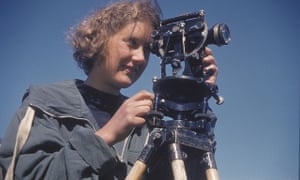
She was an expert in glaciation and I remember using her book on periglaciation when I started teaching in the late 1980s and wondering how you pronounced her name... She was very proud of her name.
There was also her book with John Cole, who I blogged about recently, on Quantitative Methods which I also remember being in the departmental library back then.
She studied at Cambridge University and earned her bachelor's degree in geography in 1942. She then joined the Women's Royal Naval Service and became a meteorologist and surveyor for the duration of World War II. After her service, she returned to Cambridge and researched sand movement on beaches, earning her doctorate in 1949.
King spent her career studying the influence of glaciers on landscape evolution. She went on expeditions to Skaftafell in Iceland in 1953 and 1954 to study the glaciers there. It was unusual at that time for young women to be allowed to participate in fieldwork in such remote, rudimentary areas of Iceland. The expeditions resulted in a series of papers in 1955 and 1956. Because of her gender, her participation in fieldwork trips was discouraged. However, she participated in research on Baffin Island in the 1960s and the Austerdalsbreen glacier in Norway, and led fieldwork expeditions of her own throughout the Arctic. She published several books throughout her career.
A Yorkshire Post piece said:
With characteristic modesty, she said more than once that her “only achievement” had been to “pave the way for gender equality in Arctic exploration,” recalling the research she undertook on Baffin Island in the far north of Canada in the mid-1960s with the eminent geologist, Prof Jack D Ives, a former student of hers at Nottingham University.
A Yorkshire Post piece said:
With characteristic modesty, she said more than once that her “only achievement” had been to “pave the way for gender equality in Arctic exploration,” recalling the research she undertook on Baffin Island in the far north of Canada in the mid-1960s with the eminent geologist, Prof Jack D Ives, a former student of hers at Nottingham University.
This piece threw up another link:
King was taught by Professor Frank Debenham, another former GA President - from 1952 in fact.
In 1959, King began teaching at the University of Nottingham, where she remained for the rest of her career. A research laboratory is named in her honour.
King was one of the earliest women to become a professor of geography in the United Kingdom, and she retired in 1982 - she may have gained that honour earlier if not for discrimination. Cuchlaine King was honoured with the David Linton Award of the British Society for Geomorphology in 1991.
In 1959, King began teaching at the University of Nottingham, where she remained for the rest of her career. A research laboratory is named in her honour.
King was one of the earliest women to become a professor of geography in the United Kingdom, and she retired in 1982 - she may have gained that honour earlier if not for discrimination. Cuchlaine King was honoured with the David Linton Award of the British Society for Geomorphology in 1991.
The Linton Award is named after the former GA President who has appeared already on this blog.
A full obituary was published in the latest issue of the Geographical Journal of the RGS-IBG.
To finish, a story I liked:
Enjoying a picnic while on a field trip to Lunedale in the Pennines, Cuchlaine King and her group of geography students were approached by an inquisitive sheep. It came close enough for Cuchlaine to offer it a bite of her sandwich, which it accepted with gusto.
“That was so sweet,” one of the students said. “What sort of sandwich was it?” “Lamb,” came the reply.
Sources
Wikipedia page: https://en.wikipedia.org/wiki/Cuchlaine_King
https://books.google.co.uk/books?id=9Pc-KlQ3I54C&lpg=PA90&dq=cuchlaine%20king%20nottingham&pg=PA90#v=onepage&q&f=false
Brian Whalley wrote an obituary for 'The Guardian'
A full obituary was published in the latest issue of the Geographical Journal of the RGS-IBG.
To finish, a story I liked:
Enjoying a picnic while on a field trip to Lunedale in the Pennines, Cuchlaine King and her group of geography students were approached by an inquisitive sheep. It came close enough for Cuchlaine to offer it a bite of her sandwich, which it accepted with gusto.
“That was so sweet,” one of the students said. “What sort of sandwich was it?” “Lamb,” came the reply.
Sources
Wikipedia page: https://en.wikipedia.org/wiki/Cuchlaine_King
https://books.google.co.uk/books?id=9Pc-KlQ3I54C&lpg=PA90&dq=cuchlaine%20king%20nottingham&pg=PA90#v=onepage&q&f=false
Brian Whalley wrote an obituary for 'The Guardian'
Sunday, 19 April 2020
1963: Professor Kenneth Charles Edwards, CBE
 Updated October 2023
Professor Kenneth Charles Edwards was an academic geographer, with a particular interest in fieldwork and biogeography, who was closely associated with the University of Nottingham.
He was born in Hampshire in 1904, and went to Itchen College and the University of Southampton.
He started out at as an Assistant Lecturer in Geography, as far back as 1926 at the University of Nottingham, where he stayed until his retirement in 1970.
He was a Fellow of the RGS too. He was also President of the IBG in 1960 - another GA President to have been closely linked with that organisation.
He was appointed to the first Chair of Geography in the University of Nottingham in 1949 and held the post until his retirement in 1970.
His Presidential address was titled: "The importance of Biogeography" and was delivered at the London School of Economics.
He was the President in the year of my birth.
Image from Balchin Centenary volume.
From Robert Steel's obituary:

In his Presidential Address, he described the importance of this branch of the subject as connecting lots of others.

It was interesting to see the use of the Wallace line, developed by Alfred Russell Wallace was still used at the time, and featured in his talk.

A collection of essays in his honour was published in 1970.
He was the editor of 'Geography' for a period.
Edwards also contributed to the classic Collins illustrated series of regional geographies with a book on an area I know very well: 'The Peak District' - a book I am sure I have read before in that edition.
He also contributed pieces to the Royal Meteorological Society's journal.
He was the editor of "British Landscapes through Maps".
He worked in local planning as well, getting involved in planning decisions in the East Midlands. He helped set up the 'East Midland Geographer' journal, and was also active in the Le Play Society, which has been featured on the blog several times before.
He died in Beeston, Notts in 1982, apparently "peacefully in his sleep", which is a good a way as any to go.
An obituary was published in Geography in the same year, and Robert Steel also wrote about his life and work.

A memorial lecture was announced later that year too, as reported in 'Geography', as part of the Nottingham GA Branch. He gave more than 50 years of service to the GA Branch. I wonder whether this annual lecture is still part of the Nottingham GA Branch programme.

References
Professor Edwards' address can be read here:
EDWARDS, K. C. “The Importance of Biogeography.” Geography, vol. 49, no. 2, 1964, pp. 85–97. JSTOR, JSTOR, www.jstor.org/stable/40565787
https://rmets.onlinelibrary.wiley.com/doi/10.1002/qj.49705623708
https://www.nottingham.ac.uk/geography/about/history.aspx
https://www.amazon.co.uk/Geographical-essays-honour-K-Edwards/dp/0900572159
Edwards, K. C. “THE NEW TOWNS OF BRITAIN.” Geography, vol. 49, no. 3, 1964, pp. 279–285. JSTOR, www.jstor.org/stable/40566379
Papers: https://archiveshub.jisc.ac.uk/search/archives/bbf12dfb-1e04-3f1e-a5ee-9592722edfc7
Obituary, written by another GA President Stanley Beaver:
Beaver, S. H. “Obituary: Professor K. C. EDWARDS CBE, MA, PhD FRGS (1904-1982).” Geography, vol. 67, no. 3, 1982, pp. 267–267. JSTOR, www.jstor.org/stable/40570571
Steel, Robert W. “Kenneth Charles Edwards, 1904-1982.” Transactions of the Institute of British Geographers, vol. 8, no. 1, 1983, pp. 115–119. JSTOR, www.jstor.org/stable/622282. Accessed 4 Apr. 2020.
From the JISC archives, some details:
Kenneth Charles Edwards was born in Hampshire in 1904 and educated at Itchen Grammar School and University College Southampton. He joined University College Nottingham in 1926 to teach as an assistant lecturer in the department of geography and geology. When the department divided, Edwards became lecturer in charge of geography. He was promoted to a readership in 1939 and in 1948 was elected to the newly-independent University of Nottingham's first Chair of Geography. Beyond his subject responsibilities at the university, Edwards was also chairman of the University Club and the first Dean of the Faculty of Law and Social Sciences.
Professor Edwards was keenly committed to the promotion of serious field studies as an important element of undergraduate study. He was for many years the chairman of the Le Play Society's Students' Group, before becoming president of its successor, the Geographical Field Group, after the war. He remained president until his death. He also held the presidency of the Nottingham branch of the Geographical Association. From 1937 to 1958, he was convenor of the Standing Conference of Heads of Geography Departments in British Universities.
His wide geographical knowledge of the East Midlands led to his being released on secondment between 1944 and 1946 as the Regional Research Officer for the newly-established Ministry of Town and Country Planning. In 1956, he launched The East Midlands Geographer and in 1966 he edited Nottingham and its region for the British Association's Nottingham annual meeting of that year. In 1967, Professor Edwards was nominated to the East Midlands Regional Economic Planning Council, and his services to planning and the region were recognised by a CBE in 1970.
As a result of pre-war field studies and doctoral research, Edwards became an authority on the geography of Luxembourg. This experience was used in wartime intelligence. He subsequently initiated and edited the National Atlas of Luxembourg, published in 1971. He was also familiar with Poland through field study and led the first official post-war delegation of university geographers there in 1959. Professor Edwards died in Beeston, Nottinghamshire on 7 May 1982.
Economic Planning Councils were established by the UK Government in 1964. They were responsible to the Department of Economic Affairs and replaced the regional boards operated by the Ministry of Production and then the Board of Trade. The East Midlands regional council was based in Nottingham and was active in economic planning and development in Nottinghamshire, Leicestershire, Lincolnshire, Derbyshire, Rutland and Northamptonshire. The council investigated a broad range of issues including new towns, sewage, rivers, and housing.
He was pictured in Balchin's Centenary volume as shown at the top of the entry.
Articles in 'Geography'
Edwards, K. C. “CHANGING GEOGRAPHICAL PATTERNS IN LINCOLNSHIRE.” Geography, vol. 39, no. 2, 1954, pp. 78–90. JSTOR, www.jstor.org/stable/40564570.
British Geography 1918-1945, Editted by Robert.W Steel - published in 1987.
Chapter 12 was by J A Patmore, where he gave a personal perspective on the period.
He described Kenneth Edwards as "a patient and courteous external examiner of a postgraduate thesis, always anxious to retain the link with the student".
He was born in Hampshire in 1904, and went to Itchen College and the University of Southampton.
He started out at as an Assistant Lecturer in Geography, as far back as 1926 at the University of Nottingham, where he stayed until his retirement in 1970.
He was a Fellow of the RGS too. He was also President of the IBG in 1960 - another GA President to have been closely linked with that organisation.
He was appointed to the first Chair of Geography in the University of Nottingham in 1949 and held the post until his retirement in 1970.
His Presidential address was titled: "The importance of Biogeography" and was delivered at the London School of Economics.
He was the President in the year of my birth.
Image from Balchin Centenary volume.
From Robert Steel's obituary:

In his Presidential Address, he described the importance of this branch of the subject as connecting lots of others.

It was interesting to see the use of the Wallace line, developed by Alfred Russell Wallace was still used at the time, and featured in his talk.
A collection of essays in his honour was published in 1970.
He was the editor of 'Geography' for a period.
Edwards also contributed to the classic Collins illustrated series of regional geographies with a book on an area I know very well: 'The Peak District' - a book I am sure I have read before in that edition.
He also contributed pieces to the Royal Meteorological Society's journal.
He was the editor of "British Landscapes through Maps".
He worked in local planning as well, getting involved in planning decisions in the East Midlands. He helped set up the 'East Midland Geographer' journal, and was also active in the Le Play Society, which has been featured on the blog several times before.
He died in Beeston, Notts in 1982, apparently "peacefully in his sleep", which is a good a way as any to go.
An obituary was published in Geography in the same year, and Robert Steel also wrote about his life and work.

A memorial lecture was announced later that year too, as reported in 'Geography', as part of the Nottingham GA Branch. He gave more than 50 years of service to the GA Branch. I wonder whether this annual lecture is still part of the Nottingham GA Branch programme.

References
Professor Edwards' address can be read here:
EDWARDS, K. C. “The Importance of Biogeography.” Geography, vol. 49, no. 2, 1964, pp. 85–97. JSTOR, JSTOR, www.jstor.org/stable/40565787
https://rmets.onlinelibrary.wiley.com/doi/10.1002/qj.49705623708
https://www.nottingham.ac.uk/geography/about/history.aspx
https://www.amazon.co.uk/Geographical-essays-honour-K-Edwards/dp/0900572159
Edwards, K. C. “THE NEW TOWNS OF BRITAIN.” Geography, vol. 49, no. 3, 1964, pp. 279–285. JSTOR, www.jstor.org/stable/40566379
Papers: https://archiveshub.jisc.ac.uk/search/archives/bbf12dfb-1e04-3f1e-a5ee-9592722edfc7
Obituary, written by another GA President Stanley Beaver:
Beaver, S. H. “Obituary: Professor K. C. EDWARDS CBE, MA, PhD FRGS (1904-1982).” Geography, vol. 67, no. 3, 1982, pp. 267–267. JSTOR, www.jstor.org/stable/40570571
Steel, Robert W. “Kenneth Charles Edwards, 1904-1982.” Transactions of the Institute of British Geographers, vol. 8, no. 1, 1983, pp. 115–119. JSTOR, www.jstor.org/stable/622282. Accessed 4 Apr. 2020.
From the JISC archives, some details:
Kenneth Charles Edwards was born in Hampshire in 1904 and educated at Itchen Grammar School and University College Southampton. He joined University College Nottingham in 1926 to teach as an assistant lecturer in the department of geography and geology. When the department divided, Edwards became lecturer in charge of geography. He was promoted to a readership in 1939 and in 1948 was elected to the newly-independent University of Nottingham's first Chair of Geography. Beyond his subject responsibilities at the university, Edwards was also chairman of the University Club and the first Dean of the Faculty of Law and Social Sciences.
Professor Edwards was keenly committed to the promotion of serious field studies as an important element of undergraduate study. He was for many years the chairman of the Le Play Society's Students' Group, before becoming president of its successor, the Geographical Field Group, after the war. He remained president until his death. He also held the presidency of the Nottingham branch of the Geographical Association. From 1937 to 1958, he was convenor of the Standing Conference of Heads of Geography Departments in British Universities.
His wide geographical knowledge of the East Midlands led to his being released on secondment between 1944 and 1946 as the Regional Research Officer for the newly-established Ministry of Town and Country Planning. In 1956, he launched The East Midlands Geographer and in 1966 he edited Nottingham and its region for the British Association's Nottingham annual meeting of that year. In 1967, Professor Edwards was nominated to the East Midlands Regional Economic Planning Council, and his services to planning and the region were recognised by a CBE in 1970.
As a result of pre-war field studies and doctoral research, Edwards became an authority on the geography of Luxembourg. This experience was used in wartime intelligence. He subsequently initiated and edited the National Atlas of Luxembourg, published in 1971. He was also familiar with Poland through field study and led the first official post-war delegation of university geographers there in 1959. Professor Edwards died in Beeston, Nottinghamshire on 7 May 1982.
Economic Planning Councils were established by the UK Government in 1964. They were responsible to the Department of Economic Affairs and replaced the regional boards operated by the Ministry of Production and then the Board of Trade. The East Midlands regional council was based in Nottingham and was active in economic planning and development in Nottinghamshire, Leicestershire, Lincolnshire, Derbyshire, Rutland and Northamptonshire. The council investigated a broad range of issues including new towns, sewage, rivers, and housing.
He was pictured in Balchin's Centenary volume as shown at the top of the entry.
Articles in 'Geography'
Edwards, K. C. “CHANGING GEOGRAPHICAL PATTERNS IN LINCOLNSHIRE.” Geography, vol. 39, no. 2, 1954, pp. 78–90. JSTOR, www.jstor.org/stable/40564570.
British Geography 1918-1945, Editted by Robert.W Steel - published in 1987.
Chapter 12 was by J A Patmore, where he gave a personal perspective on the period.
He described Kenneth Edwards as "a patient and courteous external examiner of a postgraduate thesis, always anxious to retain the link with the student".

Updated August 2021
He seems to have been an expert on the country of Luxembourg.
Updated July 2022
In 1970, a collection of essays in his honour was published by the University of Nottingham.
The foreword to this book turns out to have the best biography of him that I have found.


The book also describes a little about his time as President of the GA, where he helped "supervise the move to a new headquarters".

If anyone has further information about Professor Edwards please get in touch so I can add more detail to this post.
Updated August 2022
Professor Edwards delivered the 15th Herbertson Memorial Lecture in May 1973.

Updated October 2023
I am now researching the Geographical Research Group... that Edwards was closely connected with.
Tuesday, 27 August 2019
1932: Dr Hugh Robert Mill
Last updated July 2023

Hugh Robert Mill was a Scottish Geographer and meteorologist, and a very important figure in the history of the GA and the RGS, as well as a Polar historian.
He was born in Thurso in Caithness, and educated in Edinburgh.
Follow this link to see an image
As with other Presidents of the GA, there is a strong connection with other organisations, notably the RGS, where he was Librarian from 1892. At this time, the RGS was based at 1, Savile Row in London.
There was also a strong exploration link as well, as with several other GA Presidents.
He was particularly linked with the Royal Scottish Geographical Society as well, when it was founded in 1885. This brought him into contact with all the main travellers of the day, as Mill was particularly involved with the RSGS throughout this time.
He held the post of secretary to the Royal Geographical Society during the Society's involvement with the leading British Antarctic expeditions of the late 19th and early 20th centuries.
He was a friend and confidant to Scott, Shackleton, and especially to William Speirs Bruce, who led the Scottish National Antarctic Expedition, 1902–04 (Wikipedia entry)
Early in the century he also became President of the British Rainfall Association. That's an Association I could get behind.
He published a very useful compilation called 'Hints to Teachers of Geography on the Choice of Books for Research and Reading' in 1897. He actually gave copyright of this book to the GA, which started off the GA's publishing work.
This can be read on this Internet Archive entry along with other of Hugh Robert Mill's books.
Here's a spicy little entry.


In 1921, he gave the Herbertson Memorial Lecture to the Manchester Branch of the GA. I have also had that privilege - in 2008. His was on the Value of Regional Geography.

Herbertson himself (see my earlier blog post on Herbertson in 1915) was grateful for Mill's help with his own work on the Oxford OS Sheet which formed part of his courses. He used the approach that Mill had used on his own local area of SW Sussex, which was the first to do an in-depth study of an OS sheet "from the viewpoint of the teachers' requirements".
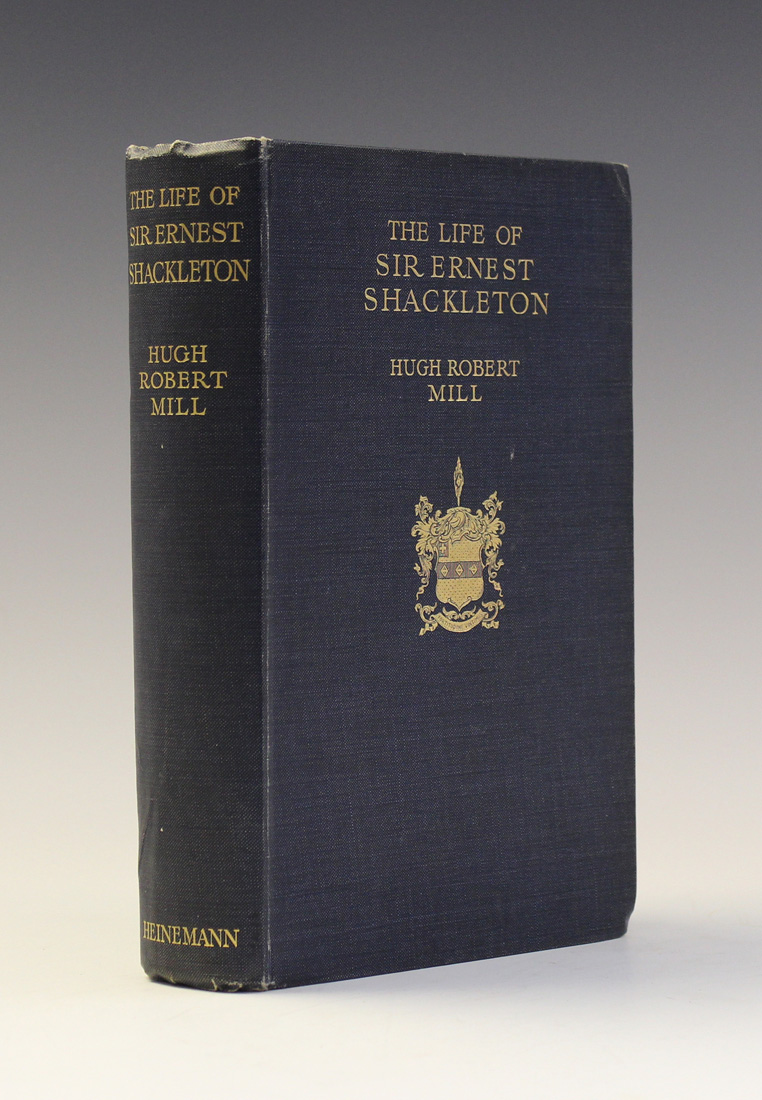
In 1923 he produced the first full-length biography of Sir Ernest Shackleton, a noted explorer and who was also connected with the RSGS. If you can find a copy be prepared to pay around £500. He wrote this with the assistance of Shackleton's widow.
He also wrote the introduction to Shackleton's book "The Heart of the Antarctic' about the 1907-9 expedition.
In his Presidential Address, he started with a nice image of the significance of geography.
The Address was called "An Approach to Geography", and he described geography as being like a picture of the world in the opening lines.

In 1934, Hugh Robert Mill gave another address to conference which is well worth reading. This time he had a focus on Scotland.
He was also connected with Imperial College.


He has a glacier named after him in Antarctica, a branch of the Beardmore Glacier.
Frank Debenham, who we will meet in several decades time, also had some land named after him in Antarctica.
His likeness is also shown on a medal which is awarded by the Royal Meteorological Society for research into rainfall.
Mill died in 1950, in his 89th year: another GA president to live to an old age. I hope he set a precedent for future Presidents.
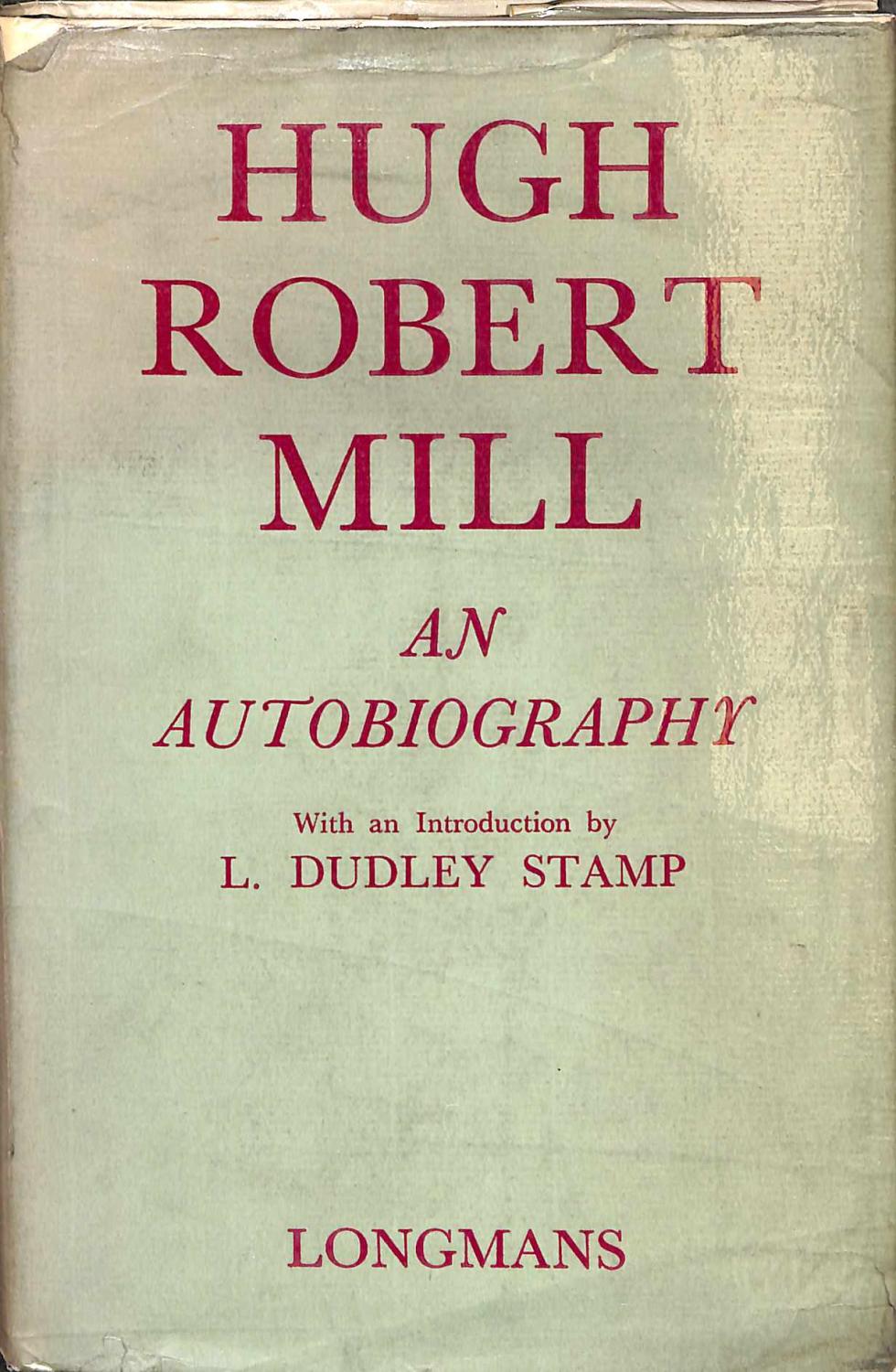
He also published his autobiography, which would be worth obtaining to find out even more about his time at the GA.

He was born in Thurso in Caithness, and educated in Edinburgh.
Follow this link to see an image
As with other Presidents of the GA, there is a strong connection with other organisations, notably the RGS, where he was Librarian from 1892. At this time, the RGS was based at 1, Savile Row in London.
There was also a strong exploration link as well, as with several other GA Presidents.
He was particularly linked with the Royal Scottish Geographical Society as well, when it was founded in 1885. This brought him into contact with all the main travellers of the day, as Mill was particularly involved with the RSGS throughout this time.
He held the post of secretary to the Royal Geographical Society during the Society's involvement with the leading British Antarctic expeditions of the late 19th and early 20th centuries.
He was a friend and confidant to Scott, Shackleton, and especially to William Speirs Bruce, who led the Scottish National Antarctic Expedition, 1902–04 (Wikipedia entry)
Early in the century he also became President of the British Rainfall Association. That's an Association I could get behind.
He published a very useful compilation called 'Hints to Teachers of Geography on the Choice of Books for Research and Reading' in 1897. He actually gave copyright of this book to the GA, which started off the GA's publishing work.
This can be read on this Internet Archive entry along with other of Hugh Robert Mill's books.
Here's a spicy little entry.


In 1921, he gave the Herbertson Memorial Lecture to the Manchester Branch of the GA. I have also had that privilege - in 2008. His was on the Value of Regional Geography.

Herbertson himself (see my earlier blog post on Herbertson in 1915) was grateful for Mill's help with his own work on the Oxford OS Sheet which formed part of his courses. He used the approach that Mill had used on his own local area of SW Sussex, which was the first to do an in-depth study of an OS sheet "from the viewpoint of the teachers' requirements".
In 1923 he produced the first full-length biography of Sir Ernest Shackleton, a noted explorer and who was also connected with the RSGS. If you can find a copy be prepared to pay around £500. He wrote this with the assistance of Shackleton's widow.
He also wrote the introduction to Shackleton's book "The Heart of the Antarctic' about the 1907-9 expedition.
In his Presidential Address, he started with a nice image of the significance of geography.
The Address was called "An Approach to Geography", and he described geography as being like a picture of the world in the opening lines.

In 1934, Hugh Robert Mill gave another address to conference which is well worth reading. This time he had a focus on Scotland.
He was also connected with Imperial College.
He also had a connection with Antarctica, and the SPRI.#OnThisDay 1861: British geographer and meteorologist Hugh Robert Mill was born (image @RGS_IBG) pic.twitter.com/vpnNXxlSOG— Imperial College (@imperialcollege) May 28, 2016


He has a glacier named after him in Antarctica, a branch of the Beardmore Glacier.
Frank Debenham, who we will meet in several decades time, also had some land named after him in Antarctica.
His likeness is also shown on a medal which is awarded by the Royal Meteorological Society for research into rainfall.
Mill died in 1950, in his 89th year: another GA president to live to an old age. I hope he set a precedent for future Presidents.
He also published his autobiography, which would be worth obtaining to find out even more about his time at the GA.
There is apparently a copy in the Fleure collection that he donated to the GA.
He also left a legacy to the GA, which helped ensure its financial stability at a crucial time.
When he died, Balchin reminds us, he had been associated with the GA from the start - over 50 years of service to the Association.
References
Wikipedia: https://en.wikipedia.org/wiki/Hugh_Robert_Mill - shared under CC license and extracts used on this page.
Edited to add the GA Presidency role.
MILL, HUGH ROBERT. “ADDRESS TO THE GEOGRAPHICAL ASSOCIATION.” Geography, vol. 18, no. 1, 1933, pp. 1–16. JSTOR, www.jstor.org/stable/40560362.
Internet Archive searches. http://www.archive.org
Archibald Geikie: https://babel.hathitrust.org/cgi/pt?id=umn.31951000910377x;view=1up;seq=7
Obituary: Brown, R. N. Rudmose, and H. J. Fleure. “OBITUARY: Hugh Robert Mill.” Geography, vol. 35, no. 2, 1950, pp. 124–127. JSTOR, www.jstor.org/stable/40563009
From the above:

Mill, Hugh Robert. “The Value of Regional Geography.” The Geographical Teacher, vol. 11, no. 2, 1921, pp. 7–19. JSTOR, www.jstor.org/stable/40555902
Please get in touch if you have anything further to add.
Updated October 2019
While investigating some resources for the entry on a later president, Percy Maude Roxby, I came across a chronology of Geography in the 20th century written by G. R. Crone, at the time the librarian of the RGS, and it had an image of Hugh Robert Mill as shown below.... a fine moustache - perhaps I need to grow one for my Presidential year...
The article also outlines how Mill wrote the entry on Geography for the 11th edition of the Encyclopaedia Brittanica, which means that he could provide his own thoughts on what the subject actually was...
 Source of image:
Crone, G. R. “British Geography in the Twentieth Century.” The Geographical Journal, vol. 130, no. 2, 1964, pp. 197–220. JSTOR, www.jstor.org/stable/1794582. - available to read with a free JSTOR account.
Mill wrote an autobiography which was called 'The Life Interests of a Geography - an experiment in Autobiography'.
This was published privately by friends in the USA.
He also left a legacy to the GA, which helped ensure its financial stability at a crucial time.
When he died, Balchin reminds us, he had been associated with the GA from the start - over 50 years of service to the Association.
References
Wikipedia: https://en.wikipedia.org/wiki/Hugh_Robert_Mill - shared under CC license and extracts used on this page.
Edited to add the GA Presidency role.
MILL, HUGH ROBERT. “ADDRESS TO THE GEOGRAPHICAL ASSOCIATION.” Geography, vol. 18, no. 1, 1933, pp. 1–16. JSTOR, www.jstor.org/stable/40560362.
Internet Archive searches. http://www.archive.org
Archibald Geikie: https://babel.hathitrust.org/cgi/pt?id=umn.31951000910377x;view=1up;seq=7
Obituary: Brown, R. N. Rudmose, and H. J. Fleure. “OBITUARY: Hugh Robert Mill.” Geography, vol. 35, no. 2, 1950, pp. 124–127. JSTOR, www.jstor.org/stable/40563009
From the above:

Mill, Hugh Robert. “The Value of Regional Geography.” The Geographical Teacher, vol. 11, no. 2, 1921, pp. 7–19. JSTOR, www.jstor.org/stable/40555902
Please get in touch if you have anything further to add.
Updated October 2019
While investigating some resources for the entry on a later president, Percy Maude Roxby, I came across a chronology of Geography in the 20th century written by G. R. Crone, at the time the librarian of the RGS, and it had an image of Hugh Robert Mill as shown below.... a fine moustache - perhaps I need to grow one for my Presidential year...
The article also outlines how Mill wrote the entry on Geography for the 11th edition of the Encyclopaedia Brittanica, which means that he could provide his own thoughts on what the subject actually was...

Crone, G. R. “British Geography in the Twentieth Century.” The Geographical Journal, vol. 130, no. 2, 1964, pp. 197–220. JSTOR, www.jstor.org/stable/1794582. - available to read with a free JSTOR account.
Mill wrote an autobiography which was called 'The Life Interests of a Geography - an experiment in Autobiography'.
This was published privately by friends in the USA.
A copy was presented to the Association - I tracked it down in the archive. A signed copy.
Details of this are provided in an article by another former GA President T C Warrington.
Details of this are provided in an article by another former GA President T C Warrington.
Update: I found some letters related to this in the GA archive.

It seems his final years were one of reflecting on what he had achieved against a variety of challenges.

Warrington, T. C. “THE AUTOBIOGRAPHY OF HUGH ROBERT MILL.” Geography, vol. 32, no. 4, 1947, pp. 166–168. JSTOR, www.jstor.org/stable/40562610.
Not only was he a connection right back to the early days of the GA, when he died in 1950, he also left what is described by another future President: Alice Garnett as a bequest made from Mill's will which helped reduced anxiety about rising costs, and staff salaries
Source: Garnett, Alice. “GEOGRAPHICAL ASSOCIATION.” Geography, vol. 36, no. 1, 1951, pp. 57–62. JSTOR, www.jstor.org/stable/40563090.
JSTOR articles: https://www.jstor.org/action/doBasicSearch?Query=hugh+robert+mill&filter=

Mill, Hugh Robert. “Proposed Geographical Description of the British Islands Based on the Ordnance Survey.” The Geographical Journal, vol. 7, no. 4, 1896, pp. 345–356. JSTOR, www.jstor.org/stable/1773547
and discussion afterwards
Wilson, Charles, et al. “Proposed Geographical Description of the British Islands Based on the Ordnance Survey: Discussion.” The Geographical Journal, vol. 7, no. 4, 1896, pp. 356–365. JSTOR, www.jstor.org/stable/1773548.

Updated November 2019
https://books.google.co.uk/books?id=N81mDwAAQBAJ&lpg=PT67&ots=RtCfAEEQvA&dq=charles%20close%20OS%20geographer&pg=PT79#v=onepage&q=charles%20close%20OS%20geographer&f=false

Updated December 2019
I found another reference to his autobiography while researching Frank Debenham
H.R. Mill, Life interests of a geographer 1861-1944: an experiment in autobiography, self-issued 1946, 122.
In print Mill felt compelled to refute media characterizations of the expedition as an “advertising stunt” as “quite unjust” – although the presence of two Boy Scouts on its crew – chosen from a nationwide competition in cooperation with the tabloid Daily Mail – might truly be described as one aspect of the expedition that was ahead of its time.
Mill, The life of Sir Ernest Shackleton (London: Heinemann, 1923), 271. The competition to attract the Scouts is described in Frank Wild and Alexander H. Macklin, Shackleton’s last voyage: the story of the Quest (New York: Frederick A. Stokes, 1923), 14-15

In it, he described Shackleton's last voyage to the Antarctic.
ABE BOOKS has a wide range of books written by Mill. He seems to have been prolific
https://www.abebooks.co.uk/servlet/SearchResults?an=hugh%20robert%20mill&cm_sp=det-_-bdp-_-author
Mill and Debenham seem to be tied up in a number of things connected with the SPRI.
The thesis by Peder William Chellew Roberts in 2010 features a number of references to Mill.
A book by Charles Withers quotes Mill's memories of his childhood, which perhaps shows an early interest in Geography.
https://books.google.co.uk/books?id=DGRrF0CV8BYC&lpg=PA194&ots=ALTTdk_XQs&dq=Life%20interests%20of%20a%20geographer%201861-1944%3A&pg=PA194#v=onepage&q=Life%20interests%20of%20a%20geographer%201861-1944:&f=false

New image


It seems his final years were one of reflecting on what he had achieved against a variety of challenges.

Warrington, T. C. “THE AUTOBIOGRAPHY OF HUGH ROBERT MILL.” Geography, vol. 32, no. 4, 1947, pp. 166–168. JSTOR, www.jstor.org/stable/40562610.
Not only was he a connection right back to the early days of the GA, when he died in 1950, he also left what is described by another future President: Alice Garnett as a bequest made from Mill's will which helped reduced anxiety about rising costs, and staff salaries
Source: Garnett, Alice. “GEOGRAPHICAL ASSOCIATION.” Geography, vol. 36, no. 1, 1951, pp. 57–62. JSTOR, www.jstor.org/stable/40563090.
JSTOR articles: https://www.jstor.org/action/doBasicSearch?Query=hugh+robert+mill&filter=

Mill, Hugh Robert. “Proposed Geographical Description of the British Islands Based on the Ordnance Survey.” The Geographical Journal, vol. 7, no. 4, 1896, pp. 345–356. JSTOR, www.jstor.org/stable/1773547
and discussion afterwards
Wilson, Charles, et al. “Proposed Geographical Description of the British Islands Based on the Ordnance Survey: Discussion.” The Geographical Journal, vol. 7, no. 4, 1896, pp. 356–365. JSTOR, www.jstor.org/stable/1773548.

Updated November 2019
https://books.google.co.uk/books?id=N81mDwAAQBAJ&lpg=PT67&ots=RtCfAEEQvA&dq=charles%20close%20OS%20geographer&pg=PT79#v=onepage&q=charles%20close%20OS%20geographer&f=false

Updated December 2019
I found another reference to his autobiography while researching Frank Debenham
H.R. Mill, Life interests of a geographer 1861-1944: an experiment in autobiography, self-issued 1946, 122.
In print Mill felt compelled to refute media characterizations of the expedition as an “advertising stunt” as “quite unjust” – although the presence of two Boy Scouts on its crew – chosen from a nationwide competition in cooperation with the tabloid Daily Mail – might truly be described as one aspect of the expedition that was ahead of its time.
Mill, The life of Sir Ernest Shackleton (London: Heinemann, 1923), 271. The competition to attract the Scouts is described in Frank Wild and Alexander H. Macklin, Shackleton’s last voyage: the story of the Quest (New York: Frederick A. Stokes, 1923), 14-15

In it, he described Shackleton's last voyage to the Antarctic.
ABE BOOKS has a wide range of books written by Mill. He seems to have been prolific
https://www.abebooks.co.uk/servlet/SearchResults?an=hugh%20robert%20mill&cm_sp=det-_-bdp-_-author
Mill and Debenham seem to be tied up in a number of things connected with the SPRI.
The thesis by Peder William Chellew Roberts in 2010 features a number of references to Mill.
A book by Charles Withers quotes Mill's memories of his childhood, which perhaps shows an early interest in Geography.
https://books.google.co.uk/books?id=DGRrF0CV8BYC&lpg=PA194&ots=ALTTdk_XQs&dq=Life%20interests%20of%20a%20geographer%201861-1944%3A&pg=PA194#v=onepage&q=Life%20interests%20of%20a%20geographer%201861-1944:&f=false

New image

Updated April 2021
A book that I came across...

Last updated August 2021
Wed 27 July 1921 #OTD #Shackleton watches a #cricket match at John Rowett’s Sussex home, between members of Quest #expedition and the Estate team. Geographer Hugh Robert Mill is there too. And RS Clark ex #Endurance, Scottish international cricketer @CricketScotland #TheHundred pic.twitter.com/yRW9smFQRG
— Quest Chronicle (@QuestChronicle) July 27, 2021
I found a copy of a self-published autobiography in the archive of the GA which had lots of interesting snippets on Shackleton, the 'Titanic' and his time at the RGS, including how he funded the payment for the statue of Shackleton that sits outside the RGS.
https://victorianweb.org/sculpture/jagger/1.html
Last updated August 2022
I discovered a bath of letters which had been written to 'Mill' as he seems to have been referred to in most of the letters from the great and the good of the GA. These were passed to the GA in 2000 and now reside in the archive. There are pictures of quite a few of them in this Flickr album.
There are quite a few from the time that he was asked to be the GA President for 1932 and he seems to have been quite reluctant at first.
This letter from B B Dickinson sent in 1931 expresses his thanks when Mill finally said that he would take the role on.

And here's one from Fleure in May 1931 asking him to come and talk about his proposed Presidential theme and mentioning some of the people who had been invited and others who couldn't make it.
One was Professor Gerhard Schott who it turns out was a renowned German oceanographer.
Also a famous geologist Percy Fry Kendall.
Apparently Sir Wilfred Grenfell was out of the country - probably in Newfoundland.

A prolific letter writer and who travelled a great deal it seems.
Mill was GA President 90 years before my own tenure.
The Classification of Geography
— Mustafa yousef (@Mustafa82211464) March 24, 2022
Author(s): Hugh Robert Mill
Source: The Geographical Journal , Feb., 1898,
(INCLUDING SOMALILAND) pic.twitter.com/5ckCSmsotd
Updated April 2023
Some more detail on Mill in this post on the Facebook group I am a member of called 'Sir Ernest H Shackleton Appreciation Society'. Mill has featured a number of times in fact.
Updated July 2023
The RMetS Award named after Hugh Robert Mill was awarded to Ed Hawkins this year, originator of the important Climate Stripes.
Delighted and honoured to receive the 2022 Hugh Robert Mill Award from @RMetS for the Rainfall Rescue project.
— Ed Hawkins (@ed_hawkins) July 19, 2023
Congratulations to all the winners: https://t.co/Cm3VlVB89e https://t.co/JJUNpZRn6d pic.twitter.com/W0t5SCcs5a
Sunday, 11 August 2019
1929: Colonel Sir Henry G Lyons FRS
Last updated August 2023
Colonel Henry Lyons was another President with a varied CV and an interesting one. He was particularly linked with museums, and Polar exploration, and was also director of the Science Museum for a time.
He was born in 1864, and died in 1944, so also had a long life - as have many Presidents it seems.
He was educated at Wellington College, and then went to the Military Academy at Woolwich, before being elected to the Geological Society. He was commissioned as a Lieutenant in the Royal Engineers (a few GA Presidents had served with them) and was posted to Cairo.
The Royal Society obituary describes the source of his interest in geology:
He attributed his first interest in science to an acquaintance made during holidays in 1879-1880 with a neighbour at his Dublin home, who was then being ‘crammed’ for Sandhurst and taking Geology as a subject. The two boys collected fossils from blocks of Carboniferous Limestone lying on the canal wharves, and, with his interest thus aroused, young Lyons spent all his spare time at Wellington in reading Lyell’s Elements of Geology and then the same author’s Principles, being encouraged in these voluntary studies by the science master, Rev. B. A. Irving
From 1909 - this changed things a little when I found this document. I presume this is the same Henry Lyons.
He took over as Honorary Treasurer of the GA in 1926 following the death of E. F. Elton, who had held the post since 1908. He retired from the council when he joined the Science Museum, and the post passed to Sir William Himbury, the Chief Officer of the British Cotton Growing Association.
His Presidential Address was called 'The Geographer and his Material'. it was delivered in January 1929 at the London School of Economics (as were many Addresses during the first part of the Century, before the change to the Easter conference).

He talked about the role of specialist knowledge and skills in supporting the teaching of geography.
Here he is on Cartography, for example...

Because of a change in the time when the President made his address from the very start of the year to later in the year, Lyons ended up doing two addresses.

 Henry George Lyons was born on 11 October 1864 in London. He was educated at Wellington College, and in 1882 entered the Royal Military Academy in Woolwich. In 1884, he attended a two-year course of military engineering at Chatham, after which he was posted to Gibraltar and then to Egypt, where he studied geology in his spare time. In 1901, Lyons retired from the army and was appointed director of the geological survey in Egypt, a post he held until 1909 when he returned to Britain. During the First World War, Lyons served with the Royal Engineers, retiring with the rank of colonel in 1919, and in the same year was appointed secretary-general of the International Union of Geodesy and Geophysics. In 1920, he became director of the Science Museum in London, where he remained until his retirement in 1933. He was knighted in 1926 and died on 10 August 1944 at Great Missenden.


Colonel Henry Lyons was another President with a varied CV and an interesting one. He was particularly linked with museums, and Polar exploration, and was also director of the Science Museum for a time.
He was born in 1864, and died in 1944, so also had a long life - as have many Presidents it seems.
He was educated at Wellington College, and then went to the Military Academy at Woolwich, before being elected to the Geological Society. He was commissioned as a Lieutenant in the Royal Engineers (a few GA Presidents had served with them) and was posted to Cairo.
The Royal Society obituary describes the source of his interest in geology:
He attributed his first interest in science to an acquaintance made during holidays in 1879-1880 with a neighbour at his Dublin home, who was then being ‘crammed’ for Sandhurst and taking Geology as a subject. The two boys collected fossils from blocks of Carboniferous Limestone lying on the canal wharves, and, with his interest thus aroused, young Lyons spent all his spare time at Wellington in reading Lyell’s Elements of Geology and then the same author’s Principles, being encouraged in these voluntary studies by the science master, Rev. B. A. Irving
From 1909 - this changed things a little when I found this document. I presume this is the same Henry Lyons.
At a meeting of the University Court, the highest decision-making body in the University of Glasgow, on 14 January 1909,
[I]t was announced that Capt. Henry George Lyons, FRS, FRGS, (Hon.) DSc Oxford & Dublin, at present Director-General of the Survey Dept. of Egypt, had been appointed Uni. Lecturer in Geog. for a period of four years from 1st Oct, 1909, at an annual salary of £250. (CM, 1908–09, C1/1/16, p. 46f)
While forms of ‘Geography’ had been taught previously in the University, at different times and as part of other courses of instruction – Ronald Miller (1972, 17) suggests that from at least 1577 it was present on Glasgow curricula – these words in January 1909 formally instituted Geography as an identifiable subject for teaching and, by implication, scholarly inquiry within the University. As noted at an earlier Court Meeting deliberating on the conclusions of a Committee set up to consider this matter, the appointment of a ‘Lecturer in Geography’ meant that Geography would now be taught ‘on a standard equal to a graduating course for Arts or Science’ (CM, 1907–08, C/1/1/15, p. 116f). A later Court meeting of 6 May 1909 also noted a proposal from the University General Council for ‘the addition of the subject of Geography under Depts. of Study’ (CM, 1908–09, C1/1/16, p. 98f). While the term ‘Department’ here does not quite mean what we now routinely understand by it (see Lorimer & Philo, 2009) the effect was still to put Geography on a relatively firm footing within the organisational structure of the University.
Source: (2009) Guest Editorial, Scottish Geographical Journal, 125:3-4, 221-226, DOI: 10.1080/14702540903364260
Lyons was appointed as a Director of the Science Museum in 1920.
It seems he was a particularly impressive Director. The Science Museum's Facebook page describes his impact:
It seems he was a particularly impressive Director. The Science Museum's Facebook page describes his impact:
A strong believer in the needs of the ordinary visitor being more important than those of the specialist, Sir Henry Lyons was hugely important to broadening the Science Museum’s appeal and popularity.
Lyons introduced the first interactive exhibits and the first ever gallery designed specifically to engage children with science and technology.
Between 1921 and 1932 – a year before he retired – the number of visitors to the Science Museum per year increased from about 400,000 to nearly 1.25 million. Today, just under 3 million people visit the Museum each year.He took over as Honorary Treasurer of the GA in 1926 following the death of E. F. Elton, who had held the post since 1908. He retired from the council when he joined the Science Museum, and the post passed to Sir William Himbury, the Chief Officer of the British Cotton Growing Association.
His Presidential Address was called 'The Geographer and his Material'. it was delivered in January 1929 at the London School of Economics (as were many Addresses during the first part of the Century, before the change to the Easter conference).
He started by sharing the great honour that he felt at being the President, and spoke glowingly of the impact of Vaughan Cornish's presidency.

He talked about the role of specialist knowledge and skills in supporting the teaching of geography.
Here he is on Cartography, for example...

Because of a change in the time when the President made his address from the very start of the year to later in the year, Lyons ended up doing two addresses.
Lyons, H. G. “Relief in Cartography.” The Geographical Journal, vol. 43, no. 3, 1914, pp. 233–248. JSTOR, www.jstor.org/stable/1778611. Accessed 23 Nov. 2020.
His 2nd was in 1930.
He was elected as a Fellow of the Royal Society.
His obituary was published in various journals.
I like this description of him from one of them.

He died, aged 80 in Great Missenden, later home of Roald Dahl.
References
Wikipedia: https://en.wikipedia.org/wiki/Henry_George_Lyons
I amended this entry to reflect his
Obituary: https://royalsocietypublishing.org/doi/10.1098/rsbm.1944.0023
Correspondence in SPRI archive: https://archiveshub.jisc.ac.uk/search/archives/ea55fcaa-eb80-3fc8-b57b-d7f991aaf417 (I really need to take a trip there)
https://science.sciencemag.org/content/78/2028/429
Ernest M. Dowson. “Colonel Sir Henry Lyons, F.R.S.” The Journal of Egyptian Archaeology, vol. 31, 1945, pp. 98–100. JSTOR, www.jstor.org/stable/3855389.
I know relatively little about Henry Lyons' time as President, so if anyone has further information please get in touch.
Image - there is one linked to here, I am still looking for a CC licensed one
Presidential Address:
Lyons, Henry G. “THE GEOGRAPHICAL ASSOCIATION. THE PRESIDENT'S ADDRESS.” Geography, vol. 15, no. 5, 1930, pp. 353–359. JSTOR, JSTOR, www.jstor.org/stable/40559150.
Fleure, H.J. (1953) "Sixty years of geography and education", Geography, vol.38, pp.231-264
His 2nd was in 1930.
He was elected as a Fellow of the Royal Society.
His obituary was published in various journals.
I like this description of him from one of them.

He died, aged 80 in Great Missenden, later home of Roald Dahl.
References
Wikipedia: https://en.wikipedia.org/wiki/Henry_George_Lyons
I amended this entry to reflect his
Obituary: https://royalsocietypublishing.org/doi/10.1098/rsbm.1944.0023
Correspondence in SPRI archive: https://archiveshub.jisc.ac.uk/search/archives/ea55fcaa-eb80-3fc8-b57b-d7f991aaf417 (I really need to take a trip there)
https://science.sciencemag.org/content/78/2028/429
Ernest M. Dowson. “Colonel Sir Henry Lyons, F.R.S.” The Journal of Egyptian Archaeology, vol. 31, 1945, pp. 98–100. JSTOR, www.jstor.org/stable/3855389.
I know relatively little about Henry Lyons' time as President, so if anyone has further information please get in touch.
Image - there is one linked to here, I am still looking for a CC licensed one
Presidential Address:
Lyons, Henry G. “THE GEOGRAPHICAL ASSOCIATION. THE PRESIDENT'S ADDRESS.” Geography, vol. 15, no. 5, 1930, pp. 353–359. JSTOR, JSTOR, www.jstor.org/stable/40559150.
Fleure, H.J. (1953) "Sixty years of geography and education", Geography, vol.38, pp.231-264
Cabinets of curiosities were mentioned by my colleague Claire Kyndt in her GA Conference session in 2015, which was excellent. Search Slideshare for the presentation.
This book explains more:
Read Chapter 6 by geographer David Matless.
Lyons introduced the first visitor-operated models in museums - the interactive displays we are so used to these days and which are found in most modern museums with a few exceptions, such as the Pitt Rivers (which has links to another former GA President Linton Myres of course).
Updated November 2020
From an obituary in a journal devoted to Egyptian Archaeology
Ernest M. Dowson. “Colonel Sir Henry Lyons, F.R.S.” The Journal of Egyptian Archaeology, vol. 31, 1945, pp. 98–100. JSTOR, www.jstor.org/stable/3855389. Accessed 23 Nov. 2020.
Updated July 2022
There is a book titled 'The rise of the Science Museum under Henry Lyons' which was published in the 1970s.
You can read a review here. via Google Books.
Updated August 2023
From a JISC Archive description:

This Royal Society documented provides all the information you would want to know about him. It doesn't mention his Presidency of the Geographical Association, which is disappointing...
It includes his work on meteorology during World War I, showing how vital weather information was militarily.
It includes an excellent image of an older Lyons shown here.
Also President of IUGG. (PDF download)

Subscribe to:
Posts (Atom)
Margaret Mackintosh RIP
Updated post. Sad news at the end of last week from colleagues who have organised the Charney Conference over the years of the passing of Ma...
