Showing posts with label Derek Spooner. Show all posts

Monday, 2 August 2021

GA Conference 1980

From the GA Archive at Solly Street.

The 1980 Conference programme, when John Allan Patmore of the University of Hull was GA President.


Some excellent sessions were included here. I would like to have seen W.G. Hoskins talking about the English landscape, and also the Balls Brothers wine reception on the Strand to mingle with the speakers.

Any memories from those who were there welcome.


Saturday, 5 June 2021

Coastline 2000

Coastline 2000 was the most recent of the GA's large land-use survey projects.
This time round, there was a focus on the Coastline (naturally) and students choosing a square that they would use in a number of areas around the coast.

There are various resources which can be uncovered.
I went to the Internet Archive and found remnants of the original web page. Here is some of the text from the web page:

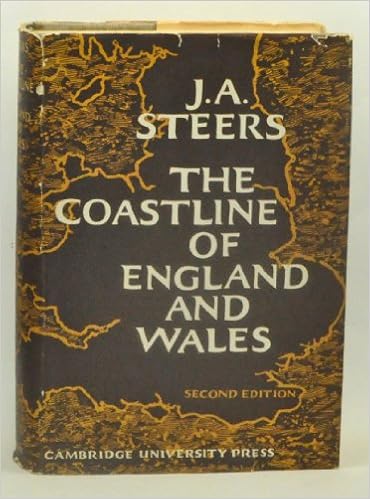
In 1944, a pioneering professor from Cambridge University provided the first snapshot of Britain's coastline, when he walked all the way around it! Professor Alfred Steers documented a fascinating range of coastal environments on his travels - from beaches to plunging cliffs, subdued marshlands to rocky foreshores. Since then, similar surveys have been carried out on smaller stretches of the shore, but no one has been brave enough to repeat Steer's coastal characterisation. The Geographical Association has taken up the challenge with Coastline 2000.
Alfred Steers was a former GA President of course.
More than 50 years have passed since Steers made his way around our shoreline, and with the passage of time considerable changes have set in. At the dawn of a new millennium it is time for Britain's schools and colleges to join with the Geographical Association and help paint an up-to-date picture of the nation's shores. Interest in Coastline 2000 is widespread, with the project receiving support from the National Trust, Ordnance Survey, David Blunkett of the DfEE and patrons including David Bellamy, John McCarthy, Michael Palin, Rick Stein, Janet Street-Porter and Helen Young.

We hope that businesses and other organisations will consider supporting this innovative and participatory educational project. By helping us in producing a CDROM of the results, combined with other learning materials and resources about our coastline, you will enable us to make the benefits of the project easily and widely avilable to a number of audiences. The partnership of the Geographical Association, The National Trust and the Ordnance Survey, brings together three respected organisations, each with a track record of supporting and providing valuable educational activities. 

We hope you will wish to join us in this unique, ambitious and exciting Coastline 2000 survey.

A Geography article introduced the project, which was written by Derek Spooner and Mo Morron.

This was written by Dr Derek J. Spooner, Lecturer in Geography at the University of Hull (and a former GA President) and Mrs M. Morron, who is Head of Harthill CP School, Cheshire. 

Source
SPOONER, DEREK, and MO MORRON. “Coastline 2000 – a Survey for the New Millennium.” Geography, vol. 85, no. 1, 2000, pp. 69–70. JSTOR, www.jstor.org/stable/40573376. Accessed 4 June 2021.

More to come...

Saturday, 30 January 2021

1998: Martin Curry

Updated May 2021

Martin Curry was never the President of the GA, but was the first CEO of the Association.
This was a bold move, and one that changed the way that the GA was run, in terms of its structure.
It was mentioned by Rex Walford in a chapter in "Issues in Geography Education" (Fisher & Binns, Ed) (2000)


There was an interview with Martin published in the TES in April 1999.
It mentioned his background before taking up the job:
"Not that he knows that much about the mechanics of school-teaching, he admits cheerfully, as he has never had to do it himself."


A biography followed:

Martin Curry was born in Bollington, east Cheshire, in 1952. Educated at King Edward VI Grammar School in Macclesfield, he studied law at London University before spending three years as an articled clerk, culminating in his Law Society finals in 1976.

It was his legal training which got him his first paid environmental job as administrative officer for the Lincolnshire and South Humberside Trust.

But his big break came in 1982 when he became manager of Gibraltar Point nature reserve, south of Skegness. It was a good induction to the life of a reserve manager, combining solitude with total immersion in the local community. He also met his future wife Mary, known as Midge, who had replaced him at the Lincolnshire and South Humberside Trust. The pair moved to Yorkshire in 1987, where Mr Curry became head of information services at North York Moors National Park, responsible for visitors' centres and school services. From there they moved to the Scottish Deer Centre in Fife, to what was practically a joint appointment for the couple with Mr Curry as general manager and his wife as his assistant in the privately-owned park.

They moved to Rum in 1992 to take up what Mr Curry describes as "a dream job, something I had held as my ultimate ambition for 20 years". He has fond memories of the island, but decided to leave after Scottish Natural Heritage said it wanted to develop a sustainable community on Rum.

The Isle of Rum is a place I have also visited, and spent a week there working for the Scottish Nature Conservancy Council removing non-native rhododendrons and doing some painting in the castle.

The President of the GA at the time was Roger Carter, who said:
 "He may not have a background of teaching in schools, but he is clearly in tune with what is important to the GA in terms of his commitment to outdoor education, environment and sustainability."
Martin was also featured on the front cover of the 'GA News' in January 1999, with a picture and some further details.
He stayed in post for a short time before moving to another role, as outlined in this GA News piece:

Wednesday, 27 January 2021

St. Catharine's College, Cambridge

I have previously mentioned St. Catharine's College, Cambridge, and have heard a lot about it via Presidents who went there themselves.

Ashley Kent told me something about this, as being one of the 'hotspots' for Geography - something I'm going to develop a little more perhaps, by focussing on some of these other hotspots such as Hull and Bristol.

A number of Presidents can connect themselves to this college in some way, and I have previously blogged about them.

The St Catharine's College website is here.

There is an archive of magazines dating back many decades, and in which one can find mentions of the GA Presidents who have been connected with the college. I had a quick look and 

Here's Ashley Kent with some memories of St. Catharine's:

My college...St Catharine’s College Cambridge....has always been a Geography ‘hotspot’....a great place where quite a few people who were prominent in the GA...attended.
These include...Steers, Balchin, Spooner, Kent, Bradford, Keeble et al. Many of us were very fortunate to have been tutored by ‘Gus’ Caesar.......arguably the ‘source’ of an extraordinary group of geography professors across the world.....Haggett/Dury/Hall/Randall/ et al...a remarkable ‘father figure’ to many.

Someone who Ashley mentions is 'Gus' Caesar.

More on Gus was added in a separate blog post previously.

J A Steers was someone who was very definitely linked with the college.

His memorial has been mentioned as well. It can be seen in the college magazines, which would also reveal other details on the geographers who passed through the college. This was a signed silver salver presented to J A Steers in 1966 on the occasion of his retirement:

Friday, 11 September 2020

1979: Professor John Allan Patmore

Updated July 2022

Professor (John) Allan Patmore was an academic geographer linked to the University of Hull with a particular interest in leisure and tourism.

I wasn't able to find out much about his time at the GA from the usual sources, and to begin with not much about the man himself. I still have very little about his time as President.

He was Professor of Geography at the University of Hull, which he arrived at in 1973, with a particular interest in leisure and recreation, a subject he wrote a lot about, including a series of books, articles and papers, including writing about this for GA journals. Regular readers of the blog will know that I did my teacher training at the University of Hull, so have a connection with this place, although we didn't mix much with the actual undergraduate geographers, and the postgrads had a better dining hall. Allan lived in North Ferriby on the outskirts of Hull.

It seems that he was also linked with the University of Liverpool to begin with, before moving to the University of Hull, where he eventually became a Professor.

He was born on the 4th of November 1931, and graduated from the University of Oxford. in 1952 according to a book edited by Robert W Steel.

I found a mention of him in a newsletter published by the Assocation of Jewish Refugees in Great Britain in 1967. He was given some money from the 'Thank-you Britain Fund' to pursue his research on Leisure and Land Use.
I gained further information from a newsletter associated with the LUPTS (showing his lifelong interest in the railways).

Liverpool University Public Transport Society (LUPTS) was formed in 1958 by a group of undergraduate students at the University with a mutual interest in all kinds of transport. Patmore was the first President of the Society http://www.lupts.org.uk/downloads/Patmore_Foreword.pdf

His inaugural Professorial lecture was given in 1974, and called 'People, place and pleasure', and published at the time. He was an expert in tourism and leisure and is referenced in a great many books and PhD theses. Here he is on people's holiday choices:

"The two prime factors in the choice of holiday destination are the friction of distance and the lure of the sun, factors that are equally applicable abroad and at home." (Patmore, 1983)

I wonder what we would have made of the current state of the tourist industry after Covid-19.

He was eventually the Vice Chairman of the Sports Council, now known as Sport England.
In his obituary, he is described as follows

“…a strong religious conviction - he was a Methodist lay preacher - and a moral compass that underscored all that he did. For us, we will remember his interest in and knowledge of railways in all their aspects but, in particular, his friendship and support."

In 1980, his Presidential lecture was entitled "Geography and Relevance" and had some illustrations when it was reproduced in 'Geography'.

Patmore, J. (1980). Geography and Relevance. Geography, 65(4), 265-283. Retrieved August 26, 2020, from http://www.jstor.org/stable/40570301

It also included one of the most well known quotes on the value of fieldwork in it:

Observation is the key to the importance of landscape to the geographer. It links him firmly to reality, it develops his appreciation and poses the questions he must answer to develop understanding. 
Contact with the actual landscape is contact with reality. Confined within classroom walls, geography is an impoverished shadow, like chemistry without experiments or biology without recourse to tangible specimens of plants and animals.
J Allan Patmore, 1980
He went on to say:
A training in geography enhances appreciation not through its intrinsic merit but because it is concerned to go far beyond the simple visual record and experience to consider context and process. The resulting understanding may be partial and incomplete, limited both by the extent of the observer's training and experience and by the inherent problems posed by elements in the landscape itself, but of almost equal worth is the curiosity aroused in the attempt.

Patmore, J. (1980). Geography and Relevance. Geography, 65(4), 265-283. Retrieved August 26, 2020, from http://www.jstor.org/stable/40570301

He was also made a CBE as part of his work with the Sports Council. 

Allan sadly died in 2018, aged 87, he lived in North Ferriby, Hull for some years.

I also found some reference to him at the University of Hull thanks to Justin Woolliscroft.

References
http://worldcat.org/identities/lccn-n50050666/
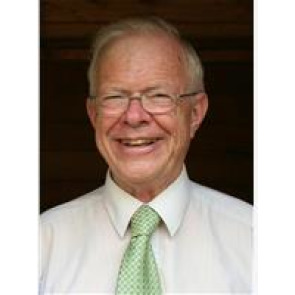
Notice Gallery for PATMORE
Obituary notice:
https://funeral-notices.co.uk/Yorkshire+%26+the+Humber-East+Riding+of+Yorkshire-Hull/death-notices/notice/PATMORE/4558758

British Geography 1918-1945, Edited by Robert.W Steel - published in 1987.
Chapter 12 was by J A Patmore, where he gave a personal perspective on the period.

He describes Stanley Wooldridge with his "eyebrows bristling" (note to self, get eyebrows sorted before the GA Conference)
Elements from this have appeared in other Presidents' entries from the period.

Yorkshire beyond the Millennium: https://www.yorkpress.co.uk/news/7957703.countys-future-to-be-put-under-spotlight/
A rather nice tribute to Patmore was published in the magazine of the North Yorks Moors Association (NYMA) journal 'Voices of the Moors' in Summer 2018 - written by Tom Chadwick. He was associated with the organisation for some time, and President of the YNMA from 1993 to 2001.

https://www.nyma.org.uk/_webedit/uploaded-files/All%20Files/Voice%20of%20the%20Moors/VOICE-132.pdf

Allan’s connection with the North Yorkshire Moors goes back to his childhood when he lived with his parents in Wetherby and was a regular visitor to the moors and coast.
This brief summary of Allan’s academic career and his involvement in the study of recreation and the countryside is a mere snapshot of his huge contribution to understanding the problems of balancing the human activities of recreation and sport and preserving the beauty of the countryside. Nowhere is this more important than in our National Parks and Areas of Outstanding Natural Beauty.

https://core.ac.uk/download/pdf/2731527.pdf - PhD thesis he supervised

If anyone can provide me with some more information on Professor Patmore that would be appreciated. This is a fairly brief entry compared with other recent ones.

Updated September 2020
Thanks to Brendan Conway for his additional contributions...

Also his work on 'Access to Water'

He attended the 1993 Centenary celebrations and is pictured top right on this image - standing in a grey suit.


Updated November 2020

I am particularly grateful to Derek Spooner, GA President 2000-2001 for the following details on the life of his friend Allan Patmore:

Allan Patmore and I were colleagues for 18 years in the Department of Geography at the University of Hull. 
He was appointed in 1973 as the Department’s second Professor (joining Professor Harry Wilkinson) and moved across from the hugely influential Liverpool Department of Geography. 

He had been at Liverpool since he left Oxford in 1974, after graduating from Pembroke College with a First Class B.A. in 1952, followed by a B.Litt. Allan had a wide range of interests in human geography, including urban development (his B.Litt thesis was a study of Harrogate) and the historical geography of transport (he was infatuated with railways). But his academic career was shaped by the award of a British Academy Thank Offering to Britain Research Fellowship 1967-69. 

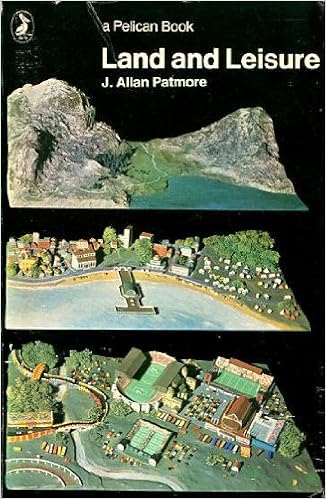
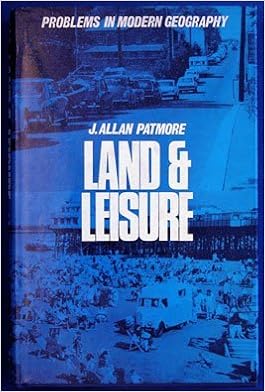
This enabled him to develop his interest in the geography of recreation, and led to the publication by Pelican of Land and Leisure in 1972. This highly successful book linked recreation and environment and kick-started the emerging field of recreational geography. 
A second book, Recreation and Resources followed in the 1980s. 
Twenty years after Land and Leisure his influence was celebrated in the publication Leisure and the Environment : Essays in Honour of Professor J.A.Patmore (including some by former graduate students). Allan was a Yorkshireman, born in Wetherby, and from his childhood had a particular affection for the North York Moors. 
Student field trips with Allan were characterised by a fluent and stimulating commentary on the landscape, environment, and, of course, recreational issues. He seemed to know every inch! It was hardly surprising that from 1977 to 1992 he was to be a member of the North York Moors National Park Committee (appointed by the Secretary of State for the Environment). 
This was just part of an extraordinary record of public service. 
He was a member of the Sports Council from 1978 to 1994 (sitting alongside the likes of Jack Charlton and Seb Coe), with several years as Vice-Chairman. I used to pull his leg about this, pointing out that he was not apparently either a sportsman or a sports fan! He also had close associations with the National Railway Museum at York, with spells on its Advisory Committee and as Chairman of the Museum’s Friends. He was awarded the CBE in 1993 for his services to sport and recreation. At Hull he had two spells as Head of Department, and also a spell as Dean of Social Sciences, and then became a Pro-Vice-Chancellor. 

He was an immaculate Chair of meetings, always well briefed, articulate and courteous. 

As my Head of Department he was always most supportive. As Head of Department he was keen to put the Department on the map, and persuaded his somewhat reluctant colleagues that it was time for Hull to host the Institute Of British Geographers Annual Conference. He pushed for it to be held in 1978 to follow the opening of the Humber Road Bridge (at the time the longest span in the world). Unfortunately the construction of the Bridge did not keep pace with Departmental plans, and it was not open by the time the Conference took place, leading to some interesting logistical gymnastics for the planned programme! 
 When Allan arrived in Hull he assisted greatly in the invigoration of the Hull branch of the GA, in which Vincent Tidswell was also strongly involved. It was through Allan that I became involved in the GA, and my first lecture to a GA Annual Conference came when he was President. 
Allan was also a Methodist lay preacher. He was a teetotaller. His Christian religion was a central part of his life, and I always think of him as a model Christian gentleman. Sadly his last years were clouded by serious health problems, including dementia. He and Barbara moved from North Ferriby by the Humber to Chesterfield to be close to some of his family, and in time he moved into a nursing home, where he died in 2018 at the age of 87.

Derek told me:

"He was a remarkable man, and I don't know how he found time to do all the things he did. 

The influence of the Department of Geography at Liverpool is very interesting. The Liverpool Department under Darby and Steel exported many of their lecturers to other universities as Professors, (and Darby himself moved to Cambridge). We used to refer to it as the Liverpool Mafia!"

Upated July 2022
On his retirement a collection of essays was published, edited by Sue Glyptis. This featured an introduction by another former GA President: Robert Steel.


Some useful additional background there, as well as his links with the Geographical Association:


Sunday, 8 March 2020

1959: Professor J A Steers, CBE

Updated August 2023

Professor Steers is probably the definitive expert on coastal processes and landscapes, particularly those which have influenced the coastline of England and Wales. He was one of several GA Presidents to be associated with St Catharine's College, Cambridge and Gus Caesar.

His book on the coastal landforms of the UK is one that sits on my shelves to this day. I have a nice old edition with a green binding which dates back to the 1950s, and which I referred to quite recently to answer a question on Chesil Beach that someone asked.

He sits alongside Denys Brunsden, who will appear in the blog several decades hence, as key coastal geographers, who have shaped how we understand and teach these dynamic landscapes.

Steers was linked to the University of Cambridge, and also with a previous President: Frank Debenham. This, from the University of Cambridge alumnus page, describing the introduction of the Geography Tripos to the university following GA an RGS campaigning which has been well covered in earlier posts near the start of the 20th Century:

The first candidates for the Geography Tripos sat the exam in 1920, resulting in 2 students receiving a 1st Class for their Part 2 exams, one of whom was JA Steers, who would go on to become Professor of Geography and Head of Department 1949-66.

Source: https://www.geog.cam.ac.uk/alumni/earlyyears/

This piece from Nature in 1949 announced the arrival of Steers at the University of Cambridge, where he replaced another former GA President: Frank Debenham. (who had his own extensive entry in the blog a few months ago)

MR. J. A. STEERS, who, in September, is to succeed Prof. F. Debenham as professor of geography in the University of Cambridge, was one of the first generation of geographers to take the newly constituted Geographical Tripos after the First World War. After a short spell of teaching at Framlingham, Mr. Steers returned to Cambridge to join the staff of the Geographical Department under Philip Lake. His College elected him to a fellowship, and before many years St. Catharine's became the first men's college to offer scholarships in geography. This led to a remarkable concentration of able geographical students in the College, which has resulted in a rapidly lengthening list of St. Catharine's geographers entering university posts–fifteen in the last ten years. In his College, Mr. Steers has served successively as dean, tutor, senior tutor, and president.

Professor Steers' address was on the subject of Physiography (also known as geomorphology) and he spoke about the importance of this aspect of geography.


Steers wrote many books on coastal landscapes, several of which I used for my own teaching over the years.
This quote is taken from Rex Walford's book, and dates to 1944, when Steers was campaigning to help "save the coast" by educating the public about its value. This sort of policy work was vital following the war.


This campaigning of Steers was mentioned by G. R. Crone in his chronology of 20th Century geography.


There are some references to J A Steers in a piece by D Stoddart in a piece on the founding of the IBG. I love this image, showing J A Steers talking, and which was apparently taken around the year 1938.

Source: Stoddart, D. R. “Progress in Geography: The Record of the I. B. G.” Transactions of the Institute of British Geographers, vol. 8, no. 1, 1983, pp. 1–13. JSTOR, www.jstor.org/stable/622270

I have some lovely memories of Professor Steers from a former student of his, who would later become a GA President himself: Derek Spooner. 

In July 2019, he shared his memories of Professor Steers to me in an e-mail.

I first encountered this name in 1960, when I was in the sixth form and was given Steers' 'The Sea Coast' as a school prize. A marvellous, inspiring book in the wonderful New Naturalist series, which hooked me at the time on physical geography. Two years later I found myself at Cambridge studying Geography in the Department where Steers was Professor, and in St Catharine's College where he was a Fellow....

Truth to tell his lectures were rather disappointing - he was rather a shy man and certainly not a showman. He was very tall and bespectacled. He had been Head of Geography since 1949. He had been extremely influential in developing Geography in my College to an outstanding position within the University. By the time I arrived in Cambridge, Steers had become the leading coastal geomorphologist of his era. His studies of Scolt Head Island on the Norfolk coast were famous and the student trips he took there were legendary, with students getting stuck in the mud - certainly wouldn't have passed a risk assessment! I was not aware that he had just been President of the GA, or that he was also very active in the RGS, or indeed had become a leading figure in conservation policy.

'Alfie' was his nickname. He retired in 1966. I had started doing postgraduate work and I can remember being invited to a sherry party at his house in the posh western suburbs of Cambridge. His wife, Harriet, was also a Geography lecturer. Her speciality was the regional and historical geography of the USSR......

In his retirement I believe he continued his coastal studies. Ron Martin, another lecturer in the Department, told me that some times he would get a call from 'Alfie' asking him to drive him up to Scolt Head Island. Sounded as if he never really retired.

Here's a image from the copy of one of Steers' books that sits on my shelf. It has some lovely plates in it.


His author profile on the Harper Collins site is useful as well.
(1899–1987). Geomorphologist, Cambridge geographer, graduate and later Fellow of St Catherine's College. Professor of Geography at Cambridge 1949–66 and the authority on the moulding of coastlines.
Member of expeditions to coral reefs Australia 1928, 1936 and Caribbean 1939.

Concerned above all with surveys of British coast from a classic study of Scolt Head Island (1934) to the standard work The Coastline of England and Wales (1946). Much involved with coastal protection and a keen exponent of coastline preservation on Nature Conservancy, National Parks Commission and National Trust’s Enterprise Neptune.

He was awarded a CBE in 1973.

He was also involved in the committee which was established to ensure that an event like the 1953 East Coast Floods could not happen again in the same way.

His wife was also a geographer and published her own books, although I was interested to see that in this ad for one of her books in 'Geography' that she also added 'Mrs. J. A. Steers' in brackets after her own name Harriet Wanklyn. See image opposite.

An obituary was published in 'Geography' in 1987, written by David Keble.

References
Wikipedia - Professor Steers has no entry - he surely deserves one given his significance

STEERS, J. A. “Physiography: Some Reflections and Trends: Address to The Geographical Association.” Geography, vol. 45, no. 1/2, 1960, pp. 1–15. JSTOR, JSTOR, www.jstor.org/stable/40565103.

Cambridge University alumnus page: https://www.geog.cam.ac.uk/alumni/earlyyears/

Crone, G. R. “British Geography in the Twentieth Century.” The Geographical Journal, vol. 130, no. 2, 1964, pp. 197–220. JSTOR, www.jstor.org/stable/1794582

The RGS-IBG present an annual prize for the best undergraduate dissertation named in Steers' honour.

Referenced here for his work on Scolt Head Island: http://archive.jncc.gov.uk/pdf/gcrdb/GCRsiteaccount2038.pdf

STEERS, J. A. “Physiography: Some Reflections and Trends: Address to The Geographical Association.” Geography, vol. 45, no. 1/2, 1960, pp. 1–15. JSTOR, www.jstor.org/stable/40565103

Stoddart, D. R. “Progress in Geography: The Record of the I. B. G.” Transactions of the Institute of British Geographers, vol. 8, no. 1, 1983, pp. 1–13. JSTOR, www.jstor.org/stable/622270

As always, if anyone has further information on J A Steers or images, please don't hesitate to get in touch.

Updated June 2020

When writing a post on Tim Burt and Des Thompson's book 'Curious about Nature' I found a picture of J A Steers taken in Oxford in 1954 by E W Gilbert - shown here.... at a meeting of Section E of the BAAS.


Source: https://books.google.co.uk/books?id=2onPDwAAQBAJ&lpg=PA80&dq=cuchlaine%20king%20nottingham&pg=PA79#v=onepage&q&f=true


Updated November 2020
There is a prize in his name for geomophology


Updated January 2021

From the St Catharine's college magazine - the text of a memorial address.


The magazine of the College society has details of his memorial address by Dr David Keeble, who was also linked with the GA:

https://www.society.caths.cam.ac.uk/Public_Magazines/1987r.pdf

Find it on p.31 here.

Each of us brings to this celebration our own personal memories of Alfred: of a tall, dignified presence crossing the College court, walking-stick in hand; of the personal warmth yet directness of his greeting in the Senior Combination Room - "sit down, sit down, have a glass of sherry"; of lectures in the semi-darkness of the Department of Geography's lecture theatre, where Alfred's impressive expositions of slides of coastal landforms sometimes demanded careful listening for those seated beyond the second row; of his famous field trips to Scolt Head Island, where an immaculate dark suit would be exchanged for shorts in the warden's hut, followed immediately, and to the horror of inappropriately dressed visitors, by a plunge into the muddiest and roughest salt marsh!

He was Church warden of St. Botolph's Church

As postwar governments grappled with growing planning pressures on Britain's precious but vulnerable coastline; as Britain's coastal defences crumbled under the 1953 North Sea surge; as the National Parks Commission, the Nature Conservancy, and the National Trust sought to devise effective and appropriate management policies for their coastal areas, it was to Alfred that they turned for scientific advice and informed appraisal. So too did the Council of Europe, who appointed him Coastal Consultant to their Conservation Committee. Alfred could be forthright in his condemnation of bad coastal management, criticising the War Office for example for such coastal eyesores as derelict huts, looking, as he scathingly remarked, "like a lot of false teeth sticking up!" But his writings and lectures on coastal problems - especially a major Royal Geographical Society lecture he gave in 1944 - were enormously influential in shaping the thinking of such ministers as W. S. Morrison

Updated August 2023

Margaret Mackintosh RIP

Updated post. Sad news at the end of last week from colleagues who have organised the Charney Conference over the years of the passing of Ma...