Showing posts with label Secretary. Show all posts

Thursday, 5 December 2019

Ronald Edward Fell


Another entry for someone who did a great deal for the GA, but didn't hold the post of President. The GA relies on volunteers and many long-standing staff members to keep it operating.

Thursday, 7 November 2019

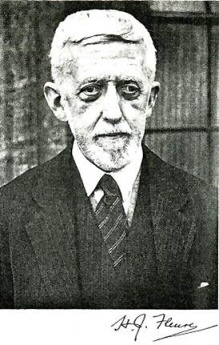
1948: Professor Herbert John Fleure FRS


Last updated December 2023

This is another of the most long serving of the Geographical Association's Presidents, and whose work ensured its survival when it was fairly young.

We come next to Professor Herbert John Fleure - another of the great names who will be forever associated with the Geographical Association, and to whom is owed a great deal by the present day Association, but whose legacy is problematic because of some of the views he held at the time.

In compiling this blog, it is clear that there are several names who are intertwined with the DNA of the Association as it is now, and one of those is H. J. Fleure or HJF as he wrote on so many documents, articles, book reviews and other documentation throughout his long time at the GA.

By the time Fleure became President, he had been linked with the GA for many decades, acting as its librarian and holding other roles, including the compilation of the Annual Report as far back as 1920 in his role as Secretary.

The Annual Report in 1920, for example talked about the progress of the association. The 2020 Conference theme, chosen by Gill Miller, is "Geography really matters", and in 1920, H. J. Fleure was already onto Gill's idea of each teacher doing something to show that geography matters,  in this statement.

"The Report of the progress of the Association should encourage teachers all over the country to put an extra dose of enthusiastic interest into their exposition of Geography and their co-operation with other subjects for a more synthetic education..... [Geography] is a subject that the pupils can go on with, must go on with, all through their lives. It is the one subject which really tries to face the problem of the interpretation of our modern world. it is the most hopeful line of work towards a better understanding between the peoples of the world.... the opportunity and responsibility of teachers of Geography is a great one, and we are confident they are rising to it."

Fleure, in addition to being a long serving Secretary of the Association, was also the editor of 'Geography' for a time, amongst many other contributions that he made to the workings of the GA.

ImageHe was born in Guernsey in 1877.
He went to Aberystwyth University, and also studied in Zurich, Switzerland.
Fleure was an academic geographer for his lengthy career, and was associated with the Universities of Aberystwyth and Manchester in particular where he held posts which allowed him to support the development ot the GA as well.

His research in Wales is described here.

Fleure wanted to look at how place influenced people, and the way that geography affected identity


During his Presidential year, he did a great deal also for the Le Play Society. The Le Play society organised overseas tours as the earlier Touring Branch had done, and also held an annual conference. I also notice the address of the Secretary on the bill below.
I wonder if the Birlings at Birling Gap is still there, or has succumbed to the coastal erosion that has taken place there in recent decades particularly.

The Le Play Society continued after the end of the GA's own Touring Branch had to close.
Someone who is also associated with the Le Play Society and the GA is Frederick Soddy, in whose name grants are now provided for teachers to provide fieldwork opportunities for their students, for both the GA and the RGS.

Here is Fleure in 1927 - 2nd from the right on the Front Row

Source: https://www.llyfrgell.cymru/fileadmin/fileadmin/docs_gwefan/amdanom_ni/cylchgrawn_llgc/cgr_erth_XXXVrh1_2010_4.pdf

Fleure was awarded an Honorary Fellowship from the American Geographical Society in 1930, and its Daly Medal in 1939.
He received the Victoria Medal of the RGS in 1946, as have a few former Presidents of the GA. A precedent that I think is worth renewing ;)

Fleure was also one of only three geographers to have been elected as a Fellow of the Royal Society - bonus points if you can name the other two...

The Fleure Library is the name of the GA's archive of materials, and it has been quite mobile, and found several homes, as has been described in the blog. Some elements of the library are now on display in the Patrick Bailey room at Solly Street (a room named after another former GA President)

As I blogged about previously, back in 1917 Fleure took the library with him when the GA relocated to Aberystwyth and he was able to secure premises in the town with appropriate space for the archive.


https://royalsocietypublishing.org/doi/pdf/10.1098/rsbm.1970.0009

He later relocated to the University of Manchester, where he had a Professorship, and the library followed him there, until 1947.
Here is an announcement from 'Geography' in 1947


As one can imagine, as with many other Geographers of the time, we have to look at his work through the lens of history.
According to this piece, Fleure made his name originally through writing about Race, although he was not a racist, and spoke out against those who were.

I wonder what this publication suggested were the particular problems... answers on a carte postale.

When he retired from the Professorship at Manchester, this piece was written about his time at the GA.
https://www.nature.com/articles/153489c0
It describes his major work called 'The Corridors of Time' which ran to several volumes.
A Natural History of Man in Britain Hardcover  by
Fleure also wrote several books on the landscape of the UK and the influence of man, and worked with Harold Peake on a series of archaeological books.

No scholar in Great Britain has done more to justify the claims of human geography, closely linked with both the natural sciences and the humanities but pursuing its own distinct objectives and devising its own technique and methods, to be one of the most illuminating approaches to the study of civilisation and its problems.
From a notice in 'Nature' in 1944

Fleure also wrote an excellent 33 page long account of the first 60 years of the GA and Education, which I have referred to several times during the production of this blog.
This is proper scholarship though, compared to my scribblings on this blog.

Updated May 2021
Fleure retired in 1944 and travelled in the USA. This was ahead of him taking up the Presidency.

Source:
“GEOGRAPHICAL ASSOCIATION. ANNUAL REPORT FOR 1944.” Geography, vol. 30, no. 1, 1945, pp. 18–19. JSTOR, www.jstor.org/stable/40562425. Accessed 15 May 2021.

Fleure died at the age of 92, having a lived a life full of geography. He finally had his own obituary, after the very many that he had written for other GA Presidents before that.

Addendum
While communicating with Ricky Buck at the GA recently, he told me that he had been in touch with an academic who was researching the life of H J Fleure.
She is exploring his life, and I hope to perhaps find out more about H. J. Fleure through chatting to her.

Another of Fleure's books, with M. Davis.
Related image

References

Matless, David. “Nature, the Modern and the Mystic: Tales from Early Twentieth Century Geography.” Transactions of the Institute of British Geographers, vol. 16, no. 3, 1991, pp. 272–286. JSTOR, www.jstor.org/stable/622948.


I have edited the page to add Fleure's Presidency to the page, as I have with all those who didn't have this information.

Fleure, H.J. (1953) "Sixty years of geography and education", Geography, vol.38, pp.231-264

https://royalsocietypublishing.org/doi/pdf/10.1098/rsbm.1970.0009 - biography from Royal Society pages.

Fleure, H. J. “GEOGRAPHY AND THE SCIENTIFIC MOVEMENT.” Geography, vol. 22, no. 3, 1937, pp. 178–188. JSTOR, www.jstor.org/stable/40560279.

Mentioned in: https://www.geography.org.uk/write/MediaUploads/Journals/Boardman_McPartland_Building_on_the_foundations.pdf

Invited to speak at Edinburgh University: https://www.ed.ac.uk/geosciences/about/history/school-history

His part in the founding of the IBG: Stoddart, D. R. “Progress in Geography: The Record of the I. B. G.” Transactions of the Institute of British Geographers, vol. 8, no. 1, 1983, pp. 1–13. JSTOR, www.jstor.org/stable/622270.
Obituary: https://www.therai.org.uk/archives-and-manuscripts/obituaries/herbert-john-fleure - written by another former President: E G Bowen (or EGB as he was known)

Fleure's account of the 60 years of the GA on JSTOR. I've mined this for lots of details on other Presidents as well, and they will appear in the next few months.

Fleure, H. J. “NEW ENGLAND-AND OLD.” Geography, vol. 31, no. 3, 1946, pp. 105–110. JSTOR, www.jstor.org/stable/40563882.
https://www.llyfrgell.cymru/fileadmin/fileadmin/docs_gwefan/amdanom_ni/cylchgrawn_llgc/cgr_erth_XXXVrh1_2010_4.pdf

http://www.geocurrents.info/geographical-thought/racial-classification-h-j-fleure-and-the-decline-of-geography

As always, if anyone has further information relating to H. J. Fleure and his time at the GA. he is one of the most influential figures in the history of the Association. Please let me know so that I can expand on this post.
 I am sure there is plenty more to say about him. 

Image - books from the Fleure library

Added August 2019

Fleure is also mentioned in Crone's chronology of Geography in the 20th Century.

Reference
Crone, G. R. “British Geography in the Twentieth Century.” The Geographical Journal, vol. 130, no. 2, 1964, pp. 197–220. JSTOR, www.jstor.org/stable/1794582.

Updated November 2019

Thanks to Jamie Woodward from the University of Manchester. He references a document which relates to Fleure's work at the University.


Also thanks for the lead to this article by another former GA president E.G.Bowen, who is yet to feature.


https://books.google.co.uk/books?id=N81mDwAAQBAJ&lpg=PT67&ots=RtCfAEEQvA&dq=charles%20close%20OS%20geographer&pg=PT79#v=onepage&q=charles%20close%20OS%20geographer&f=false

Updated March 2020

In Balchin's Centenary volume, he describes how, when Fleure reached the age of 85 in 1962, he was presented with a book of congratulatory messages and good wishes from several hundred members, together with a portrait in oils, which hung on the wall at Fulwood Road. I wonder where that is now.
At this age, he was still working as Chairman of the GA Council.

Updated July 2022

As with other Presidents I have been adding any details that emerge with respect to controversial views helf by Presidents, alongside the EDI work of the GA.
H J Fleure was a proponent of eugenics, and this needs to be remembered alongside his other achievements. Many of his books have elements of this racist theory within them.

A new image is found in a book of essays to mark the centenary of the department, which was edited by another former GA President: 'EGB' or Emrys Bowen.

This has a new image to me of Fleure.

The book was dedicated to H J Fleure.
It provides a summary of his time at Aberystwyth as well.


There is also mention of how Halford J MacKinder asked Fleure to be the Honorary Secretary of the GA, which resulted in the GA moving to Aberystwyth.


There is mention later in the foreword of the essay collection of Fleure's research:


Updated August 2023

A few tweaks and amendments.


Last updated Decembr 2023

An appreciation by Alice Garnett for the Royal Society.

Fleure was elected as a member in 1936.


Garnett, Alice. “Herbert John Fleure. 1877-1969.” Biographical Memoirs of Fellows of the Royal Society, vol. 16, 1970, pp. 253–78. JSTOR, http://www.jstor.org/stable/769590. Accessed 19 Dec. 2023.

From this article:

The last occasion when he addressed a formal gathering of geographers was in his ninety-first year. Then, from his home in Surrey, 'cocooned'-as his family described him-in rugs and shawls, in a wheel chair, he was transported to participate in 'The President's Evening' in the course of the Geographical Association's Annual Conference held at the London School of Economics.

It was a raw, bitterly cold night early in January that must have daunted many far younger than himself but for Fleure this was an occasion that come what may, no matter how 'hard the going' might be-he refused to miss, as it was designed also to mark the retirement of his successor in office after twenty-one years of service since his own day.

Unable himself to read close print, his son had read to him-at his request-every detail of the Association's Balance Sheet and Statement of Accounts presented at a recently held Annual Meeting. Fleure astonished officers whom he met that evening by the searching questions he then asked, seeking explanations for numerous small changes and variations in financial procedures, in what would, at any age, have been a prodigious feat of memory.

Before a large audience - and inevitably without the help of notes - he then delivered without faltering, a most memorable and moving speech, reiterating in this, his last public utterance, his plea through the teaching of geography, for toleration and mutual understanding amongst peoples.


Eighteen months later, he died peacefully on 1 July 1969 at his home in his ninety-second year, after an unexpected and short attack of bronchitis. Amongst geographers, he was a leader whose ideals, wisdom and strength of purpose can hardly be surpassed.

Presidential Address:
 1949. Geography and evolution. Geography, 34, 1-9. Presidential

Update December 2023
A series of tweets on the Relief Model of Wales. 

Saturday, 17 August 2019

1930: Basil Bentham Dickinson

Updated August 2021

As I created this blog certain names kept recurring in the documents I was reading from the time.

One person who finally became President in 1930 but was a supporter of the Geographical Association from its origination, perhaps even its 'prime' instigator was B B Dickinson.

This coincided with a change in the way that GA Presidents were chosen: from high profile figures who might be champions of the subject towards acknowledging the long-term service of key officers of the Association.

Dickinson's name was on the bottom of the letter which announced the meeting in Oxford where the GA was founded.

Interestingly, H. J. Fleure, in his look back at the GA, talks about the fact that after a decade or so of appointing high profile Presidents it now "felt strong enough during the decade 1930-40 to choose presidents belonging to its inner circle from time to time".

Basil Bentham Dickinson was a master at Rugby School, at a time when it was Independent schools that were at the forefront of keeping the flame of Geography alight in schools, and looking to support the subject as an academic discipline.

He worked for many years in the classroom, and was also connected with the RGS. He was the Honorary Secretary of the GA from 1893 (when it was founded) until 1900.

He then had to wait 30 years before he became the President.

The year before he had been unwell, and 'Geography' had a piece explaining that he had recovered his health enough to take up the offer of being the President.

Following the Association's founding, Dickinson spent a lot of time working on a geography syllabus that could be the basis for improving school geography, and worked tirelessly for the Association in a number of different roles for the next few decades. Some of these are outlined in this description below, taken from a book on 'Modern Geography' by Gary Dunbar, where he is described as a "prime mover" in the formation of the Association.


1930, when Dickinson finally took office, was a year of great change in the Association, as outlined in Fleure's retrospective of the first 60 years of the Association, and Balchin's Centenary History.

The Honorary Secretary (H. J. Fleure) was appointed to a post at Manchester University (which meant another change in the location of Fleure's Library as space was offered by Spurley Hey.)
When I was a schoolboy, there was a school in Sheffield called Spurley Hey, and it seems there may have been several as he was the Chief Education Officer of the city at the time.
The printing of the GA's journals was also transferred to a new printer at this time: to Percy Brothers in Manchester. The building where they operated, later known as Hotspur Press is still standing, just behind Oxford Street station, where I usually alight when visiting the GA Conference.

There was also the start of some changes to the Primary curriculum in 1930. In several areas, Primary schools which had formerly dealt with pupils up to the age of 14 were made into junior schools for pupils up to the age of 11.

In 1930, his Presidential Address was called 'Reminiscences' and looked back at his time working with the GA, and his thoughts on how geography had developed. He referenced many previous Presidents.


Dickinson died in 1941.

In this obituary, printed in 'Geography' in 1941, he was remembered therefore (quite rightly) as someone without whom the GA may not even exist.


References
DICKINSON, B. BENTHAM. “B. BENTHAM DICKINSON.” Geography, vol. 26, no. 1, 1941, pp. 39–39. JSTOR, www.jstor.org/stable/40489910.

Fleure's 60th piece reference

Fleure, H.J. (1953) "Sixty years of geography and education", Geography, vol.38, pp.231-264

FRESHFIELD, DOUGLAS W. “VALEDICTORY ADDRESS.” The Geographical Teacher, vol. 6, no. 1, 1911, pp. 5–9. JSTOR, www.jstor.org/stable/40554086.

https://rsgs.org/wp-content/uploads/2018/06/RSGS-The-Geographer-Spring-2018.pdf - RSGS journal article on the 125th Anniversary of the GA

Image: Copyright - Royal Geographical Society - taken from Balchin's Centenary of the Royal Geographical Society.

If you know more about B B Dickinson and his work for the GA, please get in touch. I'm sure there is more to discover about him.

Updated August 2021
I discovered his first name was Basil not Brian as I had thought.
His death was announced in the Rugby School Digital Archive in 'The Meteor' in 1941.


Monday, 12 August 2019

1930: Moving to Manchester

Updated October 2025

MANCHESTER: 1930 - 1946

In 1930, Professor H J Fleure took up the newly-established Chair of Geography at the University of Manchester and the GA moved with him. 

This meant finding a new place for the 4000 volumes that were now in the Association's Library, along with the Assistant Secretary who ran it and dealt with correspondence.


The Chief Education Officer in Manchester, Spurley Hey generously gave the GA free office and library accommodation in the Manchester High School of Commerce, which was gratefully accepted. Miss R M Fleming wanted to stay in Aberystwyth, and was replaced by Miss M. E. Owen. She proved herself to be just as efficient and skilful in her work.

When this became unavailable, temporary accommodation was provided at 103 Princess Street, Manchester, close to where the GA currently has its conference every three years or so.

This was a challenging time for the Association, with economic recession, and less demand for specialist teachers.
Despite that, the library's new location and premises allowed it to become a reference library, and use of it increased steadily.

T. C. Warrington took over as Honorary Librarian after stepping down as Headteacher of Leek Grammar School.

Thursday, 30 May 2019

1915: The death of A.J. Herbertson

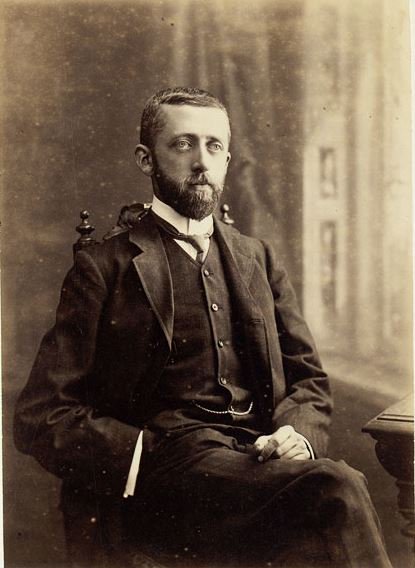
A J HerbertsonThis entry describes someone who was never the President but, had he lived to the age of many other Presidents, would have certainly taken up that position at some point.

Last updated October 2023

Andrew John Herbertson was the Honorary Secretary of the GA from 1900-1915 and oversaw many changes and developments in the early years of the association.

Balchin, in his centenary history, describes the impact of the death of A.J Herbertson, and his wife on the Association, which came as a great shock to all. 
He died at the tragically young age of 49.

He was born in Galashiels in Scotland. In 1892 he went to Dundee to teach botany. in 1892 he was made a Fellow of the Royal Geographical Society. He then moved in 1892 to Fort William, Scotland to work on a meteorological observatory on Ben Nevis. In 1894 he moved to Manchester to become a lecturer in political and commercial geography in the University of Manchester.

In 1985, he showed his interest in the teaching of geography in schools with a paper titled "The importance of geography in secondary education and the training of teachers therein." This was read at the 6th International Geographical Congress under the chair of Clements Markham, who was impressed by what Herbertson had to say on the matter.

The Bryce Commission reported in the same year. 

From 1896 to 1899 he lectured in industrial and commercial geography at Heriot-Watt College, Edinburgh. In 1896 he was elected a Fellow of the Royal Society of Edinburgh. His proposers were Peter Guthrie Tait, Sir John Murray, Ralph Copeland and Alexander Buchan. he was also acting editor of the Scottish Geographical Magazine at this time.

In 1898 he received a doctorate (PhD) from University of Freiburg-im-Breisgau. In 1899 he moved to the University of Oxford to become a reader of geography; then became the first Oxford Professor of Geography in 1905.
He would become head of the geography department at Oxford in 1910, but while teaching there he also took over the role of Honorary Secretary of the GA in 1900. He solicited support from various organisations and made an effort to ensure that Geography's position was strengthened.
In 1908 he was made a Fellow of the Royal Meteorological Society.

One of the contributions that Herbertson has left is his work on the natural regions of the world. Even in the run up to the GCSE examinations, I used a diagram very similar to the one that Herbertson developed. It is shown in the paper that he gave on his work in this area, showing global biomes.


L. Dudley Stamp (a GA President himself at a later date) wrote a paper, in which he described this moment in 1904, when Herbertson introduced his work on natural regions.

Herbertson sadly died of a heart attack on 15 July 1915 in Radnage, Buckinghamshire. He is buried with his wife Frances Dorothy (who died two weeks later) in Holywell Cemetery nearby.

Halford Mackinder wrote at length about his legacy and his work. Mackinder will receive his own entry on the blog in time.
His entry in the Autumn Issue of 'The Geographical Teacher' for 1915 was outlined in black.


In 1965, fifty years after his death, L.J Jay also wrote a long piece on his services to school geography, which was published in 'Geography'. Mr. Jay was the Honorary Librarian of the GA, and a lecturer at the University of Sheffield.
Jay described his huge influence on the GA.
He apparently didn't possess the magnetism of Mackinder, but impressed students by amongst other things, "he had the ability to make a map of Central Europe come to life under his hand as he drew from memory on the blackboard'.

He was also an author whose books had enviable sales. His 'Junior Geography' apparently sold more than a third of a million copies - I wish the textbooks I've written had a 10th of those sales figures! He wrote a book called 'Man and his Work' with his wife which went into its 8th edition in 1946, almost 50 years after it was written and first published, and with only minor changes to the text and some new photographs. Read it here on the Internet Archive. I think it would new a few revision now though, having browsed through the first few chapters.

Herbertson joined the Council of the GA, and in 1900 a motion was carried which he had proposed which was that membership should be open to all teachers of geography and not just those in public or endowed secondary schools. When Dickinson resigned he was elected Honorary Secretary. He travelled from Oxford to visit the inaugural meetings of new branches in cities such as Sheffield.

When the GA launched its journal in 1901, Herbertson had to reassure the RGS that this was not a threat to their journals, which were more of an expeditionary nature.

As a teacher, he "urged the prime importance of studying the home district, and encouraged teachers to conduct their pupils on local field excursions using the relevant one-inch sheet of the Ordnance Survey Map" - at the time this was a novel idea.

Keltie had referred to this practice that he had observed in Germany, where it was called "Heimatskunde"

We owe Herbertson another debt, as he was successful in persuading the Director General of the Ordnance Survey to let teachers have OS maps at preferential rates. He didn't like the separation of the subject into human and physical, and also the large range of political and other subdivisions that students had to learn. This led to him developing his idea of natural regions shown earlier in this post. This was influential in further work by J. F Unstead and P. M. Roxby.

A generation of children in Britain were taught using the framework Herbertson developed, perhaps making him the Waugh and Bushell of his time :)
For those attending school between the two world wars, his influence persisted, through the work of L Dudely Stamp and others.

Jay also put me onto a book which will have its own separate blogpost to itself: Herbertson's chapter in a book edited by J W Adamson in 1907. This is called 'The practice of instruction'.

Herbertson includes a list which predates Hirsch by many decades, where he outlines what might be the 'minimum geographical knowledge' he expected of a 12 year old. He is also clear on the need for a properly trained teacher:


The Oxford University Geography Department also shared some further information on the role of Herbertson during his time at Oxford University in a special webpage:
  • His passion for teaching geography brought Herbertson to Oxford in the first place: In 1895, he gave a paper on geographical education and teacher training to the Sixth International Geographical Congress in London. Halford Mackinder was so impressed by it that he hired Herbertson as his assistant. (Scargill, 1976)
  • Herbertson and Mackinder initiated biennial summer schools at Oxford at which distinguished university teachers from Britain and abroad taught schoolteachers in the class and in the field. More than 850 teachers attended the five Vacation Courses organised by Herbertson between 1902 and 1914 and the influence he thus exerted on British school geography was immense.
  • Herbertson and his wife were prolific authors of school textbooks: more than 1.4 million copies of their textbooks were used in the specialist secondary school teaching required under the 1902 Education Act.
  • He produced a new series of wall maps (published 1914-15).
  • Between 1900 until his untimely death he acted as secretary of the Geographical Association (the professional society for geography teachers) and was founding editor of its journal, Geographical Teacher, from 1901 to 1915. 
  • Herbertson used both roles to argue for more and better geographical education in schools, particularly through field classes and practical work.
This has been updated.

References

Wikipedia page:
https://en.wikipedia.org/wiki/Andrew_John_Herbertson

50 years on, L. J Jay's article:
JAY, L. J. “A. J. Herbertson : His Services to School Geography.” Geography, vol. 50, no. 4, 1965, pp. 350–361. JSTOR, www.jstor.org/stable/40565960.

He was remembered in 2015, by the Oxford University Geography Department in this special webpage.
E. W Gilbert also gave an appreciation of his work at the GA Conference in 1965.

Halford Mackinder also made an emotional tribute to his work at the time of his death.

Work of Mackinder: STAMP, L. DUDLEY. “Major Natural Regions: Herbertson after Fifty Years.” Geography, vol. 42, no. 4, 1957, pp. 201–216. JSTOR, www.jstor.org/stable/40564139.

An essay in Systematic Geography: https://www.people.iup.edu/rhoch/ClassPages/Thought%20and%20Philosophy/Readings/Week2/Herbertson.pdf

As always, if you know of any further information that would improve this post, or suggestions for additions and edits, please get in touch.

Update (May 2019)
It's always good to see that people are reading the blog. Thanks to Brendan Conway for his thoughts in this tweet


Update 2 (May 2019)
In the Spring 2016 issue of 'The Geographical Teacher', there was also a statement in memory of Mrs. Florence Herbertson.
She had done a great deal for the GA as well, and written a great deal in her own name.


Updated September 2019

Herbertson was also referenced by Joseph Acton Morris in his Presidential Address in 1966. He was a teacher and said that Herbertson's work was all based on the need to "improve the standard of geographical teaching".


Update early October 2019

From my personal collection... a good little book... co-written with his wife.


Updated October 2019
Mentioned in Darby's review of Academic Geography of the period.


Darby, H. C. “Academic Geography in Britain: 1918-1946.” Transactions of the Institute of British Geographers, vol. 8, no. 1, 1983, pp. 14–26. JSTOR, www.jstor.org/stable/622271

Update: December 2019

https://journals.openedition.org/cybergeo/2966 - a reference in a journal by Hugh Clout

Updated February 2020

As I got to the 1960s, I came across a Herbertson Memorial lecture by E. W. Gilbert, where he provides further information on Herbertson, as seen below.


GILBERT, E. W. “The Idea of the Region: Herbertson Memorial Lecture.” Geography, vol. 45, no. 3, 1960, pp. 157–175. JSTOR, www.jstor.org/stable/40565156

Update April 2020

In 1965, a special article on A. J. Herbertson was published, the transcript of a lecture by E. W. Gilbert marking the centenary of his birth.


This is well worth reading for a much fuller picture of Herbertson's life and contributions to the GA.

It also makes the connection with another remarkable man: Patrick Geddes.

There's also an excellent anecdote of how Mackinder persuaded Herbertson to work with him rather than accept a job in New York.


GILBERT, E. W. “Andrew John Herbertson 1865-1915: An Appreciation of His Life and Work.” Geography, vol. 50, no. 4, 1965, pp. 313–331. JSTOR, www.jstor.org/stable/40565956

To finish, a rather nice quote:


Update April 2020

While researching someone else, I came across Robert Neal Rudmose Brown's Herbertson Memorial Lecture of 1948 which is well worth reading.

Source:
Brown, R. N. Rudmose. “SCOTLAND AND SOME TRENDS IN GEOGRAPHY: JOHN MURRAY, PATRICK GEDDES and ANDREW HERBERTSON.” Geography, vol. 33, no. 3, 1948, pp. 107–120. JSTOR, www.jstor.org/stable/40564415. Accessed 29 Apr. 2020.

Updated July 2022

Herbertson's influence was featured in a collection of essays which was co-edited by Emrys Bowen and also featured H J Fleure and a mention of H J Mackinder. It was published to coincide with the centenary of Aberystwyth University's Geography department.


It describes Herbertson's immense contribution between 1900 and 1915.

Fleure took over as Honorary Secretary in 1917, after being asked by Halford Mackinder.

Updated October 2023


Scargill, D. I. “The RGS and the Foundations of Geography at Oxford.” The Geographical Journal, vol. 142, no. 3, 1976, pp. 438–61. JSTOR, https://doi.org/10.2307/1795296. Accessed 4 Oct. 2023.


Margaret Mackintosh RIP

Updated post. Sad news at the end of last week from colleagues who have organised the Charney Conference over the years of the passing of Ma...