Showing posts with label Advisory Teacher. Show all posts

Wednesday, 9 June 2021

2014: Mark Higginbottom

Mark Higginbottom was GA President during 2014. He has spent a career supporting other teachers as an advisor and school improvement officer since 2002.


As with more recent Presidents, much of this entry has been written thanks to contributions from Mark to a questionnaire which I sent round to all the Presidents who are still around to answer one.

Mark has worked in the North West of England for many years, and has a long association with that part of the world, having been born in Stockport in 1965 - which makes him younger than me. A whippersnapper President :)

Mark also kindly invited me over to Wigan to lead a session for him while I was working for the GA, which I remember was held in the function ground of a local rugby union team with a lovely group of teachers.

Mark went to New Mills School, then went on to study at the University of Manchester (BSc Joint Hons Geography and Geology, before going to Sheffield University to do a PGCE in Secondary Geography, where his tutor turned out to be another former GA President: the remarkable Margaret Roberts. These encounters were important in Mark's further engagement with the GA as well as his own professional development.

He has been particularly associated with the Worldwise brand, including the Worldwise Quiz (including the website element) and the Worldwise Challenge weekends.

Mark has also accompanied teams to the iGeo events to locations around the world. In 2019, there was a particularly impressive performance by the team. More on that competition and the role of the GA has been posted separately.

Mark chose Making an Impact as his Conference theme.

"Making an Impact'. The theme of ‘Making an Impact’ provided an opportunity to reflect on the geography our young people encounter and engage with and the relevance it plays to their everyday lives and experiences, be they EYFS, primary, secondary, post 16 or HEI students and whatever their ethnicity or socio-economic background.

I have been a GA member since September 1998. You had to join before Margaret Roberts would let you onto her PGCE! Since 2001 I have coordinated what was Geography Action Week (now Worldwise week), which led on to being the GA link for the Challenge weekend and have been co-chair of Worldwise since 2005. I have been team leader for the International Geography Olympiad since 2006. In 2019 in Hong Kong TeamUK had its best ever success, ranked 3rd in the World (43 countries competed), with a gold (the student was 2nd in the World out of 167 students, a silver and two bronze. 
I was a member of the membership and professional board for three years before electing elected to Council, serving for two and a half years before it became the Governing body, whereon I served for six years. Twelve months later I was elected as President for 2014 - 2015."

During his Presentation Mark included some voices from young people, with the help of Daniel Raven Ellison.
It included this thought provoking question:

“Asked if geography helps young people shape an understanding and appreciation of the world around them, whoever they are, wherever they live and whatever their academic interests, I believe we would all immediately respond with a resounding ‘yes!’; but do we really know the impact geography has on shaping them as ‘well rounded’ human beings?”


Mark's Presidential Address in 2015 was memorable, particularly for him.

He told me:
"The buzz of conference in your Presidential year is hugely memorable. Meeting teachers and young people and seeing your theme being put into practice and the impact it was having was a real success for me. Working with the three other Presidents as a team ensured synergy between years to further strengthen and embed my own theme over time. The minutes before my Presidential lecture will be a lifetime memory, in many ways!" - another President to mention the lecture - should I be worried?

Mark is now heavily involved in the iGeo competition, which takes students around the world to compete in the annual Geography Olympiad. The 2019 team had particular success, and the momentum behind this competition has been building, although the Pandemic has sadly curtailed competition and travel for a while.

Mark has been described by other Presidents as a particularly talented teacher and colleague, including those he has been worked with personally over the years.

Why the GA matters to Mark?
"The GA matters hugely. It is a community of like-minded professionals committed to working with teachers, educators to enrich young peoples lives through geography."

Mark also mentioned the importance of the support of other former GA Presidents as part of the personal journey:
"Many previous presidents were all very supportive and encouraging during my time as President. Of note however was Professor Michael Bradford. Mike was my lecturer at the University of Manchester and was doubly keen to support me in my year, as conference and the associated futures day was at the University. Mike met with me many times, providing wisdom and guidance, for which I will always be so very grateful. Mike pulled out all the stops to make my presidential term, my 2015 conference and the futures day a great success for everyone."

Images: copyright Bryan Ledgard / GA and used with permission.
Selfie of Mark in his natural habitat sent by Mark himself 

References


Mark has written for a number of GA Publications over the years, and contributed to the materials which are made available for Worldwise Week (formerly Geography Action Week) - former packs can be downloaded from here.

Mark's Presidential Lecture - 'Making an Impact'

As always, any memories of Mark in his time as President, or working with the GA welcome...

Monday, 17 May 2021

2011: Fran Martin

Fran Martin worked at the University of Exeter, as a geography teacher and researcher until recently, when she became an independent consultant.

Here's a story about Fran from the GA News 2005. These documents are quite ephemeral, and I am grateful to Aaron Bohlman from the GA for identifying them and letting me have access to them when I was last in Solly Street which seems like a long time ago now.

I was present at Fran's Presidential lecture, where she spoke about the work she had done. Rob Morris was also present, and he gave his thoughts on it here at the time:
http://lodgemeister.blogspot.com/2012/04/ga-conference-lost-bag-and-pre-term.html

Fran's conference theme was Geographies of Difference.

This is an important theme and one which persists of course to this day, with plenty more that all organisations including the GA can do to consider inclusivity and the number of people of colour involved in key roles, as well as issue of gender and representation.

Fran kindly filled in the Google Form that I sent round to all living Presidents and filled me in on some useful additional details for the blog post here.

Fran was born in the 1950s, and educated at Wycombe Abbey school, before heading for Cambridge University.

She had a career as a primary teacher followed by teacher educator and latterly academic/researcher, which was her job when she became GA President in 2011. 

(this was the year when I ended my GA employment sadly)

Fran has also written a number of books for Early Years and Primary geography, including one published by former GA President Chris Kington.

Bob Digby, who was to follow Fran as GA President worked with Fran for a while at Brunel University. He told me of his time there:
"The Brunel years were enjoyable, fun and challenging - just what a job should be. I worked with Fran Martin and Graham Yates, each of whom I love dearly, across a range of primary and secondary courses: undergraduate as well as post-graduate. I worked with school colleagues from a range of school types which were as varied and as interesting as our students. I observed PE lessons (anyone who knows me will splutter at this point) as well as lessons in Geography, English, RE ... whatever teachers taught, I observed. The School of Education was like a school in that it was a real community. PGCE students spend nine months with you and they're gone; with four-year undergraduates you get to know them and how they think just as you would with students in a school. It was rich, exciting, and fun."

Of her chosen conference theme, Fran told me:

"My theme was 'Geographies of Difference'. I chose it because it resonated with my research at the time - Global Partnerships as Sites of Mutual Learning - I learnt a lot about different ways of knowing, critical interculturalism and coloniality and wanted to bring some of that knowledge to my focus for the year. 

I have been a member of the GA since 1989. I had written articles and books for the GA and been an active member of both the Teacher Educators Working Group and the Early Years and Primary Committee. 
I was editor of Primary Geography 2005-2009 and then a member of the editorial board 2009 - 2017."


She feels the GA matters very much to educators:

"I became involved when I was county advisory teacher for the humanities in Buckinghamshire. I had not known of its existence before then. I initially found it to be an invaluable resource. Later I found I had things to say that contributed to that resource. It has been a great professional support and enhanced my career."

Of her time as President she said:
"I continue to have feedback that people loved the conference and still use the pieces I wrote for 'Primary Geography' and 'Teaching Geography' in their work. I tried to live out my values and the values inherent in the theme of geographies of difference and found mixed success in that regard." 


Fran about to speak, with members of the supportive Primary community on the front row...

Simon Catling said of her Presidency that she brought a wider awareness and context through her links and research in intercultural understanding.

Fran has continued her involvement with the Primary Geography community and regularly attends and presents at the Charney Manor Primary Conference and was also involved in the creation of many issues of 'Primary Geography' journal and contributed articles and other content over the years as mentioned previously in her role as Editor. Current work explores ideas of decolonisation, which is particularly significant at the present time.
She has carried out research in the UK, West Africa, India and Canada, particularly with Fatima Pirbhai-Illich from the University of Regina, with whom she has presented at the Charney Manor Primary Conference.

There is a link between Fran and my own chosen conference theme of 'Everyday Geographies'.
In the Autumn 2006 issue of 'Primary Geographer', Fran wrote a piece called 'Everyday Geography' which remains influential to this day. Around this time, the GA was also using the phrase 'Living Geography'.
Everyday Geography  encouraged Primary educators and students to remember and recognise that they think geographically in the course of their daily life.


Images copyright:Bryan Ledgard and the GA (from Flickr account)

References

Martin, Fran. “The Geographies of Difference.” Teaching Geography, vol. 38, no. 1, 2013, pp. 10–13. JSTOR, JSTOR, www.jstor.org/stable/23756981
Google Scholar: https://scholar.google.com/citations?user=sec5vcAAAAAJ&hl=en

Decolonising geography work: https://decolonisegeography.com/explore
Article:

'Caring for our World' - co-written with Paula Owens

As always, any memories of Fran and her time at the GA welcome.

Sunday, 9 May 2021

2010: Dr John Hopkin

Updated July 2023

John Hopkin has served in many different roles with the GA over the years, and is still working on projects with the GA and offering his skills in the service of the Association.

His main career has been based in Birmingham, where he worked as teacher, then as an  advisory teacher amd advisor. He then worked at the GA as Head of Accreditation, and particularly involved in the work of the Global Learning Programme as well, coordinating the GA's involvement with that project and working to develop CPD in critical thinking.

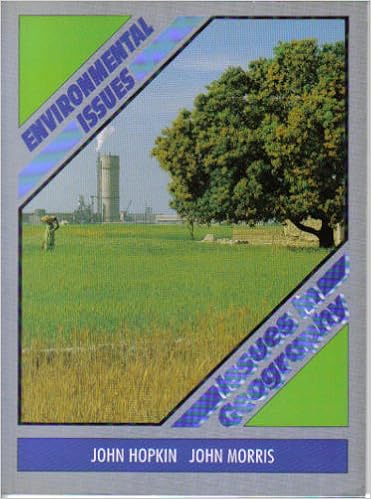
As an author, he has been involved in the writing and editing of  numerous geography publications for schools, dating back over 30 years, which include some of the GYSL books (pictured), alongside another former GA President John Westaway together with more academic publications including with David Lambert.

He has continued to be associated with the GA in many different ways, and even now he has been working on some new online student materials for the GEO project, coordinating some of the content for that new website. Take a look if you haven't already.

The following information was provided by John himself via the Google Form which I set up for more recent Presidents.

John was born in 1954, in Penarth, Glamorgan, and went to school in Bristol before attending the University of Wales (Swansea), then Birmingham.

He started out as a Teacher before moving to Local Authority Advisor, and then worked on the GA staff (possibly uniquely for a President). He has worked as a textbook author since 1986. When he became GA President he was working as a School Improvement advisor in Birmingham. He sent me several images, including one here taken at Solly Street before the view towards the hills was blocked by student accommodation.


His conference theme was Progress in Geography. This was part of a strategic pushback by the Association (in partnership with David Lambert) in favour of subjects at a time when they seemed under threat. John also wanted to argue for a dynamic subject, particularly in the way we represented the rest of the world. 
See the earlier post on the official opening of Solly Street during John's Presidency.


I asked John why the GA mattered to him:

"I first got involved in a short-lived geography and science working group around 1987-88 in the run-up to the first National Curriculum. I then joined the Assessment and Examinations Working Group (AEWG), eventually becoming chair. John still serves on the AEWG Committee to this day. I then chaired Education Committee before becoming President. 
A fairly well-worn route to the presidency, though I didn't see it at the time."

"I think we had a successful year with close strategic working with the CE. I think presidents following personal enthusiasms for their year is probably a good thing - but there also need to be a fair proportion where the presidential year is also strategic for the association. I guess everyone remembers their lecture - I enjoyed preparing for it and giving it, though at the time it was a bit touch and go because the tech people at Guildford couldn't get the presentation to work on their equipment. So top tip - bring your own laptop as well. Also the keynote from Hans Rosling was fantastic - we were lucky to get him (thanks Lucy) and it was extremely well received."

It was a pleasure indeed to meet Hans and see that during my time working for the GA

Image copyright:Bryan Ledgard and the GA (from Flickr account)

The most recent GA project that John has been involved with is our new 11-14 textbook with teacher materials. He was one of the editors. The textbook is excellent.


References

Presidential Address, 2011
Hopkin, John. “Progress in Geography.” Geography, vol. 96, no. 3, 2011, pp. 116–123. JSTOR, www.jstor.org/stable/41320394. Accessed 8 May 2021.


Report on the Global Learning Project - written by John
Download as a PDF on this link:


Hopkin, J. and Owens, P. (2016) ‘Critical thinking in geography’ Primary Geography, 91, 3 p. 23 https://www.geography.org.uk/Journal-Issue/e0bf0aca-54c6-4081-9603-9a5ded38a2ac
Critical Thinking project website

Practice Guide: this is a very valuable document and well worth downloading.

Hopkin, John. “Sampling the World.” Teaching Geography, vol. 36, no. 3, 2011, pp. 96–97. JSTOR, www.jstor.org/stable/23755596. Accessed 4 May 2021.Copy

Update July 2023

John was recently announced as the GA's new Honorary Treasurer. He will take over from Bob Digby, who held the role for six years following the retirement of Brian Ellis from the role. Thanks to John for stepping in to this important role in the governance of the association. 
John will start his role in September 2023.

Tuesday, 13 April 2021

Paula Richardson

Paula Richardson has been involved with the GA for many decades and held may different posts, and served on committees for decades.

She has also written the 'Meanderings' section of GA Magazine for even longer than I've written the Webwatch column. This comes at the end of each issue and is a sort of miscellany of ideas and links of general interest to all key stages. It always has something of interest.

Paula and her husband Tony have also written or co-written a great many resources for the GA including the Superschemes series, and resources to accompany another Paula creation: Barnaby Bear (see his own separate post)

Paula says:

After a lifetime in education including the placement and supervision of trainee teachers both in the UK and overseas I now work more specifically with teachers working towards QTS status.
Educators Abroad offers a programme to experienced teachers to assist then in obtaining fully qualified teacher status if not already held. We work in schools around the world in particular International Schools where the curriculum is taught in English. More details can be found at

www.educatorsabroad.org
As a geographer I am also an adviser, author and teacher. 
At present I chair the Publications Board of the Geographical Association and am also a member of the Governing Body of the GA.
She was educated at Ripon College of Education, Yorkshire and the University of Surrey, and completed her EdD at the University of Sheffield.

Paula was awarded Honorary Membership at the 2021 GA Conference - the Association's highest honour. 

Here is the citation that I read out.

Honorary Membership

This is the highest award that the GA makes and recognises the enormous contribution that the
recipients have made to the GA and to geography in education. This year the award goes to Paula
Richardson.

Paula joined the GA forty-five years ago in 1975 and she has given outstanding service during this
time in a multitude of ways – through her work as consultant, her many publications – including
the invention of Barnaby Bear for the QCA Schemes of work – and extensive work as chair of
Publications Board; she is a highly-valued member of EYPPC and FOLSIG; she promotes the GA at
national and international level, supporting ITE with Educators Abroad; she is also a GA Governing
Body named trustee.

She is the GA’s representative on the Education Committee of the Royal Meteorological Society.
Paula has been a consultant to the GA since 2005 and a Primary Geography Quality Mark
moderator since its launch in 2006. She has made numerous school-based CPD and conference
contributions over many years, always promoting the aims and objectives of the GA.

Paula has had a varied career; in addition to teaching, she has worked as a local authority adviser,
in ITT and in many significant roles for the GA. Other activities include her volunteer work with St
Johns Ambulance, most recently training hundreds of Covid-19 vaccinators.

She is constant in her service to the Association: few volunteers can be more deserving of this
award. As one staff colleague commented: ‘It’s hard to think of anyone who’s done more for the GA’.

Image copyright: Bryan Ledgard / Geographical Association

Tuesday, 6 April 2021

2006: Keith Grimwade

Updated October 2023

When Keith Grimwade became President, he was working as the Head of Professional Development for Cambridgeshire County Council, with responsibility for the Schools Advisory Service, as well as training and development for the Council’s Children’s Services staff.


I have had the pleasure of knowing Keith for many years, and have continued this friendship partly through his association with the Cambridge GA Branch. This is my local branch, and I have had the pleasure of speaking to students there quite a few times. Our paths have also crossed en route to the GA Conference in the past. He organises social event for the GA Cambridge branch to the present day, and regular attends meetings. The Pandemic has paused this activity for a while, although the GeogMeet and Worldwise Quiz continues thanks to a lively committee. 

As with more recent Presidents, much of this entry has been written thanks to contributions from Keith to a questionnaire which I sent round to as many Presidents as possible.

Keith was born in 1957 in Southend on Sea, in Essex. He spent five years in London.

He told me, "I benefited from two very skilled teachers who saw my interest in geography and knew how to nurture it.

First, there was Miss Foster, my Year 3 teacher at Prince Avenue Junior School. 
We had to choose reading books from a trolley and I picked out a book about Thailand that was far too hard for me to read but I was fascinated by the photographs. Miss Foster let me keep it, so while my classmates were developing their reading skills I was absorbing images of Thailand, and then I moved on to other countries in the subsequent weeks.

Second, there was Jim Alves, my geography teacher at Southend High School for Boys. He led a school trip to the Lake District at the end of my first year. I had never been on holiday and the whole week was an amazing experience. I remember studying an OS map at the top of Cat Bells. Mr Alves looked over my shoulder and began to point out features. The map came alive, I could now see it in 3D and I was hooked. So, I think I’ve always been a geographer and I’ve spent my life looking at photographs and OS maps, and not much else! I read geography at Jesus College, Oxford - it was an alien culture (these days I would be helping their ‘disadvantaged background’ quota).
Not all of the teaching was that good, to be honest, but the opportunities and access to resources were phenomenal and ideal for someone who was quite happy to work independently and plough his own furrow.
The mid to late 70s was also an exciting time to be an Oxford geographer because having lost out to Cambridge and elsewhere in the quantitative revolution, it was just beginning to pull ahead with its work on the environment and climate, led by someone else who was to become a GA President, Andrew Goudie".
Andrew has his own entry on the blog of course, with plenty of contributions from Andrew himself.

In terms of his teacher training, Keith told me:

I did a PGCE at Goldsmiths and was accepted into the ILEA ‘pool’, having been interviewed by another future GA President, Michael Storm. I requested a posting in a mixed comprehensive in NE London, so they sent me to Henry Compton Boys School in Fulham. I know that ‘it was a rough, tough school’ is a bit of a cliche but it really was but I learnt a lot about how to motivate a wide range of abilities and manage a wide range of attitudes and behaviours very quickly. I was there for 5 years and then became Head of Geography at Hinchingbrooke School, Huntingdon, where I stayed for 12 years.
In 1997 I joined Cambridgeshire County Council as County Adviser for Geography, and I stayed there until my retirement at the end of 2017, having been Director of Education for the last 5 years of my career.

In the 80s / 90s and early 2000s I authored / co-authored a range of curriculum materials and text books, and regularly contributed to the TES.

His Presidential theme was ‘The Future of Geography’. Keith says:
"we were twenty years on from the original National Curriculum debates and in something of an existential crisis. I re-visited the Case for Geography (which has had its own post on the blog previously) and explored possible, probable and preferred futures. 

My sub-theme was young people’s involvement in curriculum making. I managed to combine both into my Presidential Address. 

My route to becoming President was via the Secondary Education Section Committee (on which I also served for 14 years) and the Education Standing Committee, and I was encouraged, supported and guided by two wonderful but very different geographers,
Patrick Bailey and Roger Carter.

Read Keith's Presidential Address here:

It is called 'The Future of Geography'.
(Slideplayer)
In it, he considers the new National Curriculum and some strategies for the future.
He also mentions the Young People's Geographies project, which I was involved in.
Keith told me back in 2019 why he believes the GA matters.

"Geography teachers need a ‘community of practice’ - that is the GA, it’s one and only unique selling point - that is why the GA matters. I joined the Secondary Education Section Commitee in 1991 and was involved with many committees, including chairing the Education Standing Committee. I have been a long-standing member of the local branch, helping to keep it going through some difficult times, and I have just attended my 35th consecutive annual WorldWise quiz local round; and I still don’t know all of the answers."
He told me that:

"My Presidential year was the highlight of my professional career as a geographer. It is, of course, part of a 4 year term (Junior, Vice, President, Senior) so ‘achievements’ are spread out over a period of time. 
The big curriculum initiative was the Action Plan for Geography. 

Lord Adonis was a great supporter of geographical education but could not understand why we had the RGS/IBG and the GA - politicians prefer dealing with just one organisation. Negotiating and securing the GA’s distinctive role was, I think, one of my biggest achievements, much of which went on behind closed doors and could not be broadcast. 
I keep a letter from Lord Adonis acknowledging my work, and recognising the GA’s contribution. I also helped the GA develop its strategic framework."

He also talked about the importance of David Lambert to the GA, something I certainly appreciated when in post.

"My biggest achievement was probably retaining the services of David Lambert, who was in danger of heading off to the Institute of Education full time; David did for the GA what few, if any, others could have done over the next few years."

He was also mentioned by Jeremy Krause as being very supportive.

Ketih finished with some thoughts:
These days, I attend GA events mainly for social reasons.

What really gives me hope for the future is the energy and enthusiasm of our young teachers. They will spark a lifelong love of our subject in many ‘young Grimwades’ in the years to come. And the GA must remember that its purpose is to support their passion.

Keith was also influenced by the work of the GeoVisions project.

Keith Grimwade reflects on Geo Visions as “one of the most enjoyable and influential projects that I have been involved with …” in his 2007 Presidential Address [reported in journal 'Geography' Autumn 2007]. He highlighted the strap line:

‘Create the future … don’t just let it happen’


“ The GA adopted GeoVisions under Di Swift’s leadership (see more in Di's own blog post) and over a period of two years it inspired a range workshops and publications including the GA’s [2002] Position Statement on Geography and it initiated the GA's involvement with ‘third stream’ activities. GeoVisions introduced many of us to possible, probable and preferred futures and, I now realise, to my presidential theme. To create the future of geography rather than just letting just happen we need a strategy for change.”
Keith retired as Director of Learning at the end of 2017 after 37 years in education.

He continues to be generous with his time in the local community, and to support the work of the Cambridge GA Branch.

He is also a Governor of the Cambridge and Peterborough NHS Foundation Trust.

He is also a supporter of Peterborough Football Club, who I have been to see play with colleagues from Ely.

References

GRIMWADE, KEITH. “Presidential Address 2007: The Future of Geography.” Geography, vol. 92, no. 3, 2007, pp. 175–178. JSTOR, JSTOR, www.jstor.org/stable/40574331


Image copyright: Geographical Association and Bryan Ledgard - used with permission

Any further memories of Keith welcome. 

Updated October 2023

Keith is the guest on a podcast, exploring ideas of Hope. It was published on October 17th 2022.
He speaks openly about his career and personal challenges, and connection with caring.

He talks about his career in education: 20 years as a geography teacher, and later as an education administrator for Cambridgeshire, and as the county's adviser for geography.

He describes again the influence of his teacher Miss Foster, and his love of Ordnance Survey maps.

He retired at the end of 2017.

It's lovely to hear Keith talking about his "hope kit".


Monday, 29 March 2021

2005: Sue Lomas, OBE DL

Sue Lomas is a stalwart of the GA, and is still active supporting Worldwise Challenge (being Chair of the Worldwise Board) and international GeoOlympiad events, along with other contributions to the GA, as well as serving on the GA's Education Group.

Sue was also another GA President with experience of teaching, having been a Head of Geography in two schools.
At the time of taking up the Presidency she was a School Improvement Officer, and in fact she asked me over to Salford to work with colleagues from a school there and introduce them to some GIS ideas when I was working for the Geographical Association back in the day. 
She is also involved in the GA Manchester Branch

She was Head of Geography at Connell Sixth Form College.

Sue has also been awarded an OBE for her services to young people and Scouting.


She is still involved in promoting Outdoor education, and was involved early on in the development of the Council for Learning Outside the Classroom (CLOtC) with its award and accreditation scheme. She also participates in the organisation of the GeoOlympiad competitions, accompanying competitors to their venues.


I am grateful to Sue for sending more information via the Google Form which I set up for this project.

She told me:

"I was born in 1953 in Birmingham
Sue attended the King Edward VI Camp Hill School for Girls - one of the best known schools in the city.
I have a University of London degree but studied in Derby. I then did my PGCE in Cheltenham for a Bristol University Certificate.
I started out working as a geography teacher in rurban Cheshire, before moving to Macclesfield to become a Head of Department and then Senior teacher. I was also an advisory teacher for geography in Cheshire with Jeremy Krause. I met Mark Higginbottom for the first time here. He was an NQT in a Cheshire school whom we were working with. 
I moved to be the Foundation Subjects Consultant and then Key Stage 3 Strategy Manager for the National Strategies."

These were an important part of teaching development during the 2nd decade of my time as a geography teacher.

"Moving into a school improvement role, I became an inspector for Geography ITE. Taking early retirement in 2010 I started my own company and became a schools' inspector. I also inspected abroad in the UAE. I have joint-authored two sets of Key Stage 3 textbooks, both edited by John Hopkin. One for the UK: "Geography Matters" and another for Pakistan.

My passion has always been for my subject and if people ask me what I do, I always say I'm a geography teacher - as this was my first love.

I have been involved with the GA since the 1980s when Jeremy Krause invited me to join the geography education community. I have always enjoyed working in a collegiate way, and to get together with like-minded professionals, and the GA provided me with lots of high quality CPD in my own role. 
After serving as the President (for the four year cycle introduced by Michael Bradford) I moved on to Worldwise and was lucky enough to have accompanied the UK Team to the Geography World Championships in venues across the world (sadly now defunct) and from 2006 I was one of the chaperones for the UK teams who attend the International Geography Olympiad. 
I am now the Chair of that competition - what a fantastic opportunity that has been - working with colleagues from the iGU. Meeting young people from over fifty countries and working with their leaders (teachers or university staff) to write the three tests has certainly been a privilege.

I am a GA Consultant and that has given me a range of experiences from reviewing the quality of geography in Liverpool to supporting new heads of department across England. 
I am also an assessor for the PGQM."

When she became the GA President, she was the Key Stage 3 Strategy Manager for Salford Local Authority.

Sue's Presidential theme was "Sensational Geography".

Sue told me: 
"I think in those days, the theme was very much influenced by the GA (rather than chosen by the President as they are now), so I think I agreed the theme with David Lambert, who was the CEO at the time. I was always keen to "promote the varied approaches and the rich, diverse resources that we can share" (excerpt from Conference brochure). 
I started in the GA as the volunteer PR Officer and then became Chair of the M & P D Committee. I have been involved in Worldwise since the 1990s at first with Keith Orrell, when we were tasked with updating the whole offer for students. That was when we changed the Worldwise Quiz Final (which tended to happen at the GA Conference itself) to the Worldwise Challenge. 
The latter included the practical experience at an FSC site rather than the (independent) schools' final at Conference. 
Keith's and Tony Thomas' links to the FSC meant we were able to provide a free weekend to teams from schools across the country. Peter Smith was heavily involved too. Sadly, I think we have seen the last of the Challenge events, given the COVID-19 situation with residential centres. Since 2006, Mark Higginbottom and I have been joint chairs of Worldwise. I will always be grateful for the experiences I had and the people I met at the GA, and I'm sure my career was enhanced by being so heavily involved.

Currently, I work to try and ensure that new teachers are well-prepared for the profession. I run two Appropriate bodies for NQTs and I work as a SCITT geography tutor and an Associate Lecturer in Manchester Metropolitan University.

Of her time as President, Sue told me:
`'It was a privilege to be part of the roll-out of the Action Plan and I recall many interesting meetings with the officers of the RGS, some at their headquarters. There was a real buzz about the recognition that Geography is an important subject and it was great at the conference to promote all the brilliant resources and activities that would see Geography given much greater status, particularly in secondary schools. I also have some great memories of the Conference. It was in Manchester, so it was lovely to be 'on my own patch'. The Exhibition was amazing and in those days we had a couple of good receptions - including a Chinese banquet! I also attended the Scottish Awards event. The best bits were meeting the wide range of colleagues that make up our membership some of whom were almost as passionate as me about the subject."

I have been involved with the GA since the 1980s when Jeremy Krause invited me to join the geography education community. I have always enjoyed working collegiately and to get together with likeminded professionals and it provided me with lots of high quality CPD in my own role. After serving as the President (for four years) I moved to Worldwise and was lucky enough to have accompanied the UK Team to the Geography World Championships in venues across the world (sadly now defunct) and from 2006 I was one of the chaperones for the UK teams who attend the International Geography Olympiad. I am now the Chair of that competition - what a fantastic opportunity that has been - working with colleagues from the iGU. Meeting young people from over fifty countries and working with their leaders (teachers or university staff) to write the three tests has certainly been a privilege.

References
GA News Autumn 2005 - biography and setting out her stall for her conference.

Image result for jeremy krause geography

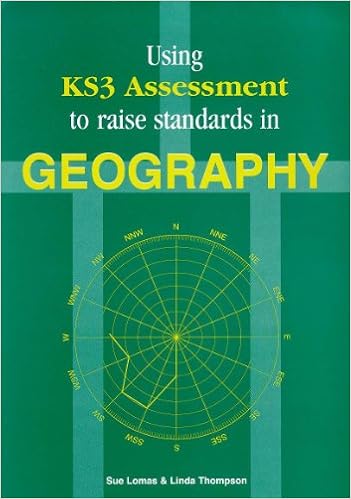
This book was co-written with Linda Thompson, who was serving on the GA's Secondary Phase Committee when I joined in 2004, thanks to the invitation of Rob Lodge. 

I remember using this book as a teacher in Norfolk.


This website has a useful short biography of Sue as well.
Sue was born in Birmingham and moved to the North West for her first teaching job in 1978. She taught Geography for 20 years before moving into school improvement work in Salford. Sue now has her own consulting business working in a variety of educational fields. She is a qualified Ofsted inspector and has worked as an Associate Lecturer at Manchester Metropolitan University. Sue has a passion for her subject, and has been a member of its professional body, the Geographical Association for many years, including being its President in 2006. She works on a voluntary basis to enthuse young people about the subject and is the chair of the association's youth arm 'Worldwise'. Sue has been a member of several school governing bodies and has also worked as an assessor for the Duke of Edinburgh's Award.

A member of Girlguiding since she was eight years' old, Sue is now a trustee of the national organisation. She is passionate about promoting the opportunities Girlguiding offers to girls and young women and has recently completed her term of office as Region Chief Commissioner for North West England. Sue is also national chair of the charity 'Youth United' which supports the work of the ten largest uniformed organisations across the UK.

Sue is married to Ian and lives in Culcheth, Warrington. She has one daughter who works as a teacher in London. Jen is very much involved with the Geographical Association and its work in Primary.

Images: Copyright Bryan Ledgard and the Geographical Association

As always, memories of Sue Lomas' time as GA President welcome.

Saturday, 27 February 2021

2001: Jeremy Krause

Signifcantly updated in late March 2021

Jeremy Krause has been involved with the Geographical Association for many years, and acted as a Trustee of the Association. He worked as an advisory teacher in Cheshire.

He has carried out many additional roles including being on interview panels to select the GA's Chief Executives - a key role in the changing nature of the GA to become a professional association with paid staff, rather than the decades of reliance on volunteers to carry out all roles. 

Jeremy has published a number of books, including books on Primary Geography in particular (although he was a Secondary teacher by training), and supported the work of the GA in numerous ways, alongside his advisory roles.

His Presidential address in 2001 was entitled: "Tell the world about learning geography" and published in 2003 in 'Geography'.


It ended with this paragraph on his vision for the GA in the future:

 "My personal vision for the GA of the future is an association which encourages its members to communicate with each other, by whatever means, to debate what it is to learn geography, what drives them and how we can all be better at delivering meaningful learning. An Association that is a strong voice for the subject as part of a rich and exciting curriculum." This links with Douglas Freshfield's introduction to the first issue of 'The Geographical Teacher'.

The Charney Manor Geography Conference is also an event which Jeremy has been involved with for many years: helping to organise and present sessions.
Jeremy was heavily involved in the 20th Anniversary event in 2017, which I was fortunate to attend, and made some significant contributions to the weekend, which celebrated the immense contribution made to Primary Education by Simon Catling.

Jeremy was kind enough to answer the questions on my Google Form a while back to add to his entry.
He also shared a great deal of other information in emails and other formats, as we approached his own entry onto the blog, with respect to the Presidents who he knew well and worked with.
I shared some questions with Jeremy, and some memories of the 1990s, which have been the focus for a number of recent blog posts.

I felt that the GA in the late 90s changed considerably as we moved into the 2000s. It went from a  charity run very well by members and a supportive administration to a professional body with subject leadership coming from HQ in addition to volunteers. Prior to 2000, the GA was very much the territory of academics this was prior to changes in demands on them to research more and also GA publications and journals weren’t approved by HEFC (so couldn't count towards their research output).
The GA’s nomadic geographical journey from Oxford to Aberystwyth Manchester and finally Sheffield was ‘underwritten’ by these academics.
The professionalising process probably also began with the introduction of Pathways at Conference - all linked to increasing performance management in schools and limited money for CPD events
I

Jeremy was involved with the introduction of ‘pathways ‘ at conference, along with the then Hon Conference officer Paul MacDermott.
It also emerged out of the M&PD committee’s work, under chairs Judy Mansell and later Sue Lomas
They were introduced either at the 2001 conference or Jeremy's conference in 2002
This was important as it represented a shift to a more Professional Development orientated organisation. This was on the back of increased performance management mechanisms in school and schools having more control of their budgets.
It was important in an environment like this to ‘badge’ the conferences more overtly as CPD - something which of course continues to this day.

He also took the time to have a number of phone conversations with me during the time when the blog project was taking shape.

The following was written by Jeremy himself and outlines in detail his involvement in the GA for many decades. Jeremy told me: 

The process of writing this blog has been both interesting and humbling. ‘Interesting’ because it is revealing to consider what the GA has given me over more than 50 years and what I have tried to do in return. ‘Humbling’ because I’ve recalled the many who helped me ‘get on my way’ and also ‘along the way’. Just as important, are those who I don’t know about directly, but who must have been there! As someone who has ‘come up through the ranks’ I have always felt strongly about all who serve on Committees and the contributions from the ‘far from ordinary members’. I hope that I do justice to all who made this possible. Thank you.

When and where were you born? 
6th July 1950 – a ‘Metrolander’ 
Born at home in Pinner Middlesex within the sound of the Metropolitan Railway. (Uxbridge Branch). 

Where did you go to school / university?
Cannon Lane Junior Mixed Infant School, Pinner Middlesex 1955 - 1961 Harrow County School for Boys, Harrow (Now Harrow High School) 1961 - 1969 University of Southampton 1969 - 72 BSc Hons Geography University of Southampton 1972 -73 PGCE University of Keele 1982 – 84 Part time MEd 

What has your career been e.g. teacher / academic / author / other work outside the obvious geography sphere? 

Relief Warden YHA North Yorkshire 1972 
Geography and Geology Teacher - Branston School and Community College Lincolnshire1973 – 78 
Head of Geography Department Adams School Wem Shropshire (now The Thomas Adams School) 1978 – 86
Head of Humanities Croeswylan School Oswestry Shropshire (now The Marches School ) 1986 – 87
Advisory Teacher for Geography 11 – 18 Shropshire LA 1987 – 89 with a focus on introducing the new GCSE courses and examinations and also the Use of ICT in Geography. 

From 1987-92 Geography Committee of the Secondary Examinations Council chaired by Tony Thomas and its successor the School Examinations and Assessment Council (SEAC) Chaired by Professor Richard Daugherty 

The Shropshire experiences coupled with being a member of SEC and its successor SEAC revealed some of the challenges especially with geographical enquiry and its assessment. Although there was a great spirit of cooperation at the time with a huge commitment to the new syllabuses, some key issues emerged: 
• with regard to Values and Attitudes, ‘What was the point of asking pupils for their opinions?’ 
• how to allocate marks for knowledge, understanding, skills and values? 
• how to make the wording of questions accessible to students of all abilities? 
• how to set up, mark, moderate and validate students’ Geographical Enquiries? 

Senior Adviser for Geography 2- 19 Cheshire LA 1989 – 2002 
A responsibility that caused me to develop a deep understanding of Early Years, Primary and Special Education that has stayed with me since and which informed me greatly about how children learn. This was a major turning point in my professional life. 

Collaboration 
One significant aspect part of my work was with the late Roger Carter in forming the Geography North West Consortium of Geography with colleagues from Cumbria, Lancashire, Cheshire Staffordshire Shropshire with the University of Liverpool. I am eternally grateful to Alan Waters, Barry Piggott, Roger Carter, the late Kate Campion, Professor Bill Marsden and Jo Hughes.
 
An important outcome were the ‘20 Day courses’ we ran for five years, with c 150 Early Years and Primary School Teachers per year, as a key part of supporting the development of the National Curriculum for Geography. A spin off from this were many writing projects for both the GA and NCC/QCA including: 
1992 Place - a Practical Guide to teaching about places for The GA 
1992 Geography and Economic Understanding at Key Stages 3 and 4 

NCC Cheshire Geography Expeditions. 
Prior to my arrival in Cheshire the LA had already run its first Geography Expedition for 6th Formers to Iceland in 1989. I played a key role is setting up expeditions to Iceland in 1991 and 1993 and participated as a leader in the latter. In 1995, 1997 and 1999 the location moved to Arctic Norway. I was able to participate as a leader in 1997 & 1999. 

1997 – 1999 Part time PGCE Primary Geography Lecturer University of Manchester 
1998 – 2000 Seconded to Cheshire LA Education Policy Adviser post to work with the Director of Education to create the LA’s first Education Development Plan for all maintained schools – over 500 in total. 

2000: Palestinian National Authority - The Department for International Development with The British Council East Jerusalem (West Bank and Gaza) - Support programme for Social Studies in Grades 1 – 4 
A real eye opener and life changing experience working with bright, optimistic and highly committed teachers in Ramallah, Nablus, Jericho, Bethlehem and Gaza. 

2002 – 05: Regional Director for Teaching and Learning in the Foundation Subjects with National Strategies for School Improvement – Yorkshire and the Humber Region 
2005 -11: Senior School Improvement Adviser with the National Strategies South West Region with a focus on 50+ underperforming schools 
2011-15 Independent Education Consultant including a major School to school improvement programme in Somerset. 
2010 – 18 Member of the Governing Body and Chair of Appointments and Standards Committee, Cotham School, Bristol 
Charney Manor Primary Geography Conference 1998/9 & 2011 -18 and 2021. Presentations in 2012, 2014, 2015, 2016, 2017 & 2018 
Author 1988 ‘Ready Steady Go’ Module 3 Shropshire Geography for Young School Leavers –TRIST (TVEI Related In-service training) Project with five other Heads of Department. 
1988 Spaceview UK - a teacher’s guide to Landsat 
Images in the classroom: Image I Welsh Borderland 1994 ‘Read all about it’: Using Children’s Literature in support of Primary Geography Chapter 11 in Primary School Geography Eds Bill Marsden and Jo Hughes David Fulton 
1995 Landmarks Portrait of Europe BBC 1995 Primary Geography a developmental Approach with Prof Alan Blythe Hodder and Stoughton 1996 Using Land Use – UK for a County Wide Initiative Chapter 12 Land Use UK- a survey for the 21st Century Ed Rex Walford Geographical Association 1997 
Geography Co-ordinator’s pack BBC Worldwide (Educational Publishing) Jeremy Krause and Wendy Garner 2004 & 2010 
Chapter 25 The subject leader in Primary Geography Handbook Ed by Roger Carter 2004 and Stephen Scoffham 2010 (in 2010 with contributions from Jane Millward and Anthony Barlow) 2001 Departmental Visions and Planning for Change with Linda Thompson, Chapter 10 in More Thinking Through Geography Ed Adam Nichols and David Kinninment Chris Kington Publishing 
A range of other materials were also authored over the years.
Articles have tended to be either practical guides to teaching and learning or particularly in recent years reflections of the lives of fellow GA Geographers who made a significant difference to me life and career 


What was your job when you became President?
Initially Senior Adviser for Geography with Cheshire LA until February 2002, then Regional Director for the Foundation Subjects Key Stage 3 National Strategy from February 2002

What theme did you choose when President, and why did you pick it? 
‘Learning Geography for our world – life in the global village’ Two reasons: First, I was fascinated by the debate about how we learn which was highly influenced by Dylan Wiliam and Paul Black’s ‘Inside the Black Box’ published in 1998 and the development of thinking skills through the work of David Leat. Geographers with their insatiable appetite for learning about places, engaging with environmental issues and for travel and adventure are ideally placed to develop strategies that engage learners with thinking skills. I also reflected on the need to be clearer about why we select particular aspects of our subject for our pupils to learn. Why do we think they are so important? Do we need to revisit our knowledge. Should we re-examine the skills we use to engage our learners? This was placed in the context that Manchester, the venue for the 2002 Conference, was hosting the Commonwealth Games later in the year. Not quite the Olympics in terms of international teams but nonetheless highly representative of our global village. This theme of ‘Life in the Global Village’ was also picked up in ‘Celebrating diversity – life in the British Isles today’ , the excellent programme of activities that formed Geography Action Week 2002 which was led by my good friend from Cheshire days Mark Higginbottom. (For those paying attention, all the 2002 Conference materials were purple as a nod to inclusivity by showing what happens if you mix the red and blue of the two leading Manchester football teams.) 
My conference address was followed in the afternoon by the The Learning Forum: ‘Learning Geography in the Primary school’ led by Wendy Garner, Simon Catling and Stephen Scoffham.

‘Learning Geography in the secondary school’ led by Linda Thompson, Dr John Morgan and Dr David Leat. 

The other aspect to my Presidential address and year was my personal vision for the GA. This choice was influenced by a real concern that the GA had to be open to new ideas and adapt to the changing circumstances in schools especially in terms of funding and curriculum development. Also events during my Presidential year also made me concerned for the GA’s future. My vision of the future was for an association which encourages its members to communicate with each other, by whatever means, to debate what it is to learn geography, what drives them and how we all can all be better at delivering meaningful learning. I also suggested that we needed to do more than say geography is ‘good’ and educationally important. We must demonstrate why it is good. There were five strands to this: 
• Research and share good practice 
• Address inclusion - especially as the membership did not reflect the ethnically diverse population of our country.  Still work to do here.
• ‘Geovisions’ – use this forum to raise and debate issues and make proposals about the future of geography 
• Links – foster links with other organisations in including the HA and RGS-IBG 
• Professional Development - develop professional development programmes which addressed the wide ranging needs of the Association’s membership. 

One feature of the whole conference were the Professional Development Pathways developed in Membership & Professional Development Committee, Chaired by Sue Lomas another good friend of mine from Cheshire. 
Paul McDermott the GA’s then Honorary Conference Officer played a significant part in their planning and execution. Sarah Clarke & Lucy Oxley at GA HQ also played a major part in the Conference being a great success. I will always be grateful to them all for all they did. My conference address was followed in the afternoon by the Learning Forum: ‘Learning Geography in the Primary school’ led by Wendy Garner, Simon Catling and Stephen Scoffham ‘Learning Geography in the secondary school’ led by Linda Thompson, Dr John Morgan and Dr David Leat. In the 2002 Conference the Pathways, begun in the previous year, were developed further under four broad headings: 
• Leading and managing Geography: Primary, Secondary and Post 16 
• Geography and ICT 
• Improving your geographical understanding 
• Curriculum development for the new Geography teacher 

The Presidential Reception was held at Chetham’s School of Music. It was an informal evening of cultural entertainment and cuisine from around the world*, including the presentations of the GA and Frederick Soddy Trust Awards. 
*Food and entertainment was provided in three different rooms and all attending were encouraged to move round all three. 
My reason for this more informal approach was that I was concerned that the Conference Dinner didn’t attract large numbers and was seen to be a bit exclusive and for many too expensive. 150 attended the Chetham’s Reception and over the 20 years since, the style of this event has become less formal and more inclusive. As a footnote: GA News Conference Extra Geography April 2002 had a comment that a first glance could be seen as a criticism: 
‘In a presentation that any visiting Ofsted inspector would find difficult to fault, GA President Jeremy Krause left his audience in no doubt about his fervour and commitment, for both his subject and the GA’ 
Too right! If I was waffling on about teaching and learning it would have been deeply ironic to be less than ‘good’. And yes I do still fervently care about the GA. 

Why does the GA matter to you? How did you get involved, and what roles have you played within the GA? 

I have been involved in the GA for over 54 years. The first twenty years were very much determined by the energy and commitment of others who guided me, advised and taught me. Those who went before me, those who support me and believe in me and helped me on me way, both subtly and directly, creating fertile ground for my growth. Only in recent years through conversations with Roy Avery my Headmaster at Harrow County, my A level geography teacher Phillip Clarke and good friend John Bale have I realised the influence others made on my early involvement with the GA. 
In my research for my GA Presidential Address I came across a 1915 article in 'The Geographical Teacher', Vol 8, No 1 (Spring 1915), pp45-53 'Value of Surveying in Teaching Geography' by Ernest Young BSc (The County School Harrow) 

A paper was delivered at the Annual Meeting of the Geographical Association, January 7 1915 with the poet and GA President Hillaire Belloc present (an aside - we have no record of his Presidential Address - I tried my best to find it.) What I liked about this was to discover that only 22 years after the GA was founded curriculum debates about what Geography included were going on. For me, most important of all, it was my school’s first Headmaster writing about Geography. Perhaps this was the first course of bricks in the foundations of the Geography Department from which I benefitted hugely in the 1960s. 
I have also discovered that Rex Walford undertook a Teaching Practice at my school before my time and trialled his ‘Geographical Games’ including ‘the Railway Pioneers’ there, after my time. 

The greatest debt I owe the Association from these times was through the Harrow and Wembley Branch of the GA. When I was a 6th Former 1967 – 69, the school arranged for us to attend branch activities. I recall a lecture by Professor Eric Brown from UCL. His lecture was about dry valleys on the North Downs. Who could forget ‘The Devil’s Kneading Trough’ near Wye in Kent. I was gripped by the detail of the research detail which went far beyond A level textbooks. What I didn’t realise then, but do now, was that the Branch had some of the key ‘Geography influencers’ of the day including Trevor Bennett, John Everson and Brian Fitzgerald as leading lights. I should also mention my other geography teachers Charles Crinson and Maurice Venn the latter was my amazing Geology teacher. (almost persuaded me to pursue a career as field geologist……shame I can’t tell him I’m still a keen amateur!) I must also mention Jim Golland, my English teacher who managed to get me to write…….Non Fiction. In my teens, I didn’t ‘get’ creative writing, but local history and geography was something I could do. My strongest memories of my three years at the University of Southampton were of Reader (Later Prof ) John Small and his protégé Dr (Later Prof) Mike Clarke and Mr (later Prof) Keith Barber. They were into the outdoors and physical geography and geology of Southern England. The Downland of Southern England is in my soul through life at home, school and university.

My next thanks are to Professor John Bale. 
John's many contributions to my life’s journey as a geographer. 
I first met him at Nobel School, Stevenage in 1971 when he very kindly helped me with my Undergraduate dissertation on the perception of place. That input helped immensely as my tutor wasn’t much interested. I then recall going to see him at his home at Vigo near Meopham after he had become a lecturer at Avery Hill College. I recall him insisting that I went to the Annual GA Conferences at The LSE. 
10 years later in 1982 he encouraged me to study for a Masters at Keele. That was another show of faith in me. Sadly he was not my tutor and I think I always begrudged that slightly. I still have a signed copy of John’s fantastic book ‘ Geography in the Primary School’ on my shelves! 
My first five years in teaching were in Lincolnshire and I am grateful to Janet Collier my first Head of Department and Gerard Roussel, Headteacher for encouraging me, a rather fidgety and always into something new, teacher. The GA’s Lincoln Branch provided an outlet for some of this energy and my contacts with other local teachers enabled me to learn more about ‘New Geography’ and new approaches to teaching such as the three ‘Geography for The Young School Leaver’ (GYSL) packs of modern case studies in a workcard format. I am proud that as GA President that I was able to speak at a Branch meeting in 2001 on the topic of ‘My journey through Palestine’. 

Jeremy has said that he is going to send me some more, so this post will be updated.

References
Presidential Address: 
KRAUSE, JEREMY. “Tell the World about Learning Geography.” Geography, vol. 88, no. 1, 2003, pp. 4–14. JSTOR, www.jstor.org/stable/40573792.

If anyone has other memories of Jeremy Krause, please get in touch with me, and I can update the post accordingly. 
Image: Bryan Ledgard / Geographical Association
Bottom image: Joseph Kerski, used with permission

Updated March 2021
Author - Jeremy told me of the items he had authored over the years.

1988 ‘Ready Steady Go’ Module 3 Shropshire Geography for Young School Leavers –TRIST (TVEI Related In-service training) Project with five other Heads of Department. 1988 Spaceview UK - a teacher’s guide to Landsat TM Images in the classroom: Image I Welsh Borderland 1994 ‘Read all about it’: Using Children’s Literature in support of Primary Geography Chap 11 in Primary School Geography Eds Bill Marsden and Jo Hughes David Fulton 1995 Landmarks Portrait of Europe BBC 1995 Primary Geography a developmental Approach with Prof Alan Blythe Hodder and Stoughton 1996 Using Land Use – UK for a County Wide Initiative Chapter 12 in Land Use UK- a survey for the 21st Century Ed Rex Walford Geographical Association 1997 Geography Co-ordinator’s pack BBC Worldwide (Educational Publishing) Jeremy Krause and Wendy Garner 1998 & 2004 Chapter 25 The subject leader in Primary Geography Handbook Ed by Roger Carter 1998 and Stephen Scoffham 2004 (in 2004 with contributions from Jane Millward and Anthony Barlow) 2001 Departmental Visions and Planning for Change with Linda Thompson, Chapter 10 in More Thinking Through Geography Ed Adam Nichols and David Kinninment Chris Kington Publishing National Strategy for school Improvement (being a Government funded programme the authorship of materials is never declared) BUT: 2003 Starters and Plenaries Unit 5 with Linda Thompson: and Unit 9 Improving the Climate for Learning (revised) in Pedagogy and Practice Teaching and Learning in Secondary Schools 2004 Building Capacity Module 4 in Sustaining Improvement Contributions to content including video footage of classroom practice and interviews with school leaders 2005 Key Stage 4 Network Leadership for Subject leaders and School Senior Leaders – English Mathematics Science MFL D&T and ICT (Led the programme) 2017: Making Sense of Charney Part 1: A letter to Charney and Making Sense of Charney; Part 2 Sense of Place A Reflection Reflections on Primary Geography Edited by Simon Catling, Register of Research in Primary Geography c/o The GA From 1989 to present: Articles in Primary Geographer and Primary Geography, Teaching Geography and Geography and GA Magazine. Articles have tended to be either practical guides to teaching and learning or particularly in recent years reflections on the lives of fellow GA Geographers who made a significant difference to me, my life and career

Jeremy ended his contribution with a lengthy and detailed description of the last 30 years or so of the GA's activities and his personal involvement. It's a reminder of how much one can gain from being part of the GA's community of practice. The following is Jeremy's personal views, which he wanted to share widely through the forum of this blog:

I am particularly interested in this, as I started teaching at this time, so the following mentions a great many familiar changes that I have had to adapt to, with the help of the GA.

Playing a more active role: 1987 to the present 
Context
I consider it useful to reflect on the context for geography and the GA during this 34 year period. These changes in the subject, and also life in schools had a profound effect on my professional life in Shropshire and Cheshire and they impacted on my ideas that I developed as President and in my other GA leadership roles. 

‘The geographer, as any other social scientist, cannot avoid being socialized into a specific culture – or more accurately, sub-culture – at a particular period of time.’ Pahl (1968)

Pahl, R. (1968). Sociological Models in Geography. In R. Chorley & P. Haggett (Eds.). Socio- Economic Models in Geography. (pp.217-242). London: Methuen. 

The ‘what, how and why’ of Geography 
The seeds of the current situation for geography in all phases were set in the late 1980s. From its beginnings the GA has always played a role in all three elements: the what how and why of Geography and its teaching and learning. The debate about the ‘what’ and ‘why’ was made in an emphatic and well argued way in 1987. The Geographical Association’s publication ‘The Case for Geography’ Edited by Patrick Bailey and Tony Binns in 1987 was the GA’s significant and timely response to Sir Keith Joseph in his address to the Geographical Association at Kings College London 1985 when he was then Secretary of State for Education & Science 
Since then the GA has sought to continue this involvement in the debate in the ‘What’ and ‘why’ of Geography 
These have included: 
• 1999: Geography in the curriculum – A position statement from the GA 
• 2002: GeoVisions - Birmingham Development Education Centre by GAIN and the Geographical Association 
• 2009: ‘A different view – a manifesto for Geography led by David Lambert 

Following closely on from the ‘Case for Geography’ was the development of the General Certificate of Secondary Education (GCSE) in 1987 & the National Curriculum in 1989. GCSE provided a single examination system replacing the bipartite Ordinary (‘O’ level) and Certificate of Secondary Education (CSE). The GCSE geography syllabuses had to cover in their courses and assessments: knowledge, understanding, skills, values and attitudes. Assessment by terminal examinations only formed a part of the final grade awarded. The significant change for most schools and especially those that had taught traditional content based ‘O’ levels was coursework or, more precisely, Geographical Enquiry. Initially, there was a short period of ‘flowering’ of a broader view of geographical content and assessment. In particular, the opportunity to develop geographical enquiry was seen by many in the geographical community to offer a chance not only to test students’ knowledge, understanding and skills, but also to apply those to their own investigations, in the field and secondary research, and while doing so developing their values and attitudes and appreciation that others held differing views. 

The National Curriculum (NC) for geography at Key stages 1, 2 and 3 was an attempt to define the content, ‘The What’ for all maintained schools. The famously cumbersome 183 statements of attainment in the original version were an attempt by the then Conservative Government to define geography mainly as content and it was left to schools to construct courses and schemes of work and approaches to teaching and learning. It is worth noting that an approach to the subject that included Geographical Enquiry chimed well with primary phase teachers. They understood implicitly that children learn best through discovery, finding out and investigating the concrete world, and thereby build up their knowledge understanding and skills, value and attitudes through experience. 

The massive growth in geography and the GA response 

The GA set about moving from ‘the what’ to ‘the how’. Much of our time was spent looking more closely at how we organised and taught the content. Another outcome over time was a move from a focus on teaching to one on learning. The GA worked hard to engage with new National Quangos to support the process of introducing GCSEs and the NC. In the early days this was not helped by a false dichotomy between curriculum content and assessment with the clumsy division between the School Examinations and Assessment Council (SEAC) based in London and the National Curriculum Council (NCC) based in York. 
As the years passed the officers of these public bodies and their professional officers worked hard to make things work and increasingly were involved with the GA in the ‘how’. Thanks are due to Ken Bland, Pat Wilson, Eleanor Rawling, John Westaway, Barbara Jones and others for the way they enabled developments to take place. 

To this day the GA has and is responding to this agenda. 
Again under a Conservative Government we have a new curriculum and amongst all the debate about ‘what’ and ‘why’ there is a clamour for ‘how!
‘It’s the economy stupid’ 
The shift of financial control & school budgets from Local Authority centralised control to schools (Local Management of Schools LMS) took place in the late 1980s. In short, schools had to take over the management of their budgets. The long-term consequences were that LAs’ control of budgets and funding rapidly reduced. It is worth noting that this process has continued to this day although perversely the power now lies with national government’s centralised overview on Academies, Multi Academy Trusts and Academy Chains etc 
When I began working as an Adviser in Cheshire in 1989 there was a growth of finance at the start to fund me and my LA’s programme. At the end in 2002 when I left I was not replaced and even in the final years I was always seeking finance from alternative funding including selling my expertise to schools. 
I achieved this with a Thinking Skills programme where I persuaded the Heads to pay for my time and course costs out of the ‘Best Practice Research Grants’ awarded to their schools. 
With schools ‘holding the purse strings’ the GA also needed to be more explicit about what it could offer 

Big brother 

Two key centralising processes took place during the 1990s that exist to this day. First, the development of School Inspections under the Office for standards in Education (Ofsted). Second, the significant growth of the accountability processes associated with performance management of teachers. This grew rapidly first in 1998 with the ‘National Standards for subject leaders’. 
Over the years more attention has been given to monitoring and evaluating everything including classroom practice and especially the use of pupil progress data. 
 The GA’s response: 
 • By being more explicit about its programmes especially conference including some identifiable CPD element within the conference programmes – ‘The Pathways’ 
• By indicating where our work impacts on pupil progress 
• By supporting appraisal
By supporting the ‘how’ especially as LA Advisory and other external support services disappeared  
By engaging in lesson planning / curriculum planning and curriculum debates such as Humanities v Geography & History 

Support for non-Geographers not just in Early Years / Primary but also KS3 & in Special Education 

So what GA activities did I get involved with?

Shropshire GA Branch 

In 1987, with support from local teachers, Nigel Vaughan, Shropshire’s Humanities Adviser and Tony Thomas Director of The Field Studies Council and his colleagues, I set up the Shropshire GA Branch. 
Wendy Morgan was one of first speakers and provided me, as a parent to two infant age children, my first insight into what young learners could accomplish in primary geography. 

Information Technology Working Group (ITWG) 
Also in 1987, I was invited to join the GA’s ITWG by Andrea Tapsfield. Andrea is another person to whom I owe a great debt of gratitude. Her leadership of what was, at that time, a significant area of growth drew me into the heart of the GA. I gained so much from so many. I mention some here and apologise for leaving some out. Thanks to Neville Grenyer, Mike Milton, Don Garman, Dave Hassall, Andy Phillips, Paula Richardson and John Davidson amongst many others. 

Also John Nanson and Roger Sanders two Shropshire Colleagues who worked on the Weather and IT project. 
Geography Advisers and Inspectors Network (GAIN) 
In the late 1980s/early 1990s most Local Authorities (LAs) in England and Wales set up or expanded their school Advisory Services in response to the new GCSEs and National Curriculum. I was first employed in Shropshire’s Advisory Services and then from 1989 Cheshire’s. GAIN was affiliated to the Geographical Association, a decision agreed partly as some members considered that the GA represented an elitist view of the subject and the curriculum. This situation also arose because some smaller LAs appointed a person to represent Geography, History and the Humanities. There was considerable and often heated debate about the role of Humanities. Thanks are due to Doug Sharp from Solihull LA and Marcia Foley from Kent for the leadership they provided. I also should mention Keith Grimwade, Roger Carter who, like myself, went on to be GA Presidents with an LA background, a group that also includes Mark Higginbottom and Sue Lomas. There were highly influential members of GAIN such as Michael Storm from ILEA whose ‘Five key questions for Geographical Enquiry’ are at the heart of much of the subject’s pedagogy. 

Chris Durbin from Staffordshire was also the inspirational source for many debates and discussions.

Membership and Professional Development Committee (M&PD) 
Prior to becoming Junior Vice President in 1999 I served as Hon Secretary to the GA’s M&PD Committee Chaired by Judy Mansell. This Committee no longer exists, but at this time it played the role described in its title. It carried overall responsibility for Membership and Professional Development activities such as Conference. It also held an overview of Local GA Branches. Each of these areas had a Hon Officer such as Paul McDermott for the GA’s Annual Conference. When it was decided to close down the Committee its activities moved either to Education Standing Committee (Education Group) or to paid staff at GA HQ. There were a number of attempts to raise additional external funds for the GA (later to be called ‘The Third Stream’) For example, an inordinate amount of time spent unsuccessfully seeking National Lottery Funding. 

During this time The GA bought (took out a Mortgage) to buy 160 Solly Street. This came about as the University of Sheffield wanted to reclaim the Fulwood Road building from the GA. The move offered much more space and although Solly Street had none of the charm of Fulwood Road it did give the GA its first ‘home of its own’ with vast amounts of space, much of which remains unused to this day. (Check out the basement!). The building could accommodate more staff both permanent and temporary as well as room for the archive and storage of publications. 

Publications – books and journals 
During the 1990s the GA’s publications flourished. Primary Geographer later Primary Geography (PG) was a shining example of the GA responding to identified needs of teachers and teacher educators. The groundwork by Wendy Morgan and Margaret Mackintosh carries through to this day under the leadership of Fran Martin and more recently Steve Rawlinson and the collective. I am proud to be an author of articles in PG from those days. The growth of the Barnaby Bear books and resources occurred at this time. 

A little known fact about me is that I’ve been airbrushed out of a Barnaby Bear image. It was my arm holding up Barnaby as he posted a letter in “Barnaby Bear goes to Dublin’! 

A highly significant event was the GA’s publication of the first ‘Handbook of Primary Geography’ in 1998 edited by Roger Carter. This was followed by a second edition edited by Stephen Scoffham in 2004. Thanks are due to Roger and Stephen for leading so successfully this mammoth and highly professional task. I was proud to involved in both. This publication challenge was repeated with huge effort and dedication under Tessa Willy’s editorship as “Leading Primary Geography’ in 2020. This is the GA at its most supportive and influential. 
In 1999 I was involved with many other GA members in a GA working group* in producing the two important leaflets ‘Leading Geography Primary’ and ‘Leading Geography Secondary’. 

(* Roger Carter, Wendy Garner, Keith Grimwade, Elaine Jackson, Sue Lomas, Paula Richardson, Linda Thompson and myself.) 
Linda Thompson was on the GA's Secondary Phase Committee when I joined.

This was the GA beginning to get further involved in the Professional Development of Teachers. Professional development 
The decline of LA Advisory Services began in the late 1990s and it became evident that the GA needed to appoint someone to lead our fast developing CPD programme based out of Solly St. I am proud that I was able to work with others to create the post of Professional Development Coordinator and the GA appointed Di Swift in 2001. 

Being the GA’s President is, to this day, the most important public office I have held. It is a source of great pride that I join the roll of honour of 100 plus Presidents that have held office since the Association was founded in 1893. 
I am humbled to be listed alongside some of the ‘greats’ in the world of geography. 

I would like to thank posthumously Mike Bradford and also Derek Spooner and Chris Kington, the three other Presidents who I served with between 1999 and 2003. We worked closely together and very much enjoyed each other’s company. I would also like to thank posthumously Neil Simmonds, Named Trustee; Don Garman, Treasurer and Trevor Bennetts, Council Member for their considerable support alongside Roger Carter and Peter Fox who were Joint Interim CE for most of my Presidential Year. 
The loyalty of GA staff especially Julia Legg and Frances Soar was highly significant in keeping the GA running smoothly. 

GA Chief Executive (CE) 
I have had the good fortune to be involved in a significant development in the leadership and management of the GA through the creation of the role of Chief Executive and the four appointments from 1998 - 2013 
The GA's first CE Martin Curry, served from 1998 – 2002. The role was toprovide leadership of the Solly Street offices as they grew both in the number of personnel and the complexity of operation. Peter Farrell was the second CE appointed to a similar job description,  but resigned for personal reasons during November 2001. I will always be grateful to Roger Carter and Peter Fox for jointly covering the Interim Role of CE in the Summer 2001 and again from Autumn 2001 until David Lambert took up post in late 2002. They provided stability and strong leadership at a difficult time for the GA at Solly Street and more widely. As President, I decided that the job description and salary level of the new CE should be changed to meet the new demands being made on the organisation. In short, we needed a CE and leader at HQ who was a subject expert of some standing who could provide leadership in not just in the Solly Street office, but also in Geography as an academic subject. 
Part of the CE Job description from 2002 illustrates this shift in emphasis and responsibility: The Chief Executive provides dynamic and enterprising leadership of the GA and its team of staff at the Association's headquarters in Sheffield. 
The role demands a high degree of responsibility and considerable initiative in terms of: 
• The areas for which the Chief Executive has special responsibility, i.e. strategic development and planning, and the provision of clear, strategic advice and implementation of agreed policies in partnership with the Governing Body. In the current climate, this particularly includes the future growth of the Association, its external relations, and income generation. 
• Advocacy for the subject, the Association and for members of the geography community (teachers, schools, and other members engaged in geographical education) in the external arena, particularly its relations with national government and external agencies. 
We appointed David Lambert from a very strong field in May 2002 and he took up the post in December after working 6 months notice from The Institute of Education in London. David, as CE, led the GA through many innovative developments including the ‘Action Plan for Geography’ and we became ‘The Trusted Voice for Geography’. 
The Geography team at Solly Street expanded greatly. David also appointed Richard Gill as Finance Manager in 2003 and he served the GA at the highest professional level until his retirement in 2020. In 2013, David Lambert was succeeded by Alan Kinder who holds the post to this day. Alan has had to lead the GA through times of reduced budget and membership while changing the organisation to cope with a greater on-line presence and increased electronic communications with a smaller HQ team. 
GA Named Trustee 2008 – 2014 
After the role of President there is, for me, no higher office than Named Trustee. I am proud to have been a Named Trustee for six years alongside Brian Ellis, Hon Treasurer and Peter Fox. The GA’s three Named Trustees are Governing Body members who have considerable experience of the GA either through previously being a member of the Governing Body or through holding other significant posts within the Association Named Trustees take a special interest in the GA’s finances (including investments) and hold specific roles with regard to staffing matters and the estate. We worked closely with six Presidents : Margaret Roberts, John Halocha, John Hopkin, Fran Martin, Bob Digby and Hazel Barrett. Our activities included: purchasing the Solly St building outright; agreeing new staffing structure, salaries and pensions and appointing Alan Kinder as CE. 
EYPPC 2014 to present 
I have been on EYPPC for six years. I joined at my own request to Anthony Barlow and Simon Catling as I came to the end of six years as a Named Trustee. I joined EYPPC because when I was a Named Trustee I was concerned that EYrs & Primary had been at times been under-recognised and under funded especially in the period after the Action Plan funding came to an end. It was also clear that there was considerable frustration that the EYPPC voice was not being heard. At that time the decline in GA Primary memberships was adding to that weakening of position. The great strength of The GA is its expertise across all phases of education!!! What pleases me immensely is that there has been a significant shift towards EYrs & Primary over the past few years. This shift is not yet complete. Evidence of progress has included the new Handbook and important joint articles such as that written by Paula Owens and Alan Kinder on School Inspections. There are many more including the new arrangements to encourage Primary membership. Through EYPPC I have become part of A Study of Moderators’ Reports on Submissions to the Primary Geography Quality Mark Award Scheme, c.2014/5-2018/19. This is led by Simon Catling and I am delighted to be working alongside Kate Glanville, Jen Lomas, Paula Owens, Steve Rawlinson, Stephen Scoffham and Sharon Witt. 

Honorary Member 2015
It was a surprise then and still is now, to be made an Honorary Member of the GA in 2015. It is not a role that I chose or was elected to. That fact alone gives it real status in my own mind. It was all the more special for the award to be made by the then President Mark Higginbottom. Mark is one of the best and most expert teachers of Geography that I have ever had the opportunity to work with. 

Memories of other Past Presidents and others 

Denys Brunsden producing pairs of boots in his 1987 Presidential Address at The LSE. 
I was very taken with this visual ‘punctuation’ of his life as Geographer. I am also impressed with his life devoted to geography which, in retirement ,was directed to work on the ‘Jurassic Coast’. 

1993: Simon Catling as President leading our celebrations in the GA’s Centennial Year in Sheffield but also in Oxford. How important it was to have a President from a Primary and Early Years background one hundred years from the tentative beginnings in 1893. A really strong message to the world of Geography that the GA had this depth and width of experience within its leadership and membership. 

1996 Rex Walford and especially Land Use UK – what a privilege to know Rex! Even more so to have his support and engagement of our county-wide coverage of I km squares across Cheshire in schools in all phases including the maintained and private sectors. The Chapters about Cheshire in the LUUK Book and the choice of three of my images and one of my ‘Geographical task force’ descriptions in the final publication. A proud moment for me both professionally and personally. 

1998 My good friends Wendy Garner and Elaine Jackson persuading me to stand for election as President, and the embarrassing situation, for all concerned, when it was announced at GA Council that there had been a tie in the voting for President between Derek Spooner and myself. It was resolved in the meeting by a ‘drawing of straws’ which Derek won. I then had to decide whether to continue. It was decided that I would be put forward uncontested for President the following year. 
After the meeting, Derek suggested that we should have gone down the ‘single stump in cricket’ route. I would have still have lost! 

At the start of his GA Presidential Address in 1999, Roger Carter looked around the packed lecture theatre and said, ‘There’s a lot of you… I’m used to seeing you in small groups in pubs and meeting rooms.’ We were those in small groups and as individuals who gained so much from being with Roger. This wasn’t a random action, it was central to Roger’s being. It’s best summed up by a quote from the ‘Geovisions’ project, in which he played such an important part, used in the conclusion of his Address.
‘We need: A renewed emphasis on the professionalism of teachers. We need fewer voices telling us what to do and how to do it. Equally, we must reassert our own professional responsibility.’ Roger’s impact on us as individuals was best expressed in his son Alan’s eulogy where he referred to messages from former colleagues, ’ Dad was an inspiration to them, or gave them the start which defined their subsequent career, or helped them at a difficult time. ‘ I am proud to say I was one of those who Roger valued and supported. 

2002 Chris Kington – a quiet voice of reason amongst the clamour. 

2012 Fran Martin’s Conference Address: Her self effacing but engaging opening lines, ‘I failed A level Geography…… twice!’ 

2013 Bob Digby. Working with Bob as a Named Trustee and supporting him in the CE Appointment of Alan Kinder. 

2015 Mark Higginbottom who used part his Presidential Address to share his ideas and experiences of the Worldwise programme. This was about students and them learning geography. That has been at the heart of the GA since 1893. Mark with Sue Lomas have been the driving force behind the ‘Worldwise’ programme which focuses on developing school students’ skills and knowledge of Geography. This has been a massive commitment for them in terms of time and energy in the UK and overseas. They have made this highly successful programme one of the GA’s jewels. 

2018 At Christchurch in Oxford in May with so many Past Presidents, Past and present office holders and members who have given so much to the GA and invited guests. 

Stephen Scoffham 2018 - 19, Gill Miller 2019 - 20 abd Susan Pike 2020 -21 
I want to thank these three Presidents for their leadership of the GA as it changed the way it operates. This is both in terms of leadership especially in the Governing Body with the appointment of Chair, but also in the way the GA operates in a world with many more ways of communicating with each other. On top of this, has been the impact of the Covid 19 Pandemic on the operation of the GA and especially the extra demands of putting the Annual Conference on line in both 2020 and 2021. 

Those who didn’t become Presidents (yet) 

This is my list and includes many who served the GA over long periods of time and at the very least deserve to be recognised for the part they have played: 
Neil Simmonds, Trevor Bennetts, Andrea Tapsfield, David Lambert & Tony Thomas 

GA HQ Staff 
The GA owes a deep gratitude to all those based at the HQ in Solly Street. There were massive demands created by this period of considerable change. I especially wish to mention Julia Legg, Frances Soar and Richard Gill. For those of us who have known the GA for a long time they ‘were’ the GA in Sheffield 

Post Script
1976 Sheila Jones 
I regularly visit a friend at a Retirement Village in Bristol who lives near Sheila Jones. She was the first female teacher to be President of the GA. Recently she shared with me an offprint of her 1976 Presidential Address. It all seemed so fresh and served as a reminder of the common cause we have been engaged with for the past 128 years. 
These are her final two paragraphs 
 “In conclusion I should like to refer to part of Professor Stanislawski's obituary to Carl Sauer who died last year: "He rejected the proposition that a teacher was obligated to pour knowledge into students while they were comfortably unaware - a method that may result in saturated sponges but hardly artesian wells of inspiration." You will all realize that this has been a very personal and consequently rather superficial consideration of the challenges facing us today. I hope that you may disagree with some, although not all of my opinions and if so, you may be provoked into considering your own point of view and possibly in clarifying your own aims and objectives. If so, then I will have achieved what I hope to achieve in the classroom, that is, a statement made by Carl Sauer in one of his last conversations - "I tried to encourage students to keep on thinking”. 
 D. Stanislawski, Carl Ortwin Sauer, 1 889-1 975, Journal of Geography, vol. 74, 1975, pp. 548- The Challenge of Change in Geography Teaching Author(s): 

SHEILA M. JONES Geography, November 1976, Vol. 61, No. 4 (November 1976), pp. 195-205 Published by: Geographical Association 


Tell the world about learning geography’ Jeremy Krause Geography January 2003 Vol 88(1) 4 - 14

Margaret Mackintosh RIP

Updated post. Sad news at the end of last week from colleagues who have organised the Charney Conference over the years of the passing of Ma...