Showing posts with label Section Committees. Show all posts

Sunday, 15 August 2021

SPC - 2013

An image I found earlier from an SPC meeting in 2013 - at the October Gallery in London.

Some familiar faces there to many readers perhaps. Happy to receive more images taken at Phase committee and Special Interest Group meetings.

Picture by Victoria Ellis.

Friday, 16 April 2021

Post-16 Committee

Thanks to Iain Palôt for posting an image from a Post-16 and HE Committee meeting some decades ago.

He tells me that the people in the picture are Mick Dawson, Antony Allchin, the late lamented Alan Marriott and Andrew Powell.

Here's Iain and Paul Baker picking up their GA Outstanding Service Diplomas in 2016.


Wednesday, 4 November 2020

The GA's responses to curriculum debates in the 1970s and early 80s - 1 of 2

I am grateful to Richard Daugherty for taking the time to send me a number of contributions to the blog. Richard was the GA President in 1989, and his own entry on the blog will appear in a month or so.

In the 1980s, Richard was heavily involved in the GA's response to the proposals for a National Curriculum. This sort of advisory work has gone on for decades and often happens in the background, with many GA members being unaware of the effort that goes into shaping curriculum and assessment. I have been involved in a little bit of this myself, going back about 15 years.

GA Council, which used to make decisions on GA Policy and other work were aware of the emerging National framework for Geography following an earlier speech by James Callagham which I have blogged about recently.

The following text and documents were provided by Richard. The documents themselves were uploaded for Scribd for ease of access and reading.

Throughout the late 1970s and into the 1980s, the GA was responding to emerging ideas from Government and from the Inspectorate that would eventually result in a statutory National Curriculum for schools in England and Wales. The first section of a discussion paper for a meeting of GA Council in March 1980 summarises developments up to that point.

GA Council Paper March 1980 by Alan Parkinson


Shortly after that meeting, I co-wrote an article with Rex Walford for the Times Educational Supplement (TES), published on 18th April 1980, commenting on the curriculum proposals.

It was titled "Overlooked in the Secret Garden".
Here's Part 1 of the article.

TES Article Page 1 18th Apr... by Alan Parkinson


Here's Part 2 of the article

TES Article Page 2 18 April... by Alan Parkinson


The GA then decided to prepare and circulate a leaflet to summarise the main features of what we believed to be the subject's contribution to the education of young people'.
'Geography in the School Curriculum 5-16' was published in January 1981.
It can be seen below:

GA Pamphlet Re School Curri... by Alan Parkinson


The GA leaflet 'Geography in the School Curriculum 5-16' was distilled from lengthy discussions in GA committees into a summary of what was then agreed as the Association's view on geography's contribution to the curriculum.

Part 2 to come tomorrow.

Thursday, 29 October 2020

Richard Daugherty on Sheila Jones

Richard Daugherty was the GA President in 1989, and his own post on the blog will be published sometime in November if I stay on the current schedule. He has offered to write a whole host of new updates for the blog around his own work at the time, which included some time as Honorary Secretary (Education)

A recent e-mail included a lovely additional update on Sheila Jones, who was the GA President in 1975, at a time when she was a Deputy Head in a comprehensive school.

The following is from Richard:

Sheila was at the heart of so much the Association achieved during the 1970s and 1980s. The characteristically warm comments from others about her contribution capture much of the several ways in which she was involved. I would like to add a little more about what Sheila did for the GA both before and after her Presidency in the mid 1970s. 

She and I first met when I joined the ‘ginger group’ GA committee, ‘Models and Quantitative Techniques (M&QT)’ in the 1960s. Key contributors, such as Rex Walford and Brian Fitzgerald, to the ideas that were changing the teaching of geography have rightly been acknowledged. But every committee about teaching also needs members whose daily work is in classrooms and who are willing to put in the work needed to keep those ideas flowing. In her roles, first as secretary and then as chair, Sheila did just that. 

 Others have referred to Sheila’s part throughout her teaching career in making the Bristol GA branch so successful, supported by the University’s Geography Department. After she had been President Sheila became more than just the GA’s Branch Officer in the formal sense. She was the voice of the branches, always to be listened to, in any discussion at national level. 

 Lastly, but not to be underestimated in the era of Barnaby Bear, Sheila was the pioneer, with the help of Pat Cleverley, in developing a range of GA branded gifts to be sold as both emblems of commitment and a source of income for the Association. Irked by the availability of a male only garment, GA ties, Sheila started by insisting that scarves for female members should also be sold. 

What originated as a ‘cottage industry’ managed by Sheila from home developed over the years into a significant aspect of the Association’s work.

Thanks for the update. Perhaps the ties and scarves need to return to the GA shop.

Monday, 28 September 2020

1980: Annual Report

In putting together this blog I have read through every edition of 'Geography' and 'Teaching Geography' and 'GA News' up to the year of the next GA President to be blogged about.
As I get closer to the present day I will also move onto 'Primary Geography' as more Presidents came from that sector in more recent decades.
One of the features of the journals for many years was the Annual Report and financial statement.
This provides some details on the changing structure of the Association and the work of key people, sometimes for decades before they became President being 'mentioned in dispatches' through their work on particular section committees.

The 1980 Annual Report is a fairly typical example of this sort of report.


It includes a report on GA activities, including the work of committees, reports on the work of Council, new publications and the work of the GA branches. The Branch officer in 1980 was Sheila Jones (President in 1975) - at present we have Ian Dixson overseeing and reporting on the work of branches.
There was also a report from that year's annual conference.
As you can see, many of the roles of the GA were still voluntary at this point. It is relatively recently that salaried posts have been available for those at GA HQ.

References
Daugherty, R., Coates, B., & Mills, D. (1981). Annual Report of the Geographical Association 1980. Geography, 66(2), 151-159. Retrieved September 14, 2020, from http://www.jstor.org/stable/40570348

Tuesday, 15 September 2020

1981: Ted Gledhill - an appreciation

Written by the 1980 President Vic Dennison. Ted Gledhill was a long serving member of the FE Section Committee of the GA.

Wednesday, 17 June 2020

1968: Professor Alice Garnett

Last updated August 2023

Alice Garnett.jpg
Alice Garnett was a Professor of Geography at the University of Sheffield.
She was the second British woman to hold the position of Professor of Geography and the first female President of the GA, and very much connected with its growth and influence.

I believe another of the first few female Professors of Geography may have been Joy Tivy, who is mentioned elsewhere on the blog, but there are a number of candidates it seems.

As Head of the Geography Department she rapidly expanded the department- with 401 students being taught in the department by 1967. She left a legacy of the next generation of geographers and one of the biggest departments in the University. She had previously joined the Geography department as far back as 1924. Hers was a life of geography.

She also held the position of Vice-President of the Royal Geographical Society - another former President to have similar connections with the two organisations. There have been plenty of those mentioned on the blog as it has grown, but the connections have not been the same for a few decades which is a pity. Work for future GA Presidents to continue to pursue.

Alice Garnett's name appears on the GA's Annual Report in 'Geography' from around 1950 onwards, when she started to take a leading role, as the association moved to Sheffield, initially into Park Library before moving to Fulwood Road - a move that Alice was very much an integral part of organising and negotiating.

Ivor Goodson talked about this period:
The period following 1945 does seem to have been critical in geography's acceptance and consolidation within the university sector. Professor Alice Garnett explained in 1968 why this period was so important: 'Not until after the Second World War was it widely the case that departments were directed by geographers who had themselves received formal training in the discipline, by which time most of the initial marked differences and contrasts in subject personality had been blurred or obliterated'. At this point geography departments were established in most universities and the subject had a recognizable core of identity. 

Alice had also, significantly been Honorary Secretary of the GA for some years before taking over the Presidential role, and had also produced the Annual reports that were published in 'Geography', so she was a very important person within the Association for many years. 

She was particularly interested in the connection between school and academic geography.


She was mentioned by several former Presidents that I spoke to as being at the very heart of the GA at the time.

Her Presidential Address was called:
"Teaching Geography: some reflections"
and looked back on some of the previous legacies of the GA's work and what she hoped might happen next.

Prior to her taking up the Presidency, Alice had served as the Association's Honorary Secretary for twenty years: 1947-1967, following the retirement of the previous holder of the post, and continued to support the GA after her Presidential year, along with her colleague Professor David Linton. She helped provide a space for the Association's library and a great many other 'backroom' tasks.
During the war, the GA had the use of a room in the High School of Commerce at the University of Manchester, but Alice moved it to Sheffield University, and found a suitable space in the Park Branch Library on Duke Street.

They persuaded the Corporation of Sheffield to give the GA accommodation in a section of the Park Branch Library. In April 1950, the GA moved for the third time. A fund had been put together to celebrate the Jubilee, but as this fell in 1943 it was not felt appropriate, and the money was saved for the removal expenses. However, Alice Garnett and the other officers managed to arrange the move without touching this fund. Mrs. C. D. Mann, the Chief Clerk resigned at this time.

She also insisted on the value of, and reorganised support for Primary Geography.

She also negotiated favourable terms on the lease of 343 Fulwood Road in Sheffield, which became the home of the GA for many years. More on that to come later.

Alice Garnett’s enduring legacy to her department was her lobbying for a purpose built building for Geography which she achieved where the Geography annexe had been on Winter Street. The building which Geography still occupies was opened in 1970 by the then head of department Ron Waters. Terraced houses on Winter Street were demolished for the new Geography building which was integrated into Weston Park. This and other features including the hexagonal teaching rooms earned the building a Civic Trust commendation.
The building, as designed, contained a library, a map library, a physical research laboratory with a huge flume, aerial photograph analysis room and teaching rooms sufficient for all but the biggest first and second year lectures. It also had offices for academic staff, tutorial rooms, a workshop, photographic and cartographic suites.

Sheffield University Geography Department building in 1970

Source: https://www.sheffield.ac.uk/geography/about/history

I visited the Department several times during the early 1980s for talks and a few school-related events. I also visited several times more while working for the GA.

In 1954, Alice published a piece in 'Geography', following the previous year's Diamond Jubilee Celebrations, looking back, taking stock and looking forward. Part of this was to make the most of the GA's stable financial position to pay staff appropriately, so that they were paid in accordance with the work they were doing at HQ. She also wanted to support the Section Committees more, to help them complete the vital work they were doing (and continue to do) to support and push forward the work of the Association. At the time, they were paying their own travel expenses for attending meetings. She reflected on the need to build up a fund. At the time, mostly due to Alice's own persuasion, the GA was given free conference accommodation and also free offices and storage at the Park Library in Sheffield.
She talked about the importance of the 'giving' nature of the Association.


She finished by setting a challenge to the geographers / GA members of 1993.


She was also involved in the GA's role in supporting the development of teacher education. In 1962, for example, 'Geography' featured a piece that she had provided for the Advisory Council to the Ministry of Education on the nature of school teaching for 'average and below average children'. This involved the following GA members, who included teachers. I wonder whether any readers can tell me more about these colleagues.

It concluded as follows:


A piece by Rex Walford, published in 1993 mentioned Alice.
The article was about Mackinder, but included a quote and the follow up listed below:

 Can we now usefully ask of ourselves and of our somewhat fragmented discipline 'Whither the geography of today and tomorrow?' For surely on the answer to this question will depend decision-making regarding the educational value and popularity of our subject in schools and its role as a university discipline and in other institutions of higher education. 
As geographers today probe and strive to expand our frontiers further and further, would our answers now be too disparate to command attention? 

These were the last published words of Professor Alice Garnett (Garnett, 1987). 

She had spent most of her life, beyond her duties in the University of Sheffield, tirelessly working for the Geographical Association, notably serving it as Hon. Secretary in a key period of its life. She had been intimately concerned with the mid-century struggle to make geography an acceptable and widely-available subject in schools. 

A postscript was added by Jo Norcup in late May 2020
She told me that Alice had a sister called Olive Garnett, who was also a prolific geography author. Olive will have her own post on the blog.

Other memories of Professor Alice Garnett are welcome.


Source:
Wikipedia page:
https://en.wikipedia.org/wiki/Alice_Garnett - her maiden name was Crow.

University of Sheffield page: https://www.sheffield.ac.uk/geography/alumni-old/history

Fleure, H. J., and H. M. Fleure. “Alice Garnett: Honorary Secretary 1947-67.” Geography, vol. 53, no. 1, 1968, pp. 93–95. JSTOR, www.jstor.org/stable/40566483.

GARNETT, ALICE. “Teaching Geography: Some Reflections.” Geography, vol. 54, no. 4, 1969, pp. 385–400. JSTOR, www.jstor.org/stable/40567138

https://books.google.co.uk/books?id=8tdurY3CGNQC&lpg=PA97&ots=jiACAnc8q_&dq=pat%20bryan%20leicester%20geography&pg=PA102#v=onepage&q&f=false

Garnett, Alice. “LOOKING AHEAD AND TAKING STOCK.” Geography, vol. 39, no. 1, 1954, pp. 1–4. JSTOR, www.jstor.org/stable/40564668

Garnett, Alice. “Memorandum on Geography Teaching.” Geography, vol. 47, no. 1, 1962, pp. 63–71. JSTOR, www.jstor.org/stable/40565632

Updated November 2020
While researching Stan Gregory and early use of ICT, I came across this by Ron Johnston.

Source:
https://books.google.co.uk/books?id=kVtwDwAAQBAJ&lpg=PA90&ots=AHT4_XIJ21&dq=Geographical%20ASsociation%20Package%20Exchange&pg=PA89#v=onepage&q&f=false

Obituary
Ellis, Ronald, and Arthur Hunt. “The Geographical Association.” Geography, vol. 74, no. 3, 1989, pp. 272–275. JSTOR, www.jstor.org/stable/40571681. Accessed 15 Nov. 2020

Alice Garnett obituary.

Plenty more on her dedication to geography here...

I wonder where the painting might be now.

Updated August 2023

I then came across a few tweets suggesting that Alice Garnett was one of the first person to talk about the Urban Heat Island effect in work she carried out.
She also seems to have been one of the first people to use the term "heat shadow".


I found the first clue in the archives at the Central Library. In a book from 1956, Climate in Sheffield and its Region, there’s a study by Alice Garnett, a Professor of Geography at the University of Sheffield. It contains the earliest mention of a ‘rain shadow’ describing our city’s climate, the reason for its relative dryness in comparison to Manchester and the Peak. As it goes, air filled with moisture reaches a mountain range and gets buffered upwards. There’s less pressure and it’s colder the higher you go, so the water vapour condenses into a liquid as clouds. When the clouds get too heavy, it rains. On the other side of the mountain range, the air descends and warms up again. The water in the clouds evaporates, leaving a ‘shadow’ of rain where it should have fallen before the descent.

https://www.sheffield.ac.uk/geography/department/about-department

https://books.google.co.uk/books?id=tRgrBgAAQBAJ&pg=PA101&lpg=PA101&dq=%22Alice+Garnett%22+geography&source=bl&ots=UIiLPDITPt&sig=ACfU3U2Iv9Yc32l8GWK7XGmDuTWpkQIbVQ&hl=en&sa=X&ved=2ahUKEwjW0O7kzNeAAxUXTkEAHSw_AUQ4RhDoAXoECBgQAw#v=onepage&q=%22Alice%20Garnett%22%20geography&f=false

Saturday, 9 May 2020

1965: Joseph Acton Morris

Updated July 2025

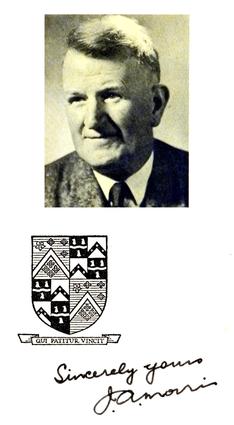
Joseph Acton Morris
was a geographer and educator, born in Lancashire in 1901.

He wrote a great many textbooks, which were popular at the time, and published by Hodder.

He was known as 'Jammy' to students (because of his initials perhaps rather the fact that he was really lucky...)

He was another (quite rare) President with a strong teaching background, along with a great interest in fieldwork, and he was associated with Latymer School, Edmonton, Greater London.

His Presidential Address was referenced two years later by E. C. Marchant, where he talked about the work that he had done. E. C. Marchant was also a teacher before taking up the role of President. More on him at the time...
He was Head of Geography at Latymer before becoming Deputy Head in 1952.
He wrote, or co-wrote 15 textbooks.

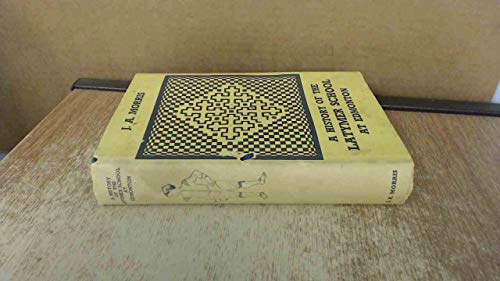
He also wrote the official history of the Latymer School at Edmonton where he taught for 36 years.
He also, another link with my own GA involvement, served on the GA's Secondary Schools Section Committee (now the SPC, which I served on for 14 years on and off) for 19 years, acting as Chairman of the committee from 1953 to 1966. This means he would also have helped support the development of the subject in schools, through the influence of the SPC. Membership, and holding the position of Chair of this committee has also taken people like Alan Kinder to other roles within the GA of course.

In 1934, he read a paper to the Congrès Internationale de Géographie at Warsaw on the Wordsworthian idea of the beneficial influence of close contact with nature - something which is very much relevant to these times of course.

He also served on the GA's Executive committee from 1953 to 1975.
When he was appointed as President:
The appointment of a teacher was apparently "a matter of great rejoicing to the secondary school teacher membership" for it was a long time since a teacher had been President.

His Presidential Address, given in 1966 was called "Reality in Geographical Education".
He starts by referencing A. J. Herbertson, one of the greats...


This is an excellent read, and will get a separate blog post to itself. 

Here's a sample quote, where he talks about the fact that engagement is not enough... and sets out the scheme of work he devised where each lesson a member of the group got 'killed off' in an appropriate way...


I shall also be referencing this address in 2022 as well, as it helped formulate some of my ideas for my own GA Presidential theme.
According to his Wikipedia entry:

His appointment was welcomed by the large body of secondary school teachers within the association's membership and in his presidential address he called for increased resources to teach geography in schools and an emphasis on practical field trips so that children could understand that, as his obituary writers in Geography put it, "geography is reality and reality geography".


Morris was made an Honorary member of the GA in 1981, the GA's highest honour.

He contributed to an important report which was published the year after his Presidency.

“Geography in the Sixth Form: AN INTERIM REPORT OF THE SIXTH-FORM AND UNIVERSITY STANDING COMMITTEE OF THE GEOGRAPHICAL ASSOCIATION", on which he served. This was a significant time too, with the raising of the school leaving age and a greater emphasis on post-16 education.

His obituary, published in 1988 in 'Geography', paid tribute to his work and referenced his Presidential Address.


It described him as an "avuncular, courteous gentleman with the twinkling eyes and cherubic smile, who always looked so bright and polished".

Would be lovely to try to get some more images and memories of him. 
Sadly, most schools are now closed so my previous route of contacting archivists has been curtailed.
Emma Halstead from Latymer has been very helpful (an extra blog post in preparation)

References

Wikipedia
https://en.wikipedia.org/wiki/Joseph_Acton_Morris - a rare page now for a President - some useful detail here.

He contributed to this report:
“Geography in the Sixth Form: AN INTERIM REPORT OF THE SIXTH-FORM AND UNIVERSITY STANDING COMMITTEE OF THE GEOGRAPHICAL ASSOCIATION.” Geography, vol. 51, no. 4, 1966, pp. 318–321. JSTOR, www.jstor.org/stable/40566157.
Wikipedia lists an impressive number of publications which he contributed to:

Selected publications:
A contour dictionary. A short text-book on contour reading with map exercises. George G. Harrap & Co., London, 1945. (multiple later editions)
The land from the air: A photographic geography. George G. Harrap & Co., London, 1958. (With G.H. Dury)
The British Isles in map and diagram. Thomas Nelson & Sons, London, 1966. (With Dick Gerald Luxon)
Landscape and mapcraft: From field study to map. Collins Clear-Type Press, London and Glasgow, 1968.
London and the London region. Thomas Nelson & Sons, 1968. (Nelsons Geography Studies)

plus a whole series of Sketch Map Histories, co-written with Irene Richards.

He wrote the history of the Latymer School at Edmonton where he taught for 36 years.
Morris, J.A. (1975) A history of the Latymer School at Edmonton. Edmonton: Governors of the Latymer Foundation

From the Internet Archive

Image of flap of cover of Latymer book.
He was a master of the school from 1926-1962.


Obituary
Robson, Rosemary, and Lawrence Elliott. “The Geographical Association.” Geography, vol. 73, no. 1, 1988, pp. 76–78. JSTOR, www.jstor.org/stable/40571348.

Books available on the Internet Archive


Friday, 21 February 2020

1950s - Committees were busy, and plenty of other changes

Balchin's Centenary volume describes some of the work of the GAs Phase Committees during the 1950s, a time when financial pressures forced the GA to raise the annual subscription to a guinea from 1955.

  • Secondary Schools Committee published a new handbook in 1952, then turned to producing school atlases. It's chairman for 25 years, Mr. C B Thurston, stepped down apparently 'reluctantly' in 1953.
  • The Primary Schools Committee revised 'Geography in the Primary School' in 1953.
  • The Public and Preparatory Schools Committee opened its membership to women teachers in 1951.
  • The Training College Section organised a series of one day conferences to meet the criticism that 'much of the geography teaching in secondary modern schools was being undertaken by individuals without any geography training' (Balchin, p.43)
  • Visual Aids Section produced 'The Geography Room in the Secondary School' in 1954, and started to investigate the use of OS Map extracts with aerial photographs which were to become a feature of Geography exams for decades to come.
  • Two new committees were formed: Further Education (1953) and Field Studies (1954)
  • The Executive Committee was continuing discussions with the BBC about geography school programming. At this time, there was a feeling that changes were happening too quickly for textbooks to keep up and that radio and TV could help.
One particular way that the GA tried to keep teachers up to date with the pace of change in the modern world was a feature called 'This Changing World' which was introduced into the 'Geography' journal in 1954, edited by Leonard Sydney Suggate followed by G. J Butland when Suggate retired to New Zealand, as described in his blog post.

The 1950s also saw the passing of several former GA Presidents who have previously appeared on the blog:

  • Dr. Hugh Robert Mill in 1950 (who was closely associated with the GA from its founding)
  • James Fairgrieve in 1953 (over 40 years of service to the GA)
  • Dr O J R Howarth in 1954 (over 40 years of service to the GA)
  • Sir John Linton Myres in 1954

These led to the appointment of other GA Presidents to come to key roles: L Dudley Stamp, E G Bowen and W.G.V Balchin.

Finally, Balchin reminds us that the 1950s were a time when the country was recovering from WWII - rationing had ceased and rebuilding of bombed cities was underway. Membership climbed steadily and the GA was settled in its new home city of Sheffield.

The Annual Conferences were still being organised by the very efficient R. C Honeybone and Dr. J H Bird and attendance was close to 1000.
Professor Emeritus E G R Taylor reached the age of 80 in 1959, and funds were raised for an annual lecture in her name.


Image: early Handbook, on display in Solly St - image by Alan Parkinson

Margaret Mackintosh RIP

Updated post. Sad news at the end of last week from colleagues who have organised the Charney Conference over the years of the passing of Ma...