Showing posts with label Eugenics. Show all posts

Monday, 11 May 2020

Rachel Mary Fleming

Updated October 2025

Another in a succession of women who gave a great deal to the Association was Rachel Fleming. She was a great support to H J Fleure when the library and GA Offices moved to Aberystwyth and was his Assistant.

She was mentioned in Fleure's own entry on the blog as someone who supported his work and kept the library running smoothly at a time of great demand for its contents.
She did however get involved in some problematic work which is detailed later in this entry.


Update - October 2025

I was contacted by Vas who had located a letter for sale on eBay which was part of Aberystwyth's history.
The letter for sale was shown on the post and is included below:


It was sent in April 1921 to a Miss D M A Dickinson, who was it seems teaching at Rugby School, but had presumably paid for herself and a colleague to go on a GA organised trip to Guernsey of some kind, and is advising her to book boats and rooms for the trip.

It's lovely to see the handwriting of someone from over 100 years ago.


Miss Fleming is well known among teachers for her skill in using folk tales to impart a general knowledge of history and geography to children.

This sounds interesting.

Assistant to Professor H.J. Fleure at Aberystwyth, Miss R.M. Fleming, who had conducted research on 'half-castes' in Britain

This sounds... inappropriate... to modern geographers for certain... and very problematic. The link with eugenics is particularly troubling.


Aspinall, P. and Caballero, C. (2021) Rachel Fleming’s Anthropometric Study. The Mixed Museum.


Rachel Mary Fleming is one of the category of people who are often invisible even in institutional histories, one of those who do their work with quiet devotion.

Text from some source which has been added to the Wiki entry:

"The work of the Geographical Association is still expanding rapidly, and we are all, as usual, deeply indebted to Miss R. M. Fleming, who, though without any official connection with the College, gives endless time to students to help them with problems and difficulties. It is therefore a special pleasure to state that this has been a year of very marked personal success for Miss Fleming, whose work has so long merited greater recognition. Her papers to the British Association at Edinburgh have appeared, one in the  "Scottish Geographical Magazine " (Geography and Tradition), and one in "Man" (Sex and Growth Characters in delation to Race Study). 
The latter was the subject of an evening lecture by Miss Fleming at the Royal Anthropological Institute. 

In addition to this Miss Fleming's book, "Ancient Tales from Many Lands" (1922), has had a quite unusually good reception, and has sold very rapidly
I hope it may influence not only educational methods, but anthropological research as well. 

This book is still available in reprinted versions.

Miss Fleming adds in an appendix three essays in which she expounds her philosophy of the use of the folk-tale in education and the principles of selection. If any further indication were needed of the thought, wide reading, and experience which have been laid under contribution in the making of this book, it would be afforded by these essays.

Finally Miss Fleming has been invited to become one of the Secretaries of Section H (Anthropology) of the British Association. 

She has been President of the local branch of the Geographical Association during the current session.

Other publications

"The new geography". Times Educational supplement, 1920 - would be interesting to find this...

Fleming, Rachel M. 1933 A Study of Growth and Development: Observations in Successive Years on the Same Children. With a statistical analysis by W. J. Martin. Report to the Medical Research Council. London: is Majesty’s Stationary Office, Code No. 45-5-90

Thursday, 7 November 2019

1948: Professor Herbert John Fleure FRS


Last updated December 2023

This is another of the most long serving of the Geographical Association's Presidents, and whose work ensured its survival when it was fairly young.

We come next to Professor Herbert John Fleure - another of the great names who will be forever associated with the Geographical Association, and to whom is owed a great deal by the present day Association, but whose legacy is problematic because of some of the views he held at the time.

In compiling this blog, it is clear that there are several names who are intertwined with the DNA of the Association as it is now, and one of those is H. J. Fleure or HJF as he wrote on so many documents, articles, book reviews and other documentation throughout his long time at the GA.

By the time Fleure became President, he had been linked with the GA for many decades, acting as its librarian and holding other roles, including the compilation of the Annual Report as far back as 1920 in his role as Secretary.

The Annual Report in 1920, for example talked about the progress of the association. The 2020 Conference theme, chosen by Gill Miller, is "Geography really matters", and in 1920, H. J. Fleure was already onto Gill's idea of each teacher doing something to show that geography matters,  in this statement.

"The Report of the progress of the Association should encourage teachers all over the country to put an extra dose of enthusiastic interest into their exposition of Geography and their co-operation with other subjects for a more synthetic education..... [Geography] is a subject that the pupils can go on with, must go on with, all through their lives. It is the one subject which really tries to face the problem of the interpretation of our modern world. it is the most hopeful line of work towards a better understanding between the peoples of the world.... the opportunity and responsibility of teachers of Geography is a great one, and we are confident they are rising to it."

Fleure, in addition to being a long serving Secretary of the Association, was also the editor of 'Geography' for a time, amongst many other contributions that he made to the workings of the GA.
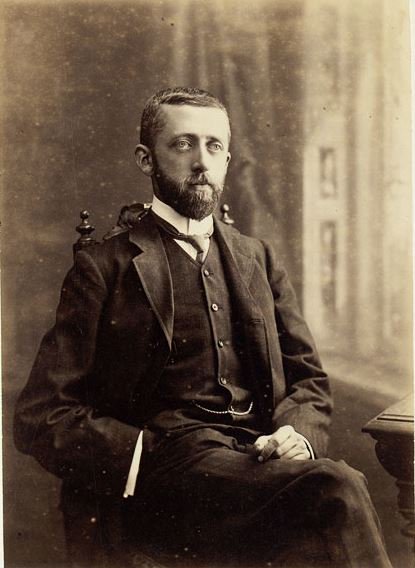
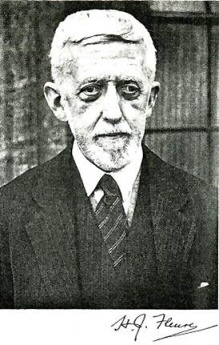
ImageHe was born in Guernsey in 1877.
He went to Aberystwyth University, and also studied in Zurich, Switzerland.
Fleure was an academic geographer for his lengthy career, and was associated with the Universities of Aberystwyth and Manchester in particular where he held posts which allowed him to support the development ot the GA as well.

His research in Wales is described here.

Fleure wanted to look at how place influenced people, and the way that geography affected identity


During his Presidential year, he did a great deal also for the Le Play Society. The Le Play society organised overseas tours as the earlier Touring Branch had done, and also held an annual conference. I also notice the address of the Secretary on the bill below.
I wonder if the Birlings at Birling Gap is still there, or has succumbed to the coastal erosion that has taken place there in recent decades particularly.

The Le Play Society continued after the end of the GA's own Touring Branch had to close.
Someone who is also associated with the Le Play Society and the GA is Frederick Soddy, in whose name grants are now provided for teachers to provide fieldwork opportunities for their students, for both the GA and the RGS.

Here is Fleure in 1927 - 2nd from the right on the Front Row

Source: https://www.llyfrgell.cymru/fileadmin/fileadmin/docs_gwefan/amdanom_ni/cylchgrawn_llgc/cgr_erth_XXXVrh1_2010_4.pdf

Fleure was awarded an Honorary Fellowship from the American Geographical Society in 1930, and its Daly Medal in 1939.
He received the Victoria Medal of the RGS in 1946, as have a few former Presidents of the GA. A precedent that I think is worth renewing ;)

Fleure was also one of only three geographers to have been elected as a Fellow of the Royal Society - bonus points if you can name the other two...

The Fleure Library is the name of the GA's archive of materials, and it has been quite mobile, and found several homes, as has been described in the blog. Some elements of the library are now on display in the Patrick Bailey room at Solly Street (a room named after another former GA President)

As I blogged about previously, back in 1917 Fleure took the library with him when the GA relocated to Aberystwyth and he was able to secure premises in the town with appropriate space for the archive.


https://royalsocietypublishing.org/doi/pdf/10.1098/rsbm.1970.0009

He later relocated to the University of Manchester, where he had a Professorship, and the library followed him there, until 1947.
Here is an announcement from 'Geography' in 1947


As one can imagine, as with many other Geographers of the time, we have to look at his work through the lens of history.
According to this piece, Fleure made his name originally through writing about Race, although he was not a racist, and spoke out against those who were.

I wonder what this publication suggested were the particular problems... answers on a carte postale.

When he retired from the Professorship at Manchester, this piece was written about his time at the GA.
https://www.nature.com/articles/153489c0
It describes his major work called 'The Corridors of Time' which ran to several volumes.
A Natural History of Man in Britain Hardcover  by
Fleure also wrote several books on the landscape of the UK and the influence of man, and worked with Harold Peake on a series of archaeological books.

No scholar in Great Britain has done more to justify the claims of human geography, closely linked with both the natural sciences and the humanities but pursuing its own distinct objectives and devising its own technique and methods, to be one of the most illuminating approaches to the study of civilisation and its problems.
From a notice in 'Nature' in 1944

Fleure also wrote an excellent 33 page long account of the first 60 years of the GA and Education, which I have referred to several times during the production of this blog.
This is proper scholarship though, compared to my scribblings on this blog.

Updated May 2021
Fleure retired in 1944 and travelled in the USA. This was ahead of him taking up the Presidency.

Source:
“GEOGRAPHICAL ASSOCIATION. ANNUAL REPORT FOR 1944.” Geography, vol. 30, no. 1, 1945, pp. 18–19. JSTOR, www.jstor.org/stable/40562425. Accessed 15 May 2021.

Fleure died at the age of 92, having a lived a life full of geography. He finally had his own obituary, after the very many that he had written for other GA Presidents before that.

Addendum
While communicating with Ricky Buck at the GA recently, he told me that he had been in touch with an academic who was researching the life of H J Fleure.
She is exploring his life, and I hope to perhaps find out more about H. J. Fleure through chatting to her.

Another of Fleure's books, with M. Davis.
Related image

References

Matless, David. “Nature, the Modern and the Mystic: Tales from Early Twentieth Century Geography.” Transactions of the Institute of British Geographers, vol. 16, no. 3, 1991, pp. 272–286. JSTOR, www.jstor.org/stable/622948.


I have edited the page to add Fleure's Presidency to the page, as I have with all those who didn't have this information.

Fleure, H.J. (1953) "Sixty years of geography and education", Geography, vol.38, pp.231-264

https://royalsocietypublishing.org/doi/pdf/10.1098/rsbm.1970.0009 - biography from Royal Society pages.

Fleure, H. J. “GEOGRAPHY AND THE SCIENTIFIC MOVEMENT.” Geography, vol. 22, no. 3, 1937, pp. 178–188. JSTOR, www.jstor.org/stable/40560279.

Mentioned in: https://www.geography.org.uk/write/MediaUploads/Journals/Boardman_McPartland_Building_on_the_foundations.pdf

Invited to speak at Edinburgh University: https://www.ed.ac.uk/geosciences/about/history/school-history

His part in the founding of the IBG: Stoddart, D. R. “Progress in Geography: The Record of the I. B. G.” Transactions of the Institute of British Geographers, vol. 8, no. 1, 1983, pp. 1–13. JSTOR, www.jstor.org/stable/622270.
Obituary: https://www.therai.org.uk/archives-and-manuscripts/obituaries/herbert-john-fleure - written by another former President: E G Bowen (or EGB as he was known)

Fleure's account of the 60 years of the GA on JSTOR. I've mined this for lots of details on other Presidents as well, and they will appear in the next few months.

Fleure, H. J. “NEW ENGLAND-AND OLD.” Geography, vol. 31, no. 3, 1946, pp. 105–110. JSTOR, www.jstor.org/stable/40563882.
https://www.llyfrgell.cymru/fileadmin/fileadmin/docs_gwefan/amdanom_ni/cylchgrawn_llgc/cgr_erth_XXXVrh1_2010_4.pdf

http://www.geocurrents.info/geographical-thought/racial-classification-h-j-fleure-and-the-decline-of-geography

As always, if anyone has further information relating to H. J. Fleure and his time at the GA. he is one of the most influential figures in the history of the Association. Please let me know so that I can expand on this post.
 I am sure there is plenty more to say about him. 

Image - books from the Fleure library

Added August 2019

Fleure is also mentioned in Crone's chronology of Geography in the 20th Century.

Reference
Crone, G. R. “British Geography in the Twentieth Century.” The Geographical Journal, vol. 130, no. 2, 1964, pp. 197–220. JSTOR, www.jstor.org/stable/1794582.

Updated November 2019

Thanks to Jamie Woodward from the University of Manchester. He references a document which relates to Fleure's work at the University.


Also thanks for the lead to this article by another former GA president E.G.Bowen, who is yet to feature.


https://books.google.co.uk/books?id=N81mDwAAQBAJ&lpg=PT67&ots=RtCfAEEQvA&dq=charles%20close%20OS%20geographer&pg=PT79#v=onepage&q=charles%20close%20OS%20geographer&f=false

Updated March 2020

In Balchin's Centenary volume, he describes how, when Fleure reached the age of 85 in 1962, he was presented with a book of congratulatory messages and good wishes from several hundred members, together with a portrait in oils, which hung on the wall at Fulwood Road. I wonder where that is now.
At this age, he was still working as Chairman of the GA Council.

Updated July 2022

As with other Presidents I have been adding any details that emerge with respect to controversial views helf by Presidents, alongside the EDI work of the GA.
H J Fleure was a proponent of eugenics, and this needs to be remembered alongside his other achievements. Many of his books have elements of this racist theory within them.

A new image is found in a book of essays to mark the centenary of the department, which was edited by another former GA President: 'EGB' or Emrys Bowen.

This has a new image to me of Fleure.

The book was dedicated to H J Fleure.
It provides a summary of his time at Aberystwyth as well.


There is also mention of how Halford J MacKinder asked Fleure to be the Honorary Secretary of the GA, which resulted in the GA moving to Aberystwyth.


There is mention later in the foreword of the essay collection of Fleure's research:


Updated August 2023

A few tweaks and amendments.


Last updated Decembr 2023

An appreciation by Alice Garnett for the Royal Society.

Fleure was elected as a member in 1936.


Garnett, Alice. “Herbert John Fleure. 1877-1969.” Biographical Memoirs of Fellows of the Royal Society, vol. 16, 1970, pp. 253–78. JSTOR, http://www.jstor.org/stable/769590. Accessed 19 Dec. 2023.

From this article:

The last occasion when he addressed a formal gathering of geographers was in his ninety-first year. Then, from his home in Surrey, 'cocooned'-as his family described him-in rugs and shawls, in a wheel chair, he was transported to participate in 'The President's Evening' in the course of the Geographical Association's Annual Conference held at the London School of Economics.

It was a raw, bitterly cold night early in January that must have daunted many far younger than himself but for Fleure this was an occasion that come what may, no matter how 'hard the going' might be-he refused to miss, as it was designed also to mark the retirement of his successor in office after twenty-one years of service since his own day.

Unable himself to read close print, his son had read to him-at his request-every detail of the Association's Balance Sheet and Statement of Accounts presented at a recently held Annual Meeting. Fleure astonished officers whom he met that evening by the searching questions he then asked, seeking explanations for numerous small changes and variations in financial procedures, in what would, at any age, have been a prodigious feat of memory.

Before a large audience - and inevitably without the help of notes - he then delivered without faltering, a most memorable and moving speech, reiterating in this, his last public utterance, his plea through the teaching of geography, for toleration and mutual understanding amongst peoples.


Eighteen months later, he died peacefully on 1 July 1969 at his home in his ninety-second year, after an unexpected and short attack of bronchitis. Amongst geographers, he was a leader whose ideals, wisdom and strength of purpose can hardly be surpassed.

Presidential Address:
 1949. Geography and evolution. Geography, 34, 1-9. Presidential

Update December 2023
A series of tweets on the Relief Model of Wales. 

Wednesday, 30 October 2019

1947: Sir Alexander Morris Carr-Saunders

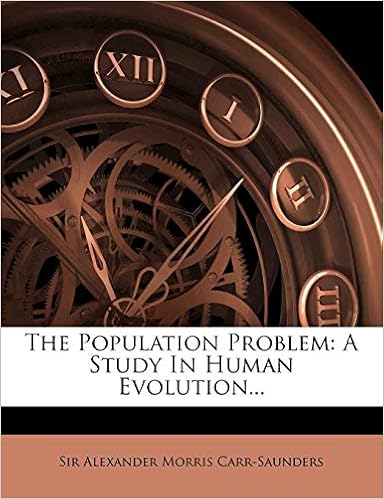
Clack and white portrait photograph of an elderly Alexander Carr-SaundersLast updated November 2023

Sir Alexander Carr-Saunders was another Economist and served as the former Head of the LSE. He is also described as a Sociologist and academic administrator. A building at LSE is named after him.

It is not surprising to see some connections between the LSE and the GA given their long-term hosting of the GA conferences, even into the 1970s.

He was born in Reigate in 1886 - the son of an underwriter - and was educated at Eton College. A few GA Presidents had that connection.

A British Academy biography describes the bullying he endured at Eton, which he described as "a convict ship"
He said he could learn nothing during term time, and left the school at 16, when he visited Paris and the Alps, and fell in love with the mountains there.

Perhaps this was the start of his love for Geography, along with mountaineering.


Carr-Saunders went to the University of Oxford, studing zoology initially.

He served in France and Egypt during the First World War as well - one of a generation of GA Presidents around the first half of the century to have experienced conflict and had their world view shaped by this.

On his return, he studied once again at Oxford, and during this time, he developed some ideas around Eugenics.
He was offered a Professorship in Social Science at the University of Liverpool, which allowed him to develop his thinking.
In 1943 he joined the Asquith Commission on Higher Education in the Colonies, and travelled widely during this time, having never previously travelled much at all.
He helped set up a lot of work in Colonial Universities through the next few decades and this is where his contribution to Geographical education began to flourish, and perhaps his potential as a GA President to unfold.

From his Wikipedia extract: shared under CC license

He participated in one of the first Oxford Expeditions to Spitsbergen in the Arctic in 1921 as main scientists, together with Julian Huxley. 

During the expedition he distilled his early ideas on population dynamics and summarized them in a book called The Population Problem. The book used a neo-Malthusian argument plus Galton's eugenics as the theoretical framework for a quantitative analysis of population dynamics. 

The population problem arose - according to Carr-Saunders' demographic analysis - from the fact of having high reproductive rates among what were described as "primitive people with low mental and physical qualities". Over-population of these lower races endangered the standard of living of races bearing higher qualities. Unlike Malthus, he thought that industrial productivity and not food was the main limiting factor in human populations.

Some of the views were of course of their time. Hans Rosling may have had a few alternative thoughts.

In 1921, as mentioned above he went to Spitsbergen on an expedition - one of several GA Presidents to have visited this place - perhaps I need to plan a visit during my Presidency. 
Is there a GA Branch in Longyearbyen?

Carr-Saunders served as Director of the LSE from 1937 to 1957.
His early publications used demographic data in a way that hadn't been done before.
He was knighted in 1946/7, around the time he served as GA President.
 

His Presidential lecture was on the theme of the teaching of Geography in Colonial Colleges, and started with him explaining how he was not a geographer - an unusual opening gambit for a President, although not unprecedented...


The address was published in 1948.

He founded the British Sociological Society in 1951.

This image from the LSE library was taken in Cumbria in 1964, to which Carr Saunders retired.
He is pictured with his wife Teresa in the middle, and Julian Huxley on the left.


He died in 1966 in Cumbria.
One obituary gives the actual circumstances which sound characteristic of him from what I have read...

He died on the night of 6 October 1966 after trying, at the age of eighty, to push his car uphill following a breakdown at Thirlmere in his beloved Lake District.

Here's a description of him from Professor Maurice Freedman:


Source: https://journals.sagepub.com/doi/abs/10.1177/030639686700800306?journalCode=raca

His GA obituary was written by fellow and former GA President Michael Wise.

He received honorary doctorates from the Universities of Glasgow, Columbia, Natal, Dublin, Liverpool, Cambridge, Malaya, Grenoble and London, and was made honorary fellow of Peterhouse, Cambridge, the University College of East Africa, and LSE.

References

https://en.wikipedia.org/wiki/Alexander_Carr-Saunders

I added reference to his GA Presidency to the Wikipedia page, as I have with all those who have Wikipedia pages.

https://www.britannica.com/biography/Alexander-Carr-Saunders - this describes him as a demographer ,and focusses on his work in the area of population - he also influenced Charles Elton, a biologist https://www.britannica.com/biography/Charles-Elton#ref5660

Obituary: https://www.tandfonline.com/doi/abs/10.1080/00324728.1967.10409969?journalCode=rpst20

Presidential Address
Carr-Saunders, Alexander. “THE TEACHING OF GEOGRAPHY IN COLONIAL COLLEGES: ADDRESS TO THE GEOGRAPHICAL ASSOCIATION.” Geography, vol. 33, no. 1, 1948, pp. 1–7. JSTOR, www.jstor.org/stable/40562655.
Obituary: Wise, M. J. “Obituary: SIR ALEXANDER CARR-SAUNDERS.” Geography, vol. 52, no. 1, 1967, pp. 81–81. JSTOR, www.jstor.org/stable/40566219.

Carr-Saunders as one of the original 'sociologists': https://journals.sagepub.com/doi/abs/10.1111/j.1467-954X.2008.00805.x?journalCode=sora

https://oxfordindex.oup.com/view/10.1093/oi/authority.20110803100443150

Image: https://www.npg.org.uk/collections/search/portrait/mw100157/Sir-Alexander-Morris-Carr-Saunders
Some further images of him: https://www.npg.org.uk/collections/search/person/mp72409/sir-alexander-morris-carr-saunders
Images from Flickr library of LSE: https://www.flickr.com/photos/lselibrary/with/3926497416/
CC licensed.

Biography from the British Academy: https://www.thebritishacademy.ac.uk/pubs/proc/files/53p379.pdf

His most famous book is still available to purchase from all good bookshops. It can also be accessed via the Internet Archive: https://archive.org/details/populationproblem00carr


If anyone has further information on Carr-Saunders, please get in touch.

Updated January - August 2021

There are remarkably few early videos or audio of GA Presidents on YouTube since some very early ones you may remember.
Here's an extract from a radio programme where he described his strong faith in God.


Thanks to Brendan Conway for this additional information on a link to the modern day LSE.

National Portrait Gallery:

https://www.npg.org.uk/collections/search/portrait/mw88743/Sir-Alexander-Morris-Carr-Saunders 

Carr-Saunders Hall - a dining space for 160 students

https://blogs.lse.ac.uk/lsehistory/2017/09/05/carr-saunders-hall-living-in-bloomsbury/

Carr-Saunders served as Director of LSE from 1937-1957 and had arranged the School’s evacuation to Cambridge prior to the outbreak of war, ensuring that the School was in touch with its London base and could continue teaching across all of its subject areas.

A mention in the Alpine Journal (PDF download)


On his personality:

The piece also outlines his impressive mountaineering achievements and plenty of anecdotes about his experiences, including ascents of Mont Blanc and lots of the nearby peaks.


I like this quote on how the scenery 'attracted and occupied his keen and sensitive mind'.

Updated August 2023

He contributed a chapter to this book, from the Wellcome collection, and stamped as being in the Eugenics Society library.


First published in 1935

Updated November 2023

On the opening of Carr Saunders Hall - with the menu that was served

He worked in Eugenics...
 
Details of his Galton Medal Award in 1946, from the Eugenics Society.


Tuesday, 6 August 2019

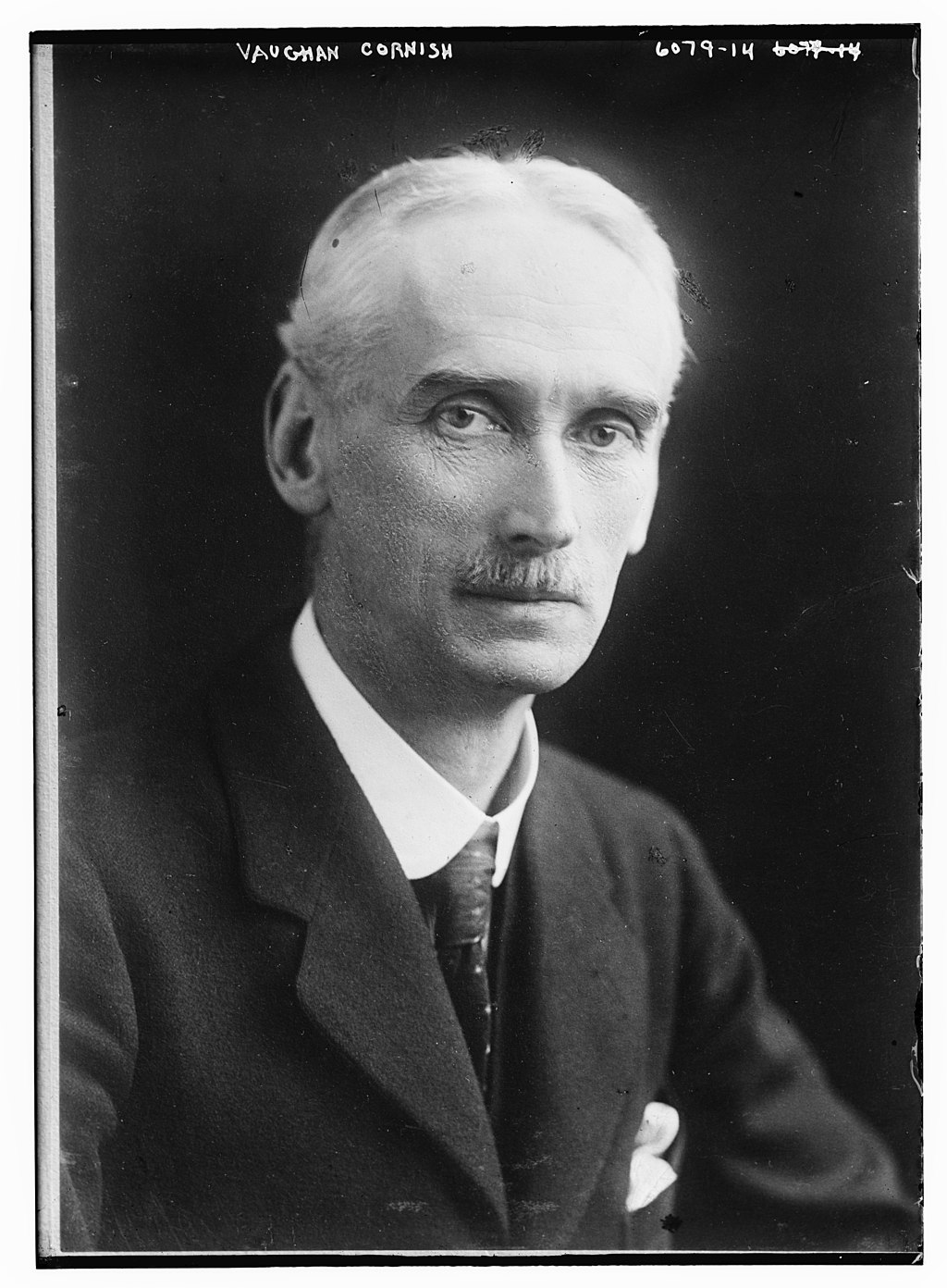
1928: Dr Vaughan Cornish

Last updated October 2023

1928 saw another President with a notable geographical pedigree take office.

Dr. Vaughan Cornish is someone I have been aware of for many years, and who has been described as one of the most prolific geographers of all time.

He was born in Debenham in Suffolk in December 1862, the third son of a vicar.

He was unusual when compared to many other of the early GA Presidents in that he never held a university post of any kind. This has remained relatively rare.

He was later selected by Carl Sauer as one of six geographers whose readings would provide a 'truly liberal geographic education', and was a worker of wide interests and versatility
Andrew Goudie (also GA President)


The other reason I am familiar with Cornish is through his association with Sidmouth, a town I have visited regularly for many years. He is buried in Salcombe Regis, just outside of the town.

When I was working for the Geographical Association, I was interested to see what was down in the GA collections and archives in the basement. In my lunch hour, I used to poke around in the filing cabinets partly to see what potential there was to unlock value in the objects the GA holds, but also to seek inspiration for my own projects. I came across some lantern slides, which I don't think were from the original collections from the original founding of the Association, as they were too new, but nonetheless interesting. One of the things I did find in one of the rooms was a series of large framed prints.
These were beautiful, and featured a range of subjects, including wave forms. They had lovely hand written captions and were signed by Cornish.


Image: Alan Parkinson - shared under CC license

Waves were one of the areas that Cornish had explored in detail. He studied waves, wave forms, and processes.
He was also the first British geographer to study dune formation and form, including desert dunes and sand dunes. It was this that drew him to the attention of Andrew Goudie (a future GA President).

In the late 1890s and the start of the 1900s, Cornish was active in delivering lectures.

These are described in a large section of Emily Hayes' PhD - this has been blogged about previously.

There were also some prints of images of the Kingston Earthquake, which I knew that Cornish had experienced in Jamaica in 1907. This was one of the journeys that he took with his wife Ellen.

I have a few of his books, including 'The Beauties of Scenery'. This describes his ideas on the aesthetics of landscape, and the involvement of people.
My copy is pictured here, a hardback 3rd edition from 1944. The book has the subtitle 'A geographical survey', and was started in 1920, following Francis Younghusband's Presidential Address to the RGS, when he said that it was the duty of geographers to undertake the analytical study of beauty in scenery'.

Here's a list from his Wikipedia entry - I have copies of the books in bold. The GA holds copies of some others in their archive / Fleure Library.
  • The Panama Canal and its Makers (1909).
  • Waves of the Sea and other Water Waves (1910).
  • The Travels of Ellen Cornish: being the Memoir of a Pilgrim of Science (1913).
  • The Waves of Sand and Snow (1914).
  • Naval and Military Geography (1916).
  • Imperial Military Geography (1920).
  • A Geography of Imperial Defence (1922).
  • The Great Capitals (1923).
  • National Parks and the Heritage of Scenery (1930).
  • The Poetic Impression of Natural Scenery (1931).
  • The Scenery of England (1932).
  • Borderlands of Language in Europe (1933).
  • Ocean Waves and Kindred Geophysical Phenomena (1934).
  • Scenery and the Sense of Sight (1935).
  • The Preservation of our Scenery (1937).
  • The Farm upon the Cliff (1939).
  • The Scenery of Sidmouth (1940).
  • Historic Thorn Trees in the British Isles (1941).
  • A Family of Devon (1942).
  • The Beauties of Scenery (1943).
  • The Photography of Scenery (1946).
  • Geographical Essays (1946).
  • The Churchyard Yew and Immortality (1946).
  • Kestell, Clapp and Cornish (1947).
  • Sketches of Scenery in England and Abroad (1949).
Cornish's images were widely exhibited too - one of the images that I came across had this label on the back:


Image: Alan Parkinson - shared under CC license

Cornish also studied the aesthetics of landscape, and the work on the beauty of landscape is one of the areas that he is best known for.
A biography and appreciation of Cornish was written by a future GA President (who will appear in a future post) Andrew Goudie, and can be read on JSTOR (a free account can be created for those who want to read it).


Cornish's acceptance of the invitation to be President was announced in 'Geography' in 1927.


Cornish's Presidential Address in 1928 was on the theme of Scenery of course, and was called 'Harmonies of Scenery: An outline of Aesthetic Geography'. It is beautifully written and contains a great deal of sense on how the landscape could be viewed.


Cornish laid out his theory of aesthetics, which started with the Scenery of Civilisation, drawing on his childhood in Debenham, Suffolk, in a parish which was "Nature adapted to Man's needs and flourishing under his care".

"Rural England owes much of its Arcadian charm to the fact that form and movement and colour are a decorative scheme which harmonises with the quiet continuity of the least changing of industrial pursuits. It is a country of gentle undulations where rivers flow quietly in winding curves, a land well timbered by deciduous trees of rounded form, of fields divided by a bushy fence, all in a climate of soft skies, where the song of birds is heard throughout the year...."

However, this Arcadia is easily broken...

"...by buildings of harsh form or staring colour, or by clatter of mechanical noise..."

In 1930, Cornish was still active in the GA, and was involved in some work around potential plans for National Parks. 
At this time, he was a Director of Technical Education in Hampshire, but resigned in 1933 to concentrate on his work.

He gave his ownl land, near Salcombe to the National Trust.


As mentioned earlier, Cornish was also a great proponent of National Parks. These finally came into being after an Act of 1949, and the Peak District was the first in 1951. In 1930, Cornish proposed his own National Park areas, some of which eventually became National Parks. He was well ahead of the game with Broadland for example.


His support for coastal protection was also well known.
This was outlined in a piece in 'Geography' at the time.


I came across a blog post from his home village of Debenham, which referenced a number of obituaries printed in The Times.

Obituary - Death of Dr. Vaughan Cornish (from The Times, 3rd May 1948)

We regret to record the death of Dr. Vaughan Cornish, which occurred at Camberley on Saturday at the age of 85 years. Dr. Cornish was a member of a well-known local family whose association with the district began in 1792. He was a great traveller and geographer and was particularly proud of his connection with Salcombe Regis. When the Sidmouth Council purchased the greater part of the land on the eastern side of Salcombe valley to prevent the establishment of a holiday camp there, Dr. Cornish gave a good deal of his land on the western side of the valley to the National Trust in order that its natural beauty should be preserved for all time.

He was a great lover of natural beauty and in spite of his wanderings it was always to Salcombe Regis he returned for refreshment and he never tired of singing its praises. With his first wife he was in Jamaica at the time of the great earthquake there and has broadcast about his experiences at the time.

During recent years Dr. Cornish has published many books, chief among them being "The Scenery of Sidmouth" which is a classic in the description of the local land- and seascape. His most recent book "Kestell, Clapp and Cornish," was lately reviewed in these columns, and as a great deal of it is autobiographical we commend it to our readers at this time.

Dr. Vaughan Cornish was buried at Salcombe Regis yesterday afternoon.


A second obituary was also published.

Obituary - Death of Dr. Vaughan Cornish (from The Sidmouth Observer, 5th May 1948)

One of Britain's best-known geographers, Dr. Vaughan Cornish, D.Sc., F.R.G.S, of "Inglewood," Gordon-road, Camberley, died on Saturday at the age of 85, in a Camberley nursing home. Dr. Cornish, who is survived by his widow, was famous among geographers for his studies of land and water waves. In later years he gave much of his time to the appreciation and preservation of the natural beauties of Britain. He had lived in Camberley since 1913.

He was a student of geography in all its aspects, and he was an author of ability who illustrated his works with his own sketches and photographs.

Dr. Cornish was born at Debenham Vicarage, Suffolk and was educated at St. Paul's School and at Victoria University, Manchester. He graduated with honours in chemistry in 1888 and later took the degree of D.Sc. He became Director of Technical Education to the Hampshire County Council, but after his marriage he entered the field of geographical scientific research. In 1900 the Royal Geographical Society presented him with the Gill Memorial for his research work into all types of waves, both on land and sea, on snow and sand and natural materials.

A world tour by Mr. and Mrs. Cornish in 1903 was the occasion for a great deal of important scientific work, and was followed by visits to many parts of the world. They were injured at Kingston, Jamaica, in January, 1907, when an earthquake wrecked the city and killed many of its inhabitants. A few months later they returned to Kingston to study earthquake effects.

During the first world war Dr. Cornish lectured to naval and military officers on strategic geography and subsequently published a number of books. He remained an active author until recently.

The funeral took place on Tuesday at Salcombe, Devon.


The GA obituary can be viewed from the link below.


T. C. W. “OBITUARY: DR. VAUGHAN CORNISH.” Geography, vol. 33, no. 3, 1948, pp. 149–150. JSTOR, www.jstor.org/stable/40564419.

One final point, from Andrew Goudie's piece is that he described himself in Who's Who as a geographer.

References

Source: Goudie, Andrew. “Vaughan Cornish: Geographer (With a Bibliography of His Published Works).” Transactions of the Institute of British Geographers, no. 55, 1972, pp. 1–16. JSTOR, JSTOR, www.jstor.org/stable/621720. 


From his Wikipedia page
Source: https://en.wikipedia.org/wiki/Vaughan_Cornish
Also provided the image of Vaughan Cornish.

I amended the entry to show that he was the GA President. I think he would have appreciated that.

Cornish, Vaughan. “ON RHYTHMIC MOTION IN RIVERS. A STUDY IN SCENERY.” The Geographical Teacher, vol. 13, no. 4, 1926, pp. 276–284. JSTOR, www.jstor.org/stable/40556129.
Emily Hayes: 'Geographical light: the magic lantern, the reform of the Royal Geographical Society and the professionalisation of geography c.1885-1894
https://www.sciencedirect.com/science/article/pii/S0305748817300427

Thesis:
https://ore.exeter.ac.uk/repository/handle/10871/23096

Matless, David. “Nature, the Modern and the Mystic: Tales from Early Twentieth Century Geography.” Transactions of the Institute of British Geographers, vol. 16, no. 3, 1991, pp. 272–286.

JSTOR, www.jstor.org/stable/622948

Cornish, Vaughan. “NATIONAL PARKS-THE CLAIM OF THE COAST.” Geography, vol. 15, no. 5, 1930, pp. 384–387. JSTOR, www.jstor.org/stable/40559155.

Goudie, Andrew. “Vaughan Cornish: Geographer (With a Bibliography of His Published Works).” Transactions of the Institute of British Geographers, no. 55, 1972, pp. 1–16. JSTOR, www.jstor.org/stable/621720.


If anyone has further information on the contributions made by Vaughan Cornish to the Association, please get in touch.

Updated August 2021
He took many lantern slides and we have found some in the 'Geographer's Gaze' project.

While searching some images of these I came across this paper by Emily Hayes, who I had previously been in touch with.

It describes Cornish as a eugenicist geographer and landscape heritage activist.
Here is Cornish writing on the Geography of eugenics. An address given in Toronto in 1924, before he became the President of the GA.
Klaus Dodds has also written about Cornish and eugenics.

The Debenham parish heritage site here provides a great deal of further family information on Vaughan Cornish.

From the New York Times - Monday May 3rd 1948

Updated July 2022
There are some of Cornish's writings and views which are problematic and link to ideas of eugenics - he is not alone in those amongst GA Presidents of the early 20th Century.


Emily Hayes, who features elsewhere on the blog, has written about Cornish.

Updated August 2023

The Public Domain Review article here has a link to his work on waves, and also an embedded copy of the books he wrote. It focusses on his work as a kumatologist: a term he coined for someone who studies waves.

Walking along the Devon coast at low tide in the autumn of 1895, geographer Vaughan Cornish (1862–1948) watched two sets of waves interact on the shore. As one set rippled across the flat strand, the other rounded a shoal and broke onto the beach. After colliding, each set then continued on its separate path, which brought to his mind how waves of light can pass through each other unaffected. Cornish’s casual association, between the behavior of light and water, speaks to how immersed he and his contemporaries were in a world of invisible waves.

American geographer Carl O. Sauer considered Cornish one of but four predecessors who could serve as a master for twentieth-century geographers.

Liberated from the need to work by his wife Ellen’s inheritance, the couple traveled around the world studying Earth’s variegated waveforms. Experiencing a catastrophic earthquake together in Kingston, Jamaica in 1907, they saw a familiar pattern: uniformitarian agency operating across crests and troughs. The pair subsequently traveled to the Panama Canal to understand waves in the volcanic bedrock, and in 1913, after Ellen’s death from cancer, Cornish penned a tribute to her scientific companionship: The Travels of Ellen Cornish. Being the Memoir of a Pilgrim of Science.


Check out Robert MacFarlane's 'The Wild Places' for a mention as well. 

I'll finish with a quote from Cornish on waves...

Most of us have felt the fascination of the wave. 
The waves of the sea, which are the prototype of all the phenomena which we now call waves, are perhaps the most fascinating of all. Great as is the beauty of their form, the mystery of their motion is the greater charm. For while they move they live and have a being, which, like our own, is but momentarily associated with the matter of which they are formed. The wave preserves its individuality, it’s recognisable through not unchanging form, its energy, party active, partly in reserve, whilst its material substance is constantly rejected and renewed. Of all manifestations of the inorganic world it is most like a living being. Yet when we watch it to its end we find none of the sad accompaniments of the exhaustion of life. It is at its most beautiful at the last, as it culminates to its fall and breaks in seething form.

From 'The Guardian'


I also found reference to his work on Section E of the BAAS


Source:
Beaver, S. H. “Geography in the British Association for the Advancement of Science.” The Geographical Journal, vol. 148, no. 2, 1982, pp. 173–81. JSTOR, https://doi.org/10.2307/633769. Accessed 24 Aug. 2023.

Updated October 2023

He undertook to preserve the land around Salcombe Hill (1937)


He features in a book on Pioneers of the Jurassic Coast


A book on the Devon Cornishes....


An article on Vaughan and his two brothers:


I perhaps need to get here too:


Updated November 2023

Cornish travelled with his wife Ellen. He wrote about their travels in 1913. She died in 1911.


Journal of the Royal Society of Arts, vol. 61, no. 3141, 1913, pp. 297–297. JSTOR, http://www.jstor.org/stable/41340507. Accessed 1 Nov. 2023.
Margaret Mackintosh RIP

Updated post. Sad news at the end of last week from colleagues who have organised the Charney Conference over the years of the passing of Ma...