Showing posts with label Regional Geography. Show all posts

Wednesday, 9 October 2019

The GA and the Second World War (cont.)

Rex Walford's book has a chapter exploring the 1940s and 1950s.
He explains how membership dropped during WWII as teachers enrolled in the forces, but publications and conference kept going, with Mackinder still active in his 80s. This was a period when the nature of the subject, and the different elements were much discussed. Was it a science or a humanity?
During the War, there was much preparation for post-war period and reconstruction.
There was also disruption from 1930 onwards because of evalucation of children from the London area, and other industrial cities which were potentially targets.

1940: The GA postponed the Annual Conference scheduled to be held in London in January. The Conference was held in March 1940 in Blackpool. In December the High School of Commerce in Manchester, containing the GA’s Library and Offices, was saved from an air raid fire by the courage of the caretaker, Mr. Sim, who brought the blaze to a halt by working a hose for several hours. The Land Utilisation Survey, used by the County War Agricultural Executive Committees charged with the task of increasing food production, lost many valuable records in a London air raid. 

The 1944 Education Act was one part of the post-war changes that affected geography teaching.
It was led by Rab Butler, and introduced the 11+ and a tripartite system promising "secondary education for all" but in different institutions depending on 'ability'.

This produced a number of different potential geography 'curricula' to prepare for. There was also a focus on Primary geography, and textbooks were produced for this age range, often involving quite stereotypical stories of young people such as "Bombo of the Congo", but even this was a little more enlightened in its coverage than some of the earlier textbooks had been. Oliver Garnett, sister of GA President to-be Alice, wrote the 'Foundations of School Geography' book used in many schools.
Textbooks by authors such as Thomas Pickles and Preece and Wood were much used in secondary schools.

E. W. 'Bill' Young was teaching at Norwich School when he started writing his series called 'Our World' before teaming up with J. H. Lowry to write books that I remember using in the 1960s at school. These included Sample Studies, such as the Kazakhs of the Steppes and Tooktoo of the Eskimos. More on that to come later... these persisted for decades.

There was also pressure from Social Studies to amalgamate, which placed geography's identity under question. The GA was part of the work to maintain its place within the curriculum, and see a change from Regions towards the Models which appeared during the 1960s. More on that to come as the blog develops and further Presidents show their influence.

Bill Marsden's paper (see references) describes some changes during this period:

Wooldridge was to resurface as a key figure in the geography versus geographical education encounters of the post-war period. He was a trenchant peer critic. In 1950 he addressed the IBG and scorned the contentment of his audience with ‘agreeably titillating’ articles on subjects of minor interest which made ‘no claim whatsoever to scholarship’ (Stoddart, 1983, p. 5). 
To Wooldridge a firm physical basis was the sine qua non of a high quality geography. He claimed that the social/urban orientation of the subject was becoming too strong. Geography, he maintained, was about ‘place’ and not about ‘man’ (Graves, 1975, p. 56). 
On the educational front he abhorred the analogous post-war trends towards introducing social studies into the curriculum. These he blamed on geographical educationists. The tendencies threatened to take ‘the ge- out of geography’, as he put it (1949, pp. 9–18). Social studies would On Taking the Geography Out of Geographical Education Some Historical Pointers in Geography Page 7 of 15 ‘destroy the value of geography as an important medium of education’ asserted the Education Committee of the RGS (1950, p. 181), in a report reputedly the work of Wooldridge. Like Geikie, he argued that the priority in schools should be detailed fieldwork in the rural landscape, developing a ‘laboratory spirit and the careful, indeed minute study of limited areas’ (1955, p. 80)

More on Wooldridge in a future blog post.

There was plenty of note in a chronology by G R Crone.


and this too


Image: my own school exercise book from 1976 ish

Reference

Walford, Rex. “On the Frontier with the New Model Army: Geography Publishing from the 1960s to the 1990s.” Geography, vol. 74, no. 4, 1989, pp. 308–320. JSTOR, www.jstor.org/stable/40571739.

Boardman, David, and Michael McPartland. “A Hundred Years of Geography Teaching: From Regions to Models: 1944—1969.” Teaching Geography, vol. 18, no. 2, 1993, pp. 65–68. JSTOR, www.jstor.org/stable/23753284

https://www.open.edu/openlearn/ocw/pluginfile.php/631169/mod_resource/content/1/geog_sk6_06t_5.pdf

Crone, G. R. “British Geography in the Twentieth Century.” The Geographical Journal, vol. 130, no. 2, 1964, pp. 197–220. JSTOR, www.jstor.org/stable/1794582.

Sunday, 8 September 2019

1934: Rt. Hon Lord James Scorgie Meston

Last updated August 2023

When I started this blog post, I couldn't find a great deal about Lord Meston's geographical 'credentials', so had to do a little more digging than usual. 

We are moving into a period when the Presidents don't have Wikipedia pages which are as detailed in all cases as some of the earlier, or slightly later ones.

I then came across a piece on the RSGS website, which gave me a way in to finding out more.

Lord Meston was involved with Geography for many years it seems, particularly in Scotland, although there was still little about his time at the GA.

On 24th October 1934, the Royal Scottish Geographical Society celebrated its Golden Jubilee. The newspapers were full of the arrival of the Duke and Duchess of York, who were visiting the Society as representatives of its Patron, King George V.
In the Usher Hall in Edinburgh, RSGS members joined delegates from other scientific and geographical societies at an afternoon reception for 2,000 guests. This was the opening session of the Society’s Edinburgh branch, and the Duke of York had agreed to present some awards. Among the recipients were Isobel Wylie Hutchison, who was awarded the Mungo Park Medal for her explorations in the Arctic, and Lord Meston of Agra and Dunnottar, who received the Scottish Geographical Medal “for distinguished services to geography over a period of many years.” 

After the ceremony, Lord Meston, a statesman whose family hailed from Aberdeen, addressed the company on the subject of India.

Source: https://rsgs.org/the-kings-speech/

His interests were wide, and he was also the President of the Royal Statistical Society.
There was a strong connection with the Royal Scottish Geographical Society, which continued.

He received the Scottish Geographical Medal from the Royal Scottish Geographical Society in 1934. This led me to a useful biography, and as an RSGS medal winner myself gave me a connection with Scorgie Meston.

Sir James Scorgie Meston. 1st Baron Meston KCSI, was a prominent British civil servant, financial expert and businessman. He served as Lieutenant-Governor of the United Provinces of Agra and Oudh from 1912 to 1918. He passed the Indian civil service examination in 1883 and was posted to the North-Western Provinces and Oudh in 1885 (which later became the United Provinces of Agra and Oudh), where he was director of land records between 1897 and 1899 and financial secretary to the government between 1899 and 1903. From 1905 to 1906 he briefly left India to act as an adviser to the Cape Colony and Transvaal governments in South Africa.

After his return to India in 1906, Meston was secretary to the finance department of the government of India until 1912, when he was appointed Lieutenant-Governor of the United Provinces of Agra and Oudh. He remained in this position until 1918, when he became finance member of the Viceroy of India's executive council. In 1917, along with Sir Satyendra Prasanno Sinha and Maharaja Ganga Singh, he assisted the Secretary of State for India in representing India in the Imperial War Cabinet and Conference.
After the war, Meston, along with Lionel Curtis, was the main designer of the Institute of International Affairs, and served as chairman of its first governing body from 1920 to 1926, of its publications committee and of the editorial board of International Affairs. Apart from this, Meston was also vice-chairman of the Supervisory Commission of the League of Nations. He sat on the Liberal benches in the House of Lords and served as President of the Liberal Party organization. He was also involved in business and served as chairman and as a board member of several companies.

Meston was made a CSI in 1908 and a KCSI in 1911 and in 1919 he was further honoured when he was raised to the peerage as Baron Meston, of Agra in the Indian Empire and Dunottar in the County of Kincardine.

In 1935, he gave his Presidential Address, which was on 'The Geography of an Indian Village.' He had spent a considerable time involved in the administration of India.


In the Address, he described his travels in India, from the perspective of someone who had lived there for a long period.
He also suggested that, as Fairgrieve explained the following year, the object of the Association was to spread interest in the population about the subject through supporting teachers.
I could find little else about his time working for the GA, but then came across an obituary. See the Update.

Image from the National Portrait Gallery.
Image - shared under CC license
James Scorgie Meston, 1st Baron Meston
by Bassano Ltd
whole-plate glass negative, 9 October 1923
NPG x122702
© National Portrait Gallery, London

A plaque with his name can be seen at Aberdeen University.

References
https://rsgs.org/the-kings-speech - link to medal ceremony at the RSGS

https://en.wikipedia.org/wiki/James_Meston,_1st_Baron_Meston - more details once I'd established the correct Lord Meston. Added his GA Presidency to the page.

“THE GEOGRAPHY OF AN INDIAN VILLAGE. ADDRESS TO THE GEOGRAPHICAL ASSOCIATION, By the Rt. Hon. BARON MESTON OF AGRA AND DUNOTTAR President, 1934-35.” Geography, vol. 20, no. 1, 1935, pp. 1–12. JSTOR, www.jstor.org/stable/40559216.

Obituary: G. F. S. “Lord Meston 1865-1943.” Journal of the Royal Statistical Society, vol. 106, no. 3, 1943, pp. 294–296. JSTOR, www.jstor.org/stable/2979981.
I amended this entry to add his GA Presidential role and RSGS Medal award.

Some papers: https://discovery.nationalarchives.gov.uk/details/c/F42492

https://saalg.blogspot.com/2018/04/meston-formation-of-civil-servant.html

If anyone has further information on this President and his time at the GA please get in touch. This is quite a slight entry compared with some of the others.

Update - late September

“LORD MESTON.” Geography, vol. 28, no. 4, 1943, pp. 120–120. JSTOR, www.jstor.org/stable/40562330

Updated November 2020
Sir James Scorgie Meston succeeded Sir John Hewett as the Lieutenant Gov. of the United Provinces of Agra & Oudh in 1912. He was looked upon as progressive and was very keen on public constructive works.

This may not have been the view of those in the United Provinces at the time of course.

Updated August 2021


James Scorgie Meston, 1st Baron Meston

by Bassano Ltd
whole-plate glass negative, 9 October 1923
NPG x122705

© National Portrait Gallery, London

Updated August 2021


Updated August 2022

I came across this document with his Presidential Address in 1934 from the Scottish Educational Journal. It has been posted separately.


Updated August 2023


He was appointed Secretary to the Finance Department, the Government of India in 1906 and, while holding that position was a temporary Finance Member of the Governor-General's Council and a member of the Imperial Legislative Council. Awarded the C.S.I. in 1908, he was knighted in 1911.
In 1912, he was made Lieut-Governor of the United Provinces and was in that post when the last World War began.
His wide knowledge of conditions in India led to his being summoned to London in 1917 and made representative for India in the Imperial War Cabinet.

Monday, 2 September 2019

1933: Professor Percy Maude Roxby

Image result for percy maude roxbyLast updated June 2024


Percy Maude Roxby was  an academic geographer connected with the University of Liverpool, and an expert on the geography of China.

He was born in 1880, and educated in History at Oxford University, but was appointed as lecturer in Regional Geography at the University of Liverpool in 1906.

He was one of the many people who were influenced by, and responded to, the work and teachings of A. J. Herbertson, who has featured previously on the blog.

He wrote a paper called "What is a natural region" in response to Herbertson's work and set out ideas for organising how geography could be taught in secondary schools. This connection with school geography has been an important part of many GA President's roles and legacies, and Roxby was particularly important in this regard.

He was also involved with the GA for a considerable period of time before being President, and so became one of the group of GA Presidents who were being 'rewarded' for their service to the Association during this period in its history.

The honours school of Geography at the University was formally approved in 1917-18, when Percy Maude Roxby was appointed as the first named chair of Geography in the British Isles.

Roxby visited China several times and wrote a book on the country as well, at a time when relatively little was known about the country. This is one of his great contributions to the work of the GA.

He traveled extensively in China, and both studied and wrote about Chinese geography. This was his particular passion.
Meanwhile, he promoted mutual understanding between China and Britain through geography. He also supervised the Department of Geography at Liverpool University and trained Chinese geographers. 
Overall, Percy Maude Roxby played a significant role in Chinese geography including his own research, the internationalization of Chinese geography, and cultivation of Chinese scholars, all of which should be included in the history of modern Chinese geography.
This becomes even more significant now, given the growing power of China on the world stage.

He wrote a whole series of articles for GA journals. His Presidential Address was on the theme of China as an Entity, compared with Europe, as one would have expected.


Roxby died in 1947, and a prize in his name was introduced at the University of Liverpool after his death. This was to pay for a geographer to travel - something Roxby was a big promoter of.

His name was also connected with another, later President, who will have his own entry in due course.

Dick Lawton was inspired by lectures from Roxby to pursue his own geographical career at the University of Liverpool and become involved with the GA in due course.

He was also mentioned by another GA President, Roger Carter in his Presidential address:

"I came across the details of the Staffordshire Geographical Exhibition of 1934. The Exhibition gave rise to an account, edited by Jasper H. Stembridge. Here is an extract from Stembridge's account:

 'The Staffordshire Geographical Exhibition proved that the popular press and the general public are deeply interested in education. On the second day the Exhibition was thronged. On the third and subsequent days it was so crowded in the afternoons and evenings that it was often difficult to make one's way round the rooms. Owing to requests received from all parts of the country it was decided to keep it open for a further three days' (Stembridge, 1934, p. 12). 

 The then President of the GA, Professor PM. Roxby, was equally enthusiastic about the event: 

'Here was the new geography - pulsating with life - presented with a freshness of outlook, but with a deep conviction of the importance of the subject and its underlying principles' (Roxby quoted in Stembridge, 1934, p. 13).

References

No Wikipedia entry exists. Perhaps one needs to be written.

There is an archive of his lectures and notes held at the University of Liverpool.
https://discovery.nationalarchives.gov.uk/details/c/F58505
https://www.liverpool.ac.uk/geography-and-planning/about/
https://www.nature.com/articles/159462a0
Lei ZHANG. Percy Maude Roxby and Chinese geography[J].Acta Geographica Sinica, 2015, 70(10): 1686-1693.
Available in Chinese it seems... anyone able to translate?


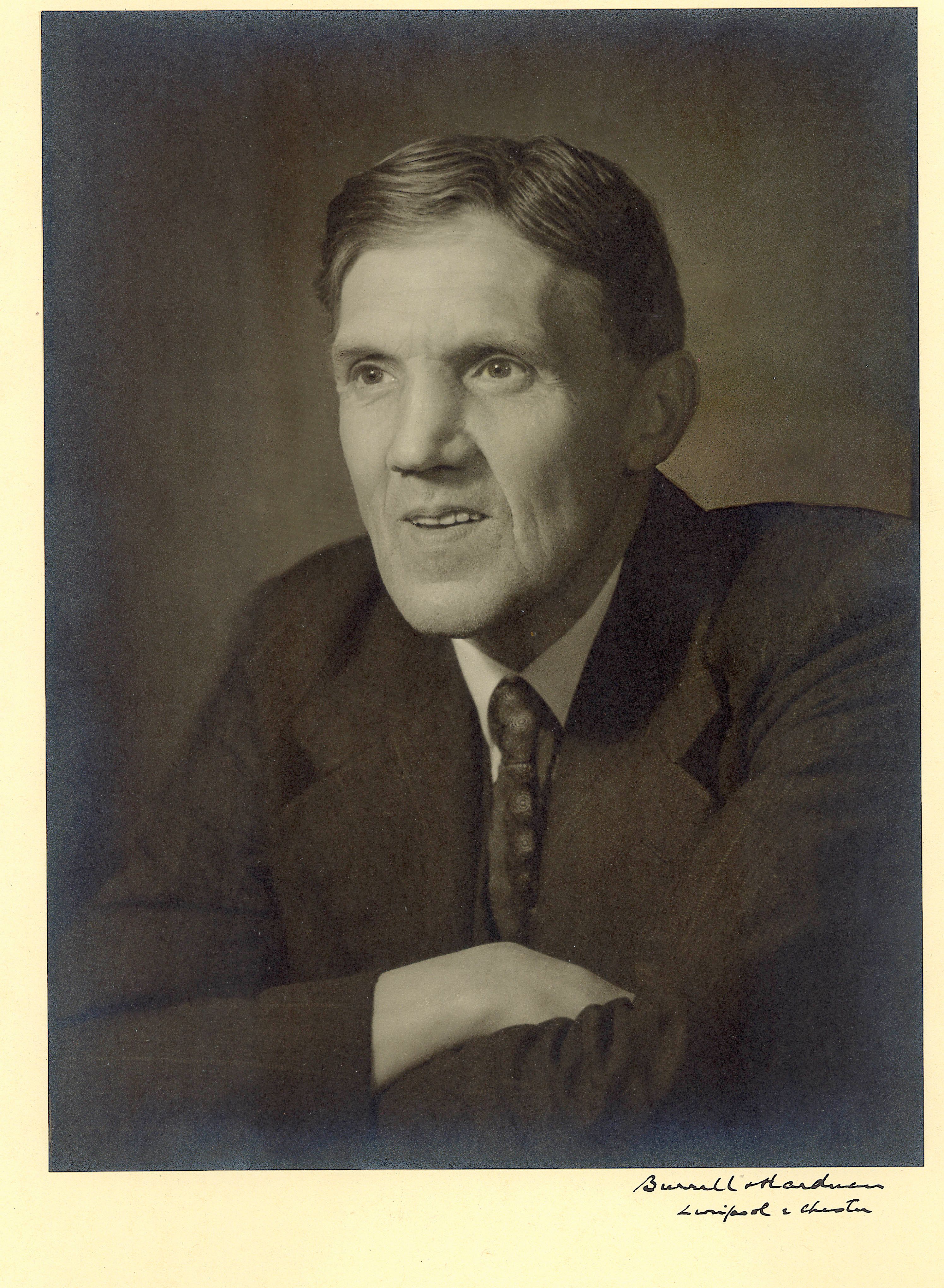
In May 2017, his centenary was announced in a Tweet from the Liverpool University account, including his portrait.
Roxby, Percy Maude. “CHINA AS AN ENTITY: THE COMPARISON WITH EUROPE. ADDRESS TO THE GEOGRAPHICAL ASSOCIATION.” Geography, vol. 19, no. 1, 1934, pp. 1–20. JSTOR, www.jstor.org/stable/40558758.

https://www.jstor.org/stable/40563887?seq=1#page_scan_tab_contents - details of Roxby Prize

Liverpool University Facebook page: https://d.facebook.com/livunigeog/photos/a.579114048787869/1640924519273478/?type=3&__tn__=EH-R

A prize winning essay from 1902 while studying at Christchurch, Oxford: https://archive.org/details/henrygrattanbein00roxb/page/n10

As always, if anyone knows anything more about Percy Maude Roxby, or has a contribution to make to the blog, please get in touch... 

Major update October 2019
Quite a lot of additional detail on Roxby and his work is included in an article by Professor H C Darby, who was also a Professor at Liverpool University. He talks first about the time following the First World War.


I like the idea of Roxby's long cycling tours, particularly in East Anglia and like to think that I have travelled along the same routes as Roxby. He wrote a chapter in a volume on Great Britain.
When searching for this book, I found this biographical reference in another book.


This told me the book was called 'Great Britain' and edited by A. Ogilvie (1928) and that he also contributed chapters to other publications. such as 'The Geographer's Craft'.

H C Darby then talked about the time when he succeeded Roxby at Liverpool University.


I also found an obituary of Roxby, which I hadn't found previously, written by H J Fleure.


References
Darby, H. C. “Academic Geography in Britain: 1918-1946.” Transactions of the Institute of British Geographers, vol. 8, no. 1, 1983, pp. 14–26. JSTOR, www.jstor.org/stable/622271.


https://archive.org/details/henrygrattanbein00roxb/page/n10 - prize-winning essay

https://archive.org/details/chinaproper0002grea/page/n425 - China manual for naval intelligence - showing his great knowledge of the city

Crone, G. R. “British Geography in the Twentieth Century.” The Geographical Journal, vol. 130, no. 2, 1964, pp. 197–220. JSTOR, www.jstor.org/stable/1794582.

Fleure, H. J. “OBITUARY: PROFESSOR P. M. ROXBY.” Geography, vol. 32, no. 1, 1947, pp. 36–36. JSTOR, www.jstor.org/stable/40562545.

CARTER, ROGER. “Connecting Geography: An Agenda for Action.” Geography, vol. 84, no. 4, 1999, pp. 289–297. JSTOR, www.jstor.org/stable/40573334. Accessed 22 Nov. 2020.

Update: December 2020
In 2003, Chris Kington asked a number of former Presidents what had sparked their passion for geography. 
He lent me the letters and Dick Lawton mentioned the influence of Roxby and other geographers including Clifford Darby and Bill Mead on his own academic career at the time.
He says they taught him not only about geography, but how to be a geographer...
Upated July 2022
Roxby contributed to some guides to China written for military intelligence, found on the Internet Archive. Another wartime contribution by a former GA President.
Updated August 2023
As with many Geographers, Roxby was involved with the British Association's Section E committee meetings. He became the President in the 1930s and spoke about his work. He had many interests aside of his trips to China.
Finally found his Biogeographical volume description:


On his links with the GA it has this to say:


Updated June 2024

From 'The Geographer's Craft' by T.W. Freeman (1967) 
Available from the Internet Archive

A superb half chapter all about Roxby and his life and career. 


Margaret Mackintosh RIP

Updated post. Sad news at the end of last week from colleagues who have organised the Charney Conference over the years of the passing of Ma...