Friday, 10 April 2020

Thought for the Day

Without geographical perspectives and a chance to ‘think geographically’, any young person’s education is, simply, incomplete. 
Without geographical knowledge and understanding young people are not fully prepared to encounter the world fully and confidently
David Lambert 
(2010, GA Magazine - on the launch of 'a different view')

Thursday, 9 April 2020

Rex Walford Award

The Rex Walford Award forms part of the annual Young Geographer of the Year Award organised by the Royal Geographical Society.

The award commemorates former GA President Rex Walford

Rex was a teacher, a natural enthusiast, a leading international name in geography education, a long-serving Fellow of the Royal Geographical Society (with IBG) and one of the first group of Chartered Geographers. He supported the Royal Geographical Society (with IBG) in many ways over more than 25 years. He will have his own post on the blog in due course, but has already been mentioned several times.

This year’s RGS-IBG Young Geographer of the Year competition has just been launched.
The title this year is particularly apt.
Although we might all be confined to our homes, and doing #geographyathome, the RGS-IBG are asking young people to explore their wider geographical horizons by providing entries to the Young Geographer of the Year competition and explore the geography of:
'The world beyond my window'

They are interested in entries that explore the human and physical geography of places that exist beyond a young person's window, be it locally or further afield. They want to know how young people’s lives are connected to and influenced by these places - be the connections physical, digital or emotional. They also want students to demonstrate that they understand how geographical processes in the physical and human worlds have created these places and might be changing them.


The Rex Walford Award is for trainees or teachers who have just started their careers, including students enrolled on a PGCE, SCITT, Teach First and School Direct, alongside NQTs and colleagues at a similar stage in their careers.

Entrants are asked to produce a scheme of work, covering at least three lessons, that focuses on the theme ‘ The world beyond my window ’

Reflecting the late Rex Walford’s passion for training new geography teachers who can inspire their students in their subject, it is awarded for the best scheme of work, set of teaching resources and/or lesson plans developed on the same theme as the Young Geographer of the Year competition.

Wednesday, 8 April 2020

1970: One for the classroom...


Does anyone remember using one of these? I remember using the smaller fold down ones with paired images.

Tuesday, 7 April 2020

Geography: Stamp it out

Geographers have always been keen on using new resources and thinking of ways of bringing everyday life into the classroom. Here's an idea for you...


Reference
PROCTOR, N. “Philately and Geography Teaching.” Geography, vol. 50, no. 2, 1965, pp. 134–141. JSTOR, www.jstor.org/stable/40565925. Accessed 27 Mar. 2020.

Monday, 6 April 2020

1961: Changes at HQ

By 1961, there were some important changes taking place at the GA's HQ. There are references here to some important additional people.

The Executive Committee decided that the time has come when we must have a second graduate member of staff at headquarters, and we are glad to report that we have been fortunate in securing the services of Miss A. M. White, a Cambridge University geography graduate, to take over some of the administrative and secretarial work. Miss Oughton remains as head of our office and staff management. 

Mrs. Felkin, the Senior Clerk, well known to many members personally, continues to give invaluable service particularly in matters concerned with our book-keeping and membership records - both most important! - and the service of water and contour pulls of O.S. maps; she is assisted by two junior clerks, and the other member of staff is the library assistant. 

 This staff, double in number what it was a decade ago, combines to give us at headquarters a very hard-working and loyal team and it is a great pleasure to feel able to report to this Annual Meeting, and for the first time, that at last we have been able, as employers, to reach the standards expected for equivalent work in the existing national conditions. 

All of the staff are now on appropriate, if in some cases modest, salary scales, with appropriate contributory pension and insurance schemes and other facilities, and, within the limitations of our present accommodation, they now have adequately furnished working space and essential clerical and labour- saving office equipment. 

This state of affairs, after a decade of financial struggle, and exacerbated by the spiral of inflation, can at last be a matter of pride, and with the increased efficiency that we hope it brings.

Source:
Garnett, Alice. “The Geographical Association.” Geography, vol. 47, no. 1, 1962, pp. 99–109. JSTOR, www.jstor.org/stable/40565641

Sunday, 5 April 2020

Thought for the Day

"...like most academic geographers I gave regular support to the Geographical Association. It was our own organisation... I responded to its needs whenever I could"

This quote is attributed to Kenneth Charles Edwards, former GA President.

British Geography 1918-1945, Edited by Robert.W Steel - published in 1987.
Chapter 12 was by J A Patmore, where he gave a personal perspective on the period.

Saturday, 4 April 2020

1961: Mr. Geoffrey E Hutchings

Updated August 2023

Geoffrey Hutchings' background was in fieldwork, which is surprisingly rare amongst GA Presidents, given the nature of the subject. 

More recent Presidents with this as an interest include Sidney Wooldridge of course, and very recently, we have had Nick Lapthorn, who has also been associated with some of the same Field Centre experiences as Geoffrey. Nick self-identified as an accidental geographer though during his Presidential lecture. More to come in a future post.
Hutchings was elected as President by the GA Council in 1960, in place of George Joseph Cons, who sadly died prior to taking up office, and who I described in recent blog posts, along with his work for the BBC.

Announcing his appointment in the GA's Annual Report of 1960, it says of Geoffrey Hutchings that:
"this will be the first occasion when we shall welcome as our President a distinguished field geographer and teacher"

Hutchings was the Warden and geography tutor of Juniper Hall centre in the Weald during the late 40's and early 50's.
At the time, it was run by the Council for the Promotion of Field Studies which later became the Field Studies Council.
He wrote a lot about the scenery of this area, and these were often illustrated books too as Hutchings was an accomplished illustrator.


A book on fieldwork was also published, co-written with another former President, S. W Wooldridge in 1957.

This book had a focus on London's Countryside, a reminder of the connection with the regional and local studies that was a feature of Geography at this time. It's a lovely looking volume as well.

He also published a book called 'Landscape Drawing' in 1960 which had plenty of information on field sketches and examples of the craft.


I was also interested to read about the influence of Geoffrey Hutchings on the development of the Field Studies Council., which celebrated its 75th anniversary recently.

A Cambridge University Geography department alumni page provides more detail on this relationship with the FSC. There is an image in the Balchin book too, which I have included above. Images are hard to come by.

This section is taken from the document and describes his role in developing the FSC's offering for students and teachers which have remained so important.


Source: Freeman and Pinchemel, 2016

I like the description of the GA Presidency as 'the culmination of his career".

Hutchings felt that his selection as President could not have been for services to the Association as, like many members, he felt he benefitted more from being a member than vice versa.

Unsurprisingly, his Presidential Address was on the theme of field teaching, and is well worth reading - follow the JSTOR link in the references section. It was given at the LSE in January 1962 (when the conference was still held at that time of year, as it was until relatively recently).


In the address, he provides lots of useful guidance for those preparing for fieldwork such as:

 "It is a mistake to conduct an instructional expedition which has not been thoroughly rehearsed. Teaching does not go smoothly if the leader has trouble in finding his way, or if the timing goes wrong. There may be something appealing in the idea of teacher and students joining together in the spirit of exploration and discovery, but a teacher who tries to break new ground in company with his students can be putting himself to a severe test. He may come out of it well as a companion but he will seldom in such circumstances be able to give a first-class piece of teaching".

He also talked about the importance of drawing:

Hutchings located landscape drawing in a tradition of geographical field teaching which sought to challenge students who seemed “to accept the rural scene as something inevitable, immutable, earthy, picturesque,” and “build up for themselves the geographical picture of the piece of country they were exploring,” both in itself and to extend their visual experience.

“Without such pictures they could not consider the operation of physical processes, organic relations and human activities” (Hutchings 1962: 3–4).

He is remembered here by a Cambridge graduate who he spoke to while a grammar school pupil.


Brendan Conway also sent an image he had created including a field sketch done in the 1950s.

References

Some book links

'Geographers: Some biobibliographical studies Vol 2' - T. W. Freeman, Philippe Pinchemel
Bloomsbury Publishing, 28 Jan 2016
This has an image and some very useful biographical detail on Geoffrey.


 HUTCHINGS, GEOFFREY E. “Geographical Field Teaching: Address to the Geographical Association.” Geography, vol. 47, no. 1, 1962, pp. 1–14. JSTOR, www.jstor.org/stable/40565627

David Mattless:
Landscape and Englishness: Second Expanded Edition (2018) also mentions him, as do other books.

This is an excellent book by the way, and well worth getting a copy of.

He wrote a regional study of part of Kent. (ABE Books)

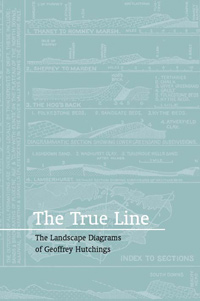
http://www.colinsackett.co.uk/thetrueline.php - features some of Hutchings' drawings.

There is also a mention of Hutchings on the excellent Some Landscapes blog, which is also well worth checking out for those interested in writing on landscapes.
https://some-landscapes.blogspot.com/2007/10/true-line.html

He was also referenced in this presentation here by Tim Burt, who was one of my lecturers, and also tutor of my dissertation at Huddersfield Polytechnic, and went on to Durham University, and to become President of the Field Studies Council. He was also mentioned at the recent 75th Anniversary of the FSC which I was privileged to be able to attend, at the Linnean Society in London.


Tim Burt – Curious about nature: A passion for fieldwork from IES / IAQM

Also mentioned in this chapter: http://www.blackwellpublishing.com/content/bpl_images/content_store/ThumbNail/LONGHURST9781405126458/9781405175654_028.PDF

"In the face of the increasing popularity of photography in geography texts, and what he saw as its limitations as a medium of landscape interpretation (as opposed to reproduction), Hutchings set out a series of basic graphical guidelines, including advice on materials as well as techniques. 
Allied to the arts of drawing maps, sections, and profiles, landscape drawing could portray articulations of structure and scenery, land and life, and with annotations, specify details of land use, vegetation cover, and settlement pattern. Geographical drawing did not just reflect an informed knowledge of what is seen, it was itself an act of observation."

From 1960s Geography journal, comes this ad:


A relatively brief entry - would love a few more images of Geoffrey at work if possible, and any more memories from his time working with the GA.

Updated May 2020


Updated August 2020

I came across a book on the history of fieldwork in geographical education, which can all be read in full on this link.
In the 1940s we get a mention for Geoffrey Hutchings, and the opening of Flatford Mill centre.

Ideally Hutchings thought that "educational field work should continue through the whole of a child's school life. If it did so the curiosity of the young child and his joy in the world of nature, would never end abruptly as they so often do, but would lead in later youth to a critical interest in his environment and a capacity to gain reliable and usable knowledge from what he sees around him [sic]." 
Hutchings transmitted his expertise and enthusiasm for the study of geography by first-hand observation and deductive methods to the many teachers and pupils who came under his influence. Under his guidance field-work activities grew rapidly. 

As president of the Geographical Association in 1960, Hutchings realized the unique opportunity within his reach to further geographical field-work. 

The title of his address "Geographical Field Teaching" outlined the theme of the Association's Annual Conference. Methodology related to outdoor work dominated the entire conference. Papers on related topics were read by some of his colleagues, and an exhibition in field work in schools was successfully organized. Geographical field activities, therefore, were firmly established by the 1960s, and prospered under enthusiastic guidance. 

Source: https://files.eric.ed.gov/fulltext/ED331742.pdf

Friday, 3 April 2020

1960s - the New Model Army


The Life of Peter Haggett | Peter Haggett

The late Professor ChorleyRex Walford tackled the changing nature of Geography in the 60's in a pieece called 'On the frontier with the New Model Army" published in 'Geography'.


This was a part of a short series which was put together by Chris Kington, along with pieces by Balchin and Tidswell.

The original piece is available in 'Geography'.

He also wrote a chapter with the same name with his book on School Geography teaching which has been a major source when writing this blog.
There is also detail on this era in the Marsden textbook on... textbooks which I was loaned by Chris Kington.
This was "a watershed in academic geography, chiefly reflected in the dramatic shift from traditional regional to the more mathematical and scientic approaches of the so-called quantitative revolution" (Marsden, p.44)

Rex Walford described the regional approach by them as being "too static, too pat, too enclosed", although it persisted, as I taught it in the late 80s still. Key textbooks at this time included those by Everson and Fitzgerald, and one by J P Cole & N J Beynon 'New Ways in Geography', which sold over 300 000 copies of the pupil books and even more of the work packs between 1969 and 1984. The series pioneered some new ideas such as disposable worksheets. It replaced the traditional exploration of life in other lands with skills development on such things as networks, coordinates, journey patterns and kocations.

The Madingley lectures of 1963 led to the release of Chorley and Haggett's 'Frontiers in Geographical Teaching' (1965) and 'Models in Geography' (1967). These were the bibles of what Rex called the 'new model army' of teachers.
In Balchin's Centenary book he talks about the impact of the quantitative revolution on the GA, which he describes as a 'danger'.
Frontiers in Geographical Teaching (inbunden)It was starting to affect teaching in schools. Quantitative techniques were apparently embraced by younger students, but viewed critically by 'the establishment'. A new GA committee was eventually formed in 1967 called the 'Role of Models and Quantitative Techniques in Geographical Teaching', which was chaired by Professor Stan Gregory.

A full issue of 'Geography' in January 1969 was devoted to the work of this committee.

More to come on this as the blog moves through the 1960s.

References
Walford, Rex. “On the Frontier with the New Model Army: Geography Publishing from the 1960s to the 1990s.”
Geography, vol. 74, no. 4, 1989, pp. 308–320. JSTOR, www.jstor.org/stable/40571739
Balchin's Centenary volume

Images in this post:
Peter Haggett (top)
Dick Chorley (bottom) - link to Cambridge Obituary

Another name associated with this period is William Vaughan Lewis.

It is worth finding and reading Haggett's own reflections on the Quantitative Revolution, which are found in this document (a useful 17 page PDF download for free) - several other former GA Presidents get a mention in this document.

Thursday, 2 April 2020

GA Lantern Slides

The GA has a large collection of lantern slides, taken from the once much larger collection built by previous Presidents and through the work of H J Fleure to curate them. You will remember that the sharing of these, and the teaching materials to make good use of them was one of the original reasons for the founding of the Association.

You can see some of them on a postcard set which is available to purchase from the GA shop.

There is a small set and a large set option.

All images on the notecards are taken from the Geographical Association’s historical collection of Lantern Slides. They provide an insight into geography during the late nineteenth and early twentieth centuries from early geographical exploration and tourism, and highlight a variety of physical and human features across the globe.

1961: Field Study from a Narrowboat

Seems like something worth considering again... imagine taking a boat through the centre of an industrial city from edge to edge exploring what can be seen.
I walked along a stretch of Regents Canal recently and encountered historical locations including the Tolpuddle Martyrs, and the redevelopment of the Coal Drops Yard and water towers near King's Cross.
Also some years ago, I cycled from the centre of Leeds out to Saltaire creating geolocated missions for a Mission:Explore project in association with Arla, which took us to all the main UK cities.


Reference
FROST, M. J. “Field Study from a Narrow Boat.” Geography, vol. 46, no. 1, 1961, pp. 50–55. JSTOR, www.jstor.org/stable/40565213

Wednesday, 1 April 2020

Thought for the Day

"...remove (your) blinkers, cast off (your) parochial myopia and once again teach the world as a mosaic of places, not as a series of examples of Von Thünen and Christaller.."

Ron Johnston (1984, 'The world is our oyster", Transactions of the Institute of British Geographers, 9:4: 441-59

Monday, 30 March 2020

G. J. Cons - Educational Films

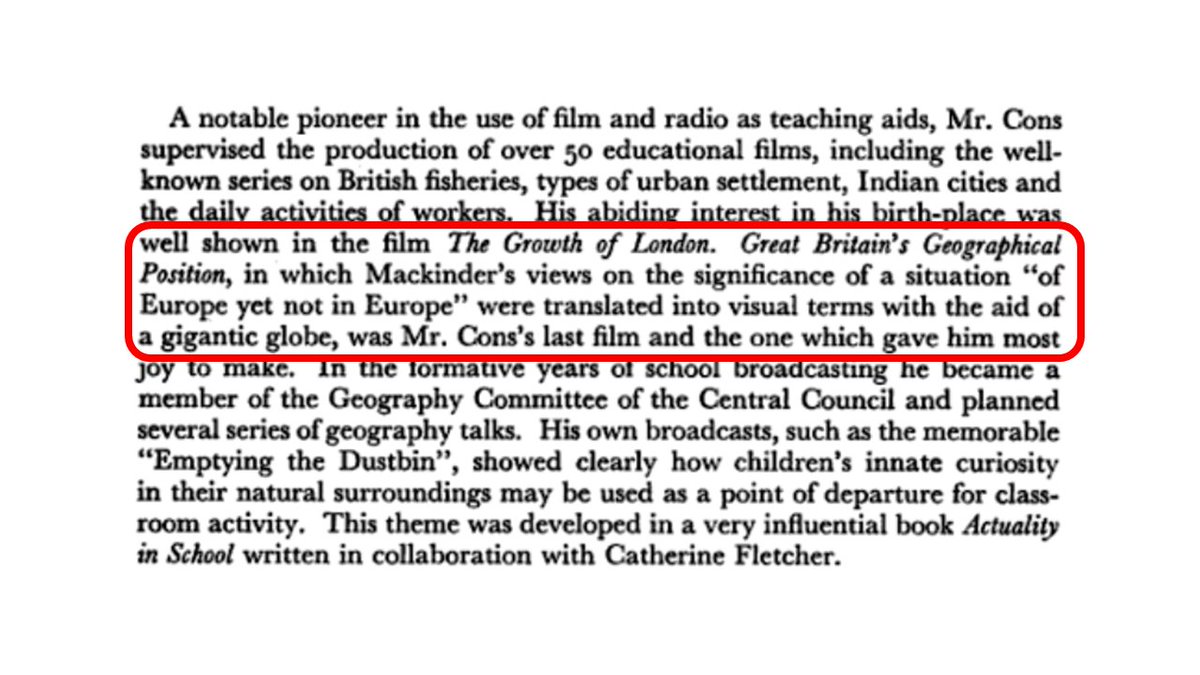
Brendan Conway noticed my post yesterday on the late George Joseph Cons and a reference to a film in his obituary as shown below.
Image
and sent a link through to the film. I need to find 'Emptying the Dustbin' next.


There is also a list of films made with his input on the BFI website which Brendan sent through.


I found a few on the British Council website - here's one on Newark

And here is another of his films in the BBC Schedules in 1938.

Image

1961: Sir Halford Mackinder

According to the chronology of the GA produced by Peter Jackson for the 125th anniversary of the GA, in 1961, the Lincolnshire Branch organised the placement of a plaque in the entrance hall of Queen Elizabeth Grammar School on the 18th of February to commemorate the centenary of the birth of Sir Halford Mackinder, who was born when the school building was his family's house.

As I posted in Mackinder's blog entry, there are images of the plaque online.


Thanks to John Spooner for the image of the plaque
Shared under CC license on Flickr
https://www.flickr.com/photos/29809546@N00/2724939061/

John also followed in Mackinder's footprints by ascending Mt. Kenya.

Sunday, 29 March 2020

1961: Mr. George Joseph Cons

Updated September 2023

Just a note on the 1961 Presidency from 'Geography'. 
It appears that Mr. George Joseph Cons was due to have been the president for this year, but unfortunately died quite suddenly in 1960 so was unable to take up the post.


Mr. G J Cons was the author of a Handbook on teaching, and was also a member of the Standing Committee for Visual Aids (which later become Teaching Aids)

He was a Senior Lecture in Geography at Goldmsiths' College.

Balchin's Centenary volume talks about him playing an active role in the Association for many years.
He is quoted in a paper on the teaching of war and peace.
Front Cover
Cons wrote that Geography is probably the best equipped subject for training the young in ‘world citizenship’ and internationalism (Cons, 1932)

This quote was included in a GA Handbook edited by Miss D M Forsaith

Cons also Chaired a number of events over the years, including a debate on the future of Geography at the 1945 conference.

He was the editor of a handbook for Geography Teachers, published by Methuen in the 1950s

Mr. Geoffrey Hutchings was elected as President in his place at the Spring meeting of the GA Council.

I noticed that he was obviously involved in helping make a number of short TV pieces.
I noticed a few fieldwork related pieces on the channel called Talking Pictures TV which shows brief vintage documentaries and films in between vintage films.


An Obituary was published in 'Geography'


Thanks to Brendan Conway for the tipoff to these films in these tweets.
Here's the 2nd tweet


And here is the film, from the Huntley Film Archives


References

W. Wallace (1956) Geography in further education, The Vocational Aspect of Education, 8:16, 40-46, DOI: 10.1080/03057875680000061

“GEOGRAPHICAL ASSOCIATION. Annual Conference Discussions on the Future for Geography.” Geography, vol. 30, no. 2, 1945, pp. 50–62. JSTOR, www.jstor.org/stable/40563427

Bull, G. B. J. “GEORGE JOSEPH CONS.” Geography, vol. 45, no. 1/2, 1960, pp. 123–124. JSTOR, www.jstor.org/stable/40565120
If anyone knows more about Mr. G. J. Cons, or has an image of him that would be appreciated.


Updated September 2023

The McNair Report gets a mention here.

H was linked with the NW Kent Branch of the GA.
He served for many years on the Education Committee of the GA.


https://www.raremaps.com/mapmaker/6716/G_J_Cons - an article that describes his map collecting.

Cons was a pioneer in pioneer in the field of geography films for schools and authored ‘Films and Living Geography’, Sight and Sound, 4/14 (Summer 1935)

The following is excerpted from Traces

A very different proposal comes from one of the few professional geographers involved in animated mapmaking for documentary films – G. J. Cons, who collaborated with the British Film Institute as scientific consultant for the production of educational documentaries. Referring to the series Indian Town Studies made by Gaumont-British Instructional, Cons highlights that ‘these films were made effective geographically by the use of animated maps’. It is evident that this effectiveness is based on the power of the trace since it allows a purely explanatory discourse which consists of the plain transmission of data and information even though no element really legitimises it. For him, there is little difference here between animated maps and informational images; the constitutive properties of motion and animation, whose consequences are far from being neutral, is relegated to a blurry allusion to a ‘living accurate’ vision. Does this prove the ineffectiveness of the attempt to acquire animated maps into the project of geography for ordering the world, or does it confirm Cons’ statement that ‘the genius of documentary film reveal[s] the screen as a magic casement through which our geographical vision of the Earth and its peoples is heightened’? In other terms, does the author’s faith in documentaries negate any concerns about the fabricated spectacle that animated maps present?

Apparently, and with a certain naivety, Cons seems to advocate a perfect analogy between the map, the mirror, and the screen – a position that may surprise coming from a professional geographer. However, as explained by Priya Jaikumar in an insightful essay on the series, the result is not the faithful and plain reproduction of Cons claims but rather an attestation of the role of animated maps in the building of that ideology that put together positivist, modernist, and colonial contents: ‘[t]owns in India were visualised to make them intelligible and transparent, with vision transforming a place, its people and fullness of their lives, into abstract space.’ Again, thanks also to the power of the trace the pretensions of correct visualisation and geographical accuracy have been overthrown and transformed into something completely different: the colonial fiction of mastery and control through alleged scientific instruments used in narrative and visual devices for making this very same fiction true.

Giuseppe Fidotta: Animated maps and the power of the trace.

He also participated in the creation of visual maps such as the one here.

https://www.raremaps.com/gallery/detail/65476/the-peopling-of-the-usa-cons


If anyone can find an image of G J Cons that would be appreciated.

1951: International Conferences

A piece on Marguerita Oughton in 1965 described the work she did organising International Conferences.

In 1951, Miss Oughton had had to assist in some measure in the conduct of a major conference - the First International Conference of Teachers of Geography - held in Sheffield from 30th July to 7th August, at which nearly 100 members and delegates from 17 countries attended. The second such conference took place in Holland in August 1954 and Miss Oughton both travelled to Holland in the previous year to make preliminary arrange- ments, and attended the conference and reported on it (Geography, No. 186, pp. 286-290).

The Third International Conference in this series was at Grenoble in 1957, and this, she has told me, she felt to be an outstanding event in her career, for not only did she attend but she found herself on at least one occasion shouldering the responsibility of speaking for the Association.

More on Marguerita in a a future blog post.

References
Linton, David L. “Miss Marguerita Oughton: An Appreciation.” Geography, vol. 50, no. 2, 1965, pp. 172–176. JSTOR, www.jstor.org/stable/40565934. Accessed 27 Mar. 2020

Submit your GA Conference 2027 proposals now

If you have some head space over the summer, now is the time to submit your proposal to speak at the GA Conference 2027.  This will take pla...