Tomorrow I will post the biography of the GA President for 1958: Professor Robert Ogilvie Buchanan.
The GA was founded in 1893, and I am intending to run this blog through until 2021 - this makes 128 years of history (and Presidents) to cover.
1957 was 64 years after the founding of the GA, which means I am half way between the founding of the GA and the President for 2021-22's entry.
This has not been the most read of my blogs. LivingGeography has had 5.5 million page views, and this has had just 2800 page views in the time since I started it last April. If you have been reading it, then thanks very much. There's plenty more to come.
Monday, 24 February 2020

Sunday, 23 February 2020
Charney Manor Conference
One of the events that is linked with numerous GA Presidents is the annual weekend at Charney where mostly Primary Geography educators (teachers and HE colleagues) gather at Charney Manor in Oxfordshire to discuss all things geography.
As I post this, the 23rd Charney Conference is in its final day.
I've been following the talks on the hashtag.

I was fortunate to be able to attend the 20th Charney Conference in 2017, and speak on the work we had done with Mission:Explore over the years to encourage some ludic pedagogies and involve ourselves with a range of stakeholders.
The Charney weekend events were first started by Rex Walford I believe in 1970 as informal conversations between school and university geographers, following on from previous courses at the venue, and numerous books derived from sets of papers presented at the conference were released over the years, including 1973 and 1982, edited by Rex Walford. I've got a few of those which I will refer to when this blog reaches the 1980s. More recently they have been organised by Simon Catling for many years, with help more recently from Steve Rawlinson and Jeremy Krause.
A piece of mine was included in the special book which was published for the 20th Anniversary Conference. This can be purchased from the GA Shop.

I am intending to be present at the 25th Charney Conference and speak on my Presidential theme, or perhaps the secondary talk which I am going to offer to GA Branches during the year which I am putting together at the moment based around my planned theme.
Much more to come on Charney when I reach the entries for those Presidents who have been involved. At this year's event, there are at least 6 GA Presidents, past, present or future in attendance that I've noticed on the pictures, and others who are yet to put themselves forward I'm sure...
Images: Alan Parkinson
As I post this, the 23rd Charney Conference is in its final day.
I've been following the talks on the hashtag.

I was fortunate to be able to attend the 20th Charney Conference in 2017, and speak on the work we had done with Mission:Explore over the years to encourage some ludic pedagogies and involve ourselves with a range of stakeholders.
The Charney weekend events were first started by Rex Walford I believe in 1970 as informal conversations between school and university geographers, following on from previous courses at the venue, and numerous books derived from sets of papers presented at the conference were released over the years, including 1973 and 1982, edited by Rex Walford. I've got a few of those which I will refer to when this blog reaches the 1980s. More recently they have been organised by Simon Catling for many years, with help more recently from Steve Rawlinson and Jeremy Krause.
A piece of mine was included in the special book which was published for the 20th Anniversary Conference. This can be purchased from the GA Shop.

I am intending to be present at the 25th Charney Conference and speak on my Presidential theme, or perhaps the secondary talk which I am going to offer to GA Branches during the year which I am putting together at the moment based around my planned theme.
Much more to come on Charney when I reach the entries for those Presidents who have been involved. At this year's event, there are at least 6 GA Presidents, past, present or future in attendance that I've noticed on the pictures, and others who are yet to put themselves forward I'm sure...
Images: Alan Parkinson
UPDATE: I attended the 25th Anniversary conference.
Roy Millward
 Regular readers (of which they are few at the moment) will know, this blog also includes mentions for people who have contributed a great deal to the Geographical Association, but haven't necessarily held the Presidency role.
Roy Millward, who died in 2016, was one of these people.
Roy Millward, died aged 98 on 25 January 2016, and was a lecturer and reader in the Geography Department from 1947 until he retired in 1982.
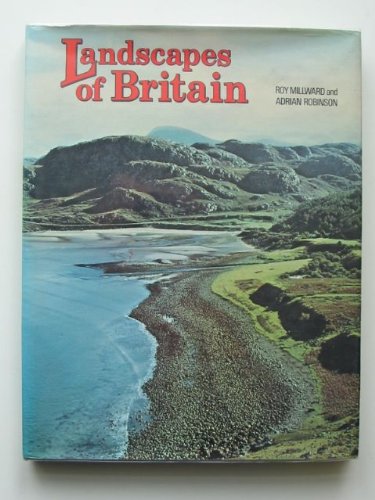 A graduate of St Catharine’s College, Cambridge, Roy was appointed assistant lecturer by Professor Pat Bryan, and with Joe Jennings, a physical geographer, and Terry Garfield as chief technician, he was a founding member of the Department in its present form.
He collaborated extensively with W.G. Hoskins, jointly editing several of the volumes in the Making of the English Landscape series, and culminating in the publication of his own book in the series, Lancashire (1955), his native county.
Of the series as a whole a number of reviewers have considered this volume to be the most effective and rounded representation of landscape analysis.
He was also the university’s Quaker chaplain for many years.
He also ran fieldtrips for the GA Leicester branch for which he was the Secretary for over 20 years.
An obituary was published by the RGS-IBG.
Image credit: Tim Millward - Source: https://www.rgs.org/geography/news/roy-millward-(1917-2016)/
Saturday, 22 February 2020
Isle of Thanet GA Branch
 While doing some research for something else, I came across a remarkable booklet produced to mark 60 years of the Isle of Thanet GA Branch.
It can be downloaded as a PDF from this link.
It runs to over 100 pages, with numerous excellent images which helped me greatly.
It was apparently produced by: Derek Wilson, FTSC, BSc, LRSC Hon Secretary, Isle of Thanet Geographical Association May 2016.
He describes the reason for the founding of the branch, which involved Alice Coleman
In late 1955, Alice Coleman, of King’s College London came to the now defunct Medway Towns branch of the Geographical Association to speak about the then unexplored aspects of the Moon. Marjorie Woodward at the time was the Secretary of the branch. Both had been educated at Clarendon House Grammar School (Photo 2 in Appendix A) for Girls and both Marjorie and Alice had their roots in the Isle of Thanet. After a geographical discussion, each promised one another that if ever either of them should return to live there, they would form a branch of the Geographical Association. After the meeting of these 2 ladies, the birth of the Isle of Thanet Geographical Association was quite sudden. A pilot committee was set up in November 1955 where it was decided that the new GA Branch would be open to all who were interested in the post-war developing world. Students would be particularly welcome and take part in the increasingly popular fieldwork with excursions to a wider area and that a magazine would be published.

An early activity was to be part of Alice Coleman's Land Use Survey of 1960, which has been blogged separately.
There was also an annual magazine called Panorama, a front cover of which is pictured here.
Copyright of all images is with the GA Thanet Branch and members.
Would be lovely to see images from other GA Branches of meetings they have had over the years, particularly when they welcomed GA Presidents to speak to them.
Friday, 21 February 2020
Thought for the Day
"The geographer who is concerned with transmitting part of his knowlege to children in school, and concurrently with fostering in them certain desirable attitudes, must necessarily devote considerable thought to the presentation of his material. Unlike his counterpart in a university, the teacher in school has study methods almost as much as subject-matter, and for this reason he is usually interested in the experiences of other teachers which may assist him in the task.
One of the leading functions of the Geographical Association since its inception has been to serve as a medium for the exchange of this information".
Source"
JAY, L. J. “Experimental Work in School Geography.” Geography, vol. 45, no. 3, 1960, pp. 205–213. JSTOR, www.jstor.org/stable/40565160
1950s - Committees were busy, and plenty of other changes
Balchin's Centenary volume describes some of the work of the GAs Phase Committees during the 1950s, a time when financial pressures forced the GA to raise the annual subscription to a guinea from 1955.
The 1950s also saw the passing of several former GA Presidents who have previously appeared on the blog:
These led to the appointment of other GA Presidents to come to key roles: L Dudley Stamp, E G Bowen and W.G.V Balchin.
Finally, Balchin reminds us that the 1950s were a time when the country was recovering from WWII - rationing had ceased and rebuilding of bombed cities was underway. Membership climbed steadily and the GA was settled in its new home city of Sheffield.
The Annual Conferences were still being organised by the very efficient R. C Honeybone and Dr. J H Bird and attendance was close to 1000.
Professor Emeritus E G R Taylor reached the age of 80 in 1959, and funds were raised for an annual lecture in her name.

Image: early Handbook, on display in Solly St - image by Alan Parkinson
- Secondary Schools Committee published a new handbook in 1952, then turned to producing school atlases. It's chairman for 25 years, Mr. C B Thurston, stepped down apparently 'reluctantly' in 1953.
- The Primary Schools Committee revised 'Geography in the Primary School' in 1953.
- The Public and Preparatory Schools Committee opened its membership to women teachers in 1951.
- The Training College Section organised a series of one day conferences to meet the criticism that 'much of the geography teaching in secondary modern schools was being undertaken by individuals without any geography training' (Balchin, p.43)
- Visual Aids Section produced 'The Geography Room in the Secondary School' in 1954, and started to investigate the use of OS Map extracts with aerial photographs which were to become a feature of Geography exams for decades to come.
- Two new committees were formed: Further Education (1953) and Field Studies (1954)
- The Executive Committee was continuing discussions with the BBC about geography school programming. At this time, there was a feeling that changes were happening too quickly for textbooks to keep up and that radio and TV could help.
The 1950s also saw the passing of several former GA Presidents who have previously appeared on the blog:
- Dr. Hugh Robert Mill in 1950 (who was closely associated with the GA from its founding)
- James Fairgrieve in 1953 (over 40 years of service to the GA)
- Dr O J R Howarth in 1954 (over 40 years of service to the GA)
- Sir John Linton Myres in 1954
These led to the appointment of other GA Presidents to come to key roles: L Dudley Stamp, E G Bowen and W.G.V Balchin.
Finally, Balchin reminds us that the 1950s were a time when the country was recovering from WWII - rationing had ceased and rebuilding of bombed cities was underway. Membership climbed steadily and the GA was settled in its new home city of Sheffield.
The Annual Conferences were still being organised by the very efficient R. C Honeybone and Dr. J H Bird and attendance was close to 1000.
Professor Emeritus E G R Taylor reached the age of 80 in 1959, and funds were raised for an annual lecture in her name.

Image: early Handbook, on display in Solly St - image by Alan Parkinson
1958: The Norfolk we live in
This sounds like a book that I could get behind, particularly as it provides a "rich source of blackboard material". 

Reference
P. J. M. B. Geography, vol. 43, no. 4, 1958, pp. 285–285. JSTOR, www.jstor.org/stable/40564222
Wednesday, 19 February 2020
Curriculum Progression
Many GA Presidents have tackled the thorny subject of progression in geography in their work.
This was particularly true of former GA Presidents Richard Daugherty and Eleanor Rawling, who will appear here much later in the year, maybe even in 2021.
 A new resource on progression has been produced by John Hopkin, with David Gardner, Alan Kinder, Ruth Totterdell and the GA Assessment and Examinations Special Interest Group.
Free to download by members, and available to purchase for £6.66 by non members from the GA website.
Good to see a quote by former GA President Richard Daugherty on the front cover
The idea of progression is implicit in any discussion of the nature of the learning we hope students will engage in. If we did not hope that our students would, in some sense, progress we would have no foundation on which to construct a curriculum or to embark on the act of teaching’ (Daugherty, 1996).
This was particularly true of former GA Presidents Richard Daugherty and Eleanor Rawling, who will appear here much later in the year, maybe even in 2021.
A new resource on progression has been produced by John Hopkin, with David Gardner, Alan Kinder, Ruth Totterdell and the GA Assessment and Examinations Special Interest Group.Free to download by members, and available to purchase for £6.66 by non members from the GA website.
Good to see a quote by former GA President Richard Daugherty on the front cover
The idea of progression is implicit in any discussion of the nature of the learning we hope students will engage in. If we did not hope that our students would, in some sense, progress we would have no foundation on which to construct a curriculum or to embark on the act of teaching’ (Daugherty, 1996).
Sunday, 16 February 2020
"By gum it was hard work"
 GA News - Issue 26 - January 1992
When I went through all copies of the GA News, I came across some interesting stories. I liked this one, which described how Stella Rowley passed her Geography 'A' level at the age of 71.
This was presented by Eleanor Rawling, the President of the GA at the time.
Saturday, 15 February 2020
1957: Professor Patrick Walter Bryan
 Updated June 2021
Professor Pat Walter Bryan was an academic geographer, who worked at the University of Leicester.
He was known to everyone as 'Pat'.
He was educated at the London School of Economics, which has a very strong connection with the GA as we have seen.
His research interests included the landscapes of Leicestershire, which makes sense with his work at the Geography department at the University of Leicester
The text below is taken from the University's description of the department:
Geography was one of the three founding disciplines offered by the new University College of Leicester in 1921 with Gladys Sarson, a local grammar school teacher responsible for the teaching on a part-time basis.
The following year the Department was established with the appointment of P.W. Bryan (an assistant lecturer at the London School of Economics) as a full time Lecturer and Head of Department, and for the next 30 years Geography at Leicester was synonymous with Pat Bryan.


These early years were ones of intense struggle and between 1926 and 1939 15 students graduated in Geography. Accommodation was limited to a lecture room and a practical room which contained some surveying equipment and a few maps.
By the 1950s however, the number of graduates had grown to around 20 annually and there were four new lecturers. Roy Millward sadly passed away in 2016 but he and former technician Terry Garfield were guests of honour at the 90th birthday celebrations.
In 1924 he was one of the first students to be awarded by London University the – for Britain – new degree of Doctor of Philosophy with a thesis published later the same year as part of a book, North America, written with L L Rodwell Jones, which remained in print until 1968. By the 1950s however, the number of graduates had grown to around 20 annually and there were four new lecturers. Roy Millward sadly passed away in 2016 but he and former technician Terry Garfield were guests of honour at the 90th birthday celebrations.
Besides being Head of Department at the University, he was Vice-Principal for over twenty years and Chairman of numerous College Boards.
Even so, he found time to make important scholarly contributions.
Even so, he found time to make important scholarly contributions.
This was followed in 1933 by Man’s Adaptation of Nature: Studies in Cultural Landscape.
He became GA President three years after retiring from a long and successful academic career at the University of Leicester.
I came across this diagram from the book in a recent collection of pieces which were inspired by the Geographies of the French author Georges Perec. My GA Presidential address will be inspired by some of Perec's ideas as well.

His Presidential Address was on the theme of 'Geography and Landscape'.
It is well worth reading. Some quotes will appear separately.

 He was also particularly interested in photography and the use of visuals in teaching, which places him in the vanguard of the new generation of geographers who 10 years later would enter the quantitative revolution with the courses at Madingley which will be featured in this blog in due course.
Pat apparently regularly contributed a film to GA Conferences in the 1950s.
I wonder if any of those still exist in an archive somewhere - that would be rather good to find out. I contacted the Geography department at the University to see what they could offer and they were very helpful.

Having contacted the University of Leicester, they very kindly sent me a large amount of additional information, including details of his retirement here, plus details of his career.
There were some newsletters and a selection of images. I am grateful for their help.

Here he is doing some fieldwork.

Upon Professor Bryan's retirement in 1954 his successor, Professor Norman Pye, was to transform this small Department over the next 25 years into one which was a leader in teaching and research.
More on Norman Pye to come later as well, as he was heavily involved with the GA, although he never became President.

Pat Bryan died in 1968 at the age of 83, another GA President who had lived a long life.
I also found a reference to some late activity and involvement in Environmental Studies within the Department, which showed that Pat continued to be active well into his 80s, shades of James Fairgrieve there.


References
Image source:
http://www.leicesterlitandphil.org.uk/1937-p-w-bryan-bsc-phd-1937-38/
https://www2.le.ac.uk/offices/press/press-releases/2013/june/university-of-leicester-department-of-geography-invites-public-to-celebrate-its-90th-anniversary
Obituary: https://search.proquest.com/openview/2c8b72d47f0d81df3d0fd4720ef8f68e/1?pq-origsite=gscholar&cbl=1818801
Presidential Address: BRYAN, P. W. “Geography and Landscape: Address to the Geographical Association.” Geography, vol. 43, no. 1, 1958, pp. 1–9. JSTOR, www.jstor.org/stable/40564113
https://link.springer.com/content/pdf/10.1038/175198a0.pdf - link to 1954 conference piece
Images are mostly courtesy of the documents sent by the School of Geography at Leicester University, with particular thanks to Kerry Allen for responding to my e-mail most kindly.

As always, if anyone has further information or memories, please get in touch. This will hopefully become more common as we get closer to the present day.
Updated June 2020
An obituary was published in January 1969 in 'Geography'.
Source: Millward, R. “PATRICK WALTER BRYAN.” Geography, vol. 54, no. 1, 1969, pp. 93–93. JSTOR, www.jstor.org/stable/40566740. Accessed 5 June 2020
https://www.leicesterlitandphil.org.uk/1937-p-w-bryan-bsc-phd-1937-38/ - Lit and Phil Society biography
#dcweekly Did You Know? The first PhD was awarded at the University of Leicester in 1924 and was titled to (now) Dr Patrick Walter Bryan in the Geography Department! #TheDoctoralCollege #CitizensOfChange #CuriosityLedResearch #OursToChange #PhD #PGR #ECR #PostDoc #Researcher pic.twitter.com/ErjjK0QQ0f
— The Doctoral College (@doctoralcollege) November 16, 2020
Tuesday, 11 February 2020
Neil Simmonds
I am grateful to Paul Baker for passing on the sad news of the passing of Neil Simmonds who Paul described as "a great Geography friend and supporter of GA Independent Schools Working Group from the 1980s to early 2000's"
Funeral details are here, and I can pass on contact details if required.

Funeral details are here, and I can pass on contact details if required.

Wednesday, 5 February 2020
Thought for the Day
Halford MacKinder's response to Principal Murray in 1942 - with thanks to Rex Walford
"Geography culls its data from the geographical aspects of a number of sciences.... it integrates its conclusions from the human standpoint, and so departs from the objectivity of science, for it ranges values alongside of measured facts. Hence 'outlook' is its characteristic - it is a philosophy of Man's environment".
New Chair of Trustees Role - could you take it on?
This blog celebrates the work of GA Presidents (and others). The GA President is currently also the Chair of Trustees.
A change in governance means there is an opening for someone to become the Chair of Trustees of the Geographical Association for a three year period.
Details are here.
A chance to be part of the Geographical Association's future, built on the past which this blog celebrates...

A change in governance means there is an opening for someone to become the Chair of Trustees of the Geographical Association for a three year period.
Details are here.
A chance to be part of the Geographical Association's future, built on the past which this blog celebrates...

Tuesday, 4 February 2020
1956: Lord Nathan of Churt

Last updated September 2023
My first role when writing this entry was to work out which of several Lord Nathans was the correct one, as there have been several, but this was fairly quickly established.
He was educated at St. Pauls School in London - as were several GA Presidents over the years.
Lord Nathan had a distinguished service in the First World War, serving in the London Regiment in Gallipoli, Egypt and France where he survived a severe head wound: one of several GA Presidents to have seen distinguished active service, including Dudley Stamp.
After the war he went into politics.

During the late 1950s, Lord Nathan was working on redrafting the constitution of the Association, and worked on some Statutes and Standing Orders which were eventually adopted by the GA. This sort of work is often going on in the background of the Association, without much fanfare, but there are many activitists and volunteers completing this work, and their work is vital. There are always people who are needed to assist with various roles within the Association.
His Presidential Address was on the theme of 'World Aviation and Geography'.
In it, he referenced the IGY and the development of exploration in Antarctica.

I'm sure he would have appreciated the development of drones and their use.
He also spoke at length about the importance of the Arctic and the movement of aircraft along the Polar circle routes - something which is now routine for trans-Atlantic flights and also for Qantas flights avoiding disturbances in the usual Rossby wave circulation.

He was still working tirelessly in his 70s in a number of roles, many of them voluntary.
He died in 1974 in Westminster Hospital, of which he had previously been the Chairman.
A busy and productive life, and with a lot of effort in the background of the Association.
References
Obituary: https://www.jstor.org/stable/1794751?seq=1#page_scan_tab_contents
Kirwan, L. P. “Obituary: The Rt. Hon. Lord Nathan, P. C., T. D., D. L., F. S. A.” The Geographical Journal, vol. 129, no. 4, 1963, pp. 582–584. JSTOR, www.jstor.org/stable/1794751. - source of the image - used under fair use
NATHAN, LORD. “World Aviation and Geography: Address to The Geographical Association.” Geography, vol. 42, no. 1, 1957, pp. 1–12. JSTOR, www.jstor.org/stable/40563896.
If anyone knows more of Lord Nathan's contributions to the GA, please get in touch - I haven't been able to find a huge amount about him compared to some of his contemporaries.
1961: NATHAN, LORD. “GEOGRAPHY AND THE BUSINESS WORLD TO-DAY.” Journal of the Royal Society of Arts, vol. 109, no. 5059, 1961, pp. 516–526. JSTOR, www.jstor.org/stable/41369050.
A nice piece - worth reading - on the value of geography to the world of business and economics. A good comment from L Dudley Stamp

Last updated December 2021
Coincidentally came across an obituary for Lord Nathan, written by L Dudley Stamp.
Stamp, L. Dudley. “HARRY LOUIS NATHAN: FIRST LORD NATHAN OF CHURT.” Geography, vol. 49, no. 1, Geographical Association, 1964, pp. 57–58, http://www.jstor.org/stable/40565764.
This gave me his actual names for the first time.

Of his time as President, the obituary also mentions:

He was a solicitor, and also entered the Lords as a Liberal.
He seems to have given a lot of good advice.
He was a Government Minister of Civil Aviation 1946-1948.
Like several other GA Presidents he also became President of the Royal Geographical Society, and also hosted dinners of the Geographical Club (one of which I was recently invited to)

It appears he died following complications from an emergency appendectomy - a couple of months before I was born.
Updated September 2023
Churt is a village in Surrey.
A report on an event at the Royal Society of Arts in 1961.

He mentions his Presidency of the GA at the start of the address - a few other quotes:
"I do not pretend to define 'Geography'. Molière 's Bourgeois gentilhomme was astonished to learn that he had been speaking prose all his life. In some respects, geography is rather like that. But to propound an acceptable definition is a formid able task even for those who are, unlike myself, professional geographers. My association with geography by virtue of office has, however, taught me something of the very great changes that have taken place in the conception of geography since my own schooldays. Life was simpler then ; in the words of E. C. Bentley : geography was about maps, biography about chaps. For years, for centuries, indeed since classical times, geography was almost exclusively descriptive. It consisted of the collection of facts about countries and peoples."
"By his training the geographer has acquired the habit of looking at problems in their all-round relations. The trained geographer is accustomed to analyse a landscape from the point of view of many branches of knowledge, and to approach problems from many different directions. Just as a geographer should be able to synthesize all the different elements of a landscape, so he is trained to balance all the factors in a problem and see it whole. It is this synoptic view of the geographer which is the heart of the matter. It is fundamental and vital to the effective planning of all commercial and industrial development."
Following the talk, there was an interesting question from someone who was there:

Another point was made by Dudley Stamp.
"I feel that I cannot let this occasion pass without expressing thanks on behalf of the professional geographers for the very able way in which Lord Nathan (who has come to us as it were from outside with a very wide experience) has put before this gathering the crucial problems of the geographer and his position in the world. I stand before you as a Professor of Geography who has never had a lecture in geography, for the simple reason that it was not a subject of Honours standard in our universities at the time when I was at college. So I had to take my training in other subjects, and came into geography because of a very deep conviction that there is an important work to be done in the application of what we now know as geographical principles to world and everyday events. It is a very great joy to me to hear, after these years of struggle, that point of view being vindicated from the lips of one so eloquent and so eminent as our lecturer this evening. I would say this in reply to questions which have been put : geography is, as you have rightly said, Sir, a point of view, a training which I think the late Field Marshal Smuts would have called a 'holistic' training, which enables one to take a view which is the view of the whole, and in that sense we do try to take in all factors which are concerned.
In a way I was delighted to hear of the five geographers from Cambridge who have taken jobs other than as geographers. I hope they will take the geographical point of view into their respective spheres, which is after all what we want. In the old days a man who got a degree in classics did not therefore get employment as a Greek or Latin scholar. He went into administration and showed us how to run the government, because of his background in a good discipline. We like to think of geography to-day as giving that broad point of view which is a real training in citizen ship. I feel, Sir, that you have put before us very eloquently indeed that real objective. Geography as a discipline in the university to-day fits its students for a very wide range of posts (not necessarily called geographers; probably in most cases."
NATHAN, LORD. “GEOGRAPHY AND THE BUSINESS WORLD TO-DAY.” Journal of the Royal Society of Arts, vol. 109, no. 5059, 1961, pp. 516–26. JSTOR, http://www.jstor.org/stable/41369050. Accessed 16 Sept. 2023.
Book plate here
Sunday, 2 February 2020
The School Textbook

Thanks to Chris Kington for loaning me a copy of this book which explores the development of school textbooks in geography (it covers other subjects too, but I'm, not interested in those...)
Using it to return to some earlier posts, and also add further detail to some forthcoming ones from the 1950s and 60s onwards, when textbooks went through their most important changes...
It contains plenty of mentions of GA Presidents for their work. Simon Catling is one of the GA Presidents who has explored their use.
An early mention of them came from Sir Archibald Geikie in his early book 'The Teaching of Geography' (1887)
"An altogether inordinate value is set by us upon class-books.... It is especially pernicious too the children in the earlier stages of their geographical studies, for it tortures their memories and brings no compensating advantage. It fosters idleness and listlessness on the part of the teacher."
Hugh Robert Mill was a supporter of their use. Mackinder was someone who had an authoritative grasp of all elements of geography.
James Fairgrieve contributed the 'Real Geography' series, published in 6 volumes between 1939 and 1952.
Subscribe to:
Posts (Atom)
Submit your GA Conference 2027 proposals now
If you have some head space over the summer, now is the time to submit your proposal to speak at the GA Conference 2027. This will take pla...
