Saturday, 6 June 2020

John Cole

Another long-lived and influential geographer has sadly passed, on the 30th of May.
John Cole was particularly associated with the University of Nottingham where he studied himself and then returned for a long career.

John Cole was an early enthusiast for computers
Cole was born in Sydney, Australia. He graduated from the University of Nottingham in 1950. He later returned there to join the staff of the Geography Department, rising to become Professor of Urban and Regional Geography. He was Emeritus Professor of Geography at the university. From 1957 he wrote or co-authored over 25 books on geography, including Geography of World Affairs, first published in 1959. His work ran from school texts to academic papers, and he was an early adopter of computers in geographical studies.
It seems he was an early innovator with ICT in Geography during the quantitative revolution and also wrote on poverty.
I remember a couple of his books in particular:
  • Quantitative Geography: Techniques and Theories in Geography (with Cuchlaine. A. M. King - who also sadly passed away relatively recently and had an obituary in the recent issue of 'Geographical Journal') (1968)
  • New Ways in Geography: A Guide for Teachers (with N. J. Beynon) (1969)
He was a prolific writer.
An obituary in the Times described him as a "popular, gentle geographer", which is a lovely thing to be remembered as.
Update
He was also mentioned in the Presidential Lecture of E.C. Marchant in 1967 who talked about him working to produce resources for teachers following the arrival of ICT.

An article in 'Geography' in 1969.


Sources:
Wikipedia page: https://en.wikipedia.org/wiki/John_Cole_(geographer)
https://www.thetimes.co.uk/article/professor-john-cole-91-popular-gentle-geographer-and-writer-on-world-poverty-nncdf8sp9 - paywall

COLE, J. P. “Mathematics and Geography.” Geography, vol. 54, no. 2, 1969, pp. 152–164. JSTOR, www.jstor.org/stable/40566781. Accessed 12 June 2020.

Friday, 5 June 2020

Thought for the Day

Of the geography teacher:
 "he (sic) must remember that he is preparing the majority of his pupils not for degrees in geography, but pretty soon for living to the full, and perchance for contributing to the full, in a bafflingly complex and ever-changing world".

E. C. Marchant
MARCHANT, E. C. “Some Responsibilities of the Teacher of Geography.” Geography, vol. 53, no. 2, 1968, pp. 129–144. JSTOR, www.jstor.org/stable/40566906. Accessed 3 June 2020.

Wednesday, 3 June 2020

Lionel William Lyde

Updated August 2023

Lionel Lyde was a prominent geographer in the early part of the 20th century.

Lyde, Lionel William (1863–1947), geographer, was born on 28 March 1863 at the vicarage, Wigton, Cumberland, the eldest son of William Lyde (1829/30–1914), vicar of Wigton, and his wife, Elizabeth Emily Hart.

He was a prolific author, and his books sold particularly well.

In an early book 'The Teaching of Geography' he provided this advice:


Lionel Lyde was an influential pioneer among British geographers, writing a series of short textbooks for schoolchildren during the 1890s and giving extension lectures in economic geography at the universities of Glasgow and Oxford before the Oxford diploma was instituted at the turn of the century.

His conception of the discipline was very much of his own making. Trained in the classics and history at Oxford, he taught English at two schools in Scotland before becoming headmaster of Bolton School. He also played an important role as an examiner and lecturer to trainee and novice teachers of geography. In 1903, he accepted an invitation to occupy the newly created chair of economic geography at University College London, being the only geographer in the United Kingdom to hold professorial title at that time. His major textbooks on Europe and Asia served several generations of undergraduates.

His books sold in huge quantities, totalling sales of over 4 million apparently! Giving David Waugh a run for his (D C) money.

He taught at UCL for many years.

He apparently, according to the Huch Clout piece, used to arrive at his lectures wearing a top hat which he would then remove and it contained his lecture notes.

He was also connected with the Geographical Association, other than the articles that he wrote for its journals in the early years of publication.


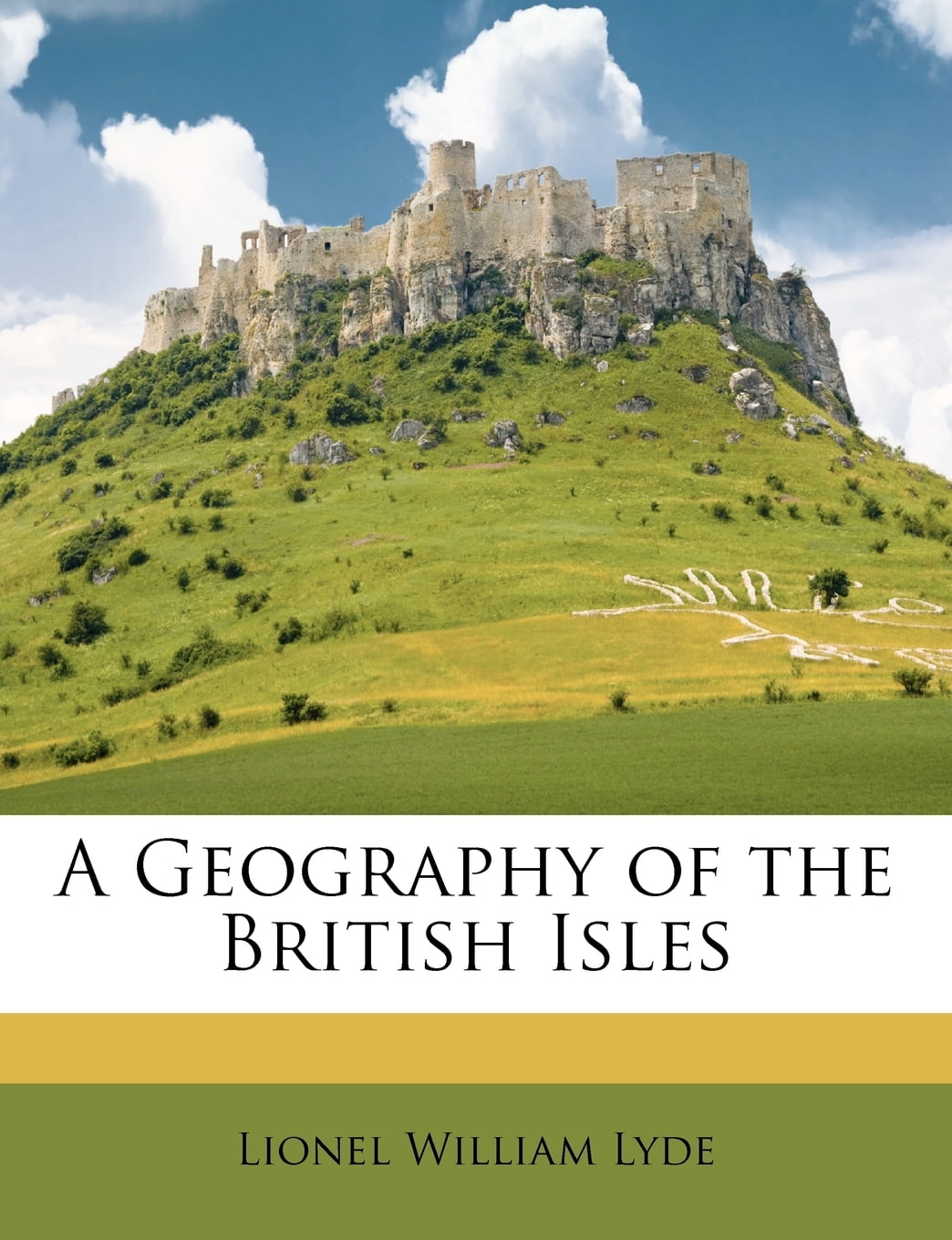
A Geography of the British Isles - Walmart.com

Source:
Hugh Clout wrote this detailed biography of him:

https://books.google.co.uk/books?id=7BQSBwAAQBAJ&lpg=PA16&ots=qyoQUQmILd&dq=lyde%20geography%20definition&pg=PA3#v=onepage&q&f=false

https://www.nature.com/articles/133361a0.pdf?proof=true&draft=collection

I could do with some images of Lionel William Lyde - apparently the archive of UCL was destroyed in a fire / bombing raid.

Update
From the GA collection


Involved with Section E of the BAAS.

Tuesday, 2 June 2020

Anti-racist guidance over the years

Many people are sharing black squares on social media accounts today with associated hashtags.
It is something they feel is worth doing. One could argue that it will change nothing, or that it is virtue signalling. One could argue the opposite. What I'm about to write is from the perspective of a white male in his 50s living in the UK - and could easily be seen as irrelevant given the scale and longevity of the injustices that have taken place for centuries between those in power and who hold particular views, and those with little voice.
However, I thought it was important to take a look at what we can (continue to) do, and how the GA has supported the work of teachers on educating about this issue through its existence.
And what will we do tomorrow?

In response to a request earlier in the day from Paul Turner about the work that the GA, RGS and others were doing, I used spare time around teaching from home today to delve a little (this is a superficial first search). The GA has had a long involvement in anti-racist / multicultural / fully inclusive education and reinforcing the need for teachers to accept a responsibility for dealing with issues like this in their classroom and removing the descriptions that were part of early textbooks in the subject.

Subscriptions to the relevant journals will be needed to read the pieces, although they may be accessible with a free JSTOR account to read on screen.

The GA responded to the need for support for teachers from the 1970s onwards in a coordinated way.

Nick Hopwood in this THINK PIECE touched on the idea of teacher neutrality (and presenting both sides of an argument...)

In the late 1960s Lawrence Stenhouse led the Humanities Curriculum Project (or HCP; Nuffield Curriculum Centre website; Stenhouse 1975), which explored ways of teaching children about controversial issues. Stenhouse advocated a teacher role of neutral chair (not revealing his or her views) rather than a committed advocate. It was argued that teacher authority in a classroom is strong, that pupils are vulnerable to following a teacher's view as the 'right' one, and that this can create the impression that controversial issues can be settled by recourse to higher authority – i.e. ask the teacher. The neutral approach was promoted by the HCP on the understanding that this would enable a range of opinions to be expressed, and that the questioning pupils' assertions and recourse to evidence and reasoning would model a more appropriate way to teach and learn about controversial issues. Suggestions that teachers should be neutral when teaching about racism (rather than committed to anti-racist agendas) sparked a major debate, demonstrating how even though most people would accept that racism is socially unacceptable, issues of how to teach them quickly bring the controversy back to life. How we approach teaching about controversial issues, and how we would like pupils to learn about them at school, are at least partly dependent on the sort of outcomes we envisage. A geography teacher might feel their role is to advocate strongly on behalf of environmental agendas (i.e. adopt a committed approach) because we need a generation of environmentally committed people if any serious headway is to be made in these respects.

Source: https://www.geography.org.uk/write/MediaUploads/research%20library/GA_TP_S_valuesissues.pdf

In 1985, Rex Walford announced the GA's Anti Racism Policy Statement.


A lot of work was done in Primary schools at this time as well, with their focus on 'Far Away Places' to ensure they were represented fairly.
Other Humanities subject also revisited teaching of topics such as the American West at this time.


Peter Jackson wrote on Racism and Reaction in 1988
Jackson, Peter. “Beneath the Headlines: Racism and Reaction in Contemporary Britain.” Geography, vol. 73, no. 3, 1988, pp. 202–207. JSTOR, www.jstor.org/stable/40571418. Accessed 2 June 2020.

David Lambert contributed two pieces on this theme at the turn of the century.

The first, from 2001 with John Morgan was as part of a special Working Group that the GA had convened following the publication of the Macpherson report into the Stephen Lawrence enquiry in 1999.
The group was made up of Mary Biddulph and Roger Firth, David and John, Robert Chessman, Huw Jones and the late Jagdish Gundara from UCL.

MORGAN, JOHN, and DAVID LAMBERT. “Geography, 'Race' and Education.” Geography, vol. 86, no. 3, 2001, pp. 235–246. JSTOR, www.jstor.org/stable/40573580. Accessed 2 June 2020.

He quotes Kobayashi:
 'Students need to be firmly theoretically grounded, to develop the concepts they need to analyse a complex social process such as racism. 
The more important theoretical challenge is to uncover deeply rooted essentialist notions of race, and to clarify the ways in which racialization occurs through social construction. In addition, students need facts, both as a basis for knowledge and to empower them in their antiracist actions. 
They need to understand the history of racism in our society, and they need to be able to fix racism in terms of the concrete circumstances of life for racialized people' (1999, p. 179)

The second, published in 2002, explored the very word 'race' and the way that it was framed within the classroom. This is a characteristically thoughtful piece by David Lambert.
LAMBERT, DAVID. “Geography, 'Race' and Education: Further Perspectives.” Geography, vol. 87, no. 4, 2002, pp. 297–304. JSTOR, www.jstor.org/stable/40573763. Accessed 2 June 2020.

Peter Jackson wrote on Geographies of Diversity and DifferenceJACKSON, PETER. “Geographies of Diversity and Difference.” Geography, vol. 87, no. 4, 2002, pp. 316–323. JSTOR, www.jstor.org/stable/40573765. Accessed 2 June 2020.

A book was published as part of the Theory into Practice series.
This book focuses on the contribution secondary school geography teachers can make to anti-racism.
The book explores key themes including unsettled geographies and migration and the ‘invisible whiteness’ of geography. The book describes how teachers can use critical approaches to help students adopt new ways of thinking about difference and offers practical tips and strategies for doing this


Arun Saldanha from the University of Minnesota (a city which has been affected by the current unrest) wrote about the Concept of 'Race' in 2011
Saldanha, Arun. “The Concept of Race.” Geography, vol. 96, no. 1, 2011, pp. 27–33. JSTOR, www.jstor.org/stable/41320323. Accessed 2 June 2020.

Keith Ajegbo wrote on cohesion at a time when the idea of 'community cohesion' was strong.

Ajegbo, Keith. “Diversity, Citizenship and Cohesion.” Teaching Geography, vol. 36, no. 2, 2011, pp. 46–48. JSTOR, www.jstor.org/stable/23755405. Accessed 2 June 2020.

Ruth England talked about countering stereotypes in 2015.England, Ruth. “Countering Stereotypes through Global Learning.” Teaching Geography, vol. 40, no. 2, 2015, pp. 64–66. JSTOR, www.jstor.org/stable/26383093. Accessed 2 June 2020.

In 2017, Mary Biddulph's Conference Theme was 'Inclusive Geographies' and this piece was inspired by that conference, and published in 2018.


Peter Hopkins is Professor of Social Geography in the School of Geography Politics and Sociology, Newcastle University, UK (email: Peter.Hopkins@newcastle.ac.uk); Katherine Botterill is Lecturer in Human Geography in School of Applied Sciences, Edinburgh Napier University, UK; and Gurchathen Sanghera is Senior Lecturer in the School of International Relations, University of St Andrews, UK

A look through the JSTOR archive of the journals reveals tens of articles by Jeff Serf, John Morgan, David Hicks and others, and the late David R Wright did a lot to explore the issues with textbooks.
I'm going to request the text of this paper by Peter Jackson:
https://www.researchgate.net/publication/233233240_Challenging_Racism_Through_Geography_Teaching

There is so much more that all organisations, individuals, governments, publishers and all involved in education could do to continue working in this area. 
Teaching about the current situation would be more difficult done remotely than it would be in a classroom, with students physically present and responsive.
We will continue and we will prevail.

This piece (as with all posts on this blog) represents the personal thoughts and views of Alan Parkinson.

Update

I was reminded of the work on de-Colonising the curriculum by Fran Martin. I heard some of that at the Charney Conference, where there are other pieces published in the book edited by Simon Catling.

Also check out episode 4 of GeogPod with Daniel Hammett.

Monday, 1 June 2020

Norman Pye - someone who was never President but "should have been"


Updated October 2020

That is according to former President Sheila Jones and several others...
I decided to find a little more about him.
Norman Pye was Professor of Geography, and later Emeritus Professor at the University of Leicester.

Born in Wigan, where he attended the local grammar school, Professor Pye graduated from the University of Manchester in 1935 with a first class honours degree in Geography, followed by a Diploma in Education ( Class I ).

He then pursued postgraduate studies at Cambridge and in 1938 was appointed assistant lecturer at Manchester. Between 1940 and 1946 Professor Pye was seconded to the Admiralty, Hydrographic Department, as Cartographic Officer and upon return to Manchester was made lecturer and in 1953 senior lecturer.
At various times he held visiting Professorial positions at the Universities of Alberta, Edmonton, Vancouver, Nairobi and Dar-es-Salaam.

Professor Pye’s main research interest was in the field of physical geography particularly climatology, cartography and surveying and he published in all these three sub-fields. He was a member of the 1938 Cambridge expedition to Spitsbergen to study the movement of glaciers and many of its findings are used as the benchmark for several contemporary studies.
In 1946 he was awarded a Leverhulme Research Fellowship for research in climatology and in 1952 a Fulbright award for research in geomorphology in the Mojave and Sonora deserts, USA.

He also served on the councils of a number of academic societies including the Royal Geographical Society, Geographical Association, Institute of British Geographers and Royal Meteorological Society. Between 1965 and 1979 Professor Pye was editor of Geography and in 1972 he edited the volume, Leicester and its Region, to coincide with the British Association for the Advancement of Science annual meeting held at the University.

He took over as Editor of 'Geography' from another former President David Leslie Linton.

Throughout his career Professor Pye strove to enhance the reputation of the University and the maintenance of standards during periods of rapid change. Those values that he held so strongly and which guided his contribution to the development of the University were expounded at length in his last seminar to the department in February 1979. From reading Tony Budd’s notes made at the time it is significant that so many of the points he made over a quarter of a century ago are still relevant today; for example,

“the most precious thing in a department is not the gadgetry but the students. I cannot conceive of a University without teaching but without research it would degenerate into a high school” 


“students need to distinguish between discussion (working towards truth) and debate (working towards victory of one’s own argument)” “on University members of staff…….there is a danger of them becoming so expert that they cannot be contradicted but are not worth contradicting. There is always need for stimulating contradictions”

In 1979, he was made an Honorary Vice President of the GA and elected as an Honorary Member in 1983, when Sheila Jones (who mentioned him) was made an Honorary Vice President.


In his retirement Professor Pye remained a great advocate of the University, always keen to hear news of new developments. He was Chairman of Convocation from 1982 to 1985 and a regular supporter of University events including his beloved Wine Club of which he was a founder member and President.

References
https://www.le.ac.uk/ebulletin-archive/ebulletin/people/bereavements/2000-2009/2007/04/nparticle.2007-04-18.3867066183/index.html

Lovely descriptions here:
https://reader.exacteditions.com/issues/50105/page/13

Update
A picture of Norman Pye (Honorary Editor, 1965-1979) with Mrs. D M Ellis (Assistant Editor) was included on p.59 of the Balchin Centenary book.

Norman was also mentioned by other Presidents including Richard Daugherty.

Sunday, 31 May 2020

1967: Fleure turns 90


Here's the cover of one of Fleure's books from the GA's collection at Solly Street.


He had previously been the subject of an appreciation when he turned 80:

BOWEN, E. G., et al. “For Herbert John Fleure, F. R. S. On His Eightieth Birthday, 6 June 1957.” Geography, vol. 42, no. 3, 1957, pp. 137–41. JSTOR, http://www.jstor.org/stable/40564094. Accessed 19 Dec. 2023.

Saturday, 30 May 2020

Ron Johnston RIP

In the GA's manifesto for Geography "a different view" (which I shall talk about more when we get into the 2000s, there is a series of quotes.
One of them was from Professor Ron Johnston, who I heard today has sadly died.
ImageHe has a long and influential career and taught in a number of universities including the UK and New Zealand.
He was President of the Lincoln branch of the Geographical Association, 1978-83.

He wrote the obituary for former GA President Stan Gregory.
He won the AAG Lifetime Achievement Award.
He also co-wrote a piece for the Independent about another former GA President Michael Wise.

Updated:

Catch this video of him talking with Peter Haggett.

And read this piece from Derek Gregory on Geographical Imaginations.

Download 'a different view' as a PDF.

Friday, 29 May 2020

1967: The Broadening Vista

I came across reference to this paper in Robert Steel's obituary of Kenneth Charles Edwards. It was read at a joint meeting of the GA, RGS and IBG in 1967.


here's the paper, in 'Geography' - it's worth a read via JSTOR.


References

EDWARDS, K. C. “The Broadening Vista.” Geography, vol. 52, no. 3, 1967, pp. 245–259. JSTOR, www.jstor.org/stable/40566323. Accessed 4 Apr. 2020.

Tuesday, 26 May 2020

Gladys Hickman

Updated October 2023

Another influential person in the life of the GA was Gladys Hickman.

She was described in this piece in the GA Magazine as "an inspirational enthusiast for geographical education". She was made an Honorary member of the GA.
She was born in 1912 in East Sussex and grew up on a sheep farm on Romney Marsh.
She gained a first in Geography from UCL and took part in the first land use survey of Great Britain, becoming a close friend of former GA President Dudley Stamp.
Gladys was linked with the Bristol GA branch, having worked in teacher education at Goldsmiths and then Bristol University.
She worked on the Schools Council 14-18 project.
She was a well travelled geographer, and chaired the GA's Field Group in the 1960s and helped launch the Study Tours which the GA's International SIG still runs to this day.

She was also the tutor of former GA President Sheila Jones who told me in a personal communication:
Education year (1950-51), was a revelation with Dr. Gladys Hickman who introduced us to fieldwork opportunities and was a great innovator. Many of her students owe much of their success in teaching to her.

Sheila also wrote a history of the GA Bristol branch. This piece in the GA Magazine gives a flavour of her work.
She attended the 1993 Centenary Celebration of the GA, and Sheila Jones remembered her being there and wrote a little note in the letters she sent to me.


She was working into her 90s in retirement in Edinburgh, and supporting the work of the RSGS.


She wrote a book about Africa which stayed in publication for many years.


She died in 2006, and an appreciation was featured in the GA Magazine and an obituary in the Geographical Journal.


I read about Glady's life in this book as well.


Source:
https://books.google.co.uk/books?id=p_xfuY8CJ48C&pg=PT115&lpg=PT115&dq=%22marguerita+oughton%22+sheffield&source=bl&ots=xln_U09sEO&sig=ACfU3U0BVaFI8t74PC7xxPHMiijd8QoLyQ&hl=en&sa=X&ved=2ahUKEwjbrsfys43pAhXKQEEAHeGlCCIQ6AEwAnoECAoQAQ#v=onepage&q&f=false

An Obituary, written by her son Richard, was published in The Guardian
https://www.theguardian.com/news/2006/oct/19/obituaries.mainsection

https://onlinelibrary.wiley.com/doi/abs/10.1111/j.0028-8292.1975.tb00753.x

https://books.google.co.uk/books?id=6xWsAgAAQBAJ&lpg=PA1913&ots=Tsc_l8fz68&dq=gladys%20hickman%20geography&pg=PA1915#v=onepage&q=gladys%20hickman%20geography&f=false


Updated August 2021
Found this in my Flickr account. It's a book in the Victorian Schoolhouse at Gressenhall Rural Life Museum a few miles from where I live in Norfolk.

Source:


Saturday, 23 May 2020

Teaching Geography

By Lionel William Lyde


Source:
https://books.google.co.uk/books?id=7BQSBwAAQBAJ&lpg=PA16&ots=qyoQUQmILd&dq=lyde%20geography%20definition&pg=PA8#v=onepage&q&f=false

Friday, 22 May 2020

1966: Professor Stanley Henry Beaver

Last updated August 2023

Professor Stanley Henry Beaver was an academic geographer, who was particularly associated with the LSE and Keele University, as well as being a great supporter of the work of the GA.

A prolific author, he authored books on a wide range of topics, from Sand and Gravel, to more general human geographies of the world, and geomorphology.
He had a very long association with the GA, as did many Presidents of course, working with them for over 30 years before becoming President in a number of roles, and providing content for journals.
He was involved with L Dudley Stamp's Land Utilisation Survey, and co-authored many of the reports that came out of that survey in the 1930s and beyond.

He also became involved in the planning and delivery of the Annual Conference in 1933, after Dr. H J Wood stood down.
During the 1930s, the GA Conference actually moved around a lot more than it had previously, where it was mostly held at the LSE. The 1930s saw it in cities including Liverpool, Glasgow, Nottingham and Sheffield. In 1932, the conference was even planned to be overseas in Heidelburg, but political and currency problems meant it had to be cancelled.

He had an association with the RGS (as many other GA Presidents have) and the IBG.

When he left the LSE he was succeeded by Michael Wise: another former GA President.

He also co-wrote a classic book with another GA President, L Dudley Stamp called 'The British Isles' as part of the 'Regional Geography' series.

He was born in London in 1907, and went to UCL where he graduated with first class honours in Geography in 1928. He completed his Diploma in Education in 1929, and according to an obituary published in the Transactions of the IBG, was influenced by L. W. Lyde, who apparently regarded geography as:
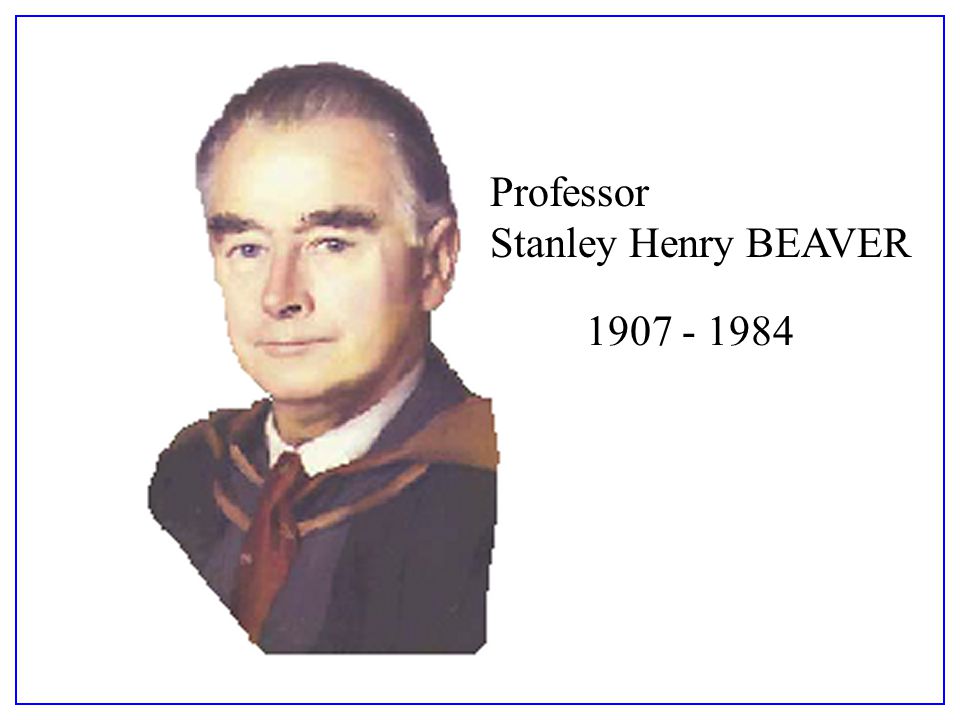
Image result for Professor Stanley Henry Beaver
"a body of knowledge coupled with an attitude of mind". 

He worked at the LSE between 1929 and 1950,  along with L Dudley Stamp

For some time, I couldn't find a contemporary image of Stanley Beaver, but was fortunate to receive one from Dr. Philip Kivell which can be seen at the top of the blog post.

In 1962, he had a piece published in 'Geography' on the Le Play Society and their contribution to fieldwork.

By this time, he was Head of the Geography department at the University of Keele. He stayed at Keele until his retirement in 1974 when he became Emeritus Professor.


In it, he references the work of Patrick Geddes, who had A. J. Herbertson as his assistant.


I am grateful to Dr. Peter Knight for helping me get in touch with Dr. Philip Kivell, who very kindly gave me a range of additional details on Professor Beaver's career and personal life. 
What follows was provided very kindly by Dr. Kivell.

S.H.BEAVER 1907-1984
Stanley Henry Beaver was born in Willesden, North London in August 1907. He graduated from University College London in 1928 with first class honours in Geography having already been awarded the Morris Prize and a University Scholarship in Geology. His first academic post was at the London School of Economics, where a very productive period resulted in appointment as Ernest Cassel Reader in 1946. His major work at this time, together with L Dudley Stamp was “The British Isles: a geographic and economic survey” which went though many editions before and after the war and provided a geographical grounding for  many thousands of students. 
During the war he worked for Naval Intelligence and used his geographical training to produce a number of regional handbooks. 
He was appointed as the founding professor of Geography at the new University College of North Staffordshire, subsequently Keele University, in 1950. 
Here he built up the first new post- war Geography Department in the country, including being closely involved in the physical design of the building. 
This included finding a home for millions of RAF air photographs taken over Europe during the war, and the establishment of a meteorological station on the campus.
Beaver could fairly be described as a traditional geographer, a product of an age that largely pre-dated the increasing specialization that reshaped the discipline from the 1960s. 
Having said that, his interests and skills were enormously diverse.  Most obviously he was a Human Geographer concerned with economic and regional matters, but his interests also ranged widely over transport geography, land use and dereliction and he was equally well informed about climate, meteorology, and mineral extraction. He was a practical academic, always interested in how environments and human processes worked and in this context he helped enormously to put “The Potteries” region on the map of public and academic awareness.
He was a superb and well organised teacher and was always in demand as a guest speaker by organisations across the country. From a student point of view he was extremely well respected but perhaps not the most approachable teacher. He belonged to an era when staff- student relations were more formal and respectful so the informality and student politics of the 1960s and 70s did not always sit easily with him. 
He could appear austere and remote but those who experienced his excellent field excursions soon saw a more relaxed side of him and were perhaps party to his dry sense of humour, his love of puns and his stock of limericks. At heart he was kind and immensely supportive to his staff and colleagues.
Apart from his teaching and research Beaver played a very active role in numerous groups and committees. Some of these were tied up with the University and local region, but others were national or international.  For many years he chaired Keele University Grounds Committee, responsible for the largest, and some would say, most attractive university campus in the country. It was not unknown for him to open his office window to berate students who were walking on the grass. 
He was President of the Geographical Association, active in the RGS and in the founding of the IBG, the IGU and the Anglo-Polish seminars. 
As Chair of the Geography Board of the CNAA he played a major role in promoting the new Polytechnic sector. Amongst all of this he found time to translate several important French texts into English.
During his quarter century at Keele  Stanley lived on the campus with his wife Elsie, who also worked as curator in the departmental map library, and four children. He enjoyed his large garden which he said (tongue in cheek) lay astride the watersheds between the Trent, Severn and Weaver catchments. One of his enduring passions had been steam railways, about which he was enormously knowledgeable. When the locomotive Keele Hall was withdrawn from service in 1963 Stanley Beaver bought the nameplate and displayed it proudly in his new department. On numerous overseas travels he would manage to arrange a trip on the footplate of whatever local steam locomotive took his fancy.
Upon retirement he and Elsie bought a large house in Eccleshall , a few miles from the campus, where he continued to garden, to enjoy his stamp collection and to continue his involvement in local Staffordshire organisations, especially the CPRE. He and Elsie endowed separate funds for student prizes and for fieldwork in the local area. 
Stanley Beaver was undoubtably one of the great geographers of his generation.
Professor Beaver died in 1984.

References
http://worldcat.org/identities/lccn-n50006237/

Obituary: “Stanley Henry Beaver, 1907-1984.” Transactions of the Institute of British Geographers, vol. 10, no. 4, 1985, pp. 504–506. JSTOR, www.jstor.org/stable/621896

Beaver, S. H. “The Le Play Society and Field Work.” Geography, vol. 47, no. 3, 1962, pp. 225–240. JSTOR, www.jstor.org/stable/40565418

British Geography 1918-1945, Edited by Robert.W Steel - published in 1987.
Chapter 12 was by J A Patmore, where he gave a personal perspective on the period.

Article in Geography in 1978
BEAVER, S. (1978). Some Observations on the Climate and Weather of New Zealand. Geography, 63(1), 14-22. Retrieved August 25, 2020, from http://www.jstor.org/stable/4056883
Patmore describes Beaver in this chapter.
A chapter in this book is here:
https://books.google.co.uk/books?id=9NSDx4DxfVcC&lpg=PA76&ots=uk5vMrcPG4&dq=stanley%20henry%20beaver%20geographer&pg=PA76#v=onepage&q&f=false

RGS Archives: http://discovery.nationalarchives.gov.uk/details/c/F46114 - I won't be able to visit the archive for a while, but there are quite a lot of papers

Updated - May 2020

A few updates to add following the posting.

There was a connection revealed between Professor Beaver and another former GA President who will have his own entry in due course (sometime in 2021) Bob Digby.
Bob told me that:


Bob apparently spent the £25 in the Keele University bookshop, buying geography textbooks from the time.

I also discovered another bit of information on Professor Beaver, from when he was a student at UCL in the 1920s. He was taught by Lionel William Lyde, another high profile Geographer from the early part of the 20th century.

His wife Elsie Rogers was also a student at UCL, and her memories of Lyde's teaching were also featured in the same document.


Taken from UCL Geography Department Archives.

Keele University offers an Elsie Beaver Prize for the best undergraduate dissertation by final year student involving fieldwork in physical geography, so the connection to Beaver continues.
It seems that she worked in the Map Library at the University as Map Curator. 


Beaver was also taught by another former GA President: Edmund Garwood. More connections...

Source:
https://books.google.co.uk/books?id=7BQSBwAAQBAJ&lpg=PA16&ots=qyoQUQmILd&dq=lyde%20geography%20definition&pg=PA8#v=onepage&q&f=false
- this link is to one of the many Biogeographical Studies, which are 'proper' versions of what I'm doing on this blog.

I also found his own entry, after all that, in the Biogeographical Studies series.


This included an image of him, and also details of his links with the GA, as well as a lot more detail.

Beaver was Honorary conference organiser from 1934-1949 and also declared an intention to visit every branch in Britain while President - something I hoped to do, but didn't quite manage it.


https://books.google.co.uk/books?id=R-48DwAAQBAJ&lpg=PA130&ots=vx3Y5ASsYg&dq=lionel%20lyde%20UCL&pg=PA129#v=onepage&q=lionel%20lyde%20UCL&f=false 

As always, if you have further information relating to this President please get in touch. 

Thanks to Dr. Philip Kivell for the image of Professor Beaver used at the top of the blog and substantive text later on.
Thanks to Dr. Peter Knight for his assistance as well.

Updated March 2023

Mentioned on first page of J B Priestley's 'English Journey'.

Updated August 2023


This flagged up his involvement with Section E of the BAAS, which I have been investigating over the last few days and have found plenty of details in the Transactions of the IBG and elsewhere that show Beaver's substantial involvement in discussions around geography in schools and universities. 


GA Obituary

Rodgers, H. B. “The Geographical Association.” Geography, vol. 70, no. 1, 1985, pp. 77–80. JSTOR, http://www.jstor.org/stable/40571501. Accessed 24 Aug. 2023. 

Wednesday, 20 May 2020

Fanny Herbertson

Updated August 2022

Sometimes (but not always) remembered in the telling of A J Herbertson's tremendous contribution to the GA was that of his wife Fanny. Frances Dorothea Herbertson is described below:


Her story, and those of other female geographers are told in this book here.

She was a teacher herself, at Cheltenham Ladies College, and there is also a connection with Patrick Geddes, who will also be featured on the blog in a future post.
There is a link to Robert Neal Rudmose Brown, who featured recently on the blog.
See the A J Herbertson post on the blog for more on the work that he completed with his wife, including jointly authored books.


Source
https://books.google.co.uk/books?id=p_xfuY8CJ48C&lpg=PT115&ots=xln_U09sEO&dq=%22marguerita%20oughton%22%20sheffield&pg=PT115#v=onepage&q&f=false


Updated August 2022

A Chronology of Fanny Herbertson 


Submit your GA Conference 2027 proposals now

If you have some head space over the summer, now is the time to submit your proposal to speak at the GA Conference 2027.  This will take pla...