Monday, 18 November 2019

1950: Ellis W Heaton

Occasionally on the blog, we feature people who were never GA Presidents, but gave a lot to the Association - after all, not all those who work for the GA can take up the Presidential role.

It seems like Ellis Heaton did a great deal to support the Association, as do the many hundreds of activists / volunteers / SIG and committee members, branch officials and Trustees who give of their time voluntarily to support the work that we do.

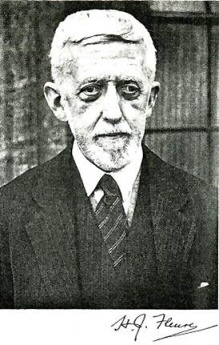
Here's the obituary of Ellis Heaton, written by H J Fleure, and published in 1950.

Reference
Fleure, H. J. “OBITUARY: Ellis W. Heaton.” Geography, vol. 35, no. 3, 1950, pp. 194–194. JSTOR, www.jstor.org/stable/40563034

Sunday, 17 November 2019

1950: New Sheffield HQ - official opening


Source:
“GEOGRAPHICAL ASSOCIATION: THE OPENING OF THE NEW HEADQUARTERS AND SOME FUTURE PROJECTS.” Geography, vol. 35, no. 4, 1950, pp. 257–258. JSTOR, www.jstor.org/stable/40563062.

Updated March 2020

As David Linton said, in 1965
At the end of April 1950 it ended its twenty-year association with the Municipal High School of Commerce in Manchester and moved to Sheffield to enjoy the hospitality of the City Libraries. This was also the time for the arrival of Marguerita Oughton, who will be mentioned in a future post.

Linton, David L. “Miss Marguerita Oughton: An Appreciation.” Geography, vol. 50, no. 2, 1965, pp. 172–176. JSTOR, www.jstor.org/stable/40565934. Accessed 27 Mar. 2020.
I wonder where the "large globe" ended up?

Tuesday, 12 November 2019

1949: Sir Harry Alexander Fanshawe Lindsay KCIE CBE

Updated October 2023

Sir Harry Lindsay was a Colonial administrator, who was connected with India, and worked to develop aspects of the Commonwealth, which grew from the end of Empire.

He was another St. Paul's Old Boy and was also educated at Oxford University, as were many previous Presidents.

A Wikipedia article provided the following information, under CC license:

In 1910 Lindsay became Under-Secretary to the government of Bengal. He moved to the Commerce and Industry Department of the Government of India in 1912.

In 1916 he was Director-General of Commercial Intelligence in Calcutta and in 1922 Secretary to the Government of India, Commerce Dept. In 1923 he became Government of India Trade Commissioner in London. 

In 1919, he was knighted:

CENTRAL CHANCERY OF THE ORDERS OF KNIGHTHOOD. St. James's Palace, S.W. 
3rd June, 1919. 
The KING has been graciously pleased, on the occasion of His Majesty's Birthday, to make the following promotions in, and appointments to, the Most Excellent Order of the British Empire: — 'To be Knight Commanders of the Civil Division, of the said Most Excellent Order.

Harry Alexander Fanshawe Lindsay, Esq., Indian Civil Service, Director-General of Commercial Intelligence in India.


In 1923 he was delegate for India to the Economic Committee of the League of Nations. In 1934 he was appointed Director of the Imperial Institute, a post in which he remained until 1953.

He was GA President during this time.

Image credit: National Portrait Gallery


Described here:


Lindsay was Chairman of the Council of the Royal Society of Arts, editing the publication British Commonwealth Objectives in 1946. 

He was President of the Imperial Institute in the 1940s as well.
A vintage photograph from the time.

Lindsay was also president of the Royal Geographical Society (yet another President to have served with both organisations), and vice-president of the Royal Commonwealth Society.

Lindsay's presidential address was on 'Geography and the Museum'.


In it, he talked about the role that geography might play in the development of museums, even the one at the RGS, which he mentions at the start of his address.

There is a return here to the contested notions of geography as a science, which was a debate had throughout the early 20th Century, and aspects of this are still talked about now.

An interest in museums also connects him other former GA President, who were connected with museums:
1925 - John Linton Myres, who was linked with the Pitt Rivers Museum in Oxford, and
1929 - Sir Henry Lyons, who was a director of the Science Museum

He died on 2 March 1963, in Oxfordshire, England, United Kingdom, at the age of 81.

I wasn't able to find much about what he did while GA President unfortunately.

References

Wikipedia page: https://en.wikipedia.org/wiki/Harry_Lindsay - a brief entry, which doesn't say anything about his Geographical career - Edited to add his GA Presidency as always.

Lindsay, Harry. “GEOGRAPHY AND THE MUSEUM: ADDRESS TO THE GEOGRAPHICAL ASSOCIATION.” Geography, vol. 35, no. 1, 1950, pp. 1–9. JSTOR, www.jstor.org/stable/40564519.

Portrait at NPG: https://www.npg.org.uk/collections/search/person/mp79885/sir-harry-alexander-fanshawe-lindsay

https://api.parliament.uk/historic-hansard/written-answers/1943/mar/31/colonial-products-research-council

Mentioned in: https://journals.le.ac.uk/ojs1/index.php/mas/article/viewFile/232/245

Lindsay, Harry. “CULTURAL RELATIONS WITHIN THE BRITISH COMMONWEALTH.” Journal of the Royal Society of Arts, vol. 96, no. 4756, 1947, pp. 6–18. JSTOR, www.jstor.org/stable/41364360.


Here's an image of Sir Harry Lindsay welcoming the Queen to an event at the Royal Society of Arts mentioned in the article above - when he served as President of the RSA.


Image of Lindsay from NPG under Creative Commons

Sir Harry Alexander Fanshawe Lindsay
by Walter Stoneman
bromide print, March 1943
NPG x165080© National Portrait Gallery, London

As always, I would be happy to hear from anyone who has further details on this President's particular contributions to the work of the GA. I have very little to go on for this entry which is one of the briefest.

You can buy a greetings card with his image on from the NPG if you so desire...


Sunday, 10 November 2019

Dr. Hilda Ormsby

Updated October 2023

While researching the blog over the years, I have come across a whole range of interesting characters who have made a contribution to the development of geography and geography eduction.

From the LSE Flickr page.

Here is Dr Hilda Ormsby, in a striking image taken c1910

Dr Hilda Ormsby died on October 23rd 1973, a few days before her 96th birthday. (I like the tendency for significant geographers to live long lives).

She was born in 1877. 

She was the country's longest living geographer at the time one could argue, for she had been both a student of and then assistant to Sir Halford Mackinder, one of the founders of modern geography, a former director of the School, and its first Professor of Geography - and also a former GA President of course.

Indeed Mackinder tried out on her a draft of his famous book "Democratic Ideals and Reality."

Mackinder's successor as Professor was Rodwell Jones, who was the brother of Hilda Ormsby, and the brother-sister partnership is thought to have been the only one on a British department of geography. 
In 1931 she became one of the very few geography holders of the D.Sc (Econ) and was appointed Reader in 1932. 
Although she retired in 1940 she gave some lectures in the next two sessions whilst the School was in Cambridge. 

In both World Wars she served with Naval Intelligence. Many geographers put their analytical skills to good use at this time.

During the first she worked on terrain analysis, and in the second helped to prepare handbooks on France. She was elected an Honorary Fellow of the School in 1962...' R.J. Harrison Church, LSE Magazine, November 1974, No48, p14

The LSE has a Prize named after George and Hilda Ormsby. This link with Prizes is important.

What would a Parkinson prize involve?


Source of the image:
IMAGELIBRARY/286
Persistent URL: archives.lse.ac.uk/dserve.exe?dsqServer=lib-4.lse.ac.uk&a...

Text linked with the image...

Updated October 2023

It seems her maiden name was Rodwell Jones... a familiar name... more detail here....


She also features in this book
Free download


Saturday, 9 November 2019

Thought for the Day

I've been using the first line of this quote for years without knowing the real source of it, and found it while researching some other GA Presidents earlier today.

Geography without fieldwork is like science without experiments; the ‘field’ is the geographic laboratory where young people experience at first hand landscapes, places, people and issues, and where they can learn and practice geographical skills in a real environment. Above all, fieldwork is enjoyable.

Bland, K., Chambers, B., Donert K. and Thomas, T. (1996) ‘Fieldwork’ in Bailey, P. and Fox, P. (eds) Geography Teacher's Handbook. Sheffield: GA, pp.165-76

Thursday, 7 November 2019

1937: Classifying the World's regions

In 1937, a committee of the GA reported their progress on defining the world's regions. It was a 30 page article, exploring classifications of regions, with maps such as those of Köppen and Herbertson. Some of those ideas can still be seen in textbooks over 80 years later.


References
“CLASSIFICATIONS OF REGIONS OF THE WORLD: REPORT OF A COMMITTEE OF THE GEOGRAPHICAL ASSOCIATION.” Geography, vol. 22, no. 4, 1937, pp. 253–282. JSTOR, www.jstor.org/stable/40560420.

Members
All GA Presidents, other than the Chair.

1948: Professor Herbert John Fleure FRS


Last updated December 2023

This is another of the most long serving of the Geographical Association's Presidents, and whose work ensured its survival when it was fairly young.

We come next to Professor Herbert John Fleure - another of the great names who will be forever associated with the Geographical Association, and to whom is owed a great deal by the present day Association, but whose legacy is problematic because of some of the views he held at the time.

In compiling this blog, it is clear that there are several names who are intertwined with the DNA of the Association as it is now, and one of those is H. J. Fleure or HJF as he wrote on so many documents, articles, book reviews and other documentation throughout his long time at the GA.

By the time Fleure became President, he had been linked with the GA for many decades, acting as its librarian and holding other roles, including the compilation of the Annual Report as far back as 1920 in his role as Secretary.

The Annual Report in 1920, for example talked about the progress of the association. The 2020 Conference theme, chosen by Gill Miller, is "Geography really matters", and in 1920, H. J. Fleure was already onto Gill's idea of each teacher doing something to show that geography matters,  in this statement.

"The Report of the progress of the Association should encourage teachers all over the country to put an extra dose of enthusiastic interest into their exposition of Geography and their co-operation with other subjects for a more synthetic education..... [Geography] is a subject that the pupils can go on with, must go on with, all through their lives. It is the one subject which really tries to face the problem of the interpretation of our modern world. it is the most hopeful line of work towards a better understanding between the peoples of the world.... the opportunity and responsibility of teachers of Geography is a great one, and we are confident they are rising to it."

Fleure, in addition to being a long serving Secretary of the Association, was also the editor of 'Geography' for a time, amongst many other contributions that he made to the workings of the GA.
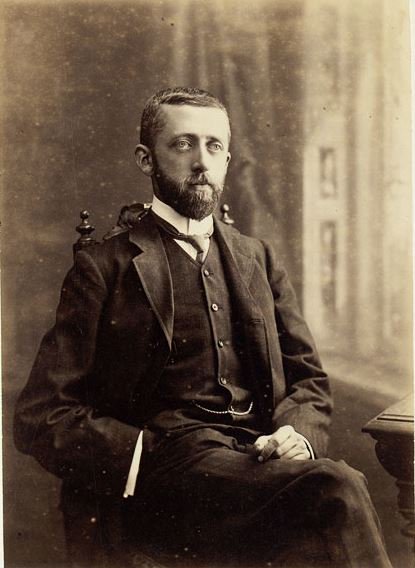
ImageHe was born in Guernsey in 1877.
He went to Aberystwyth University, and also studied in Zurich, Switzerland.
Fleure was an academic geographer for his lengthy career, and was associated with the Universities of Aberystwyth and Manchester in particular where he held posts which allowed him to support the development ot the GA as well.

His research in Wales is described here.

Fleure wanted to look at how place influenced people, and the way that geography affected identity


During his Presidential year, he did a great deal also for the Le Play Society. The Le Play society organised overseas tours as the earlier Touring Branch had done, and also held an annual conference. I also notice the address of the Secretary on the bill below.
I wonder if the Birlings at Birling Gap is still there, or has succumbed to the coastal erosion that has taken place there in recent decades particularly.

The Le Play Society continued after the end of the GA's own Touring Branch had to close.
Someone who is also associated with the Le Play Society and the GA is Frederick Soddy, in whose name grants are now provided for teachers to provide fieldwork opportunities for their students, for both the GA and the RGS.

Here is Fleure in 1927 - 2nd from the right on the Front Row

Source: https://www.llyfrgell.cymru/fileadmin/fileadmin/docs_gwefan/amdanom_ni/cylchgrawn_llgc/cgr_erth_XXXVrh1_2010_4.pdf

Fleure was awarded an Honorary Fellowship from the American Geographical Society in 1930, and its Daly Medal in 1939.
He received the Victoria Medal of the RGS in 1946, as have a few former Presidents of the GA. A precedent that I think is worth renewing ;)

Fleure was also one of only three geographers to have been elected as a Fellow of the Royal Society - bonus points if you can name the other two...

The Fleure Library is the name of the GA's archive of materials, and it has been quite mobile, and found several homes, as has been described in the blog. Some elements of the library are now on display in the Patrick Bailey room at Solly Street (a room named after another former GA President)

As I blogged about previously, back in 1917 Fleure took the library with him when the GA relocated to Aberystwyth and he was able to secure premises in the town with appropriate space for the archive.


https://royalsocietypublishing.org/doi/pdf/10.1098/rsbm.1970.0009

He later relocated to the University of Manchester, where he had a Professorship, and the library followed him there, until 1947.
Here is an announcement from 'Geography' in 1947


As one can imagine, as with many other Geographers of the time, we have to look at his work through the lens of history.
According to this piece, Fleure made his name originally through writing about Race, although he was not a racist, and spoke out against those who were.

I wonder what this publication suggested were the particular problems... answers on a carte postale.

When he retired from the Professorship at Manchester, this piece was written about his time at the GA.
https://www.nature.com/articles/153489c0
It describes his major work called 'The Corridors of Time' which ran to several volumes.
A Natural History of Man in Britain Hardcover  by
Fleure also wrote several books on the landscape of the UK and the influence of man, and worked with Harold Peake on a series of archaeological books.

No scholar in Great Britain has done more to justify the claims of human geography, closely linked with both the natural sciences and the humanities but pursuing its own distinct objectives and devising its own technique and methods, to be one of the most illuminating approaches to the study of civilisation and its problems.
From a notice in 'Nature' in 1944

Fleure also wrote an excellent 33 page long account of the first 60 years of the GA and Education, which I have referred to several times during the production of this blog.
This is proper scholarship though, compared to my scribblings on this blog.

Updated May 2021
Fleure retired in 1944 and travelled in the USA. This was ahead of him taking up the Presidency.

Source:
“GEOGRAPHICAL ASSOCIATION. ANNUAL REPORT FOR 1944.” Geography, vol. 30, no. 1, 1945, pp. 18–19. JSTOR, www.jstor.org/stable/40562425. Accessed 15 May 2021.

Fleure died at the age of 92, having a lived a life full of geography. He finally had his own obituary, after the very many that he had written for other GA Presidents before that.

Addendum
While communicating with Ricky Buck at the GA recently, he told me that he had been in touch with an academic who was researching the life of H J Fleure.
She is exploring his life, and I hope to perhaps find out more about H. J. Fleure through chatting to her.

Another of Fleure's books, with M. Davis.
Related image

References

Matless, David. “Nature, the Modern and the Mystic: Tales from Early Twentieth Century Geography.” Transactions of the Institute of British Geographers, vol. 16, no. 3, 1991, pp. 272–286. JSTOR, www.jstor.org/stable/622948.


I have edited the page to add Fleure's Presidency to the page, as I have with all those who didn't have this information.

Fleure, H.J. (1953) "Sixty years of geography and education", Geography, vol.38, pp.231-264

https://royalsocietypublishing.org/doi/pdf/10.1098/rsbm.1970.0009 - biography from Royal Society pages.

Fleure, H. J. “GEOGRAPHY AND THE SCIENTIFIC MOVEMENT.” Geography, vol. 22, no. 3, 1937, pp. 178–188. JSTOR, www.jstor.org/stable/40560279.

Mentioned in: https://www.geography.org.uk/write/MediaUploads/Journals/Boardman_McPartland_Building_on_the_foundations.pdf

Invited to speak at Edinburgh University: https://www.ed.ac.uk/geosciences/about/history/school-history

His part in the founding of the IBG: Stoddart, D. R. “Progress in Geography: The Record of the I. B. G.” Transactions of the Institute of British Geographers, vol. 8, no. 1, 1983, pp. 1–13. JSTOR, www.jstor.org/stable/622270.
Obituary: https://www.therai.org.uk/archives-and-manuscripts/obituaries/herbert-john-fleure - written by another former President: E G Bowen (or EGB as he was known)

Fleure's account of the 60 years of the GA on JSTOR. I've mined this for lots of details on other Presidents as well, and they will appear in the next few months.

Fleure, H. J. “NEW ENGLAND-AND OLD.” Geography, vol. 31, no. 3, 1946, pp. 105–110. JSTOR, www.jstor.org/stable/40563882.
https://www.llyfrgell.cymru/fileadmin/fileadmin/docs_gwefan/amdanom_ni/cylchgrawn_llgc/cgr_erth_XXXVrh1_2010_4.pdf

http://www.geocurrents.info/geographical-thought/racial-classification-h-j-fleure-and-the-decline-of-geography

As always, if anyone has further information relating to H. J. Fleure and his time at the GA. he is one of the most influential figures in the history of the Association. Please let me know so that I can expand on this post.
 I am sure there is plenty more to say about him. 

Image - books from the Fleure library

Added August 2019

Fleure is also mentioned in Crone's chronology of Geography in the 20th Century.

Reference
Crone, G. R. “British Geography in the Twentieth Century.” The Geographical Journal, vol. 130, no. 2, 1964, pp. 197–220. JSTOR, www.jstor.org/stable/1794582.

Updated November 2019

Thanks to Jamie Woodward from the University of Manchester. He references a document which relates to Fleure's work at the University.


Also thanks for the lead to this article by another former GA president E.G.Bowen, who is yet to feature.


https://books.google.co.uk/books?id=N81mDwAAQBAJ&lpg=PT67&ots=RtCfAEEQvA&dq=charles%20close%20OS%20geographer&pg=PT79#v=onepage&q=charles%20close%20OS%20geographer&f=false

Updated March 2020

In Balchin's Centenary volume, he describes how, when Fleure reached the age of 85 in 1962, he was presented with a book of congratulatory messages and good wishes from several hundred members, together with a portrait in oils, which hung on the wall at Fulwood Road. I wonder where that is now.
At this age, he was still working as Chairman of the GA Council.

Updated July 2022

As with other Presidents I have been adding any details that emerge with respect to controversial views helf by Presidents, alongside the EDI work of the GA.
H J Fleure was a proponent of eugenics, and this needs to be remembered alongside his other achievements. Many of his books have elements of this racist theory within them.

A new image is found in a book of essays to mark the centenary of the department, which was edited by another former GA President: 'EGB' or Emrys Bowen.

This has a new image to me of Fleure.

The book was dedicated to H J Fleure.
It provides a summary of his time at Aberystwyth as well.


There is also mention of how Halford J MacKinder asked Fleure to be the Honorary Secretary of the GA, which resulted in the GA moving to Aberystwyth.


There is mention later in the foreword of the essay collection of Fleure's research:


Updated August 2023

A few tweaks and amendments.


Last updated Decembr 2023

An appreciation by Alice Garnett for the Royal Society.

Fleure was elected as a member in 1936.


Garnett, Alice. “Herbert John Fleure. 1877-1969.” Biographical Memoirs of Fellows of the Royal Society, vol. 16, 1970, pp. 253–78. JSTOR, http://www.jstor.org/stable/769590. Accessed 19 Dec. 2023.

From this article:

The last occasion when he addressed a formal gathering of geographers was in his ninety-first year. Then, from his home in Surrey, 'cocooned'-as his family described him-in rugs and shawls, in a wheel chair, he was transported to participate in 'The President's Evening' in the course of the Geographical Association's Annual Conference held at the London School of Economics.

It was a raw, bitterly cold night early in January that must have daunted many far younger than himself but for Fleure this was an occasion that come what may, no matter how 'hard the going' might be-he refused to miss, as it was designed also to mark the retirement of his successor in office after twenty-one years of service since his own day.

Unable himself to read close print, his son had read to him-at his request-every detail of the Association's Balance Sheet and Statement of Accounts presented at a recently held Annual Meeting. Fleure astonished officers whom he met that evening by the searching questions he then asked, seeking explanations for numerous small changes and variations in financial procedures, in what would, at any age, have been a prodigious feat of memory.

Before a large audience - and inevitably without the help of notes - he then delivered without faltering, a most memorable and moving speech, reiterating in this, his last public utterance, his plea through the teaching of geography, for toleration and mutual understanding amongst peoples.


Eighteen months later, he died peacefully on 1 July 1969 at his home in his ninety-second year, after an unexpected and short attack of bronchitis. Amongst geographers, he was a leader whose ideals, wisdom and strength of purpose can hardly be surpassed.

Presidential Address:
 1949. Geography and evolution. Geography, 34, 1-9. Presidential

Update December 2023
A series of tweets on the Relief Model of Wales. 

Monday, 4 November 2019

Essential equipment

When I first started teaching in the late 80s, all of this equipment was sitting in a cupboard in my classroom.

Friday, 1 November 2019

Memories of Jim Nicholls

This blog is marking the biographies of over 100 GA Presidents.

However, the GA works on many levels, and only a tiny fraction of a percentage of the GA's members and volunteers will ever become President, so from time to time we feature other GA folks.
This particular blog entry is about Jim Nicholls.
Jim was a teacher at Lewes Grammar School.
I like this description which will be familiar to those who are into this style of teaching, which has come back in vogue after 70 years...

Jim will be remembered by countless Old Lewesians for his geography lessons in Room 2, most of which were taken up by a "test" consisting of twenty questions on the previously set homework ("read Chapter XIII") the answers to which had to be written on a minuscule scrap of paper (there was a war on and paper was in short supply) to be marked by the boy in the next seat. When the test was finished and the marks gathered in he would announce the next chapter to be read for homework. Lessons in those days were a mere 40 minutes long so there was precious little time for real teaching. Money for old rope, really.

This was an interesting addition too
Roy Metcalfe writes ...
[Jim] was a founding committee member of the Brighton and District Branch of the Geographical Association when it was formed in 1952, serving for many years on committee and its Chairman from 1953 to 1955 and 1965-66. He hadn't been active in the branch for some years, but he came along to a celebration of the Association's centenary in 1994 held at the University of Sussex. I have a photograph of the occasion where he appeared with the Association's President of the year, the founding Chairman of the branch, one of our first students and myself as founding Secretary. 

As at school, he is remembered in the local G.A. Branch as being concerned that we should run field excursions and he led our first one in 1953 on, appropriately, "The site of Lewes in its physical and historical setting". I shall miss our occasional chats and he was indeed, as your OL correspondent writes, 'Gentleman Jim'.

I came across his biography when researching another President.

References
http://www.old-lewesians.org.uk/biogs/nicholls.htm

Wednesday, 30 October 2019

1947: Sir Alexander Morris Carr-Saunders

Clack and white portrait photograph of an elderly Alexander Carr-SaundersLast updated November 2023

Sir Alexander Carr-Saunders was another Economist and served as the former Head of the LSE. He is also described as a Sociologist and academic administrator. A building at LSE is named after him.

It is not surprising to see some connections between the LSE and the GA given their long-term hosting of the GA conferences, even into the 1970s.

He was born in Reigate in 1886 - the son of an underwriter - and was educated at Eton College. A few GA Presidents had that connection.

A British Academy biography describes the bullying he endured at Eton, which he described as "a convict ship"
He said he could learn nothing during term time, and left the school at 16, when he visited Paris and the Alps, and fell in love with the mountains there.

Perhaps this was the start of his love for Geography, along with mountaineering.


Carr-Saunders went to the University of Oxford, studing zoology initially.

He served in France and Egypt during the First World War as well - one of a generation of GA Presidents around the first half of the century to have experienced conflict and had their world view shaped by this.

On his return, he studied once again at Oxford, and during this time, he developed some ideas around Eugenics.
He was offered a Professorship in Social Science at the University of Liverpool, which allowed him to develop his thinking.
In 1943 he joined the Asquith Commission on Higher Education in the Colonies, and travelled widely during this time, having never previously travelled much at all.
He helped set up a lot of work in Colonial Universities through the next few decades and this is where his contribution to Geographical education began to flourish, and perhaps his potential as a GA President to unfold.

From his Wikipedia extract: shared under CC license

He participated in one of the first Oxford Expeditions to Spitsbergen in the Arctic in 1921 as main scientists, together with Julian Huxley. 

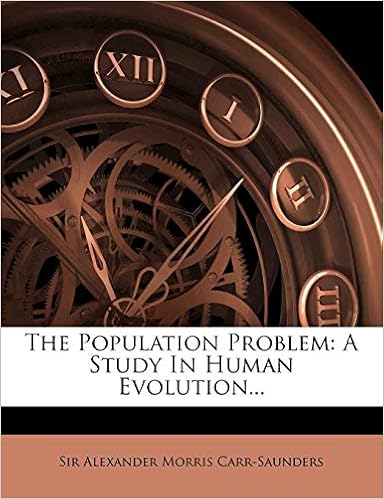
During the expedition he distilled his early ideas on population dynamics and summarized them in a book called The Population Problem. The book used a neo-Malthusian argument plus Galton's eugenics as the theoretical framework for a quantitative analysis of population dynamics. 

The population problem arose - according to Carr-Saunders' demographic analysis - from the fact of having high reproductive rates among what were described as "primitive people with low mental and physical qualities". Over-population of these lower races endangered the standard of living of races bearing higher qualities. Unlike Malthus, he thought that industrial productivity and not food was the main limiting factor in human populations.

Some of the views were of course of their time. Hans Rosling may have had a few alternative thoughts.

In 1921, as mentioned above he went to Spitsbergen on an expedition - one of several GA Presidents to have visited this place - perhaps I need to plan a visit during my Presidency. 
Is there a GA Branch in Longyearbyen?

Carr-Saunders served as Director of the LSE from 1937 to 1957.
His early publications used demographic data in a way that hadn't been done before.
He was knighted in 1946/7, around the time he served as GA President.
 

His Presidential lecture was on the theme of the teaching of Geography in Colonial Colleges, and started with him explaining how he was not a geographer - an unusual opening gambit for a President, although not unprecedented...


The address was published in 1948.

He founded the British Sociological Society in 1951.

This image from the LSE library was taken in Cumbria in 1964, to which Carr Saunders retired.
He is pictured with his wife Teresa in the middle, and Julian Huxley on the left.


He died in 1966 in Cumbria.
One obituary gives the actual circumstances which sound characteristic of him from what I have read...

He died on the night of 6 October 1966 after trying, at the age of eighty, to push his car uphill following a breakdown at Thirlmere in his beloved Lake District.

Here's a description of him from Professor Maurice Freedman:


Source: https://journals.sagepub.com/doi/abs/10.1177/030639686700800306?journalCode=raca

His GA obituary was written by fellow and former GA President Michael Wise.

He received honorary doctorates from the Universities of Glasgow, Columbia, Natal, Dublin, Liverpool, Cambridge, Malaya, Grenoble and London, and was made honorary fellow of Peterhouse, Cambridge, the University College of East Africa, and LSE.

References

https://en.wikipedia.org/wiki/Alexander_Carr-Saunders

I added reference to his GA Presidency to the Wikipedia page, as I have with all those who have Wikipedia pages.

https://www.britannica.com/biography/Alexander-Carr-Saunders - this describes him as a demographer ,and focusses on his work in the area of population - he also influenced Charles Elton, a biologist https://www.britannica.com/biography/Charles-Elton#ref5660

Obituary: https://www.tandfonline.com/doi/abs/10.1080/00324728.1967.10409969?journalCode=rpst20

Presidential Address
Carr-Saunders, Alexander. “THE TEACHING OF GEOGRAPHY IN COLONIAL COLLEGES: ADDRESS TO THE GEOGRAPHICAL ASSOCIATION.” Geography, vol. 33, no. 1, 1948, pp. 1–7. JSTOR, www.jstor.org/stable/40562655.
Obituary: Wise, M. J. “Obituary: SIR ALEXANDER CARR-SAUNDERS.” Geography, vol. 52, no. 1, 1967, pp. 81–81. JSTOR, www.jstor.org/stable/40566219.

Carr-Saunders as one of the original 'sociologists': https://journals.sagepub.com/doi/abs/10.1111/j.1467-954X.2008.00805.x?journalCode=sora

https://oxfordindex.oup.com/view/10.1093/oi/authority.20110803100443150

Image: https://www.npg.org.uk/collections/search/portrait/mw100157/Sir-Alexander-Morris-Carr-Saunders
Some further images of him: https://www.npg.org.uk/collections/search/person/mp72409/sir-alexander-morris-carr-saunders
Images from Flickr library of LSE: https://www.flickr.com/photos/lselibrary/with/3926497416/
CC licensed.

Biography from the British Academy: https://www.thebritishacademy.ac.uk/pubs/proc/files/53p379.pdf

His most famous book is still available to purchase from all good bookshops. It can also be accessed via the Internet Archive: https://archive.org/details/populationproblem00carr


If anyone has further information on Carr-Saunders, please get in touch.

Updated January - August 2021

There are remarkably few early videos or audio of GA Presidents on YouTube since some very early ones you may remember.
Here's an extract from a radio programme where he described his strong faith in God.


Thanks to Brendan Conway for this additional information on a link to the modern day LSE.

National Portrait Gallery:

https://www.npg.org.uk/collections/search/portrait/mw88743/Sir-Alexander-Morris-Carr-Saunders 

Carr-Saunders Hall - a dining space for 160 students

https://blogs.lse.ac.uk/lsehistory/2017/09/05/carr-saunders-hall-living-in-bloomsbury/

Carr-Saunders served as Director of LSE from 1937-1957 and had arranged the School’s evacuation to Cambridge prior to the outbreak of war, ensuring that the School was in touch with its London base and could continue teaching across all of its subject areas.

A mention in the Alpine Journal (PDF download)


On his personality:

The piece also outlines his impressive mountaineering achievements and plenty of anecdotes about his experiences, including ascents of Mont Blanc and lots of the nearby peaks.


I like this quote on how the scenery 'attracted and occupied his keen and sensitive mind'.

Updated August 2023

He contributed a chapter to this book, from the Wellcome collection, and stamped as being in the Eugenics Society library.


First published in 1935

Updated November 2023

On the opening of Carr Saunders Hall - with the menu that was served

He worked in Eugenics...
 
Details of his Galton Medal Award in 1946, from the Eugenics Society.


Tuesday, 29 October 2019

Fleure Library

Over the years, the GA has accumulated a huge wealth of printed material, and what remains of this is currently held at Solly Street, the GA HQ in Sheffield.
There is also a large Primary-focussed collection owned by Simon Catling, some of which is also held at the GA's HQ in a special room.
A great deal of this was initially collected and curated by H. J. Fleure, who is pictured opposite.

He looked after all donated books to the Association - some of which were sent in for review in the journals, and others from teachers who wanted to leave something tangible in the Association's archive.
Fleure was a former President, who has his own entry on the blog shortly.

He managed to find a number of premises for the library in Aberystwyth, where it stayed for many years. Fleure was the GA's Honorary Secretary at the time. It then moved to Manchester where, as I have previously mentioned, it was saved from a fire by a fast acting caretaker.

The library was housed in the Sheffield University library for many decades after it was moved from Fulwood Road in 1983 following a decision approved by the GA Council at the time. I remember visiting it there as an undergraduate.
The collection is now housed at the GA HQ in Solly Street, and several glass display cases featuring items from the library are in the Patrick Bailey room (a former GA President who will also have his own post on the blog)

For the 125th Anniversary conference, I was asked to curate a selection of items from this collection, and was aided by Ricky Buck, who retrieved the items that I suggested might tell a story of the Association, and together I chose about 100 items and provided captions for the exhibition, along with a Primary section.

One of the things that I have available to add to this collection is a set of journals called 'Classroom Geographer, which was published by Hugh Sealey. More on this in a later blog post, as the journal saw the first published work by several GA Presidents who will get their entries in time.

I have a spreadsheet containing details of all the 10 000 items which were in the collection at the time, and there is an impressive range of books and other materials there. 

Monday, 28 October 2019

Hill Top and Hazelwood Schools

I came across a reference to what sounds like an interesting volume for geography researchers into the early days of geography teaching.


Birmingham Library apparently has a copy. I may need to pay a visit.

Does anyone have further information on Hill Top or Hazelwood Schools?

Reference
Wise, Michael J. “AN EARLY 19th CENTURY EXPERIMENT IN THE TEACHING OF GEOGRAPHY: A Note on the Teaching of Geography at Hill Top and Hazelwood Schools, 1815-1825.” Geography, vol. 33, no. 1, 1948, pp. 17–21. JSTOR, www.jstor.org/stable/40562659.

Friday, 25 October 2019

1947: Moving to Sheffield

PARK LIBRARY, SHEFFIELD: 1947 - 64 

Post-war developments forced the GA to relinquish its accommodation in Manchester as the area was redeveloped.
Dr. Alice Garnett (the Honorary Secretary at the time) and Professor David Linton (Honorary Editor) were both based in Sheffield, so a move there was agreed, and made possible by the Sheffield City Librarian’s generous offer of free office and library space at Park Library, Duke Street.

This is another on the list of places to visit during my time as President.

In October 1950, the GA’s new offices were officially opened.


Image: Google Earth - copyright is held by the various image providers, and image used under Fair Use.

Thursday, 24 October 2019

1946: Sir Cyril Norwood


Updated August 2023

Following the Second World War, the Presidency returned to a one year tenure, and has stayed that way since. The first post-war President was Sir Cyril Norwood.

The career of Sir Cyril Norwood, who took on the role in the immediate Post War period, is tied up with that of Clement Cyril Carter, who was President at the outbreak of the Second World War and held the post for several years. It must have been a great delight to Carter to be followed a few years later by someone who had no doubt nurtured him and supported him in his own teaching.

It is also the story of someone who influenced the education of generations of schoolchildren, as well as giving a lifetime of service as a teacher, Headteacher and leadership of the HMC, which continues to this day.

Norwood was the son of a Reverend and educated at Merchant Taylor's School, and the University of Oxford.
He was a classics schoolmaster at Leeds Grammar School (1901–1906), before serving as Headmaster of Bristol Grammar School (1906–1916), Master of Marlborough College (1917–1925), Headmaster of Harrow (1926–1934) and President of St John's, Oxford, from 1934-1946.

That's quite a list of schools to have been linked with, and an Oxford college to conclude his career.

Cyril Norwood was Master at Marlborough College, and this is where C C Carter taught at the same time.
There is a Norwood Hall at Marlborough College named after him. I may even try and get to see it as part of my Presidential year travels.

Norwood was knighted in 1938 for services to education.

He had a major influence on the 1944 Education Act, and the division of schools into three categories, which persisted for decades. I started my secondary education after other changes had taken place such as ROSLA, and the introduction of Comprehensive schools - some of the books and folders I used still had 'High School' written on them.

R. A. Butler, then minister for education, chose Norwood to chair a committee on secondary education, which produced a report on Curriculum and Examinations in Secondary Schoolsthat in turn influenced the 1944 Education Act, setting out the template for the division of state schools in England into three categories: secondary modern, technical, and grammar.
Little wonder that Gary McCulloch described Norwood as “one of the most prominent and influential English educators of the part century”. He was also a died-in-the-wool establshment figure who had passed the civil service entrance examination before devoting himself to a career in education. He served as a teacher in Leeds Grammar School, then as Master of Marlborough College, then headteacher of Harrow for eight years, before becoming Master of an Oxford College in 1934.
(Source)

Book link to read: https://epdf.tips/cyril-norwood-and-the-ideal-of-secondary-education-secondary-education-in-a-chan.html

He had a long career in teaching before he took over the Presidency, at the age of 70 years old.

His Presidential address was simply called 'Geography', and he started by reminiscing about what he had noticed during his 'three score years and ten'.


He started with a useful and positive quote saying:
"there is no subject in the school curriculum which has improved in scope and content more than geography".
"the true geographer finds nothing human alien to his interest"

A book on Norwood's contributions to the development of education was written by G McCulloch

Norwood also co-wrote Carter's obituary.

Norwood retired to Iwerne Minster in Dorset where he died in 1956.

A building is named after him as part of Bristol Grammar School's Elton Road Houses and is primarily used for the teaching of modern languages. 

Marlborough College has not forgotten him. 
The main dining hall at Marlborough College is named the Norwood Hall. 
Norwood also wrote the lyrics, in Latin, for Bristol Grammar School's song, Carmen Bristoliense, which is still sung today apparently.

During his career he fulfilled other prominent roles, including: Chairman of the Secondary School Examinations Council (1921-46); Chairman, Allied Schools (1934-54); and Chairman of the Committee on Curricula and Examinations, which in 1943 produced the influential report Curriculum and examinations in secondary schools (the "Norwood Report") which led to the post-war tripartite system of secondary education. 
A committed Christian, he was also President of the Modern Churchmen's Union (1937-47).

His publications, in addition to the Norwood Report, include: The higher education of boys in England (1909), The English educational system (1928), and The English tradition of education (1929).

I contacted Marlborough College to see if their archivist could help fill in some gaps in his entry, given his long association with the school.

Grainne very kindly sent me a range of additional information on Cyril Norwood, as she did previously for Clement Cyril Carter (see that entry)


Educated at Merchant Taylor’s School and Scholar of St John’s College, Oxford, 1st Lit. Hum.
Civil Service (Admiralty) 1899-1900
Assistant Master Leeds Grammar School 1901-06    
Head Master Bristol Grammar School 1906-16
Master Marlborough College 1916-25
Member of Marlborough College Council 1926
Head Master Harrow School 1926-34
Hon. Fellow of St John’s College, Oxford 1927, President 1934-36
Chairman of Secondary School Exam Council 1921-46
Editor of Report on Curriculum and Examinations 1943
Past chairman of Head Masters Conference
Knighthood in 1938

Quite a CV

She sent an image of Norwood with the Duke of Connaught, from 1925, the only photograph I could source of him. He's on the left in the image.


Grainne also sent me an image of Norwood's obituary in the 

References

Norwood, Cyril. “Address to the Geographical Association.” Geography, vol. 31, no. 1, 1946, pp. 1–9. JSTOR, www.jstor.org/stable/40563684.

Wikipedia page: https://en.wikipedia.org/wiki/Cyril_Norwood

I added his GA Presidency to this page, as I have with all the other GA Presidents.

https://thelearningprofessor.wordpress.com/2015/03/04/cyril-norwood-and-a-national-labour-service/

https://discovery.nationalarchives.gov.uk/details/r/df921236-0085-49e4-8360-da7efdf7bbb6

https://link.springer.com/chapter/10.1057/9780230603523_3

http://www.educationengland.org.uk/documents/norwood/norwood1943.html

Papers at Sheffield University: https://www.sheffield.ac.uk/library/special/norwood

Book: https://epdf.pub/cyril-norwood-and-the-ideal-of-secondary-education-secondary-education-in-a-chan.html

https://books.google.co.uk/books?id=LvJ5CwAAQBAJ&lpg=PT293&ots=_1Lsigvfcz&dq=cyril%20norwood%20geography&pg=PT293#v=onepage&q&f=false

http://www.educationengland.org.uk/documents/norwood/ - the Norwood Report

If anyone has further information on Cyril Norwood, please get in touch.

Update - late October 2019

Here's a YouTube clip of Dr Cyril Norwood, as he was then, welcoming boys back to Harrow School for the new year in 1926 as their new Headmaster.
An early clip of a GA President.


Updated August 2021.


https://thelearningprofessor.wordpress.com/2015/03/04/cyril-norwood-and-a-national-labour-service/ 

https://www.theguardian.com/books/2014/oct/15/nicol-russel-obituary

At his 90th birthday, Nick recalled a "lost" poem composed by Larkin one evening at dinner, mocking the then president of St John's: 
"If approached by Sir Cyril Norwood
Any respectable whore would
Charge double
For her trouble."

Updated August 2023
On the Norwood Report


“The education that has so far been given to the people is at most partial and second best, and has little in common whether in range or in spirit with the universal education that may be. It was but the least possible with which the people would be contented, and it was calculated to equip not citizens, but servants… But education has to fit us for something… so incomparably precious that it will save a man from being a mere unit, a cipher: it will give him a life of his own, independent of the machine. And therefore at any cost our education must never sink to the level at which it will be merely vocational.” (1929)

There is plenty to read of Norwood's time at Harrow, and opposing views on how successful it was.

McCulloch, Gary. “Cyril Norwood and the English Tradition of Education.” Oxford Review of Education, vol. 32, no. 1, 2006, pp. 55–69. JSTOR, http://www.jstor.org/stable/4618644. Accessed 24 Aug. 2023.

I found this quote, which needs to be referenced:


A few thoughts on girls...

Daily Mail October 1928:

When you consider the 100,000 or so of girls of 12 to 18 who are now being educated in the secondary and public schools - the number has increased two and three times since the war - is it not very short-sighted to suppose that a stereotyped course of learning will suit all of them? The majority will eventually marry. At school they are taught exactly as if they were going on to university (quoted in McCulloch 2007:70).


Professor Norman Graves - RIP

A cross posting from my Living Geography blog.   I received sad news today from Frances Slater, via GA President Fiona Sheriff about the sad...