Showing posts with label The Geographical Teacher. Show all posts

Wednesday, 15 October 2025

What facts shall we teach?

 A nice article in an early edition of 'The Geographical Teacher' from 1918....


As we wait for the report of the Curriculum and Assessment Review, what facts should we teach?

Source:

Orford, E. J. “GEOGRAPHY : WHAT FACTS SHALL WE TEACH ?” The Geographical Teacher, vol. 9, no. 5, 1918, pp. 212–15. JSTOR, http://www.jstor.org/stable/40554678. Accessed 15 Oct. 2025.

Wednesday, 23 August 2023

Wayside Geography

John Nowell Linton Myres was the GA President in 1925. His entry on the blog is here. He was an archaeologist, closely linked with the Pitt Rivers Museum in Oxford.

In 1925, at a GA Annual Meeting he spoke on 'Wayside Geography' which was apparently broadcast on BBC Radio. He expanded that into a longer piece, published in 1926 which is worth reading, as it has connections with the idea of everyday geographies.


Source:

Myres, J. L. “WAYSIDE GEOGRAPHY.” The Geographical Teacher, vol. 13, no. 4, 1926, pp. 285–95. JSTOR, http://www.jstor.org/stable/40556130

Saturday, 20 August 2022

Professor Eva G R Taylor

Updated August 2023

Eva Taylor was the first woman to hold a Chair in Geography in the UK: at Birkbeck.


Eva G R Taylor worked with R J Unstead on work on regions and within the Birkbeck Geography department.

She was a ground-breaking female geographer and historian.

Regional geography was a key idea in geography for many decades, even through to the 1980s when I started my teaching career.


Source:

British Geography, edited by Robert Steel. (PDF download)

PROFESSOR Eva G. R. Taylor, an Honorary Member of the Institute since 1954, died in Wokingham on 5 July 1966, aged 85. She was a Fellow of Birkbeck College and Victoria Medallist of the Royal Geographical Society. From 1930 to 1934 she was Professor and Head of the Department of Geography in the University of London, and in 1944 became Professor Emeritus.

There are links here to a range of former GA Presidents and also A J Herbertson.

Image source:

https://www.cambridge.org/core/services/aop-cambridge-core/content/view/2F941C5513B80DB4D1C8F4BCEF0F6B57/S0373463300042946a.pdf/div-class-title-eva-g-r-taylor-div.pdf

https://en.wikipedia.org/wiki/Eva_Germaine_Rimington_Taylor

According to this, the first woman to hold an academic chair of geography in the United Kingdom.

From the document above:

In a broadcast talk about town-planning, Professor Taylor once said that to plan a new town on the lines she was criticizing was like 'trying to stop Tommy growing by refusing to buy him a new pair of boots'. It was typical of her forthright use of English. 

Many people know and respect her as a geographer and historian, but to many she is endeared by her absolute mastery of language: no stylist in the prissy sense of the word, but a writer in whom two great literary virtues were eminently found. First, the absolute reflection of the writer in the words—so that her tone and personality come through so unmistakably that no other person could have written them. And secondly, so complete a certainty of what she had to say that the language she used took on a natural, unforced, direct form that gave it immense pungency and punch. 

That clarity of mind extended not simply to the construction of each sentence but to the whole plan of the essay or book—an essentially classical virtue even more admirable when found in a person who had a poor opinion of the exclusively classical—to put it in terms that are probably historically out of date and that would (God rest her) perhaps infuriate her, an Oxford rather than a Cambridge virtue. As a historian, Professor Taylor was constantly dealing with movements, inventions, discoveries, manifesting themselves in persons: and no matter which of her writings you turn to, you will find (and this is what gives her writing such ease and clarity) that she never wrote until she had a clear picture of the personality behind the person. There are no lay figures in her work. It is supreme craftsmanship, even supreme artistry. 

RENE HAGU

Updated August 2023

Obituary in Transactions of the IBG

“Eva Germaine Rimington Taylor.” Transactions of the Institute of British Geographers, no. 45, 1968, pp. 181–86. JSTOR, http://www.jstor.org/stable/621401. Accessed 24 Aug. 2023.


She was the President of Section E

She started out as a Chemistry Teacher

In 1905, while attending a vacation course in education at Oxford, she was introduced to geographical field studies. Early in 1906, she moved to a teaching post at a convent school in Oxford in order to complete her study for the Diploma in Education. In October of the same year, she became a student at the School of Geography and two years later obtained the Certificate of Regional Geography and the Diploma of Geography, both with a mark of distinction. 

From 1908 to 1910, she served as a private research assistant to A. J. Herbertson who 'considered her the most brilliant and able of the many women students trained under him at Oxford' (H. O. Beckit, in a testimonial dated 27 April 1916). 

She spent the years 1910 to 1916 writing school text-books and drafting wall-maps (in collaboration with J. F. Unstead whom she first met at Oxford in 1906); and in starting her family. From 1916 to 1918, she lectured in geography and in educational method at Clapham Training College for Teachers and at the Froebel Educational Institute. In 1920, she gave a course of lectures at Queen Mary College (then the East London College).

Also published in 'The Geographical Teacher' - 1916

Taylor, E. G. R. “THE FIRST STEPS IN GEOGRAPHY TEACHING.” The Geographical Teacher, vol. 8, no. 4, 1916, pp. 224–30. JSTOR, http://www.jstor.org/stable/40554496. Accessed 24 Aug. 2023.

Worth a read.

Source:

Beaver, S. H. “Geography in the British Association for the Advancement of Science.” The Geographical Journal, vol. 148, no. 2, 1982, pp. 173–81. JSTOR, https://doi.org/10.2307/633769. Accessed 24 Aug. 2023.

Eva Taylor lectures were started in 1960.
The one described here was chaired by another former GA President: Michael Wise.
Of the speaker here he described his work during the war...


Wise, M. J., et al. “Planning and Geography in the Last Three Decades: Discussion.” The Geographical Journal, vol. 137, no. 3, 1971, pp. 330–38. JSTOR, https://doi.org/10.2307/1797270. Accessed 24 Aug. 2023.

Further memories of Eva Taylor are very much welcome.

"Professor Eva Taylor of Birkbeck College London University, the foremost authority on Tudor geography, arranged a facsimile publication and provided commentary on Forty Plates from John Speed’s Pocket Atlas of 1627.

Professor Emeritus Taylor, 1879–1966, was the first female professor of geography in the U.K., published prolifically, and was also renowned for her unconventional use of a walking stick: 

An academia.edu bio describes how “she used to point it at students when asking a question, as well as using it to hail taxies or even to hook Professor Darby’s leg to join her taxi from a crowd of people waiting.”

“Her writings were characterized by the extensive use of original sources and documentary evidence and they were always a delight to read.” This included “her two monumental volumes of the mathematical practitioners of Tudor and Stuart England (1954), and then those of Hanoverian England (1966)….”

Source: https://simanaitissays.com/2022/03/15/touring-tudor-england-with-professor-eva-taylor-and-google-maps/


And another biography here:

Taylor continued working well into her 80s, dying at Wokingham on July 5, 1966.

https://www.encyclopedia.com/women/encyclopedias-almanacs-transcripts-and-maps/taylor-eva-1879-1966

https://www.hakluyt.com/downloadable_files/Journal/DeClercqTaylor.pdf - an updated version of a lecture given in 2005. Mentions Bill Mead.

She was a partner of one of the Dunhills of tobacco fame it seems.

A Bill Mead mention of her lecturing at the GA Conference here (in 1946 just after WWII)


Another Eva Taylor lecture transcript:

Tuesday, 18 August 2020

Geography and Education


I was looking for something else when I came across this book which has been made available as a PDF and written by Kieran O Mahony.
Published by Educare Press.

It explores the development of school geography in the UK with a focus on fieldwork in places.

It mentions some of the very early 'geographers', the work of Comenius, Erasmus, Vives and others, through to the interest shown by the Royal Geographical Society for a while, and on through the Keltie report, and the work of Douglas Freshfield and Pestalozzi's thinking on 'look and see' fieldwork.

It's worth taking a look at as it mentions no end of former GA Presidents who have appeared in this blog over the last couple of years.

It talks about Captain Maconochie, the first Professor of Geography in the UK in 1833 before becoming the Governor of a penal colony in Australia. He was also one of the founders and first secretary of the Royal Geographical Society.
His Wikipedia entry includes quite a lot more information on this interesting character.
http://adb.anu.edu.au/biography/maconochie-alexander-2417

As we move into the 20th Century we are inevitably introduced to characters such as Halford Mackinder,  A J Herbertson, Patrick Geddes and Le Play and Reclus.
Herbertson and colleagues were busy in 1902 when they realised they would not only have to train new teachers, but also retrain existing ones - running courses through the summer vacation. C B Fawcett (after whom there is a fellowship still in existence) and Blanche Hosgood were active here.

By the time H J Fleure is mentioned, Herbertson had involved the Ordnance Survey and standards were improving. He was also behind the launch of 'The Geographical Teacher' journal in 1901, which became 'Geography'.

The book goes on to describe the impact of the two world wars. One of these was a Ministry of Education circular 140, published in 1947 which paved the way for more fieldwork. The GA started to offer courses very quickly after this allowed for more work to be done off the school premises without HMI approval, and the FSC opened their first centre at Flatford Mill. Geoffrey Hutchings is mentioned here (another former GA President) in helping with this movement which soon saw over 200 field centres operating across the country.

A later chapter covers Grenville Cole, an early GA President.

Source:
You can read the whole book here.
https://files.eric.ed.gov/fulltext/ED331742.pdf

Sunday, 12 July 2020

Some sources of information: GA journals

To research the Presidents for the blog, I have used a number of sources.

These include those listed at the bottom of each blog post, but it's worth mentioning the GA's journals, which include notes on previous meetings, AGMs, Presidential addresses and 'Back and Front Matter; which features details on conferences, branch meetings, meetings and minutes, and changes of GA officers, from which one can chart the involvement of particular characters who then emerge as President having served their time in other roles.

The Geographical Teacher was the first of the GA's journals. It had its first issue in 1901. Although there was no issue in 1902, it returned in 1903, and then continued for several decades. It was edited by John Scott Keltie for many years, Beckit and Roxby earlier, and other names then took over. All past issues are available on the JSTOR archive for 'Geography' subscribers - login via the GA website.
This has some wonderful articles, and it's good to see female geographers so well featured, even in early editions (although the GA's formation is connected with the position of women within the RGS, so perhaps this is not so surprising). We still have an imbalance in the number of male to female Presidents of course (and my own taking-up of the Post doesn't help with that...)


It later became the journal Geography. This is also available on the JSTOR archive for subscribers.
This is the academic outlet of the association, with useful information on AGMs, formation of committees, branch activities and other activity.
More recently, an editorial collective shaped the new format, which to begin with slimmed down the many pages of references which accompanied many articles, and which many people will never read anyway.

Teaching Geography was launched in the mid 1970s - more on that to come when I get that far.
This features articles relating to pedagogy in the secondary classroom, and also some

The GA Magazine is a more newsy journal, which also shares news of GA policy and committees and special interest groups, as well as projects.
Issues dating back to 2004 (Issue 77) are available online.

I gained a few useful entries from there, and went up to Solly St over the summer to go through the paper archive copies. Early issues of the GA Magazine did contain some details of Presidents, but few and far between. We've also moved away from the tradition of printing Presidential Addresses.

Primary Geographer (now Primary Geography) was first published in the 1990s.
I am pleased to have contributed some articles to all of the GA's journals over the years, including most-recently a piece in the Spring 2020 issue of Primary Geography.
Issues back to 2004 (Issue 55) are available online.
Image result for jstor logo
GA members who subscribe to the present day journal 'Geography' will find they have access to an electronic back catalogue of all issues going back to 1901, which has been produced in association with JSTOR.
This has been the primary source for information on the proceedings of the Association, as outlined at the AGMs.
A similar facility exists for Teaching Geography too, going back to the early issues of the journal. Others have researched this archive such as Indra Persaud.
I think there may also be plans to digitise Primary Geography(er)

Other sources were:
Wikipedia - some of the older, more illustrious Presidents have pages, whereas more recent Presidents are less likely to be featured. I may well encourage some page building nearer the time as we move later into the 20th Century.
Many of their entries didn't have mention of the Geographical Association Presidency, so I have edited these entries to include reference to the GA.

Classroom Geographer journal has previously been mentioned as well. I have most of a full set of this journal.

Sunday, 7 July 2019

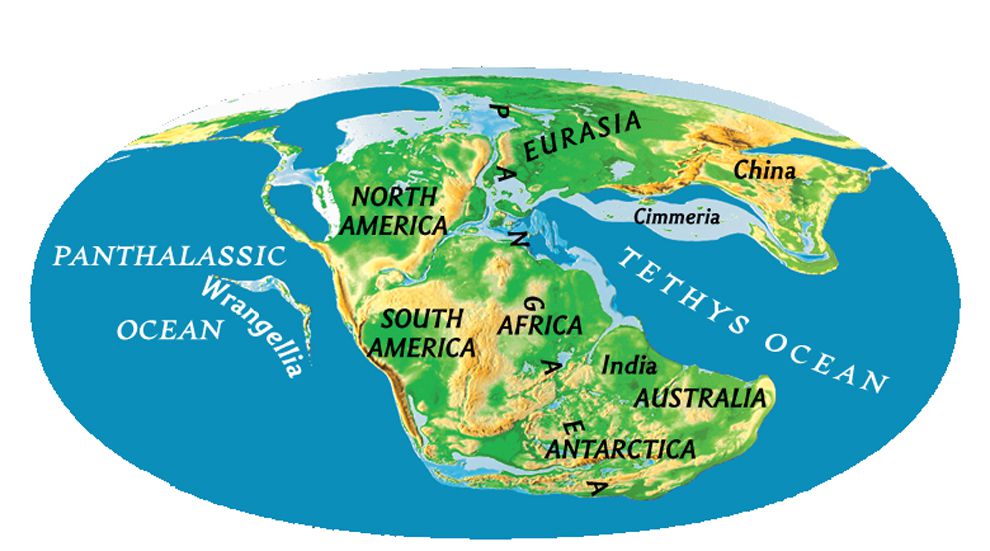
1922: Wegener's Theories

In the Autumn 1922 issue of 'The Geographical Teacher' there was an article by Jon I Platt called "The Displacement of Continents - The Wegener Theory" which introduced readers to the ideas of Professor Alfred Wegener, Director of the German Oceanographical Survey. His theory had been published in 1915, but Platt says that it was "only in the last few months" that British scientists had given their attention to it.


This is a great insight into the changing thinking behind this theory at a time when it was by no means accepted by all. Some scientists found discrepancies between what Wegener suggested might be the case and what they had observed on a more local scale (although at this stage, the work was only available in German as a translation had yet to be done)


It ends with a quote from Philip Lake... "He has suggested much, he has proved nothing."


Image source: https://www.nationalgeographic.org/thisday/nov1/happy-birthday-alfred-wegener/
Used under Fair Use.

Reference
Platt, John I. “The Displacement of Continents—The Wegener Theory.” The Geographical Teacher, vol. 11, no. 6, 1922, pp. 367–369. JSTOR, www.jstor.org/stable/40556630.

Wednesday, 10 April 2019

1897 - 1911: Douglas William Freshfield

Image result for douglas freshfieldUpdated September 2023

In 1897, following a period during which the Association was developing its constitution and statutes, Douglas W Freshfield became the first President of the Geographical Association (GA). 

This followed his resignation from the Royal Geographical Society, apparently partly because the organisation would not admit women Fellows. 
He remained in office until 1911, a period which has not been surpassed since, and will not now be, as the Presidency is a one year post (bracketed by other related responsibilities)

From the chronology written by Peter Jackson for the GA website. (see separate blog post)

Douglas Freshfield was one of the people who attended the first meeting when the Association was formed. He was the first Honorary Secretary of the Royal Geographical Society.

He was born on the 27th of April 1845, and died on 9th of February 1934. 

He was a lawyer, mountaineer and author and also edited the 'Alpine Journal'. 
He was educated at Eton College, and University College, Oxford.

He also wrote a quote that I have used many times in my CPD sessions in the first issue of 'The Geographical Teacher': the first journal that the GA published (of which more to come later in the blog) about the importance of teachers coming together to learn from each other.

This can be read in the image to the right.

This was published in 1901, and was free to members, (but cost one shilling for non-members). This was an important element of the work of the GA, and remains so today.

Douglas Freshfield was heavily involved with the GA from the very early days of the Association.

In 1899,  Freshfield accompanied another future President: E. J. Garwood, on an expedition to Kangchenjunga and explored the geological structure and physical features of Sikkim. Images taken during trips like this helped build the lantern slide library owned and shared by the GA as part of its founding purpose, and which was revisited for the Geographers Gaze project.

In 1900, GA membership opened to all teachers of geography irrespective of age, gender or type of school.

Key lectures were given at this time by H. J. Mackinder on 'Geography as Training for the Mind' and B. B. Dickinson on 'The Use of the Lantern Slide'.

Update
These were referenced by Emily Hayes in her PhD thesis - more on that to come in future blog posts as I discuss the early importance of the lantern slide as a resource for geography teaching and knowledge exchange.

Douglas Freshfield was working as Honorary Secretary to the RGS when he became involved in the founding of the Association. He had made some decisions which were apparently not always welcome by the President at the time: Clements Markham.

On his mountaineering exploits:

He also became the first mountaineer to examine the western face of Kangchenjunga, which rises from the Kanchenjunga Glacier. Freshfield described Siniolchu as "The Most Superb Triumph of Mountain Architecture and The Most Beautiful Snow Mountain in the World".

He made some notable first summits, including in the Caucasus - see later tweet update towards the bottom of the post.


In 1905 he attempted to climb Rwenzori Abruzzi in Uganda but failed due to bad weather. 

However the Freshfield Pass on the mountain was named after him. This makes him one of several GA Presidents who have geographical features named after them. Keep an eye out for them as the blog develops. There are various examples of different features.

Mount Stanley from Freshfield Pass. Photo by Vittorio Sella.

Freshfield Pass and Mount Stanley - Image source and copyright

Rex Walford's book on School Geography (an important source for this blog) reminds us that Freshfield also had concerns that the membership of the RGS (at the time) did not allow women to become Fellows, although the RGS had given them awards and indeed Fellowships, until the full society forced the Council to back down on this issue later on.
Freshfield penned a brief quatrain at the time:

The question, our dissentients bellow
Is can a woman be a Fellow?
That, sirs, will be no question, when
Our Fellows are all Gentlemen!

Freshfield did re-establish his connections with the RGS later in the later part of his period as GA President. He was also awarded the RGS Founder's Medal in 1903.
(Walford, 2001) - pp.68-9

The work that Freshfield led can be followed by visiting the JSTOR archive of the 'Geographical Teacher' journal. He chaired the AGM and other meetings of the Association and these are reported each year, often held in different venues offered free of charge at the time.

At the AGM of 1903, Freshfield reminded those present that:

"The Geographical Association began its corporate existence as a body militant, a body struggling against a national and professional apathy, of which they recognised the dangers".

At the same event, there was a reminder of the ties between the Ordnance Survey and the GA, which have persisted for over a century as well, with Charles Close being a later President.

During this period, there was continued growth in the Association, and branches opened in Sheffield and Huddersfield (1907), Leeds (1911) and other cities - I have visited and spoken at these branches, as well as many others. Efforts continued to develop the position of geography in universities at degree level to allow Honours degrees to develop.

When Freshfield stepped down in 1911, the Presidency became an annual appointment, and efforts were made to bring in distinguished outsiders with geographic interests to strengthen the standing of the Association. This pattern persisted for a few years.

At the 50th Anniversary conference in 1943, T. C. Warrington reflected on Freshfield's contribution to the GA, saying this about him:

Douglas Freshfield, who became leader of the movement in the Royal Geographical Society for the improvement of geographical education, had been a member of its Council since 1878 and Secretary from 1881. By the end of 1893, he had retired from the Council and from the secretaryship in protest against the action of the Society in denying ladies admission as Fellows. From the beginning his interest in the Geographical Association was keen.

In 1898 he became its first President and remained in office till 1911. His interest in the improvement of the teaching of geography was primarily enlisted for public schools and universities, but he was president of this Association when, in 1900, its doors were thrown open to all teachers of geography. Our debt to him for the improvement of the teaching of geography, for his help and guidance and encouragement in the formative years of the Association cannot easily be measured.

In 1911, he gave his Valedictory Address after 14 years as President, where he reflected on his time as President, and the changes in the nature of the discipline.

In this address he returned to the reasons for his original exit from the RGS.

"The reason why some of us wanted to see ladies in the Society was that many ladies are engaged in geographical teaching and often in high posts. The Geographical Association was founded to give those ladies facilities denied them elsewhere."

Freshfield went on to be elected as President of the Royal Geographical Society between 1914-17 - cementing the relationships between the two organisations.

References

Valedictory Address: FRESHFIELD, DOUGLAS W. “VALEDICTORY ADDRESS.” The Geographical Teacher, vol. 6, no. 1, 1911, pp. 5–9. JSTOR, www.jstor.org/stable/40554086.

This is well worth reading!

An obituary following Freshfield's death in 1934 is linked to here

https://www.britannica.com/biography/Douglas-William-Freshfield - an entry in Encyclopaedia Britannica - not many GA Presidents have one of those.

Some details from Balchin's Centenary history of the Association used in this post.

https://en.wikipedia.org/wiki/Douglas_Freshfield - I edited the Wikipedia entry to add the fact that he was the President of the Geographical Association. I shall do that for each President, as hardly any of their entries mentioned that before I started the blog.

Image: Wikimedia - Creative Commons

ABE Books for 2nd hand copies of books by Freshfield - if I was doing this properly I would try to get books from as many of the Presidents as possible - I still might over the years to come, although I guess they are in the GA archive, and I will try to get access to those during my time as President and perhaps turn this blog into a proper book: https://www.abebooks.co.uk/servlet/SearchResults?sts=t&cm_sp=SearchF-_-home-_-Results&an=Douglas+Freshfield&tn=&kn=&isbn=

At the end of each post, there will be a request for anyone who has further additions to add them as a comment. 

UPDATE (May 2019)

While compiling the entry for John Scott Keltie, I came across some words from Douglas Freshfield following Kelties' Presidential Address in 2014
You can read it here:

Presidential Address: KELTIE, J. SCOTT. “THIRTY YEARS' PROGRESS IN GEOGRAPHICAL EDUCATION.” The Geographical Teacher, vol. 7, no. 4, 1914, pp. 215–227. JSTOR, www.jstor.org/stable/40555979.


Freshfield was referenced in Keltie's address, for his work in the early years of the Association, but there was a nice quote in Freshfield's comments, which also referred to the GA's founding and the link with the RGS and their position on female fellows. He thanks Keltie for having "created and maintained the leading Geographical Journal of the World"

There is an interesting quote on fieldwork or "out of door work" as Keltie referred to it. He describes a visit to Japan and France where he had seen teachers taking students outside. He makes the connection with the Boy Scouts, which at that stage was quite a new organisation, having been founded in 1908....

"Give the Boy Scouts a rough map of some very think and difficult wood, with instructions to look for their lunch at a particular spot, and they will develop remarkable skill in map-reading." - I may hide the packed lunches on our next field trip accordingly....

Updated June 2019 - additional links to Emily Hayes PhD thesis

Updated November 2019
Image of his grave from Wikipedia


Plus details on Ugandan mountaineering
https://www.rwenzoriabruzzi.com/highest-peaks-of-the-Rwenzori

For further research:

The Alpine Club has a series of Douglas Freshfield's papers including correspondence and other documents
https://discovery.nationalarchives.gov.uk/results/r?_q=douglas+freshfield+alpine+club

The RGS Archives - apparently his writing was "very hard to read" - there are documents here relating to the Everest expedition of the 1920s, so will have to try to access those
https://discovery.nationalarchives.gov.uk/details/r/b46cabd2-de41-4d6d-9a91-06ca17dde4d9

Search on items
https://rgs.koha-ptfs.co.uk/cgi-bin/koha/opac-detail.pl?biblionumber=217804&query_desc=kw%2Cwrdl%3A%20douglas%20and%20kw%2Cwrdl%3A%20freshfield

These include some lantern slides from his Ugandan climbs, which were apparently destroyed in February 1951 as they had faded.

Updated November 2020

In 1899 the noted British explorer Douglas Freshfield accompanied by the great Italian photographer Vittorio Sella did a circuit around Kangchenjunga. Freshfield described Siniolchu as “The Most Superb Triumph of Mountain Architecture and The Most Beautiful Snow Mountain in the World” in his book Round Kangchenjunga. Here Siniolchu is seen from the "Rest Camp" on the Zemu Glacier one day short of the Green Lakes Base Camp.

Updated August 2021

A set of Freshfield's journals from the Caucasus expedition sold for £4750 at Sotheby's auction house in London - part of a collection that was being auctioned.

Here's the description of the lot:

Freshfield first climbed Mont Blanc as a schoolboy, made at least twenty first ascents in the 1860s and 1870s, chiefly of lesser known-peaks in the Italian Alps, and was president of the Alpine Club from 1893 to 1895. "In 1868 he explored, together with Charles Tucker, Adolphus Moor, and his lifelong friend François Devouassoud, the central Caucasus, which, except for the lower heights, were then unknown. He made the first ascent of Kazbek (16,546 ft), Elbrus (18,470 ft), and several other peaks, and recorded the existence of large glaciers in the regions between them. After returning to the Caucasus in 1887 and 1889 he published his Exploration of the Caucasus (1896), which was for a time a standard work. In 1899 he visited India, Burma, and Ceylon, and made, with Dr Edmund Johnston Garwood, the circuit of Kanchenjunga through unmapped territory in Sikkim and Nepal, recorded in Round Kanchenjunga (1903) [see lot 532]. Lastly, in 1905, at the age of sixty, he tried, with A. L. Mumm, to ascend Ruwenzori in Uganda, then known as the Mountains of the Moon, but was stopped by bad weather and mud at 12,000 ft." (ODNB).

Updated July 2022

Freshfield in later life supported others.
He was particularly active in mountaineering.

And a local example:


I then found his entry in the series of Biobibliographical Studies. 


A little more about his later life:


A good quote in this final extract from that book as well:


And more on his work at the GA: "a militant body"


Updated August 2023

Some further tweaks and amendments.


I discovered a book about Douglas W Freshfield and have ordered a second hand copy. It says that he was the youngest schoolboy to climb Mt. Blanc in 1863.

From the Alpine Journal obituary (source of the image above) which shows his remarkable career and how highly he was held in regard.

https://www.alpinejournal.org.uk/Contents/Contents_1934_files/AJ46%201934%20166-198%20In%20Memoriam.pdf

He was in Anthony Wolley-Dod's house at Eton. - an interesting character himself.

It is hard to realize that he made a 'first ascent' as far back as 1861. He may be said to have descended from mountaineering stock, for his mother, Mrs. Henry Freshfield, was a mountain wanderer before the Victorian era and the gifted authoress of A Summer Tour in the Grisons and Italian Valleys of the Bernina (1862)

In 1923 the University of Geneva conferred on him the Honorary Degree of Doctor of Laws. He married, in 1869, Augusta Charlotte, daughter of the Ron. William Ritchie; sh~ died in 1911. He leaves four daughters, his only son dying as a schoolboy. He was a barrister at the Inner Temple and a J.P. 'for Sussex. 

It features a memory from E J Garwood (another former GA President)

https://charlottemasonpoetry.org/the-teaching-of-geography-by-r-a-pennethorne/ - 1956

Some of us remember the first stirring of the dry bones—and how our founder gave the results of her personal walks and investigations of our own country to the world as The Forty-two Shires—of how the London University Lectures on the subject were given in the ‘Eighties’—of how the Schools of Geography were founded, and largely through the inspiration of Dr. Douglas Freshfield, the ‘Geographical Association’ grew out of the Royal Geographical Society, and the path was ready for the mental explorer and discoverer to tread.

Referenced here:

Updated September 2023
The controversy over women fellows at the RGS-IBG and Freshfield's involvement is outlined in this article:


Source:
Bell, Morag, and Cheryl McEwan. “The Admission of Women Fellows to the Royal Geographical Society, 1892-1914; the Controversy and the Outcome.” The Geographical Journal, vol. 162, no. 3, 1996, pp. 295–312. JSTOR, https://doi.org/10.2307/3059652. Accessed 16 Sept. 2023.

“DOUGLAS WILLIAM FRESHFIELD.” Geography, vol. 19, no. 1, 1934, pp. 60–60. JSTOR, http://www.jstor.org/stable/40558766. Accessed 16 Sept. 2023.

Margaret Mackintosh RIP

Updated post. Sad news at the end of last week from colleagues who have organised the Charney Conference over the years of the passing of Ma...