Showing posts with label Standing Committees. Show all posts

Sunday, 15 November 2020

1987: Progress on many fronts

1987 saw a period of plenty of activity, with the Case for Geography, ongoing discussions over a National Curriculum, the 5-16 document from DES and responses and other activity. The GA was now on a sound financial footing.

There was also reference to the Education Standing Committee (ESC), now known as Education Group, and the work of the other committees. Members of GA committees work away, often in the background, providing valuable support for this sort of work.

References

Humphrys, Graham, et al. “Annual Report of The Geographical Association 1987.” Geography, vol. 73, no. 2, 1988, pp. 162–178. JSTOR, www.jstor.org/stable/40571395. Accessed 14 Nov. 2020.

Sunday, 6 September 2020

Sixth form geography report

January 1979 saw the publication of a report by the Sixth Form and Universities Working Group on Skills and Techniques for 6th form geography.


Reference
Skills and Techniques for Sixth-form Geography: A REPORT BY THE SIXTH-FORM AND UNIVERSITIES WORKING GROUP OF THE ASSOCIATION. (1979). Geography, 64(1), 37-45. Retrieved August 26, 2020, from http://www.jstor.org/stable/40569063

Monday, 20 July 2020

1972: Standing Committees

One of the ways to find out more about the work of the Association, and give something back, is to serve on one of its committees. From time to time, spaces open up, and you can ask to be told about any vacancies, or even act as a corresponding member.

In 1972, an item in 'Geography' outlined full details of all the GA's committees at the time, not all of which are still in existence, or have changed their names. As you will have seen from previous blog posts, there have been various committees reflecting important issues of the time, which have ended when their purpose has come to an end.


References
Article: https://www.jstor.org/stable/40567921 (Subscription to Geography or JSTOR membership required to view)

Wednesday, 17 June 2020

1968: Professor Alice Garnett

Last updated August 2023

Alice Garnett.jpg
Alice Garnett was a Professor of Geography at the University of Sheffield.
She was the second British woman to hold the position of Professor of Geography and the first female President of the GA, and very much connected with its growth and influence.

I believe another of the first few female Professors of Geography may have been Joy Tivy, who is mentioned elsewhere on the blog, but there are a number of candidates it seems.

As Head of the Geography Department she rapidly expanded the department- with 401 students being taught in the department by 1967. She left a legacy of the next generation of geographers and one of the biggest departments in the University. She had previously joined the Geography department as far back as 1924. Hers was a life of geography.

She also held the position of Vice-President of the Royal Geographical Society - another former President to have similar connections with the two organisations. There have been plenty of those mentioned on the blog as it has grown, but the connections have not been the same for a few decades which is a pity. Work for future GA Presidents to continue to pursue.

Alice Garnett's name appears on the GA's Annual Report in 'Geography' from around 1950 onwards, when she started to take a leading role, as the association moved to Sheffield, initially into Park Library before moving to Fulwood Road - a move that Alice was very much an integral part of organising and negotiating.

Ivor Goodson talked about this period:
The period following 1945 does seem to have been critical in geography's acceptance and consolidation within the university sector. Professor Alice Garnett explained in 1968 why this period was so important: 'Not until after the Second World War was it widely the case that departments were directed by geographers who had themselves received formal training in the discipline, by which time most of the initial marked differences and contrasts in subject personality had been blurred or obliterated'. At this point geography departments were established in most universities and the subject had a recognizable core of identity. 

Alice had also, significantly been Honorary Secretary of the GA for some years before taking over the Presidential role, and had also produced the Annual reports that were published in 'Geography', so she was a very important person within the Association for many years. 

She was particularly interested in the connection between school and academic geography.


She was mentioned by several former Presidents that I spoke to as being at the very heart of the GA at the time.

Her Presidential Address was called:
"Teaching Geography: some reflections"
and looked back on some of the previous legacies of the GA's work and what she hoped might happen next.

Prior to her taking up the Presidency, Alice had served as the Association's Honorary Secretary for twenty years: 1947-1967, following the retirement of the previous holder of the post, and continued to support the GA after her Presidential year, along with her colleague Professor David Linton. She helped provide a space for the Association's library and a great many other 'backroom' tasks.
During the war, the GA had the use of a room in the High School of Commerce at the University of Manchester, but Alice moved it to Sheffield University, and found a suitable space in the Park Branch Library on Duke Street.

They persuaded the Corporation of Sheffield to give the GA accommodation in a section of the Park Branch Library. In April 1950, the GA moved for the third time. A fund had been put together to celebrate the Jubilee, but as this fell in 1943 it was not felt appropriate, and the money was saved for the removal expenses. However, Alice Garnett and the other officers managed to arrange the move without touching this fund. Mrs. C. D. Mann, the Chief Clerk resigned at this time.

She also insisted on the value of, and reorganised support for Primary Geography.

She also negotiated favourable terms on the lease of 343 Fulwood Road in Sheffield, which became the home of the GA for many years. More on that to come later.

Alice Garnett’s enduring legacy to her department was her lobbying for a purpose built building for Geography which she achieved where the Geography annexe had been on Winter Street. The building which Geography still occupies was opened in 1970 by the then head of department Ron Waters. Terraced houses on Winter Street were demolished for the new Geography building which was integrated into Weston Park. This and other features including the hexagonal teaching rooms earned the building a Civic Trust commendation.
The building, as designed, contained a library, a map library, a physical research laboratory with a huge flume, aerial photograph analysis room and teaching rooms sufficient for all but the biggest first and second year lectures. It also had offices for academic staff, tutorial rooms, a workshop, photographic and cartographic suites.

Sheffield University Geography Department building in 1970

Source: https://www.sheffield.ac.uk/geography/about/history

I visited the Department several times during the early 1980s for talks and a few school-related events. I also visited several times more while working for the GA.

In 1954, Alice published a piece in 'Geography', following the previous year's Diamond Jubilee Celebrations, looking back, taking stock and looking forward. Part of this was to make the most of the GA's stable financial position to pay staff appropriately, so that they were paid in accordance with the work they were doing at HQ. She also wanted to support the Section Committees more, to help them complete the vital work they were doing (and continue to do) to support and push forward the work of the Association. At the time, they were paying their own travel expenses for attending meetings. She reflected on the need to build up a fund. At the time, mostly due to Alice's own persuasion, the GA was given free conference accommodation and also free offices and storage at the Park Library in Sheffield.
She talked about the importance of the 'giving' nature of the Association.


She finished by setting a challenge to the geographers / GA members of 1993.


She was also involved in the GA's role in supporting the development of teacher education. In 1962, for example, 'Geography' featured a piece that she had provided for the Advisory Council to the Ministry of Education on the nature of school teaching for 'average and below average children'. This involved the following GA members, who included teachers. I wonder whether any readers can tell me more about these colleagues.

It concluded as follows:


A piece by Rex Walford, published in 1993 mentioned Alice.
The article was about Mackinder, but included a quote and the follow up listed below:

 Can we now usefully ask of ourselves and of our somewhat fragmented discipline 'Whither the geography of today and tomorrow?' For surely on the answer to this question will depend decision-making regarding the educational value and popularity of our subject in schools and its role as a university discipline and in other institutions of higher education. 
As geographers today probe and strive to expand our frontiers further and further, would our answers now be too disparate to command attention? 

These were the last published words of Professor Alice Garnett (Garnett, 1987). 

She had spent most of her life, beyond her duties in the University of Sheffield, tirelessly working for the Geographical Association, notably serving it as Hon. Secretary in a key period of its life. She had been intimately concerned with the mid-century struggle to make geography an acceptable and widely-available subject in schools. 

A postscript was added by Jo Norcup in late May 2020
She told me that Alice had a sister called Olive Garnett, who was also a prolific geography author. Olive will have her own post on the blog.

Other memories of Professor Alice Garnett are welcome.


Source:
Wikipedia page:
https://en.wikipedia.org/wiki/Alice_Garnett - her maiden name was Crow.

University of Sheffield page: https://www.sheffield.ac.uk/geography/alumni-old/history

Fleure, H. J., and H. M. Fleure. “Alice Garnett: Honorary Secretary 1947-67.” Geography, vol. 53, no. 1, 1968, pp. 93–95. JSTOR, www.jstor.org/stable/40566483.

GARNETT, ALICE. “Teaching Geography: Some Reflections.” Geography, vol. 54, no. 4, 1969, pp. 385–400. JSTOR, www.jstor.org/stable/40567138

https://books.google.co.uk/books?id=8tdurY3CGNQC&lpg=PA97&ots=jiACAnc8q_&dq=pat%20bryan%20leicester%20geography&pg=PA102#v=onepage&q&f=false

Garnett, Alice. “LOOKING AHEAD AND TAKING STOCK.” Geography, vol. 39, no. 1, 1954, pp. 1–4. JSTOR, www.jstor.org/stable/40564668

Garnett, Alice. “Memorandum on Geography Teaching.” Geography, vol. 47, no. 1, 1962, pp. 63–71. JSTOR, www.jstor.org/stable/40565632

Updated November 2020
While researching Stan Gregory and early use of ICT, I came across this by Ron Johnston.

Source:
https://books.google.co.uk/books?id=kVtwDwAAQBAJ&lpg=PA90&ots=AHT4_XIJ21&dq=Geographical%20ASsociation%20Package%20Exchange&pg=PA89#v=onepage&q&f=false

Obituary
Ellis, Ronald, and Arthur Hunt. “The Geographical Association.” Geography, vol. 74, no. 3, 1989, pp. 272–275. JSTOR, www.jstor.org/stable/40571681. Accessed 15 Nov. 2020

Alice Garnett obituary.

Plenty more on her dedication to geography here...

I wonder where the painting might be now.

Updated August 2023

I then came across a few tweets suggesting that Alice Garnett was one of the first person to talk about the Urban Heat Island effect in work she carried out.
She also seems to have been one of the first people to use the term "heat shadow".


I found the first clue in the archives at the Central Library. In a book from 1956, Climate in Sheffield and its Region, there’s a study by Alice Garnett, a Professor of Geography at the University of Sheffield. It contains the earliest mention of a ‘rain shadow’ describing our city’s climate, the reason for its relative dryness in comparison to Manchester and the Peak. As it goes, air filled with moisture reaches a mountain range and gets buffered upwards. There’s less pressure and it’s colder the higher you go, so the water vapour condenses into a liquid as clouds. When the clouds get too heavy, it rains. On the other side of the mountain range, the air descends and warms up again. The water in the clouds evaporates, leaving a ‘shadow’ of rain where it should have fallen before the descent.

https://www.sheffield.ac.uk/geography/department/about-department

https://books.google.co.uk/books?id=tRgrBgAAQBAJ&pg=PA101&lpg=PA101&dq=%22Alice+Garnett%22+geography&source=bl&ots=UIiLPDITPt&sig=ACfU3U2Iv9Yc32l8GWK7XGmDuTWpkQIbVQ&hl=en&sa=X&ved=2ahUKEwjW0O7kzNeAAxUXTkEAHSw_AUQ4RhDoAXoECBgQAw#v=onepage&q=%22Alice%20Garnett%22%20geography&f=false

Friday, 3 April 2020

1960s - the New Model Army


The Life of Peter Haggett | Peter Haggett

The late Professor ChorleyRex Walford tackled the changing nature of Geography in the 60's in a pieece called 'On the frontier with the New Model Army" published in 'Geography'.


This was a part of a short series which was put together by Chris Kington, along with pieces by Balchin and Tidswell.

The original piece is available in 'Geography'.

He also wrote a chapter with the same name with his book on School Geography teaching which has been a major source when writing this blog.
There is also detail on this era in the Marsden textbook on... textbooks which I was loaned by Chris Kington.
This was "a watershed in academic geography, chiefly reflected in the dramatic shift from traditional regional to the more mathematical and scientic approaches of the so-called quantitative revolution" (Marsden, p.44)

Rex Walford described the regional approach by them as being "too static, too pat, too enclosed", although it persisted, as I taught it in the late 80s still. Key textbooks at this time included those by Everson and Fitzgerald, and one by J P Cole & N J Beynon 'New Ways in Geography', which sold over 300 000 copies of the pupil books and even more of the work packs between 1969 and 1984. The series pioneered some new ideas such as disposable worksheets. It replaced the traditional exploration of life in other lands with skills development on such things as networks, coordinates, journey patterns and kocations.

The Madingley lectures of 1963 led to the release of Chorley and Haggett's 'Frontiers in Geographical Teaching' (1965) and 'Models in Geography' (1967). These were the bibles of what Rex called the 'new model army' of teachers.
In Balchin's Centenary book he talks about the impact of the quantitative revolution on the GA, which he describes as a 'danger'.
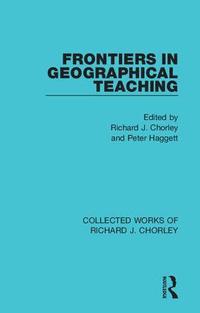
Frontiers in Geographical Teaching (inbunden)It was starting to affect teaching in schools. Quantitative techniques were apparently embraced by younger students, but viewed critically by 'the establishment'. A new GA committee was eventually formed in 1967 called the 'Role of Models and Quantitative Techniques in Geographical Teaching', which was chaired by Professor Stan Gregory.

A full issue of 'Geography' in January 1969 was devoted to the work of this committee.

More to come on this as the blog moves through the 1960s.

References
Walford, Rex. “On the Frontier with the New Model Army: Geography Publishing from the 1960s to the 1990s.”
Geography, vol. 74, no. 4, 1989, pp. 308–320. JSTOR, www.jstor.org/stable/40571739
Balchin's Centenary volume

Images in this post:
Peter Haggett (top)
Dick Chorley (bottom) - link to Cambridge Obituary

Another name associated with this period is William Vaughan Lewis.

It is worth finding and reading Haggett's own reflections on the Quantitative Revolution, which are found in this document (a useful 17 page PDF download for free) - several other former GA Presidents get a mention in this document.

Thursday, 7 November 2019

1937: Classifying the World's regions

In 1937, a committee of the GA reported their progress on defining the world's regions. It was a 30 page article, exploring classifications of regions, with maps such as those of Köppen and Herbertson. Some of those ideas can still be seen in textbooks over 80 years later.


References
“CLASSIFICATIONS OF REGIONS OF THE WORLD: REPORT OF A COMMITTEE OF THE GEOGRAPHICAL ASSOCIATION.” Geography, vol. 22, no. 4, 1937, pp. 253–282. JSTOR, www.jstor.org/stable/40560420.

Members
All GA Presidents, other than the Chair.

Sunday, 9 June 2019

1918: The introduction of Standing Committees

Standing Committees were introduced to the Geographical Association in 1918.

The first 4 committee established were:
  • Exhibitions
  • Regional Surveys
  • Syllabuses and Examinations
  • Books, Maps and Atlases
Update: 
In 1922, the Tours committee was added, as part of the growth of the Tours the GA was running at the time to parts of the UK and also into Europe.

One reason for their introduction may have been to reduce the burden of work on some of the early presidents and secretaries who must have worked non-stop to keep the various elements of the Association going, and also to bring in opportunities for volunteers / activists with particular skills to help out. There were changes in the responsibilities of the Honorary officers at the same time.
Over the years, the names of quite a few committees have come and gone, and been changed of course.

At the AGM in January, 2018, Balchin's book describes the formation of 4 Standing Committees, which were not organised in the same way as the present GA Committees.
Currently, the activity of the GA is overseen by Education Group (EG)

The Geographical Association's Education Group (EG) oversees the educational work of GA volunteers, covering all phases from foundation through to post-16 and Initial Teacher Training, as well as its international work and activities in areas such as Education for Sustainable Development (ESD) and Learning Outside the Classroom (LOtC).

The Education Group's functions include:
formulating the educational policy of the GA and ensuring that provision is made for all aspects of geographical education
guiding the GA Governing Body on priorities for the educational work of the GA
overseeing, setting priorities for, and co-ordinating the actions of its sub-groups (Phase Committees, Special Interest Groups, Communication Boards, Working Parties)
taking action on education and professional matters identified by EG itself or its sub-groups, the GA Governing Body or other GA Officers.

EG meets formally three times a year, usually in January, May and September.

Education Group members are all elected or appointed from the GA membership and comprise a Chair, a Vice Chair, GA President, GA Senior Vice President, GA Junior Vice President, and the chairs of EG's sub-groups (Phase Committees, Special Interest Groups and Communication Boards). Current EG sub-groups are:

There are three Phase Committees
Secondary Phase Committee - I have served on the SPC for 15 years, and until I stepped down this week, was the Secretary of the committee. We meet 3 times a year in London, and always offer workshops and lectures at the GA Conference, and have previously been involved in consultations on curriculum change, publications, reviews and other consultations.
Post-16 and HE Phase Committee

There is also a Presidents Group of Trustees.
Some of the committee functions have been devolved / changed to become Special Interest Groups (SIGs)

Currently the GA has the following SIGs.

If you would like to get involved with any of these committees, follow the link to their pages and contact the Chair to express an interest. We have recently recruited two new members on SPC for example.

The minutes I have been reading in 'Geography' and 'The Geographical Teacher' note quite a few Standing Committees that have come and gone over the years. I'd quite like to have served on some of these. One can imagine the tweed jackets, and ashtrays with smoke filling the rooms as the discussions continued....
I shall collate a list of these committees over the coming months, and post again several times to update you on some of the committees which have been and gone over the years. Some were short lived.

The Regional Survey Committee eventually led to the Land Utilisation Survey instigated by L. Dudley Stamp, for example.

Image on GA Committees taken from the GA website.

Image: SPC members, January 2019 - created by Ryan Bate
Please note that as of June 2019, I have stepped down from the SPC, to focus on my Presidency stint... starting in September 2019 as Junior Vice President.

Margaret Mackintosh RIP

Updated post. Sad news at the end of last week from colleagues who have organised the Charney Conference over the years of the passing of Ma...