Showing posts with label J A Steers. Show all posts

Monday, 18 September 2023

Dr Edward Christie Willatts OBE

Another unsung hero, linked with the work of Dudley Stamp and the Land Utilisation Survey but a great deal more besides.


Image from the 1930s. Could that be Edna Green too?

Image source: https://www.flickr.com/photos/lselibrary/3983645366/in/photolist-752dYN

Edward Christie Willatts, geographer and cartographer, born July 4 1908; died January 8 2000

Christie Willatts, who has died aged 91, was recruited by the wartime government to run a geographic information system in the days before the term itself was invented. He was well qualified to do so. He had been the organising force behind Britain's first land utilisation survey. From 1941, until his retirement in 1973, he used his energy, unrivalled knowledge and skill as a presenter of geographical facts, to help planners and decision-makers across Whitehall do their job better.

Professor Dudley Stamp recruited him to run the survey he had conceived of land-use across Great Britain. Willatts recruited and enthused thousands of volunteers, writing their instructions, supplying their maps, and then checking the results. 

He did this by travelling the country by motorcycle and sidecar with fellow geographer Edna Green, whom he married in 1937. 
When the government requisitioned the survey offices at LSE, he commandeered a barrow to wheel all the maps and records to Bacon's, their printers in nearby Fetter Lane. When these were blitzed, Willatts set up a drawing office in his own home.

The Royal Geographical Society awarded him the Gill Memorial in 1950 for research, and he was appointed an OBE in 1958. He helped to found, and later became an honorary member, of the British Cartographic Society.

Source:

Obituary from 2000: https://www.theguardian.com/news/2000/mar/17/guardianobituaries4

He also helped J A Steers with his survey of the coastline of England and Wales.

His Obituary in 'Geography' was written by GA President Professor Michael Wise

Willatts had trained as a teacher 1930-31 and, at a time when good teaching posts were difficult to find, had received an attractive offer from Hulme Grammar School, Manchester. As he was already undertaking fieldwork for the LUS in Surrey, Willatts seized the new opportunity offered by Stamp for a year at an annual salary of £200. The decision brought great good fortune to the LUS. Willatts' work involved visiting education officers to win support, recruiting schools and student volunteers to undertake the field work, writing and publishing leaflets and instructions, supplying the six inches to the mile quarter sheets, collating and analysing the completed sheets, arranging the publication of the one-inch maps and, later, the production of the County Reports.


Source:

“Dr E.C ‘Christie’ Willatts, OBE 1908-2000: An Obituary.” Geography, vol. 85, no. 2, 2000, pp. 166–166. JSTOR, http://www.jstor.org/stable/40573410. Accessed 16 Sept. 2023.
E. C. Willatts (1946) "Some Geographical Factors in the Palestine Problem" The Geographical Journal,Vol. 108, No. 4/6 (Oct. - Dec., 1946), pp. 146-173 (32 pages)
J. R. James, Sheila F. Scott, E. C. Willatts (1961) "Land Use and the Changing Power Industry in England and Wales", The Geographical Journal, Vol. 127, No. 3 (Sep., 1961), pp. 286-309
E. C. Willatts (1971) "Planning and Geography in the Last Three Decades" The Geographical Journal, Sep., 1971, Vol. 137, No. 3 (Sep., 1971), pp. 311-330

Other references:


A piece in the BCS journal:


Christie Willatts inspired and helped to train almost an entire generation of cartographers at a time when there were no formal qualifications in the subject outside geography and surveying. Forced on him by the wartime situation he recruited many young women some straight from school and who count themselves fortunate to have had such a teacher. Having begun his postgraduate career by training as a teacher and having held parttime university teaching posts at LSE and Birkbeck College in London, his role became one of combining research with trainingwithin the Civil Service. His national contribution lay (with Dudley Stamp) in the completion of the aims of the LUS, then of laying the groundwork for a national atlas and lastly of raising the profile of geographical cartography in Britain, with decisionmakers and national institutions.

Sunday, 17 September 2023

RGS 125th Anniversary Dinner - 1955

There was a strong representation of former GA Presidents at this event, held at the Dorchester Hotel - very posh.

In the speech that followed, the GA gets a mention, alongside the previous explorations and expeditions.


There is also a mention for recent Medallists, including Sir John Russell (another former GA President)


“The 125th Anniversary Dinner.” The Geographical Journal, vol. 121, no. 3, 1955, pp. 392–404. JSTOR, http://www.jstor.org/stable/1790929. Accessed 16 Sept. 2023.

Wednesday, 27 January 2021

St. Catharine's College, Cambridge

I have previously mentioned St. Catharine's College, Cambridge, and have heard a lot about it via Presidents who went there themselves.

Ashley Kent told me something about this, as being one of the 'hotspots' for Geography - something I'm going to develop a little more perhaps, by focussing on some of these other hotspots such as Hull and Bristol.

A number of Presidents can connect themselves to this college in some way, and I have previously blogged about them.

The St Catharine's College website is here.

There is an archive of magazines dating back many decades, and in which one can find mentions of the GA Presidents who have been connected with the college. I had a quick look and 

Here's Ashley Kent with some memories of St. Catharine's:

My college...St Catharine’s College Cambridge....has always been a Geography ‘hotspot’....a great place where quite a few people who were prominent in the GA...attended.
These include...Steers, Balchin, Spooner, Kent, Bradford, Keeble et al. Many of us were very fortunate to have been tutored by ‘Gus’ Caesar.......arguably the ‘source’ of an extraordinary group of geography professors across the world.....Haggett/Dury/Hall/Randall/ et al...a remarkable ‘father figure’ to many.

Someone who Ashley mentions is 'Gus' Caesar.

More on Gus was added in a separate blog post previously.

J A Steers was someone who was very definitely linked with the college.

His memorial has been mentioned as well. It can be seen in the college magazines, which would also reveal other details on the geographers who passed through the college. This was a signed silver salver presented to J A Steers in 1966 on the occasion of his retirement:

Sunday, 28 June 2020

Sir (Henry) Clifford Darby

Clifford Darby was never a GA President, but he was associated with the GA in some ways, and was certainly a significant figure in British Geography.

He was present at the 50th anniversary celebrations of the GA's Cambridge Branch, as featured in a previous blog post.

This piece from the British Academy gives a detailed biography of his life and geographical achievements, which were many.
(PDF download)

He was able to gain a scholarship to Cambridge from his village in Wales where he was born in 1909. He lived in lodgings as he couldn't afford the college lodgings. His tutor was former GA President Alfred Steers.
He was also connected with several other former GA Presidents.

Early in his academic career, he was chosen to assist Frank Debenham with some research in Southern Africa. When he returned he used his experiences in his other work.
His dissertation was on the role of Fenland in English history. His early work was a little deterministic, but he reworked it later for a different emphasis on the changing landscape and the draining of the Fens. An area of personal interest given the location of my school in Ely. Not everyone at the University was as encouraging - I liked this story:

His supervisor was Bernard Manning - not the comedian.
He was involved in conversations between the GA and the Historical Association following a joint meeting on "the new historical geography" in 1932. He shared the Common Room with a range of interesting characters including M.R. James (who also wrote about East Anglia)
He also assisted George Philip in the production of their atlases.

During the Second World War, as shown above, he joined many other geographers in helping with the war effort.

In 1945, he took over from another former GA President Percy Maude Roxby at the University of Liverpool.
He took over from Alfred Steers on his retirement in 1966 at the University of Cambridge, having also spent time at UCL (an insitution with strong connections with many former GA Presidents)
He died in 1992.

Source:
https://www.britannica.com/biography/Clifford-Darby
https://www.thebritishacademy.ac.uk/publishing/proceedings-british-academy/87/darby-henry-clifford-1909-1992/

Update: December 2020
In 2003, Chris Kington asked a number of former Presidents what had sparked their passion for geography. He lent me the letters and Dick Lawton mentioned the influence of Roxby and other geographers including Clifford Darby and Bill Mead on his own academic career at the time.
He says they taught him not only about geography, but how to be a geographer...

Tuesday, 9 June 2020

1967: Mr. E C Marchant HMI

Last updated October 2023

E C Marchant was a teacher at Marlborough College, a Headteacher in India and HM Inspector of Schools, but also a cartographer and scholar who travelled with J A Steers.

I was not able to find out as much about Ernest Cecil Marchant as I was about some of the other, older Presidents, which is a feature of this period generally, but eventually developed a suitable post with the thanks of others.
Marchant had featured in a previous article from 1960, describing a conference in Manchester, where he spoke in his position as HMI. He was also mentioned by Michael J Storm, when he became President 20 years later, who was also a school inspector. 

I then discovered a link with Marlborough College, C C Carter and Cyril Norwood. This led me to go back to the very helpful Archivist at the college - see later.
https://www.geos.ed.ac.uk/~rsgs/cgi-bin/ifa_series1.pl?series=3624

The link, which can be seen above describes a bequest of lantern slides to the Royal Scottish Geographical Society, who I may have to visit perhaps as well during my Presidential year to discover any further artefacts they may have relating to previous GA Presidents with a Scottish connection in particular.

This collection was donated to the RSGS in 1997 when Marlborough College was undergoing refurbishment. The materials date largely from between WW1 and WW2. At that time the Geography Department at Marlborough College was directed by E C Marchant who later became Senior Inspector of Schools. He was assisted by C C Carter whose text "Landforms and Life" was one of the best sellers for a generation. Carter and Marchant established a tradition in which Geography was firmly rooted in practical work and case studies long before these became so fashionable elsewhere. A great deal of mapwork was done, and the relief models were clearly made to illustrate famous areas, such as the Isle of Purbeck. 
Lantern slides were used to illustrate teaching and practical work, largely surveying, was employed.

Acknowledgements to Christopher Joseph, Head of Geography, Marlborough College for text.

During this time, in the late 1960s, the GA's Council was being chaired by H. J. Fleure.

Marchant is also quoted in Ivor Goodson's book, with some thoughts from inspections.

The advances in university geography after the Second World War partly aided the acceptance of geography as a subject suitable for the most able children, but problems remained. In 1967 Marchant noted: 'Geography is at last attaining to intellectual respectability in the academic streams of our secondary schools. But the battle is not quite over'. He instanced the continuing problem: 'May I quote from just two reports written in 1964, one of a girls' grammar school and the other on a well-known boys' independent school. First, 'geography is at present... an alternative to Latin, which means that a number of girls cease to take it at the end of the third year... there is no work available at A level'. Or second, perhaps a more intriguing situation: 'In the ‘O’ level forms, the subject is taken only by those who are neither classicists, nor modern linguists, nor scientists. The sixth form is then drawn from this rather restricted group with the addition of a few scientists who failed to live up to expectations'
To seal its acceptance by the universities and high status sixth forms, geography had to embrace new paradigms and associated rhetoric.  The supreme paradox is that the crisis in school geography in the late 1960s led not to change which might have involved more school pupils but to changes in the opposite direction in pursuit of total academic acceptance. This push for university status centred around the 'new geography', which moved away from regional geography to more quantitative data and model building. The battle for new geography represented a major clash between those traditions in geography representing more pedagogic and utilitarian traditions (notably the fieldwork geographers and some regionalists) and those pushing for total academic acceptance.
Marchant's Presidential Address connected with his interest in school inspection - which I guess went down well with the audience - and was called 'Some responsibilities of the Teacher of Geography'.

In it, he talks about the role of the teacher, with some interesting quotes, from the perspective of the school inspector, and also relating to his travels in what he called the 'Old World'.
He started by mentioning Professor Haggett, who had spoken at the IBG conference he had attended the previous year in Sheffield, and said that although it had been fascinating the discussions that had taken place had mostly been beyond what most teachers would usefully apply.

I wonder what impact that work had on schools from the perspective of the school inspectorate of the time.
He said of the geography teacher that, "he (sic) must remember that he is preparing the majority of his pupils not for degrees in geography, but pretty soon for living to the full, and perchance for contributing to the full, in a bafflingly complex and ever-changing world".

This was an era of the quantitative revolution, and the Madingley Conferences, which I have blogged about previously, which happened about this time. Marchant's views are interesting.
He referred to the comments of Joseph Acton Morris in 1965 who called for more reality in teaching.
He said of some teachers that they "deceive themselves intop believing that once a pupil has drawn a sketch map or looked at one in a textbook, he knows what a landscape looks like, and what it is like to live there." He shared a map of most of the SE which was labelled "Fruit and Vegetables", and of a textbook in a primary school on the Geography of Norfolk which had a map labelled "Wheat and Turkeys".

A few other quotes from his address:
"we have a vital responsibility to ensure that our subject is not superficial, but is intellectually rigorous".

He also introduced me to a new word: pabulum.

He talked of a student whose "mind had been cloyed with a pabulum of what were, to him, quite meaningless abstractions".
He says that this (the late 60s) was "the era of mathematical geography".

Marchant also wrote a book called 'The Teaching of Geography at School level' which contained his thinking, based on his experience of school inspection.

He also co-wrote a book on geography of Europe with another GA President: C C Carter, with whom he was connected at Marlborough College. Carter was also mentioned in his Presidential address, where he talked about the need to have the grammar in geography to help with the rigour of dealing with its vocabulary.

At this point, I had no image or further information, but contacted Marlborough College.

The archivist Grainne proved very helpful once again and provided further details for me.

Ernest Cecil Marchant
Perse School
Scholar of St John’s College, Cambridge
1st class Geography Pr.1
Marlborough College 1931-38
Principal of Daly College, Indore 1939

An impressive building, built from concrete it appears.
CIE 1946
HM Inspector of Schools

The link with the Perse School proved to be interesting as that is local to me, in Cambridge.
I also managed to get an image from Grainne, taken as part of a staff photo. ECM is the gentleman in the middle of the photo.

In 1972, he led a Working Party of the GA and RGS exploring Geography and Careers.

"The eminent French geographer, Henri Baulig, insisted that there was nothing in the realm of the natural sciences which gave a more fundamental training of the mind than "placing the student in front of a landscape, or a map or photograph, and inviting him, drawing also on his previous knowledge, to make certain individual deductions and to be prepared to defend his conclusions. He may not get very far: certain aspects of the problem may escape him : but his conclusions will be none the less valuable; for they will be based on his own observations, supported by previous knowledge, and arrived at through the chain of argument by which he links up the one with the other."
Source: MARCHANT, E. C. “Geography for Careers. REPORT OF THE FINDINGS OF A WORKING PARTY OF THE GEOGRAPHICAL ASSOCIATION AND ROYAL GEOGRAPHICAL SOCIETY.” Geography, vol. 57, no. 4, 1972, pp. 327–332. JSTOR, www.jstor.org/stable/40567916. Accessed 3 June 2020.


Marchant died in September 1979, aged 77.

References
No Wikipedia page - perhaps one needs to be made for Marchant.

Shepherd, W. H. “A One-Day Conference on the Teaching of Geography: A REPORT.” Geography, vol. 45, no. 4, 1960, pp. 300–303. JSTOR, JSTOR, www.jstor.org/stable/40565188.

Presidential Address
MARCHANT, E. C. “Some Responsibilities of the Teacher of Geography.” Geography, vol. 53, no. 2, 1968, pp. 129–144. JSTOR, www.jstor.org/stable/40566906.

Obituary in Geography by J W Morris
Morris, J. (1980). MR. E. C. MARCHANT. Geography, 65(1), 58-58. Retrieved August 26, 2020, from http://www.jstor.org/stable/40570277


Book: https://www.goodreads.com/book/show/3554461-the-teaching-of-geography-at-school-level

Thanks to Grainne for her help with this entry.

More on Daly College:
Daly College website also had a small photo of Marchant when he was the Principal from 1939-1945, before returning to the UK to work in school inspection.

He was mentioned in a Principal's report from 2007, attended by his children apparently.

The fourth and last personality I will highlight is a former Principal who again has nothing named in his memory. Mr. E C Marchant, with the support of the then President, Nawab of Bhopal, and the then Vice President, the Maharaja of Panna, visualised an independent and egalitarian India and had the courage to transform the Daly College from a Chief’s College into a Public School. He not only reorganised the system along modern day lines but met with the Heads of some other schools and thus made the Daly College a founder member of the Indian Public Schools Conference.

He helped found the Indian Public Schools' Conference in 1939, and attended the inaugural meeting.


He was made a Companion of the Order of the British Empire (CIE) in the Birthday Honours List in 1946.
Companion of the Order of the Indian Empire (CIE)

If anyone has further information on E C Marchant (ECM) please get in touch.

Updated July 2022

A small piece in Marchant's obituary mentions the Great Barrier Reef exhibition, which he undertook with J A Steers.
This led me back to that expedition

And a Maplab article with an example of a map that he produced.


The Low Isles, from a survey by M.A. Spende, T.A. Stephenson, and E.C. Marchant, 1929.
Great Barrier Reef Expedition 1928-1929 Scientific Reports, Volume III, No. 2

Updated August 2023

He lived at 7 Melbourne Place, Cambridge in 1911- his father was born in Downham Market - a town I pass through on the way to work.

Updated October 2023

He took part in a 1960 conference in May, at Manchester University, attended by 200 teachers.

The opening lecture was given by Mr. E. C. Marchant, H.M.I., who spoke on Geography and Education. Mr. Marchant suggested that the impact of geography on the education of the pupil might be looked at at three levels

1. The level of purely factual information
2. The level of intellectual training

he late Mr. C. C. Carter, remembering his own training in the classics, wrote a Geographical Grammar which had to be learnt as a preliminary to a course in geography, by which means he hoped to impose a rigorous training equivalent to the one he himself had enjoyed. Mr. Marchant believed that there is a "grammar" of geography and that it is salutary to the discipline of the subject that that grammar be at some time acquired. However, modern language teaching largely derives the grammar from the language, not the language from the grammar; and scientific method requires that generalizations be built up empirically, not learnt at the outset. Working from the particular to the general is desirable also in order to enlist the active interest of the child. In geography, field work and its methods - observation, recording, interpretation of pictures and statistics - are important illustrations of this.

3. The level of geography as a humanity

 If in addition to selection the geographer can use the overtones of words to evoke the spirit of a region then he is truly being both a scientist and a humanist. Roxby, Fleure, Mill and Vidal de la Blache have used the evocative power of words.

"Mankind must be made much more aware of the world it lives in, its rigorous limitations and its limited possibilities. Above all it must be assisted and persuaded to think of the world as a whole"
D. L. Linton

Monday, 8 June 2020

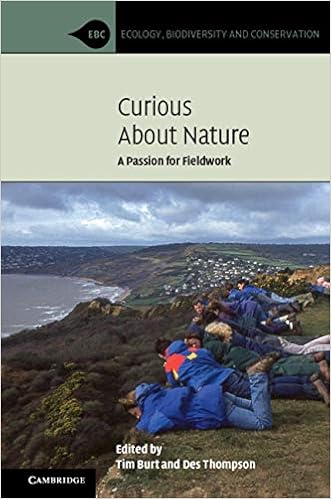
Curious about Nature

I have previously blogged about the Field Studies Council's 75th Anniversary celebrations which were attended by quite a few former GA Presidents, and the Past and present GA President. They presented and were mentioned in other presentations, particularly one by Professor Tim Burt, my former tutor when I was an undergraduate at Huddersfield Polytechnic back in the day.

This event was also a launch event of a kind for a new book called 'Curious about Nature', which was written by Tim along with Des Thompson. This explores the development of field studies and the contributions of individuals. It is available to purchase from all good book shops, and a sample can be viewed on Google Books - see the link at the bottom of this post.

A few GA Presidents of note are mentioned in the book, when they had a link with the development of fieldwork.

There is a mention for Geoffrey Hutchings, the master of the fieldsketch.
This is followed by a paragraph on the influence of Sidney Wooldridge and Dudley Stamp.

There is also a picture of J A Steers, which I was after for ages until Andrew Goudie found me one - I have added this, along with other information to an update on the post for J A Steers elsewhere on this blog. Use the SEARCH function to find any previous Presidents.

A review from the present GA President Gill Miller, who has been associated with FSC for many years:

'This book amply delivers its strapline 'passion for fieldwork'. With its informal yet informed writing, this eclectic collection of practitioners and research findings provides something for everyone. There is no denying its central message, that field studies inspire and ignite curiosity and remain central to our guardianship of the planet.' 
Gill Miller, President of The Geographical Association, 2019-20

Source:
https://books.google.co.uk/books?id=2onPDwAAQBAJ&lpg=PA80&dq=cuchlaine%20king%20nottingham&pg=PP1#v=onepage&q=cuchlaine%20king%20nottingham&f=false

Sunday, 8 March 2020

1959: Professor J A Steers, CBE

Updated August 2023

Professor Steers is probably the definitive expert on coastal processes and landscapes, particularly those which have influenced the coastline of England and Wales. He was one of several GA Presidents to be associated with St Catharine's College, Cambridge and Gus Caesar.

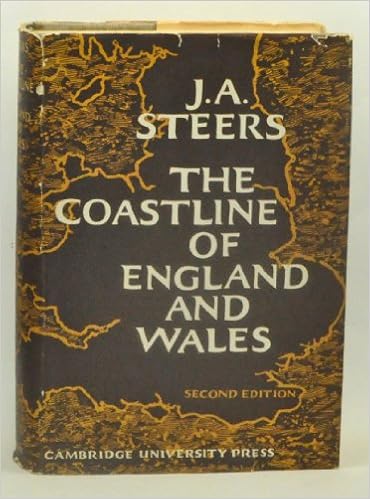
His book on the coastal landforms of the UK is one that sits on my shelves to this day. I have a nice old edition with a green binding which dates back to the 1950s, and which I referred to quite recently to answer a question on Chesil Beach that someone asked.

He sits alongside Denys Brunsden, who will appear in the blog several decades hence, as key coastal geographers, who have shaped how we understand and teach these dynamic landscapes.

Steers was linked to the University of Cambridge, and also with a previous President: Frank Debenham. This, from the University of Cambridge alumnus page, describing the introduction of the Geography Tripos to the university following GA an RGS campaigning which has been well covered in earlier posts near the start of the 20th Century:

The first candidates for the Geography Tripos sat the exam in 1920, resulting in 2 students receiving a 1st Class for their Part 2 exams, one of whom was JA Steers, who would go on to become Professor of Geography and Head of Department 1949-66.

Source: https://www.geog.cam.ac.uk/alumni/earlyyears/

This piece from Nature in 1949 announced the arrival of Steers at the University of Cambridge, where he replaced another former GA President: Frank Debenham. (who had his own extensive entry in the blog a few months ago)

MR. J. A. STEERS, who, in September, is to succeed Prof. F. Debenham as professor of geography in the University of Cambridge, was one of the first generation of geographers to take the newly constituted Geographical Tripos after the First World War. After a short spell of teaching at Framlingham, Mr. Steers returned to Cambridge to join the staff of the Geographical Department under Philip Lake. His College elected him to a fellowship, and before many years St. Catharine's became the first men's college to offer scholarships in geography. This led to a remarkable concentration of able geographical students in the College, which has resulted in a rapidly lengthening list of St. Catharine's geographers entering university posts–fifteen in the last ten years. In his College, Mr. Steers has served successively as dean, tutor, senior tutor, and president.

Professor Steers' address was on the subject of Physiography (also known as geomorphology) and he spoke about the importance of this aspect of geography.


Steers wrote many books on coastal landscapes, several of which I used for my own teaching over the years.
This quote is taken from Rex Walford's book, and dates to 1944, when Steers was campaigning to help "save the coast" by educating the public about its value. This sort of policy work was vital following the war.


This campaigning of Steers was mentioned by G. R. Crone in his chronology of 20th Century geography.


There are some references to J A Steers in a piece by D Stoddart in a piece on the founding of the IBG. I love this image, showing J A Steers talking, and which was apparently taken around the year 1938.

Source: Stoddart, D. R. “Progress in Geography: The Record of the I. B. G.” Transactions of the Institute of British Geographers, vol. 8, no. 1, 1983, pp. 1–13. JSTOR, www.jstor.org/stable/622270

I have some lovely memories of Professor Steers from a former student of his, who would later become a GA President himself: Derek Spooner. 

In July 2019, he shared his memories of Professor Steers to me in an e-mail.

I first encountered this name in 1960, when I was in the sixth form and was given Steers' 'The Sea Coast' as a school prize. A marvellous, inspiring book in the wonderful New Naturalist series, which hooked me at the time on physical geography. Two years later I found myself at Cambridge studying Geography in the Department where Steers was Professor, and in St Catharine's College where he was a Fellow....

Truth to tell his lectures were rather disappointing - he was rather a shy man and certainly not a showman. He was very tall and bespectacled. He had been Head of Geography since 1949. He had been extremely influential in developing Geography in my College to an outstanding position within the University. By the time I arrived in Cambridge, Steers had become the leading coastal geomorphologist of his era. His studies of Scolt Head Island on the Norfolk coast were famous and the student trips he took there were legendary, with students getting stuck in the mud - certainly wouldn't have passed a risk assessment! I was not aware that he had just been President of the GA, or that he was also very active in the RGS, or indeed had become a leading figure in conservation policy.

'Alfie' was his nickname. He retired in 1966. I had started doing postgraduate work and I can remember being invited to a sherry party at his house in the posh western suburbs of Cambridge. His wife, Harriet, was also a Geography lecturer. Her speciality was the regional and historical geography of the USSR......

In his retirement I believe he continued his coastal studies. Ron Martin, another lecturer in the Department, told me that some times he would get a call from 'Alfie' asking him to drive him up to Scolt Head Island. Sounded as if he never really retired.

Here's a image from the copy of one of Steers' books that sits on my shelf. It has some lovely plates in it.


His author profile on the Harper Collins site is useful as well.
(1899–1987). Geomorphologist, Cambridge geographer, graduate and later Fellow of St Catherine's College. Professor of Geography at Cambridge 1949–66 and the authority on the moulding of coastlines.
Member of expeditions to coral reefs Australia 1928, 1936 and Caribbean 1939.

Concerned above all with surveys of British coast from a classic study of Scolt Head Island (1934) to the standard work The Coastline of England and Wales (1946). Much involved with coastal protection and a keen exponent of coastline preservation on Nature Conservancy, National Parks Commission and National Trust’s Enterprise Neptune.

He was awarded a CBE in 1973.

He was also involved in the committee which was established to ensure that an event like the 1953 East Coast Floods could not happen again in the same way.

His wife was also a geographer and published her own books, although I was interested to see that in this ad for one of her books in 'Geography' that she also added 'Mrs. J. A. Steers' in brackets after her own name Harriet Wanklyn. See image opposite.

An obituary was published in 'Geography' in 1987, written by David Keble.

References
Wikipedia - Professor Steers has no entry - he surely deserves one given his significance

STEERS, J. A. “Physiography: Some Reflections and Trends: Address to The Geographical Association.” Geography, vol. 45, no. 1/2, 1960, pp. 1–15. JSTOR, JSTOR, www.jstor.org/stable/40565103.

Cambridge University alumnus page: https://www.geog.cam.ac.uk/alumni/earlyyears/

Crone, G. R. “British Geography in the Twentieth Century.” The Geographical Journal, vol. 130, no. 2, 1964, pp. 197–220. JSTOR, www.jstor.org/stable/1794582

The RGS-IBG present an annual prize for the best undergraduate dissertation named in Steers' honour.

Referenced here for his work on Scolt Head Island: http://archive.jncc.gov.uk/pdf/gcrdb/GCRsiteaccount2038.pdf

STEERS, J. A. “Physiography: Some Reflections and Trends: Address to The Geographical Association.” Geography, vol. 45, no. 1/2, 1960, pp. 1–15. JSTOR, www.jstor.org/stable/40565103

Stoddart, D. R. “Progress in Geography: The Record of the I. B. G.” Transactions of the Institute of British Geographers, vol. 8, no. 1, 1983, pp. 1–13. JSTOR, www.jstor.org/stable/622270

As always, if anyone has further information on J A Steers or images, please don't hesitate to get in touch.

Updated June 2020

When writing a post on Tim Burt and Des Thompson's book 'Curious about Nature' I found a picture of J A Steers taken in Oxford in 1954 by E W Gilbert - shown here.... at a meeting of Section E of the BAAS.


Source: https://books.google.co.uk/books?id=2onPDwAAQBAJ&lpg=PA80&dq=cuchlaine%20king%20nottingham&pg=PA79#v=onepage&q&f=true


Updated November 2020
There is a prize in his name for geomophology


Updated January 2021

From the St Catharine's college magazine - the text of a memorial address.


The magazine of the College society has details of his memorial address by Dr David Keeble, who was also linked with the GA:

https://www.society.caths.cam.ac.uk/Public_Magazines/1987r.pdf

Find it on p.31 here.

Each of us brings to this celebration our own personal memories of Alfred: of a tall, dignified presence crossing the College court, walking-stick in hand; of the personal warmth yet directness of his greeting in the Senior Combination Room - "sit down, sit down, have a glass of sherry"; of lectures in the semi-darkness of the Department of Geography's lecture theatre, where Alfred's impressive expositions of slides of coastal landforms sometimes demanded careful listening for those seated beyond the second row; of his famous field trips to Scolt Head Island, where an immaculate dark suit would be exchanged for shorts in the warden's hut, followed immediately, and to the horror of inappropriately dressed visitors, by a plunge into the muddiest and roughest salt marsh!

He was Church warden of St. Botolph's Church

As postwar governments grappled with growing planning pressures on Britain's precious but vulnerable coastline; as Britain's coastal defences crumbled under the 1953 North Sea surge; as the National Parks Commission, the Nature Conservancy, and the National Trust sought to devise effective and appropriate management policies for their coastal areas, it was to Alfred that they turned for scientific advice and informed appraisal. So too did the Council of Europe, who appointed him Coastal Consultant to their Conservation Committee. Alfred could be forthright in his condemnation of bad coastal management, criticising the War Office for example for such coastal eyesores as derelict huts, looking, as he scathingly remarked, "like a lot of false teeth sticking up!" But his writings and lectures on coastal problems - especially a major Royal Geographical Society lecture he gave in 1944 - were enormously influential in shaping the thinking of such ministers as W. S. Morrison

Updated August 2023

Monday, 5 August 2019

University of Cambridge

The history of the GA and many of its Presidents is closely tied to Oxford University of course, where the association was founded.
However, there are also strong links with the University of Cambridge.

I've been fortunate to have a connection with Homerton College, going back to the days of Rex Walford, and also spent time at Sidney Sussex before, as well as teaching several students who went on to study Geography there, and more who studied other subjects.

The 100th Anniversary of Geography at Cambridge has been marked by a publication which is a free PDF download.


This is well worth reading, and has plenty of interesting details on some GA Presidents who were associated with the department.

Frank Debenham was the first Professor of Geography at the University. He has a very lengthy entry which will be posted sometime next year on the current posting schedule.

Professor J A Steers followed him - another GA President who is an expert in his particular field.

This magazine is well worth reading, as it gives an insight into early fieldwork and pedagogies.

Margaret Mackintosh RIP

Updated post. Sad news at the end of last week from colleagues who have organised the Charney Conference over the years of the passing of Ma...