Showing posts with label Historical Geography. Show all posts

Saturday, 12 October 2024

Oskar Spate

Oskar Spate is a name that has been mentioned a few times in the documents that I read through while writing my history of the GA alongside the biographies of the Presidents.

A Wikipedia entry here explains a little of his connections with Geography.

I also came across a more recently published biography on his connections, and discovered he was another geographer who came through St. Catharine's College, Cambridge.


Thursday, 1 September 2022

2022: Professor Alastair Owens

It has been my pleasure to work with Professor Alastair Owens this last year, who has served as Vice President during my term as President. 

He takes over as President today!

He was very much involved in the GA Conference 2022, and has created the theme of 'Collaborative Geographies' for 2023.

More on that later in this post.

I hadn't met Alastair before he was named as the next VP, and he kindly came up to Ely in a gap in lockdown to have a wander and a chat about what the role might involve, and my own personal involvement with the Geographical Association. We have worked well together and he has been very supportive. He also had an important job to do at the GA Conference in April 2022, and introduced me at my Presidential Lecture amongst other things.

I sent Alastair the questions that I had given to all other Presidents and used them to create the post below. I'm grateful to Alastair for the lovely level of detail that he included here:

On his birth:

I was born in a cottage maternity hospital in a small town called Heswall on the Wirral, Cheshire in 1971. My father was a Church of England curate and we lived in village called Pensby; my mother had given up work as a Biology Teacher to start a family (I am the eldest of four, all born between 1971 and 1977).

On his childhood and school memories:

In 1974, aged three, I moved to a small town called Alsager, near Crewe, in south Cheshire. That was a happy time and I joined St Gabriel’s Roman Catholic Primary School for most of my primary education. It was a memorable school, newly-built and very 1970s with an open plan layout with curtained bays at the sides for ‘floor time’ activity and discussions. Mine and my siblings’ attendance caused a minor local stir as my dad was the vicar of an Anglican church and we attended a Catholic School. It was great though, as we were always given sweets on saints’ days! 

Here's Alastair in 1974 showing his fashion sense in a rather fine tank top.

He said:

I don’t have many geography memories from that time, but there was a short-lived acting career. I played Mowgli in a production of the Jungle Book in 1981 – I am the skinny one wearing a sheepskin rug) – an episode for decolonising, I think – and Michael in Mary Poppins. I think it was my ability to sing in tune that got me these roles!


At that point Alsager was being developed as a commuter town, but still felt quite rural and I enjoyed a ‘free-range’ child, pedalling around on a basic but trusty Raleigh bike (rather uncool compared to most of my friends’ ‘Choppers’), riding through fields and down disused railways with my buddies. I wanted to be a farmer (my best friend had a farm and collecting eggs from the henhouse was a favourite highlight when visiting) or a train driver, but had no inklings about becoming a Professor of Geography at the point.

On his parents and their career and family movements, plus links with politics and 1980s Britain:

My parents were quite political, my dad in particular, and in the 70s he occasionally got labelled ‘the Commie Vicar’; they were both members of CND. In fact it was politics that moved him to a new job in a place called Brinnington in Stockport, near Manchester. The move took place in 1983, just before I went to secondary school. The majority of Brinnington was comprised of a large council estate, constructed in the 1960s. It was (and remains) pretty deprived and there were many associated problems such as ill health, low educational attainment, crime and substance misuse. Of course, it was also a place of great warmth and joy, generosity, talent and care and I suppose that’s where I became very aware of the significance of place, including of the ways that certain places get pathologized and demonised.

We lived in a vicarage (one of the few detached homes in the neighbourhood) right in the middle of Brinnington, next to the church, across from a chippy and between an old people’s home and the Labour Club. This was formative. 
Many people come to visit vicarages, looking for food, shelter, money and protection. 
We were all quite adept as teenagers at handling callers, making cups of tea and sandwiches, often for regulars who you would get to know. But others visits were troubling: a night when I was in on my own, a man forced his way in to headbutt his girlfriend, who I had let in for protection; another man turned up on the doorstep with a stab wound; a trans person came exasperated by continuous taunting and discrimination; and a plastic carrier bag full of fivers and tenners was once handed in (‘don’t ask me any questions') for safe keeping.

While living in Brinnington, my father’s work became part of a politicised religious response to the ‘crisis’ of the British inner city in the 1980s. Following in the trail blazed by publications like Faith in the City (1985) and identifying with a Christian Socialist tradition, he used the church buildings to offer a range of community-centred services, from providing access to cheap food and furniture (donated from wealthier parts of Cheshire and South Manchester), to advice and counselling services, drugs advice and even a needle exchange (it was also moment of concern because of the AIDS pandemic). 
I remember this vividly and becoming a bit of an adjunct to parish life. 

One popular weekly event was prize bingo (mainly prizes of groceries bought from Sainsbury’s), and sometimes I used to have the job of placing the balls on the number tray after the caller (usually my mother) had read them out. 
This experience (living as the son of a clergyman in Brinnington not the bingo balls) became the inspiration for a major research project that I am currently completing and on the back of which I am currently writing a book (with Historian David Geiringer), exploring the response of the Church of England to the crisis of the inner city in Britain from the 1970s to the 1990s.

Alastair told me about his secondary school experiences and early interest in geography:

This life in Brinnington contrasted sharply with my schooling. 
One of the problems when moving to Brinnington was finding a place in a secondary school. It went against my parents’ principles at the time but I ended up going to a private school, Stockport Grammar School, supported by a government funded ‘assisted place’ (a scheme that funded children from low-income families to go to a private school). 

Stockport Grammar provided a wonderful education and many opportunities, offering privileges that contrasted sharply with the lives of people in Brinnington.

Through school I became increasingly interested in History and Geography, inspired by some very good teachers. 

A history teacher – Nicholas Henshall – was exceptional. He encouraged us to read academic texts and get enthused by historiographical argument and debate and instilled rigorous skills of analysis and essay writing techniques (which I use with my own students). 

The Geographers at Stockport Grammar were an eccentric and likeable bunch teaching different specialisms at A Level: the EEC with Mr Martin; Africa with Miss Backhouse; methods and techniques with Mr Barr (a north-American trained spatial scientist and product of the ‘quantitative revolution’); and physical geography with head of department, Mr Durnall (aka ‘the Colonel’), who always wore a white coat!

On his university studies, he faced some difficult decisions:

Undecided whether to study Geography or History, in the end I decided to apply for Geography courses at university. 

I got an offer from Cambridge but didn’t get my grades and wound up at my insurance choice, King’s College London. 

This of course has strong links with many former GA Presidents including Laurence Dudley Stamp.

I moved to London in 1990 and have been there ever since. 

King’s was exciting – buzzing, central, right at the heart of what was going on politically and economically. I persuaded them to let switch from BA Geography to BA Geography and History and made the most of a degree that allowed me to study modules across the University of London. 

At King’s I met historical Geographer David Green – at one time a key supporter of the GA and organiser of the annual conference. 

He was my tutor and dissertation supervisor and we’ve been good friends and collaborators ever since.

He’s the reason I ended up an academic Geographer, a model mentor and support, who I have learnt a great deal from. I was taught by several other inspiring geographers in London – Latin Americanist Linda Newson, Political Geographer Keith Hoggart, Cultural Geographer Peter Jackson, and Historical Geographer Richard Dennis. 

But London itself was as much a (historical)-geographical education as the degree course. 

I started out in student digs in Denmark Hill, before spending a year in a grotty student house in Peckham. In the final year, thanks to the early 1990s housing crisis, we lived in a cheap but (fairly) luxury flat on the Thames on the Isle of Dogs. My bedroom overlooked the river.

Alastair pictured in 1993 as a student. I had very similar glasses at the time.

Alastair moved on to telling me about his work and career to date:

I graduated in 1993 fairly convinced that I wanted to do a PhD, but failed to win funding to start straight away. Over the next year I had two jobs: working for a publishing company producing an encyclopaedia with ‘experts’ from the BBC’s Antiques Roadshow, and working as a Research Assistant for David Green at King’s on a project looking at the geography of wealth and inequality in Victorian London.

Victorian London is still a major interest and the focus of the specialist third year course I teach in my current job.

This set the scene for a PhD that I started in 1994 at what was then Queen Mary and Westfield College, over in East London. 

There I was supervised by Geographers Humphrey Southall and Miles Ogborn and undertook research on families, wealth and inheritance in the nineteenth century. 
The PhD was funded through a Teaching Assistant position in the Department of Geography at Queen Mary where I ran tutorial and seminars for undergraduate students and taught on fieldtrips. It was wonderful ‘on the job’ training and Queen Mary offered a warm and supportive working environment, with many inspiring colleagues (and friends of the GA) such as Ray Hall and Roger Lee.

Soon after starting at Queen Mary, in 1995 I moved to Hackney and have lived within a few hundred yards of the place I first rented ever since. 

Hackney is, in my view, the best place on the planet and an education in itself. 

Alastair's Twitter account is @AlastairHackney which reflects this love of the place.

From singing in a community choir to having various voluntary and community roles, I feel deeply embedded in the place. The richness and diversity of experience in Hackney is a constant geographical inspiration. It is also grounding; intellectual flights of fancy only go so far in a place as diverse, complex and unequal as Hackney; it demands a more immediate response.

I was lucky enough to get a job as soon as my PhD funding came to an end in 1998 (I hadn’t actually finished the thesis) and moved to what was then the University of Luton as a Lecturer in Human Geography. It was a small Department and there were only really two of us who taught human geography, so I quickly developed a wide-ranging teaching portfolio. Aside from the longish commute, it was for most of the time a happy institution in which to begin a career and I found Luton as a place very interesting – it felt to me like a bit of the North in the South East! With the different priorities of a ‘new’ university I got diverted from some of my core historical research interests to undertake collaborative projects with university colleagues working in the area of local healthcare provision. 

A particularly successful qualitative research project explored the palliative care needs of South Asian people living in Luton, off the back of which we published a number of articles and at that point I nearly switched my academic focus to work in health and social care services research. 
This was in part triggered by the decision to close the department I was working in (the Department of Environment, Geography and Geology) due to low student recruitment; redundancy or a lectureship in health and social care were my options. It was a painful time for many of my colleagues who had been at Luton for many years. 

In the end I took the former option as I was offered a temporary job back at Queen Mary.

Queen Mary, like Hackney is an important place for Alastair:

I returned to Queen Mary in 2001 and have been there ever since. 

In the early years – as has become the norm in HE – I got by on a number of short-term contracts filling temporary positions, but applied for and got a permanent post in Human Geography in 2005. 
Queen Mary has been a wonderful place to develop a career. Deeply rooted in its East London location, but global in its outlook and high in academic aspirations, it has often felt a privilege to be part of its diverse community. 
It has a very open intellectual culture where I have been free to work across disciplines and with people and organisations outside of the university. 
I’ve worked alongside and with many remarkable geographers at Queen Mary – Alison Blunt, Kavita Datta, Jon May, Miles Ogborn, Catherine Nash, Kate Amis, Marta Timoncini (to name just a few) – but perhaps the thing that has really made my career has been the many collaborations that I have been able to sustain outside of the university, especially with museum, heritage and community organisations. 
Centred around historical research interests spanning the period from the 1800 to the present, and often concerned with the historical geographies of London, these collaborations have included work with: Museum of London Archaeology, the Bank of England, the V&A Museum of Childhood, Spitalfields Music and many more and brought many wonderful people to work with me as PhD students. 

A particularly rewarding and long-lasting series of collaborations – usually with my colleague Alison Blunt – has been with the Museum of the Home (in Shoreditch), where, often following Alison’s discipline-leading interest in ‘geographies of home’, we have worked together to explore aspects of the domestic life and experience in the past and the present (including our current project with geographers Georgina Endfield and Kathy Burrell at the University of Liverpool on COVID-19 and experiences of domestic life).

So, what is Alastair's current role?

I was made Professor of Historical Geography at Queen Mary in 2016 and was in that role and Head of the School of Geography at Queen Mary when I became Vice President of the GA. 

I have since finished my term as Head of School, but am very pleased to be bringing an East London perspective to the GA, not least as we’ve had an active local branch of the GA supported by the Queen Mary and the East London Geography Hub (organised by Vice President elect Denise Freeman).

Alastair is also a keen runner. Here he is taking part in the 2022 Hackney Half Marathon.

What is Alastair's Presidential theme?

My theme is ‘Collaborative Geographies’. 

I chose it for a number of reasons. 

First (and rather indulgently), my own career has often been about collaboration – with my colleagues, with my students and with people and organisations outside of my university – it remains one of the most enjoyable aspects of what I do. 

Second, I think geographers are good collaborators. 
We are used to working together and can see the world from multiple perspectives. 

Collaborating is at the heart of geographical learning – in classrooms and in the field. But I also think collaboration is important as method and as a political strategy. In some political quarters there is a belief that collaboration, co-operation and working together with and across our differences is a bad thing. I profoundly disagree. There are many challenges within and beyond geography where I think collaboration – with its pleasures but also its challenges, its requirement to listen, adapt and compromise – is key to achieving better geographical education, a better professional geographical community, and a better world. 

I hope this can be explored in my presidential year and, as a framework, put to good use in relation to some of our current preoccupations and challenges, such as efforts to decolonise and make more inclusive geographical understanding, education and (professional) practice.

And finally, Alastair explained what the GA means to him:

I have long been inspired by the GA and have worked with geographical educators outside of universities since the very start of my own career as a Geographer. 
We should be working together and learning from one another, across, specialisms, areas of expertise and phases, I think. 
I began to work more with the GA after I sat on the A Level Content Advisory Board (back in 2014), where along with a team of academics, teachers and geography professionals, we devised the content for the A Level qualification that has been taught since 2016. 

My particular area of contribution related to the ‘Changing Places’ theme (loved and loathed in equal measure, I hear) - I love it - and I have contributed to various professional development programmes (associated with the GA and with organisations beyond the GA) relating to that theme ever since. 

I also co-wrote a textbook for the GA’s Top Spec series with Simon Oakes and Emma Rawlings-Smith entitled Changing Places. 

Since becoming Vice President, I have been involved in a range of other things, including the Diversity and Inclusion Group.

Best of luck to Alastair for his Presidential year ahead.

All images copyright Alastair Owens.

Sunday, 11 April 2021

The mystery of 1923 - The Very Rev Principal Sir George Adam Smith MA LLD DBA

It appears that the President for 1923: Sir John Russell, was not originally going to be the GA President.

In Autumn 2021, this announcement went into 'The Geographical Teacher'

Source: “Editorial.” The Geographical Teacher, vol. 11, no. 3, 1921, pp. 131–135. JSTOR, www.jstor.org/stable/40555625. Accessed 11 Apr. 2021

I came across this while looking for a little more information on Robert Cecil's speech as President, as my own is scheduled to take place 100 years after his and I wanted to refer to it as I remember it had quite an interesting opening line....
It turns out that the President elect was replaced .
I was unable to find out why, and the journals don't mention any particular reason: they just announce that the new President will be John Russell.

So who was The Very Rev Principal Sir George Adam Smith MA LLD DBA?
It turns out he was a Scottish theologian.
The GA had previously had President(s) with this interest and specialism.

He was born in Calcutta in 1856, where his father was Principal of the Doveton College, a boys' school in Madras. By 1870 the family had returned to Scotland and were living at Scagore House in Edinburgh.

He was educated at Edinburgh in the Royal High School.

He then studied Divinity at the University of Edinburgh and the New College, graduating MA in 1875.

After studying for summer semesters as a postgraduate at the University of Tübingen (1876) and the University of Leipzig (1878) and travelling in Egypt and Syria. He was ordained into the Free Church of Scotland in 1882 and served at the Queen's Cross Free Church in Aberdeen.

In 1892 he was appointed Professor of Hebrew and Old Testament subjects in the Free Church College at Glasgow. 
In 1909 he was appointed Principal and Vice Chancellor of the University of Aberdeen, a post he held until his retirement in 1935. He was elected a Fellow of the British Academy in 1916, and was knighted in the same year.

He served as Moderator of the General Assembly of the United Free Church of Scotland in 1916-17. In 1917 he was elected a Fellow of the Royal Society of Edinburgh. 

His main work was the Historical Geography of the Holy Land (1894, followed by 25 editions), which proved immensely popular as the best-written and most scholarly account of the subject. He had a profound understanding of the permanent geographical factors and their influence on history.

He also prepared an Atlas of the Historical Geography of the Holy Land (1915, 1936)

Publications
The Book of Isaiah (2 vols)
The Book of the Twelve Prophets (2 vols)
Modern Criticism and Preaching of the Old Testament
The Forgiveness of Sins
Four Psalms
The Life of Henry Drummond

References


Image from Wikipedia - Creative Commons licensed

JISC Archives
- I wonder if the answer lies in here.


A book on his life:

If anyone is able to shed any light on the mystery please get in touch as always. He would have been 67 in 1923 so did was he perhaps ill? He didn't die until 1942.

Sunday, 28 June 2020

Sir (Henry) Clifford Darby

Clifford Darby was never a GA President, but he was associated with the GA in some ways, and was certainly a significant figure in British Geography.

He was present at the 50th anniversary celebrations of the GA's Cambridge Branch, as featured in a previous blog post.

This piece from the British Academy gives a detailed biography of his life and geographical achievements, which were many.
(PDF download)

He was able to gain a scholarship to Cambridge from his village in Wales where he was born in 1909. He lived in lodgings as he couldn't afford the college lodgings. His tutor was former GA President Alfred Steers.
He was also connected with several other former GA Presidents.

Early in his academic career, he was chosen to assist Frank Debenham with some research in Southern Africa. When he returned he used his experiences in his other work.
His dissertation was on the role of Fenland in English history. His early work was a little deterministic, but he reworked it later for a different emphasis on the changing landscape and the draining of the Fens. An area of personal interest given the location of my school in Ely. Not everyone at the University was as encouraging - I liked this story:

His supervisor was Bernard Manning - not the comedian.
He was involved in conversations between the GA and the Historical Association following a joint meeting on "the new historical geography" in 1932. He shared the Common Room with a range of interesting characters including M.R. James (who also wrote about East Anglia)
He also assisted George Philip in the production of their atlases.

During the Second World War, as shown above, he joined many other geographers in helping with the war effort.

In 1945, he took over from another former GA President Percy Maude Roxby at the University of Liverpool.
He took over from Alfred Steers on his retirement in 1966 at the University of Cambridge, having also spent time at UCL (an insitution with strong connections with many former GA Presidents)
He died in 1992.

Source:
https://www.britannica.com/biography/Clifford-Darby
https://www.thebritishacademy.ac.uk/publishing/proceedings-british-academy/87/darby-henry-clifford-1909-1992/

Update: December 2020
In 2003, Chris Kington asked a number of former Presidents what had sparked their passion for geography. He lent me the letters and Dick Lawton mentioned the influence of Roxby and other geographers including Clifford Darby and Bill Mead on his own academic career at the time.
He says they taught him not only about geography, but how to be a geographer...

Thursday, 25 July 2019

1925: Professor John Nowell Linton Myres OBE FBA (later Sir)

Last updated August 2023

Professor John Linton Myres was an archaeologist and historical geographer, and was linked to the University of Oxford, as were many GA Presidents during the early decades of the 20th Century.

Several other presidents have also had a strong connection with both Archaeology and Historical geography.

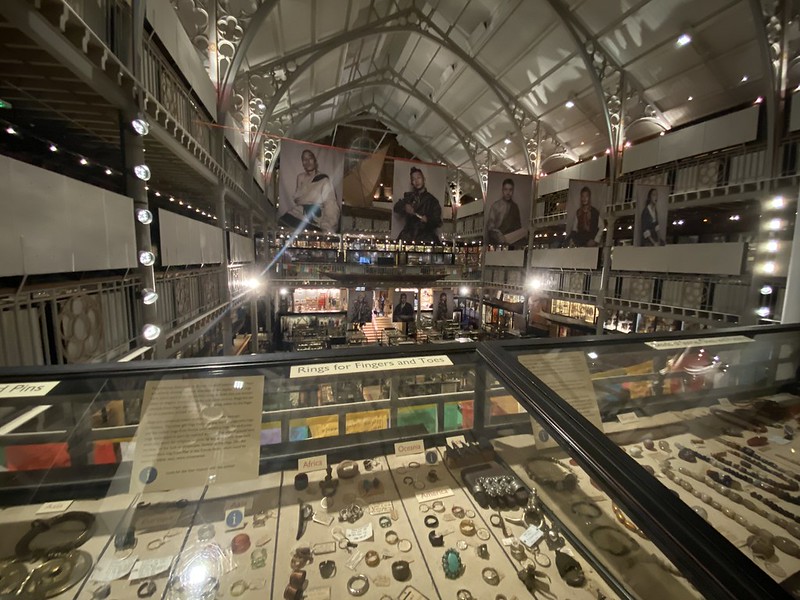
Myres was connected with the Pitt-Rivers Museum in Oxford, one of my favourite museums for its eclectic mix of artefacts all over the world, and the overwhelming view you get when you first walk in. 

This is a wonderful place for a geographer to lose themselves.

In 1926, Myres was also President of the Folklore Society.

From one description of him:

Myres will perhaps be best known to posterity for his many contributions to the history of the ancient Greeks, their origins, distribution and culture. But the keynote of all his studies and writings was his broad outlook and versatility, his grasp of studies other than his own speciality, and his power to fit in all the many elements that make up a finished picture. ... Myres brought his knowledge of many subjects, both in the arts and sciences, to bear on his main problem -- the Greeks, ... and he was always seeking from others some item he might have overlooked, it was this sense that he might have missed some factor that kept him always so free of dogmatism and finality. [K.M., 1954: 541]

He had been involved with the Association for some time before becoming a President, and was involved with it for some time afterwards.
In 1920, he sent a number of lantern slides to the Association for their collection, which was growing rapidly at this time.

In 1925, he also featured in 'The Geographical Teacher' talking about 'Wayside Geography'. This is described as a 'broadcast address' as it was played on the BBC - I wonder if a copy exists anywhere. 
He says in this piece:

"like any other science.... geography is simply a convenient name for a particular way of observing what goes on in [the] world"

He also finds opportunity in the every day:


In 1926, a longer version of this piece appeared in 'The Geographical Teacher', developing his ideas further, and worth a read if you have a subscription to 'Geography' and can access the archive via JSTOR.

In this expanded version, he mentions more examples of geography's power to describe and explain the world.

His Presidential Address was on the theme of Ethnology.


In 1926, he was thanked for a gift to the Association of over 700 slides, with notes.
“EDITORIAL.” The Geographical Teacher, vol. 13, no. 2, 1925, pp. 87–89. JSTOR, www.jstor.org/stable/40554985.

He was knighted in 1943.


Image credit:
Sir John Linton Myres
by Walter Stoneman
bromide print, 1923
NPG x162242© National Portrait Gallery, London

National Dictionary of Biography entry reads...

He founded no school. In his lifetime he saw classical archaeology grow from a dilettante study to a discipline which has much to contribute to all departments of classical scholarship. 
His part in this development was to show how historian, archaeologist, anthropologist, and geographer should combine their skills in the study of antiquity.

His obituary, written by H. J. Fleure, was published in 'Geography' in 1954, and outlined his contributions to the subject in a long and varied career.


References
https://en.wikipedia.org/wiki/John_Myres

I have edited this entry to add the fact that Myres was the President of the GA, as I have done with each President as I have come to them.

http://england.prm.ox.ac.uk/englishness-John-Linton-Myres.html - Pitt Rivers Museum connections
https://www.encyclopedia.com/social-sciences/applied-and-social-sciences-magazines/myres-john-linton
Myres, J. Linton. “Geography and the Classics.” The Geographical Teacher, vol. 10, no. 5, 1920, pp. 236–238. JSTOR, www.jstor.org/stable/40555132.

Myres, John L. 1925 'Presidential Address: The methods of magic and science' Folklore, Vol. 36, No. 1 (Mar. 31, 1925), pp. 15-47

Myres, John L. 1926 'Presidential Address: Folkmemory' Folklore, Vol. 37, No. 1 (Mar. 31, 1926), pp. 12-34

Myres, J. L. “WAYSIDE GEOGRAPHY.” The Geographical Teacher, vol. 13, no. 1, 1925, pp. 65–66. JSTOR, www.jstor.org/stable/40556448.

Myres, J. L. “WAYSIDE GEOGRAPHY.” The Geographical Teacher, vol. 13, no. 4, 1926, pp. 285–295. JSTOR, www.jstor.org/stable/40556130.

Myres, John L. “A GEOGRAPHICAL VIEW OF THE HISTORICAL METHOD IN ETHNOLOGY.” The Geographical Teacher, vol. 13, no. 1, 1925, pp. 9–29. JSTOR, www.jstor.org/stable/40556436

Fleure, H. J. “OBITUARY: Sir John Linton Myres.” Geography, vol. 39, no. 2, 1954, pp. 128–128. JSTOR, www.jstor.org/stable/40564578

If you know anything about him, please get in touch.

Here's a picture of mine of part of the Pitt Rivers Museum.


'The Pitt Rivers is packed beautifully, and practically to the ceiling with the most wonderful array of ethnographic objects, all soothingly lit and artistically arranged.'
Bill Bryson, The Road to Little Dribbling


Image: Alan Parkinson, shared under CC license.

Update - late July 2019

Myres' continuing support of the Association was mentioned in the 1928 Annual Report.

It is described as "long continued, intimate and unsparing help... especially valuable in some past times of some difficulty"
In 1928, he was elected as the President of the Royal Anthropological Institute and the Presidency of Section E. (Geography) of the British Association for the Advancement of Science.

Fleure, H. J. “ANNUAL REPORT.” Geography, vol. 14, no. 4, 1928, pp. 338–341. JSTOR, www.jstor.org/stable/40558279

Update - early August 2019

Found a reference to his work and photography in this blog. It also said that he had a brother with an almost identical name, but doesn't say what that was. From the Oxford Archaeology blog.
Myres is shown here in his white hat that he apparently wore, in a lantern slide, which is relevant of course...

ad34428_185-scr

A nice piece by Alice Jaspars.

Image from Facebook of Myres wearing his white hat...


Update October 2019
Visited the museum as part of a visit which also involved meeting the Halford Mackinder Professor of Geography: Danny Dorling.


It remains an astonishing mix of objects, artefacts and scholarship.
Some of them were donated by Linton Myres

Myres' English collections given to the Pitt Rivers Museum
Myres' donation of English objects were few:
1934.37.1-3 3 Percussion Tower muskets, dated 1856, 1858 and 1862. ENGLISH.
1942.1.422-3 2 tallies, records of vegetables planted delivered by donor’s gardeners, Richard Smith, at the Copse, Hinksey Hill. V. File.

In the museum files there is a letter from John Linton Myres to Henry Balfour dated 27 August, 1935:

 'The enclosed records were made about five years ago by my gardener at the Copse-Hinksey Hill, for vegetables delivered to the kitchen. His name is Richard Smith; he was about 75 years of age then; practically illiterate, though he recognized & distinguished unfailingly any packets of seed with printed labels that I gave him. He was very shy about these lists, and usually destroyed them; but these two we secured. They were always in this long tally-like form. The different arrangements of dots stood for different vegetables, but we only ascertained the meaning of a few (marked in ink) by comparing with the supplies received on each occasion. I see that I have put a note, at the time of collection, on the back of them.'
 
1946.10.55 Box containing experimental flakes of glass to illustrate the flaking-angle of 'eoliths' - made by Walter Charles Brice in 1941
 
[Bequest after his death] 1959.4.4-9 A set of six groups of Chinese scenes hand-painted in glass. These are an early form of lantern slide, and belonged to the late Sir J.L. Myres.

Updated July 2022
A holiday photo with his wife in Greece


Described as a 'father of Cypriot archaeology' and also a Freemason.


In 1941, he read a paper at the GA Conference on Greece.


Updated August 2023
Some small tweaks and changes.


Thursday, 27 June 2019

1920: Sir Charles Prestwood Lucas KCMG, KCB

Updated August 2023

Sir Charles Prestwood Lucas, by Bassano Ltd - NPG x75124
Sir Charles Prestwood Lucas was announced as the new President of the Association in a piece published in 'The Geographical Teacher' in 1919.

"We have pleasure in announcing that Sir Charles Prestwood Lucas, K.C.M.G., K.C.B., has accepted the Presidency of the Association for 1920, and will deliver his Presidentiaî Address on " Islands, Peninsulas and Empires " on Friday evening, January 9th, at the Day Training College, Southampton Row, London, W.C.1. 
Details will be announced shortly, and the meetings will be spread over January 9 and 10. Sir Charles Lucas is well known, both as a Colonial Administrator and as a student of Historical Geography. 

He presided over the Geographical Section of the British Association at Adelaide in 1914, and his work for the Royal Colonial Institute during the War has strengthened that valuable organisation in many ways. His chief writings are the History of Canada."

Lucas was born in Brecon, Wales. He was educated at Winchester College and Balliol College, Oxford.
Lucas was called to the bar, in Lincoln's Inn, on 30 April 1885. He became a civil servant in the Colonial Office which led to his becoming head of the Dominion Department and, in 1907, to his knighthood.
He is one of a number of GA Presidents who came to the role following a distinguished career in Law or the Civil Service, or a Colonial administrator. Those years are perhaps gone now, and the 21st Century has moved more towards those with a closer connection to teacher education or academic geography.

His Presidential Address was on the theme of 'Islands, Peninsulas and Empires', and he also published other articles on the parts of the world which he knew the best. This was also a time when Presidential addresses sometimes focussed on particular parts of the world in detail - the era of the "expert" - Michael Gove would have hated it.

In his address, he discussed the significance of islands and peninsulas in geopolitics. He ended by saying "Perhaps air power may supersede both land and sea power."

In the same year, he produced a piece on 'The Place Names of Empire', which had been read at the Colonial Institute in April 1917.

He was thanked for his work in an issue of 'The Geographical Teacher', which he helped to produce.


His Obituary was published in the Times in 1931, outlining his work in a number of locations around the world, but not saying much about his time as President. 
He was serving on the GA's Council until his death, so remained actively involved with the GA.
He is described as a Civil Servant and Historian. 
He wrote about the Colonies.


References

Announcement in 'The Geographical Teacher': H.J.F. “[Editorial].” The Geographical Teacher, vol. 10, no. 3, 1919, pp. 77–79. JSTOR, www.jstor.org/stable/40555739.

Wikipedia: https://en.wikipedia.org/wiki/Charles_Prestwood_Lucas

I have amended the entry to add his GA Presidential role, as I have with all the Presidents who have Wikipedia pages.

Presidential Address: Lucas, Charles P. “Islands, Peninsulas and Empires.” The Geographical Teacher, vol. 10, no. 4, 1920, pp. 126–130. JSTOR, www.jstor.org/stable/40555032.

“SIR CHARLES PRESTWOOD LUCAS, K.C.B., K.C.M.G.” Geography, vol. 16, no. 2, 1931, pp. 153–153. JSTOR, www.jstor.org/stable/40557915.
Obituary in the Times:
 https://en.wikisource.org/wiki/The_Times/1931/Obituary/Charles_Prestwood_Lucas

Image credit: National Portrait Gallery
CC Attribution:
Sir Charles Prestwood Lucas
by Bassano Ltd
whole-plate glass negative, 11 August 1920
NPG x75124© National Portrait Gallery, London

He wrote a History of Canada.

If anyone knows any further information about Sir Charles Prestwood Lucas please get in touch to help expand this entry as it is rather brief and I couldn't find much about what he did while President.

Update March 2023


Updated August 2023

He lived from 1853-1931.


Given the importance of decolonising the curriculum currently, it's also interesting that Prestwood Lucas wrote about the history of Jamaica as a colony, including this section on the Maroons.


Article in Scottish Geographical Magazine


Sir Charles P. Lucas K.C.B. K.C.M.G. (1914) Man as a geographical agency, Scottish Geographical Magazine, 30:9, 449-467, DOI: 10.1080/14702541408541564

Margaret Mackintosh RIP

Updated post. Sad news at the end of last week from colleagues who have organised the Charney Conference over the years of the passing of Ma...