Showing posts with label Institute of Education. Show all posts

Thursday, 5 February 2026

RIP

As you know, we try to mark the passing of significant people in the GA's history on this blog - not all of whom were Presidents of course.

The Spring 2026 edition of the GA Newsletter also contained details of the passing of three people who were very much involved with the GA: Michael Naish, Russell Feaver and Marjorie Woodward.


Images copyright: Geographical Association

Saturday, 14 December 2024

GA / IoE seminar

On the 4th of Decemember, the Geographical Association and Institute of Education held a joint seminar exploring the geography curriculum in the light of the Curriculum and Assessment Review.

I was invited to speak at the event on behalf of the RGS, but was unable to attend as I already had a previous engagement, so Catherine Souch kindly stepped in to give a summary of the work we had done on our submission to the call for evidence.


The seminar was chaired by Dr Alex Standish (IOE) with contributions from:

  • Helen Martin (Primary Head)
  • Hina Robinson (Head of Geography and GA President)
  • Steve Brace (Chief Executive at the GA)
  • Dr Catherine Souch (Head of Research and Higher Education RGS)
  • Eleanor Rawling (consultant in geographical education)

The discussion explores the current geography curriculum and its GCSE and A level specifications at a time of curriculum review, alongside the progression and set-backs of the geography curriculum since its introduction in the late 1980s. Eleanor Rawling spoke at the event and she has been involved in previous iterations of the National Curriculum and worked on the National Curriculum Framework for the GA.

A recording of the contributions and Q&A is available using this link - you will need to login to Zoom in order to see it. Thanks to the GA for sharing this.

https://ucl.zoom.us/rec/share/_UX_SqYZHp1EqnnyX2DMC2QRFLB4hrsoyEBXcR_It4w1GXOGVBveh-Jkae77HQIf.KnFHjvaxWjZEouf7

Passcode: D37Zw#@+

You can watch Catherine's contribution by fast-forwarding to 34'30". She sums up the work we did in ten key bullet points.

Saturday, 16 January 2021

1996: W(illiam) Ashley Kent

Updated August 2023

Ashley Kent had a long career as an academic geographer.
As with quite a few other former GA Presidents, Ashley Kent worked at the Institute of Education for many years.

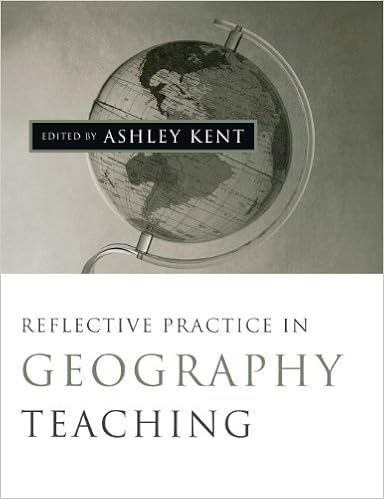
I own a copy of the book whose cover is shown below, which has proved useful in the past, and has several chapters written by a number of other former Presidents as well. Like many of his books, it has run to several editions.

His PhD thesis was on the adoption of CAL (computer assisted learning) and acts as a useful summary of the development of IT in Geography classrooms - this connects with the work of another President: Peter Fox, (and I will discuss his role at the appropriate time). See the link at the end of the post to download a copy if you are interested.

He also wrote an influential book with Michael Bradford (another former President, who sadly died in 2019) called just 'Bradford and Kent' by the many teachers who used it. I mentioned that book in a recent blog post.

He was also part of the authoring team of the Oxford Geography Project, which I used back in the day when I first started teaching. Copies of this can still be obtained second hand.

Ashley proved elusive to track down for some further information for some time, from the start of my blog writing. 

I was able to swap e-mails with Ashley earlier this year, and he provided me with further information, which is now included below:

I was born in 1945. 
I attended St. Catharine's college, Cambridge - as did at least three other GA Presidents including Derek Spooner. 
My teaching career began as a student teacher at St Dunstan’s College, Catford where Brian Fitzgerald was head of department and Neville Grenyer a member of staff…both became HMI’s!

I then taught at Haberdashers’ Aske’s School, Elstree where my colleagues included John Rolfe, Neville Grenyer, Rosie Grenyer and Clive Rowe.

I was then head of department at John Mason School, Abingdon with Eleanor Rawling as a close colleague.
What a powerful department that must have been!

Eleanor and I then moved to the Geography 16-19 Project at the Institute of Education with Michael Naish.
I then became a lecturer and eventually a professor and pro-Director at the Institute of Education.

My major textbooks were the Oxford Geography Project written by the Haberdashers’ team for years 7-9; and two textbooks written with Michael Bradford: Human Geography: Theories and their applications (1977) - and Understanding Human Geography: People and their changing environments (1993). 
Both were aimed at A level and first year university students. 
All published by Oxford University Press…and fortunately sold quite a few copies!?

I joined the GA in 1969 so have been a member for over 50 years!

Further details from his CV:
He has taught in a variety of secondary schools; the University of Wisconsin-Madison; the UK’s
Open University and was Associate Director of the Geography 16-19 Project a nationally funded
curriculum development project.
He has longstanding professional and research interests in: curriculum development and evaluation;
innovation and change (the focus of his PhD work); teaching strategies including fieldwork; the
marketing and image of geography; the school/HE interface; information technology, including
remote sensing; developments in human geography; 16-19 geography; initial teacher education;
stereotyping and bias; and environmental hazards.
He has directed a number of research and development projects including: Project HIT (Humanities
and Information Technology); Remote Sensing in the Geography National Curriculum Project; Centre
for ‘A’ level Curriculum Support; Eurogame Project, a large scale European funded multi media
development; Geography 16-19; Learning Geography with Computers; YoungNet; DUNES; and
pillar leader of the HERODOT Project.

On his involvement with the GA, Ashley sent me this resumé:

He has been fully involved with the Geographical Association (GA) since 1969. He was on GA
Council for 15 years and has been its President. He was a member of COBRIG (Council for British
Geography) and has been its chairman. Over the years, he has been engaged in a number of
geography education research projects, both in the UK and for the International Geographical
Education (IGU), Geography Education Commission. He has presented papers at IGU conferences
across the world and was both a full member of the IGU Geography Education Commission and a
former chair of the British Sub-Committee. He has published widely in geography education and
education both for professional and academic audiences. This has included a number of successful
school and university textbooks.
The common thread in his career has been an involvement and passion for education at a variety of
levels and specifically curriculum development and teacher education.

I tracked down his PhD Thesis from 1996, which was titled:
"Process and Pattern of a Curriculum Innovation".

The innovation in question was introduced at the start:
The innovation in question is the use made by secondary school geography departments of computer assisted learning.
Ashley mentioned 2 key documents that sum up his approach to Geography

‘Geography’ October 1997 ‘Challenging Geography’----my Presidential Lecture presented at the Institute of Education

KENT, ASHLEY. “Challenging Geography: A Personal View.” Geography, vol. 82, no. 4, 1997, pp. 293–303. JSTOR, www.jstor.org/stable/40572948. Accessed 15 Jan. 2021. 

James Fairgrieve featured in the Presidential Address, where Ashley outlined his life and also the strong connections between the IoE and the GA. It is well worth reading to get an idea for the links and the changing nature of Geography. 

Ashley provides additional detail on Fairgrieve's life.

His inaugural professorial lecture in 2004 entitled ‘Windows on Geographical Education’….published by the University of London Institute of Education…2004

He was the tutor on the IoE's MA in Geography Education for many years. This went online from 2001, having been offered at UCL since the 1960s
He contributed to an IoE publication on retired academics in 2009, and was described as follows:

Ashley Kent retired as Professor of Geography Education at the Institute of Education, University of London - the culmination of a lifetime as a geography teacher.

“Exciting demanding, relevant and worthwhile – geography prepares pupils to critically understand and fully participate in the changing worlds in which they live” — Ashley Kent

In 2003, Chris Kington asked a number of former Presidents what had sparked their passion for geography. He lent me the letters and Ashley replied to Chris.
He talked about a "gradual realisation" that geography was for him. His geography teacher at school was described as "rigorous - a bit terrifying and gave us lots of autonomy...". He also remembers taking part in the 2nd Land Use survey, at Pilling Marshes and realising that it was all 'rough grazing'. He remembered his PGCE year and the influence of Walford and Fitgzerald et al. He also remembered his first year teaching at Haberdasher's Aske.
Many thanks to Chris Kington for the loan of the letters.
Ashley told me about his connections with Hull University and Derek Spooner, with whom he led celebrations of the life of Michael Bradford (far more on Mike to come as we get closer to the present day)
He also had memories of my own PGCE tutor at Hull: Vincent Tidswell. He told me:
Vincent I knew through his work and the ‘new’ geography ....his Pattern and Process in Human Geography was followed by Keith Hilton’s Process and Pattern in Physical Geography. 
Keith was a colleague of mine at the Institute of Education....and knew Vincent through working at Hereford College of Education. 
Vincent also had links with Brian Fitzgerald who I met at St Dunstans College. 
That was for me as a keen young man/geographer....a really exciting time...we felt very much at the frontier of the ‘new’ geography, both new in terms of content and pedagogy. 
Oxford Geography Project was really at the leading edge....as were the Schools Council Projects....GYSL and 14-18 ...and the one I was very much part of...the 16-19 Project. 

People like Brian, Rex et al were at the forefront....it was great fun being part of it! 
The first book Mike and I wrote was a direct effort to help teachers to keep up to date with the ‘new’ geography then in several school and university syllabuses. 
Of course Mike and I were helped by being a part of Cambridge and US developments....we went to Madison Wisconsin after Cambridge...where a great deal of that stuff was going on.

Exciting times, and Vincent was very much part of that. I like to think he passed on a little of that love for exciting new approaches and pedagogies to his trainees, of which I am proud to have been one. I remember using GYSL in my first job in January 1988 at John Flamsteed School in Denby, Derbyshire.

Ashley also shared some memories of the next important phase in the GA's History: the move from Fulwood Road to Solly Street, where it has its HQ to this day. Ashley is amongst the Presidents and former staff who were involved in locating the GA's new premises. That story will be told next.

Image from GA News.

Update January 2021

Some memories of his Presidential conference from Ashley Kent.
In my Presidential Year we had the Conference at the Institute on Bedford Way, which I thought was appropriate given the long-standing links between the IOE and the GA. The Presidential Dinner was held at the Imperial Hotel on Russell Square. My guest of honour was the Crown Princess of Thailand: a much revered member of their royal family: very environmentally aware and active. He had been suggested by Professor Philip Scott: an extraordinary and alternative academic from SOAS. 
The assembled diners were kept waiting by the Princess, who had been having tea with Prince Charles at Highgrove and then visiting SOAS.
We were kept waiting by the guest of honour for quite a while...so much so I suggested more booze was supplied to all the waiting guests.
On her eventual entrance/arrival the assembled throng, on the advice we were given, all stood up and did the slow handclap, which apparently in Thailand is a mark of real respect.
She was accompanied by two armed generals and sat next to me at the top table and the generals became anxious ( I was told by folk sitting with them at one of the tables) when I engaged in a lively/animated story involving props, including a scroll given to her in memory of her visit.
It was all right on the night! 

Is there anyone who was there and has their own memories of this event?

References


KENT, ASHLEY. “Innovation, Change and Leadership in Geography Departments.” Geography, vol. 91, no. 2, 2006, pp. 117–125. JSTOR, www.jstor.org/stable/41555403. Accessed 15 Jan. 2021.

Presidential Lecture, exploring the life of James Fairgrieve
KENT, ASHLEY. “Challenging Geography: A Personal View.” Geography, vol. 82, no. 4, 1997, pp. 293–303. JSTOR, www.jstor.org/stable/40572948. Accessed 15 Jan. 2021.

I would be pleased to receive any further details of Ashley Kent's time as GA President.

Updated August 2023

A link with the forthcoming GA President (as I write this) for 2023-24: Denise Freeman.

Tuesday, 14 July 2020

Neville Scarfe

Updated August 2023

Neville Scarfe was an influential tutor at the Institute of Education who was connected with several GA Presidents, because of their own association with UCL. Molly Long, President in 1970 was closely connected with the Institute during her career.


A brief biography:

Neville Vincient Scarfe was born in 1909. 
In 1927 he achieved a first-class honours B.A. in Geography, at age 19 heading the honours list. The following year he acquired a teaching diploma, which from 1928 to 1931 he put to good use as senior geography master at Bemrose Grammar School, Derby. Thence he transferred to the University of Nottingham, where for four years he lectured in geography and earned a master’s degree as well. 

From 1935 to 1951 he worked as senior lecturer and head of geography at the University of London Institute of Education. From this last position he took leave of absence on war work (1939-1945), serving as director of press censorship, Ministry of Information, London. 

After the war a visiting professorship (1948-1949) at Syracuse University, New York State, and the task of co-ordinating the UNESCO International Seminar at McGill University preluded his five years (1951-1956) as Dean of Education at the University of Manitoba. From the latter position he submitted his application for the corresponding deanship at University of British Columbia.

The Neville Scarfe Education Building (University of British Columbia)

The University, in Vancouver, has a Neville Scarfe building and Lecture Theatre. 
He was Dean of Education there for 18 years and achieved a huge amount.
https://studiohub.ca/on-the-boards/ubc-neville-scrafe-lecture-theatre

He contributed an article on games in geography to 'Geography' in 1971.
His son is an actor.
He died in 1985.
I wonder what he may have made of the current status of Canadian Geography. There is an excellent Royal Canadian Geographical Society, but geography doesn't have a high status in the school curriculum in Canada.

Source:
SCARFE, N. V. “Games, Models and Reality in the Teaching of Geography in School.” Geography, vol. 56, no. 3, 1971, pp. 191–205. JSTOR, www.jstor.org/stable/40567554. Accessed 6 July 2020.
Neville Scarfe and British Columbia


Throughout his career, Neville wrote over 100 articles and gave numerous speeches on education around the world. His intuition and progressive understanding of post-war learning instilled in the Faculty the idea that teachers are made, not born. With this spirit in mind, he created rigorous, specialized streams taught by enthusiastic professors to produce dynamic and informed educators. Always an advocate for educational reform, Neville was particularly critical of the findings of the 1960 Report of the Royal Commission on Education (the “Chant Report”), calling it “contradictory and conservative”*. He took particular issue with its recommendations for harsh discipline in classrooms and the assumption that children will behave belligerently unless taught otherwise.

Image source:

Further memories of Neville Scarfe welcome - he was an important geographer on both sides of the Atlantic and I am sure there is plenty more to come.

Updated August 2023


After World War II, Neville Scarfe returned to the Institute of Education of the University of London, where he taught the principles and practices of the teaching of geography. This sparked his interest in the philosophy of education—this was a pursuit he continued for the rest of his life, so it was probably what could be considered his main interest.


They included James Fairgrieve, who he described as 
"a down to earth geographer bent on assisting students to imagine world characteristics accurately, the better to imagine political and social problems"

https://snaccooperative.org/view/64845894

Scarfe was a proponent of play in education.
https://www.tandfonline.com/doi/abs/10.1080/00094056.1962.10726996

Thursday, 9 July 2020

1970: Mrs. I Molly Long

Updated August 2023

Molly Long was a tutor in the School of Education at the Institute of Education. She was particularly interested in education, and the role that children had to play in their own conception of the subject.
Her Presidential Address was called 'The Interests of Children in School Geography' and as such was a rare Presidential address with a focus on pedagogy and the classroom.


She explored the sorts of activities that children said they did and did not like, following a survey which was sent out to the GA membership (an innovative move at the time.... much easier to do these days with Google Forms).

When she was younger, Molly gained a scholarship to Godolphin and Latymer School, before studying at Bedford College, London, her home city. She trained as a teacher at the University of London Institute of Education (ULIE) in 1946, and became a lecturer in teacher education in 1948.

At that time Neville Scarfe had recently been appointed to succeed James Fairgrieve as Head and sole member of staff of the Geography Department. Molly must have made a great impression on Neville Scarfe, as after teaching in schools in Reading and Beckenham, she was appointed to the Institute's staff, in 1946 as Assistant Tutor, and in 1948 as Lecturer in Education (with special reference to the teaching of geography). There are some strong links here with the history of the Association.

When I trained as a geography teacher in 1949-50, Molly Long was one of the three tutors in the Geography Department working alongside Neville Scarfe and Reginald Honeybone

(from Norman Graves' Obituary of Molly)

In 1952, Molly published work in 'Geography' on children's reactions to geographical pictures. This was a main research interest.

In 1969, it was announced that Molly would be GA President in the Annual Report, published in 'Geography'


Molly worked at the Institute of Education until her retirement in 1976.
She worked on quite a few publications, which were influential at the time, particularly following the Second World War.

Books included:
World Problems: A Topic Geography (Secondary school series)
Teaching Geography - published in 1966 - (https://www.abebooks.co.uk/9780435345402/Teaching-Geography-Molly-Long-Robertson-0435345400/plp ) - a blog post on this book was added a few weeks ago - I have a copy of the book in my library.

Rex Walford describes her work with Bertie Roberson (a colleague at UCL) to produce a secondary teacher manual in the 1960s. They both employed "creative pedagogy" at a time when the old style geography was beginning to be challenged.
The preface of their teacher manual sets the tone from the outset:

"The whole trend of our argument is that children should be led to think about the subject matter offered.....the idea of geography as a 'soft option' for the unintelligent remains".

Molly's Presidential Lecture was called "The interests of children in school geography".

The 2nd chapter of her book, Rex explained, featured a 'Regional' approach. This was going to be a feature of geography for some decades to come. When I first started teaching 'A' level Geography in the late 80s, the Cambridge board specification we used was regionally based.

Molly died in 1997, and her obituary was written by the textbook author (and former GA President) Norman Graves.

I am grateful to Alex Standish from the IoE for the image of Molly, from a framed picture which is in his office at UCL - a reminder of the legacy of the past for today's teacher educators.

References
Long, Molly. “CHILDREN'S REACTIONS TO GEOGRAPHICAL PICTURES.” Geography, vol. 38, no. 2, 1953, pp. 100–107. JSTOR, www.jstor.org/stable/40563406.

https://issuu.com/davidward7/docs/ora_newsletters_volume_iii_1990-1999 - memories of Molly Long by her husband

LONG, MOLLY. “The Interests of Children in School Geography.” Geography, vol. 56, no. 3, 1971, pp. 177–190. JSTOR, www.jstor.org/stable/40567553.

Long, Molly. “CHILDREN'S REACTIONS TO GEOGRAPHICAL PICTURES.” Geography, vol. 38, no. 2, 1953, pp. 100–107. JSTOR, www.jstor.org/stable/40563406

Graves, Norman. “I. L. M. (Molly) Long (1916-1997).” Geography, vol. 82, no. 2, 1997, pp. 148–148. JSTOR, www.jstor.org/stable/40572829

Complex Locations: Women's Geographical Work in the UK 1850-1970By Avril Maddrell

Her main biography details were sourced from this book, which has also informed numerous other entries on the blog regarding the important female contribution to the GA over the decades.


Source:
https://books.google.co.uk/books?id=p_xfuY8CJ48C&pg=PT115&lpg=PT115&dq=%22marguerita+oughton%22+sheffield&source=bl&ots=xln_U09sEO&sig=ACfU3U0BVaFI8t74PC7xxPHMiijd8QoLyQ&hl=en&sa=X&ved=2ahUKEwjbrsfys43pAhXKQEEAHeGlCCIQ6AEwAnoECAoQAQ#v=onepage&q&f=false

As always, if anyone has further information relating to Molly Long please let me know so that I can expand on this post.

Updated December 2020
Thanks for Simon Catling for sending through some memories of Molly:

"I have enjoyed reading your blog on Norman Graves, the inspiration for many of us. When I did my MA in geography education at the Institute in 1971-3 (the 3rd or 4th year it ran, I think) I was one of a group of 4 students. We had superb seminars where one of us would read our essay for that week (we wrote 24 essays over the 3 terms of the year, weekly) and then it would be debated. Alongside Norman, Molly Long, Bertie Roberson and Michael Naish were our tutors. It was a fascinating, invigorating, rigorous and very informative first year of the MA. Mick Naish supervised my MA thesis. I think that was, part-time on a Monday late afternoon, an invaluable course for my geographical education. The reading, thinking and writing was a very real education, demanding but just right. While a young primary teacher I did two week long courses which were influential. In early 1975 I did a Place, time and Society 8-13 course run by Ray Derricot, Hazel Sumner and Gordon Elliot at an ILEA centre. In early 1978 I did an environmental course at Avery Hill College in Eltham, run by Colin Ward. Both were influential in my thinking. Gordon Elliott introduced me to a producer at the BBC which led from the autumn of 1975 to me being an adviser, alongside Michael Storm (who had just become the geography adviser in the ILEA), to a new series of primary geography programmes."

Via Ashley Kent


My memory of Molly Long....former president and my tutor ....was my first meeting with her. 
Whilst smoking....she smoked a lot!...she asked me to sit down and asked me ‘if I was one of those new quantitative people’. 
She knew my background was the University of Cambridge then University of Wisconsin, Madison...and both at the forefront of new developments. 
She and Bertie (Roberson) had ‘nailed their colours to the regional mast’ and saw the ‘new’ geography as threatening...sadly since she was a wise and good tutor. 
The divisions were clearly evident in the split between the tutors at the time....Graves and Naish...the new guard...Long and Roberson the opposite!

Updated August 2023

Molly's 'Teaching Geography' book is available to borrow from the Internet Archive.

I also referenced Molly in an article on the GA Presidents project that I had published in Routes journal in 2021. It's well worth reading in my opinion (although I may be biased)

Sunday, 15 September 2019

1935: James Fairgrieve

Last update August 2023

"Anyone who leaves school without geography as part of their education cannot be considered to be fully educated..."
(1926)


Quoted by David Lambert in a conference lecture (see link at the end of the piece)

James Fairgrieve was a geographer, and author, and prior to taking up the Presidency, he had held several roles within the Association and, as so often, his name appears on the minutes of many meetings and gatherings. He was one of the most significant people in the GA's history and development and many of his documents are in the GA Archives.

He is perhaps best known for his books Geography and World Power (1915) and Geography in School (1926), which were popular at the time of publication, although he wrote others.

James was a British geographer, born in 1870, and had a long career as a teacher too, which is good to see in a GA President, and is still relatively rare. He died in the 1950s.
Fairgrieve originally had no formal training in geography, but took part-time courses in geography at the London School of Economics.

These courses were taught by geographer and geopolitician Halford Mackinder (GA President in 1916, and one of the most influential geographers of the early 20th century).
From that point forward, Fairgrieve devoted his life's work to geography (according to his Wikipedia page)
He was appointed a geography master in 1907 at the William Ellis School. He is described as "bubbling with fresh ideas and astonishing energy". He set up a geographical laboratory at the school and also wrote many textbooks. His commitment to pedagogy was equal to that of geography. He was a long way from the 'Capes and Bays' of the day, and looked at active teaching methods, and lots of fieldwork in the local area.

He is quoted as saying: "We must work from the known to the unknown, not like some teachers - work from the unknown the unknowable."

The full quote goes:
From the known to the unknown
From the simple to the complex
From the indefinite to the definite
From the particular to the general

During the First World War, he wrote 'Geography and World Power'.

Fairgrieve was an intellectual disciple of the great British geopolitical thinker Sir Halford Mackinder, and borrowed some of Mackinder’s concepts in formulating his own geopolitical worldview. Fairgrieve factored into his geopolitical analyses topography, location, climate, relative population density, the distribution of energy, the ease or difficulty of movement, and political and social organization.

Geography and World Power traced the impact of geographical conditions on the course of history, beginning with the desert, marsh and steppe lands of Egypt and Mesopotamia; to the near and readily accessible regions of Palestine and Phoenicia; to Greece, Carthage, and Rome; to the forest lands of Germany and Russia; to the great plain of Eurasia from which nomadic tribes invaded the settled peoples of Europe; to the lands of Arabia from which Mohammedans attempted to convert the known world to Islam; to the age of exploration and the discovery of the New World; to the African grasslands; to the Monsoon lands of China and India.

In 1918, he wrote a piece against environmental determinism called 'Geographical Control'.

He was also a predecessor of former GA Chief Executive David Lambert at the Institute of Education.

As with many other geographers who became President, there was a connection with previous Presidents, and the work of the RGS-IBG.

During the late 1920s and through the 30s, James Fairgrieve worked on developing support materials for teachers to help in their use of educational films. I have blogged about this work separately here.

In 1926, he published his main book "Geography in School". It attracted a lot of interest, as did his definition of Geography. It can be downloaded as a PDF from the Archive.org website. It ran to several editions.

"The function of Geography is to train future citizens to imagine accurately the conditions of the great world stage and so help them think sanely about political and social problems in the world around."

His book, and teaching approaches inspired a generation of geography teachers.
Here it is, from the GA collection


Fairgrieve later led a group of voluntary workers who watched a huge range of educational films to look at their potential for classroom use.
He served on the GA's council for several years during the 1940s, including as Chair of the GA Council in 1947.

He was a relatively rare GA President in that he was a teacher for pretty much all of his career, but had retired before taking office.

Fairgrieve was a Geography Master at William Ellis School, joining in 1907, a school which had a remarkable Geography classroom. 
I have been given some wonderful images of this classroom by Chris Willey, a Historian of the school - these will feature in a future post.

I also discovered that he was succeeded as a Geography Master by another former GA President: Leonard Brooks, who we will come to in due course, when I shall also share some of the images.

In 1931, he wrote about broadcasting in schools.


Fairgrieve's Presidential Address explored the themes of pedagogy in a way that other previous GA Presidents hadn't really. It was simply called 'Can we teach Geography better?'


Save your money on some of the new teaching books that have emerged and read this address instead.
The first suggestion he has is that we need to let others see us teach and have the chance to see others teach in return.


We also have to spread a love for geography in our subjects or we have failed in our job.
Feed your geographical caterpillars geographical cabbage and they will soon learn to fly.


Remember to move from the known to the unknown, he says. Go from simple to complex. Move from concrete to abstract. There is a place for wonder.

Fairgrieve travelled to Scandinavia on an Orient Line ship in the 1920s and contributed a large number of lantern slides of images from that trip into the GA's collection.

Read about 'Geography and World Power'

This is a very enjoyable address and worth reading. Fairgrieve continued to attend GA meetings for another 20 years after his Presidency, according to Rex Walford, "able to attend meetings only with the help, successively, of sticks, wheelchair and basket bed". 
Quite a commitment to the Association indeed!

Fairgrieve died in 1953, active to the very last within the GA.

References

Wikipedia: https://en.wikipedia.org/wiki/James_Fairgrieve

I amended this entry to add reference to the GA Presidency role, as I have for all Presidents when that information was missing.

FAIRGRIEVE, J. “GEOGRAPHIC CONTROL.” The Geographical Teacher, vol. 9, no. 4, 1918, pp. 189–192. JSTOR, www.jstor.org/stable/40554568.
Mentioned in: https://www.geography.org.uk/write/MediaUploads/Journals/Boardman_McPartland_Building_on_the_foundations.pdf

Fairgrieve, J. “USE OF BROADCASTING IN TEACHING GEOGRAPHY IN SCHOOLS.” Geography, vol. 16, no. 1, 1931, pp. 34–44. JSTOR, www.jstor.org/stable/40557798.
Fairgrieve commented on by David Lambert in a lecture here. (from 2015)

https://thediplomat.com/2015/04/geography-and-world-power-at-100/ - Geography and World Power

Also had a section in Rex Walford's book p.97-9

Fairgrieve, J. “CLOUD AND RAIN.” Geography, vol. 27, no. 1, 1942, pp. 31–33. JSTOR, www.jstor.org/stable/40562174.
Boardman, David, and Michael McPartland. “A Hundred Years of Geography Teaching: Building on the Foundations: 1893—1943.” Teaching Geography, vol. 18, no. 1, 1993, pp. 3–6. JSTOR, www.jstor.org/stable/23754476.

https://www.open.edu/openlearn/ocw/pluginfile.php/631169/mod_resource/content/1/geog_sk6_06t_5.pdf - an interesting perspective by Bill Marsden

FAIRGRIEVE, J. “CAN WE TEACH GEOGRAPHY BETTER?” Geography, vol. 21, no. 1, 1936, pp. 1–17. JSTOR, www.jstor.org/stable/40559408.

As always, if anyone has further information relating to James Fairgrieve and his work for the GA, please let me know so that I can expand on this post.

Update
Here's an image of a contemporary Geography classroom from Fairgrieve's book, reproduced in Rex Walford's 'Geography in British Schools 1850-2000'


Update - late October

Here's a silent educational film from 1925 - of a village in the Punjab


Made by British Instructional Films Ltd of Surbiton Surrey and apparently approved by James Fairgrieve and the Geographical Association.


Can be viewed here...


And here's one of a Mediterranean island...


Updated January 2021

Fairgrieve also featured in the Presidential Address of the 1996 President Ashley Kent, where he outlined his life and also the strong connections between the IoE and the GA. It is well worth reading to get an idea for the links and the changing nature of Geography. Ashley's Presidential Address was given at the Institute of Education.

KENT, ASHLEY. “Challenging Geography: A Personal View.” Geography, vol. 82, no. 4, 1997, pp. 293–303. JSTOR, www.jstor.org/stable/40572948. Accessed 15 Jan. 2021.

He provides additional detail on Fairgrieve's life.

"A central figure in the long struggle for the subject to which he gave a life of enthusiastic work"
H. J. Fleure (1953)

Updated April 2021
Fairgrieve seems to have spent 1921 out of the country according to this piece in 'The Geographical Teacher'


Updated June 2021


Aberystwyth University has a Prize named after James Fairgrieve.

Updated August 2021
I have been exploring some of Fairgrieve's lantern slides over the last month for a project called 'A Geographer's Gaze'

Updated July 2022
A remarkable piece of film from the 1930s.


Updated August 2023

Neville Scarfe's influences included James Fairgrieve, who he described as 

"a down to earth geographer bent on assisting students to imagine world characteristics accurately, the better to imagine political and social problems"


Margaret Mackintosh RIP

Updated post. Sad news at the end of last week from colleagues who have organised the Charney Conference over the years of the passing of Ma...