Showing posts with label ITE. Show all posts

Thursday, 12 August 2021

Fred Martin

Along with the Presidents, this blog has featured some of the many volunteers and activists who have supported the Association over the years.

Fred Martin was the PGCE tutor at Bath Spa University for many years, and has been involved with the GA for decades in various roles, with a long stint serving on the Education Group of the GA. 

He is a prolific author who has written many books, some of which were first published over twenty years ago, and remain available. They include the book here, published by the GA.

Fred was on the sub-group that was involved with the GeoVisions project, which led to many other GA projects over the years, and has appeared on this blog previously, along with further information about Di Swift.

This led to him writing the Cape Farewell resource, which I used when teaching the OCR Pilot GCSE Geography, and which has also been featured in a previous blogpost.

Fred served on the Secondary Phase Committee for many years, including the period when I was also on the committee.

I presented sessions with Fred several times at GA Conference including 2005 - the first time I presented at the GA conference in a session on Gifted and Talented Geographers. I was a bit nervous.

We also worked on a session exploring how to 'Transform Tired Topics' along with Tom Biebrach. It originally had a diffferent title...

In 2007, we also jointly presented on Future Fieldwork: a double workshop on GIS for Beginners which included some cutting edge GIS work (for the time) and also included future Chief Executive Alan Kinder.


Fred worked with a number of others, including Gary Dawson, who also served on the Secondary Committee to write 3 books of starters for Badger Publishing. You may remember them. I have them on the bookshelf in my classroom. 

Fred is now on the editorial board of 'Teaching Geography' and recently set me a challenge of writing an article about the teaching of GIS and traditional map skills.

Fred was also kind enough to provide a message to delegates at the first TeachmeetGeographyIcons when I did a keynote session.

Even in the Summer 2021 issue, Fred has an article, where he explores the progress made in pedagogy over the years through 'Teaching Geography' articles.

Image: Bryan Ledgard / Geographical Association

References

Martin, Fred, and Diane Swift. “What Can CD-ROMs Do for Us?” Teaching Geography, vol. 21, no. 1, 1996, pp. 20–23. JSTOR, www.jstor.org/stable/23753746. Accessed 26 June 2021.

Monday, 21 June 2021

2001: Diane Swift

Just before Easter I spent a pleasant hour talking to Diane Swift and asking for her input on some of the projects that she was involved in during her time working for the GA, to help explore some of the connections between them. 

Other former Presidents have previously mentioned Di and the importance of her work for the GA.

From the entry by Jeremy Krause:

"I am proud that I was able to work with others to create the post of Professional Development Coordinator and appoint Di Swift in 2001."

Di was also mentioned by Keith Grimwade and Chris Kington, who were involved in the important decision to 'professionalise the GA'.
She has worked in a number of roles within the GA, and more recently has worked in Initial Teacher Education in Staffordshire.
Di was involved in a number of key projects.
These included the Young People's Geographies project (see separate blog posts) which I was involved in.
The Valuing Places project was a catalyst for many of the others. being one of the early projects when the GA was finding its way in such work. Funded projects have remained important, and the GA has a track record of very successful completion of such projects.

GeoVisions has previously been mentioned, led by Roger Carter. In many ways, this was at the heart of a lot of GA activity during the days of the first Chief Executive and the move towards funded staff at Solly Street.

The OCR Pilot GCSE Geography, which has been mentioned in a number of other posts was also important, and changed the course of my career because of my involvement.

Argumentation - Why argue (in Geography and Science)
I remember a session in Norwich at our PDC - they were good visits during the Rob Lodge era, when Di came to lead a session for us.

She also told me other snippets which will feed into other blog posts in time.

Di still works in teacher education, for a SCITT in Staffordshire.

Di has extensive experience in schools as a teacher, senior leader and a governor. She regularly contributes articles to professional journals and has authored a variety of materials that support teachers to develop both their curriculum and pedagogic thinking. She has worked extensively with teacher-colleagues on a variety of projects in relation to Philosophy for Children, History and Geography. Diane is an advocate for the Chartered College of Teaching. She also works at a national level in relation to ITE, particularly in connection with inclusion. Diane is undertaking an EdD, her research is considering the ways in which beginning teachers develop a professional language to share their developing pedagogic expertise.

She has worked on a number of publications.
I had a copy of this one when it was first published in 2005 and it still sits on my shelf and I find it useful.

She also mentioned the importance of Chris Durbin and Kate Russell and the development of the Staffordshire Learning Network - something I very much agree with.


References
Martin, Fred, and Diane Swift. “What Can CD-ROMs Do for Us?” Teaching Geography, vol. 21, no. 1, 1996, pp. 20–23. JSTOR, www.jstor.org/stable/23753746. Accessed 26 June 2021.

Thanks to Di for all she did for the Association while working there. 

Update - June 2025

Congratulations to Di for being awarded an OBE in the King's Birthday Honours List.

Sunday, 23 May 2021

2012: Bob Digby

Bob Digby's name will be known to many from the numerous textbooks and other examination work he has been involved with over the years, and he is still a very active geographer within the subject community offering consultancy, online sessions and continuing to examine, as well as writing numerous textbooks and resources.

He has worked as a teacher, with a career in several schools to give him the grounding that he draws on in his other work. Bob has spent a great deal of time working with Awarding Bodies, and has written and co-written numerous textbooks and worked on other educational resources during that time, as well as leading fieldwork.


He has led many hundreds of days of fieldwork, particularly around the Olympic Park, along with John Widdowson and others, going back to a time before the Olympics.

This was the opening slide from Bob's Presidential lecture, which was themed around the Olympics of course. At the last minute, Bob decided that having taught about it for so long, he couldn't miss out on the once in a lifetime opportunity to see the ceremony that opened the games, and paid an as yet undisclosed sum for a ticket... That also means he saw what was probably Mike Oldfield's last 'live' performance into the bargain...


Bob kindly answered my questionnaire on the Google Form and filled in some additional details as can be seen below:

Bob was born in 1949, in Chelmsford, Essex
His family moved to Cornwall in 1960 shortly before he began his secondary education, which took place at St Austell Grammar School between 1960-67. Like many who have contributed to the Presidents' Blog before him, Bob told me that he owes much of his professional life to one man, Courtney Rice, who taught him geography - a kind and lively man, who was a firm socialist, having grown up in the Welsh valleys. 
Bob went to Keele University (1967-71), where he studied the four-year course; everyone did the same Foundation Year (FY) course cutting across all subject disciplines. He told me:

"I encountered everything from new (to me) disciplines such as astronomy, philosophy and sociology. I didn't make the most of it - who does, aged 18? - but 'FY' gave me a broader appreciation of academic subjects than I could ever have gained by studying a single-subject degree. My degree course consisted of Geography and History (everyone did dual honours at Keele), together with subsidiaries in Geology (which I still love now) and English. My teacher training at Nottingham (1971-2) was unusual at the time, but it determined my career path. I joined a group which trained in Humanities, and did my placement (one, full term at that time) at a new comprehensive school (Toothill, in Bingham) which explored links across the Humanities subjects. It gave me the experience that I needed to get my first job in teaching, which was again in a new school."

He describes his career (so far) as "A mix!"

"My first job was at John Smeaton High School in east Leeds (1972-80), which was a large 13-18 all-ability school drawing from a social cross section from suburban east Leeds to the south of the school, and Europe's largest council estate to the north in Seacroft and Whinmoor. The school was very informal, with no uniform, led by a former Brigadier as Head Teacher, for whom his staff would have walked on water had they the ability. I taught a wide variety of subjects (all in mixed-ability groups to age 16), ranging from integrated Humanities and Social Studies, to Geography to A level and Geology O level. At the time, schools could assess most of their intake through Mode 3 CSEs and O levels, so I was setting exam papers at CSE in my third year of teaching and O level by my fifth year. You wrote the syllabus, you set and marked the exam, all overseen by a Moderator who fed back at all stages. Teachers were trusted and annual meetings took place where teachers cross-marked each others work to moderate standards. It all worked rather well. 

My first Head of Department role was at Morley High School (1980-90), a former West Riding Grammar School in a small town SW of Leeds. Unlike John Smeaton, it was much more formal (staff addressing each other as Mrs or Mr even in the staffroom (that still happens in some schools now - why?) with setted classes. But it was a wonderful time to be a geography teacher. The 14-18 Bristol Project was well-established, and we began teaching that - again, a curriculum which individual schools wrote within the broadest and most basic of frameworks, and an assessment system which was 50% coursework (five items over the two years x 10%) and 50% exam. The Chief Examiner, Keith Orrell , set the most creative exam papers for O level that I've ever seen, then or since. 
See the previous post on this blog on Keith Orrell.
My years at Morley High laid the foundations for the thing which changed my life - the 16-19 Geography Project. Led from the Institute of Education by Mick Naish (a major influence in my career), the project curriculum fired me up like nothing had ever done at school or university. 
It had curriculum depth (fewer topics, taught and assessed in more depth), breadth (a max of core and option topics - there were 23 of the latter and if you didn't like them all you could write your own), and innovation (the first decision-making exercises came from 16-19, together with three coursework assignments which could be designed as you wished based on techniques research and timed essays. I became a Regional Moderator and Regional Co-ordinator for the Project in the Yorkshire region just as the demand and uptake was increasing rapidly. It gave me my first experience in leading CPD and in leading an annual 16-19 conference through Leeds University which lasted over 20 years. 
Thanks to that experience, I was approached to author materials for a new GCSE book (it never got off the ground but it got me noticed) and then a new 16-19 topic book 'The Geography of Health'. From that came Heinemann's "Physical Environment' and its human companion, with others following. I loved - and continue to love - writing, especially on things I'd taught and about places I'd been to 

(I once had a discussion with Margaret Roberts where we agreed that no author should ever write about places they don't know). I've had a few discussions with Margaret on a similar theme of authenticity.

In 1990, my career changed when I was appointed as Lecturer in Education / Geography at Sheffield University (1990-2) to work with Margaret Roberts. 

"I brought experience to the role, but working with Margaret made me raise my game. Her capacity for using frameworks for thinking - about what we teach, how we teach, about writing in geography, as well as her research into enquiry in geography - turned my 18 years almost on its head. I realised I had been planning and teaching almost intuitively without consciously being aware of WHY I was doing things. It was like having to re-learn. I loved it but my goodness it was challenging."

"I realised just how much I'd learnt from working with Margaret when I was appointed to what was West London Institute of Higher Ed (later to become part of Brunel University) to run my own course (1993-2001). 

I invited Margaret to come and run a day one year, and one of the students said to Margaret 'I've wanted to meet you because Bob talks about you all the time'. I did - and if you've read this far and read Margaret's work, you'll know why, and just how unimaginably lucky I had been to work with her."

There were a few other interesting experiences:
"There was a gap in 1992-3 - when I worked at Manchester University as Project Leader for National Curriculum, working with a team to develop what were to be (but were later abandoned) tests for children at 7, 11 and 14. All I'll say is that I should never have taken the job. I wasn't cut out for it, nor it for me; my fault, no-one else's. Don't ever take a job when your heart is shouting 'Walk away'. "

Of his time at Brunel:

"The Brunel years were enjoyable, fun and challenging - just what a job should be. I worked with Fran Martin and Graham Yates, each of whom I love dearly, across a range of primary and secondary courses: undergraduate as well as post-graduate. I worked with school colleagues from a range of school types which were as varied and as interesting as our students. I observed PE lessons (anyone who knows me will splutter at this point) as well as lessons in Geography, English, RE ... whatever teachers taught, I observed. The School of Education was like a school in that it was a real community. PGCE students spend nine months with you and they're gone; with four-year undergraduates you get to know them and how they think just as you would with students in a school. It was rich, exciting, and fun."

"Why did I not stay then? 
Brunel appointed a Vice-Chancellor who could not understand why a third of the Education budget had to be paid to schools, and why as a consequence the School of Education made a deficit. I don't believe in being the last one at a party so began job searching. I'd also had enough of Ofsted by then - 29 inspections across the courses we taught within six years. 

A job was advertised at University College School in north London. Its liberal ethos appealed together with the education freedom that goes with independent schools. I didn't then, and I don't now, support the existence of independent schools in theory, but nor do I support the idea of academy trusts without any democratic accountability. I believe passionately in academic freedom, and the professionalism of teachers to do their jobs without being micro-managed, either by an authoritarian academy management or by the State. I'm not against school inspections at all, but monitoring is very different from feeling that your every move is being watched - and judged. So I took the job at UCS (2001-07) and loved every minute.

When Bob became the GA President he was working as a freelance consultant and author

Bob's Presidential Theme was 'Looking to the Future'. He told me:

"I picked it because it seems to me that this is what we should be thinking about all the time - our students and the world they face, and the responsibilities and challenges they'll face as we hand over to them. I remember Mick Naish saying at the first 16-19 conference that I ever attended, that the purpose of a geographical education was political - that students should be in a position to vote when they are eighteen as informed and thinking citizens. That's our responsibility. 
It seemed that the theme would sit well with keynotes about climate change (a keynote given by Prof Terry Callaghan - I remember it well), teaching about controversial issues (given by Margaret Roberts - I remember that well too) and peace (given by David Hicks) would fit well with this. 
One of the features I was keen to introduce - and which has become a regular feature, I'm delighted to say - was the 'Future Geographers' parallel conference for sixth form students. I owe that thought to Sue Bermingham who brought along some school students to Manchester in 2012. 

I'd been a member of the GA since 1990. I'd attended conferences before that, for example at LSE. I attended conferences and ran sessions for the 16-19 Project during the 1990s, and then on curriculum change in both 2000 and 2006-7. When, in 2005, London won the bid for the 2012 Olympic and Paralympic Games, I'd continued writing materials as I had on Sydney's and Athens' Games in 2000 and 2004. I took the voluntary post of Community Geographer with the GA in 2007 to develop materials on Beijing in 2008, and then on London. I started working with Pumpkin TV and obtained funding from the Learning Skills Council to place a free copy of a DVD 'Aiming for Gold' in every secondary school in the UK.

Bob is a huge supporter of the GA:

"I love the GA. I don't mean that to sound cheesy, but I love the fact that this is a thriving community of people who love geography and love education. It matters because it's a strong voice for the subject when we need it within the community of teachers, within the wider public and (especially now) in a political forum. My roles have been Community Geographer as a volunteer, and then since 2010 when I began my four-year Presidential cycle as a member of Governing Body (2010-14). I continued as a Named Trustee 2014-17 and Honorary Treasurer since 2017."

Of his time as President: Bob said:
"I loved it, and especially annual conference at Derby in April 2013. 
Conference is a wonderful occasion by any standards, and the feeling that you have helped create the theme and the list of speakers is powerful. I was touched by how many people that I valued and admired wanted to accept invitations to speak. It felt 'successful', whatever that means; a large attendance, including the first sixth form students and their teachers, real quality sessions as judged by the evaluations afterwards, and it was also a much younger conference - a trend which has continued since.

It's a great feeling to see PGCE and NQT students attending in large numbers. Then there was the Presidential Lecture. 
I guess every President will tell you that it's the thing that kept them awake at night the most. Good to know. I'd better get started on it soon. I decided to play to strengths with a reflection of the 2012 London Games. I wanted to speak about something geographical. It seemed to me (and still seems) that London's Games were groundbreaking, and I wanted to show why geographers would want to study them. I loved being there at that conference in that lecture room, and looking at the audience. It was and remains the honour of my life to be there, no question."
My Presidents blog project has certainly revealed lots of stories around Presidential lectures, which will form part of my own...

He has some good memories from that time, and of other Presidents as well:

"Above all, I remember Margaret's Roberts' year as the only Presidential lecture I never made it to. I reached the (huge) hall in Manchester at the right time only to find everyone had a far better idea and had used their coffee break to get a seat. So - no seats left. Margaret's lecture is to my knowledge the only Presidential lecture that had to be held twice, the second time on the Saturday morning! 
I was about to make this a firm appointment in the diary when I received a text from BMI with whom I was flying home to Newquay on Saturday evening to say that my flight had been cancelled and I could only get home by taking the morning flight instead. It took off as Margaret would have been starting to speak ..... 
Another lecture that stands out is Eleanor Rawling's at Southampton (I think) in 1992, where she spoke quietly and powerfully about how the geography National Curriculum had been framed in the later 80s / early 90s. It was a devastating insight into the political process. 
Every President brings something special. 
The GA has been fortunate to have had an array of talent from which to draw for its Presidents - teachers, primary and secondary educators, local authority geography advisers, university-based teacher educators, academic geographers, a head of field centre .. we are lucky indeed."

Generations of students have benefitted from Bob's advice and he remains a popular speaker in all sorts of circumstances including online of course over the last year or so.

Until the pandemic, Bob was regularly travelling up to London and other locations from his home in rural Cornwall where he lives with his husband Mike and several dogs. As the GA's Honorary Treasurer. he has followed in the footsteps of his predecessors and continues to hold a very important position in the GA. The last year has shown the value of his financial 'nous' and prudence, backed up by Richard Gill and Alex Forsyth.

This image was produced at the same time as his GA Presidential lecture, and presented to Bob.


References

Far too many books and digital resources to mention, but a few notable items include:
Digby, Bob. “This Changing World: The London 2012 Olympics.” Geography, vol. 93, no. 1, 2008, pp. 40–47. JSTOR, www.jstor.org/stable/40574215. Accessed 15 May 2021.

There was also a special issue of 'Teaching Geography' on the London Olympics:
https://www.rgs.org/CMSPages/GetFile.aspx?nodeguid=bc40d439-8a25-4761-ad2c-74fda48cd525&lang=en-GB

Bob has co-written, written and edited for the GA's 'Top Spec' series.
He has written materials to accompany Pumpkin Videos.
Check out these textbooks:


Image at the top: copyright GA / Bryan Ledgard.

As always, if anyone has further memories of Bob please pass them through or add a comment.

Thursday, 29 April 2021

2008: Margaret Roberts, MBE

Updated October 2023

Well, what is there to say about the legend who is teacher educator
Margaret Roberts?

In her time at Sheffield University, she trained many future teachers and I have worked with quite of those, including my current Vice Principal and some other geography legends that I engage with regularly.

The GA has published Margaret's books on geographical enquiry over the years and they have always been in the top sellers of the GA's catalogue. 

In January 2021 Margaret was awarded an MBE in the New Years' Honours List, and this resulted in lots of messages and appreciation of her work over the decades from people who had valued her thoughtful contributions.

At the GTE Conference in January 2021 there was a celebration of her award which I was pleased to be present at.

Emma Rawlings Smith, another of Margaret's students talked about how important Margaret was in her own life.

This tweet by Bob Digby has a number of others as part of the thread that follows:
To hear Margaret at work, you can go onto YouTube, and hear her debating with Michael Young about Powerful Knowledge, for example and her own perspective on his ideas. You will find other elements of Margaret's work online.

Michael spoke first, and Margaret responded - the IoE recorded the session. I was fortunate enough to be in the audience at this event, and remember it well.


As with other former Presidents, Margaret was kind enough to send me some responses to a series of questions that I asked her, and that forms the next part of this entry:

Of her education, Margaret told me: 
"I was born in Cardiff. I went to Lansdowne Road Primary School, Cardiff and Cardiff High School for Girls before transferring to Colston’s Girls’ School, Bristol." This was the school where, shortly after, former President (1975) Sheila Jones began teaching. Sheila was the first female GA President to be teaching when she became President.

Margaret told me:

"My most vivid memories of school were school trips. I went to Windsor Castle when I was 9, my first visit to England, and to Bordeaux and Hanover, to stay with families on school exchanges, when I was 14 and 17. My parents never had a car or went abroad and we never went far, but I longed to travel. It was my interest in places and people that triggered my interest in geography. 

Unlike other past presidents, I was not inspired by my geography teachers. It was my A level biology teacher whose lessons I enjoyed most; she shared her curiosity and sense of wonder in the subject and we did a lot of practical work. I would have studied biology at university but had stopped studying chemistry at the age of 14. I am perhaps an accidental geographer!  In a gap between school and university I worked for three months in an ice-cream parlour in Hanover washing up dishes. Other holiday jobs included working in a guesthouse in Cornwall, a bookshop in Bristol and cleaning public baths in Bristol.

I went to Cambridge University and was a student at New Hall, then newly established (now Murray Edwards College). It had no buildings and in our first year we lived in Darwin’s old house, now Darwin College. There were only sixteen students in each year and the life-long friends I made were studying different subjects: English; natural sciences; history; maths and economics, a broadening experience. As New Hall had no geography tutors, my weekly supervisions were in other colleges: Newnham, Trinity and in my final year, with Gus Caesar in St Catharine’s College. 

Gus has his own entry on the blog, and was mentioned by a number of other St. Catharine's alumni. This places Margaret in a special group of former GA Presidents.

When Gus Caesar died, Ashley Kent and Michael Bradford (who also feature on this blog of course) kindly contacted Margaret so that she could go to his memorial service with them in Cambridge.

Margaret told me that her time at Cambridge studying geography was exciting:

"...with access to the latest research and thinking; Richard Chorley and Peter Haggett were among the lecturers.  I was struck by how cross-curricular geography was, with most lecturers referring to other disciplines: history, geology, climatology, chemistry, physics and economics. What made the biggest impact on me, however, was getting a geography department travel award to do my undergraduate dissertation in Ghana, studying development in a rural area east of Accra. The time I spent getting there on a French boat where my companions were African students from Senegal and Guinea and the time interviewing subsistence farmers, together with short stays in a school and training colleges in other parts of Ghana, transformed my understanding of development and colonialism. I wanted to get back to Africa and did a PCGE so that I could travel. I never did get to work in Africa but married a South African and visited South Africa many times."

Margaret completed her PGCE at the London Institute of Education and, at her request, did her  teaching practice at Kidbrooke comprehensive school whose first headteacher Mary Green had been head at Colston’s Girls’ School. 

Career

  • 1962-1968 Minchenden School, Southgate, London, where I became coordinator of Sixth Form General Studies
  • 1968-1970 Team member of the Nuffield Foundation Resources for Learning Project  
  • 1970-1976 Countesthorpe Upper School and Community College, Leicestershire (part-time): responsibility for A level geography.
  • 1980-1981 City School, Sheffield (part-time)
  • 1982-2006 University of Sheffield, Lecturer, PGCE geography tutor (part-time until 1987)

Margaret told me of her own teaching experience (remember that not every GA President has this):

"At Minchenden School the head of English, Douglas Barnes, took an interest my teaching and, because of interest in Language across the curriculum, got me involved in conferences of the London Association for the Teaching of English (LATE). Douglas encouraged my use of exploratory talk and writing in the classroom. I devised and taught Sixth Form General Studies courses on South Africa, the Press and Current Affairs.  

The Nuffield Foundation Resources for Learning Project was set up to promote more active learning in the classroom, where students could work more independently at their own pace using resources, with guidance. I was responsible for humanities, supported by Michael Armstrong, Deputy Project Director. The theme I was given was ‘the USA’ and I produced resources and guidelines for use by history, geography and RE teachers in comprehensive schools in London and Oxfordshire on: The First Americans; Black America (including extracts from black writers) and A Nation of Immigrants (white America).

Countesthorpe College, Leicestershire, which opened in 1970, was the vision of Tim McMullen, a former Director of the Resources for Learning Project. Four members of the Resources for Learning team got teaching posts there, keen to put into practice what the project had advocated. There was almost no whole class teaching; students learnt mainly through resource-based learning and investigative project work, often done in small groups. Students received a lot of individual attention. It was an exciting school intellectually for both students and teachers.

Margaret took a career break after the birth of her daughter, but spent her time marking CSE and O Level geography papers and did a ceramics diploma evening course (even considering becoming a potter). She also actually retrained as a Maths teacher (after doing A Level maths) as there was a glut of teachers and she wanted to get back into teaching part-time. She told me:

"I must be the only PGCE tutor ever to have done teaching practice (teaching bottom set maths students in Sheffield comprehensive schools) in the year before starting the job."

She may well be right there...

Margaret spent many years at Sheffield University, also home to the GA.

"I worked as PGCE geography tutor and eventually as Director of PGCE, at Sheffield University from 1982 (part time initially) until my retirement in 2006. My course, influenced by the language across the curriculum movement, included pre-Teaching Practice visits to schools to interview individual students about place, to teach planned lessons to small groups and to carry out a simulated public meeting role play, all emphasising the value of listening and talk. There was a lot of discussion and group work in university-based sessions. My ideas on enquiry-based learning, developed during my experiences with the Resources for Learning Project and at Countesthorpe College, were further influenced by the Schools Council geography projects which were used widely in the partner schools. (see separate blog post on the Schools Council project)

My research, using questionnaire surveys and interviews, focused on the geography national curriculum and learning through enquiry.

Margaret's personal geographical education contained at the same time, she told me:

"In my first three jobs, I had been incredibly fortunate to find myself, by chance, working with such brilliant, stimulating teachers, most notably Douglas Barnes, Michael Armstrong and Pat D’Arcy, each of whom developed my educational thinking. But none of these was a geographer. 

So, the Geographical Association was particularly important for me as it gave me the opportunity to meet inspiring geography educators and to become part of the geography education community. I initially felt overawed at meeting, at GA Teacher education conferences, well known authors such as Bill Marsden, Rex Walford and Frances Slater and people involved in Schools Council Projects: Eleanor Rawling, Ashley Kent and Michael Naish. But I found them approachable, supportive and encouraging. I gradually became more involved with the GA and over the years have been on several committees, including Council, Publications, Teacher Education Working Group and a Research group. The GA gave me opportunities to publish chapters in its secondary handbooks, articles in its journals and ‘Learning through Enquiry’ which was based on my PGCE course. So, it was easy to choose my Presidential conference theme ‘Investigating Geography’.


She told me of her own Presidential year:

"I was fortunate during my Presidential year to have the support of David Lambert, then Chief Executive of the GA. He decided to launch ‘a different view’, the GA's impressive Manifesto for Geography, in my conference slot, but having timed my lecture carefully I was worried about how much of my time he would use up! I was delighted that this conference included, for the first time, a slot for research presentations and a special session for PGCE students, an earlier initiative of Michael Bradford’s that I had strongly supported. I think it is important for new teachers, whatever other networks they can now join, to become members of the professional community of geography teachers, the Geographical Association. My PGCE students were expected to do so and encouraged to go to conference. It has given me enormous pleasure to see former students, including Mark Higginbottom, Richard Allaway, Matt Podbury and Emma-Rawlings Smith, giving presentations at GA conferences."


Since my retirement in 2006, in addition to my year as GA President (2008-2009), I have continued to be involved with the GA and with geographical education generally. I coordinated the GA’s Think Piece project; I edited 'Teaching Geography' journal for a while and went on well-organised GA Study Tours to China, South Africa, Mexico and Poland. I chaired COBRIG (Council for British Geography) for six years and organised its small-scale seminars in Sheffield, Perth and Cardiff. I have contributed to CPD sessions for Teach First, Prince's Trust, Eduqas and a MAT. I was on the IGU Commission for Geographical Education British Committee for many years and contributed to its conferences in Helsinki, South Korea, Brisbane, Melbourne, Stellenbosch, Singapore and Lisbon. I have been a member of the Geography Education Research Collective (GERECO).  I continue to write occasional articles and chapters and to contribute to conferences.


My GA publications, notably, ‘Learning through Enquiry’, led to unimagined further opportunities. I was invited to run courses for teachers on ‘Inquiry’ in Singapore in 2011, the Netherlands in 2014 and Hong Kong in 2015. So, although I never did teach abroad, I did get to travel widely in the end. I developed my second book, 'Geography through Enquiry' (now translated into Korean), from the ten courses I ran in Singapore. My unplanned and surprising career would not have developed in the way it has without my involvement in the Geographical Association. Through the GA I have met and shared ideas with so many inspirational people and feel very grateful to have received so much support and encouragement from the GA community."


You need to get yourself a copy of Margaret's book if you haven't already. One belongs in every departmental library.

"What makes a Geography lesson good?" is one of the most useful pieces of advice she has shared - free download from the GA.
Download as a PDF

For more on Margaret's influence, you should listen to her talking to John Lyon for the second of the GA's GeogPod episodes. She talks about her work with Singapore educators, and also a recent contribution to a book on technology and her career as a whole.


Margaret has contributed numerous articles to GA journals as well as her other writing work. 

I also have a memory of chatting to her and the late Doreen Massey while at the University of Derby about a T-shirt I was wearing saying "I am here" and where exactly I may have been...

Doreen, who has her own post as a former Honorary Vice President of the GA later posed in a hoodie for a recreation of one of our 'Mission:Explore' missions: 'Put OAPs in the Hood'.


Images copyright: Bryan Ledgard / Geographical Association - used with permission

When I'm teaching, to this day, I often think to myself of any lesson "What would Margaret say?"

Another former GA President Derek Spooner also provided me with a great story about he and Margaret...

"Another less serious memory: when I was Editor of Geography I used to attend Publications and Communications Committee at HQ at Fulwood Road. These meetings were held on Saturdays and could be rather long and tedious. Margaret Roberts (another President in due course) was also on the Committee. She was a Sheffield Wednesday fan, and the two of us skived off after lunch from one particularly boring meeting to go to Hillsborough to watch Everton v Sheffield Wednesday. Wednesday won 3-1 and the Everton goalie Neville Southall was sent off. Chris Waddle was playing (brilliantly) for Wednesday. The only time I've been to Hillsborough (though I played cricket several times down the road at Bramall Lane!). I remember a few eyebrows were raised when we left the meeting......"

Margaret told me of her MBE award:

It has been quite humbling receiving such messages from people who themselves have done so much to promote geographical education. I feel particularly fortunate to have worked with people in my first few jobs who encouraged me so much and also to have had the support of the Geographical Association and the opportunities it has given me at conferences and in publications. I consider myself a democrat and have always considered the students in the classrooms I have observed. That is what it was about for me - their engagement and involvement - otherwise geographical knowledge was just inert.

I've had the pleasure of spending time chatting to Margaret many times over the years. I also remember a terrifying occasion in a hotel in York when I was leading a session for the GA's 'Living Geography' events and my session on 'Geographical Enquiry' had Margaret in the audience - she was very kind about it. She also asked to check a chapter of a book I was editing to make sure what we were saying was accurate and included real people and not 'talking heads' invented by the authors. Realism and authenticity is vital in textbooks.

References
'Learning through Enquiry' and 'Geography through Enquiry' -  Margaret Roberts - published by the Geographical Association.

Read this PDF : OU Enquiry resource

Margaret contributed a chapter to a recent book edited by Nicola Walshe and Grace Healy on Geography Education in the Digital World. She also mentions that in the GA Podcast with John Lyon.

Any further memories of Margaret would be very welcome. 

If you were trained by Margaret please say hello in a comment or let me have any further memories of your time on the course.

Updated August 2023

Make sure you sign up to hear about the new edition of Margaret's classic book.

The second edition of the popular Geographical Association title Geography Through Enquiry: Approaches to teaching and learning in the secondary school will be published in autumn 2023.

This updated edition draws on Margaret Roberts’ in-depth experience and knowledge of geographical education, with input from a wide range of practising teachers and educators from around the world.

It takes into account the changes that have taken place since the first edition, both educationally and in the wider context:
  • The many new books, articles and national and international projects focused on geographical education.
  • In England, the changes to the inspection framework and standards and requirements for trainee and early career teachers.
  • The sharper focus on issues related to equity, diversity and inclusion and on the continuing impact of the legacy of empire on both the curriculum and the world that geography studies.
  • The increasingly urgent challenges related to climate change and sustainability.
  • The rapid development of digital technologies and the impact of this on the world studied by geographers and ways in which they study it.

NOW AVAILABLE FOR ORDERING.

Monday, 29 March 2021

2005: Sue Lomas, OBE DL

Sue Lomas is a stalwart of the GA, and is still active supporting Worldwise Challenge (being Chair of the Worldwise Board) and international GeoOlympiad events, along with other contributions to the GA, as well as serving on the GA's Education Group.

Sue was also another GA President with experience of teaching, having been a Head of Geography in two schools.
At the time of taking up the Presidency she was a School Improvement Officer, and in fact she asked me over to Salford to work with colleagues from a school there and introduce them to some GIS ideas when I was working for the Geographical Association back in the day. 
She is also involved in the GA Manchester Branch

She was Head of Geography at Connell Sixth Form College.

Sue has also been awarded an OBE for her services to young people and Scouting.


She is still involved in promoting Outdoor education, and was involved early on in the development of the Council for Learning Outside the Classroom (CLOtC) with its award and accreditation scheme. She also participates in the organisation of the GeoOlympiad competitions, accompanying competitors to their venues.


I am grateful to Sue for sending more information via the Google Form which I set up for this project.

She told me:

"I was born in 1953 in Birmingham
Sue attended the King Edward VI Camp Hill School for Girls - one of the best known schools in the city.
I have a University of London degree but studied in Derby. I then did my PGCE in Cheltenham for a Bristol University Certificate.
I started out working as a geography teacher in rurban Cheshire, before moving to Macclesfield to become a Head of Department and then Senior teacher. I was also an advisory teacher for geography in Cheshire with Jeremy Krause. I met Mark Higginbottom for the first time here. He was an NQT in a Cheshire school whom we were working with. 
I moved to be the Foundation Subjects Consultant and then Key Stage 3 Strategy Manager for the National Strategies."

These were an important part of teaching development during the 2nd decade of my time as a geography teacher.

"Moving into a school improvement role, I became an inspector for Geography ITE. Taking early retirement in 2010 I started my own company and became a schools' inspector. I also inspected abroad in the UAE. I have joint-authored two sets of Key Stage 3 textbooks, both edited by John Hopkin. One for the UK: "Geography Matters" and another for Pakistan.

My passion has always been for my subject and if people ask me what I do, I always say I'm a geography teacher - as this was my first love.

I have been involved with the GA since the 1980s when Jeremy Krause invited me to join the geography education community. I have always enjoyed working in a collegiate way, and to get together with like-minded professionals, and the GA provided me with lots of high quality CPD in my own role. 
After serving as the President (for the four year cycle introduced by Michael Bradford) I moved on to Worldwise and was lucky enough to have accompanied the UK Team to the Geography World Championships in venues across the world (sadly now defunct) and from 2006 I was one of the chaperones for the UK teams who attend the International Geography Olympiad. 
I am now the Chair of that competition - what a fantastic opportunity that has been - working with colleagues from the iGU. Meeting young people from over fifty countries and working with their leaders (teachers or university staff) to write the three tests has certainly been a privilege.

I am a GA Consultant and that has given me a range of experiences from reviewing the quality of geography in Liverpool to supporting new heads of department across England. 
I am also an assessor for the PGQM."

When she became the GA President, she was the Key Stage 3 Strategy Manager for Salford Local Authority.

Sue's Presidential theme was "Sensational Geography".

Sue told me: 
"I think in those days, the theme was very much influenced by the GA (rather than chosen by the President as they are now), so I think I agreed the theme with David Lambert, who was the CEO at the time. I was always keen to "promote the varied approaches and the rich, diverse resources that we can share" (excerpt from Conference brochure). 
I started in the GA as the volunteer PR Officer and then became Chair of the M & P D Committee. I have been involved in Worldwise since the 1990s at first with Keith Orrell, when we were tasked with updating the whole offer for students. That was when we changed the Worldwise Quiz Final (which tended to happen at the GA Conference itself) to the Worldwise Challenge. 
The latter included the practical experience at an FSC site rather than the (independent) schools' final at Conference. 
Keith's and Tony Thomas' links to the FSC meant we were able to provide a free weekend to teams from schools across the country. Peter Smith was heavily involved too. Sadly, I think we have seen the last of the Challenge events, given the COVID-19 situation with residential centres. Since 2006, Mark Higginbottom and I have been joint chairs of Worldwise. I will always be grateful for the experiences I had and the people I met at the GA, and I'm sure my career was enhanced by being so heavily involved.

Currently, I work to try and ensure that new teachers are well-prepared for the profession. I run two Appropriate bodies for NQTs and I work as a SCITT geography tutor and an Associate Lecturer in Manchester Metropolitan University.

Of her time as President, Sue told me:
`'It was a privilege to be part of the roll-out of the Action Plan and I recall many interesting meetings with the officers of the RGS, some at their headquarters. There was a real buzz about the recognition that Geography is an important subject and it was great at the conference to promote all the brilliant resources and activities that would see Geography given much greater status, particularly in secondary schools. I also have some great memories of the Conference. It was in Manchester, so it was lovely to be 'on my own patch'. The Exhibition was amazing and in those days we had a couple of good receptions - including a Chinese banquet! I also attended the Scottish Awards event. The best bits were meeting the wide range of colleagues that make up our membership some of whom were almost as passionate as me about the subject."

I have been involved with the GA since the 1980s when Jeremy Krause invited me to join the geography education community. I have always enjoyed working collegiately and to get together with likeminded professionals and it provided me with lots of high quality CPD in my own role. After serving as the President (for four years) I moved to Worldwise and was lucky enough to have accompanied the UK Team to the Geography World Championships in venues across the world (sadly now defunct) and from 2006 I was one of the chaperones for the UK teams who attend the International Geography Olympiad. I am now the Chair of that competition - what a fantastic opportunity that has been - working with colleagues from the iGU. Meeting young people from over fifty countries and working with their leaders (teachers or university staff) to write the three tests has certainly been a privilege.

References
GA News Autumn 2005 - biography and setting out her stall for her conference.

Image result for jeremy krause geography

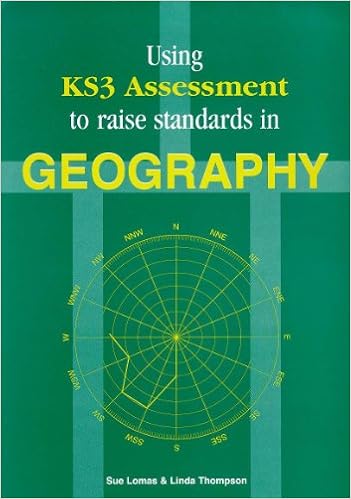
This book was co-written with Linda Thompson, who was serving on the GA's Secondary Phase Committee when I joined in 2004, thanks to the invitation of Rob Lodge. 

I remember using this book as a teacher in Norfolk.


This website has a useful short biography of Sue as well.
Sue was born in Birmingham and moved to the North West for her first teaching job in 1978. She taught Geography for 20 years before moving into school improvement work in Salford. Sue now has her own consulting business working in a variety of educational fields. She is a qualified Ofsted inspector and has worked as an Associate Lecturer at Manchester Metropolitan University. Sue has a passion for her subject, and has been a member of its professional body, the Geographical Association for many years, including being its President in 2006. She works on a voluntary basis to enthuse young people about the subject and is the chair of the association's youth arm 'Worldwise'. Sue has been a member of several school governing bodies and has also worked as an assessor for the Duke of Edinburgh's Award.

A member of Girlguiding since she was eight years' old, Sue is now a trustee of the national organisation. She is passionate about promoting the opportunities Girlguiding offers to girls and young women and has recently completed her term of office as Region Chief Commissioner for North West England. Sue is also national chair of the charity 'Youth United' which supports the work of the ten largest uniformed organisations across the UK.

Sue is married to Ian and lives in Culcheth, Warrington. She has one daughter who works as a teacher in London. Jen is very much involved with the Geographical Association and its work in Primary.

Images: Copyright Bryan Ledgard and the Geographical Association

As always, memories of Sue Lomas' time as GA President welcome.

Thursday, 28 January 2021

1998: GeoVisions

The GeoVisions Committee of the GA was active from the 1998 through to around the year 2000. It was looking at what a geography for the 21st Century would need to be. Now that we are a fifth of the way through it, have we managed it...

It involved a committee of various people who have been related to the GA for many decades and included people I have worked with on projects myself, particularly Di Swift, who chaired the project, and Chris Durbin. Linda Thompson is also mentioned, who was Chair of the Secondary Committee when I joined it, but then moved on to another role. Diane also led the Young People's Geographies project, of which more to come later. 

The strapline of the project was:

‘Create the future … don’t just let it happen’ 

The full list can be seen below:

Coordinated by Roger Carter a former GA President who is next up on the blog. It was also referenced by Keith Grimwade in his Presidential lecture.

Mentioned by him in his Presidential lecture:

It is hard to look into the future with any certainty. I have been working with the Geo Visions Project (Carter et al., 1998) ' in order to help to raise the debate about the future of geography. I would like to close with what the Geo Visions Team believe a geography for the twenty-first century will need: 

 • A renewed emphasis on the professionalism of teachers We need fewer voices telling us what to do and how to do it. Equally, we must reassert our own professional responsibility.

 • A focus on children and young people Let us focus less on what is to be done to them and more on their hopes and fears for the future. It is their world too: we should listen to them more.  

• An all-inclusive debate about future needs Education is far too important to be left in the hands of a few, be they educators, politicians or chief inspectors. We must keep the debate open. 

 • Attention to alternative and preferred futures Education for the twenty-first century should engender a real feeling by everyone that they matter in society and that they can make a difference individually or collectively. 

 • Commitment to the capabilities for a better world. The knowledge and skills needed to compete industrially are not necessarily the same as those needed to build equitable, sustainable communities. We need a broader vision, and a better balance between skills and knowledge on the one hand, and values and commitment on the other. 

 • A critique of geography as a subject to promote a better world

Any memories of engagement with this project welcome.

A booklet was produced in assocation with TIDE Global (PDF download)

A report as well.

This includes a quote from Roger Crofts, of SAGT, who is someone I've met several times, most recently at an FSC 75th Anniversary event where he spoke about his life in geography:

“It is essential that geography is not just seen as social geography or cultural geography or biogeography or geomorphology, but that there is some interlinking between these different elements if the subject is to retain its relevance.” 

Professor Roger Crofts, COBRIG Seminar 1998

To find out more about more recent GA projects, head for this relatively new archive page on the GA website which details what the project work of the GA has involved. I am proud to have been involved in quite a few of these projects over the years, including the most recent GEO project, for which I am currently writing some materials.

GeoVisions also led into the OCR Pilot GCSE Geography, of which more to come...

References

Carter, Roger, et al. “The Geo Visions Project.” Teaching Geography, vol. 23, no. 4, 1998, pp. 201–202. JSTOR, www.jstor.org/stable/23755721. Accessed 22 Jan. 2021.

Robinson, Roger, et al. “Wiser People — Better World?” Teaching Geography, vol. 24, no. 1, 1999, pp. 10–13. JSTOR, www.jstor.org/stable/23755686. Accessed 22 Jan. 2021.

If anyone has memories of participation in this project, or knows of the outcomes, please let me know. It looks to have huge relevance today.

Margaret Mackintosh RIP

Updated post. Sad news at the end of last week from colleagues who have organised the Charney Conference over the years of the passing of Ma...