Showing posts with label University of Cambridge. Show all posts

Monday, 8 February 2021

1999: Professor Michael Bradford

Last updated November 2025

Michael Bradford was a stalwart supporter of the GA for decades, in various capacities, and led on a great many initiatives to promote the subject at all levels throughout his career.
He was Emeritus Professor of Geography at the University of Manchester.

Some descriptions from Michael's University page:
After an undergraduate degree at St Catharine's College Cambridge, I did postgraduate work at the University of Wisconsin, Madison and completed a PhD at Cambridge. 
My first post was as a Lecturer at the University of Manchester (1971) where eventually I became Professor of Geography. 
My research interests have been on the geographies of education, the geographies of children and urban policy evaluation. 
The underlying themes that tie the work together are inequalities, social exclusion and social polarisation. Similar themes featured in my teaching. I have also completed some pedagogic research and published papers on learning and teaching, and earlier in my career written texts for school geography.

Michael was very much involved in the GA Manchester Branch, which is one of the oldest of the GA Branches, and has previously won a GA Award. He kindly welcomed me when I gave the Herbertson Memorial Lecture in 2008, to over 200 people.

Michael particularly loved the city of Manchester, and led a tour of the city during the most recent GA Conference in the city.
He also attended the 125th anniversary dinner of the GA at Christchurch College, Oxford, which I have blogged about previously.

Sadly, during the compilation of this blog, Michael passed away in July 2019. It was announced on social media at the time and was a catalyst for me contacting other Presidents earlier than I otherwise would have done. I am sorry that I didn't get the chance to chat to Michael about his career in person.


A Celebration of Michael's life was held at the University of Manchester on the 19th of October 2019. It was attended by many people who had been inspired by his work, including a significant number of former GA Presidents.

The Celebration was led by Ashley Kent, Janet Pickering and Derek Spooner, along with Sheila.

Michael had also planned a party that was to take place at the Sports club, where he and Sheila had been members since the late 1970s. Several hundred people had already responded affirmatively to this event, but it was cancelled, as he was very unwell and in the hospital at the end of June. This party was meant to celebrate various things, including he and Sheila's Golden Wedding. 

Sheila told me:

"Michael had outlined what he wanted to be included in his Celebration of Life. He said he wanted it to be at the University, in a lecture theatre and also that there would be a video of him speaking at the beginning of it. I was able to implement almost all of what he wanted. Michael would have loved the reunion of people at the reception following his Celebration of Life."

His obituary, written by another former GA President Derek Spooner (who also introduced his GA Presidential Lecture in 2000) was published in The Guardian, and he explained that Michael may well have had a career on the stage.

In 2003, Chris Kington asked a number of former Presidents what had sparked their passion for geography. He lent me the letters that he received at the time, and here is the response that Michael sent to Chris at the time. It describes a trip to Arran in the company of future Ofsted chief Chris Woodhead.

This contains some memories of particular teachers, including Charles Larkinson. He talks about the importance of travel and holidays.
"A gradual immersion - inspiring teaching - a kind man who drove me to Arran among many kind acts - and a few key moments and walking holidays. Fun and Geography were connected, as were kindness and Geography."
Thanks so much to Chris Kington for the loan of the letters.
In January 2021, I had the chance to chat to Sheila Kaplan Bradford. She was keen to talk through the work that Michael had done through his long career, and also very kindly sent me a number of documents and videos. One of the most entertaining elements was a recording of the speech that Michael gave at the Presidents' Dinner, with plenty of jokes. 
Sheila told me: "I would say that the essence of Michael was his concern for all people. He felt passionately about trying to redress the inequalities and injustices suffered within societies. He was keen to make sure that his philosophy and way of life reflected that strong moral and ethical ideal." 
Michael was born on the 6th December 1944 at St Helier's Hospital, Carshalton in Surrey. He attended Winchcombe County Primary School, Carshalton and Wallington County Grammar School for Boys, followed by studies at St Catharine's College, University of Cambridge, BA Cantab (1964-67) and PhD: thesis (1968-71): Spatial Aspects of Urban Consumer Behaviour 
Between his undergraduate and graduate studies at Cambridge, Michael attended the University of Wisconsin, Madison, for one year as a post-graduate in the Department of Geography. This experience convinced him that he wanted to pursue a career in teaching and research at University level rather than becoming a secondary school teacher, which had been his original plan. His career took him to a number of institutions and involved some significant achievements:
1971: University of Manchester - Professor of Geography awarded 1997, and Professor Emeritus
1996-2000:  Head of the School of Geography 
2001-2004:  Pro-Vice-Chancellor responsible for Teaching and Learning 
2004-2005 Associate Vice President for Teaching and Learning 
2006-8:   HE Academy: Senior Associate (one-day a week) Jointly led Change Academy sponsored by the HEA and the Leadership Foundation
In this role, Michael visited a range of institutions interacting with staff or giving workshops in relation to Change and Leadership. These included Dundee, Robert Gordon, Bangor, Aston, Sheffield, Lampeter, Plymouth, St Mary’s and Cambridge. In addition Michael led leadership workshops for a national audience for the HEA. These led to some mentoring of staff outside the University of Manchester where he completed many mentoring sessions as part of Manchester Gold, including supporting teachers such as Sue Bermingham.

Distinguished Achievement Medal: Teacher of the Year 2005 at the new University of Manchester. 
HEFCE-funded National Teaching Fellowship 2006 £10,000, a prestigious national award. 
GA Council member: 1992-2001 and 2006-2010 and President 1999-2000.
IBG: 1990-93 Member of the Council of the Institute of British Geographers Secretary of Council’s Education Committee. IBG Conference Officer 1992-95 Member of Council’s Education Committee. RGS/IBG: Invited as Chair of Higher Education Subcommittee with a seat on the Research and Higher Education Division (RGS/IBG) merged society. 
Education Division of RGS/IBG 1998-2002 Research Division. 1998-2004 Member of Council RGS/IBG (elected 2000-3, co-opted before and after)
2000-2003:  Chair of Joint Committee of RGS/IBG – GA
RGS/IBG Study Groups various committees eg HESG 1992-2000
1990-93:  Chair of the Urban Geography Study Group of the IBG - organised resurrection with six meetings and major improvement to finances Awarded by RGS with IBG: 
Taylor and Francis Award for excellence in teaching and learning in geography in higher education. 
Michael was also the HE rep on Dearing’s Slimming of the National curriculum. Vice Chair of Subject Benchmarking Group & QAA auditor. 
1993-6: Developed a new 'A' level and Chaired the Exam Board: NEAB(AQA)
He also had a great many interests outside of his work.Michael was chair of the Bramhall Community Council in the 1980s. This was a new thing and I think they understood what a good overview Michael had of the area and the politics. I think he was viewed as having balanced views of the issues which affected the community. He likely would have been a good councillor, but he became too involved in the University. Michael loved sports and played squash for many years at Grove Park Squash Club, and  very involved in the overall running of Manchester Football Club and Cheadle Hulme Cricket Club. He acted as overall Secretary of the Club for three years. 
Michael's Presidential theme was Pride of Place. 
Sheila told me "An engagement with place was always very significant to Michael. This was true of both of us, which is why I came up with the idea, that Michael loved, that we were like two pieces of Blackpool Rock with Geography [or Geographer] written through us. Michael loved that image. Michael became very involved in the Manchester Branch of the GA. He served as Local Branch President, at least once, if not more, and continued to serve on the committee in different roles including up to the time of his death. He was very supportive of all their activities and took part in all the functions held, such as the World Wise Quiz. He mentored a number of the teachers, who were involved in the GA, both officially and unofficially. He was held in very high regard by all of them. He contributed to the fairly recent publication of a book[let] about the history of the Manchester Branch. He presented the Herbertson Lecture to the Branch and combined meeting with the local Geological Society. He frequently travelled to other GA branches to give presentations to the society. Some of these were on geographical topics and others were about applying to University to study Geography.
One of my most vivid memories is when Michael was asked to dress up as Barnaby Bear for the GA conference and to wander around the exhibit as part of a promotion for Barnaby Bear and the books, and eventual television series. People were supposed to guess which Past President was in the bear costume."
See the previous post on Barnaby Bear for the image of Michael in the Barnaby Bear costume.

Thanks very much to Sheila for her many contributions to this post.
References

A small selection of many references and publications:

1977: "Human Geography: Theories and their Application". Oxford, Oxford University Press, 180pp. (with W.Ashley Kent) over 10 impressions. 
Hardback edition in Zimbabwe, 1991. 
Translated into: 1981 Geografi Manusia. Kuala Lumpur, Penerbit Eajar Bakti Sdn. Bhd, 237pp, Malaysian 1987 Geografia Humana. Lisbon, Gradiva, 2&4pp Portuguese 
This book has become a major text used around the world. 
1993 "Understanding Human Geography: People and their Changing Environments". Oxford, Oxford University Press 320 pp. (with W. Ashley Kent) 
[Geographical Association prize: a significant contribution to Geography]

1979-1994: Michael was a co-editor of a major series for Routledge on Geography and the Environment with Prof. A. Wilson (Leeds), N. Thrift (Bristol) and E.Soja (UCLA). This enabled the dissemination of geographical research. Over the years Michael personally acted as editor of 24 books.

And finally....

Here's Michael and colleagues performing YMCA on the rooftop of the University, which originally had 15 million views before being taken down temporarily...


Images copyright: Bryan Ledgard / Geographical Association

As Sheila said: 

"Michael had always been passionate about the subject and promoting it within schools. He was always interested in making sure there were strong links within the education sector - from Primary to Secondary to Higher Education. He felt strongly about how much the GA could contribute to the support for school teachers. Michael just passionately cared about people."

He also introduced a major change to the GA during his time as President, one which ran for over 30 years, and was only changed this year.

As President, Michael set up the Presidents Group ie the Junior Vice, Vice and current President along with the past President would meet several times a year to establish continuity of policy (the group was renamed to the Governance Working Group last year). 

The President's role, he said, is much more than a figurehead role. Michael reviewed and restructured the HQ staff. He helped establish the GA's weebsite. He improved links with the RGS/IBG, and  introduced a day for PGCE students and NQTs at conference. All these and other work set the base for more recent change within the organisation.
This is an important and powerful legacy, for which the GA is grateful to Michael Bradford.

Further memories of Michael and his work would be very welcome.

Update March 2021
Here's Michael and myself stood next to each other after picking up GA Awards back in 2015.


Wednesday, 27 January 2021

St. Catharine's College, Cambridge

I have previously mentioned St. Catharine's College, Cambridge, and have heard a lot about it via Presidents who went there themselves.

Ashley Kent told me something about this, as being one of the 'hotspots' for Geography - something I'm going to develop a little more perhaps, by focussing on some of these other hotspots such as Hull and Bristol.

A number of Presidents can connect themselves to this college in some way, and I have previously blogged about them.

The St Catharine's College website is here.

There is an archive of magazines dating back many decades, and in which one can find mentions of the GA Presidents who have been connected with the college. I had a quick look and 

Here's Ashley Kent with some memories of St. Catharine's:

My college...St Catharine’s College Cambridge....has always been a Geography ‘hotspot’....a great place where quite a few people who were prominent in the GA...attended.
These include...Steers, Balchin, Spooner, Kent, Bradford, Keeble et al. Many of us were very fortunate to have been tutored by ‘Gus’ Caesar.......arguably the ‘source’ of an extraordinary group of geography professors across the world.....Haggett/Dury/Hall/Randall/ et al...a remarkable ‘father figure’ to many.

Someone who Ashley mentions is 'Gus' Caesar.

More on Gus was added in a separate blog post previously.

J A Steers was someone who was very definitely linked with the college.

His memorial has been mentioned as well. It can be seen in the college magazines, which would also reveal other details on the geographers who passed through the college. This was a signed silver salver presented to J A Steers in 1966 on the occasion of his retirement:

Wednesday, 20 January 2021

Gus Caesar

Updated August 2023

Gus Caesar was described by former GA President Ashley Kent as arguably the ‘source’ of an extraordinary group of geography professors across the world: Haggett / Dury / Hall / Randall et al...a remarkable ‘father figure’ to many.

He was a tutor at St. Catharine's college, University of Cambridge. (Twitter account link)

He came up on a £20 Exhibition to St Catharine's College in 1933, gained double Firsts in Geography and was elected to a postgraduate scholarship in 1936. After the war he returned to a university lectureship and fellowship at Selwyn College and in 1951 moved back to his old college. For the next 30 years he was to hold almost every senior college post except that of Master.

He was Senior Tutor for Geography, working with Dr Keeble.

The above text is taken from his Obituary, written for the Independent newspaper by the famous geographer Peter Haggett.

Peter Haggett also said of Gus:

No one who experienced the hour-long inquisitions in his rooms on Main Court at St Catharine's, delivered through a haze of Three Nuns pipe smoke, will forget the process. Essays were disassembled, the reasonable parts retained, new components added, and the whole reassembled into something that was well ordered, logical and, above all, geographically sound. 
He had an innate sense of what gave coherence to a geographical point of view and drove that relentlessly into those he taught.

A story from the memorial address for J A Steers, who taught Gus:

Gus Caesar's splendid story of his own undergraduate days, when he was woken one morning, admittedly somewhat late, by a severe pain in his chest. Opening bleary eyes, he discovered that the cause of this pain was a walking stick, jabbing him in the ribs. And at the other end of the stick was, of course, Alfred, immaculately dressed as usual, with hat and briefcase, exclaiming "get up, get up, I'm lecturing to you in ten minutes!" 

References

https://www.independent.co.uk/news/obituaries/obituary-gus-caesar-1600981.html - obituary in the Independent newspaper

With growling voice and the massive bulk of a second-row forward, Gus Caesar appeared ferocious. And as a Dean on the warpath after a rowdy boat-club supper, this image could stand him in good stead. But the reality was of a gentle and ever kindly man for whom the individual undergraduate (particularly if from St Catharine's) could always ask for support. 

His college house on Grantchester Meadows was a haven through which hundreds of visitors passed each year. 

His wife, Margaret, and daughter, Pat, could calculate to a nicety the strength of undergraduate appetites after the towpath walk back from Grantchester.

https://www.society.caths.cam.ac.uk/home/?m=page&id=1923 - St. Catharine's Society Journals

Image above is taken from the St. Catherine's Society Journal

https://www.society.caths.cam.ac.uk/Public_Magazines/1971r.pdf 

https://www.society.caths.cam.ac.uk/Public_Magazines/1987r.pdf 


Updated August 2023

Sir Peter Hall - Town Planner

https://discover.ukdataservice.ac.uk/assets/qualibank/6226themext016.pdf

I was taught by an outstanding teacher in economic geography, a guy called Gus Caesar, whose full name was almost unbelievably Alfred Augustus Levi Caesar, and he was a legendary figure in British geography...  He was not a researcher, he’d got a very poor research record, I don’t think he’d have got tenure nowadays, but he was an absolutely inspiring teacher in close supervision, because the style was, you would write an essay every week, of course, and he would read it, and he would tear the essay to pieces!  He’d say, “Look, old lad” – his favourite term – “Look, old lad, you’re putting the conclusions before the evidence.  Say what you think the hypothesis is, and then produce the evidence carefully, in logical order, and then the conclusions”.  He absolutely [analysed] your essay.  Everyone who was taught by Gus, has this extraordinary kind of intellectual discipline of being able to argue A to B to C to D, which none of us ever lost, I think.

https://discovery.ucl.ac.uk/10042912/3/Hebbert_PH%20for%20GBS%20final%20ms.pdf

His path was determined by the offer of a geography scholarship at St Catharine’s College. Hall found Cambridge initially uncongenial, what with the snobbery of privately educated undergraduates towards provincial grammar schoolboys, the relatively low 3 academic esteem of his chosen discipline, and the bias of first year teaching towards the physical geography he least enjoyed. 

But in 1951 the situation was transformed by the college's appointment of A.A.L. Caesar (an alumnus) to be Fellow and Director of Studies in Geography. 

As the only Cambridge college offering geography scholarships, St Catharine’s attracted the pick of the crop and for the next 29 years Gus Caesar was their academic mentor. The weekly supervisions in which Caesar deployed his ‘formidable powers of critical dissection and logical rearrangement’ (Haggett 1965, ii) nurtured many rising stars of the discipline (Johnston and Williams 2003, 309) and Hall recollected them as the high point of his undergraduate career (2003b, 2014f). 

He had already learned from George Orwell how to write clearly without resort to jargon; now he learned how to construct arguments, marshal empirical evidence, and submit to relentless self-criticism—‘progress is a mistake-making business’ was one of Gus’s aphorisms. 

More than this, Caesar was a committed advocate of geography as an applied science, with regional planning as its practical outcome. He had coauthored the chapter on the ‘North-east of England’ and written those on ‘Gloucester–Wiltshire–Somerset’ and ‘Devon and Cornwall’ in G.H.J. Daysh’s Studies in Regional Planning: Outline Surveys and Proposals for the Development of Certain Regions of England and Scotland (1949). The authors conceived regional planning to be a self-contained policy process in which the geographer ascertained trends, constraints, and requirements so that planner might devise proposals for administrators to implement. 

For his presidential address to section E of the British Association for the Advancement of Science at Southampton in August 1964, A.A.L. Caesar spoke on ‘Planning and the geography of Great Britain’. He emphasized the inexorable geographical trends of economic centralization on South-east England and the midlands, the decline of peripheral regions, road transport growth and extensive railway closures. ‘The Twentieth Century pattern must be accepted—there is need to contemplate that of the Twenty first Century. 

If Megalopolis is coming, let us at least be aware of it and let us plan for it’—a challenge for geography indeed (1964, 240). 

Caesar himself had little direct involvement in public policy, but his teaching of geography as an applied science was profoundly influential, as seven of his distinguished former students—Michael Chisholm, Peter Haggett, Peter Hall, David Keeble, Gerald Manners, Ray Pahl and Kenneth Warren—acknowledged in their Spatial Policy Problems of the British Economy (1971).

Memories from the late David R Wright - another legend who has appeared on the blog

https://www.geog.cam.ac.uk/files/alumni/landmark/landmark1/landmark1.pdf

Thursday, 26 November 2020

Scott Polar Research Institute Centenary

The SPRI was founded 100 years ago today. Details on its history are here.

Frank Debenham was the GA President in 1952, and was its first Director, and helped to raise the funding.

The Scott Polar Research Institute was founded in 1920, in Cambridge, as a memorial to Captain Robert Falcon Scott, RN, and his four companions, who died returning from the South Pole in 1912. When Scott's last words, "For God's sake look after our people" were made known to the British nation, the response was tremendous. Scott himself had emphasised the importance of science and from this plea, the Institute was born.

Frank Debenham, Geologist on the British Antarctic Expedition 1910-13 (Terra Nova), was the driving force behind the founding of the Scott Polar Research Institute. He wanted to establish a place that brought together polar researchers and resources for the improvement of polar expeditions and scientific investigation. Debenham asked that the new institute perform two roles: it should be a centre of study, preferably as part of a university, and it must also stand alone as a national memorial to Captain R. F. Scott and the men who died with him in the Antarctic. As Debenham and other veterans of the British Antarctic Expedition 1910-13 (Terra Nova) had found themselves in Cambridge writing up their findings, and, as Debenham argued, because Cambridge had 'furnished more polar scientists than all the other English universities put together', a home within the University of Cambridge was the obvious choice.

Happy Centenary Day!

It has not escaped my notice that I will be the GA President 70 years on from Frank Debenham and he will get a mention in the Presidential Address that year. 

Thursday, 15 October 2020

1983: Rex Walford - "teacher who made geography fun"

Updated August 2023

Rex Walford was a polymath and a genius geographer, a talented musician and much more.

He is still thought of fondly and remembered by geographers the world over.

“Everyone who met Rex knew very quickly they were in the company of an extraordinary man. He had a huge heart, boundless curiosity, sharp intelligence and above all commitment and enthusiasm which was infectious and mobilising. 
He is an enormous loss to the world of geography education.”
David Lambert


Rex Walford
was involved in very many aspects of the GA over the years, and this entry could end up being one of the longer ones on the blog just because of the sheer amount of things that Rex did with, and for the GA. He led a great deal of policy work and wrote a great many books and articles which were published by the GA. His energy and enthusiasm were legendary. His wife Wendy has attended GA Conferences regularly (before and) since his untimely passing and been involved in the development of the Rex Walford Award offered by the RGS-IBG, along with the creation of the annual Rex Walford lecture given at the GA Conference, which is aimed at early career teachers - a group that Rex did so much to nurture and inspire during his career.

I knew Rex, as the school where I worked for 20 years: King Edward VII in King's Lynn took trainees from Homerton College, University of Cambridge for many decades, and I also employed several of them as a Head of Department and worked with them, and met him numerous times when he came in to observe them teaching, before Liz Taylor succeeded him on his retirement from the post. It's a relationship I've maintained to this day, although my annual visit this year has been postponed... I shall be back next year I hope to speak to the 2021 cohort.

At the time, I shared Rex's interest in the use of games and simulations, and he made regular contributions to 'Teaching Geography' through this time, sharing ideas created by his students and there will be some shared on the blog. I have his book on 'Games and Simulations in Geography' published by Chris Kington on the shelf by my desk in my classroom.

I chatted to Rex when the GA finally purchased Solly Street and celebrated with a reception including David Blunkett as a guest of honour and a gathering of many former Presidents as it happened (although I didn't appreciate who all of them were at the time). This was a lovely occasion and one which drew several Presidents who had been involved with the process of locating and eventually securing Solly Street as the second Sheffield home of the GA after Fulwood Road. Some images from that evening have already appeared on the blog, with others still to come, taken by Bryan Ledgard.

There was also the 2010 Madingley venue for the Geography Teacher Educators' (GTE) conference, which I attended and spoke at, regarding the nature of the GA's support for trainee teachers. Rex had brought along his collection of memorabilia from the original Madingley lectures, which was fascinating to look through and talk about, and he spoke to us about the ongoing influence of those lectures and the many geographers they influenced. I have already mentioned the Quantititive Geography group, and Richard Daugherty has kindly provided further detail on their work.

There was also his commitment to the Charney Manor conferences, which have been running for over 20 years now. He edited a number of books in this series of papers from the conference, and I have copies of several of them in my collection of books as well.

It was such a shock to hear of Rex's untimely death, during the time I worked at Solly Street in a tragic boating accident on the River Thames over the Christmas period. It was a sad week, and the GA responded by opening a book of condolences which was soon filling with happy memories of encounters with Rex linked to his many and various interests.

This obituary was written by Mike Younger and Joan Whitehead and provides a useful summary of Rex's career.


I wrote about it on LivingGeography here and this included a memory of Rex. I was also honoured to visit a special commemorative event held at Wolfson College in that same year and hear several speeches from colleagues and Rex's wife.

Something about Rex's varied life next:

Rex started out working as a journalist for the Hendon Times series of newspapers, but then became head of geography at St Mary’s Church of England Secondary School in Hendon. In 1962 he was appointed lecturer in geography and mathematics at Maria Grey College, Twickenham, later becoming senior tutor.

In 1973 he moved to Cambridge as university lecturer in geography and education. In that role, which he held until 1999, Walford inspired hundreds of young geography teachers. He played a major part in transforming the teaching of geography. In the early 1990s he was head of what was then the University Department of Education.
A chronology taken from the document that was handed out at a memorial event.

  • 1934 Born in Edgware, Middlesex
  • 1945 Scholarship to University College School, Hampstead
  • 1951-58 Part-time journalist with Hendon and Finchley Times
  • 1952-55 London School of Economics (B.Sc. Econ)
  • 1952 Acquires a BSA Bantam
  • 1955-58 Kings College, London (PGCE and BD)
  • 1958-62 Head of Geography, St Mary‘s C of E School, Hendon
  • 1960-61 Northwestern University, USA (MA)
  • 1961 Hits a four off Jim Laker for the US International Team
  • 1962-73 Geography Lecturer/Senior Tutor, Maria Grey College, Twickenham
  • 1969 Marries Wendy Kirby at John Keble Church, Mill Hill
  • 1973-99 Lecturer/Head of Dept., School of Education, Cambridge
  • 1999 Pilkington Prize for "teaching excellence‟ – Cambridge
  • 2000 OBE for "contributions to geographical scholarship‟
  • 2003 Anglia Ruskin University (PhD)
  • 2008 Acquires a Harley Davidson XL
'Geography through the Window'
Ashley Kent
Described here:


Rex is also referenced in Jo Norcup's PhD thesis when she talks about his involvement in setting up a working group to explore the way that the GA was tackling a new multicultural society, and the way it was being represented in the work of the GA, and also in geography textbooks, as well as classrooms. Rex was very much involved in that work. 

Rex was also chosen to represent the GA in meetings with the SAGT which were held in the late 1970s to help the associations work more closely together - this is a relationship which persists to this day with fraternal greetings exchanged at the relative conferences.

Rex is also remembered in the creation of an RGS-IBG award for NQTs who produce resources based around the theme of the RGS's Young Geographer of the Year each year. We will return to that again as well. Steve Rawlison was one of those former Presidents involved in the discussions around the creation of this Award, and there is also an annual Rex Walford Memorial lecture at the GA Conference each year. Rex was associated with the RGS-IBG of course, and helped with their support for new teachers and also those applying for Chartered Geographer status.
Rex contributed to a great many books, one of which is pictured here:
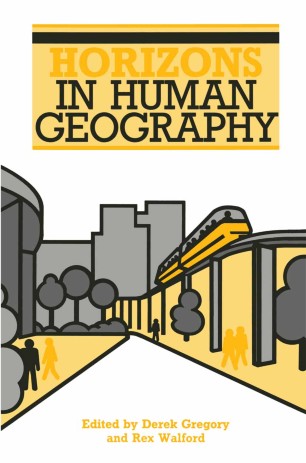

As mentioned earlier, in 1983, he was part of a GA Working Party which was tasked with looking at the provision for multi-cultural education and helped produce some work in that area which has been the focus for a previous blog post.


Rex was a tireless supporter of Geography, and wrote many letters to organisations who he felt could perhaps support the cause of the GA in the promotion of geography.
Here is an example from 1984


Memories here are from Australian geographers, showing his influence was global. See later for an image linked to that as well.

Rex's memorial service was held at Ely Cathedral, a building I now see every day, and visit regularly, towering over the school where I work, and which was packed out that day.
Young teachers can still gain lots from Rex's legacy.
I often think of Rex when I sit in the Cathedral with my students from the King's Ely school.

I was also pleased to get Rex Walford's memories on what gave him the 'spark' for geography which was part of Chris Kington's project around his own Presidency. Chris loaned me the letters a year ago. 

Rex talked about the importance of maps in books, particularly the front papers of the Wind in the Willows. He also references the Milly Molly Mandy Story Book and Reader as being an early influence on him.

Rex was also involved in drama and acting.
He was the Chairman of the Cambridge Drama Festival.

Treasured amongst friends and colleagues as a lover of theatre, Dr Walford was chairman of Cambridge Drama Festival until his death.

Tricia Peroni, Acting Secretary of the group, wished to share with Varsity: "Rex inspired many people in the world of amateur theatre. He was a man who loved life; he was intelligent and encouraging, full of energy and enthusiasm, and all who he came into contact with him were captivated by his warmth and charm."

"He gave himself wholeheartedly to every one of his ‘projects’ and he was a vibrant part of theatre in Cambridge. It was a privilege to work with Rex and we are richer for having known him."

Famed for squeezing rehearsals into his tight teaching schedule, Dr Walford particularly contributed to the transformation of secondary school geography teaching. For a quarter of a century he ran the post-graduate teacher-education course for the subject and can be credited with filling schools nationwide with a stream of enthusiastic educators.

There was also a mention of his links with the Meridian School in Royston.

Dr Walford’s innovative teaching approach based on active participation went beyond the seminar room as he dedicated 22 years to the Meridian School in Royston whose headteacher, Dr Mike Firth, will remember him as "extremely well-liked and dedicated to the school."

Dr Walford was due to continue to offer day-school and residential courses at the Madingley School for the Institute of Continuing Education.

A former student, Peter Freeman, fondly remembers an occasion when the don gave up his coffee break to help him to surprise his sister. "One does not forget such kindness. He will prove irreplaceable."

A dedicated Christian, Dr Rex Walford also made good use of his retirement to study for a theological doctorate. It is this ability to live life to the full that will allow Dr Rex Walford to live on and inspire those who knew him.

Congratulations to Emily Chandler who was announced as this year's Rex Walford Award winner yesterday.

References

Rex doesn't have a Wikipedia page - perhaps that needs to be rectified. He certainly deserves one given the influence he has had and perhaps I shall go back through the Presidents once this blog project has finished, and use the research here (and perhaps additional contributions from others) to create a page for any former GA President who does not already have one.

An obituary can be read here.

http://theses.gla.ac.uk/6849/1/2015NorcupPhD.pdf - Jo Norcup thesis - see p.232 onwards

https://www.educ.cam.ac.uk/news/obits/walford_rex/ - Cambridge College Obituary
https://www.thetimes.co.uk/article/rex-walford-6565rjr7vt0

Morrish, Mike. “Obituary: Rex A. Walford OBE 1934-2011.” Geography, vol. 96, no. 2, 2011, pp. 105–107. JSTOR, JSTOR, www.jstor.org/stable/41320343.

Also in The Guardian, in a piece by Mike Younger and Joan Whitehead.
https://www.theguardian.com/education/2011/mar/10/rex-walford-obituary

Walford, Rex. “Finding Grenada on the Map.” Area, vol. 18, no. 1, 1986, pp. 56–57. JSTOR, www.jstor.org/stable/20002261

Linnell, Andrew. “REX ASHLEY WALFORD OBE 14 February 1934-2 January 2011.” The Geographical Journal, vol. 177, no. 2, 2011, pp. 192–193. JSTOR, www.jstor.org/stable/41238029. Accessed 4 Apr. 2020.

Walford, Rex. “Mackinder, the GA in Wartime and the National Curriculum.” Geography, vol. 78, no. 2, 1993, pp. 117–123. JSTOR, www.jstor.org/stable/40572493.

I will not attempt to list all Rex's contributions to GA Journals as they run to the hundreds probably.

Tony Binns book:
https://books.google.co.uk/books?id=LvJ5CwAAQBAJ&pg=PT293&lpg=PT293&dq=cyril+norwood+geography&source=bl&ots=_1Lsigvfcz&sig=ACfU3U33bqK9vMOWZ2ioDCAYQgLo7mQyGg&hl=en&sa=X&ved=2ahUKEwjjpOyZieDjAhUlQkEAHUGhC-I4ChDoATAFegQIBxAB#v=onepage&q=cyril%20norwood%20geography&f=false

https://www.agta.asn.au/conf2011/tribute/walford_r.php

Referenced by David Hicks: https://www.teaching4abetterworld.co.uk/Downloads/download3.pdf

Contributions made to the TES over the years: https://www.tes.com/author/rex-walford

And finally, this blog would not have been possible without the substantial referencing from the book that Rex wrote about School Geography in the UK.


If anyone has further memories of Rex they would like to share with respect to his time at the GA, please let me know. This is a post which may well have quite a few updates as time passes. Thanks to Steve Rawlinson for sending his memories.

He was even remembered in Australia after his death, at the GTAV conference in 2011. His influence reached all around the world he studied and loved. Rita Gardner dedicated her lecture at AGTA that same year to Rex as well: https://www.agta.asn.au/conf2011/presentations/gardner_r.php


Update October 2020

Thanks to Brendan Conway for sending his own memories of Rex, and the link with his own PGCE tutor: Mike Younger.

Rex Walford conducted the final observation for my PGCE at Highfield School in Letchworth. I remember being very nervous as he was already a legendary figure. However, when he arrived he immediately put me at my ease. The lesson was about anticyclones so I had taken what was then a bit of a pedagogical risk by using some of my own photos, taken during a BUNAC programme visit to the USA in the previous summer.
At the end of the trip I’d been to stay with relatives in the mountains above San Bernardino in Southern California. One day I took a series of photos of smog building up from the early morning until midday over greater Los Angeles on the plain below. I used the images to show the students how anticyclonic inversion layers trap the smog in the valley like a bath filling up with dirty water, eventually cascading over cols into neighbouring valleys. Other resources I used included local newspaper smog forecasts with warnings for those with respiratory ailments. There was nothing like that available in the UK at that time.

After the lesson, Rex was kind enough to spend a long time chatting about the lesson (which he thankfully enjoyed) and the geography of the topic. He was particularly affirming about my decision to use personal experience as an educational resource and my teaching of the atmospheric processes. 
His encouraging words were a catalyst for my lifelong interest in weather and climate and its importance for geography. 
Now that I am a PGCE Geography tutor myself, Rex’s approach to observation and feedback is something I now do my best to emulate. ​

Updated November 2020

This came via an e-mail from Denys Brunsden, who was part of a quiz team in the 1993 GA Centenary event. More on that nearer the time.
He mentioned that Rex had "been on Mastermind", which was news to me.

While searching for the 'Mastermind' connection, I discovered a lengthy blog post from Alan Parr: a maths teacher who knew Rex well. It was published in 2018.
He had been inspired by Rex's work in designing games for the geography classroom, and created his own games as a result.

So simulation games became a huge influence on my professional life and the United game and many others became my major hobby commitment as well. None of these huge influences would have happened if I hadn’t discovered Rex Walford, and when I launched an amateur games magazine (which is still going today after 300 issues) I invited him to become involved. Rex was delighted to join us. He set up a team in the football game, enjoying the whimsicality of naming the goalkeeper after the milkman, and using the vicar as a ruthless defender. He joined lots more games and set to work devising a postal game about the aviatrix Amy Johnson.

He described meeting up with Rex for drinks in a pub in Cambridge.

He wrote and directed plays (we went to see one he wrote about Amy Johnson), played and recorded in revivals of English pre-war musical theatre songs, and was a Mastermind finalist on TV – indeed, he became a setter of specialist questions. Uniquely, he marked retirement by acquiring both a Harley–Davidson and a doctorate in theology.

I was also taken by his description of Ely on the day of Rex's memorial service in the Cathedral - a building I am now closely associated with through my work and have spent hundreds of hours in.

Ely is a small place, and by the middle of the day it was full of visitors and it was apparent that almost everyone we saw was going to the service. Though the town may be small, Ely Cathedral is a huge building – and it was full. There were so many aspects to Rex’s life that we were asked to introduce ourselves to those next to us and explain our connection to Rex.   Knowing that there were colleagues from his religious, educational, dramatic, and musical lives present, I diffidently introduced myself as the inventor of a postal football game Rex had enjoyed. The man in the next seat exploded with excitement; “Conington Thursday!”. He called to his wife a couple of seats away, “This is the chap who invented United!”

He also mentions some other of Rex's achievements:

I’m not the one who wrote a pantomime every year, or was a decent middle-distance runner, or who was a sports reporter for the local paper (which led to Rex playing semi-pro football – albeit only for 45 minutes until the missing player turned up). I’m not the one whose books went far beyond geography to include church history and guides to writing one-act plays, or who recorded CDs of 1930 English popular songs, or wrote plays for radio. 

Alan Parr's blog:
https://established1962.wordpress.com/2018/01/02/rex-walford/

Walford, Rex. “Geography in the National Curriculum of England and Wales: Rise and Fall?” The Geographical Journal, vol. 161, no. 2, 1995, pp. 192–198. JSTOR, www.jstor.org/stable/3059975. Accessed 2 Nov. 2020.

Memories from Chris Kington and Margaret Robertson at the IGU in this special newletter from 2011 event.

Here's part of Margaret's memories from the above link - worth reading the whole document.

And on his radio plays:

A Dorothy L. Sayer fan, Rex wrote a 'one woman' play about her life which he took to the Edinburgh Fringe Festival in 1985 with the Head of Department's secretary, Miriam Rundle, as Dorothy. He also produced a theater performance of her radio play 'The Man Born to be King' as well as a dramatization of 'Murder must Advertise'. Since retirement, Rex expanded his life-time interest in theater as a co-founder of Cameo Theater Company, and at his death was a Council member of the Guild of Drama Adjudicators and Chair of the Cambridge Drama Festival. He regularly worked with soprano Gabrielle Bell in presenting programs and workshops about musical theater, and frequently led courses for the University Institute of Continuing Education on music, theater and film.

A tweet:

Updated August 2022 

I found a lot of images in the GA Archive in August 2022.

They included an interview when he became the first President of COBRIG - the Council of British Geography which I attended, representing the GA.

Updated August 2023

An RGS obituary with a lovely image.

https://rgs-ibg.onlinelibrary.wiley.com/doi/full/10.1111/j.1475-4959.2011.00409.x

https://www.ebay.co.uk/p/89839947 - your chance to own the Land Use Survey book by Rex

A play Rex wrote. and some he directed.


Sunday, 28 June 2020

Sir (Henry) Clifford Darby

Clifford Darby was never a GA President, but he was associated with the GA in some ways, and was certainly a significant figure in British Geography.

He was present at the 50th anniversary celebrations of the GA's Cambridge Branch, as featured in a previous blog post.

This piece from the British Academy gives a detailed biography of his life and geographical achievements, which were many.
(PDF download)

He was able to gain a scholarship to Cambridge from his village in Wales where he was born in 1909. He lived in lodgings as he couldn't afford the college lodgings. His tutor was former GA President Alfred Steers.
He was also connected with several other former GA Presidents.

Early in his academic career, he was chosen to assist Frank Debenham with some research in Southern Africa. When he returned he used his experiences in his other work.
His dissertation was on the role of Fenland in English history. His early work was a little deterministic, but he reworked it later for a different emphasis on the changing landscape and the draining of the Fens. An area of personal interest given the location of my school in Ely. Not everyone at the University was as encouraging - I liked this story:

His supervisor was Bernard Manning - not the comedian.
He was involved in conversations between the GA and the Historical Association following a joint meeting on "the new historical geography" in 1932. He shared the Common Room with a range of interesting characters including M.R. James (who also wrote about East Anglia)
He also assisted George Philip in the production of their atlases.

During the Second World War, as shown above, he joined many other geographers in helping with the war effort.

In 1945, he took over from another former GA President Percy Maude Roxby at the University of Liverpool.
He took over from Alfred Steers on his retirement in 1966 at the University of Cambridge, having also spent time at UCL (an insitution with strong connections with many former GA Presidents)
He died in 1992.

Source:
https://www.britannica.com/biography/Clifford-Darby
https://www.thebritishacademy.ac.uk/publishing/proceedings-british-academy/87/darby-henry-clifford-1909-1992/

Update: December 2020
In 2003, Chris Kington asked a number of former Presidents what had sparked their passion for geography. He lent me the letters and Dick Lawton mentioned the influence of Roxby and other geographers including Clifford Darby and Bill Mead on his own academic career at the time.
He says they taught him not only about geography, but how to be a geographer...

Thursday, 11 June 2020

Cuchlaine A M King

Professor Cuchlaine Audrey Muriel King died in December 2019.
She was an expert in glaciation and I remember using her book on periglaciation when I started teaching in the late 1980s and wondering how you pronounced her name... She was very proud of her name.
There was also her book with John Cole, who I blogged about recently, on Quantitative Methods which I also remember being in the departmental library back then.
She studied at Cambridge University and earned her bachelor's degree in geography in 1942. She then joined the Women's Royal Naval Service and became a meteorologist and surveyor for the duration of World War II. After her service, she returned to Cambridge and researched sand movement on beaches, earning her doctorate in 1949.

King spent her career studying the influence of glaciers on landscape evolution. She went on expeditions to Skaftafell in Iceland in 1953 and 1954 to study the glaciers there. It was unusual at that time for young women to be allowed to participate in fieldwork in such remote, rudimentary areas of Iceland. The expeditions resulted in a series of papers in 1955 and 1956. Because of her gender, her participation in fieldwork trips was discouraged. However, she participated in research on Baffin Island in the 1960s and the Austerdalsbreen glacier in Norway, and led fieldwork expeditions of her own throughout the Arctic. She published several books throughout her career.

A Yorkshire Post piece said:
With characteristic modesty, she said more than once that her “only achievement” had been to “pave the way for gender equality in Arctic exploration,” recalling the research she undertook on Baffin Island in the far north of Canada in the mid-1960s with the eminent geologist, Prof Jack D Ives, a former student of hers at Nottingham University.

This piece threw up another link:

King was taught by Professor Frank Debenham, another former GA President - from 1952 in fact.
In 1959, King began teaching at the University of Nottingham, where she remained for the rest of her career. A research laboratory is named in her honour.
King was one of the earliest women to become a professor of geography in the United Kingdom, and she retired in 1982 - she may have gained that honour earlier if not for discrimination. Cuchlaine King was honoured with the David Linton Award of the British Society for Geomorphology in 1991.

Cuchlaine King specialised in physical geography. She learned topographic surveying and had a special interest in beach sand movement, completing a doctorate on the topic in 1949

The Linton Award is named after the former GA President who has appeared already on this blog.
A full obituary was published in the latest issue of the Geographical Journal of the RGS-IBG.

To finish, a story I liked:

Enjoying a picnic while on a field trip to Lunedale in the Pennines, Cuchlaine King and her group of geography students were approached by an inquisitive sheep. It came close enough for Cuchlaine to offer it a bite of her sandwich, which it accepted with gusto.
“That was so sweet,” one of the students said. “What sort of sandwich was it?” “Lamb,” came the reply.

Sources
Wikipedia page: https://en.wikipedia.org/wiki/Cuchlaine_King

https://books.google.co.uk/books?id=9Pc-KlQ3I54C&lpg=PA90&dq=cuchlaine%20king%20nottingham&pg=PA90#v=onepage&q&f=false

Brian Whalley wrote an obituary for 'The Guardian'

Sunday, 8 March 2020

1959: Professor J A Steers, CBE

Updated August 2023

Professor Steers is probably the definitive expert on coastal processes and landscapes, particularly those which have influenced the coastline of England and Wales. He was one of several GA Presidents to be associated with St Catharine's College, Cambridge and Gus Caesar.

His book on the coastal landforms of the UK is one that sits on my shelves to this day. I have a nice old edition with a green binding which dates back to the 1950s, and which I referred to quite recently to answer a question on Chesil Beach that someone asked.

He sits alongside Denys Brunsden, who will appear in the blog several decades hence, as key coastal geographers, who have shaped how we understand and teach these dynamic landscapes.

Steers was linked to the University of Cambridge, and also with a previous President: Frank Debenham. This, from the University of Cambridge alumnus page, describing the introduction of the Geography Tripos to the university following GA an RGS campaigning which has been well covered in earlier posts near the start of the 20th Century:

The first candidates for the Geography Tripos sat the exam in 1920, resulting in 2 students receiving a 1st Class for their Part 2 exams, one of whom was JA Steers, who would go on to become Professor of Geography and Head of Department 1949-66.

Source: https://www.geog.cam.ac.uk/alumni/earlyyears/

This piece from Nature in 1949 announced the arrival of Steers at the University of Cambridge, where he replaced another former GA President: Frank Debenham. (who had his own extensive entry in the blog a few months ago)

MR. J. A. STEERS, who, in September, is to succeed Prof. F. Debenham as professor of geography in the University of Cambridge, was one of the first generation of geographers to take the newly constituted Geographical Tripos after the First World War. After a short spell of teaching at Framlingham, Mr. Steers returned to Cambridge to join the staff of the Geographical Department under Philip Lake. His College elected him to a fellowship, and before many years St. Catharine's became the first men's college to offer scholarships in geography. This led to a remarkable concentration of able geographical students in the College, which has resulted in a rapidly lengthening list of St. Catharine's geographers entering university posts–fifteen in the last ten years. In his College, Mr. Steers has served successively as dean, tutor, senior tutor, and president.

Professor Steers' address was on the subject of Physiography (also known as geomorphology) and he spoke about the importance of this aspect of geography.


Steers wrote many books on coastal landscapes, several of which I used for my own teaching over the years.
This quote is taken from Rex Walford's book, and dates to 1944, when Steers was campaigning to help "save the coast" by educating the public about its value. This sort of policy work was vital following the war.


This campaigning of Steers was mentioned by G. R. Crone in his chronology of 20th Century geography.


There are some references to J A Steers in a piece by D Stoddart in a piece on the founding of the IBG. I love this image, showing J A Steers talking, and which was apparently taken around the year 1938.

Source: Stoddart, D. R. “Progress in Geography: The Record of the I. B. G.” Transactions of the Institute of British Geographers, vol. 8, no. 1, 1983, pp. 1–13. JSTOR, www.jstor.org/stable/622270

I have some lovely memories of Professor Steers from a former student of his, who would later become a GA President himself: Derek Spooner. 

In July 2019, he shared his memories of Professor Steers to me in an e-mail.

I first encountered this name in 1960, when I was in the sixth form and was given Steers' 'The Sea Coast' as a school prize. A marvellous, inspiring book in the wonderful New Naturalist series, which hooked me at the time on physical geography. Two years later I found myself at Cambridge studying Geography in the Department where Steers was Professor, and in St Catharine's College where he was a Fellow....

Truth to tell his lectures were rather disappointing - he was rather a shy man and certainly not a showman. He was very tall and bespectacled. He had been Head of Geography since 1949. He had been extremely influential in developing Geography in my College to an outstanding position within the University. By the time I arrived in Cambridge, Steers had become the leading coastal geomorphologist of his era. His studies of Scolt Head Island on the Norfolk coast were famous and the student trips he took there were legendary, with students getting stuck in the mud - certainly wouldn't have passed a risk assessment! I was not aware that he had just been President of the GA, or that he was also very active in the RGS, or indeed had become a leading figure in conservation policy.

'Alfie' was his nickname. He retired in 1966. I had started doing postgraduate work and I can remember being invited to a sherry party at his house in the posh western suburbs of Cambridge. His wife, Harriet, was also a Geography lecturer. Her speciality was the regional and historical geography of the USSR......

In his retirement I believe he continued his coastal studies. Ron Martin, another lecturer in the Department, told me that some times he would get a call from 'Alfie' asking him to drive him up to Scolt Head Island. Sounded as if he never really retired.

Here's a image from the copy of one of Steers' books that sits on my shelf. It has some lovely plates in it.


His author profile on the Harper Collins site is useful as well.
(1899–1987). Geomorphologist, Cambridge geographer, graduate and later Fellow of St Catherine's College. Professor of Geography at Cambridge 1949–66 and the authority on the moulding of coastlines.
Member of expeditions to coral reefs Australia 1928, 1936 and Caribbean 1939.

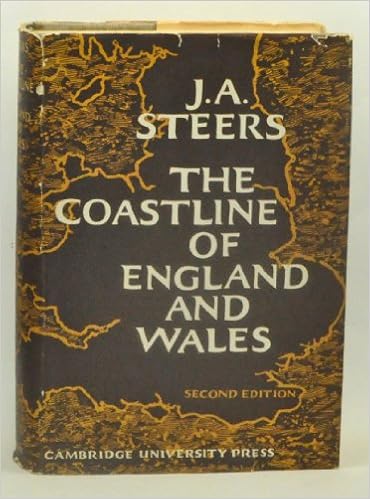
Concerned above all with surveys of British coast from a classic study of Scolt Head Island (1934) to the standard work The Coastline of England and Wales (1946). Much involved with coastal protection and a keen exponent of coastline preservation on Nature Conservancy, National Parks Commission and National Trust’s Enterprise Neptune.

He was awarded a CBE in 1973.

He was also involved in the committee which was established to ensure that an event like the 1953 East Coast Floods could not happen again in the same way.

His wife was also a geographer and published her own books, although I was interested to see that in this ad for one of her books in 'Geography' that she also added 'Mrs. J. A. Steers' in brackets after her own name Harriet Wanklyn. See image opposite.

An obituary was published in 'Geography' in 1987, written by David Keble.

References
Wikipedia - Professor Steers has no entry - he surely deserves one given his significance

STEERS, J. A. “Physiography: Some Reflections and Trends: Address to The Geographical Association.” Geography, vol. 45, no. 1/2, 1960, pp. 1–15. JSTOR, JSTOR, www.jstor.org/stable/40565103.

Cambridge University alumnus page: https://www.geog.cam.ac.uk/alumni/earlyyears/

Crone, G. R. “British Geography in the Twentieth Century.” The Geographical Journal, vol. 130, no. 2, 1964, pp. 197–220. JSTOR, www.jstor.org/stable/1794582

The RGS-IBG present an annual prize for the best undergraduate dissertation named in Steers' honour.

Referenced here for his work on Scolt Head Island: http://archive.jncc.gov.uk/pdf/gcrdb/GCRsiteaccount2038.pdf

STEERS, J. A. “Physiography: Some Reflections and Trends: Address to The Geographical Association.” Geography, vol. 45, no. 1/2, 1960, pp. 1–15. JSTOR, www.jstor.org/stable/40565103

Stoddart, D. R. “Progress in Geography: The Record of the I. B. G.” Transactions of the Institute of British Geographers, vol. 8, no. 1, 1983, pp. 1–13. JSTOR, www.jstor.org/stable/622270

As always, if anyone has further information on J A Steers or images, please don't hesitate to get in touch.

Updated June 2020

When writing a post on Tim Burt and Des Thompson's book 'Curious about Nature' I found a picture of J A Steers taken in Oxford in 1954 by E W Gilbert - shown here.... at a meeting of Section E of the BAAS.


Source: https://books.google.co.uk/books?id=2onPDwAAQBAJ&lpg=PA80&dq=cuchlaine%20king%20nottingham&pg=PA79#v=onepage&q&f=true


Updated November 2020
There is a prize in his name for geomophology


Updated January 2021

From the St Catharine's college magazine - the text of a memorial address.


The magazine of the College society has details of his memorial address by Dr David Keeble, who was also linked with the GA:

https://www.society.caths.cam.ac.uk/Public_Magazines/1987r.pdf

Find it on p.31 here.

Each of us brings to this celebration our own personal memories of Alfred: of a tall, dignified presence crossing the College court, walking-stick in hand; of the personal warmth yet directness of his greeting in the Senior Combination Room - "sit down, sit down, have a glass of sherry"; of lectures in the semi-darkness of the Department of Geography's lecture theatre, where Alfred's impressive expositions of slides of coastal landforms sometimes demanded careful listening for those seated beyond the second row; of his famous field trips to Scolt Head Island, where an immaculate dark suit would be exchanged for shorts in the warden's hut, followed immediately, and to the horror of inappropriately dressed visitors, by a plunge into the muddiest and roughest salt marsh!

He was Church warden of St. Botolph's Church

As postwar governments grappled with growing planning pressures on Britain's precious but vulnerable coastline; as Britain's coastal defences crumbled under the 1953 North Sea surge; as the National Parks Commission, the Nature Conservancy, and the National Trust sought to devise effective and appropriate management policies for their coastal areas, it was to Alfred that they turned for scientific advice and informed appraisal. So too did the Council of Europe, who appointed him Coastal Consultant to their Conservation Committee. Alfred could be forthright in his condemnation of bad coastal management, criticising the War Office for example for such coastal eyesores as derelict huts, looking, as he scathingly remarked, "like a lot of false teeth sticking up!" But his writings and lectures on coastal problems - especially a major Royal Geographical Society lecture he gave in 1944 - were enormously influential in shaping the thinking of such ministers as W. S. Morrison

Updated August 2023

Margaret Mackintosh RIP

Updated post. Sad news at the end of last week from colleagues who have organised the Charney Conference over the years of the passing of Ma...